How to Unlock Your Phone for Free Using IMEI Number 2026
Learn how to unlock your phone for free using its IMEI number by contacting your carrier, using free online tools, or requesting a manufacturer unlock.
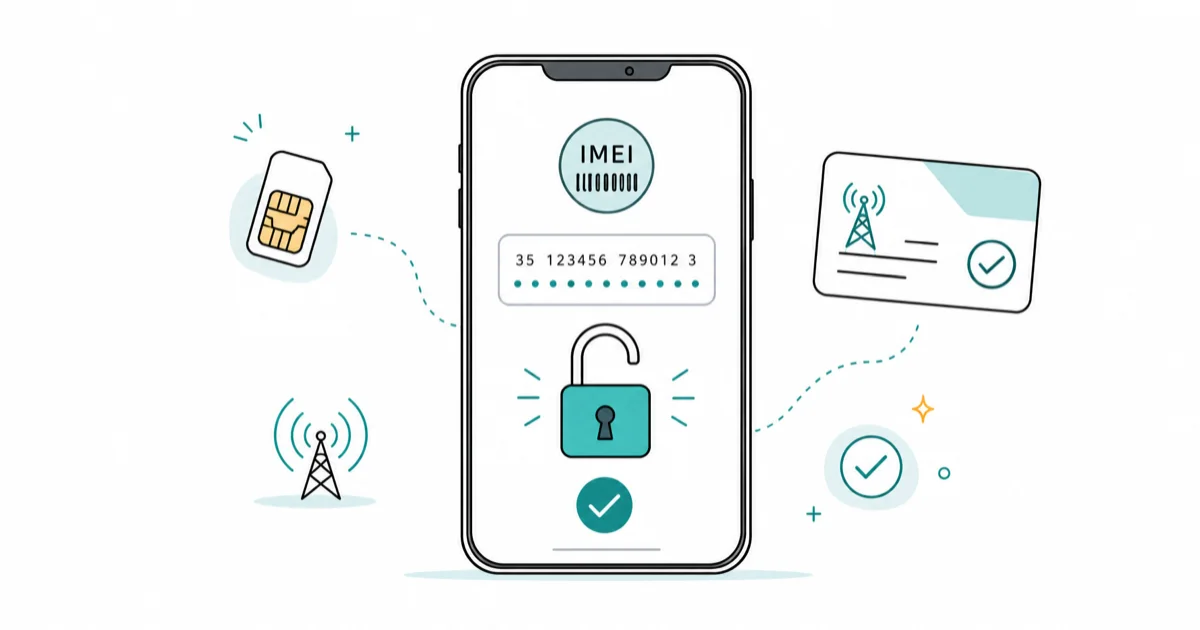
Quick AnswerThe most reliable free method is contacting your carrier directly with your IMEI number (dial *#06# to find it) and requesting an unlock code. Most carriers will unlock your phone for free if you've completed your contract or paid off the device in full.
Switching carriers or traveling abroad doesn’t have to mean buying a new phone. If you own the device outright, your IMEI number is the key that lets your carrier (or the manufacturer) release the network lock for free. This guide walks through what carriers actually require, where free routes work, and where they don’t.
- Dial *#06# on any phone to instantly display your 15-digit IMEI without opening Settings
- Contacting your own carrier is the most reliable free route once your contract or device financing is paid off
- According to FCC guidance, all major US carriers commit to unlocking eligible devices after the contract or installment plan ends
- For Android, find the IMEI in
Settings>About Phone>Status; for iPhone, openSettings>General>About - Changing or reprogramming an IMEI is illegal in most countries and can lead to criminal charges, so stick to legitimate unlock paths only
#Understanding IMEI Numbers
Before any unlock request, get the basics right. The same handful of mistakes come up every time.
#What an IMEI Number Is
The International Mobile Equipment Identity (IMEI) is a unique 15-digit identifier assigned to every cellular device. It’s effectively a digital fingerprint that lets carriers identify a specific handset on their network. According to the GSMA’s TS.06 IMEI numbering specification, the 15 digits are split into an 8-digit Type Allocation Code, a 6-digit serial, and a check digit, allocated at manufacture and tied to the hardware for life.
IMEI numbers are also used for fraud prevention and stolen-device blocking. If you want the security side of this, our overview of IMEI number tracking explains how the same identifier feeds into blocklists.
#How to Find Your IMEI Number
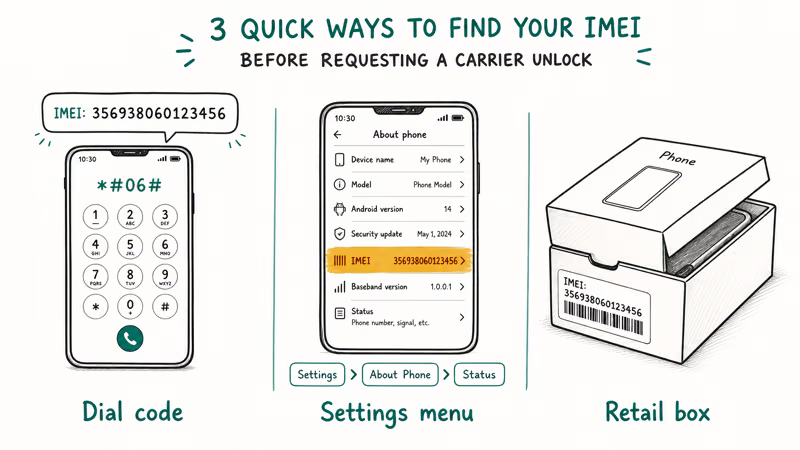
Finding your IMEI is the easy part:
- Dial *#06# on the phone keypad. The IMEI pops up instantly without leaving the dialer.
- Or check Settings:
- For Android: Go to
Settings>About Phone>Status - For iPhone: Go to
Settings>General>About
- For Android: Go to
- Look on the original packaging or under the battery if it’s removable
iPhone owners often confuse IMEI with UDID. They aren’t the same, and our guide on how to find your UDID on iPhone explains the difference if you need both. Before you start an unlock request, we also recommend running an iPhone IMEI check to confirm the device isn’t blocklisted.
#Which Free Methods Actually Work to Unlock Your Phone?
There are three free routes worth trying. Two are reliable. One is hit-or-miss. The carrier route works consistently once the device is paid off, while free online services tend to be inconsistent and depend heavily on the device model.
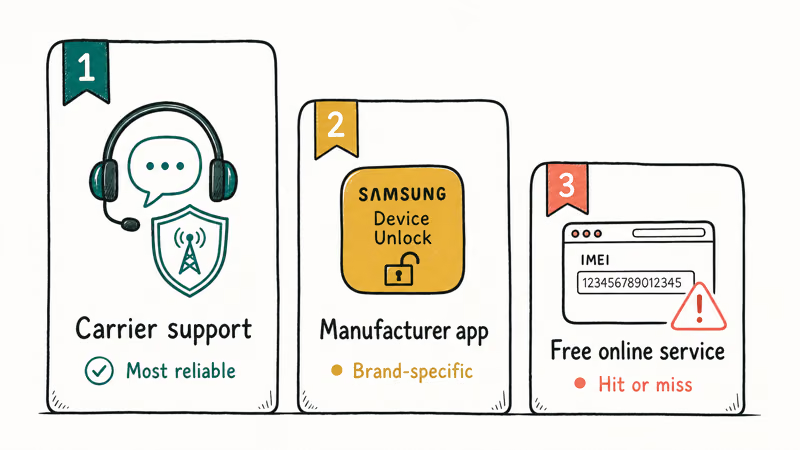
#1. Contacting Your Carrier (The Reliable Route)
This is the path that almost always works:
- Gather your IMEI number and account credentials
- Contact your carrier’s customer service (chat, phone, or app)
- Request an unlock for the specific IMEI
- Provide the reason, such as switching carriers, international travel, or selling the device
- Wait for the approval email and unlock instructions
The CTIA Consumer Code for Wireless Service states that participating US carriers will unlock eligible postpaid devices after the contract or installment plan is paid off. The same code requires prepaid devices to become unlock-eligible after 12 months of active service. T-Mobile, AT&T, Verizon, and most regional carriers all follow this commitment.
For a T-Mobile-locked iPhone, the unlock approval usually lands in your account within a day or so. Verizon and AT&T requests are similar, typically completing within a couple of business days.
#2. Using Free Online Unlock Services
A handful of websites offer free IMEI unlock codes for older or less common devices:
- Find a service with verifiable reviews (Mobile Unlocked is one option, and DoctorSIM works as a paid backup if the free route fails)
- Enter the IMEI and exact device model
- Follow the on-site instructions and verify your email
- Receive the unlock code (sometimes minutes, sometimes days)
Be cautious here. Many “free” services upsell during checkout, and a few are outright phishing pages. Never pay upfront for a “free” service, and don’t hand over your Apple ID or Google account. A legitimate unlock only needs the IMEI and model number.
#3. Manufacturer Unlock Apps and Tools
Some manufacturers offer free unlock paths for their own hardware:
- Samsung: The carrier-driven Device Unlock app is bundled on US carrier Galaxy devices and runs the unlock once your account is eligible
- Motorola: Motorola’s official unlock portal supports many older models for free if eligibility checks pass
- iPhone: Apple doesn’t sell unlocks. According to Apple’s carrier unlock guidance, the unlock has to come from the carrier and is then applied via Apple’s activation servers
Always download tools from the manufacturer’s official site or app store, and read recent reviews. Older third-party “unlock apps” on Google Play are mostly IMEI checkers, not real unlockers.
#Step-by-Step Guide to IMEI Unlocking
Here’s the full sequence for unlocking a phone from start to finish:
- Find your IMEI (dial *#06#)
- Confirm eligibility, meaning the contract or financing is paid in full
- Choose a method (carrier first, then manufacturer, then a reputable service)
- Submit the request with your account details
- Wait for the unlock email or push notification
- Insert a SIM from a different carrier and follow the on-screen prompts
If you’re on a specific carrier, these walkthroughs cover the carrier-specific quirks:
iPhone owners can also confirm their unlock status with our guide on how to check if an iPhone is unlocked without a SIM.
#Is It Legal and Safe to Unlock Your Phone?
The legality depends on where and how you unlock. According to FCC guidance, the unlocking requirement has applied to all 4 major US carriers since 2014, when the Unlocking Consumer Choice and Wireless Competition Act was signed into law. The full rule is published on the FCC wireless device unlocking page.
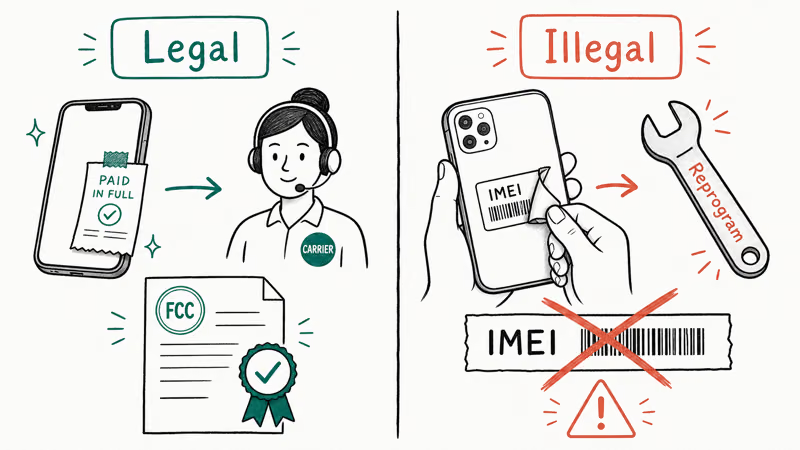
A few important boundaries:
- Legal: Unlocking your own paid-off device through the carrier, manufacturer, or a service you authorize
- Legal but risky: Using third-party services that ask only for an IMEI. Fine if reputable, dangerous if they request account passwords.
- Illegal: Reprogramming or “changing” an IMEI to disguise a stolen or blocklisted device. This is criminalized in the US, UK, EU, Australia, and most other jurisdictions.
Our guide on changing an IMEI on iPhone goes deeper into why this isn’t a route you should take. Stick to the carrier and manufacturer paths.
Warranty-wise, a network unlock doesn’t void your hardware warranty in most cases. But rooting or jailbreaking, which some grey-market “unlock tools” require, usually does void it. Apple and Samsung both confirm that a carrier-approved unlock leaves the warranty intact.
#Tips That Improve Your Odds of a Successful Unlock
A few habits make the difference between a smooth unlock and a stalled request:
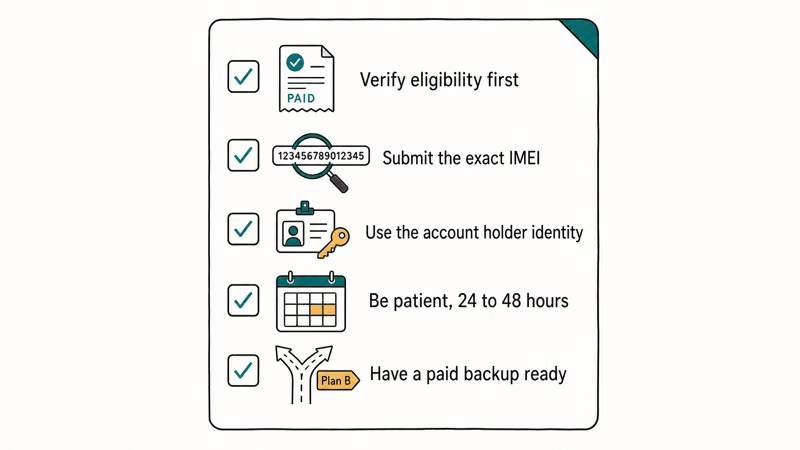
- Verify eligibility first. Carriers reject requests where the device isn’t fully paid, has an active fraud flag, or is associated with a closed account.
- Submit the exact IMEI. A single mistyped digit will bounce the request silently, and you’ll wait days for a “we couldn’t find your device” email.
- Use the account holder’s identity. Carriers won’t unlock a device requested by someone who isn’t on the account.
- Be patient. Most unlocks complete within 2 business days, but some carriers reserve up to 48 hours of review for international travel cases.
- Have a Plan B. If the free path fails, a paid manufacturer unlock or a reputable third-party service is usually $20 to $40, which still beats buying a new phone.
#Alternatives When Free Methods Don’t Work
If the carrier route refuses your request, here’s where to go next:
- Paid manufacturer or carrier unlock: Sometimes available even when the free path is denied. Useful for older devices outside warranty.
- Reputable third-party unlock services: DoctorSIM and similar reputable services have a track record with older models. Expect to pay $15 to $50 depending on the device.
- Buying an unlocked replacement: For very old devices, the cost-benefit may favor a new unlocked phone.
- Activation lock issues: If you bought a used iPhone that’s stuck on iCloud, that’s a different problem. See our guide on removing the activation lock.
#Bottom Line
If you own your phone outright and it’s tied to a major US carrier, the free route is real and it works. Dial *#06#, contact your carrier with the IMEI, and you’ll typically have an unlock approval within a day or two.
Don’t pay third-party services until you’ve tried the carrier first. Never hand over your Apple ID or Google credentials to an “unlock site,” and never touch tools that promise to change or reprogram your IMEI. That’s the line between a legal unlock and a criminal offense.
#Frequently Asked Questions
Is it legal to unlock my phone using its IMEI number?
Yes. In the US, it’s legal under the Unlocking Consumer Choice and Wireless Competition Act of 2014, and most other countries permit unlocking your own device once you’ve paid for it. The UK, Canada, and most of the EU follow similar consumer-protection rules, and India also allows IMEI-based unlocking for personal use. What’s illegal everywhere is reprogramming the IMEI itself to disguise a stolen or blocklisted phone, which is a separate criminal act under telecom fraud statutes.
Will unlocking my phone void its warranty?
A carrier-approved network unlock doesn’t void your hardware warranty. Apple, Samsung, and Google all confirm this on their support sites. What can void warranty is rooting, jailbreaking, or using grey-market “unlock tools” that modify the bootloader.
How long does the IMEI unlock process take?
Usually 24 to 48 hours. With T-Mobile, AT&T, and Verizon, approval commonly arrives by the next business day once the device is eligible.
Can I unlock a phone that’s still under contract?
It depends on the carrier. Some carriers let you unlock for international travel even mid-contract, but most won’t approve a permanent unlock until financing is fully paid. Prepaid devices typically need 12 months of active service before they become eligible.
Are free online IMEI unlock services safe to use?
Some are legitimate, many aren’t. A safe service will only ask for your IMEI and device model, nothing more. If a “free” site asks for your Apple ID, Google account, payment info, or remote access to your phone, close the tab immediately. When in doubt, start with the carrier route first.
What’s the difference between an IMEI unlock and an iCloud unlock?
A network unlock removes your carrier’s SIM lock so the phone works on other networks. An iCloud unlock removes Apple’s Activation Lock from a phone tied to someone else’s Apple ID, and there’s no legitimate free way to do that. The original owner has to remove the device from their account. If you bought a used iPhone stuck on someone else’s iCloud, the only legal path is to contact the previous owner.
Can I track a TextNow number using an IMEI?
No. TextNow is a VoIP service and isn’t tied to a specific IMEI, since calls are routed through the app rather than a SIM. Our guide on tracking a TextNow number covers the methods that actually apply.
Is This Bank App Real? Spot a Fake App on Your Home Screen
A bank app can land on your home screen from a web page with no install warning. Learn the checks that tell a real banking app from a phishing web app.
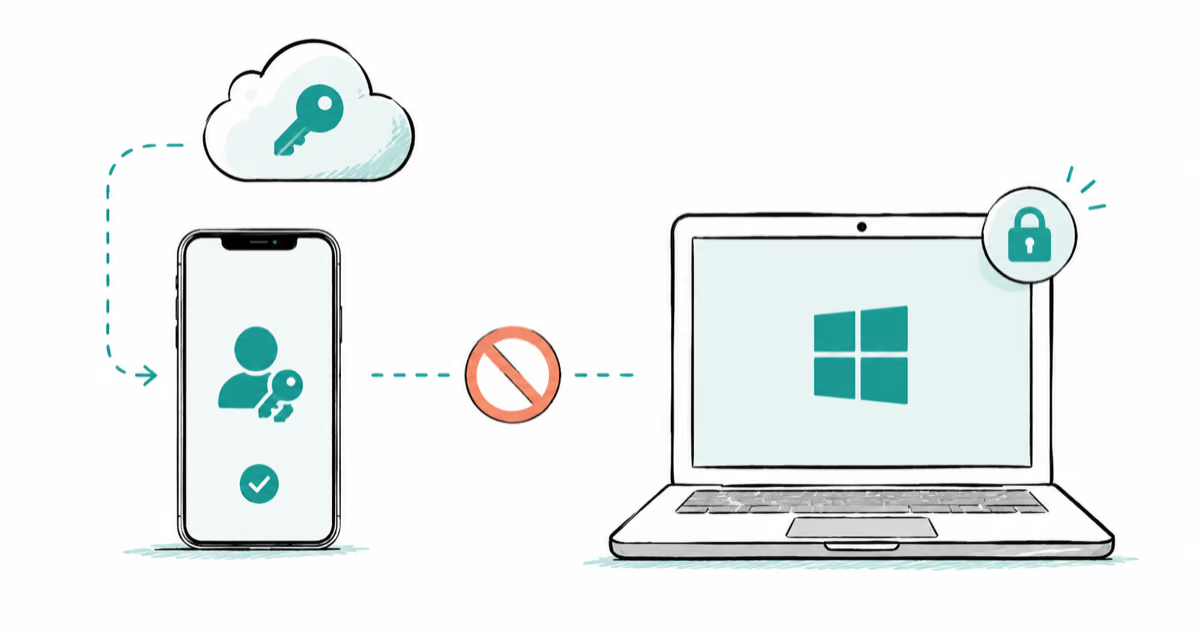
Passkeys Not Syncing Between iPhone and Windows? Read This
Passkeys not syncing between iPhone and Windows is by design, not a bug. Here is why iCloud passkeys skip Windows Hello and the three ways to fix it.
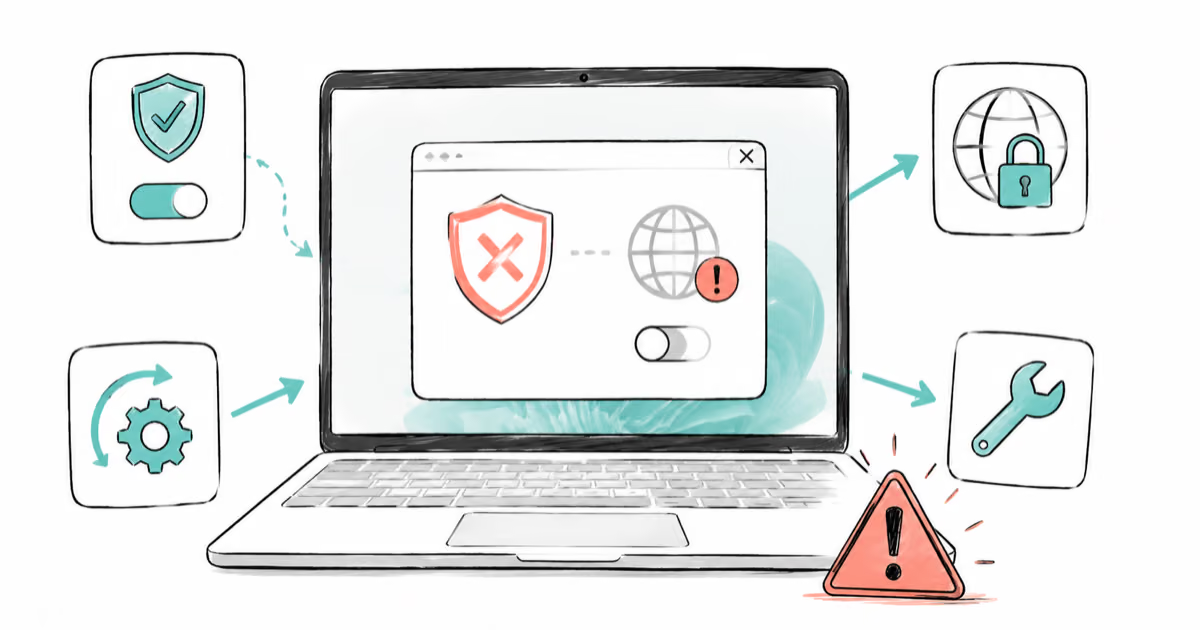
VPN Not Working on Snapdragon X? Why It Fails, How to Fix
Your VPN won't install or connect on a Snapdragon X Copilot Plus PC because Windows on ARM can't emulate the network driver. Here are the fixes that work.
How to Check If a Link Is Safe Before You Click It
Learn how to check if a link is safe with official-first steps: read the real domain, use the app instead, and treat scanners as a second opinion only.