How to Remove Activation Lock: Official Apple Methods
Remove Activation Lock with the linked Apple Account, a previous owner, an organization administrator, or an Apple proof-of-purchase request.
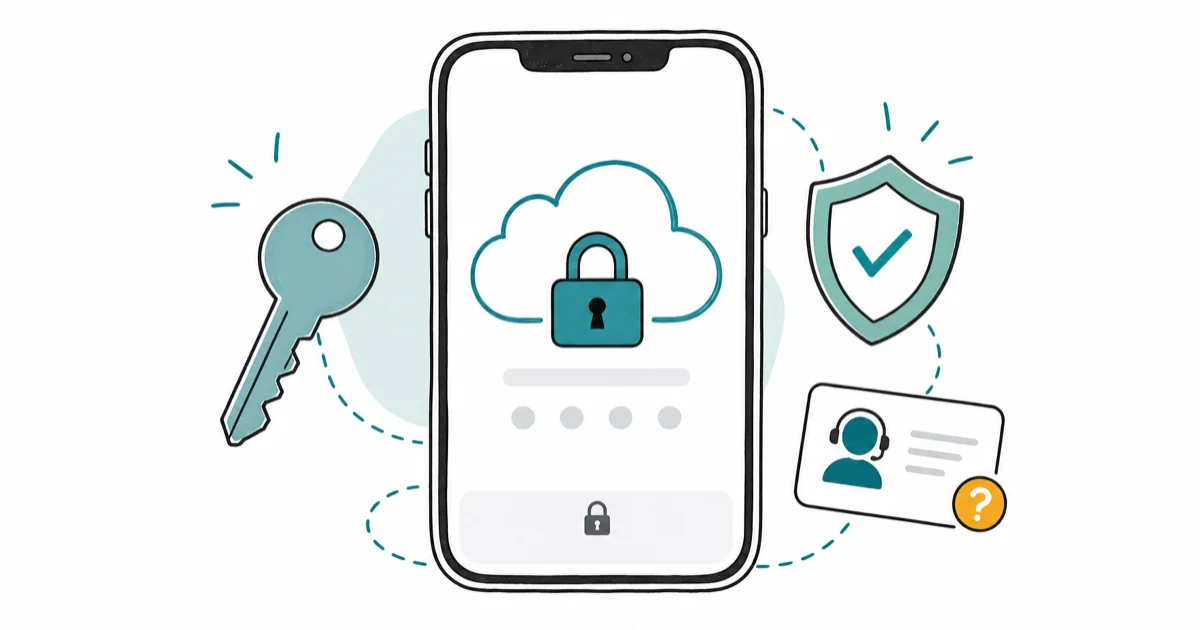
Quick AnswerUse the linked Apple Account or device passcode, ask the previous owner to remove the device in Find My, or start Apple's support request with proof of purchase. Don't use bypass tools on a device you don't own.
Activation Lock is an ownership safeguard, not a screen passcode. If a device is yours, use Apple’s account, previous-owner, organization, or proof-of-purchase routes; a reset alone doesn’t establish ownership.
- Start with the Apple Account, password, or device passcode shown on the Activation Lock screen
- A previous owner can remove an absent device from their account through Find My on the web
- Don’t buy or keep a used iPhone that shows iPhone Locked to Owner
- Organization-owned devices should go through the responsible IT or device-management administrator
- Apple offers a support-request path for owners who have proof of purchase, without publishing a fixed approval time
#What Does Activation Lock Actually Do?
According to Apple’s current Activation Lock guide for iPhone and iPad, the feature turns on automatically with Find My. When an iPhone or iPad is activated or recovered, it contacts Apple to check whether Activation Lock is enabled.
The same guide explains that Apple stores the linked Apple Account on its activation servers. The account password is required before someone can turn off Find My, erase the device, or reactivate and use it. That is why erasing or restoring a device doesn’t by itself transfer ownership.
Activation Lock can also protect an Apple Watch, Apple Vision Pro, and an eligible Mac. For Mac-specific requirements and removal steps, use Apple’s current Activation Lock for Mac instructions.
Ownership and privacy boundary: Only proceed on a device you own or are authorized to manage. Don’t request a seller’s password or verification code, and don’t upload a receipt, serial number, IMEI, or activation-screen photo to an unverified unlock service. Trying to remove someone else’s lock can expose private data and may violate law or service terms.
#1. Remove Activation Lock on the Device
If the Activation Lock screen belongs to your account, follow the onscreen prompt. According to Apple’s current removal instructions, you can enter the Apple Account and password used to set up the device, or the device passcode when that option is offered.
If you don’t remember the account name, try email addresses or phone numbers that you regularly use for Apple services. Apple also documents where to find the addresses and phone numbers linked to your account in its Apple Account email guide.
If you know the account but forgot the password, reset it through Apple’s official flow. Our locked Apple Account guide covers the difference between a forgotten password and an account that is locked or inactive.
Avoid repeatedly guessing passwords or passcodes. A seller should enter their own credentials without disclosing them to you.
#2. Remove an Absent Device Through Find My
Apple’s current web route is shorter than many older tutorials describe:
- Go to iCloud.com/find and sign in to the linked Apple Account.
- Select the device that you want to remove from iCloud.
- Choose Remove This Device.
Apple presents this as the route for a device that is offline and not in your possession, while noting that removal might also be available for an iPhone that isn’t offline. Follow the labels shown in the current Find My interface instead of relying on an old erase-then-remove sequence.
If you can sign in on the device but can’t sign out, see our Apple Account sign-out troubleshooting guide before erasing anything.
#3. What If a Previous Owner Is Still Linked?
Apple says not to take ownership of a used iPhone or iPad while Activation Lock is enabled. On supported versions, the warning appears as iPhone Locked to Owner.
If the seller is present, hand the device back and ask them to enter their password. If they aren’t present, ask them to use Find My in a browser to remove the device from their account. According to Apple’s preowned iPhone inspection guide, you should return an online purchase if it arrives at the Locked to Owner screen.
The Hello screen only proves that the iPhone was erased. Continue setup, including online activation; the device is ready for a new owner only when setup reaches the Home Screen without asking for the previous owner’s Apple Account. A serial-number or IMEI lookup doesn’t substitute for this activation check.
For the wording shown on this screen, see our linked Apple Account guide. Carrier locking is a separate issue covered in our iPhone carrier-lock check.
#4. Recover the Linked Apple Account First
Account recovery is preferable to attempting to work around Activation Lock. Start with a trusted device that is already signed in, a trusted phone number, a recovery contact, or Apple’s password-reset flow.
If those options fail, Apple’s account recovery guide says the process can take several days or longer. Apple Support can’t shorten the security waiting period, so ignore anyone who promises an instant paid shortcut.
Don’t confuse that account-recovery wait with an Activation Lock support request. They’re different processes, and Apple publishes no universal completion time for the proof-of-purchase route.
#5. Start an Apple Support Request With Proof of Purchase
If you need help removing Activation Lock and have proof of purchase documentation, Apple provides a link to start an Activation Lock support request. Use the official form linked from that page and follow its current prompts.
Apple’s public article does not promise that every request will be approved, and it does not publish a fixed turnaround. Don’t quote a one-to-five-day window or treat a particular receipt format as guaranteed eligibility unless the live request flow states that for your case.
Keep the original purchase records in a safe place, but submit sensitive documents only through an Apple-controlled support page. If you bought the device through a marketplace and the seller can’t remove the lock, use the marketplace’s return or dispute process instead of paying a separate unlock vendor.
#6. What About Business or School Devices?
Apple’s removal page tells users of business- or education-owned devices to contact their IT department or manager. An organization’s administrator may have a legitimate Activation Lock management route that an individual user does not.
Apple’s deployment guide for Activation Lock explains that authorized administrators can manage eligible organization-owned devices through Apple Business Manager, Apple School Manager, and a device management service. Any bypass code belongs in that managed workflow.
Don’t apply an MDM bypass code from an unknown source to a personal or second-hand device. If an organization no longer owns the device, ask it to release the device through its own records before you continue setup.
#Why This Guide Doesn’t Recommend Bypass Tools
Apple’s current public paths are account or passcode entry, Find My removal, help from the owning organization, and a proof-of-purchase support request. They don’t list DNS redirection, jailbreak utilities, or paid IMEI services as ownership-removal methods.
This guide therefore doesn’t provide DNS server addresses, jailbreak steps, compatibility tables, vendor success claims, or paid unlock links. Those items sit outside Apple’s published ownership-removal methods and don’t prove that the linked owner authorized a transfer.
Apple’s scam guidance says never to share passwords or security codes and to contact a company through its official channels when a request for credentials, money, or personal information is suspicious. Apple also says it never asks for an account password or verification code to provide support.
If a tool asks you to disable security features, paste commands into Terminal, send a two-factor code, or pay by gift card, stop. Contact Apple directly through the support link above.
#Prevent Another Activation Lock Problem
- Keep recovery details current: Review the trusted phone numbers and email addresses on your Apple Account.
- Add a recovery contact: Do this before you lose access, not after the device is locked.
- Retain purchase records: Store them somewhere you can reach without signing in to the locked account.
- Before buying used: Have the seller erase the device and complete enough setup to prove it reaches the Hello screen without their account.
- Before selling: Sign out, erase the device, and confirm it no longer appears under the seller’s Find My devices.
- For managed hardware: Ask IT to release Activation Lock and device-management enrollment before reassignment.
If you are cleaning up your own account before a sale, our iCloud account removal guide explains the account-side steps. If a device is also carrier-blacklisted, see our blacklisted iPhone guide because Activation Lock and carrier status are independent.
#Bottom Line
Use the linked Apple Account or device passcode first. If someone else owns the account, have that person remove the device in Find My. For organization-owned hardware, go through its administrator. If you own the device but can’t recover the account, use Apple’s proof-of-purchase support request without assuming a guaranteed outcome or deadline.
A used device that remains Locked to Owner should go back to the seller. Bypass tools and paid IMEI claims are not substitutes for a verified transfer of ownership.
#Frequently Asked Questions
Does a factory reset remove Activation Lock?
No. Apple states that Activation Lock can continue after a remote erase and requires the linked account credentials before reactivation.
Can the previous owner remove the device remotely?
Yes. The linked owner can sign in to Find My on the web, select the device, and choose Remove This Device.
What should I do with an iPhone Locked to Owner?
Ask the seller to remove the device from their account. If an online purchase arrives locked and the seller can’t fix it, return or dispute the purchase.
Can Apple remove Activation Lock for me?
Apple offers an Activation Lock support request for people who have proof of purchase documentation. Its public article does not guarantee approval or give a fixed completion time.
Will account recovery finish immediately?
Not necessarily. Apple says account recovery can take several days or longer and that Apple Support can’t shorten the security waiting period.
Is jailbreaking an Apple-approved removal method?
No. Apple’s public removal instructions don’t list jailbreaking. It also doesn’t prove that you own the device or that the linked owner authorized a transfer.
How do I handle an organization-owned device?
Contact the organization’s IT or device-management administrator. Only that organization can determine whether it has an authorized management or bypass-code route for the device.

Is This Bank App Real? Spot a Fake App on Your Home Screen
A bank app can land on your home screen from a web page with no install warning. Learn the checks that tell a real banking app from a phishing web app.
Passkeys Not Syncing Between iPhone and Windows? Read This
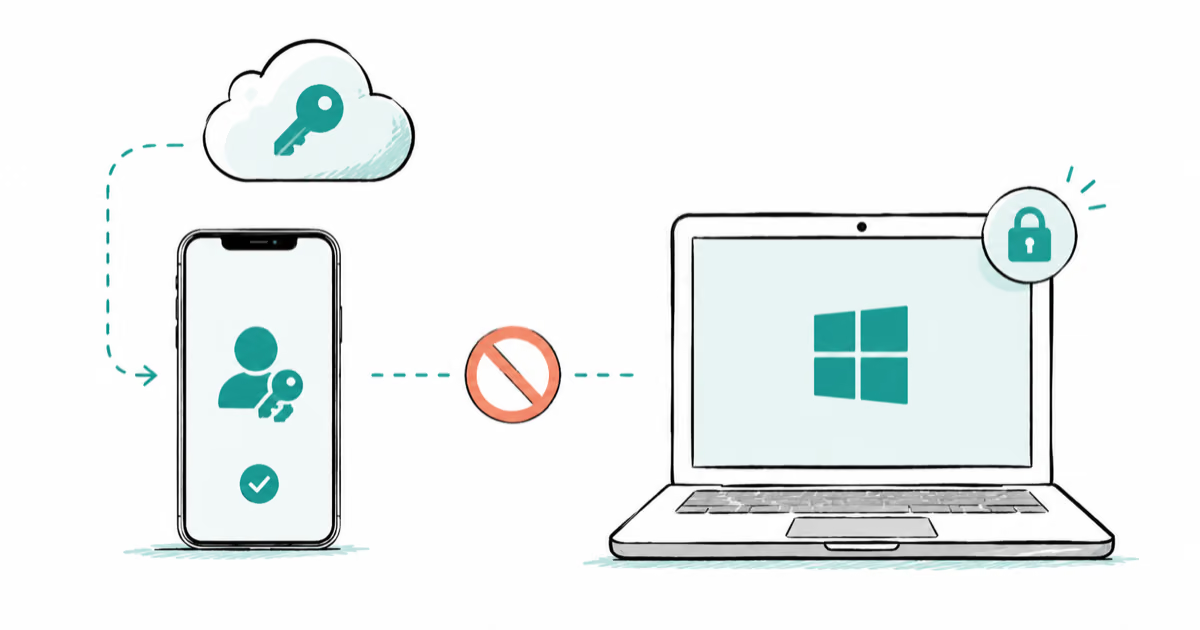
Passkeys not syncing between iPhone and Windows is by design, not a bug. Here is why iCloud passkeys skip Windows Hello and the three ways to fix it.

VPN Not Working on Snapdragon X? Why It Fails, How to Fix
Your VPN won't install or connect on a Snapdragon X Copilot Plus PC because Windows on ARM can't emulate the network driver. Here are the fixes that work.

How to Check If a Link Is Safe Before You Click It
Learn how to check if a link is safe with official-first steps: read the real domain, use the app instead, and treat scanners as a second opinion only.