Can You Track a TextNow Number? What's Legal in 2026
Can you track a TextNow number harassing you? Learn the legitimate steps, what police can subpoena, and how to document evidence under US law.
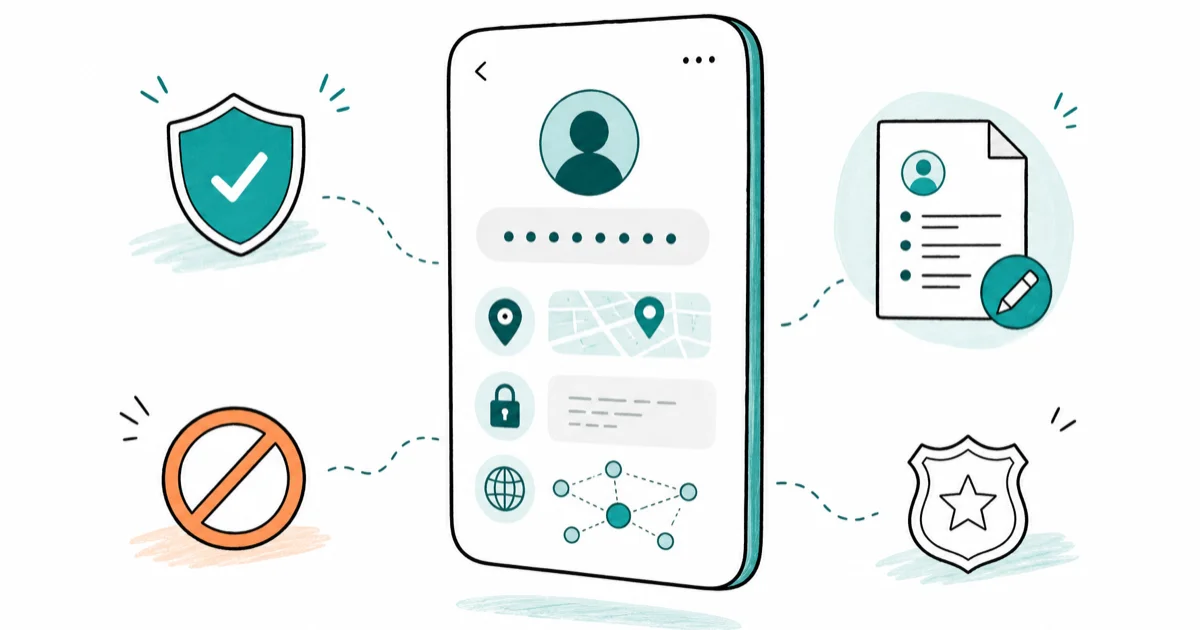
Quick AnswerYou can't directly trace a TextNow number yourself, but if it's harassing you, save every message, block the line, report it to TextNow and your carrier, and file a police report. Only verified law enforcement can subpoena TextNow for the account holder's IP, email, and registration data.
Asking whether you can track a TextNow number usually means a virtual number has been calling, texting, or threatening you, and you want to know who’s on the other end. The honest answer is that you can’t unmask the user yourself, but you do have a clear lawful path to identify them when the line is targeting you, your family, or your business.
A TextNow number can’t be traced to a real identity by a private user, no matter the platform. It can, though, be funneled into TextNow’s law-enforcement portal once the right report is filed.
- TextNow assigns free VoIP numbers tied only to an email, so private lookup tools can’t pull the account holder’s name on their own
- Only verified police, sheriffs, the FBI, or other agencies can subpoena TextNow for IP, email, and registration data
- Document harassment first: screenshots, voicemails, and call logs with timestamps form the evidence file police use to subpoena TextNow
- US stalking is illegal in all 50 states under 18 U.S.C. § 2261A, so persistent harassment from any TextNow line is a reportable crime
- Free tools like Truecaller can flag a line as VoIP and surface partial owner data from crowdsourced contacts without invading anyone’s account
#Your Right to Know vs. the Caller’s Privacy
Before you try to identify anyone behind a TextNow number, draw a clear line. A reverse phone search is only legitimate when you are documenting calls or messages directed at you, your family, or your business.
Threats aimed at your household, a scam targeting your small business, a debt collector you want to vet before paying, or a recurring spam pattern all fit the legitimate use case. What doesn’t fit: surveilling an ex, doxxing a stranger, monitoring a partner without consent, or compiling information about another person you have no relationship with. The simple test: are you the recipient of the calls, or are you trying to investigate someone who isn’t contacting you?
The legal stakes on the surveillance side are serious.
According to the US Department of Justice’s stalking page, federal law under 18 U.S.C. § 2261A makes repeated conduct intended to cause fear or substantial emotional distress a federal crime, and all 50 states have parallel statutes. If your reason for searching looks more like surveillance than self-protection, stop here.
Privacy law also matters on the carrier side. According to the FCC’s STIR/SHAKEN framework, US carriers have been required since June 30, 2021 to authenticate caller identity and reduce illegal robocalls. The rule helps you confirm whether a call is spoofed, but it doesn’t grant private individuals the right to unmask any number they choose.
Spoofing detection and identification are not the same thing.
Your rights kick in when the calls or messages are aimed at you. You can document them, block them, and report them. You don’t have the right to investigate strangers, and you don’t have the right to access another person’s account.
When in doubt, block the line and let police subpoena TextNow if real-world threats appear. The rest of this guide assumes your reason is in scope.
#Why Are TextNow Numbers Hard to Trace?
According to TextNow’s own product history, the service has been giving out free phone numbers since 2009, and they work over Wi-Fi or cellular without traditional carrier registration. Sign-up needs only an email, so the line you see on caller ID has no SIM, no billing record, and no permanent identity attached on the surface.
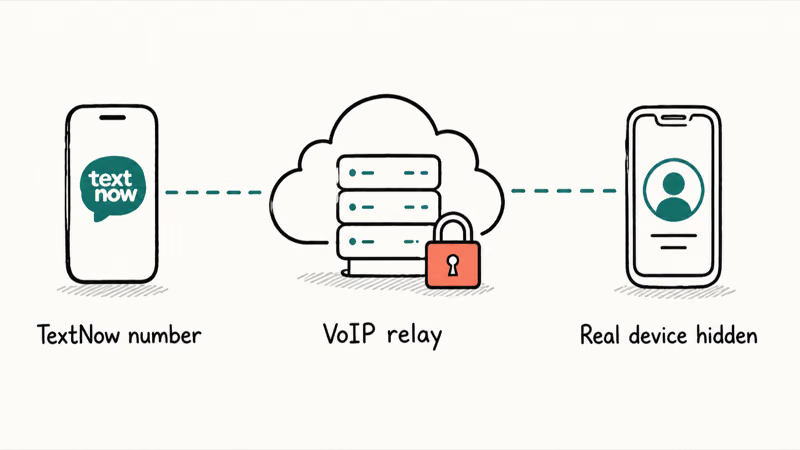
That’s the design, not a bug.
TextNow’s privacy policy confirms that the company still collects subscriber data including IP addresses, device fingerprints, and account registration emails. It releases that information only when served with a valid legal order such as a subpoena, court order, or search warrant. Regular users, journalists, and private investigators can’t pull this data directly. That’s why the legitimate workflow runs through police.
According to the FCC’s official VoIP page, VoIP providers must cooperate with traceback requests for illegal calls, but that process flows through registered law-enforcement channels. Even when a TextNow line is clearly abusive, your direct route is to file a report and let the FCC, the FBI, or local police pursue the data. The same channel handles other VoIP services like TextFree, which is structurally similar.
#What Should You Do First If a TextNow Number Is Harassing You?
The first 24 hours matter most. Move in this order: document, block, escalate.
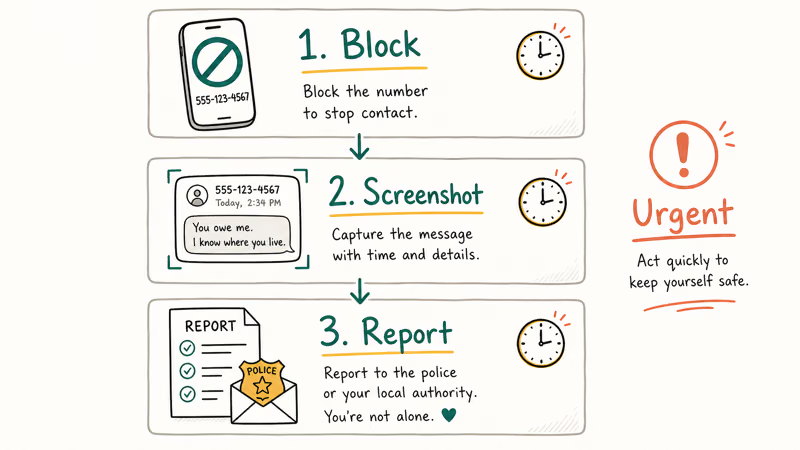
Save evidence before doing anything else. Open every message thread and screenshot it with the timestamp and the full number visible. Export voicemails by tapping the share icon on iPhone (Phone > Voicemail > tap message > share) or by long-pressing the voicemail on Android.
Write down a one-line note for each incident. Date, time, what happened, how it made you feel. According to TextNow’s law enforcement information page, verified police, sheriff, FBI, or other agencies can request raw account data through their portal, and your evidence file is the foundation of that request.
Treat the notes like a logbook, not a diary.
Block the number on your own phone next. On iPhone, open the Phone app, go to Recents, tap the info icon, and choose Block this Caller. On Android, long-press the number in your call history and select Block. You can also report the number from inside the TextNow conversation thread.
If new TextNow lines keep appearing, a dedicated call blocker for Android adds a second layer that filters by pattern.
Then escalate to people with authority to act. File a non-emergency police report and bring your evidence file. If the threats are credible or in real time, call 911 instead. For purely financial scams, file with the FTC at reportfraud.ftc.gov so the pattern feeds federal databases.
#Documenting Evidence for Police or a Subpoena
Format matters more than volume.
Police can subpoena TextNow once they open a case, but they need a clean evidence package to justify the request. Detectives generally ask for the file laid out in a specific format.
- Number and dates: the full TextNow line, plus every date and time you were contacted. A single annotated spreadsheet beats a wall of screenshots
- Screenshots: every message with the number, the message body, and the timestamp visible. Don’t crop the header
- Voicemails: the original audio file exported from your phone, plus a one-sentence transcript per message
- Call log: screenshots from your phone’s Recents tab showing missed calls or call durations
- Context: a one-page summary stating who you are, why you believe you are being targeted, and any relationship history (if applicable)
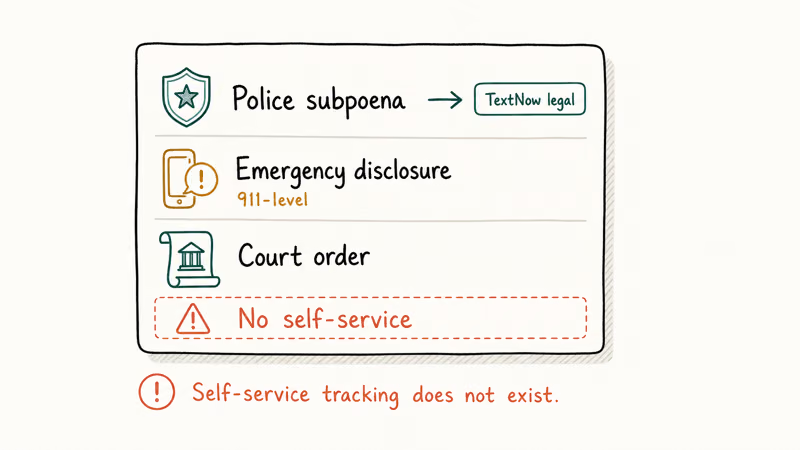
The same law enforcement page confirms that TextNow processes subpoenas, court orders, and search warrants through a verified portal. Once the agency submits the request, TextNow can return the account holder’s IP address, registration email, and device metadata. That data is what eventually identifies a real person.
#Legitimate Methods to Identify a TextNow Caller
Some non-invasive checks can give you a starting clue before police get involved. Each uses public data only, not anyone’s account.
#Search the Number on Google
Put the full TextNow number in quotation marks and search Google. The quotes force an exact-match search. If the owner ever posted the number on a forum, classified ad, business directory, or personal site, it surfaces.
This sometimes returns a match, such as a Craigslist listing with a first name or an entry in a small-business directory. The check costs nothing and takes only seconds.
Start here before anything paid.
#Cross-Reference With Truecaller and Reverse Lookup Tools
Truecaller’s crowdsourced database often labels VoIP numbers and shows partial owner data when other users have saved the number to their contacts. A line that other people have saved to their contacts can return at least a partial name.
Brand-new TextNow lines with no contact history won’t surface here.
A standard caller ID app on either iPhone or Android handles this for free. For deeper public-records data, our full TextNow number lookup walkthrough covers BeenVerified, Spokeo, and Intelius with realistic costs.
#Search Social Media by Number
People often link a VoIP number to a Facebook, Instagram, or LinkedIn profile and forget to make the field private. Type the TextNow number into each platform’s search bar.
LinkedIn rarely matches VoIP lines.
Our social media phone-number guide explains which platforms still expose matched accounts and which ones quietly removed the feature. This is the same logic we apply when helping users find a person free of charge without paid services.
#Compare With SIM-Based Tracing
VoIP and traditional carriers are fundamentally different. If you suspect the line is actually a regular SIM that’s been ported, the techniques for SIM-card tracing apply instead.
TextNow lines don’t have a SIM at all, so SIM-side tools won’t help.
#What TextNow Will (and Won’t) Reveal
TextNow is bound by US privacy law and the company’s own published policy. It won’t share user information with you, an attorney, or a private investigator.
Verified law enforcement is the only exception.
The law enforcement information page confirms that the company shares data only when it receives a valid subpoena, court order, or search warrant from a verified agency.
What law enforcement typically receives:
- The registration email on the account
- IP addresses tied to login sessions, with timestamps
- Device fingerprint metadata (operating system, app version, sometimes carrier of underlying cellular data)
- Account creation date and any TextNow communications history
What TextNow won’t release to private users or under informal requests:
- Real name, unless the user voluntarily provided it
- Home address
- Payment data (the free tier doesn’t collect this)
- Live location
The gap between “what’s on TextNow” and “what police can act on” is bridged by the subpoena, not by clever lookup tricks. The fastest path to identifying a harassing caller is also the most boring one: document well, report once, and let the agency drive.
#Bottom Line
Skip the DIY tracing fantasies.
If a TextNow number is harassing or scamming you, save every message, block the line on both iPhone and Android, report it inside TextNow, then file a police report with your evidence file. Add an FTC report at reportfraud.ftc.gov for any financial-scam angle. The subpoena path is the only one that legally identifies the user, and police can request it the day you open the case.
If you only want to confirm whether the line is VoIP or vet a small-business contact, run the free Google and Truecaller checks first. They resolve a meaningful share of cases without anyone’s data being touched. Anything more invasive than that means you’re crossing into surveillance, which isn’t what this article supports.
#Frequently Asked Questions
Can a private person legally trace a TextNow number?
No. Only verified law enforcement can pull account data from TextNow, and only with a subpoena, court order, or search warrant.
What information will TextNow give to police?
Once it receives a valid subpoena, court order, or search warrant from a verified agency, TextNow can release the account registration email, IP addresses tied to login sessions with timestamps, device fingerprint metadata, the account creation date, and the user’s TextNow communications history. The free tier typically doesn’t collect payment data, so a real legal name isn’t guaranteed in every case. Investigators usually combine the IP and device data with carrier records to identify the person behind the line.
Is it illegal to track someone’s TextNow number without consent?
Yes, in most cases.
Repeatedly tracking, monitoring, or surveilling another person without authorization can fall under federal stalking law at 18 U.S.C. § 2261A and parallel state statutes. The same conduct can also violate computer-fraud and privacy laws depending on how the data is obtained.
How long does a TextNow subpoena response take?
Standard subpoenas typically take days to weeks. Emergencies involving credible threats can be expedited.
What if the harassing TextNow user keeps switching numbers?
Document each new number the same way you documented the first one, with timestamps and screenshots intact. The pattern itself becomes evidence and often makes the case stronger, not weaker.
Bring the full list to police as one annotated spreadsheet. A single subpoena can sometimes target an account that’s tied to all the lines if the abuser kept reusing the same email or device fingerprint, and police can also issue separate subpoenas in the same case file.
Can Truecaller or BeenVerified bypass TextNow’s privacy?
No. These tools index public records and crowdsourced contact data, so they only surface what the owner already exposed online.
Does the FCC’s STIR/SHAKEN rule unmask TextNow callers?
Not directly.
STIR/SHAKEN authenticates whether a caller ID is spoofed, which helps your carrier label or block suspicious traffic. It doesn’t give you the user’s identity. For that, the subpoena route through TextNow’s law-enforcement portal is still required.
What should I do if I think the calls are tied to identity theft?
Move on three fronts the same day if you can. Report the calls to reportfraud.ftc.gov, place a fraud alert with Equifax, Experian, and TransUnion, then file a police report with your TextNow evidence file.
If money was moved, notify your bank’s fraud department within 24 hours so card or transfer protections can apply.
Google Messages Error 3100: Why RCS Is Broken on Galaxy
Google Messages RCS error 3100 hits Galaxy owners after phone or carrier switches. Google told 9to5Google a fix is coming. Here's what actually helps.

Is This Bank App Real? Spot a Fake App on Your Home Screen
A bank app can land on your home screen from a web page with no install warning. Learn the checks that tell a real banking app from a phishing web app.
Apps Crashing After iOS 27 Update? Fix Order (2026)
Apps crashing after the iOS 27 update? Update the app in the App Store first, then offload and reinstall to clear stale cache, then restart. The fix order.

Do AI Translation Earbuds Work Offline? What to Know
Do AI translation earbuds work offline? A few do with downloaded language packs, but most need the cloud. Here's what works offline and what you give up.