How to Know If Your Snapchat Is Hacked (And Fix It)
Spot signs your own Snapchat is hacked, recover the account through official channels, and lock it down with 2FA. Login alerts, resets, and support.
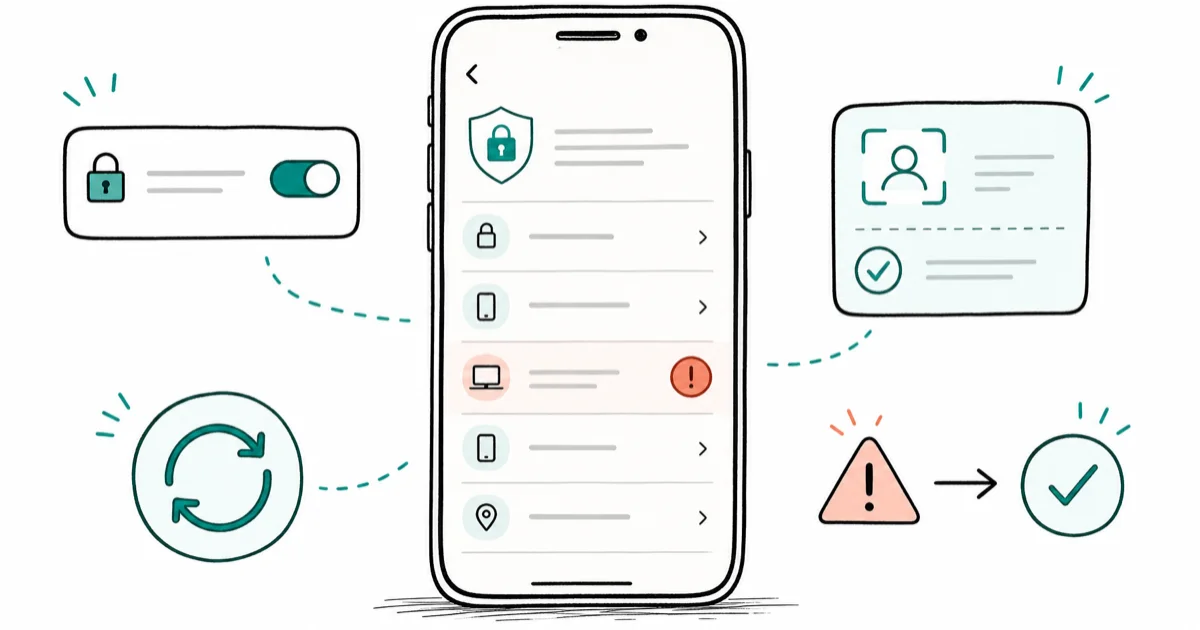
Quick AnswerCheck Settings > My Data > Login History for devices you don't recognize. If you see unknown logins, change your password immediately and enable two-factor authentication.
- Unknown logins, password changes, and messages you didn’t send are the biggest red flags
- Change your password and enable two-factor authentication the moment you suspect a breach
- If you’re fully locked out, Snapchat’s account recovery form is the fastest way back in
- Most Snapchat hacks happen through phishing links, reused passwords, or third-party apps
- Regularly reviewing your login history takes 30 seconds and can catch problems early
This guide is for recovering your own Snapchat account after a suspected compromise. It’s not a how-to for breaking into someone else’s profile. Accessing an account that isn’t yours is illegal under laws like the U.S. Computer Fraud and Abuse Act, so everything below assumes the account in question is yours.
If your account is acting strange, the fix follows a simple playbook: confirm the hack, lock things down, harden what’s left, and document anything suspicious in case you need to involve Snapchat support or law enforcement later. We walk through every step, from the early warning signs to a full identity-verification recovery when both your email and phone number have been changed.
#How Can You Tell If Your Snapchat Is Hacked?
Not every glitch means someone broke in. If you notice more than one of these signs, act fast.
#You’re Getting Logged Out Randomly
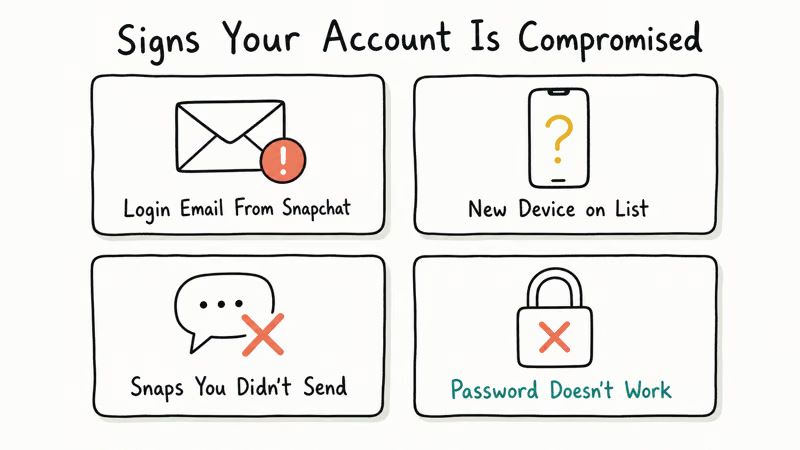
Snapchat only allows one active session at a time. If someone else signs in with your credentials, you get kicked out. A single random logout might just be a server hiccup. Repeated logouts when you haven’t changed devices, though, are a clear suspicion.
#Messages or Snaps You Didn’t Send
Friends asking why you sent them a weird link or a random snap? That’s a classic sign. Hackers often use compromised accounts to send phishing links to your entire contact list, just like they do with hacked Discord accounts.
#Your Email or Phone Number Changed
If Snapchat sends you a notification that your email or phone number was updated and you didn’t do it, someone else already has account-level access. This is the most serious red flag in the entire list, because it usually means the attacker is racing to lock you out permanently before draining your saved Memories, mining the account for OAuth tokens, or pivoting into any linked service that trusts your Snap login.
#Unknown Devices in Your Login History
This is the most reliable check. Go to Settings > My Data > Login History and look at every device and location listed. If you see a device you don’t own or a city you’ve never been to, your account has been accessed.
The login report lists each session with an IP address, an approximate city, and the device user-agent string, which makes a strange out-of-country entry easy to spot at a glance.
#New Friends You Didn’t Add
Check your friends list for accounts you don’t recognize. If your Snapchat Quick Add suggestions changed, investigate.
#Snap Score Changed Dramatically
A sudden jump in your score when you haven’t been active means someone else is using your account to send snaps. Even a small unexplained increase is worth checking.
#How Do You Recover a Hacked Snapchat Account?
Speed matters. The longer a hacker has access, the more damage they can do.
#If You Can Still Log In
You’re in the best position. Do this right now:
- Open Snapchat and tap your profile icon
- Tap the gear icon to open Settings
- Tap Email and verify it’s still yours; change it back if it has been altered
- Tap Mobile Number and verify the same
- Go to Password and change it to something strong and unique
Use a password with at least 12 characters that mixes uppercase letters, lowercase letters, numbers, and symbols. Don’t reuse a password from any other service. A password manager like 1Password or Bitwarden makes this painless.
#If You’re Locked Out
If the hacker changed your password and you can’t log in:
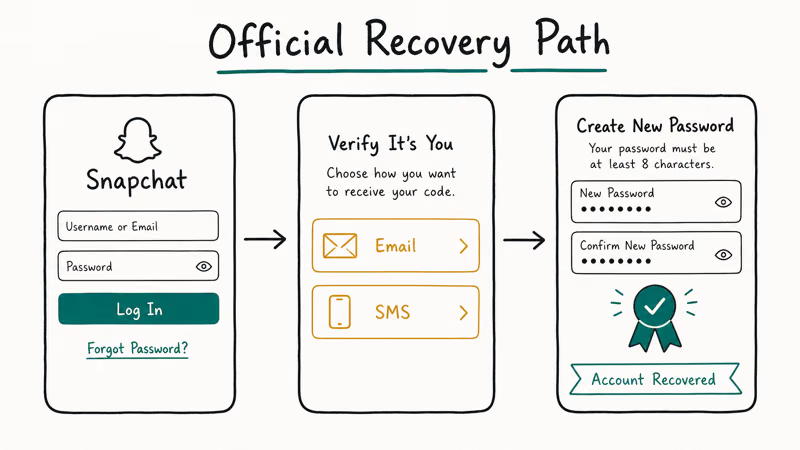
- On the login screen, tap Forgot your password?
- Choose to reset via email or phone number (whichever one hasn’t been changed)
- Follow the reset link or enter the verification code
- Set a new, strong password immediately
If both your email and phone number were changed, you’ll need to go through Snapchat’s account recovery page. You’ll need to verify your identity, which may include providing the original email, phone number, or other account details.
#Contact Snapchat Support
When self-service recovery doesn’t work, contact Snapchat’s support team directly. Select the My account is compromised option and provide as much detail as you can:
- Your username
- The email and phone number originally on the account
- The approximate date your account was created
- Device model you typically used
According to Snapchat’s hacked account help article, the team needs to verify ownership before resetting credentials, which is why specifics like the original sign-up email and rough creation year matter. Check your spam folder for the reply.
After you’re back in, take a few minutes to review your account. Check if the hacker changed your Snapchat private story settings, deleted saved messages, or messed with your Memories.
If your Snapchat streaks were lost during the incident, you can try to get them restored.
#Enable Two-Factor Authentication
Two-factor authentication (2FA) is the single best thing you can do to protect your account. Even with your password, an attacker still can’t sign in without the second code.
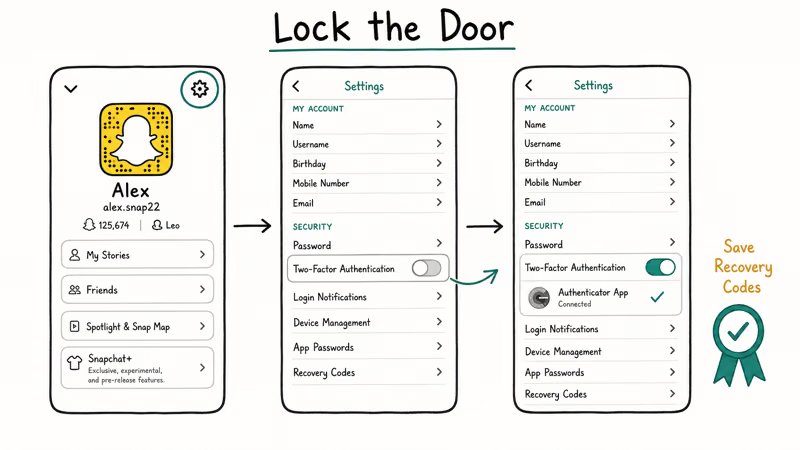
Here’s how to set it up:
- Open Snapchat and go to Settings
- Tap Two-Factor Authentication
- Choose your method: Text Verification (SMS) or Authentication App
- Follow the prompts to complete setup
According to Google’s 2019 account-security research, adding a recovery phone number alone blocks 100% of automated bot attacks and 99% of bulk phishing attempts targeting consumer accounts. On-device prompts and authenticator apps pushed the bar even higher in the same study.
Snapchat’s official 2-Step Verification guide recommends using an authentication app rather than SMS, because SMS codes can be intercepted through SIM swapping. That’s the right call. Switching from SMS to an app like Google Authenticator adds only a few seconds to each login but removes the largest practical attack against a Snapchat account.
After enabling 2FA, Snapchat issues a recovery code. Save it somewhere safe outside of Snapchat itself. You’ll need it if you lose access to your authenticator.
#Other Security Settings Worth Checking
Beyond 2FA, Snapchat has several settings that affect your account’s exposure.
#Review Connected Apps
Go to Settings > Connected Apps and remove any third-party apps you don’t recognize or no longer use. Shady “Snapchat utility” apps are a common entry point for hackers. If you’ve ever used a third-party app that asked for your Snapchat login, change your password immediately.
#Control Who Can Contact You
Under Settings > Contact Me, set it to My Friends instead of Everyone. This reduces phishing attempts from strangers.
#Limit Who Sees Your Story
Set your story visibility to Friends Only under Settings > View My Story. Public stories expose you to a wider audience, including potential attackers who use social engineering.
#Check Your Email Security Too
Your Snapchat account is only as secure as the email attached to it. If someone can access your email, they can reset your Snapchat password. Make sure that mailbox has its own strong password and 2FA. The same goes for your phone’s iCloud security code if you’re on iPhone.
#Legal and Privacy Boundaries for Account Recovery
Everything in this guide assumes the account in question is your own, or that you have explicit consent from the legitimate owner (for example, a parent helping a minor child you are legally responsible for, or an employer recovering a clearly company-owned device).
Signing into a Snapchat account that isn’t yours is illegal in most jurisdictions, even when the target is a partner or ex who once shared the password with you. In the United States, that single act can violate the Computer Fraud and Abuse Act (CFAA), most state computer-trespass laws, and the Stored Communications Act, which separately covers reading any stored private message without authorization from the account holder.
In the EU and UK, the same conduct lands under GDPR and the Computer Misuse Act 1990. The U.S. Department of Justice’s CFAA charging policy notes that convictions can include both fines and federal sentences of up to 5 years per count, and the penalty stacks per affected account.
Snap’s own Privacy Center and Community Guidelines state that account credentials must not be shared and that impersonation is grounds for permanent suspension.
If you suspect a stalker or ex is the one inside your account, save screenshots of unfamiliar logins and messages before changing anything. Then report the situation to Snapchat and, in serious cases, file a report with your local police or the FBI’s IC3. Don’t try to “hack back,” because that crosses the same line.
#What Hackers Actually Do with Snapchat Accounts
Understanding why accounts get hacked helps you take the threat seriously.
Phishing distribution. Your friends trust messages from you. Attackers exploit that trust by sending links to phishing sites or malware downloads from your account. It’s the same tactic used across Instagram and other social platforms.
The Federal Trade Commission’s consumer-protection data confirms that imposter scams remain one of the top reported fraud categories in the United States, with social-media accounts as a primary delivery channel. Social-media-based scams drained a large share of those losses, and a hijacked Snapchat profile fits the textbook pattern: trusted sender, urgent message, link with a payload, and a friends list of believable next victims for the same play.
Blackmail and extortion. If you have private photos or conversations saved, hackers may threaten to share them unless you pay. Never give in. Report them to Snapchat’s safety team and local law enforcement.
Account sales. High-Snap-Score, OG-username, or aged accounts get sold on underground markets.
Spam and scam campaigns. Hacked accounts get added to bot networks that send crypto scams, fake giveaways, and other junk to as many people as possible before getting flagged.
Identity fraud. With access to your Snapchat, an attacker can impersonate you, contact your friends for money or personal information, and build enough data to target your other accounts. Snap’s own transparency reports state that the platform takes action against millions of accounts each half-year for spam, impersonation, and other abuse, which is proof that the abuse pipeline is industrial-scale.
#Bottom Line
For your own account, Snapchat hacks are fixable, and most of the time you can recover within hours.
The key steps are always the same: change your password, verify your email and phone number, and turn on two-factor authentication. If you’re locked out completely, Snapchat’s support team can help, so be patient with the verification process.
The best defense is prevention. Use a unique password, enable 2FA with an authenticator app (not SMS), and never log into Snapchat through third-party apps or suspicious links. Two minutes on these settings now saves you the headache of dealing with a compromised account later — and keeps your recovery efforts firmly on the right side of the law.
#FAQ
#How do I check if someone else logged into my Snapchat?
Go to Settings > My Data > Login History. This shows every device, IP address, and location that accessed your account. If anything looks unfamiliar, change your password right away and enable 2FA.
#Can someone hack my Snapchat without me knowing?
Yes, but the takeover almost always leaves visible tracks. Random logouts, messages you didn’t send, sudden Snap Score jumps, and changes to your email or phone number are the most common indicators that someone else is using your account. Reviewing your Login History every couple of weeks is still the most reliable way to catch unauthorized access before the attacker rotates your credentials.
#Will Snapchat notify me if someone tries to log into my account?
Snapchat sends notifications when your password is changed, when your email or phone number is updated, and when a new device logs in. Make sure your notification settings are enabled so you don’t miss these alerts.
#How long does it take to recover a hacked Snapchat account?
If you can still access your email or phone number, you can reset your password and recover your account in minutes. If the hacker changed both, you’ll need to work with Snapchat support, which typically takes a few days while they verify your identity.
#Does two-factor authentication really protect my account?
It’s by far the most effective single setting available. Even if an attacker has phished your password, they still can’t log in without the second verification code generated on a device they don’t physically hold. Use an authenticator app rather than SMS for the strongest protection, since SMS codes can be intercepted through SIM swap attacks at the carrier level.
#Can third-party Snapchat apps hack my account?
Yes. Snapchat’s API doesn’t support third-party logins, so any app asking for your credentials is unsafe.
#What should I do if the hacker is blackmailing me with my Snapchat data?
Don’t pay or engage with the hacker. Screenshot any threatening messages as evidence, then report the situation to Snapchat and file a report with your local police. You can also report online extortion to the FBI’s IC3 if you’re in the United States.
#How do hackers get Snapchat passwords in the first place?
The most common methods are phishing (fake login pages), credential stuffing (trying passwords leaked from other sites), and malware on the victim’s phone. Reusing passwords across services is the biggest vulnerability. If your password for any site appears in a public data breach, attackers will try it on Snapchat, Instagram, Discord, and every other platform within hours of the leak hitting credential-stuffing markets.
Is This Bank App Real? Spot a Fake App on Your Home Screen
A bank app can land on your home screen from a web page with no install warning. Learn the checks that tell a real banking app from a phishing web app.
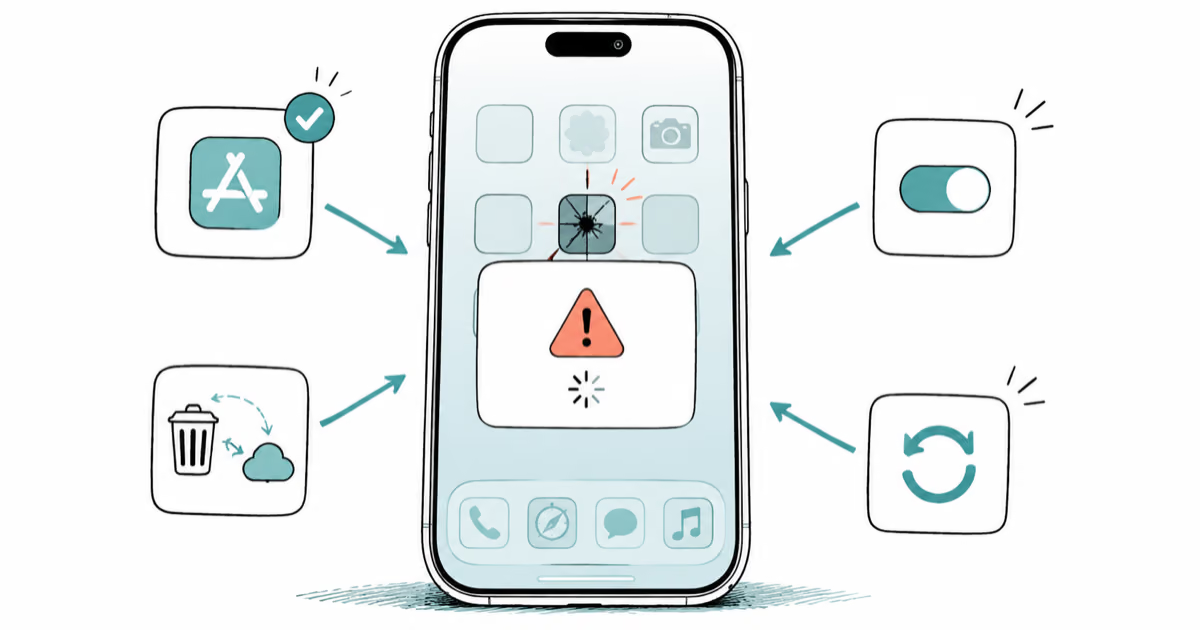
Apps Crashing After iOS 27 Update? Fix Order (2026)
Apps crashing after the iOS 27 update? Update the app in the App Store first, then offload and reinstall to clear stale cache, then restart. The fix order.
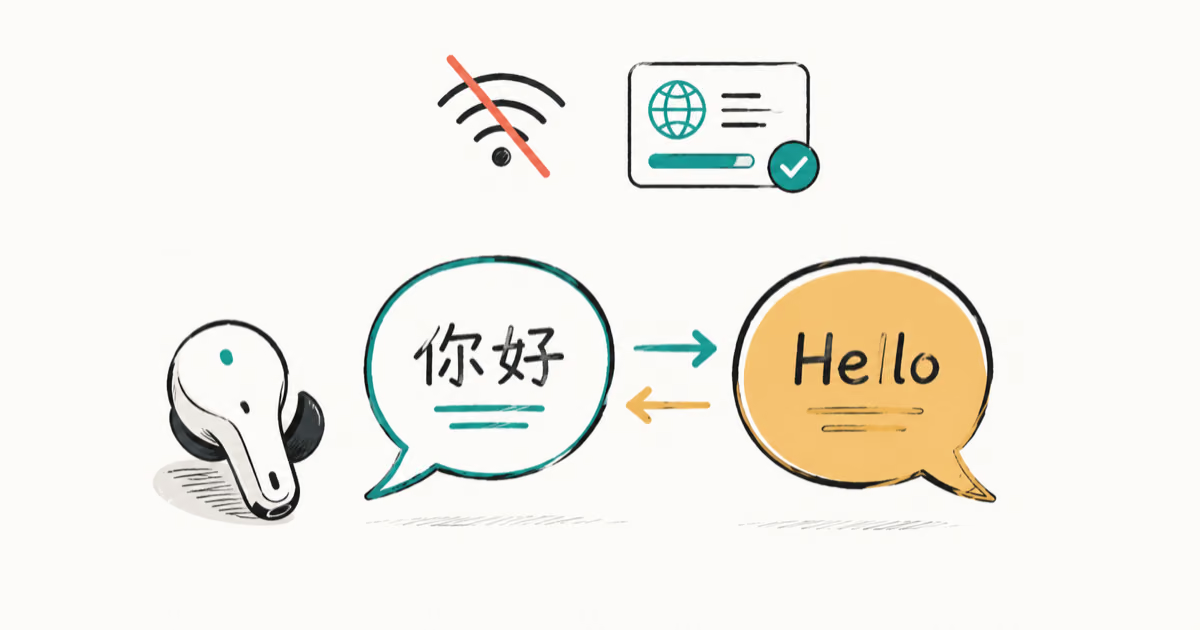
Do AI Translation Earbuds Work Offline? What to Know
Do AI translation earbuds work offline? A few do with downloaded language packs, but most need the cloud. Here's what works offline and what you give up.
How to Set Up Translation Earbuds (Pairing and Modes)
How to set up translation earbuds: charge, install the app, pair over Bluetooth, pick two languages, and choose a mode. A step-by-step first-use guide.