Snapchat Quick Add: How It Works and How to Turn It Off
Snapchat Quick Add suggests friends from mutual contacts, synced address books, and shared location. Turn it off in Privacy Controls in 30 seconds.
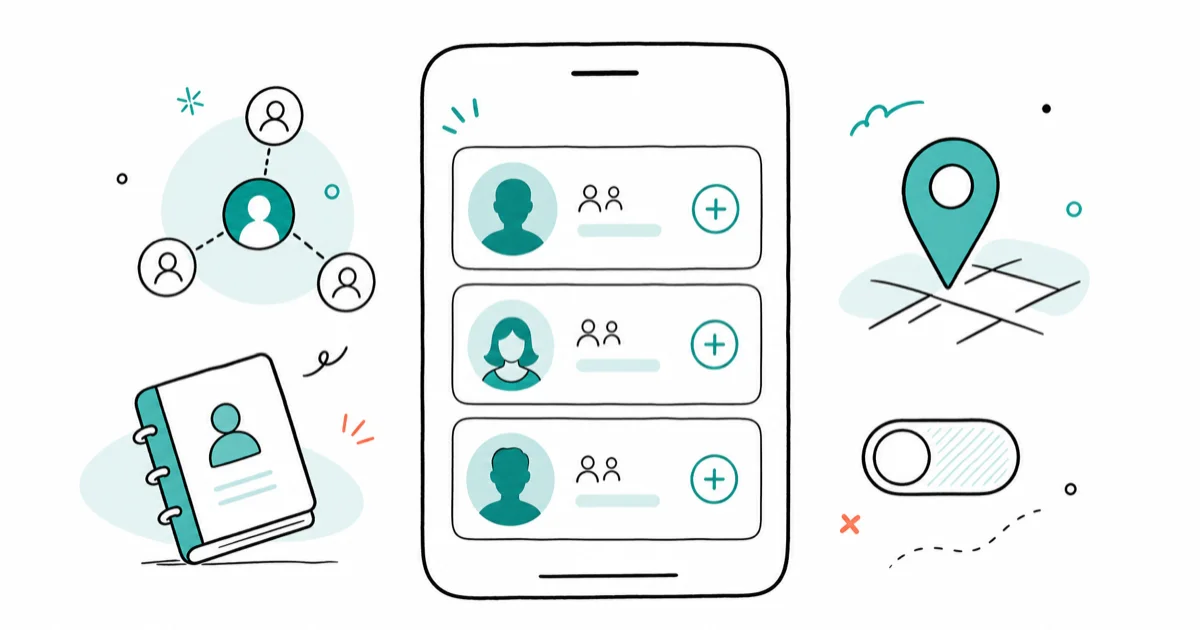
Quick AnswerSnapchat Quick Add is a friend suggestion feature that uses mutual friends, synced contacts, and location data to recommend new connections. Turn it off in Settings > Privacy Controls > See Me in Quick Add.
Snapchat Quick Add pushes suggested friends to your Add Friends screen based on the connections, contacts, and patterns Snap Inc. has collected on you. It’s useful when you actually want to grow your network, and a privacy headache when you don’t. This guide walks through how Quick Add picks who shows up, the three settings that control your visibility, and the contact-sync toggle most people forget about.
- Quick Add ranks suggestions using mutual friends first, then contact-sync data, location, and recent in-app behavior
- Visibility lives at
Settings>Privacy Controls>See Mein Quick Add with three modes: Everyone, My Friends, or My Friends Except - Toggling See Me in Quick Add off removes you from every Quick Add list while still letting you see suggestions yourself
- Contact syncing in
Privacy Controls>Contact Syncingis the single biggest signal driving who finds you through Quick Add - Adjusting these settings takes under 30 seconds, and the visibility toggle applies as soon as you save it
#How Does Snapchat Quick Add Work?
Quick Add is the feed of “people you may know” that appears when you open Add Friends inside Snapchat. Each card shows a profile picture, username, and sometimes a context label like “3 mutual friends.” Tap Add to send a request, or hit the X to dismiss the suggestion.
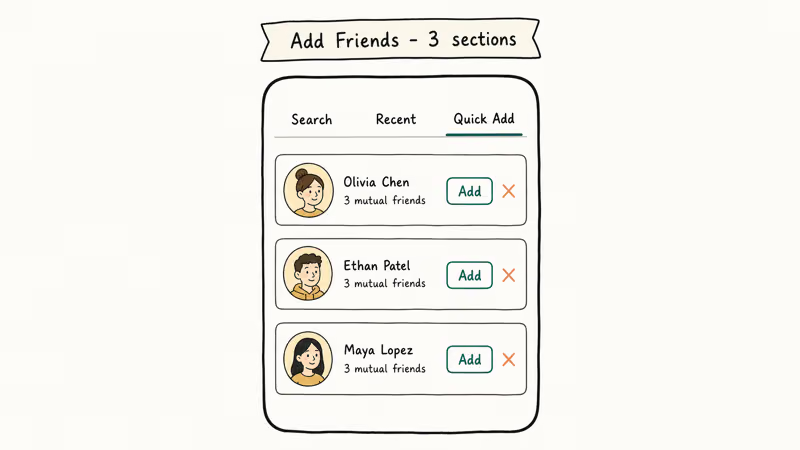
Dismissed accounts don’t reappear unless something changes.
Snap’s Add Friends help page states that Quick Add is 1 of 3 sections inside the Add Friends menu, alongside Search and Recent. The recommendation engine pulls from your existing Snapchat friends, your phone contacts (if you’ve granted access), and how you’ve been using the app recently. It then matches that profile against Snap Inc.’s user database to surface accounts you likely know or share interests with.
The recipient of your friend request never sees a “found you via Quick Add” tag.
By default, every Snapchat account is visible in Quick Add to a wide audience. If you’ve never touched the privacy settings, your See Me in Quick Add toggle is on and set to Everyone, which is the broadest possible audience and a common source of stranger-add complaints.
#How Snapchat Picks Your Quick Add Suggestions
Mutual friends carry the heaviest weight. If you and another user share three or more friends, you’re going to see each other in Quick Add unless one of you has the feature off. Snap’s recommendation engine compares your social graph against billions of others and ranks the overlap.
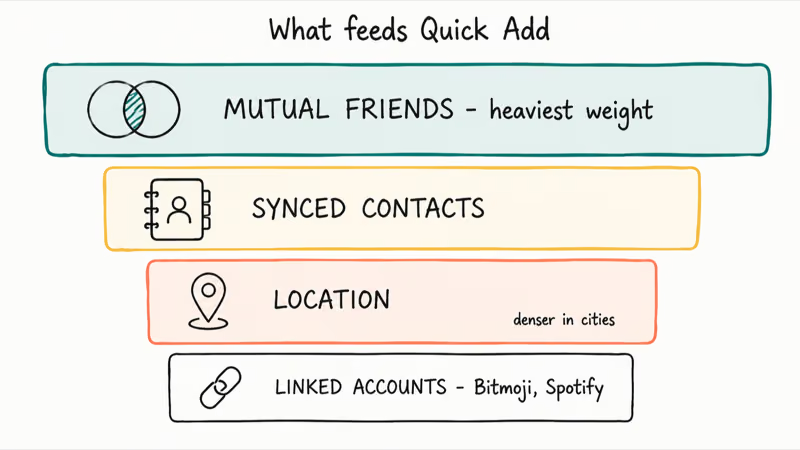
Synced contacts come second.
When you grant Snapchat access to your phone’s address book, the app uploads your contacts and matches phone numbers and email addresses against existing Snap accounts. That’s how someone you only ever texted in 2019 suddenly shows up as a Quick Add suggestion. Even old contacts you barely remember can resurface this way, because Snap retains uploaded contact data on its servers long after you stopped using those numbers.
Location adds another layer. Linked accounts (Bitmoji, paired Spotify activity, certain partner integrations) feed in too when they’re present on your account.
Users physically near you have a stronger chance of appearing, and the signal carries more weight in dense urban areas.
Even with Contact Syncing off, mutual friend on Snapchat suggestions appear.
#Where to Find the Quick Add Feature
Open Snapchat. Tap your profile icon in the top-left corner, then tap Add Friends. The screen loads tabs labeled Search, Recent, and Quick Add, with Quick Add scrolling vertically and refreshing a few times a day as new signals come in.
Some accounts show Subscribe instead of Add. That happens when the account is a Public Profile or a creator with subscriptions enabled. Subscribing follows their Stories and Spotlight content without making you a direct friend, which means you don’t appear on their Friends list and they don’t appear on yours.
If you’re trying to grow your own audience, our walkthrough on how to get subscribers on Snapchat covers the steps to flip your account to a Public Profile.
The dismiss button matters.
Tapping the X on a suggestion teaches the algorithm that you aren’t interested, and that account stops surfacing in your list, at least until your shared connection signals shift again.
#Can You Control Who Sees You in Quick Add?
Yes. Settings > Privacy Controls > See Me in Quick Add gives you three modes.
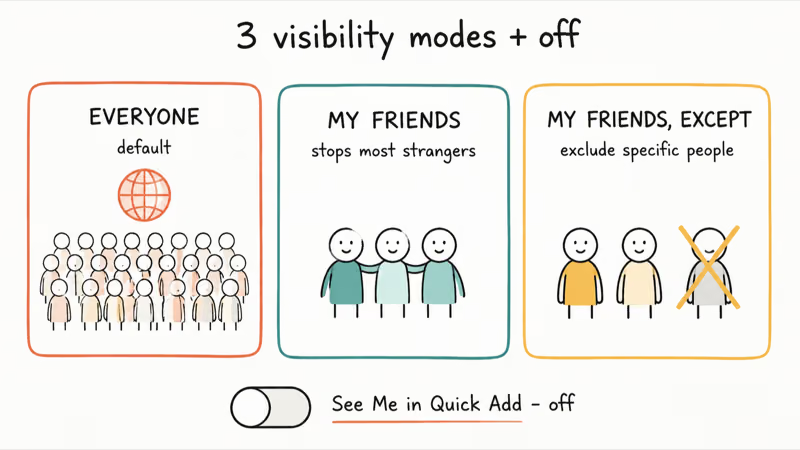
Everyone is the default. Your account is eligible to appear in any other user’s Quick Add list, anywhere in the world.
My Friends restricts visibility to people already on your Friends list. Strangers who share a mutual friend or have your number won’t see you. Most people who want to stop random adds use this option.
My Friends, Except lets you exclude specific friends from seeing you in Quick Add while keeping the rest of your Friends list. It’s the option most people skip, and it’s the one that matters if you want to stay invisible to a coworker, an ex, or a family member without unfriending them.
Toggling See Me in Quick Add off removes you from every Quick Add list on the platform. You’ll still see your own Quick Add suggestions, and your existing friend connections aren’t affected. The change applies at the account setting level rather than only on the device where you flipped the toggle.
#Why Contact Syncing Matters for Privacy
This is where most people accidentally leak their identity to Snapchat.
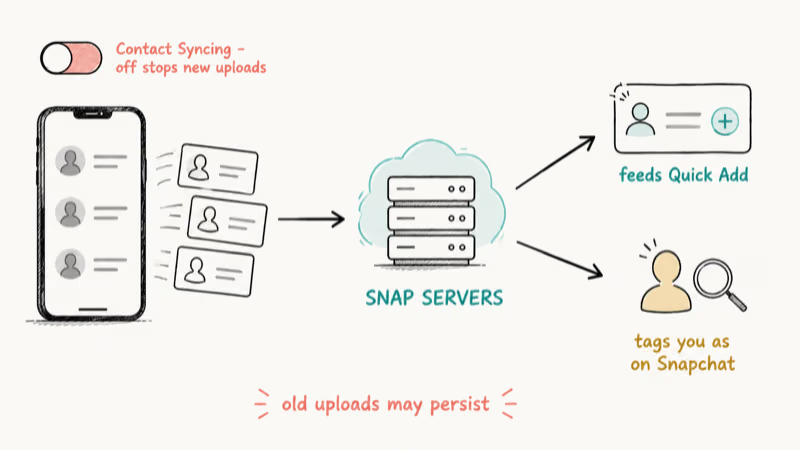
Settings > Privacy Controls > Contact Syncing controls whether the app uploads and matches your address book against Snap accounts. When syncing is on, Snapchat reads every phone number and email address saved on your device, sends them to Snap’s servers, and uses the matches in two ways: to feed Quick Add, and to tell other users with you in their contact list that you’re a Snapchat user.
Numbers from people you texted years ago, work contacts you saved once, anyone in your phonebook becomes Quick Add fuel.
According to Snapchat’s privacy policy, Snap Inc. uses contact information you upload for friend recommendations and to help others find you on the service. Disabling Contact Syncing stops new contact uploads, but Snap may still hold previously uploaded data on its servers. To request deletion, the policy points users to the Help Center’s account and data controls.
Apple’s App Privacy guidance recommends reviewing each app’s permissions whenever you update or reinstall. If you originally granted Snapchat contact access years ago, that permission is still active until you revoke it in iOS Settings > Privacy & Security > Contacts, or Android Settings > Apps > Snapchat > Permissions > Contacts.
#Stopping Random Quick Add Requests From Strangers
If strangers keep adding you, your See Me in Quick Add setting is almost certainly on Everyone. Switch it to My Friends, or turn the toggle off. The change is instant.
Random adds also happen when Snap matches old contact-list entries from someone else’s phone. A friend of a friend who once saved your number, for example, can still surface you in their Quick Add even if you yourself have Contact Syncing disabled. The cleanest fix is to set See Me in Quick Add to My Friends, which short-circuits the contact-match path on the receiver’s end.
For a deeper look at where unfamiliar adds come from, our breakdown of random Snapchat adds covers the four pathways strangers can use to find you and what each one needs to be turned off.
If a specific account keeps trying, block it.
Tap the profile, hit the three-dot menu, and choose Block. Blocked accounts can’t send friend requests, view your Stories, or appear in your Quick Add list. If the harassment is more serious or you suspect a compromised session, our guide to logging out of Snapchat covers how to disconnect a session quickly.
#Step-by-Step: Lock Down Your Quick Add Privacy
Run through these five steps in order. Each one closes a different leak.
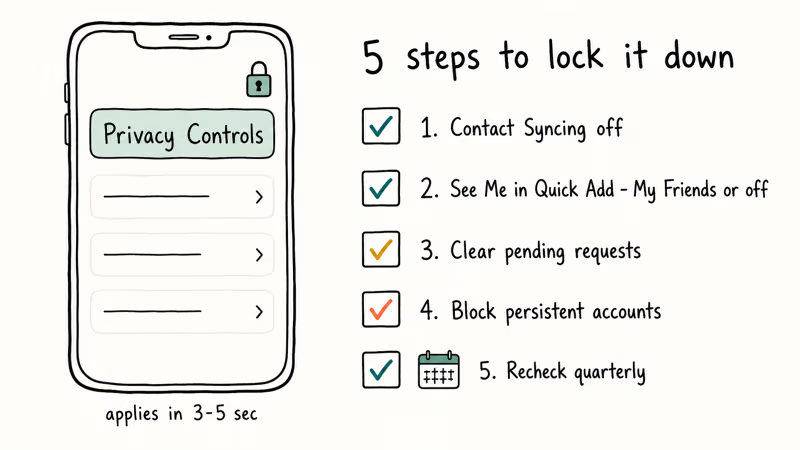
Step 1: Disable Contact Syncing. Open Settings > Privacy Controls > Contact Syncing and toggle it off. This stops new contact uploads.
Step 2: Limit Quick Add visibility. Open Settings > Privacy Controls > See Me in Quick Add and switch to My Friends, or toggle it off entirely. New users won’t find you through this feature.
Step 3: Clear pending friend requests. Open Add Friends and scroll to the pending requests section. Reject anything you don’t recognize.
Step 4: Block persistent unwanted accounts. From the harassing user’s profile, tap the three-dot menu and choose Block. Once blocked, they can’t send another friend request from that account, view your Stories, see your Snap Map location, or appear as a suggested contact in any future Quick Add list on your end.
Step 5: Recheck quarterly. Snapchat updates occasionally reset privacy defaults, especially after major version bumps. Set a recurring calendar reminder.
Snapchat doesn’t send a confirmation email for these settings; the toggle itself is the change.
#Bottom Line
If random adds are the problem, the fix is one toggle: Settings > Privacy Controls > See Me in Quick Add, then switch to My Friends or off. Pair that with disabling Contact Syncing in the same menu, and you’ve cut both the visibility path and the contact-matching path Snap uses to surface you to strangers. Skip the workaround posts that recommend deleting and recreating your account; your existing privacy controls already cover this.
#Frequently Asked Questions
Is Quick Add the same as Facebook’s People You May Know?
Not quite. Quick Add weights mutual Snapchat friends, synced contacts, and location data, while People You May Know also pulls workplace and education matches from your Facebook profile. Quick Add tends to be more accurate for people you actually know in real life because it draws from your phone’s contact list rather than open profile fields.
Can you see who added you through Quick Add specifically?
No. Snapchat doesn’t tag friend requests by source. A request from someone who found you through Quick Add looks identical to one from a username search, a Snapcode scan, or a contact match.
Does turning off Quick Add affect your Snap Score?
No. Snap Score is calculated from snaps sent and received, plus active streaks, as covered in our walkthrough on how to get a Snapchat streak back. Friend discovery method has zero impact on your score, your streak counts, or your visibility to existing friends. Turning Quick Add off only changes who can find you, not what you can do once you’re already connected.
Will people know if you ignore their Quick Add request?
No notification goes out either way. Ignored requests sit in your pending list until they expire, and the sender gets no indicator. If you want them to know, message them directly.
What happens if I turn Quick Add back on after disabling it?
Your previous visibility setting returns. If See Me in Quick Add was on Everyone before you toggled it off, it goes back to Everyone the moment you switch the toggle on. Snapchat doesn’t reset the sub-setting to a safer default, so check the mode before flipping the switch back.
Does Quick Add work the same on iPhone and Android?
The core mechanics are identical. iOS uses toggle switches, while Android often uses radio buttons inside Privacy Controls. The paths may vary slightly by app version, but the same privacy controls apply.
Can I delete contact data Snapchat already uploaded?
Disabling Contact Syncing stops new uploads, but previously synced contacts may remain in Snap’s systems unless you submit a deletion request. Snap’s privacy policy points to the Help Center’s account and data tools to request removal. The process generally takes a few business days, though Snap doesn’t publish a guaranteed turnaround.
Google Messages Error 3100: Why RCS Is Broken on Galaxy
Google Messages RCS error 3100 hits Galaxy owners after phone or carrier switches. Google told 9to5Google a fix is coming. Here's what actually helps.
Is This Bank App Real? Spot a Fake App on Your Home Screen
A bank app can land on your home screen from a web page with no install warning. Learn the checks that tell a real banking app from a phishing web app.
Apps Crashing After iOS 27 Update? Fix Order (2026)
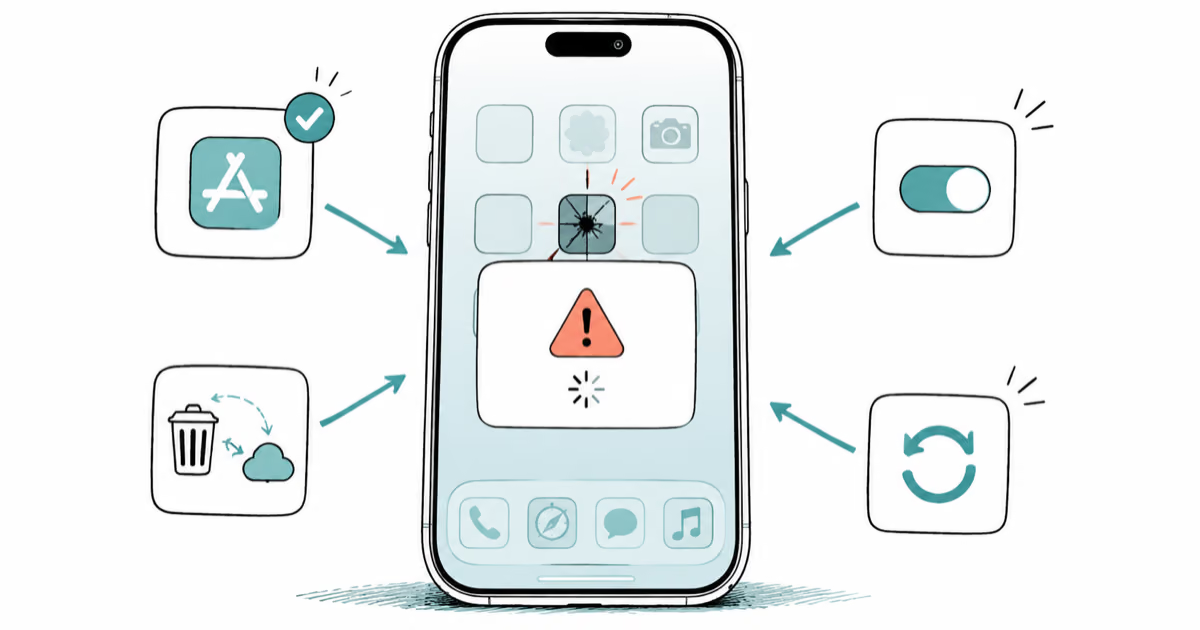
Apps crashing after the iOS 27 update? Update the app in the App Store first, then offload and reinstall to clear stale cache, then restart. The fix order.
Do AI Translation Earbuds Work Offline? What to Know
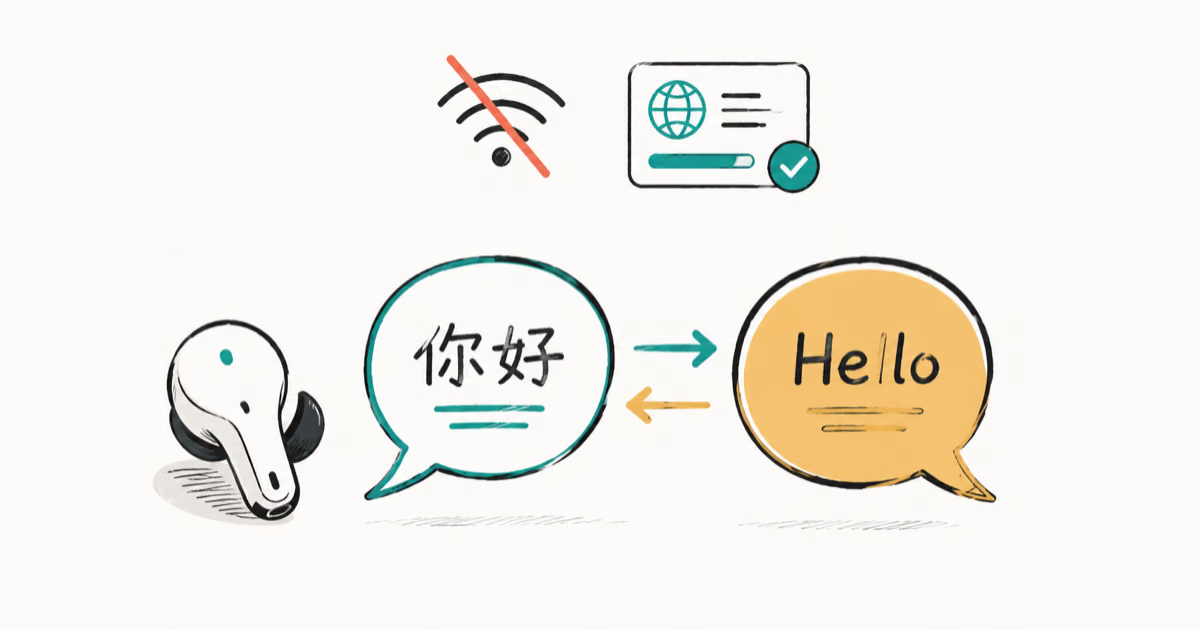
Do AI translation earbuds work offline? A few do with downloaded language packs, but most need the cloud. Here's what works offline and what you give up.