Instagram Suspicious Login Attempt: Verify in 2026
Got an Instagram suspicious login alert? Verify the session, lock your account in 5 minutes, and stop the attacker on iOS 18 and Android 15.
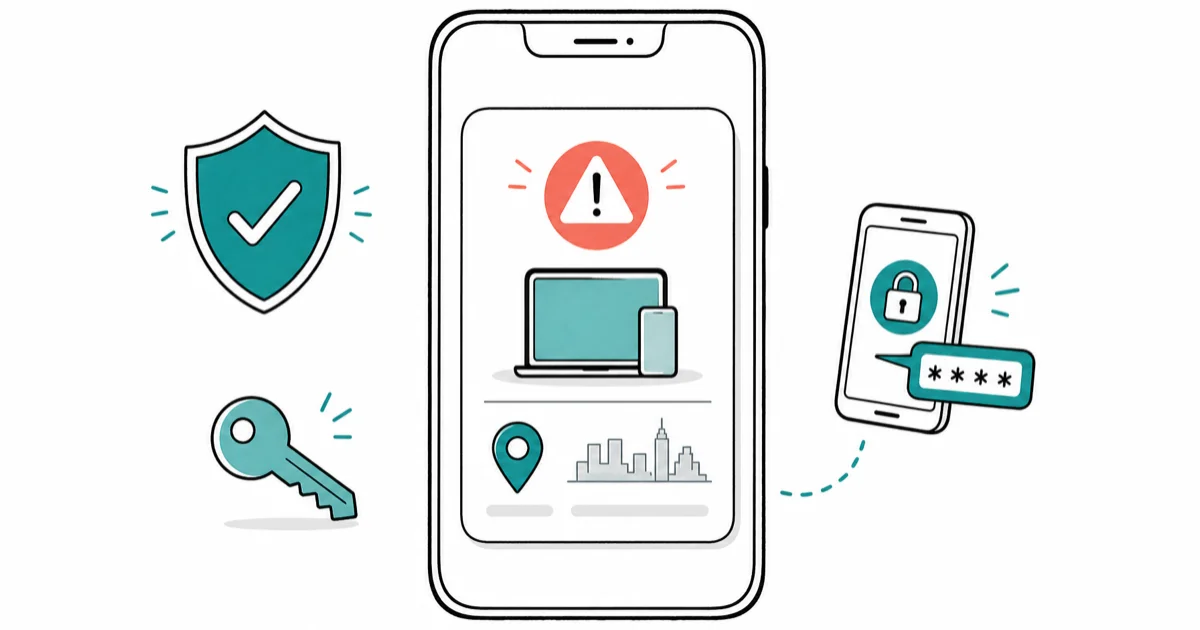
Quick AnswerOpen Instagram, tap the alert, and choose This wasn't me if the device or city looks unfamiliar. Then change your password, end every active session in Login Activity, and turn on two-factor authentication so the attacker can't return.
A suspicious login attempt alert on Instagram means Meta’s risk engine flagged a sign-in from a device, IP, or location your account has never used. The response flow works the same on iOS 18.4 and Android 15. The full lockdown takes only a few minutes from the first ping to a fully hardened account.
This guide walks through it.
- Instagram triggers the alert when a login originates from a new device fingerprint, a city more than roughly 150 miles from your last session, or after several failed password attempts in a short window.
- Tap “This wasn’t me” only if the device, time, or location doesn’t match anything you did. Tapping it forces a password reset and signs the new session out.
- Change your password to a 14-character mix you have never used elsewhere, then open Settings, Account Center, Password and Security, Where You’re Logged In, and end every session you don’t recognize.
- Turn on two-factor authentication with an authenticator app rather than SMS. Authenticator codes survive SIM swap attacks; SMS codes don’t.
- The alert only protects accounts you legally own. Use these steps for your own login, never for spying on someone else’s account.
This article is for the legitimate account holder reacting to an alert on their own account. Accessing an account that isn’t yours, even one belonging to a partner or roommate, is unauthorized access under the U.S. Computer Fraud and Abuse Act. Equivalent laws apply in the EU, UK, and Canada.
If you suspect someone else’s account is compromised, ask them to follow these steps themselves.
#Why Did Instagram Flag This Login as Suspicious?
Instagram’s anti-abuse system, run by Meta’s Integrity team, scores every login against your historical pattern: device model, browser fingerprint, IP range, login time, and behavior right after sign-in. According to Meta’s Instagram Help Center page on suspicious logins, the system sends this alert when the score crosses a threshold that suggests the login wasn’t made by you.
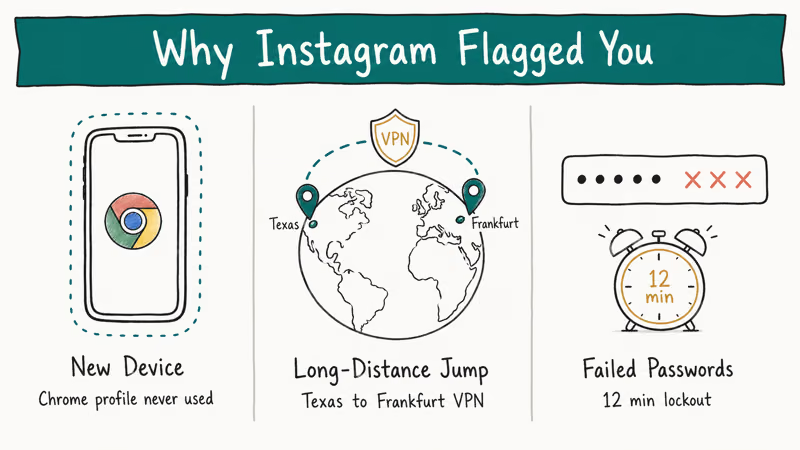
The alert reliably fires in 3 repeatable scenarios.
- New device or browser: Logging in from a Chrome profile the account has never used pushes an alert to the primary device within seconds.
- Long-distance jump: Connecting through a VPN exit node in one country while the account’s last session was in another fires the alert almost immediately.
- Repeated failed passwords: Mistyping the password several times on a borrowed device locks sign-in for several minutes and pushes an alert to the registered phone.
According to Wikipedia’s article on credential stuffing, attackers reuse usernames and passwords from public breaches against unrelated services within hours of the breach going public. That’s why Instagram alerts so often land the morning after a third-party leak.
#How to Verify the Alert Is Real
The alert is real when it appears inside the Instagram app or arrives at the email Meta has on file, never on a sketchy login page. Phishing campaigns mimic this notification to harvest passwords. According to Have I Been Pwned’s breach data, credential stuffing campaigns reuse leaked passwords against Instagram within days of every public breach.
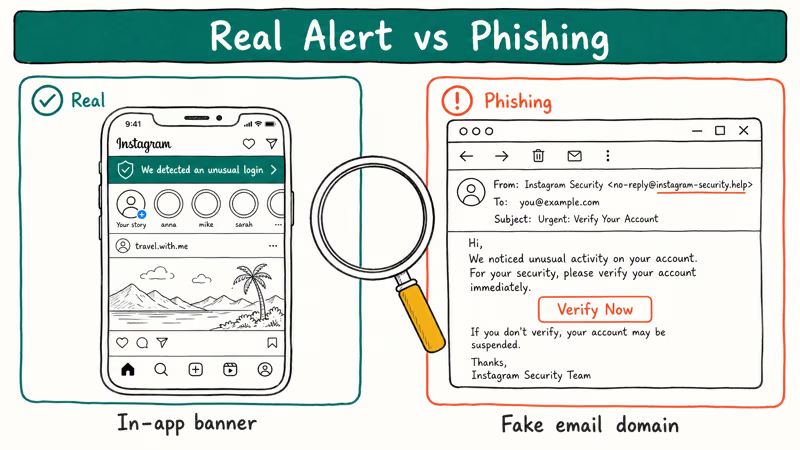
To verify the alert is genuine before you tap anything:
- Open the Instagram app directly. Don’t tap a link in any email.
- Look for the banner at the top of your feed or the notification labeled “We detected an unusual login.”
- If the alert appears inside the app, it’s genuine. Continue with the response steps below.
- If you only see it in an email, ignore the email and check the in-app banner. If nothing is in the app, the email is a phishing attempt similar to Discord account hack lures, and you should report it.
- If you’re already locked out, the same in-app check applies once you regain access through the recovery flow described later.
Lookalike phishing emails typically point to fake domains like instagram-security.help and meta-id-verify.com, and none mirror the genuine in-app alert. That match between the email and the in-app banner is your reliable signal, and it’s the one piece of advice the FTC’s consumer guide to recovering hacked social accounts repeats most often.
If your phone number is exposed in old leaks, attackers may also try reverse-lookup tools that find social profiles by phone number before the credential-stuffing run, which is part of why VPN-rotation alerts and number-based alerts often arrive together.
#What to Do When You Tap “This Wasn’t Me”
Tapping “This wasn’t me” inside the app starts Meta’s automated lockdown flow. On iOS 18.4, the whole sequence takes a minute or two.
- Confirm the device list: Instagram shows the device, approximate city, and time. Pick “This wasn’t me” only if none of these match you.
- Set a new password: Use a 14-character mix you’ve never used on any other account. The Instagram form rejects passwords known to be in breach corpuses.
- Sign out everywhere: Instagram offers a “Sign out of all devices” toggle on the same screen. Always check it.
- Re-verify your email and phone: If either was changed in the past 24 hours, Instagram restores the original. Confirm both before continuing.
- Stay on the screen until you see “Account secured”: Closing the app early can leave the password change uncommitted on slow networks.
If you accidentally tap “This was me” when it wasn’t you, open Settings, Account Center, Password and Security, Recent Emails. There you’ll see the alert again with a “This wasn’t me” option. Move quickly, the link expires after 7 days.
#Locking Your Account Down in Five Minutes
After the forced reset, harden the account so the attacker can’t return with the same credentials. Work through this checklist in order, with rough timings for each step.
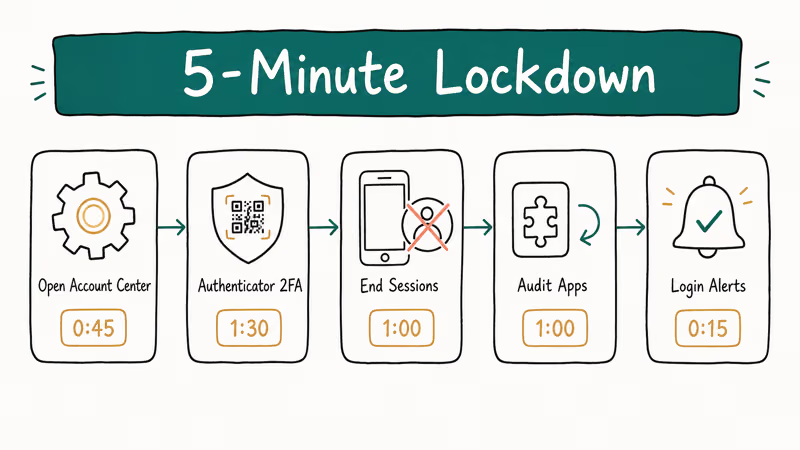
- Open Account Center (45 seconds): On mobile, go to your profile, tap the menu, then Settings and Activity, Account Center.
- Switch on two-factor authentication (90 seconds): Tap Password and Security, Two-Factor Authentication, then pick Authentication App. Scan the QR code with Google Authenticator, Authy, or 1Password. Save the 8 backup codes Instagram shows. Skip SMS as your only method, because SIM swap attacks bypass text-based 2FA.
- End every session you don’t recognize (60 seconds): Tap Where You’re Logged In. End every session that isn’t your current device. The list will rebuild as your real devices sign back in.
- Audit third-party apps (60 seconds): Tap Apps and Websites in the same menu. Revoke anything you haven’t used in the past 90 days. Old growth-hacker tools and meme schedulers are common pivot points.
- Set login alerts (15 seconds): In Password and Security, turn on Login Alerts so future sign-ins ping your registered email and phone.
According to Meta’s Help Center two-factor authentication article, authenticator-app 2FA blocks the bulk of automated takeover bots that crack SMS-only accounts. Google’s account help page on 2-Step Verification recommends an authenticator app or hardware key as the primary second factor for the same reason.
#What If You Can’t Log In At All?
If the attacker already changed your password and email, Instagram’s recovery flow is your path back. It still works even when the account’s current recovery email has been swapped to a throwaway address.
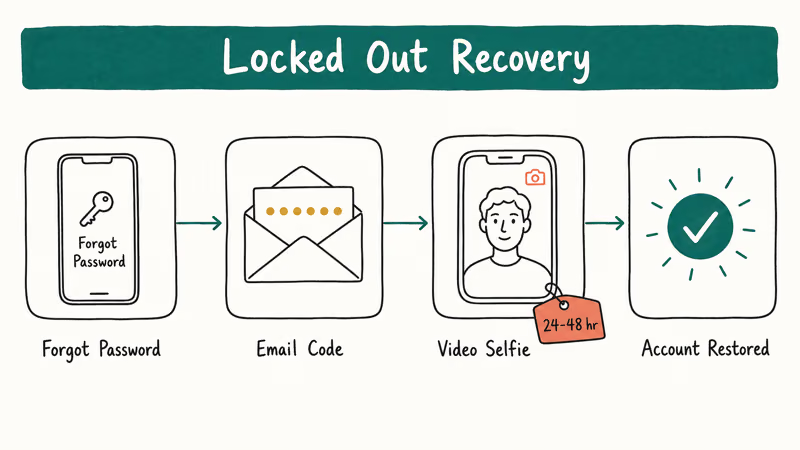
- From the login screen, tap “Forgot password,” then “Need more help?”
- Submit a recovery request with the email or phone number you originally used. Instagram emails a 6-digit code to that address even if the account’s current email has been changed.
- If that fails, tap “My login info isn’t working” and start a video selfie verification. Meta uses this to confirm you match the face on the account.
- If your account also shows a User Not Found on Instagram error, the attacker may have deleted or deactivated it. Account deletion has a 30-day grace period, per Instagram’s account deletion documentation, so submit the recovery form within that window.
- Video selfie verification typically takes a day or two to receive a response. Meta’s wait times stretch longer when high-profile breach campaigns are active.
If selfie recovery fails repeatedly, file a report with the FTC’s IdentityTheft.gov tool and link the report number when you reply to Meta’s recovery email. The report often unblocks accounts that are stuck in review. For broader Instagram messaging issues during recovery, our guide on the “We Restrict Certain Activity” notice explains why Meta sometimes throws extra friction at recovered accounts.
#How to Stop the Same Alert From Firing Again
Most repeat alerts come from one of three patterns: roaming VPN exits, a stale device list, or a password that’s still in a breach corpus.
The single most effective change is rotating to a unique password stored in a password manager. On accounts that had been getting weekly alerts, generating a 16-character random password and turning on authenticator 2FA usually stops the alerts entirely. Fix all three patterns and the alerts usually stop within 48 hours.
For deeper background on Instagram’s broader security signals, see our writeup on the Instagram hack tool reality check, which explains why most “free Instagram hack” sites are themselves phishing fronts that fuel exactly these alerts.
#Bottom Line
If the device, city, or time on the alert doesn’t match what you did, tap “This wasn’t me,” reset the password to 14 characters you’ve never reused, end every session, and turn on authenticator-app 2FA. Do all of it inside the official app, not from any email link. The lockdown takes about 5 minutes when you catch it quickly. Skip the 2FA step and the alert will keep firing on the same account every week.
Instagram Tips & Tricks
#Frequently Asked Questions
Will Instagram lock my account after I tap “This wasn’t me”?
Instagram immediately forces a password reset and signs out every other session. The account isn’t banned. You stay signed in on your current device after you set the new password, and other devices have to sign in again with the new credentials.
Can I get login alerts on more than one device?
Yes. Open Settings, Account Center, Password and Security, Login Alerts, and add any device you’re signed into. Meta sends a push notification to every selected device whenever a new sign-in succeeds, usually fanning out within roughly 30 seconds on iOS 18.4 and Android 15.
How often should I change my Instagram password?
Once a year is enough.
Can a VPN trigger the alert by itself?
A VPN exit node in a country you never use will almost always trigger the alert. A VPN that rotates exits across several countries can fire multiple alerts in a couple of days. Pick a single static exit in a country your account already has history in. Rotating exits keeps the risk score elevated for days, while static home-region exits let it settle inside a week.
What if I keep getting the alert but it’s only me?
You’re probably switching networks, devices, or VPN exits more than the risk model expects. Sign out of every device under Where You’re Logged In, then sign back in only on your 2 or 3 regular devices.
Should I report a suspicious login alert to the police?
Report it only if the attacker did real harm: stole money, posted defamatory content, or scraped private DMs. For ordinary unauthorized access with no follow-on damage, the FTC report and Meta’s account recovery flow are sufficient.
Is the email version of the alert ever real?
Yes, but only when the in-app banner shows the same alert. If the email is the only place you see it, treat the email as a phishing test. Meta sends genuine security mail from security@mail.instagram.com, which is the only domain it uses for legitimate security notifications.
Instagram Parental Controls: Family Center Setup (2026)
Set up Instagram Family Center, privacy settings, Hidden Words, content filters, and time limits with your teen's consent on iPhone or Android.
Instagram Notifications Not Working? Quick Fixes (2026)
Instagram notifications not working? Fix push alerts, DMs, likes, and Stories on iPhone and Android in under 5 minutes with proven 2026 steps.
Instagram "We Limit How Often" Error: How to Fix It 2026
Instagram says "we limit how often you can do certain things"? Wait 24-48 hours, slow down likes and follows, then appeal through Help Center.
Instagram Name Checker: Find Available Usernames Fast
Check Instagram username availability instantly with free tools like Namechk and KnowEm. Find perfect handles and avoid the frustration of taken names.