Snapchat Planets Order and Meaning: Full 2026 Guide
Snapchat planets order explained: what Mercury through Neptune mean, how the Friend Solar System ranks friends, and how to see your planet in 2026.

Quick AnswerSnapchat planets rank your eight closest friends through the Snapchat+ Friend Solar System. The order matches the real solar system: Mercury is your number one friend, then Venus, Earth, Mars, Jupiter, Saturn, Uranus, and Neptune for your eighth. You need Snapchat+ to see which planet you are in someone's system.
Snapchat planets rank your eight closest friends using a Friend Solar System, where you’re the sun and each friend gets a planet based on how much you talk. The order copies the real solar system, so Mercury is your closest friend and Neptune is your eighth. It’s a Snapchat+ feature, and this guide breaks down every planet, what it means, and how the ranking actually works.
- Snapchat planets are part of the Snapchat+ Friend Solar System, where you are the sun and your eight closest friends each become a planet
- The order is Mercury, Venus, Earth, Mars, Jupiter, Saturn, Uranus, Neptune, matching the real solar system from closest to farthest
- Mercury means you are someone’s number one best friend, while Neptune means you rank eighth on their list
- Ranking is based purely on how often you snap and chat, not on streaks, stories, or how long you have been friends
- You need a Snapchat+ subscription to see which planet you are, and the feature is off by default for new subscribers
#Snapchat Planets, Explained
Snapchat planets picture your friendships as a solar system. You’re the sun, and your top friends orbit you.
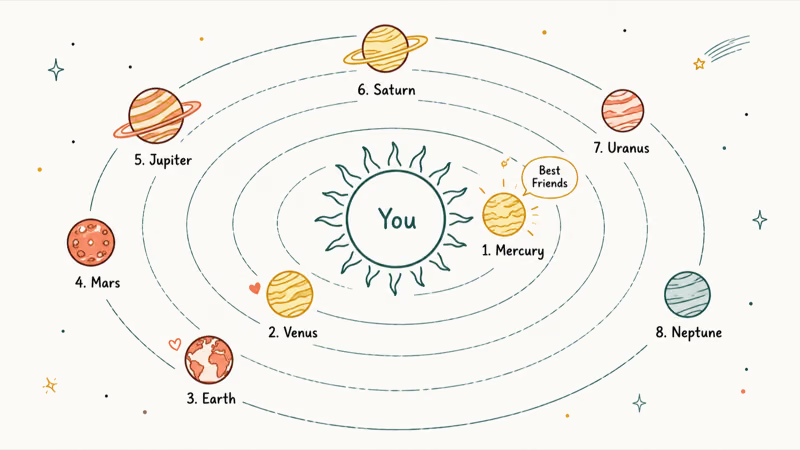
According to Snapchat’s official Friend Solar Systems page, the eight planets represent the eight friends you snap and chat with the most, ordered from closest to eighth closest. The closer the planet sits to the sun, the higher that friend ranks.
This is a Snapchat+ feature, so you won’t see it without a subscription. When you have it, a friend who is close enough to you shows a Best Friends badge with a gold ring around it on their Friendship Profile.
#Snapchat Planets Order and Meaning
The full order, from your number one friend to your number eight, follows the real solar system exactly. Here’s the breakdown.
| Planet | Rank | Meaning |
|---|---|---|
| Mercury | 1st | Your single closest friend |
| Venus | 2nd | Your second-closest friend |
| Earth | 3rd | Your third-closest friend |
| Mars | 4th | Your fourth-closest friend |
| Jupiter | 5th | Your fifth-closest friend |
| Saturn | 6th | Your sixth-closest friend |
| Uranus | 7th | Your seventh-closest friend |
| Neptune | 8th | Your eighth-closest friend |
Each planet also has its own look. Beebom’s planet breakdown found that Mercury appears as a red planet ringed with 5 red hearts, the strongest signal in the system, detailed planet by planet. Mars shows up as a red planet surrounded by stars with purple and blue hearts. Uranus, at seventh, is a green planet with no hearts at all, which tells you the connection is cooler than the planets above it.
The gold-ringed badge appears on a friend’s profile for Snapchat+ subscribers, and tapping it shows exactly which planet you are in that friend’s system.
#How Does the Snapchat Planets Ranking Work?
The ranking is simpler than people assume. It’s about volume, not history.
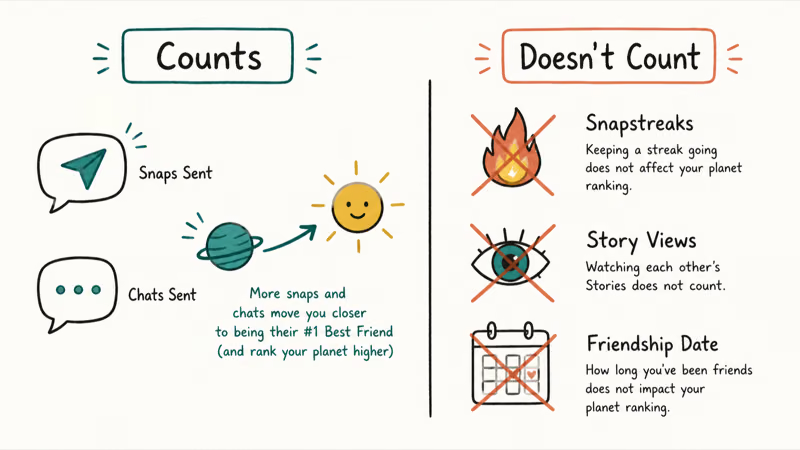
Snapchat scores each friendship by how often you snap and chat back and forth. The more two-way activity, the closer the planet. This is the same signal that drives the Best Friends list, so your planets and your top friends usually line up.
A few things that don’t move the ranking, despite the rumors:
- Streak length. A long streak doesn’t guarantee a closer planet if your overall snap volume is low.
- Stories and views. Watching someone’s story doesn’t count toward planet ranking.
- How long you’ve been friends. A friend from 2019 can rank below someone you met last month if you talk to the new person more.
Because the ranking is based on snap and chat activity, the order can shift when recent activity changes. If you want a specific friend to climb, the only reliable lever is to snap and chat with them more often. The longest Snapchat streak guide explains how streaks work separately, and the how to get a Snapchat streak back walkthrough covers recovering a lost one.
#How Do You See Your Snapchat Planet?
You can only see your planet in someone else’s system if you have Snapchat+. There’s no free workaround.
Here’s the path once you’re subscribed:
- Open a friend’s profile by tapping their Bitmoji or name in your chat list.
- Look for the Best Friends or Friends badge near the top of their Friendship Profile.
- If it has a gold ring, tap it. A popup shows which planet you are in their Solar System.
Snapchat’s support page confirms that the feature is off by default for first-time subscribers, so if you just subscribed and see nothing, toggle it on through the Snapchat+ management screen. The gold ring only appears for friends who are in each other’s top eight.
If you don’t have Snapchat+ but want to gauge closeness, the regular friend emojis next to names give a rough idea. The Snapchat emoji ideas guide explains what those symbols mean, and the how to see mutual friends on Snapchat guide covers the related friend-discovery tools.
#Mercury vs Neptune: The Real Difference
Being someone’s Mercury and being their Neptune are very different signals.
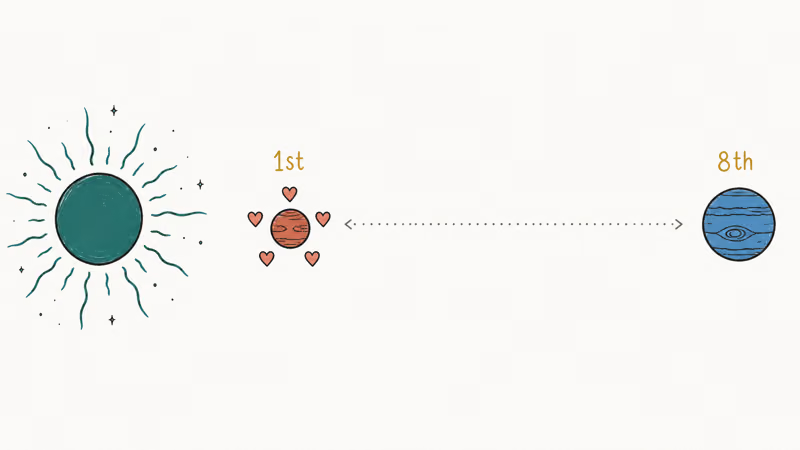
Mercury is the top spot. It means you snap and chat with that person more than anyone else, and it’s the only planet that comes wrapped in five hearts. If you’re someone’s Mercury, you’re their number one.
Neptune is the edge of the system. You made their top eight, but seven people rank ahead of you.
Neither position is permanent. Because the ranking tracks ongoing activity, a Neptune can climb to Mercury over a few weeks of heavier messaging, and a Mercury can slide outward if you go quiet.
#The Planet Colors and Symbols at a Glance
Each planet has a distinct color and a number of hearts or stars that hints at how close the friendship is.
The visuals borrow from the real planets. The order itself mirrors astronomy, where, per Wikipedia’s solar system overview, the 8 planets run Mercury through Neptune outward from the sun. Snapchat keeps that exact sequence, which is why the names feel familiar.
Quick visual cues to know: Mercury carries five hearts and the strongest signal, Mars adds stars with purple and blue hearts, and the outer planets like Uranus and Neptune carry fewer hearts or none. The hearts shrink as you move outward, mirroring a cooler connection. If you want to log out and check the badge on a different account, the how to log out of Snapchat guide covers switching cleanly.
#Bottom Line
If you want to move up someone’s planet order, increase your two-way snap and chat volume with them, because that’s the only input the Friend Solar System actually weighs. Streaks, story views, and friendship age don’t count.
To check your own planet, you need Snapchat+, then tap the gold-ringed badge on a friend’s Friendship Profile. If you’re weighing whether the subscription is worth it just for planets, the pros and cons of Snapchat guide lays out what else Snapchat+ unlocks.
Remember the order: Mercury, Venus, Earth, Mars, Jupiter, Saturn, Uranus, Neptune, from your closest friend to your eighth.
#Frequently Asked Questions
What is the order of Snapchat planets?
The order is Mercury, Venus, Earth, Mars, Jupiter, Saturn, Uranus, and Neptune, matching the real solar system. Mercury is your closest friend and Neptune is your eighth-closest. Each planet sits closer to the sun the higher that friend ranks.
What does it mean to be someone’s Mercury on Snapchat?
It means you’re that person’s number one best friend. Mercury is the first planet, closest to the sun, shown as a red planet ringed with five red hearts.
Do you need Snapchat Plus to see planets?
Yes. The Friend Solar System is a Snapchat+ feature, so you can’t see which planet you are without a subscription. Once subscribed, you tap the gold-ringed Best Friends badge on a friend’s profile to see your planet. The feature is off by default for new subscribers.
How is the Snapchat planet ranking decided?
It’s based on how often you snap and chat with each friend, both directions counted. The more two-way activity, the closer the planet. Streak length, story views, and how long you’ve been friends don’t affect the order.
Can your Snapchat planet change?
Yes, and it changes fairly quickly. The system tracks ongoing snap and chat activity, so your position can move up or down within days as your messaging habits shift. A quiet stretch drops you outward, a busy one pulls you closer to the sun, and a Neptune can climb all the way to Mercury given enough back-and-forth over a couple of weeks.
What does Neptune mean on Snapchat?
Neptune is the eighth and farthest planet, so being someone’s Neptune means you rank eighth on their best friends list. You still made their top eight, which is meaningful, but seven other people get more of their snaps and chats.
Why don’t my Snapchat planets match my best friends list?
They usually do, since both use snap and chat frequency. Small differences can show up because the planet system and the emoji best-friends list update on slightly different timing. Give it a day or two and they typically realign.
Google Messages Error 3100: Why RCS Is Broken on Galaxy
Google Messages RCS error 3100 hits Galaxy owners after phone or carrier switches. Google told 9to5Google a fix is coming. Here's what actually helps.

Is This Bank App Real? Spot a Fake App on Your Home Screen
A bank app can land on your home screen from a web page with no install warning. Learn the checks that tell a real banking app from a phishing web app.
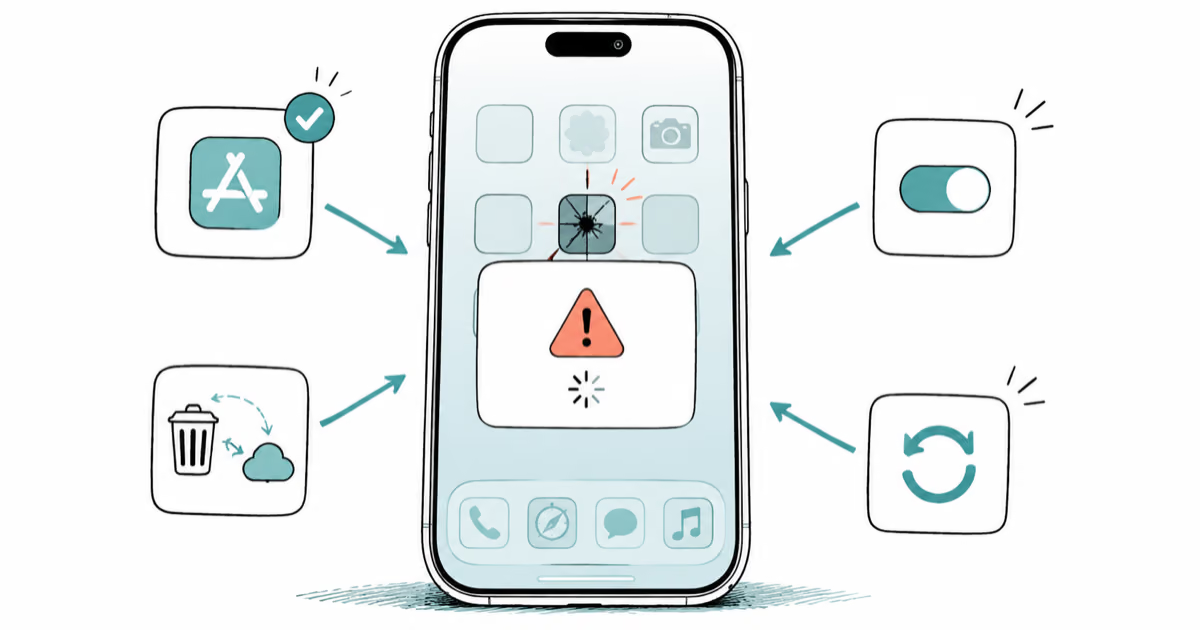
Apps Crashing After iOS 27 Update? Fix Order (2026)
Apps crashing after the iOS 27 update? Update the app in the App Store first, then offload and reinstall to clear stale cache, then restart. The fix order.
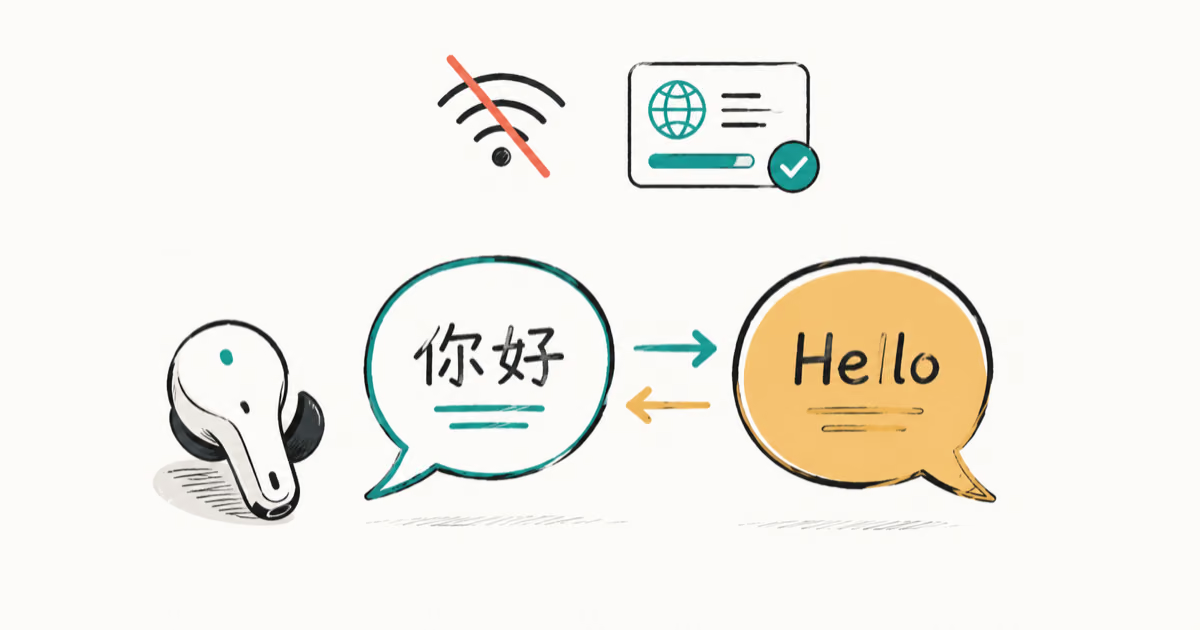
Do AI Translation Earbuds Work Offline? What to Know
Do AI translation earbuds work offline? A few do with downloaded language packs, but most need the cloud. Here's what works offline and what you give up.