Intel Panther Lake Explained: The Core Ultra Series 3
Intel Panther Lake explained: Core Ultra Series 3 on the Intel 18A node, 50-TOPS NPU, Xe3 Arc graphics, and why it's the x86-safe AI PC pick for 2026.

Quick AnswerIntel Panther Lake is the Core Ultra Series 3, Intel's first AI PC platform built on the Intel 18A node. It pairs up to 16 CPU cores, a 12-core Xe3 Arc GPU, and a 50-TOPS NPU, and it's the x86 compatibility-safe Copilot+ option that runs every Windows app natively.
As of June 2026, Intel Panther Lake is the company’s newest AI PC chip and the safe x86 answer to ARM-based Copilot+ laptops. It launched at CES 2026 as the Core Ultra Series 3, and its headline claim isn’t a TOPS number. It’s that this is the first platform built on Intel 18A, the company’s most advanced process, while keeping the native Windows compatibility ARM chips can’t fully match.
Intel started pre-orders on January 6, 2026, with systems shipping globally from January 27. The pitch is clean: a real on-device NPU and a strong new GPU, without giving up the x86 software stack you already depend on.
- Panther Lake is Intel’s Core Ultra Series 3, the first Intel compute platform built on the Intel 18A process node
- The top configurations have up to 16 CPU cores, a 12-core Xe3 Arc GPU, and a 50-TOPS NPU that clears the 40-TOPS Copilot+ bar
- Because it’s x86, it runs virtually every Windows app, driver, and anti-cheat tool natively, with no emulation layer
- Intel cites up to 60% better multithreaded CPU performance and 77% faster gaming versus the prior Lunar Lake generation
- It targets up to 27 hours of battery life, narrowing the gap that ARM chips have long held
#What Panther Lake Actually Is
Panther Lake is the codename for Intel’s Core Ultra Series 3 processors, the latest generation of its AI PC platform. If you’ve read our explainer on what a Copilot+ PC is, this is Intel’s silicon for that tier. It directly succeeds the Lunar Lake-based Core Ultra 200V chips, so if you bought a 2024 Intel AI laptop, this is the part that replaces what’s inside it, built on a newer node with a faster GPU and a more capable NPU.
According to Intel’s CES 2026 newsroom announcement, Core Ultra Series 3 is “the first compute platform built on Intel 18A,” which Intel calls its most advanced semiconductor process manufactured in the United States. That node is the structural story here.
The chip is a three-part design, like every modern AI PC: a CPU, a GPU, and an NPU working together. What sets this generation apart is that all three blocks got a meaningful upgrade at once, rather than one piece moving forward while the others stand still, which is what makes Panther Lake feel like a full platform refresh instead of a spec bump.
#What’s New on the Intel 18A Node?
The node change is the foundation everything else builds on. Intel 18A is a new manufacturing process, and a more advanced node generally means more transistors in less space, better efficiency, and higher clocks. Intel positions Panther Lake as the first product to ship on it at scale.
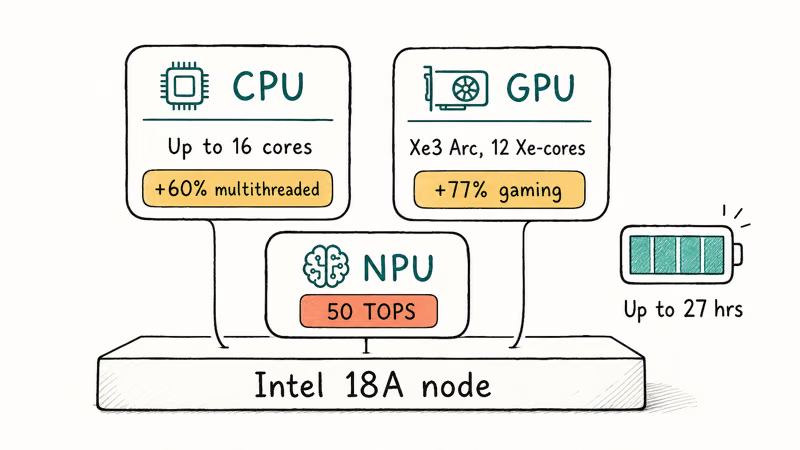
On top of that node, three components stand out:
- CPU. Up to 16 cores split between performance and efficiency cores. Intel claims up to 60% better multithreaded performance versus the previous Lunar Lake generation.
- GPU. A new Xe3 Arc integrated GPU with up to 12 Xe-cores. Intel reports 77% faster gaming performance over the prior chip, a large jump for integrated graphics.
- NPU. A 50-TOPS neural engine, comfortably past Microsoft’s 40-TOPS Copilot+ floor.
Intel also points to up to 27 hours of battery life. That matters because battery is exactly where ARM chips like Snapdragon have led, and this platform is built to close the gap.
#Why Is x86 Compatibility the Real Selling Point?
Here’s the thing that makes Panther Lake the safe pick. It uses x86, the same architecture Windows has run on for decades, so virtually every app, driver, anti-cheat system, and enterprise tool runs natively with no translation layer. There’s no Prism emulation, no compatibility asterisk, no “check your apps first.”
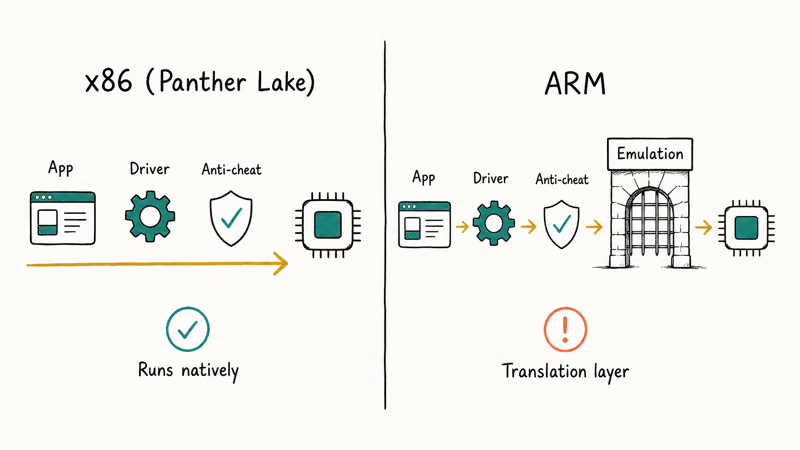
That’s the core trade-off across the whole AI PC market. Snapdragon wins on battery but runs some legacy software through emulation, while Intel and AMD run everything natively. Our Snapdragon X vs Intel Core Ultra vs AMD Ryzen AI comparison maps out exactly when that native compatibility difference matters.
Copilot+ features on x86 hardware key off the NPU, not the instruction set, so Recall, Live Captions, and Windows Studio Effects can sit alongside native x86 app and driver compatibility. You get the full Copilot+ experience plus native compatibility, which the Windows on ARM app compatibility guide explains in depth.
#How the NPU, GPU, and CPU Split the Work
Each chip handles a different job. The 50-TOPS NPU runs light, always-on AI like blur and captions while sipping power. The Xe3 GPU takes heavy parallel AI, gaming, and rendering. The CPU handles everything else.
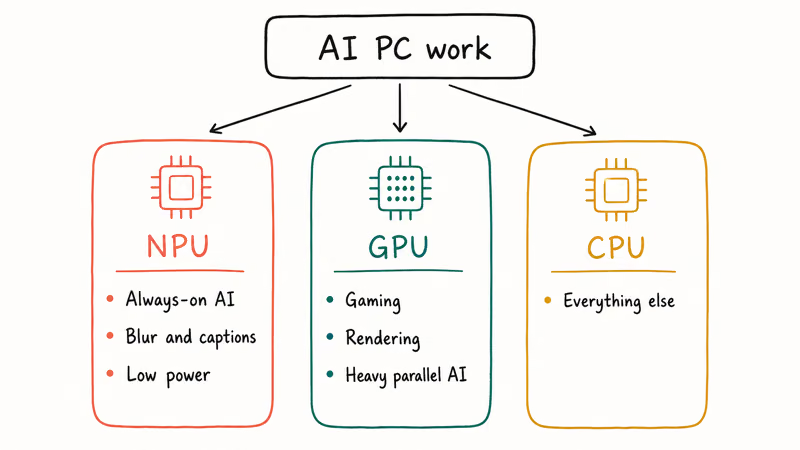
That division of labor is the foundation of every AI PC, which is why the headline TOPS number tells only part of the story. Our explainer on the NPU versus GPU versus CPU breaks down which chip does what for AI work, and our guide on what an NPU actually does digs into the specific background workloads the neural engine owns on a Copilot+ laptop.
According to Microsoft’s Copilot+ PCs developer guide, the 40-TOPS NPU line, which Panther Lake clears, is the threshold that unlocks the on-device feature set. Intel’s own Panther Lake architecture briefing details how the CPU, GPU, and NPU divide AI work across the platform.
#How It Compares to the Last Intel Generation
The jump from Lunar Lake is real, not a refresh. Intel’s CES announcement states that Panther Lake delivers up to 60% better multithreaded CPU performance and 77% faster gaming than the Core Ultra 200V chips it replaces, both large generational gains. The NPU also moves up to 50 TOPS, and the platform targets longer battery life on the new 18A node.
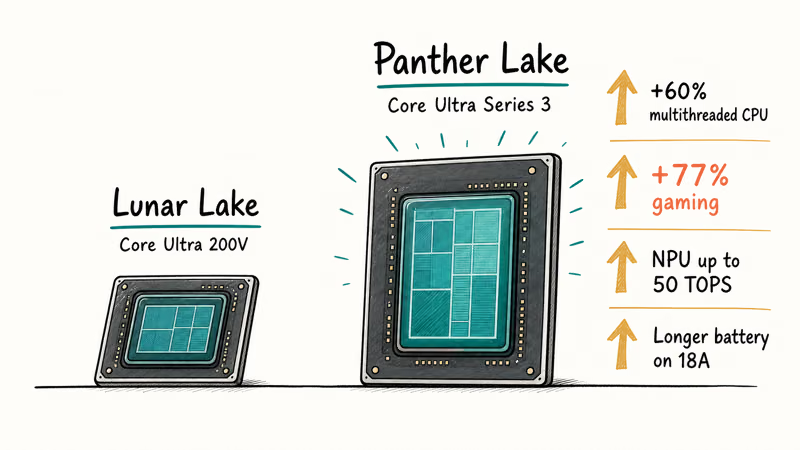
For most buyers, that means a Panther Lake laptop should feel noticeably quicker in heavy multitasking and games than a 2024-era Core Ultra machine, while running cooler and longer.
#Who Panther Lake Is For
Panther Lake is the natural pick if you want a Copilot+ AI PC but can’t risk app compatibility. That covers a lot of people: gamers with anti-cheat titles, professionals tied to legacy or enterprise software, and anyone who’d rather not audit their app list before buying.
The Xe3 GPU jump also makes it a stronger choice for light gaming and creative work than past integrated Intel graphics, so it stretches further for editing and casual play. Still weighing whether an NPU machine earns its price? Our AI PC vs regular laptop breakdown and do you need an AI PC guide both tackle that head-on.
#Bottom Line
Pick Intel Panther Lake if you want a Copilot+ AI PC and have even one app, driver, or anti-cheat game that must run natively. The 50-TOPS NPU unlocks the full on-device AI feature set, and the x86 guarantee kills the one risk that hangs over ARM Snapdragon laptops. If battery is your top priority and your software runs on ARM, the Snapdragon X2 Elite edges it. Otherwise, Panther Lake is the broadest no-asterisk AI PC pick in 2026.
AI PCs and Copilot+ Laptops
#Frequently Asked Questions
What is Intel Panther Lake?
Panther Lake is the codename for Intel’s Core Ultra Series 3, launched at CES 2026. It’s the first Intel platform on the 18A node, with up to 16 cores, a 12-core Xe3 GPU, and a 50-TOPS NPU.
When did Panther Lake come out?
Intel opened pre-orders on January 6, 2026, and systems shipped globally starting January 27, 2026.
How many TOPS does the Panther Lake NPU have?
The Panther Lake NPU is rated at 50 TOPS, which clears Microsoft’s 40-TOPS Copilot+ requirement and unlocks on-device features like Recall and Live Captions. It sits in the same range as rival NPUs from Qualcomm and AMD, which is why TOPS rarely decides the buy on its own.
Does Panther Lake run all Windows apps?
Yes. Because it uses x86, virtually every Windows app, driver, anti-cheat tool, and enterprise program runs natively with no emulation layer. That native support is its main advantage over ARM-based Snapdragon chips, which have to translate some legacy software through Microsoft’s Prism layer, and translation is where the occasional compatibility break shows up. If app compatibility is non-negotiable for you, x86 is the safe path.
Is Panther Lake better than Snapdragon X2 Elite?
It depends on what you need. Panther Lake wins on native x86 compatibility, while the Snapdragon X2 Elite typically wins on battery life and fanless design. Both clear the same Copilot+ AI bar, so the real choice is compatibility versus runtime, not raw AI speed. Lean Snapdragon if your apps run on ARM and you live on battery; lean Intel if even one program has to run natively.
What is the Intel 18A node?
Intel 18A is Intel’s newest manufacturing process, and Panther Lake is the first compute platform built on it. A more advanced node packs more transistors into less space, which generally improves efficiency and performance per watt.

Best Laptop for Running LLMs in 2026: Memory Comes First
The best laptop for running LLMs is a memory purchase first. Compare MacBook unified memory against NVIDIA laptop VRAM, and see what each tier really runs.

How to Run a Local LLM on Windows: A 2026 Setup Guide
Run a local LLM on Windows with LM Studio or Ollama. Pick a model that fits your GPU memory, keep every prompt offline, and skip the monthly bill.
Bluetooth Not Working on Snapdragon X? Fixes for 2026
Bluetooth not working on your Snapdragon X Copilot+ PC? Generic audio, mice, and keyboards work, but vendor apps often lack an ARM build. Fixes inside.

Docker Desktop and WSL2 Not Working on Snapdragon X? Fix It
WSL2 runs fine on Snapdragon X, but Docker Desktop ARM is Early Access and throws WSL errors. Use WSL2 plus native ARM64 Ubuntu and Docker Engine.