Snapdragon X2 Elite Explained: Qualcomm 2nd-Gen ARM
Snapdragon X2 Elite explained: Qualcomm's 2nd-gen ARM laptop chip with up to 18 Oryon cores, 80-TOPS NPU, and 3nm efficiency. What it changes for 2026.

Quick AnswerThe Snapdragon X2 Elite is Qualcomm's second-generation ARM laptop chip, built on a 3nm process with a 3rd-gen Oryon CPU of up to 18 cores and an 80-TOPS Hexagon NPU. It's the efficiency-and-battery king's encore, doubling down on the Copilot+ strengths that made the first Snapdragon X stand out.
As of June 2026, the Snapdragon X2 Elite is Qualcomm’s second swing at the Windows laptop, and it builds straight on the chip that started the Copilot+ era. The first Snapdragon X won on battery and quiet, fanless design. This sequel keeps that lead and pushes the NPU far past where the original sat, so it stays the efficiency play in a field that now includes Intel and AMD.
Qualcomm announced the X2 Elite and a higher-binned X2 Elite Extreme at Snapdragon Summit in September 2025, with laptops and mini-PCs arriving into 2026.
- The Snapdragon X2 Elite is Qualcomm’s 2nd-gen ARM laptop chip, built on a 3nm process node for higher performance at lower power
- It uses a 3rd-gen Qualcomm Oryon CPU with up to 18 cores; the X2 Elite Extreme is Qualcomm’s first ARM-compatible CPU to reach 5.0 GHz
- The Hexagon NPU is rated at 80 TOPS, which Qualcomm calls the world’s fastest NPU for laptops and well past the 40-TOPS Copilot+ bar
- It supports the Snapdragon X75 5G modem at up to 10 Gbps and FastConnect 7800 for Wi-Fi 7
- The trade-off is unchanged: ARM means class-leading battery but some legacy x86 apps still run through Prism emulation
#What the Snapdragon X2 Elite Actually Is
The Snapdragon X2 Elite is the second generation of Qualcomm’s Oryon-based laptop platform, the ARM chip family that powers Copilot+ PCs. If you’ve read the explainer on what an AI PC is, this is the silicon that defined the category when the first-gen Snapdragon X Elite launched the program.
According to Qualcomm’s official Snapdragon X2 Elite product page, the chip uses a custom-built 3rd-gen Qualcomm Oryon CPU tuned for ultra-premium performance with strong power efficiency. That phrase is the whole pitch. ARM gets you efficiency, and Qualcomm is leaning into it again.
This is a sequel, not a reinvention. The architecture, the Oryon CPU, and the Hexagon NPU all carry over by name from the first generation, refined rather than replaced.
#How It Differs From the First Snapdragon X
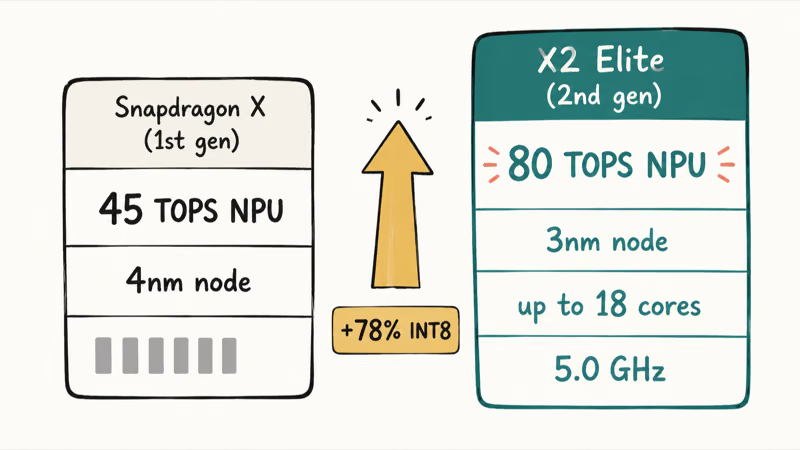
The biggest jump is the NPU. Qualcomm states that the X2 Elite’s Hexagon NPU reaches 80 TOPS with 78% more INT8 TOPS than the previous generation, which it calls the world’s fastest NPU for laptops. The first-gen Snapdragon X Elite was rated at 45 TOPS, so this is a large step up in on-device AI headroom.
Three other things changed worth knowing:
- Process node. The X2 Elite is built on a 3nm process node, which Qualcomm credits for higher performance and lower power draw. A tighter node usually means better efficiency per watt.
- Core count and clock. The platform scales up to 18 cores, and Qualcomm says the X2 Elite Extreme is the first ARM-compatible CPU to reach 5.0 GHz. That clock ceiling is a first for the ARM-on-Windows side.
- Management and modem. It adds Snapdragon Guardian for out-of-band fleet management and supports the X75 5G modem rated up to 10 Gbps.
So the formula stays the same, just turned up. More cores. A faster ceiling. A far larger NPU, all on a smaller node.
#Does the Bigger NPU Matter Day to Day?
Here’s the honest answer most spec sheets skip. An 80-TOPS NPU gives more headroom than a 45-TOPS NPU, but everyday Copilot+ features are designed around the 40-TOPS floor. Recall, Live Captions, and Windows Studio Effects are light, steady jobs that any chip clearing the Copilot+ requirement is built to handle.

The extra headroom shows up in heavier local AI. Qualcomm points the Hexagon NPU directly at the latest large language models that power on-device AI agents, which means larger offline models, faster image generation, and assistants that keep working without a network. If that’s your workload, the bigger NPU buys real room and should age better than a 45-TOPS part. If you mainly use the standard features, it’s future-proofing more than a daily upgrade.
For background on why this number gets quoted so often, the guide on what TOPS means for an AI PC breaks down the metric. Microsoft’s own Copilot+ PCs developer guide confirms that the 40-TOPS line, not the headline NPU figure, is the threshold that unlocks the on-device feature set.
#What Does the NPU Leave for the GPU?
Plenty. The NPU is built for efficiency, not raw throughput, so it handles light, always-on AI without draining the battery. Heavy AI work still leans on the GPU.
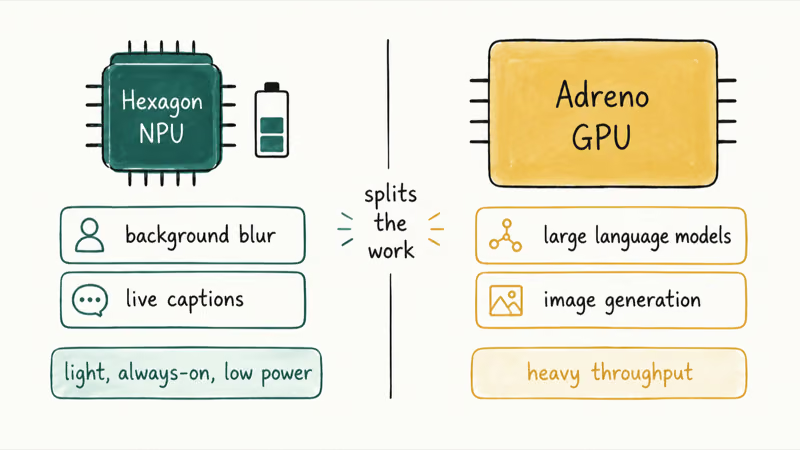
The X2 Elite pairs the Hexagon NPU with an upgraded Adreno GPU, and that division of labor is core to how every AI PC works. The explainer on the NPU versus GPU versus CPU covers which chip does what. The short version: background blur and captions go to the NPU; large language models and image generation lean on the GPU.
#The ARM Trade-Off Hasn’t Gone Away
Snapdragon’s defining strength is also its defining caveat. Because it uses ARM rather than x86, the X2 Elite runs ARM-native apps directly and translates older x86 software through Microsoft’s Prism emulation layer. Most everyday apps work fine. The exceptions are kernel-level tools, some anti-cheat games, and a few specialized drivers, which can still stumble under emulation, so the people most affected are gamers with specific anti-cheat titles and anyone tied to legacy enterprise software that hooks deep into Windows.
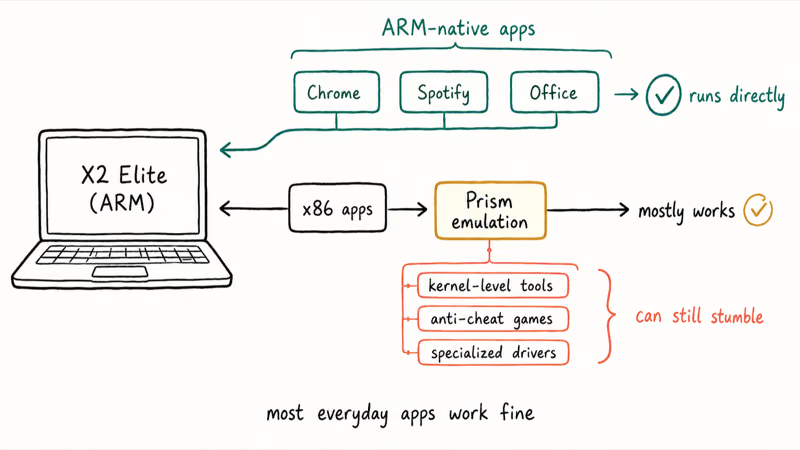
The Windows on ARM app compatibility guide covers this trade-off in detail: ARM-native apps are the best fit, while kernel-level tools, legacy drivers, and some anti-cheat games can still be blockers under emulation.
Need guaranteed x86 support? Intel Panther Lake or AMD Ryzen AI 300 are the safer route, and the Snapdragon X vs Intel Core Ultra vs AMD Ryzen AI comparison lays out how that decision plays out.
#Who Should Wait for the X2 Elite
Shopping a Copilot+ laptop mainly for battery and quiet operation? The X2 Elite is the natural pick in Qualcomm’s 2026 lineup. The efficiency lead that made the first Snapdragon X stand out is intact here, the larger NPU gives it a longer runway for local AI as those features mature, and the move to 3nm only widens the gap on battery and thermals over the prior generation. For most battery-first buyers, this is the chip to wait for.
Choosing between platforms instead of within Qualcomm’s range comes down to compatibility versus battery. The AI PC vs regular laptop breakdown helps if you’re still deciding whether an NPU-equipped machine is worth it at all, and the do you need an AI PC guide tackles it from the buyer’s side.
Still unsure which features actually need this chip? Microsoft’s Copilot+ PCs page lists exactly what depends on the silicon tier.
#Bottom Line
Buy into the Snapdragon X2 Elite if battery life and silent, fanless design top your list and your must-have apps already run on ARM or in the browser. It’s the strongest battery-first Copilot+ option in 2026, and the 80-TOPS NPU means you won’t outgrow its on-device AI soon. If even one critical app is x86-only and known to break under emulation, step over to Intel Panther Lake for guaranteed native support instead.
AI PCs and Copilot+ Laptops
#Frequently Asked Questions
What is the Snapdragon X2 Elite?
It’s Qualcomm’s second-generation ARM laptop processor for Windows Copilot+ PCs, announced in September 2025. It uses a 3rd-gen Oryon CPU with up to 18 cores and an 80-TOPS Hexagon NPU, built on a 3nm process node.
Is the Snapdragon X2 Elite available yet?
It’s rolling out now. Qualcomm announced the X2 Elite and X2 Elite Extreme at Snapdragon Summit in September 2025, and as of June 2026 the first systems built around it, including early mini-PCs, have started to appear. Availability widens as more laptop makers ship designs through the year, so the exact model you want may still be inbound. Check the manufacturer’s listing for ship dates before you order.
How many TOPS does the Snapdragon X2 Elite NPU have?
Qualcomm rates the Hexagon NPU at 80 TOPS. That clears Microsoft’s 40-TOPS Copilot+ bar with room to spare and marks a 78% INT8 jump over the first-generation chip.
Does the Snapdragon X2 Elite run all Windows apps?
It runs ARM-native apps directly and translates x86 apps through Microsoft’s Prism emulation. Most software works, but some kernel-level tools, anti-cheat games, and specialized drivers can fail under emulation, so check your critical apps before buying.
Is the Snapdragon X2 Elite faster than the first Snapdragon X?
In AI workloads, yes. The NPU jumps from 45 TOPS to 80 TOPS, and the CPU scales to higher clocks, with the X2 Elite Extreme reaching 5.0 GHz, a first for an ARM-compatible chip. For everyday browsing and office work, though, the difference is far smaller than those headline numbers suggest, since most tasks never push either chip hard. The real wins land in heavy local AI and sustained multi-core jobs.
Should I pick Snapdragon X2 Elite or Intel and AMD?
Pick Snapdragon for the best battery and fanless designs if your apps run on ARM. Choose Intel Core Ultra or AMD Ryzen AI for guaranteed x86 compatibility with legacy software, drivers, and anti-cheat tools. The three-way comparison walks through the full decision.

Best Laptop for Running LLMs in 2026: Memory Comes First
The best laptop for running LLMs is a memory purchase first. Compare MacBook unified memory against NVIDIA laptop VRAM, and see what each tier really runs.

How to Run a Local LLM on Windows: A 2026 Setup Guide
Run a local LLM on Windows with LM Studio or Ollama. Pick a model that fits your GPU memory, keep every prompt offline, and skip the monthly bill.
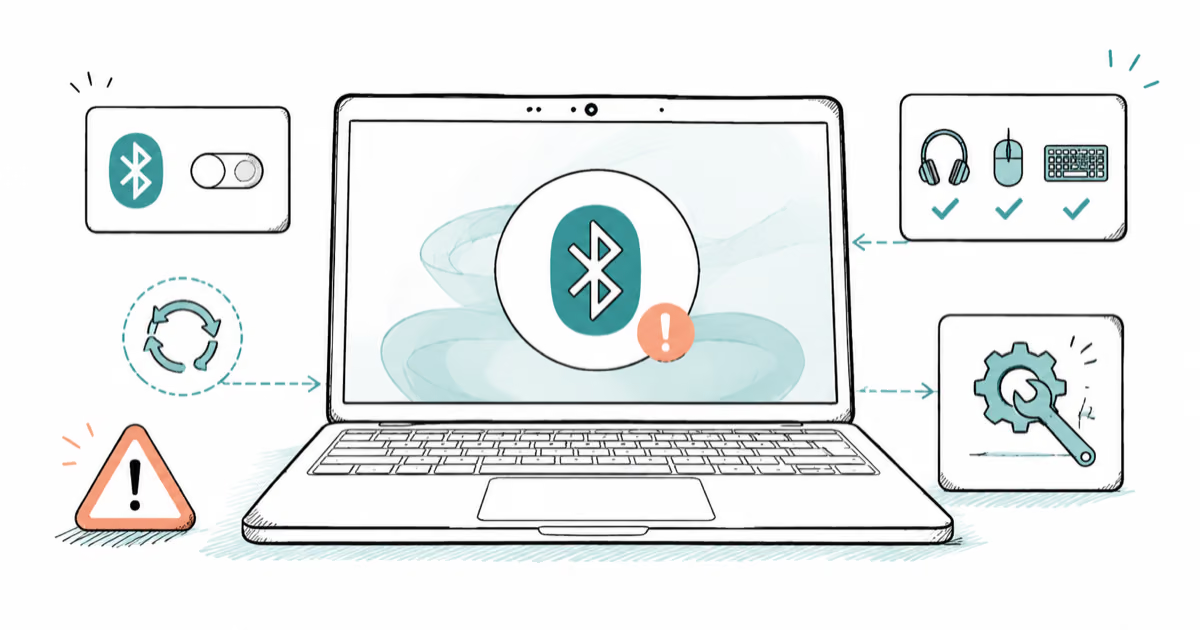
Bluetooth Not Working on Snapdragon X? Fixes for 2026
Bluetooth not working on your Snapdragon X Copilot+ PC? Generic audio, mice, and keyboards work, but vendor apps often lack an ARM build. Fixes inside.

Docker Desktop and WSL2 Not Working on Snapdragon X? Fix It
WSL2 runs fine on Snapdragon X, but Docker Desktop ARM is Early Access and throws WSL errors. Use WSL2 plus native ARM64 Ubuntu and Docker Engine.