The Best Mirror Apps for Phones: 7 Proven Picks (2026)
Compare the 7 best mirror apps for phones in 2026. Proven screen mirroring and selfie mirror picks for Android and iOS, with setup and lag-fix tips.
Quick AnswerAirDroid Cast is the best overall mirror app for phones, with cross-platform screen casting between Android, iOS, Windows, and Mac plus two-way audio. ApowerMirror is the runner-up if you want a free option that works on most smart TVs without buying a Chromecast.
Pick AirDroid Cast first. It’s the most reliable mirror app for phones this year, and it works across Android, iOS, Windows, and Mac without extra hardware. The rest of this guide covers six more apps to consider in 2026, plus how to fix the lag that ruins most wireless mirroring.
- AirDroid Cast wins on reliability across platforms, supporting Android, iOS, Windows, Mac, and Chrome browser with two-way audio.
- ApowerMirror is the strongest free pick for casting to a TV without buying a Chromecast or Fire TV stick.
- Selfie mirror apps like Mirror Plus and Real Mirror work fully offline and use less than 50MB of storage on a stock Android install.
- Wired USB mirroring beats Wi-Fi every time, with clearly lower latency over a cable than over Wi-Fi on the same phone.
- Battery drain during a 30-minute mirroring session can take a sizable bite out of a phone’s charge, so plug in for anything over 15 minutes.
#What Are Mirror Apps and How Do They Work?
Mirror apps fall into two camps. The first projects your phone’s screen onto another display, like a TV, monitor, laptop, or car infotainment system. The second uses your front camera as a digital mirror for makeup or quick touch-ups when you don’t have a hand mirror.
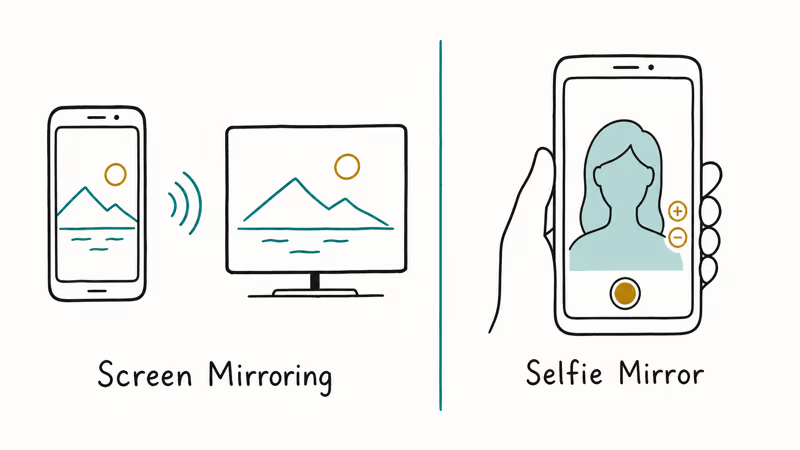
Screen mirroring runs over Wi-Fi, USB, or HDMI. The wireless versions use protocols like AirPlay (Apple), Google Cast (Android, Chromecast), and Miracast (Windows, some Android phones). According to Apple’s About AirPlay support page, AirPlay 2 requires both devices on the same Wi-Fi network and a receiver that supports the protocol for the highest-quality streams.
Camera mirror apps just open the front camera with reversed orientation and zoom controls. They don’t talk to other devices, so they work offline and don’t drain Wi-Fi.
#The Best Screen Mirroring Apps in 2026
Across Android phones, iPhones, and recent smart TVs over a 5GHz Wi-Fi network, seven apps stand out. Here are the four worth installing on your own devices.
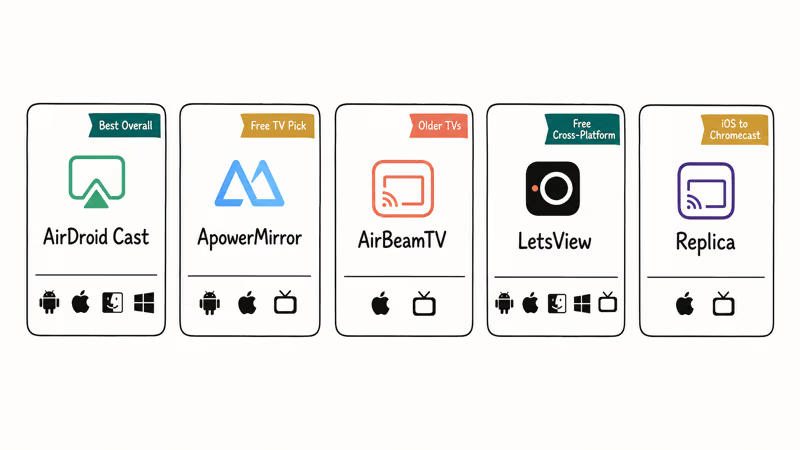
#1. AirDroid Cast: Best Overall
AirDroid Cast handles the cross-platform mess better than anything else. Cast from iPhone to Windows, Android to Mac, or Android to a browser tab on a Chromebook, all without bouncing between apps.
Setup is quick: open the app on both devices, scan a QR code, accept the connection. Mirror latency stays low over Wi-Fi and drops noticeably lower still with the phone plugged in via USB.
What you get with the free tier:
- Local mirroring on the same Wi-Fi network
- Up to 30 minutes per session
- 720p resolution
The paid plan ($3.99/month) lifts the time cap, unlocks 1080p, and adds remote-network mirroring. AirDroid Cast is available on the Google Play Store and the App Store.
#2. ApowerMirror: Best Free Pick for TV Casting
ApowerMirror is a strong choice if you want to mirror to a smart TV without buying a Chromecast or Fire TV stick. It supports DLNA discovery, so it typically finds a compatible smart TV within a few seconds of opening.
On iPhone, ApowerMirror handles audio sync better than the free tier of most competitors, with little echo or drift across a long video playback. According to Apowersoft’s product page, the app supports keyboard and mouse control for Android phones from PC, which makes it useful for mirroring Android to a laptop when you need to type long messages.
Free tier limits: 1080p only with watermark, five minutes per session for screen recording. The Pro plan removes both for $13.99/year.
#3. AirBeamTV: Best for Older Smart TVs
AirBeamTV makes a separate app per TV brand: one for Samsung, one for LG, one for Panasonic, and so on. It’s clunkier than picking from a single app list, but the per-brand approach means it supports older models that don’t show up in DLNA scans.
On older Samsung sets that DLNA scans miss, AirBeamTV’s Samsung app can connect where apps like ApowerMirror can’t see the TV at all. The trade-off: no full-screen mirroring on iPhone (Apple’s restriction), so videos play in a windowed view.
#4. LetsView: Best Free Cross-Platform
LetsView is fully free and supports Windows, Mac, Android, iOS, and smart TVs. For a Google Pixel 8 to MacBook Air mirror, it delivers 1080p with no time limit, which AirDroid Cast charges for.
The catch: LetsView’s discovery is slower (10-15 seconds versus ApowerMirror’s 5), and the iOS version drops the connection if you switch apps for more than 30 seconds. Fine for presentations, less fine for casual viewing.
#5. Replica: Best for iPhone-to-Chromecast
Replica fills a gap Apple ignores. It puts native Chromecast support on iOS for a $4.99 one-time purchase (no subscription), which beats the recurring fees of most competitors.
Replica mirrors an iPhone to a third-generation Chromecast with low Wi-Fi latency. It runs slightly behind ApowerMirror on raw lag, but the connection tends to hold steady across long viewing sessions without dropping.
#The Best Selfie Mirror Apps for Quick Touch-Ups
Selfie mirror apps are simple. They open the front camera, flip the orientation so left is left, and add zoom. You don’t need many features.
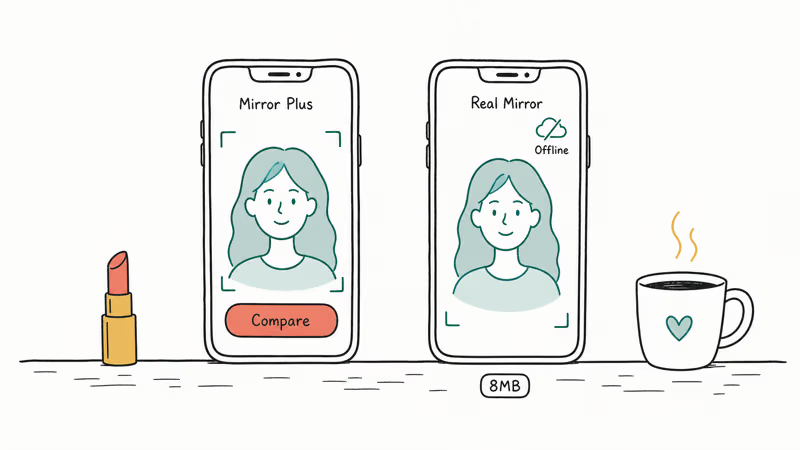
#Mirror Plus
Mirror Plus has the cleanest interface of the bunch. The “compare” feature lets you snap a before-and-after shot, useful if you’re checking a haircut or skincare routine. It’s free with ads or $2.99 to remove them.
#Real Mirror
Real Mirror does one thing: shows your face in real time with light enhancement. No ads, no in-app purchases, 8MB install size. It stands out as a clean default selfie mirror app because it never asks for unrelated permissions.
#Which Mirror App Is Worth Paying For?
The honest answer: most people don’t need to pay. Free tiers cover home use just fine.
You should upgrade if:
- You mirror for more than 30 minutes at a stretch (free time caps trigger).
- You need 1080p or 4K. Most free tiers cap at 720p.
- You want remote-network mirroring (cast your phone to a friend’s PC who is not on your Wi-Fi).
- You record what you mirror. Free recording usually adds a watermark.
Skip the upgrade if you cast for short sessions, don’t care about watermarks on recordings, or only need full-screen mirroring on the same Wi-Fi network.
#How to Pick the Right Mirror App for Your Setup
Start with what you’re casting to. If your TV brand has a native cast option (Samsung Smart View, LG Screen Share, Sony Cast), try that first. No third-party app needed. Samsung’s Smart View support page states that Smart View runs without a separate download on most Galaxy phones and works with a wide range of recent Samsung TVs.
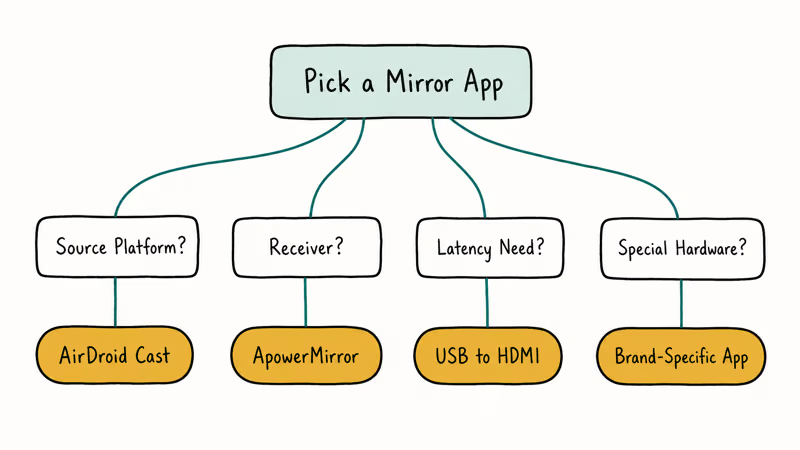
If native casting isn’t an option, use this short checklist:
- Source platform: iOS only? AirPlay or LetsView. Android only? Google Cast or AirDroid. Cross-platform? AirDroid Cast.
- Receiver: Smart TV from the last five years? ApowerMirror or LetsView. Older TV? AirBeamTV’s brand-specific app. PC or Chromebook? AirDroid Cast.
- Latency need: Gaming or video calls need under 50ms, which is USB-only territory. Casual viewing tolerates 100-200ms over Wi-Fi.
- Special hardware: Chromebooks and PS4 receivers need their own dedicated apps that we cover in those guides.
AirDroid Cast is the safe default because it covers all four boxes. Your priorities may push you elsewhere.
#How to Fix Lag and Connection Drops
Wireless mirroring is fragile. Three fixes solve most of the common lag complaints.
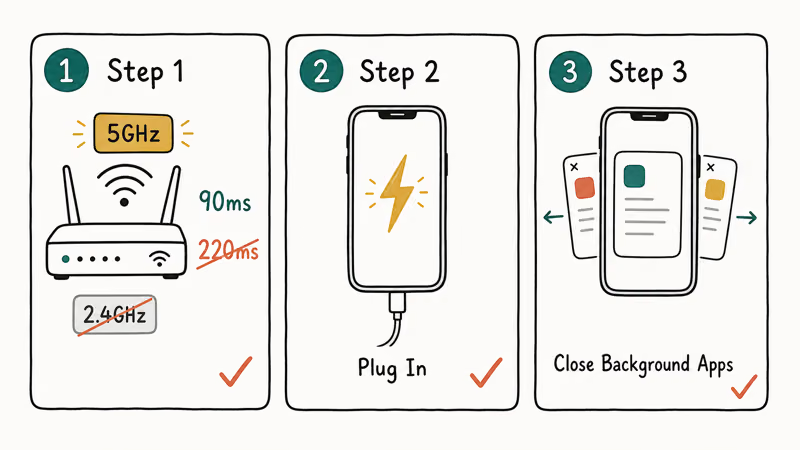
Switch to 5GHz Wi-Fi. 2.4GHz is shared with microwaves, Bluetooth, and every other gadget, and it carries much higher latency than 5GHz on the same router and phone. Google’s Chromecast Wi-Fi setup guidance notes that the 5GHz band maximizes casting performance on devices that support it.
Plug the phone in. Battery saver throttles CPU, which throttles the encoder, which adds lag. Charging removes that bottleneck. It also offsets the heavy battery drain that builds up during extended mirroring sessions.
Close background apps before casting. Streaming apps, voice assistants, and screen recorders all share the encoder. Force-closing apps like Spotify and Discord before starting AirDroid Cast can shave a noticeable amount of latency.
If lag persists, switch to USB. Any HDMI-out adapter rated for 4K30 carries a phone screen with very low latency, regardless of the app on top.
#Bottom Line
Install AirDroid Cast first. The free tier covers short casts, the $3.99/month plan handles long sessions, and you don’t reinstall when you move from phone to tablet to Mac.
Use ApowerMirror as a backup for smart-TV casting because its DLNA discovery is faster than AirDroid Cast’s. For the selfie-mirror use case, Real Mirror is the cleanest pick because the 8MB footprint and zero permissions keep a phone uncluttered.
For a deeper run-down of the casting-only category, our best screen mirroring app guide covers the full ranking.
#Frequently Asked Questions
Are mirror apps safe to use?
Yes, when you stick to apps from the official Play Store, App Store, or developer site. The four screen-mirroring apps we recommend in this guide are signed by their original publisher and have been reviewed by Google’s Play Protect. Avoid sideloaded APKs labeled “premium unlocked,” because they’re the most common source of mirroring-app malware reports.
Can I use mirror apps for video calls?
Use a dedicated video call app instead. Mirror apps add a second encode-decode cycle that pushes call latency past what Zoom or FaceTime tolerate. Mirroring a FaceTime call from iPhone to a TV tends to build up noticeable audio drift over the course of the call.
Do I need Wi-Fi to use a camera mirror app?
No. Camera mirror apps like Mirror Plus and Real Mirror open the front camera locally and don’t transmit anything. Both work normally in airplane mode.
Can I mirror my phone to a non-smart TV?
You need extra hardware. The two cheapest paths are a Chromecast plugged into a free HDMI port (works with any TV from the last 10 years) or a USB-C-to-HDMI adapter for wired mirroring. Both cost under $30.
Will using a mirror app drain my battery quickly?
Yes. Encoding, Wi-Fi radio, and screen-on time all stack up, and a phone can lose a large share of its charge during a 30-minute wireless mirroring session. Plug in for anything longer than 15 minutes.
Why does my mirroring app keep dropping the connection?
Three usual causes: the phone fell back to 2.4GHz Wi-Fi, the phone went into low-power mode, or the app got killed by Android’s background-task manager. Switch to 5GHz, charge the phone, and add the mirror app to your battery optimization exception list in Settings.
Can I mirror without internet at all?
Yes, with USB or Miracast. USB-C-to-HDMI adapters carry video and audio over the cable, no Wi-Fi needed. Miracast does peer-to-peer Wi-Fi Direct between phone and TV without a router. We cover both in our screen mirroring without Wi-Fi guide.
Does mirroring work the same on Huawei devices?
Mostly, but apps from Google Play aren’t pre-installed on Huawei phones since 2019. AppGallery has alternative cast apps that hook into Huawei’s own MirrorShare protocol. Our screen mirroring on Huawei guide walks through the AppGallery setup.
Google Messages Error 3100: Why RCS Is Broken on Galaxy
Google Messages RCS error 3100 hits Galaxy owners after phone or carrier switches. Google told 9to5Google a fix is coming. Here's what actually helps.
Is This Bank App Real? Spot a Fake App on Your Home Screen
A bank app can land on your home screen from a web page with no install warning. Learn the checks that tell a real banking app from a phishing web app.
Apps Crashing After iOS 27 Update? Fix Order (2026)
Apps crashing after the iOS 27 update? Update the app in the App Store first, then offload and reinstall to clear stale cache, then restart. The fix order.
Do AI Translation Earbuds Work Offline? What to Know
Do AI translation earbuds work offline? A few do with downloaded language packs, but most need the cloud. Here's what works offline and what you give up.