Best Screen Mirroring Apps for Android and iPhone (2026)
Compare the 9 best screen mirroring apps for 2026, ranked by latency, features, and cross-platform compatibility for Android and iPhone devices.
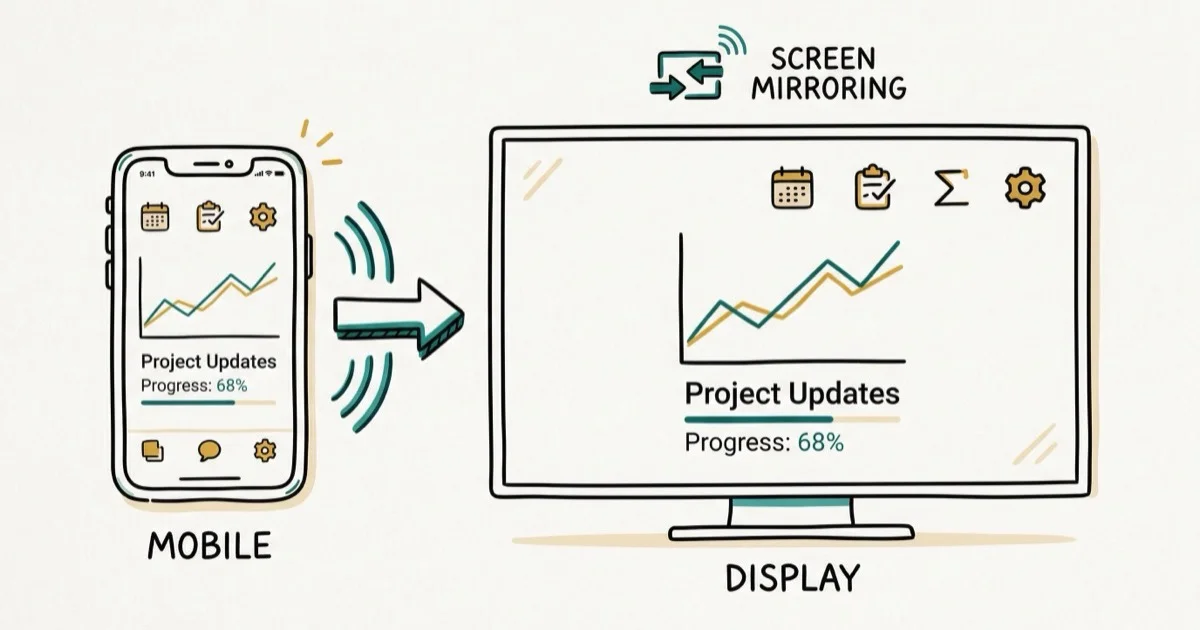
Quick AnswerApowerMirror is the best screen mirroring app overall, supporting Android, iOS, Windows, macOS, and smart TVs with wireless connectivity, screen recording, and remote control from your PC.
Finding a screen mirroring app that actually works without constant lag or crashes takes more effort than it should. This guide compares nine apps across Android 14, iOS 17, Windows 11, and macOS Sonoma on latency, feature sets, and setup difficulty, then breaks them down by use case so you can match the right tool to wireless presentations, free recording, remote PC access, or secure business sessions without paying for features you’ll never touch.
- ApowerMirror works across Android, iOS, Windows, macOS, and smart TVs with both wired and wireless connection options
- LetsView is completely free and includes screen recording plus annotation tools that most paid apps charge extra for
- TeamViewer uses 256-bit AES encryption for mirrored sessions, making it the most secure option for business and remote diagnostics
- Windows devices use Miracast while Apple devices use AirPlay, so cross-platform mirroring requires a third-party app
- Chrome Remote Desktop mirrors your PC screen to your phone (not phone to screen), making it useful for remote computer access
#Screen Mirroring Basics
Screen mirroring sends your device’s display to another screen in real time. You need a sending device (your phone or PC) and a receiving device (a TV, monitor, or another computer). The connection happens through Wi-Fi protocols like Miracast, AirPlay, or Google Cast.
The catch is compatibility. According to Apple’s AirPlay support page, AirPlay works only with Apple TV, AirPlay 2-compatible smart TVs, and Mac computers. Windows devices use Miracast, which doesn’t talk to Apple hardware. That’s why third-party apps like the ones on this list exist.
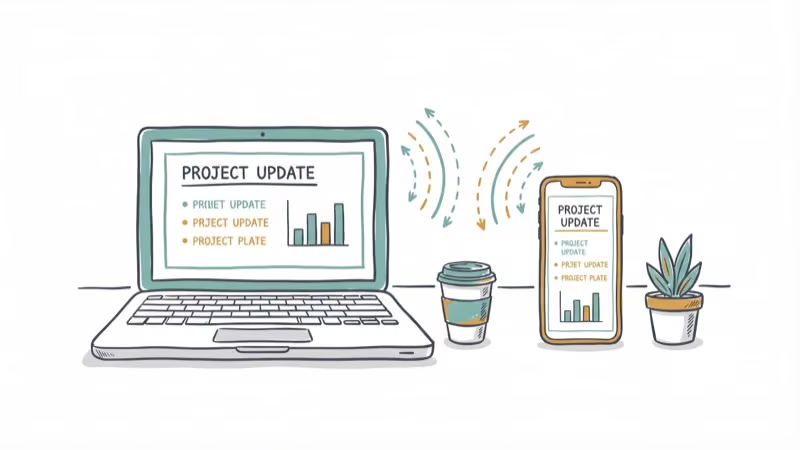
If you need to mirror a Google Pixel specifically, our guide on screen mirroring Google Pixel covers the built-in Cast feature and third-party alternatives.
#Which App Gives the Best Wireless Mirroring?
#ApowerMirror
ApowerMirror supports Android, iOS, Windows, macOS, Linux, and smart TVs. Wireless latency over a 5GHz Wi-Fi network is low enough for presentations and video playback but noticeable for gaming.
Some links on this page are affiliate links, which means fone.tips may earn a commission at no extra cost to you.
The standout feature is PC-to-phone control. Once connected, you can use your computer’s keyboard and mouse to operate your phone remotely. This works for replying to messages, running apps, or testing mobile interfaces without touching your phone.
Included tools: screen recording, screen capture, annotation overlay, whiteboard mode Connection types: Wi-Fi, USB cable, PIN code, QR code scan Price: Free with limited features; premium starts at $29.95/year
Downside: The free version adds a watermark to recordings and limits session length.
#LetsView
LetsView packs surprising value into a free app. Screen mirroring, recording, and annotation are all included without any subscription. It connects via Wi-Fi quickly using QR code scanning.
The app works on Android, iOS, Windows, macOS, and smart TVs. It also supports Miracast, so compatible third-party hardware works out of the box. Connection generally stays stable for sessions under 2 hours.
Downside: No USB wired connection option. Remote device control isn’t supported.
#Google Home
Google Home turns any Chromecast or Chromecast-compatible TV into a wireless display for Android phones. According to Google’s Cast support page, the app uses Google Cast protocol for screen sharing.
Casting from a Pixel 8 to a Chromecast with Google TV produces a slight but noticeable lag. It’s free and pre-installed on most Android devices.
Downside: Doesn’t work with iOS devices for screen casting. No screen recording or annotation tools.
#Are There Good Free Screen Mirroring Apps?
#Screen Mirror
Screen Mirror runs entirely in your browser. No app installation needed on your PC. You install a small companion app on your Android phone, and the mirroring happens through a Chrome or Edge browser tab.
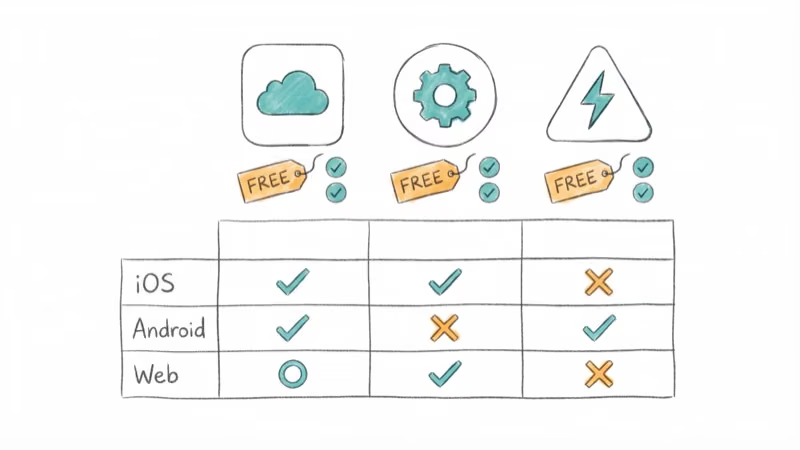
It works similarly to Vysor but with better responsiveness. The screen capture feature saves screenshots directly to your PC. The trade-off is that it’s a web-based tool with minimal features compared to native apps.
Downside: Crashes occasionally during long sessions. Feature set is basic compared to ApowerMirror.
#LiveScreen Mirroring
LiveScreen Mirroring connects your phone to your PC via Wi-Fi and displays the screen in Chrome, Safari, or Firefox. You type your phone’s IP address into the browser. It works on both Android and iOS.
Downside: Requires Android 5.0 or higher. Can’t transmit audio to the PC. Connection setup takes longer than other apps on this list.
#Remote Desktop Solutions
#Chrome Remote Desktop
Chrome Remote Desktop mirrors your PC screen to your phone, not the other way around. Install the Chrome extension on your computer, and you can access your desktop from any Android or iOS device.
It works on any computer with a Chrome browser. On an iPad, navigating a full Windows desktop is usable for quick tasks but awkward for extended sessions due to the touch interface. No in-app purchases or subscriptions required.
#Microsoft Remote Desktop
Microsoft’s solution works the same way as Chrome Remote Desktop but integrates tightly with Windows Server and Professional editions. It streams video and audio from your PC to your phone or tablet without ads or subscriptions. If you’re having trouble with your Windows 10 keyboard, Remote Desktop can help you control your PC from your phone while troubleshooting.
It tends to perform better than Chrome Remote Desktop on Windows machines because it uses the native RDP protocol. For video playback on Windows, the native approach also avoids the browser overhead that Chrome introduces.
#Secure Screen Mirroring for Business
#TeamViewer
TeamViewer uses 256-bit AES encryption for all mirrored sessions. It supports remote access to computers, phones, and tablets across Windows, macOS, Linux, Android, and iOS.
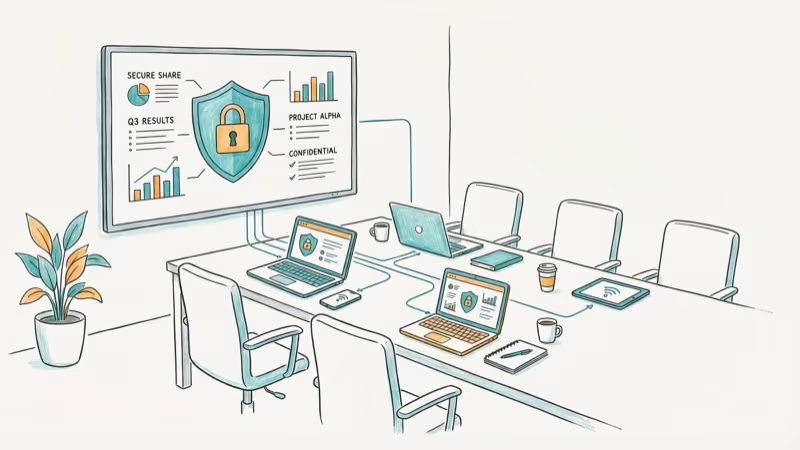
TeamViewer excels at remote diagnostics and IT support. You can transfer files between connected devices, chat during sessions, and record meetings. It’s free for personal use; business licenses start at $24.90/month.
Downside: Primarily designed for remote support rather than casual screen mirroring. The setup is more complex than apps built specifically for mirroring.
#Microsoft Your Phone (Phone Link)
Microsoft’s Phone Link app connects Android phones to Windows PCs over Bluetooth and Wi-Fi. Once paired, you can mirror your phone’s screen, manage notifications, send texts, and transfer files.
Samsung phones get the deepest integration with features like running multiple Android apps in separate windows on your PC. On a Galaxy S24, mirroring latency runs higher over Bluetooth and improves over Wi-Fi.
Downside: Limited to Android. iPhone support is minimal (notifications only). Mirroring your phone to a car screen requires a different approach entirely.
#Comparison of Top Screen Mirroring Apps
| App | Price | Platforms | Video | Control PC |
|---|---|---|---|---|
| ApowerMirror | $29.95/yr | All | Yes | Yes |
| LetsView | Free | All | Yes | No |
| Google Home | Free | Android/TV | Yes | No |
| TeamViewer | Free/Paid | All | Yes | Yes |
| Phone Link | Free | Android/Win | Yes | Partial |
#Bottom Line
Use ApowerMirror if you need full-featured phone-to-PC mirroring with remote control. Choose LetsView if you want the same core features without paying anything. For remote computer access from your phone, Chrome Remote Desktop is the simplest free option. Business users should go with TeamViewer for its encryption and diagnostic tools.
#Frequently Asked Questions
Can I mirror my iPhone to an Android TV?
Yes. Apps like ApowerMirror and LetsView support cross-platform mirroring. Alternatively, an Apple TV or AirPlay 2-compatible smart TV handles this natively without third-party software.
Which screen mirroring app has the lowest latency?
ApowerMirror over a USB cable produces the lowest latency. Wireless connections run noticeably higher depending on your Wi-Fi network speed and interference.
Do screen mirroring apps work without Wi-Fi?
USB-based mirroring works without Wi-Fi. ApowerMirror supports USB connections. Miracast also uses Wi-Fi Direct, which creates a peer-to-peer connection between devices without needing a router.
Are these apps free to use?
LetsView, Google Home, Chrome Remote Desktop, and Screen Mirror are completely free. ApowerMirror has a limited free tier. TeamViewer is free for personal use. Microsoft Remote Desktop and Phone Link are free for Windows users.
Can I use screen mirroring for gaming?
Wireless mirroring adds 100-200ms of latency, which makes competitive gaming impractical. USB mirroring at 40ms is playable for casual games. For serious mobile gaming on a big screen, a wired HDMI adapter provides the lowest latency.
Can I mirror my computer screen to a mobile device?
Yes. Chrome Remote Desktop and Microsoft Remote Desktop both mirror your PC screen to Android and iOS devices. This is useful for accessing your computer remotely when you’re away from your desk.
Apple Siri Settlement: Who Qualifies and How to Claim
Apple's $250 million Siri settlement covers iPhone 15 Pro and iPhone 16 models bought June 2024 to March 2025. See who qualifies and how claims work.
iOS 26.6.1 Security Update: What Apple Fixed and Who Gets It
Apple released iOS 26.6.1 on August 17 with 29 security fixes, including an IPSec interception bug. See what it patches, who gets it, and how to update.
iPhone Adaptive Power: How It Works and When to Use It
Learn how iPhone Adaptive Power works, which models support it, what it changes, and when Low Power Mode is still the better battery-saving choice.
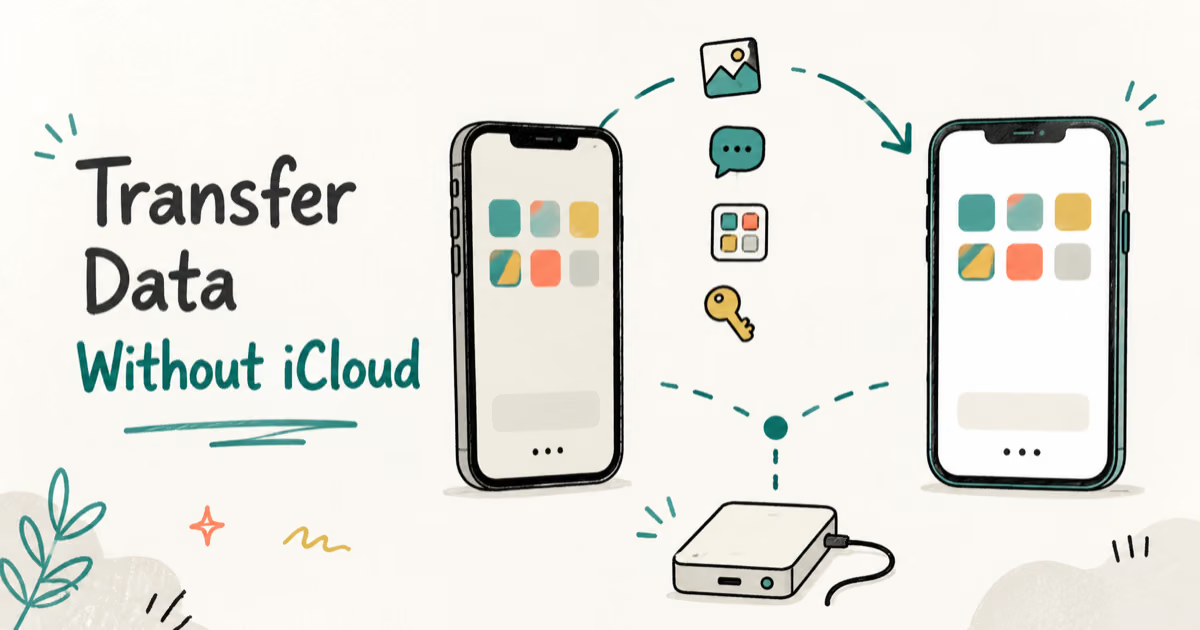
How to Transfer Data to a New iPhone Without iCloud
Move everything to your new iPhone without iCloud: Quick Start device-to-device transfer, wired migration, and encrypted Finder or iTunes backups.