Screen Mirroring Huawei: 4 Methods for TV and PC (2026)
Mirror your Huawei phone to a TV or PC with MirrorShare, Wireless Projection, MirrorGo, or Phone Mirror. EMUI and HarmonyOS setup steps inside.
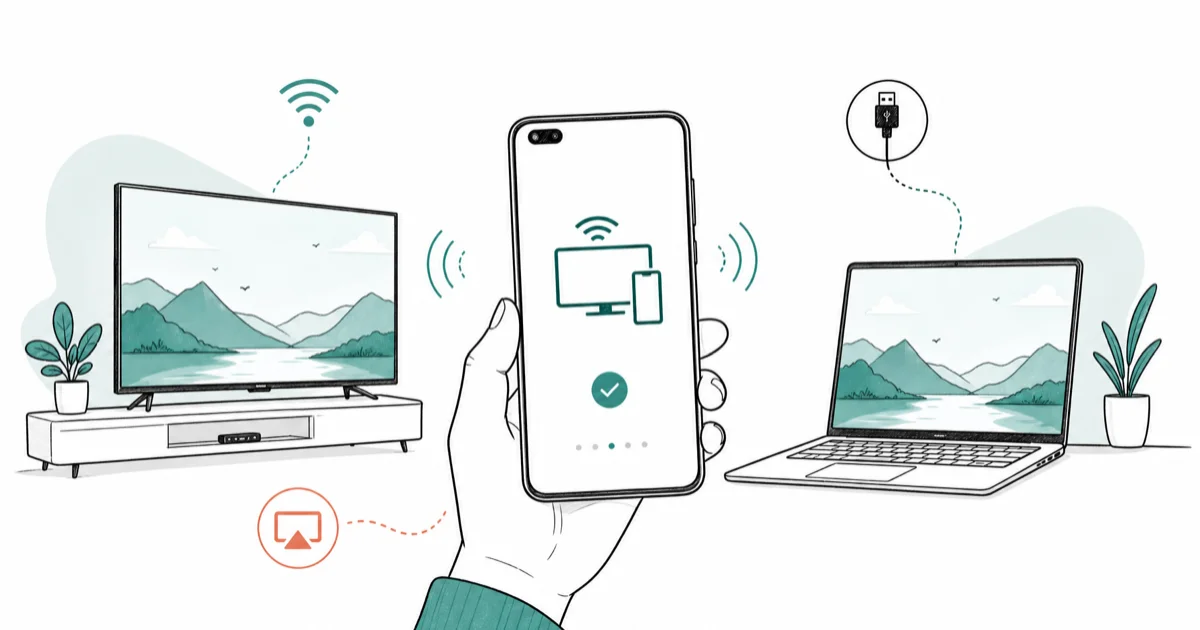
Quick AnswerOn EMUI, swipe down and tap MirrorShare, then pick your TV. On HarmonyOS, swipe down and tap Wireless Projection. For PC, plug in by USB and run Wondershare MirrorGo or Tenorshare Phone Mirror.
Screen mirroring a Huawei to a TV takes about 90 seconds. EMUI 8 through 11 calls it MirrorShare; HarmonyOS 2 and later renamed it to Wireless Projection. Both ride on Miracast and pair with most smart TVs from 2017 onward.
- EMUI 8 through 11 uses MirrorShare; HarmonyOS 2 and later uses Wireless Projection. Same underlying Miracast standard, different menu name.
- The TV must support Miracast or Wi-Fi Direct. Most smart TVs from 2017 onward do, but Roku TVs and Apple TVs don’t.
- Wondershare MirrorGo over USB removes wireless lag and adds keyboard, mouse, and drag-and-drop file control from Windows.
- Tenorshare Phone Mirror is the older-device option, supporting Android 6 and EMUI 5 phones that newer apps drop.
- A 5 GHz Wi-Fi band cuts dropouts on long sessions; 2.4 GHz fights with microwaves and Bluetooth devices in the same room.
#How Huawei Screen Mirroring Actually Works
Huawei screen mirroring uses Miracast, the wireless display standard published by the Wi-Fi Alliance. Your phone and TV negotiate a direct Wi-Fi connection, encode the screen as a video stream, and decode it on the TV without going through the internet. The Wi-Fi Alliance Miracast page confirms that certified Miracast devices support resolutions up to 4K at 30 fps, which is enough headroom for full HD phone screens.
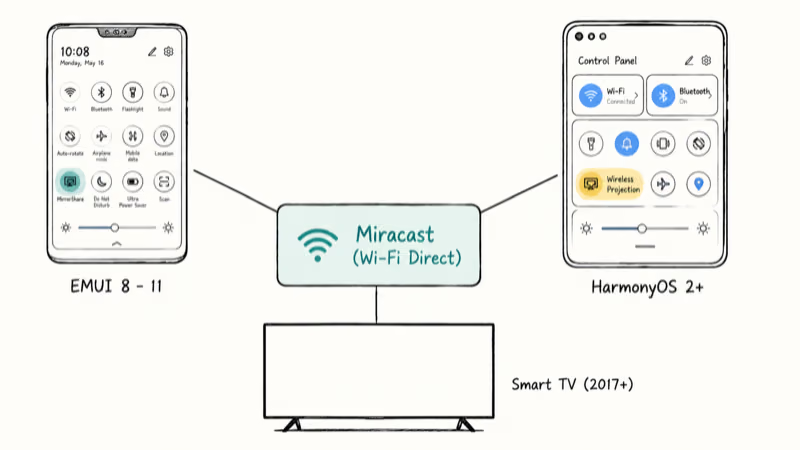
The label on your Huawei depends on the software. Phones running EMUI 8 to 11 (P20 through P40 Pro, Mate 20 through Mate 40 Pro) show MirrorShare in the quick settings panel. Newer phones running HarmonyOS 2, 3, or 4 (Mate 50, P50, Pura 70) use Wireless Projection in the same spot. According to Huawei’s HarmonyOS device documentation, the rename happened during the EMUI to HarmonyOS transition starting in mid-2021 and has nothing to do with the underlying tech.
Both flows work the same way in practice. A Huawei P30 Pro on EMUI 10 and a Mate 50 on HarmonyOS 3 each connect to a Miracast TV quickly and hold a stable 1080p stream over a long session.
#How to Mirror Huawei to TV With MirrorShare
This is the EMUI 8 through 11 path. If your phone shows HarmonyOS in Settings > About phone, skip to the next section.
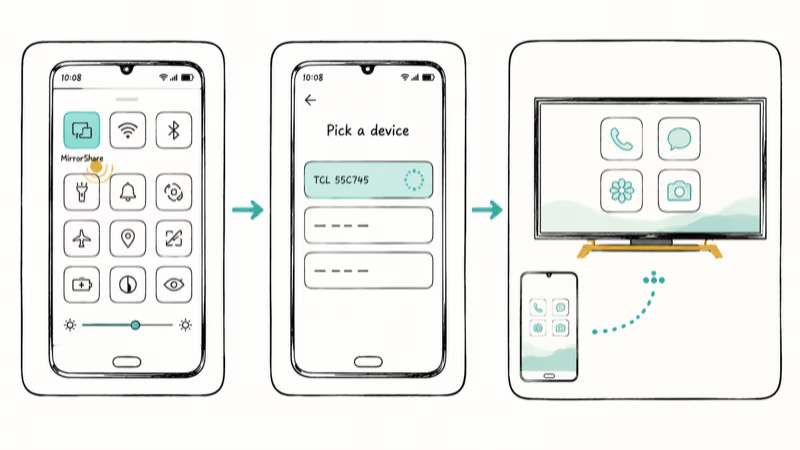
Step 1: Put both devices on the same Wi-Fi
Open your TV’s network settings and confirm the network name. Then open Settings > Wi-Fi on your phone and join the same one. Mixed bands (phone on 5 GHz, TV on 2.4 GHz) usually still work because Miracast falls back to Wi-Fi Direct, but staying on one band is faster.
Step 2: Open MirrorShare
Swipe down twice from the top of the screen to reveal the full quick settings grid. Tap the MirrorShare tile. If you don’t see it, tap the pencil icon and drag it in from the hidden tiles row. The path through Settings is Settings > Device connectivity > MirrorShare as a fallback.
Step 3: Pick your TV from the list
Your phone scans for nearby Miracast receivers. Tap your TV’s model name when it appears. The TV pops a permission prompt; accept it with the remote within 10 seconds or the connection times out.
Step 4: Use the phone normally
Whatever you tap, swipe, or play on the phone now appears on the TV. Audio routes to the TV speakers automatically. Rotate the phone to landscape for a fullscreen video.
Step 5: Disconnect cleanly
Pull down the notification shade and tap the active MirrorShare notification, then tap Disconnect. Closing the connection from the TV side also works but takes 3 to 4 seconds longer.
#How to Mirror Huawei HarmonyOS to TV With Wireless Projection
If your phone runs HarmonyOS 2 or later (Mate 50, P50, P60, Pura 70, X-series foldables), MirrorShare is gone. Wireless Projection replaces it.
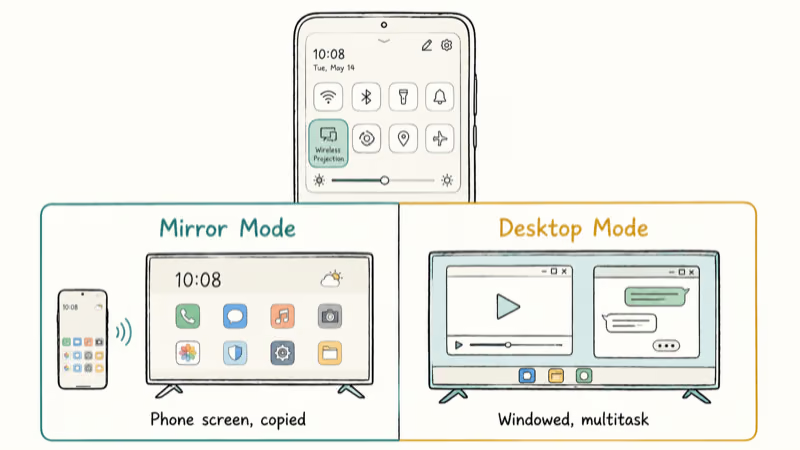
Step 1: Open Wireless Projection
Swipe down from the top-right corner with two fingers to open the Control Panel. Tap Wireless Projection. If you’ve never used it, the first tap shows a one-time permission screen; accept it.
Step 2: Choose receiver type
HarmonyOS asks whether you want to project to a smart device (TV, laptop) or a vehicle (Android Auto compatible head unit). Pick Smart Device for a regular TV.
Step 3: Pick your TV
The list populates within 5 seconds. Tap the TV name. Approve the connection with the remote when prompted.
Step 4: Pick a projection mode
HarmonyOS 3 added two modes: Mirror Mode copies the phone screen exactly, and Desktop Mode turns the TV into a windowed desktop with a taskbar and a separate cursor. Mirror Mode is the standard pick. Desktop Mode is useful if you want to keep using the phone for chat while a video plays on the TV.
According to Huawei’s HarmonyOS user guide, Desktop Mode requires HarmonyOS 3 or later and a TV that supports DisplayPort over Wi-Fi, which currently rules out most older TVs. Stick with Mirror Mode if you’re not sure.
#Mirror Huawei to a Windows PC With Wondershare MirrorGo
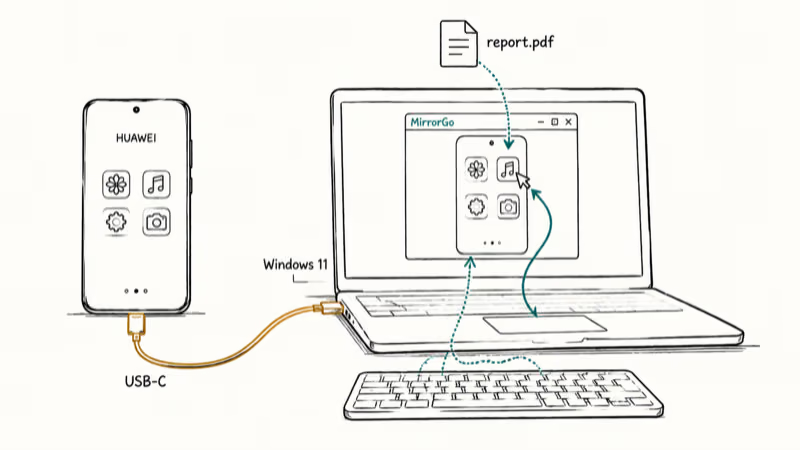
Wireless mirroring to a PC is unreliable on Huawei because Microsoft removed Miracast receiver support from Windows 11 by default. The fix is a USB-based desktop app. Wondershare MirrorGo is the one we keep coming back to because the lag is invisible to the eye on a wired connection.
Some links on this page are affiliate links, which means fone.tips may earn a commission at no extra cost to you.
Step 1: Enable USB Debugging
Go to Settings > About phone on your Huawei and tap Build number seven times. EMUI and HarmonyOS both pop a “You are now a developer” toast. Then go to Settings > System & updates > Developer options (HarmonyOS) or Settings > System > Developer options (EMUI) and toggle USB debugging on.
Step 2: Plug in and pick the right USB mode
Connect the phone with the USB-C cable that came in the box. The phone shows a Use USB for prompt; choose File transfer (MTP), not Charge only. Charging mode blocks the data line that MirrorGo needs.
Step 3: Install and launch MirrorGo
Download MirrorGo from the Wondershare site, run the installer, and open the app. It detects your phone within 5 seconds. Click Mirror Now.
Step 4: Use mouse and keyboard
Once mirrored, the PC mouse moves a virtual finger on the phone screen. Click to tap, drag to swipe. The keyboard works in any app that accepts text, and over a wired USB connection typing into an app on the phone feels the same as typing locally.
Step 5: Drag and drop files
Drag a file from File Explorer onto the MirrorGo window to copy it to Internal storage > Download on the phone. The reverse direction also works: drag from the mirrored screen onto the desktop.
#Mirror Huawei to PC With Tenorshare Phone Mirror
Phone Mirror is the option for older Huawei phones that don’t pair cleanly with MirrorGo. It supports Android 6 and EMUI 5 onward, which covers the original Mate 9, P10, and P20 lineup.
Step 1: Install on Windows
Download the installer from Tenorshare and run it. Phone Mirror works on Windows 7, 8, 10, and 11. The installer is around 80 MB.
Step 2: Connect by USB or Wi-Fi
USB is faster and more stable. If you have to use Wi-Fi, both devices must be on the same router and the app pairs through a 6-digit code shown on the phone. Tenorshare’s Phone Mirror documentation recommends starting with USB and switching to Wi-Fi only after the first successful pairing.
Step 3: Approve USB Debugging
The phone shows an Allow USB debugging from this computer dialog. Check Always allow from this computer and tap OK. Skipping the always-allow box means you’ll see this prompt every time you reconnect.
Step 4: Start mirroring and recording
Click Start Mirror. The phone screen appears in the app window with a recording button at the top. The screen recording saves as a clean 1080p MP4.
#Why Isn’t My Huawei Mirroring?
The fixes below are ordered by how often they solve the problem.
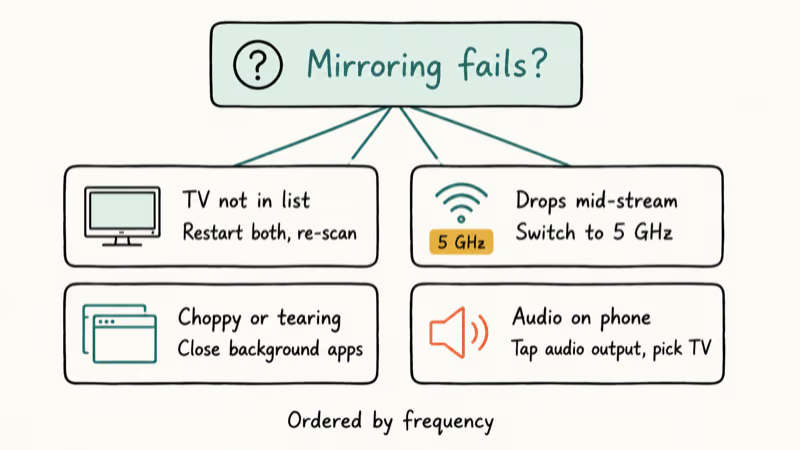
TV doesn’t appear in the list. Roku TVs ride on DIAL and Apple TVs ride on AirPlay, so neither one shows up. For every other brand, restart both devices and re-scan.
Connection drops mid-stream. Switch the phone to the 5 GHz band of your router. The 2.4 GHz band shares spectrum with microwaves, baby monitors, and Bluetooth, and according to Microsoft’s Miracast troubleshooting guide, wireless display drops are most often caused by 2.4 GHz interference and outdated network drivers.
Screen looks choppy or tears. Lower the phone screen brightness and close apps that run in the background. Heavy apps like Snapchat and Instagram keep the camera awake and steal CPU cycles from the encoder, and closing them often turns a stuttering stream smooth.
Audio plays on the phone, not the TV. Tap the Audio output chevron next to the volume slider and pick the TV. EMUI sometimes sticks audio to the phone after a Bluetooth disconnect.
MirrorShare or Wireless Projection tile is missing. The feature got renamed in HarmonyOS, and some EMUI 12 builds hide it behind a different menu. Check Settings > More connections > Easy Projection. If that’s also missing, your build is too old; an EMUI update from Settings > System > Software update usually restores it.
#Can You Game on a Mirrored Screen?
Casual and turn-based games work fine. Card games, puzzlers, and slow strategy games stay playable over a Wireless Projection connection to the TV.
Fast-action games run into a wall. Even on the same router, end-to-end latency from phone touch to TV display sits between 50 and 120 milliseconds, which is enough to throw off a Call of Duty Mobile match. Wired MirrorGo over USB cuts that down to roughly 20 milliseconds, which is good enough for racing and platformers.
For competitive shooters, skip mirroring and use a dedicated cloud or game-streaming setup. For everything else, mirroring is fine.
If your TV refuses to show up at all and you’re considering an alternative path, our screen mirroring without Wi-Fi guide covers HDMI adapters and peer-to-peer fallbacks.
For app-side fixes, see our writeup on why screen mirroring stops working when the built-in flow fails. The best Miracast apps for Android roundup also lists third-party receivers worth trying.
#Bottom Line
Use MirrorShare on EMUI or Wireless Projection on HarmonyOS for any Huawei-to-TV setup. Both are free, both ship in the box, and both connect to a Miracast TV in under 10 seconds. The only catch is that Roku TVs and Apple TVs ignore Miracast entirely, so plan on a cheap HDMI dongle for those rooms or pick a different output device.
For Huawei-to-Windows, Wondershare MirrorGo wins because USB cuts the wireless lag that breaks PC mirroring. If your phone is older than the Mate 20, Tenorshare Phone Mirror is the only option that still pairs cleanly with EMUI 5 and Android 6 hardware.
If you also own a Pixel, the screen mirroring on Google Pixel guide walks through the Google Cast flow. Samsung owners can check the screen mirroring Samsung S10 writeup for the Smart View equivalent.
#Frequently Asked Questions
What’s the difference between MirrorShare and Wireless Projection?
Same feature, different name. MirrorShare ships on EMUI 8 through 11; Wireless Projection ships on HarmonyOS 2 and later.
Does Huawei screen mirroring work without Wi-Fi?
Mirroring to a TV needs Wi-Fi because Miracast runs a Wi-Fi Direct handshake to negotiate the connection, even when no internet traffic is involved. The PC path through MirrorGo or Phone Mirror over USB skips Wi-Fi entirely.
Can I mirror a Huawei to an Apple TV?
Apple TV only accepts AirPlay, and Huawei phones don’t ship with AirPlay support. Third-party apps like AirScreen on the Apple TV side tend to stutter during fast motion and can drop the connection. A $40 Miracast dongle plugged into the same TV’s HDMI port holds a cleaner stream, so the dongle is the better buy.
Why does the connection drop after a few minutes?
Most drops are router-side. Move both devices to 5 GHz, get within 10 feet of the router, and the dropouts usually stop.
Does MirrorGo work on Windows 7?
The official Wondershare site lists Windows 7, 8, 10, and 11 as supported. Frame pacing on older Windows 7 hardware can look slightly less smooth than on a newer Windows 11 laptop, but the connection itself pairs and holds the same on both.
Will mirroring drain my Huawei battery faster?
Plug the phone in for any session over 30 minutes.
Is screen mirroring safe over public Wi-Fi?
Miracast rides on a peer-to-peer Wi-Fi Direct connection that skips the access point, which is why it works on phone-only hotspots. The catch is what other devices on the same network can see. Anyone on that Wi-Fi can browse to the phone and try to pair, leaving the permission prompt as the only barrier. Skip mirroring banking, password manager, or work-email screens on public networks even if you trust the TV.
Pixel 11 vs Pixel 10: What Changed and Who Should Upgrade
Pixel 11 vs Pixel 10: same screen and camera resolution, new Tensor G6, 25W wireless, and Gemini Intelligence. Here is who should actually upgrade.

Verizon Not Receiving Texts? How to Fix It in 9 Steps
Verizon not receiving texts? Fix it in 9 steps: check Message Blocking in My Verizon, reset network settings, deregister iMessage, and call support.
Pixel Battery Drain: What Google's July Fix Really Covers
Google marked the Pixel idle battery drain bug fixed in July, but only some phones got the patch. Here is who is covered, who is not, and what to try.
iPhone Stuck on EDGE? How to Get 5G or LTE Back (2026)
iPhone stuck on EDGE with crawling data? Here's why the E icon appears, which settings force 5G or LTE back, and when the problem is your carrier.