Screen Mirror Google Pixel to TV: 3 Working Methods (2026)
Screen mirror your Google Pixel to a TV with Chromecast, USB-C HDMI, or third-party apps. This guide compares each method and shows when to use which one.
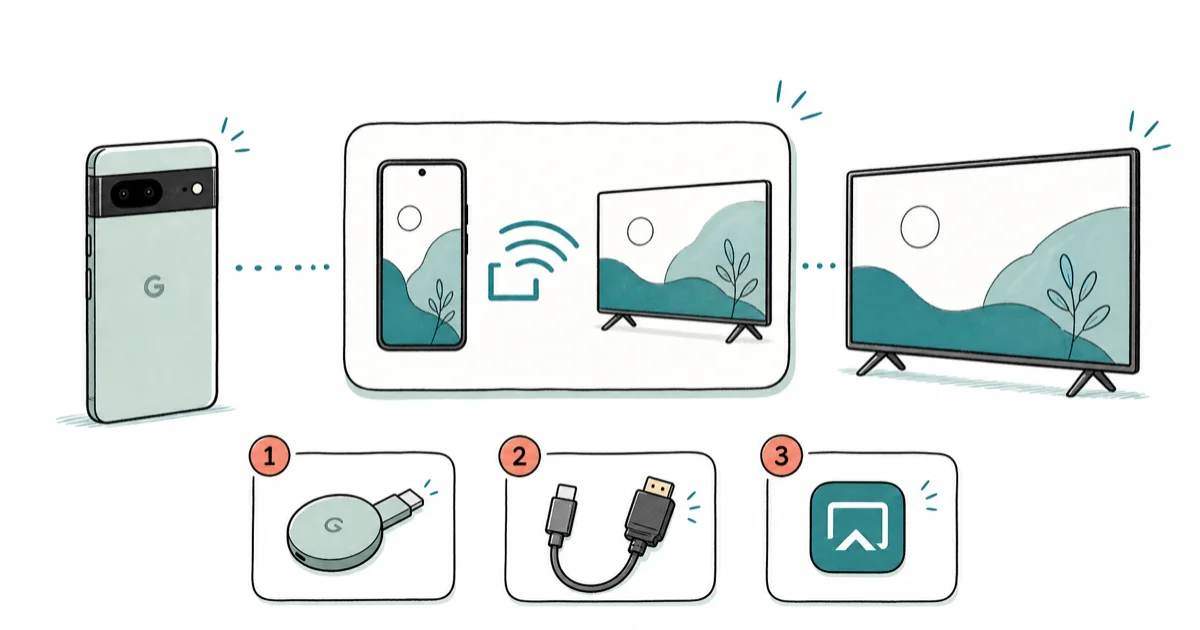
Quick AnswerOpen the Google Home app, tap your Chromecast or compatible smart TV, then select Cast my screen. Your Pixel screen appears on the TV in about 3 seconds.
Screen mirroring your Google Pixel to a TV is faster than people think, and most setups take under 2 minutes from cold start. This guide compares Chromecast, USB-C HDMI, and third-party apps, then shows when to use each one and how to fix the connection problems that keep showing up in r/GooglePixel threads.
- Chromecast is the easiest wireless option: open Google Home, tap your device, and pick Cast my screen.
- USB-C HDMI gives true zero-lag mirroring, which matters for gaming, presentations, and live software demos.
- Third-party apps like AirDroid Cast and ApowerMirror cover PCs and Macs, not just TVs.
- 5 GHz Wi-Fi cuts visible lag during Chromecast sessions compared to 2.4 GHz, especially when other devices share the network.
- Both Pixel and Chromecast must be on the same Wi-Fi network and the same band, or the cast target won’t appear in Google Home.
#Why Is Chromecast the Easiest Way to Mirror Your Pixel?
Chromecast is Google’s wireless casting hardware. Pixel phones use Cast, so compatible targets appear in Google Home once both devices share Wi-Fi.
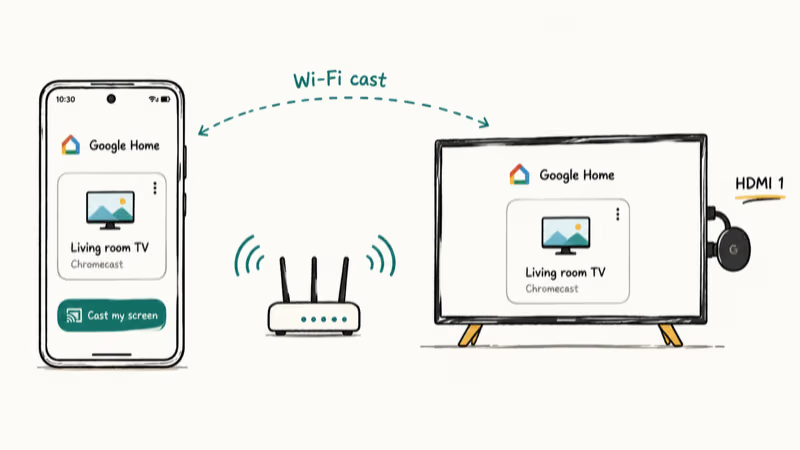
According to Google’s Chromecast support documentation, Chromecast handles resolution and aspect ratio automatically across most TVs, so you don’t need to change display settings before casting. That’s what makes the wireless route practical for non-technical users.
Casting works with anything you put on the screen: streaming apps, games, photos, browser tabs, even messaging. You can keep using the phone while the TV mirrors it, since Cast my screen runs in the background and the phone display stays interactive throughout.
#When Chromecast is the right pick
- You want a no-cable setup
- You’ll be using regular streaming or social apps (YouTube, TikTok, Photos, Disney+)
- You don’t need pixel-perfect responsiveness for a fast-paced game
#When Chromecast falls short
- Live gaming where 200-500ms of lag is too much
- Presentations or video calls where audio-video sync is sensitive
- Networks where guest Wi-Fi or VLANs split phones and Chromecast onto different subnets
If your TV runs Google TV or Android TV, you can skip the dongle. The same flow casts to the TV directly.
#Setting Up Chromecast in 5 Steps
Pulling out the setup so you can scan it without rereading the explainer above. The sequence is short enough to follow in one pass.
- Plug the Chromecast into an HDMI port on your TV and power it on.
- Connect both your Pixel and the Chromecast to the same Wi-Fi network. Same band matters, so pair 5 GHz with 5 GHz, not 5 GHz with 2.4 GHz.
- Open the Google Home app on your Pixel.
- Tap the Chromecast device tile, then pick Cast my screen at the bottom of the device card.
- Confirm with Cast screen. The Pixel display appears on the TV in about 3 seconds.
If the device tile doesn’t show, force-quit Google Home and reopen. The first time you cast after a router reboot, you’ll occasionally need to relaunch the app to refresh the device list.
#Mirroring Your Pixel With a USB-C HDMI Adapter
A wired connection has no Wi-Fi, no app, and no lag. It’s the move when latency matters. Pixel phones support DisplayPort over USB-C from the Pixel 6 and later, which is what makes basic adapters work without extra drivers or setup screens.
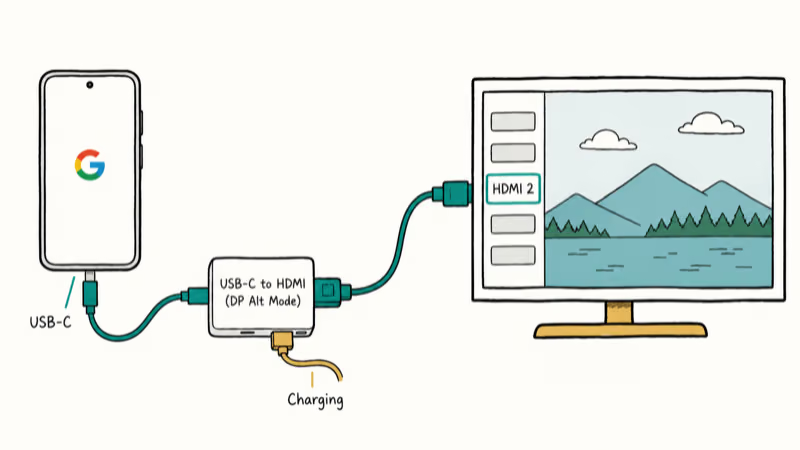
According to Android’s developer documentation, USB-C with DisplayPort Alt Mode is the standard wired display path for modern Pixel and other Android devices, and the OS handles output without driver installation.
#What you need
- A USB-C to HDMI adapter that supports DisplayPort Alt Mode
- One HDMI cable (any standard length is fine)
- A TV or monitor with a free HDMI input
As an Amazon Associate, fone.tips earns from qualifying purchases. Some links on this page are affiliate links.
#HDMI setup steps
- Plug the USB-C end of the adapter into your Pixel.
- Connect an HDMI cable from the adapter to the TV.
- Switch the TV to that HDMI input.
- Your Pixel screen appears immediately, no permission dialog or prompt.
A Pixel with DisplayPort Alt Mode can mirror over USB-C HDMI without a setup screen, driver prompt, or permission dialog. Pass-through power lets you keep the phone charging during long sessions, if your adapter has a second USB-C input on the side.
#When wired is worth the cable
- Gaming with tight reaction windows
- Live software demos and walkthroughs
- Slide presentations where audio cues need to land in time with visuals
#Trade-offs
- You’re tied to the cable length
- Older Pixel models (Pixel 4a and earlier) don’t reliably support video out through USB-C
- Cheap adapters skip DisplayPort Alt Mode and won’t show anything on the TV
#Other Apps That Work for Pixel Screen Mirroring
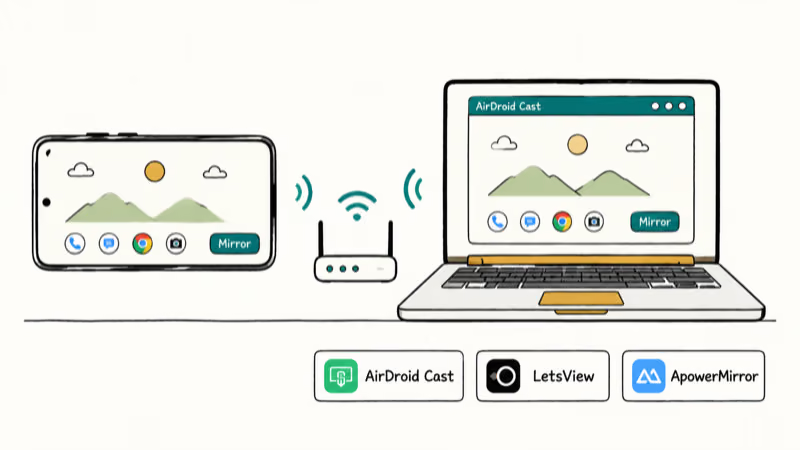
Third-party apps help when the destination is a laptop or PC instead of a TV.
#Apps to Consider for Pixel Mirroring
AirDroid Cast. Wireless mirroring to Windows, macOS, Linux, or via a browser.
LetsView. Free, basic, no account required.
ApowerMirror. Includes built-in screen recording, similar to how to screen record on TikTok but at the system level so it captures any app on the phone.
For a fuller breakdown of mirroring tools across phones and TVs, see the best screen mirroring app comparison, which covers picks for both directions and explains which app fits which workflow.
#How to use a third-party mirroring app
- Install the app on both your Pixel and the destination device.
- Confirm both devices share the same Wi-Fi network.
- Open the app on the Pixel and follow the pairing prompt.
- Pick the device you want to mirror to.
Most third-party apps land in the 500-1000ms latency range, which is fine for tutorials, slow-paced apps, and watching videos with a friend, but it’s not tight enough for gaming or live software demos where every dropped frame breaks the moment and an extra half-second of lag derails the room.
#What’s the Best Method for Each Use Case?
The three methods don’t compete head to head, since each one wins in different conditions. The decision matrix below is the shortest path to a confident pick when you don’t want to think about it for more than a minute or read a 2,000-word comparison piece.
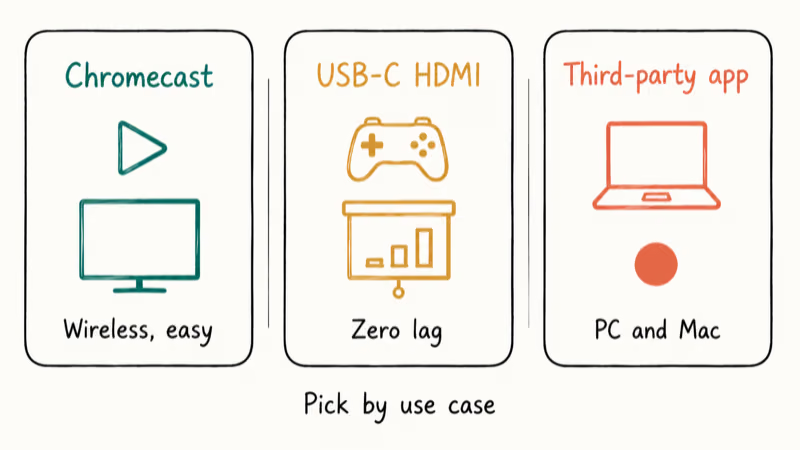
| Use case | Best method | Why |
|---|---|---|
| Watching YouTube on the TV | Chromecast | Native cast support, no cables |
| Mobile gaming on a big screen | USB-C HDMI | Zero lag, no Wi-Fi dependency |
| Presenting slides to a room | USB-C HDMI | Audio sync stays tight with visuals |
| Mirroring to a laptop screen | AirDroid Cast | Chromecast can’t target laptops |
| Hotel TV, weak Wi-Fi | USB-C HDMI | No network setup needed |
| Quick demo to family | Chromecast | Fastest from cold start |
If you have a Chromecast already, default to wireless. Pull the wired path out only when lag or network reliability is the deal-breaker.
#Fixing Common Pixel Mirroring Connection Problems
Most failures fall into four buckets: wrong network, stale Cast target, dirty Google Home cache, or HDMI hardware.
#Chromecast target doesn’t show up
- Restart both the Pixel and the Chromecast. Unplug the Chromecast for 10 seconds before powering it back on.
- Open Settings → Network & Internet on the Pixel and confirm both devices are on the same Wi-Fi name and the same band.
- Clear the Google Home cache: Settings → Apps → Google Home → Storage → Clear cache.
- Update the Google Home app from the Play Store.
#HDMI adapter isn’t detected
- Try a second USB-C to HDMI adapter. Cheap units that don’t carry DisplayPort Alt Mode look identical to the ones that do.
- Update Android: Settings → System → System update.
- Unplug, wait 5 seconds, replug. If a different USB-C cable still doesn’t work, the adapter is the suspect, not the phone. (For broader USB issues, see USB device not recognized fixes.)
#Mirroring keeps disconnecting
- Move the Pixel within 6 feet of the router during the session.
- Turn off Bluetooth on nearby devices when casting on 2.4 GHz, since they share spectrum.
- Disable Battery Saver: Settings → Battery → Battery Saver. Mirroring drains the battery quickly, and aggressive battery saving will kill the cast. (If the battery is dropping fast even when idle, see why Android battery drains quickly.)
- For third-party apps, set Settings → Apps → [App] → Battery → Unrestricted so the OS doesn’t pause the app.
#Lag during Chromecast mirroring
Google’s Chromecast troubleshooting guide states that switching from 2.4 GHz to a 5 GHz Wi-Fi network typically lowers wireless casting lag, since less household traffic competes for that band. Start with these fixes:
- Switch the Pixel and Chromecast to a 5 GHz network if the router supports it.
- Pause background streams (Netflix, YouTube on other devices, large downloads).
- Reboot the router every couple of weeks to clear lease tables.
If wireless still won’t behave, fall back to HDMI for that session. For mirroring on networks you don’t control, like hotel rooms or conference Wi-Fi, screen mirroring without Wi-Fi covers the wired and direct-connection options in detail.
#Bottom Line
For most Pixel owners, Chromecast is the default. Bring USB-C HDMI for presentations or games where lag would ruin the moment.
Skip third-party apps unless you’re casting to a laptop screen, since they trail Chromecast for TV destinations on every dimension that matters. For most setups, Chromecast plus a USB-C HDMI adapter as a backup covers wireless convenience and zero-lag wired output in a single setup.
#Frequently Asked Questions
Can I screen mirror my Pixel to a TV without a smart TV?
Yes. Plug a Chromecast into any TV with HDMI. A USB-C HDMI adapter is the wired alternative.
Does screen mirroring drain the Pixel battery quickly?
Yes, mostly because the screen stays on the entire time. Continuous Chromecast mirroring drains the battery faster than normal idle use. For longer sessions, plug the phone in.
Can I keep using my Pixel while screen mirroring?
With Chromecast and most third-party apps, yes. You can switch apps and the mirrored screen follows, since Cast my screen mirrors the live display. With HDMI the same is true, since whatever the Pixel shows appears on the TV in real time, including notifications and lock-screen previews.
Is there a way to mirror my Pixel without Wi-Fi?
USB-C HDMI is the cleanest no-Wi-Fi option, since it’s a direct cable and never touches the network. Wi-Fi Direct works on some hardware but is unreliable across brands and routers.
How do I stop screen mirroring on my Pixel?
For Chromecast, open Quick Settings and tap Stop casting. For HDMI, unplug the adapter. For apps, hit Disconnect.
Does Pixel screen mirroring work on older Pixel phones?
Cast my screen works on any Android device running Android 5.0 or higher, so every Pixel released in the last several years supports it. Reliable USB-C video output starts at the Pixel 6, and earlier models are inconsistent because they don’t always carry DisplayPort Alt Mode.
Will the person on the TV see my notifications?
Yes. Anything that appears on the Pixel display gets mirrored, including incoming texts, push notifications, and lock-screen alerts. Mute notifications before mirroring during a presentation or video call so private alerts don’t end up on the TV.
Pixel 11 vs Pixel 10: What Changed and Who Should Upgrade
Pixel 11 vs Pixel 10: same screen and camera resolution, new Tensor G6, 25W wireless, and Gemini Intelligence. Here is who should actually upgrade.

Verizon Not Receiving Texts? How to Fix It in 9 Steps
Verizon not receiving texts? Fix it in 9 steps: check Message Blocking in My Verizon, reset network settings, deregister iMessage, and call support.
Pixel Battery Drain: What Google's July Fix Really Covers
Google marked the Pixel idle battery drain bug fixed in July, but only some phones got the patch. Here is who is covered, who is not, and what to try.
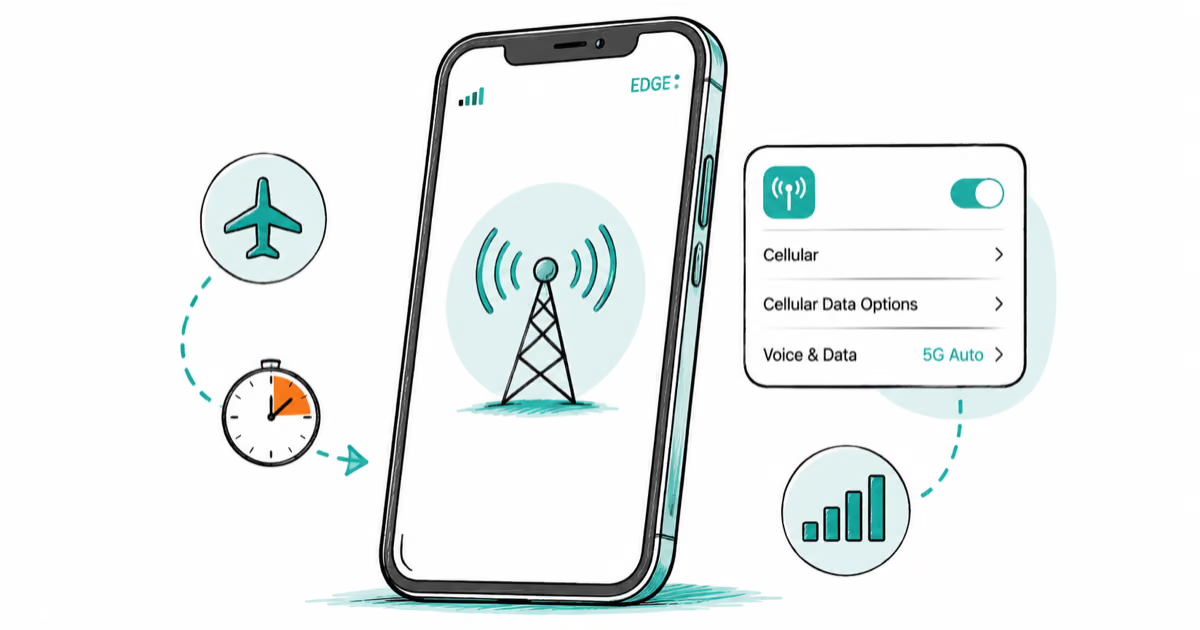
iPhone Stuck on EDGE? How to Get 5G or LTE Back (2026)
iPhone stuck on EDGE with crawling data? Here's why the E icon appears, which settings force 5G or LTE back, and when the problem is your carrier.