AMD Ryzen AI 300 Explained: XDNA 2 and Zen 5 Power
AMD Ryzen AI 300 explained: up to 12 Zen 5 cores, an XDNA 2 NPU at 50 TOPS, and RDNA 3.5 graphics. Why it's the creator and multitasking AI PC pick.

Quick AnswerAMD Ryzen AI 300 is AMD's Copilot+ laptop chip, pairing up to 12 Zen 5 cores with an XDNA 2 NPU rated at 50 TOPS. It's the creator and multitasking pick of the AI PC field, leaning on strong multi-core CPU muscle and x86 compatibility rather than ARM battery efficiency.
As of June 2026, AMD Ryzen AI 300 is AMD’s answer to the Copilot+ AI PC, and its pitch is muscle. Where Snapdragon chases battery and Intel chases broad balance, the Ryzen AI 300 leans on a strong multi-core CPU and a capable NPU, making it the family creators and heavy multitaskers tend to reach for. It’s an x86 chip, so it skips the ARM compatibility caveats entirely.
AMD launched the series, codenamed Strix Point, in mid-2024, so it’s mature and widely shipping now. The headline parts: a Zen 5 CPU, an XDNA 2 NPU, and RDNA 3.5 graphics on one chip.
- Ryzen AI 300 is AMD’s Copilot+ laptop platform, built around the Zen 5 CPU architecture and the XDNA 2 NPU
- The NPU is rated at 50 TOPS, clearing Microsoft’s 40-TOPS Copilot+ bar and unlocking the on-device Windows AI features
- Top configurations have up to 12 CPU cores and 24 threads, which makes it the strongest multi-core pick of the AI PC chips
- Because it’s x86, every Windows app, driver, and anti-cheat tool runs natively, with no ARM emulation layer
- It integrates RDNA 3.5 graphics, a stronger iGPU than rivals for light gaming and creative work
#What the Ryzen AI 300 Actually Is
The Ryzen AI 300 is AMD’s processor family for Copilot+ AI PCs, built on the Zen 5 CPU architecture. If you’ve read our explainer on what a Copilot+ PC is, this is AMD’s entry, alongside Snapdragon X and Intel Core Ultra.
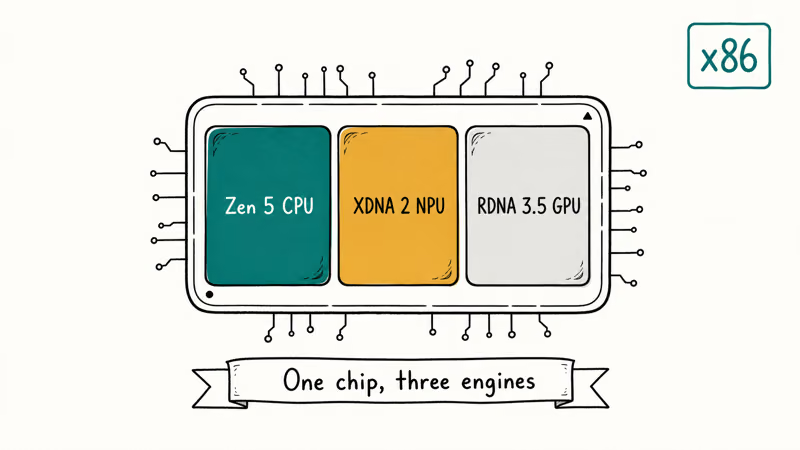
It’s a single chip with three jobs. A Zen 5 CPU handles general computing, an XDNA 2 NPU runs always-on AI, and RDNA 3.5 graphics drive the display and heavier parallel work. AMD’s pitch leans hardest on the CPU, where its multi-core design has long been a strength, and that emphasis carries through to how the company markets these laptops to professionals and creators who load all their cores rather than to people chasing the thinnest possible always-connected design.
Crucially, it’s x86, the architecture that’s run Windows for decades. Microsoft’s Copilot+ documentation confirms that any qualifying NPU unlocks the same on-device features regardless of CPU type, so the x86 base costs nothing on the AI side. What it buys is zero emulation and no compatibility asterisk, the trait that defines how the Ryzen AI 300 fits against ARM-based Snapdragon and the rest of the field.
#How Many Cores and How Much AI Power
This is where the Ryzen AI 300 separates itself. Top configurations pack up to 12 CPU cores and 24 threads, more than its main Copilot+ rivals. That’s why reviewers pick it for heavy work.
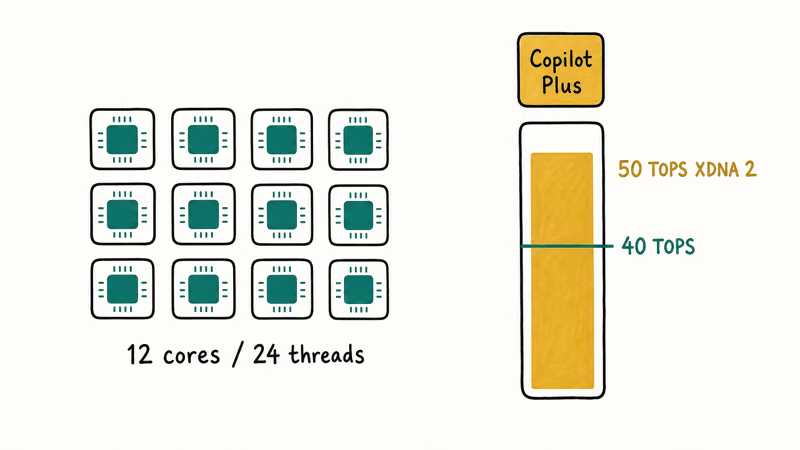
On the AI side, AMD built the NPU on its XDNA 2 architecture and rates it at 50 TOPS. According to Microsoft’s Copilot+ PCs developer guide, any NPU running “more than 40 trillion operations per second (TOPS)” qualifies for the Copilot+ tier, and Microsoft explicitly names the AMD Ryzen AI 300 series as Copilot+ silicon. So the 50-TOPS NPU clears that bar with margin.
The combination is the real selling point. You get a Copilot+ NPU plus more CPU cores than the alternatives, which is a meaningful edge for anyone whose work actually loads all those cores. AMD’s own Ryzen AI 300 launch announcement frames the chip around exactly this pairing of Zen 5 cores with the upgraded NPU.
#Why Is the Multi-Core Strength the Big Draw?
Because not every workload is light. Background AI like blur and captions barely taxes any modern chip, but video editing, 3D rendering, code compilation, and running multiple virtual machines hammer the CPU. That’s exactly where extra cores pay off.
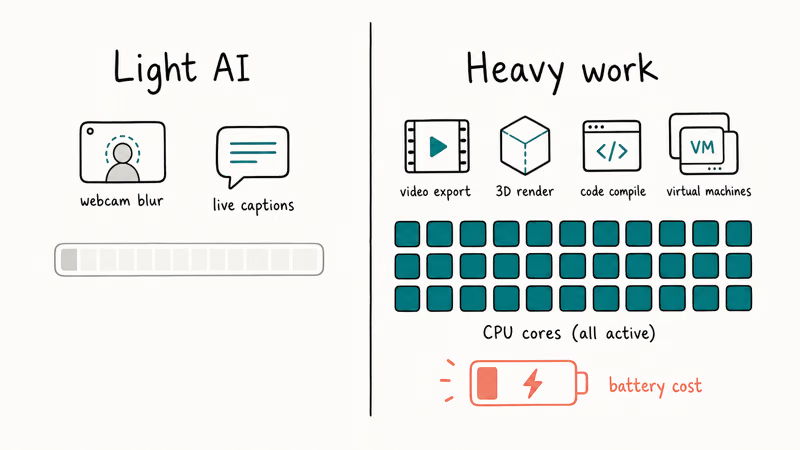
Ryzen AI 300 is for CPU-heavy creator work; Copilot+ tasks lean on the NPU, while exports, compiles, and multitasking lean on CPU cores.
The trade-off is battery. ARM-based Snapdragon chips still tend to run longer on a charge, so if you live unplugged all day, that’s the counterweight to AMD’s core advantage. AMD’s Ryzen AI 300 series overview details the full lineup and its Zen 5, XDNA 2, and RDNA 3.5 building blocks.
#How the NPU, GPU, and CPU Divide the Work
Each block owns a slice. The XDNA 2 NPU handles light, always-on AI efficiently. The RDNA 3.5 GPU takes heavy parallel AI, gaming, and creative rendering. The Zen 5 CPU does general and bursty workloads, and there’s a lot of it here.
That split is the foundation of every AI PC, and it’s why two chips with the same NPU rating can feel different in use. Microsoft’s developer guidance states that the NPU “uses energy on AI tasks more efficiently than a CPU or GPU,” which is why light background AI runs there. Our explainer on the NPU versus GPU versus CPU covers which chip does what, and our what an NPU actually does guide digs deeper.
One AMD-specific wrinkle stands out: its RDNA 3.5 integrated graphics beat the iGPUs in rival Copilot+ chips, so light gaming and GPU-accelerated creative tasks have noticeably more headroom on a Ryzen AI 300 laptop than on an equivalent Snapdragon or Intel machine. For anyone editing photos, doing light 3D, or playing the occasional game, that stronger iGPU is a real, tangible part of the creator appeal here.
#How It Stacks Up Against Snapdragon and Intel
All three families clear the same Copilot+ AI bar, so the split is about strengths, not AI speed. Snapdragon leads on battery, Intel on balance, AMD on cores and graphics.
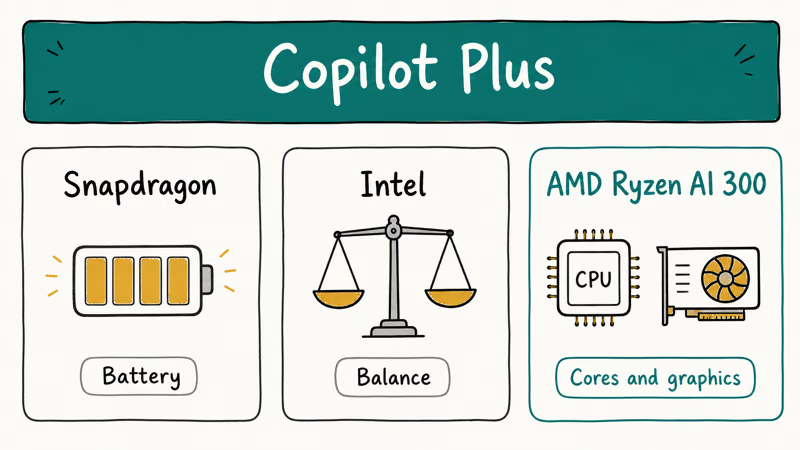
That makes it a workload question. Live unplugged, lean Snapdragon. Want balance, lean Intel. If your day loads the CPU and GPU hard, the Ryzen AI 300 wins, as our three-way comparison shows.
#Who Should Buy a Ryzen AI 300 Laptop?
The Ryzen AI 300 is the pick if your day is CPU-heavy and you want a Copilot+ AI PC without compromise on app compatibility. Video editors, developers, 3D artists, and power multitaskers get the most from those extra cores, and the strong iGPU is a bonus for creative work.
It’s also the safe x86 choice for anyone who simply can’t risk an app, driver, or anti-cheat tool failing under emulation. Still deciding whether an NPU machine is worth the premium at all? Our AI PC vs regular laptop breakdown and do you need an AI PC guide both work through that question.
#Bottom Line
Buy a Ryzen AI 300 laptop if your work leans on the CPU, like video export, compiling, or multitasking, and you want a Copilot+ AI PC with no compatibility asterisks. Its up-to-12-core Zen 5 design is the strongest multi-core option among AI PC chips, and the RDNA 3.5 iGPU adds creative headroom. If you want the longest battery and run only ARM apps, the Snapdragon X2 Elite fits better. For creator work, though, Ryzen AI 300 is the clear pick.
AI PCs and Copilot+ Laptops
#Frequently Asked Questions
What is AMD Ryzen AI 300?
It’s AMD’s processor family for Copilot+ AI PCs, built on the Zen 5 CPU architecture with an XDNA 2 NPU. It pairs up to 12 CPU cores with a 50-TOPS neural engine and RDNA 3.5 graphics on a single chip.
How many TOPS does the Ryzen AI 300 NPU have?
The XDNA 2 NPU is rated at 50 TOPS, clearing Microsoft’s 40-TOPS Copilot+ bar. That unlocks on-device features like Recall and Live Captions on supported laptops.
Does the Ryzen AI 300 run all Windows apps?
Yes. Because it uses x86, virtually every Windows app, driver, anti-cheat tool, and enterprise program runs natively with no emulation layer. That’s the same compatibility advantage Intel’s chips have over ARM-based Snapdragon laptops, which translate some legacy software through Microsoft’s Prism layer, so anyone with picky software is on safe ground here.
Is the Ryzen AI 300 good for video editing and content creation?
It’s one of the better AI PC chips for it. The up-to-12-core CPU handles heavy multi-threaded jobs like video export and rendering, and the RDNA 3.5 integrated graphics beat most rival iGPUs. That cores-plus-graphics combination is why creators often favor it.
Is the Ryzen AI 300 better than Snapdragon or Intel?
For raw multi-core work, it’s usually the strongest of the three. Snapdragon tends to win on battery and fanless designs, while Intel offers the broadest all-around balance, but AMD leads on CPU cores and integrated graphics. All three clear the same Copilot+ AI bar, so the decision really comes down to your specific workload rather than AI speed. Pick the one whose strength matches how you actually use a laptop, whether that’s battery, compatibility, or cores.
When did the Ryzen AI 300 launch?
AMD announced the series, codenamed Strix Point, in mid-2024 and shipped laptops shortly after. By June 2026 it’s a mature, widely available platform across many laptop makers.

Best Laptop for Running LLMs in 2026: Memory Comes First
The best laptop for running LLMs is a memory purchase first. Compare MacBook unified memory against NVIDIA laptop VRAM, and see what each tier really runs.

How to Run a Local LLM on Windows: A 2026 Setup Guide
Run a local LLM on Windows with LM Studio or Ollama. Pick a model that fits your GPU memory, keep every prompt offline, and skip the monthly bill.
Bluetooth Not Working on Snapdragon X? Fixes for 2026
Bluetooth not working on your Snapdragon X Copilot+ PC? Generic audio, mice, and keyboards work, but vendor apps often lack an ARM build. Fixes inside.

Docker Desktop and WSL2 Not Working on Snapdragon X? Fix It
WSL2 runs fine on Snapdragon X, but Docker Desktop ARM is Early Access and throws WSL errors. Use WSL2 plus native ARM64 Ubuntu and Docker Engine.