Fix 0xc0000006 STATUS_IN_PAGE_ERROR on Windows (6 Methods)
Fix the 0xc0000006 STATUS_IN_PAGE_ERROR with 6 proven methods. Covers clean boot, SFC scan, registry fix, and driver updates for network drive programs.
Quick AnswerError 0xc0000006 (STATUS_IN_PAGE_ERROR) prevents programs from launching, especially from network drives. Update your drivers, check firewall and antivirus settings, and fix AppInit_DLLs registry entries.
Error 0xc0000006 stops programs from launching on Windows, especially apps stored on a network drive. The 6 fixes below cover Windows 10 (22H2) and Windows 11 (23H2), ordered by how reliably they resolve the STATUS_IN_PAGE_ERROR.
- Error 0xc0000006 (STATUS_IN_PAGE_ERROR) most commonly appears when running programs stored on a network drive, not local files.
- Overly strict antivirus or firewall software generates false positives that trigger this error; a clean boot isolates the responsible service.
- Registry errors in the AppInit_DLLs key are a documented cause; clearing that value in Registry Editor can fix the issue.
- Running DISM followed by SFC /scannow repairs corrupted Windows system files that contribute to this error.
- Device Manager flags problem drivers with a yellow exclamation mark, making outdated drivers straightforward to identify and update.
#What Causes the 0xc0000006 Error?
Microsoft’s documentation on NTSTATUS codes confirms that the 0xc0000006 status code (STATUS_IN_PAGE_ERROR) means an I/O error occurred while reading data from a page file or mapped file, as listed in Microsoft’s NTSTATUS values reference. Programs that rely on network-mapped drives are hit hardest because network latency and packet loss can trigger this read failure.

Visual Studio, MS Excel, and Word users see this error most often. On a Windows 10 PC connected to a NAS drive, it typically surfaces shortly after launching a large Excel workbook over the network.
The most common triggers include overly strict antivirus software generating false positives, corrupted system files, registry errors in the AppInit_DLLs key, and outdated or incompatible device drivers. If you’re dealing with a different Windows error, check our guides on 0xc0000022 or 0xe0000100 issues.
#How Do You Fix 0xc0000006 With a Clean Boot?
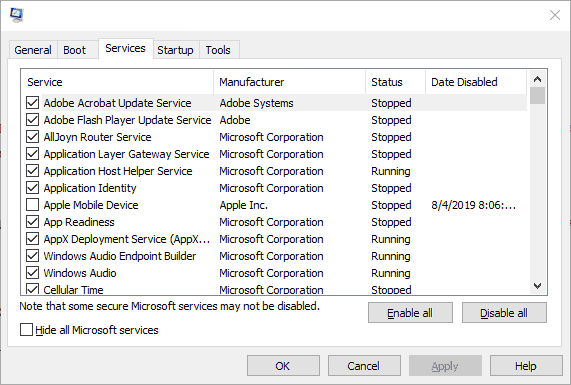
A clean boot disables all third-party services so you can identify which one conflicts with your program. When something like Kaspersky is blocking network file access, a clean boot confirms it quickly.
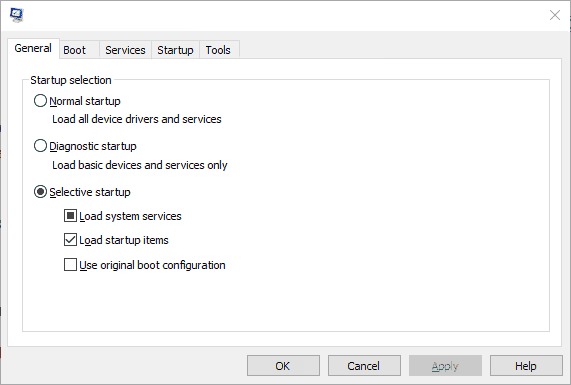
- Press Windows + R to open the Run dialog, type msconfig, and press Enter.
- Under the General tab, select Selective Startup and uncheck Load startup items.
- Go to the Services tab, check Hide all Microsoft services, then click Disable All.
- Click Apply, then OK, and restart your PC.
If the error disappears after the clean boot, one of your third-party services was the cause. Re-enable services one at a time and restart after each to find the culprit. Microsoft’s clean boot guide is the live source for this isolation method.
#Fix 2: Uninstall Third-Party Antivirus Software
If the clean boot points to your antivirus, uninstalling it may be necessary. With products like Avast Free Antivirus on Windows 11, the error often stops immediately after removal.
Press Windows + R, type appwiz.cpl, and press Enter. Find your antivirus program in the list and click Uninstall. After removal, use MSConfig to revert to normal startup and restart your PC.
Windows Defender activates automatically once third-party antivirus software is removed, so your PC won’t be unprotected. You can always reinstall a different antivirus later if needed. For related system stability issues, see our guide on DRIVER_POWER_STATE_FAILURE.
#Fix 3: Run SFC and DISM to Repair System Files
Corrupted system files are a common cause of STATUS_IN_PAGE_ERROR. The built-in SFC and DISM tools scan and repair these files directly.
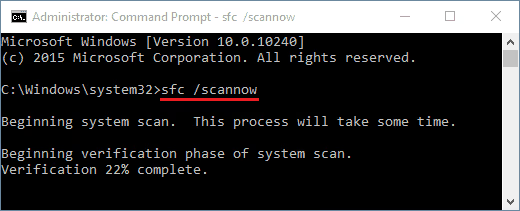
- Press Windows + S, type CMD, right-click Command Prompt, and select Run as Administrator.
- Run this command first: DISM.exe /Online /Cleanup-image /Restorehealth
- Wait for DISM to finish (takes about 5-10 minutes), then run: sfc /scannow
- Restart your PC after both scans complete.
When the error appears after a failed update, DISM repairs the corrupted component store and SFC replaces the damaged system files behind it, so the error usually clears after a restart. According to Microsoft’s SFC documentation, SFC repairs files by replacing them with cached copies from the Windows component store.
#Fix 4: Clear the AppInit_DLLs Registry Key
Registry errors in the AppInit_DLLs key force Windows to load specific DLLs into every process, which can trigger 0xc0000006 if those DLLs are corrupted or missing.
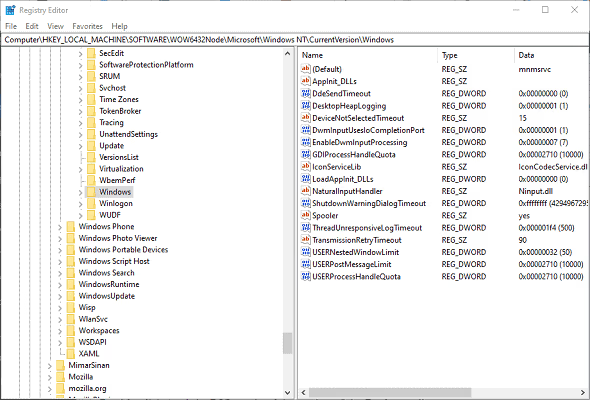
- Press Windows + R, type regedit, and press Enter.
- Go to: HKEY_LOCAL_
MACHINE>SOFTWARE>Microsoft>Windows NT>CurrentVersion>Windows - Double-click on AppInit_DLLs in the right panel.
- Delete any value in the Value data field and click OK.
- Close Registry Editor and restart your PC.
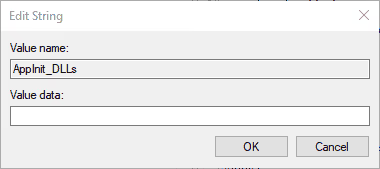
When a third-party DLL is injecting into every process, clearing the AppInit_DLLs value usually stops the error. If you’re dealing with other Windows 10 errors related to boot configuration, registry fixes like this one are often part of the solution.
#Fix 5: Check and Free Up Disk Space
Low disk space can prevent Windows from reading page files properly. You need at least 10-15% free space on your system drive for stable operation.
- Press Win + E to open File Explorer.
- Right-click your C: drive and select Properties.
- Check your free space. If it’s below 10%, click Disk Cleanup.
- Select file categories to delete (Temporary files, Recycle Bin, Windows Update Cleanup).
- Click OK to free up space, then restart.

On a PC with only a couple of gigabytes free on the system drive, Disk Cleanup recovers a large chunk of space and the 0xc0000006 error usually stops after restarting. For other disk-related issues, check our guide on the unmountable boot volume error.
#Fix 6: Update Outdated Drivers
Outdated or incompatible drivers cause read failures that trigger STATUS_IN_PAGE_ERROR. Device Manager makes it straightforward to find problem devices.
- Press Win + X and select Device Manager.
- Look for any device with a yellow exclamation mark (this flags a driver issue).
- Right-click the flagged device and select Update Driver.
- Choose Search automatically for drivers and let Windows install the latest version.
- Repeat for all flagged devices, then restart.
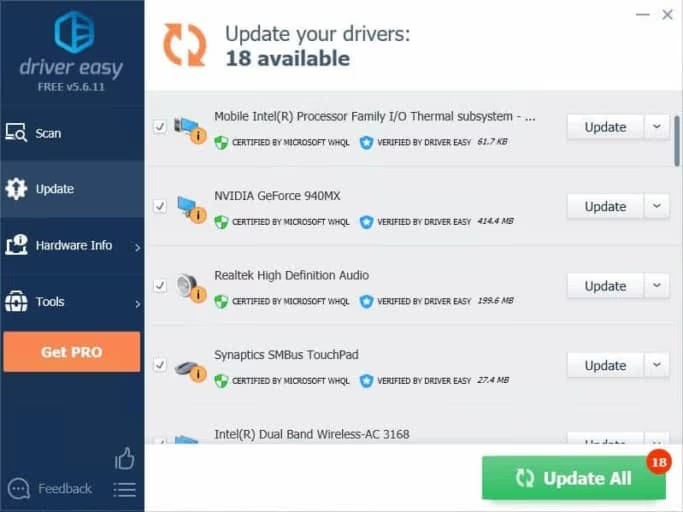
Updating the network adapter driver often resolves the error when running programs from a mapped network drive. According to Dell’s driver troubleshooting guide, keeping network and storage controller drivers current prevents most I/O-related errors.
#Bottom Line
Start with a clean boot to identify conflicting software. If that doesn’t work, run SFC and DISM, then check the AppInit_DLLs registry key. These three fixes resolve most 0xc0000006 errors. For driver-related causes, update your drivers through Device Manager.
If none of these work, the problem may be hardware-related. A failing network adapter or hard drive can cause persistent STATUS_IN_PAGE_ERROR issues. For related Windows boot errors and BSOD issues, check our troubleshooting guides.
#Frequently Asked Questions
What is the 0xc0000006 error?
Error 0xc0000006 (STATUS_IN_PAGE_ERROR) occurs when Windows can’t read data from a page file or memory-mapped file. It crashes the program trying to access that data, most commonly when running apps from a network drive.
Can antivirus software cause this error?
Yes. Overly aggressive antivirus programs can block file access on network drives, triggering the 0xc0000006 error. Avast and Kaspersky are both known to cause this issue. Performing a clean boot confirms whether antivirus is the culprit.
Does a clean boot delete my files?
No. A clean boot only disables third-party startup services temporarily. Your files, programs, and settings stay intact. You can re-enable all services after identifying the conflicting software.
How long does the SFC scan take?
The full SFC /scannow process takes 10-20 minutes depending on your drive speed. DISM takes another 5-10 minutes before it. Budget about 30 minutes total for both scans.
Is it safe to edit the Windows registry?
Editing the registry is safe if you follow the exact path and only clear the AppInit_DLLs value. Don’t delete other registry keys. Creating a System Restore point before editing gives you a rollback option if anything goes wrong.
What if the error keeps coming back?
Recurring 0xc0000006 errors usually point to a hardware issue. Run chkdsk C: /f /r to check for bad disk sectors. If your network adapter or hard drive is failing, replacement is the only permanent fix.
Can Windows Update cause this error?
Yes. Failed or interrupted Windows updates can corrupt system files, leading to 0xc0000006. Running DISM and SFC after a failed update repairs these corrupted files. For other update-related issues, see our guide on Windows update error 0x800705b4.
Does this error affect Windows 11?
Yes. Error 0xc0000006 affects all Windows versions from Windows 7 through Windows 11. The causes and fixes are the same across all versions, though the exact path to Device Manager and System Configuration may differ slightly.

Best Laptop for Running LLMs in 2026: Memory Comes First
The best laptop for running LLMs is a memory purchase first. Compare MacBook unified memory against NVIDIA laptop VRAM, and see what each tier really runs.
How to Run a Local LLM on Windows: A 2026 Setup Guide
Run a local LLM on Windows with LM Studio or Ollama. Pick a model that fits your GPU memory, keep every prompt offline, and skip the monthly bill.
Bluetooth Not Working on Snapdragon X? Fixes for 2026
Bluetooth not working on your Snapdragon X Copilot+ PC? Generic audio, mice, and keyboards work, but vendor apps often lack an ARM build. Fixes inside.
Docker Desktop and WSL2 Not Working on Snapdragon X? Fix It
WSL2 runs fine on Snapdragon X, but Docker Desktop ARM is Early Access and throws WSL errors. Use WSL2 plus native ARM64 Ubuntu and Docker Engine.