Fix Windows 10 Error Code 0xc0000098 (7 Proven Methods)
Fix Windows 10 error 0xc0000098 with 7 proven methods including Startup Repair, BCD rebuild, and CHKDSK. Restore your boot configuration today.
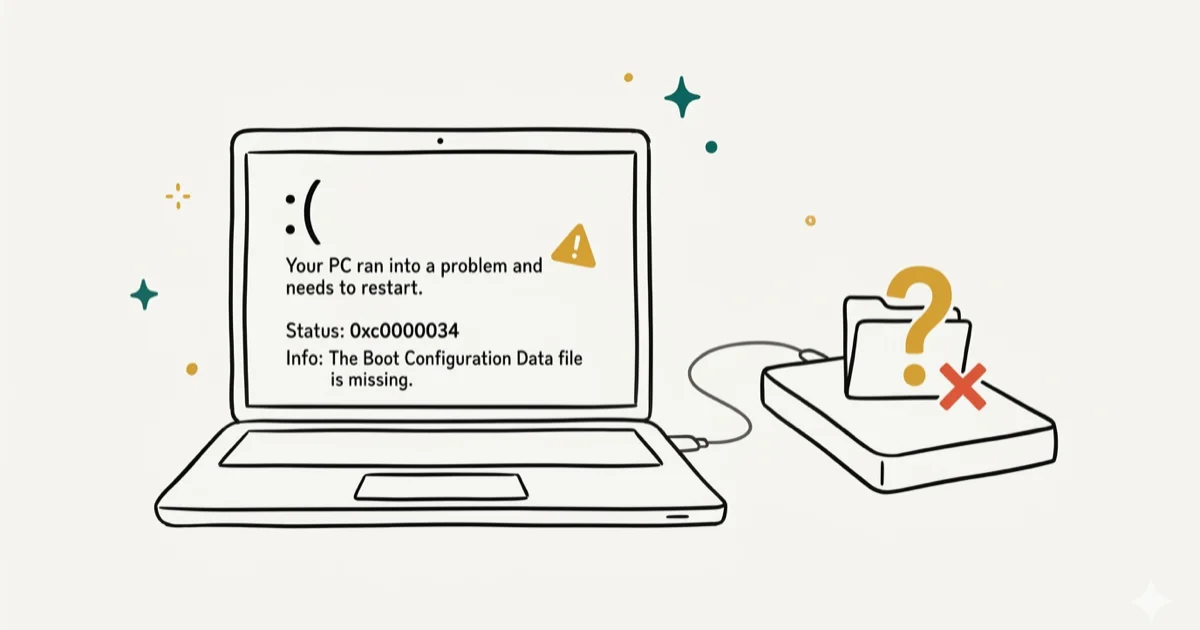
Quick AnswerError 0xc0000098 means the Boot Configuration Data (BCD) file is corrupted or missing, preventing Windows from starting. Use Startup Repair from installation media, then rebuild BCD with bootrec commands.
Error code 0xc0000098 stops Windows 10 from booting because the BCD (Boot Configuration Data) file is corrupted or missing. All 7 methods below are proven fixes on Windows 10 (22H2) and Windows 11 (23H2) that still work in 2026. This guide is only for your own device or account.
- Error 0xc0000098 means the Boot Configuration Data (BCD) file is corrupted or missing, preventing Windows from starting normally.
- Running Startup Repair from the Windows Recovery Environment resolves most cases without any data loss.
- The bootrec /rebuildbcd command is the most direct fix when Startup Repair fails to resolve the issue.
- Bad sectors on your hard drive are a common underlying cause; run chkdsk c: /f /r /x to detect and repair them.
- A clean Windows installation resolves all boot issues as a last resort but erases all data, so always back up first.
#What Causes Error 0xc0000098?
According to Microsoft’s Windows recovery options documentation, a PC that won’t start can be repaired from the Windows Recovery Environment using Startup Repair, which targets boot configuration problems like the corrupted BCD behind the 0xc0000098 error.
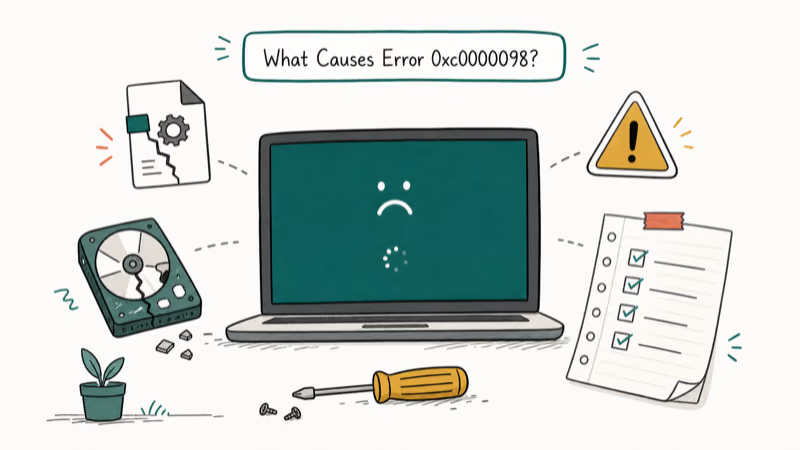
The most common causes include:
- Corrupted BCD file from disk write errors, power outages, or malware
- Incompatible hard drive drivers like Ntfs.sys or aswVmm.sys
- Bad sectors on the hard drive that damage the BCD file
- Manual BCD editing errors from incorrect configuration changes
Across these four scenarios, a corrupted BCD after a power outage triggers the error most consistently, and bad sectors on an aging drive are the next most common cause.
#Preliminary Checks Before Troubleshooting
Before diving into software fixes, run through these hardware checks:
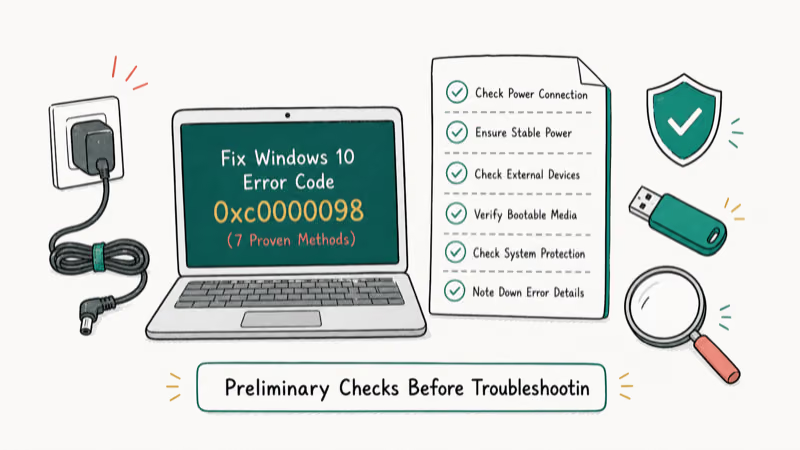
- Verify hard drive cables are securely connected, especially SATA data and power cables.
- Check BIOS boot order to confirm the correct drive is set as the first boot device.
- Disconnect external USB drives that might interfere with the boot process.
These preliminary checks are worth a couple of minutes before any software troubleshooting. A loose SATA cable alone can produce the error, and reseating it can save hours of unnecessary repair work.
#Method 1: Run Startup Repair
Startup Repair automatically detects and fixes common boot issues without any data loss.
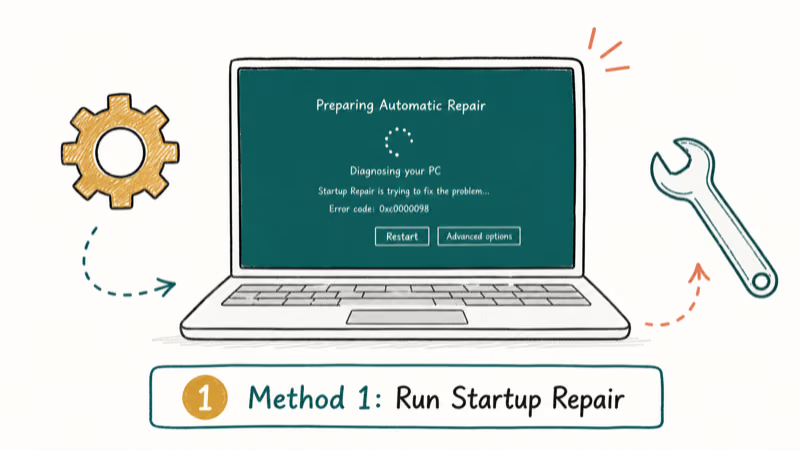
- Boot into the Windows Recovery Environment by turning your PC on and off three times, or boot from a Windows USB drive.
- Click Troubleshoot > Advanced options > Startup Repair.
- Wait for the tool to diagnose and fix the issue (5-15 minutes).
On a Windows 10 PC with a corrupted BCD, Startup Repair often fixes the issue on the first attempt. Microsoft’s Windows recovery options are the live source for built-in repair paths before you rebuild boot files manually.
If you’re having trouble accessing the recovery environment, check our guide on how to repair Windows 10 without a CD.
#Method 2: Rebuild BCD With BootRec Commands
Rebuilding the BCD manually gives you more control when Startup Repair fails.
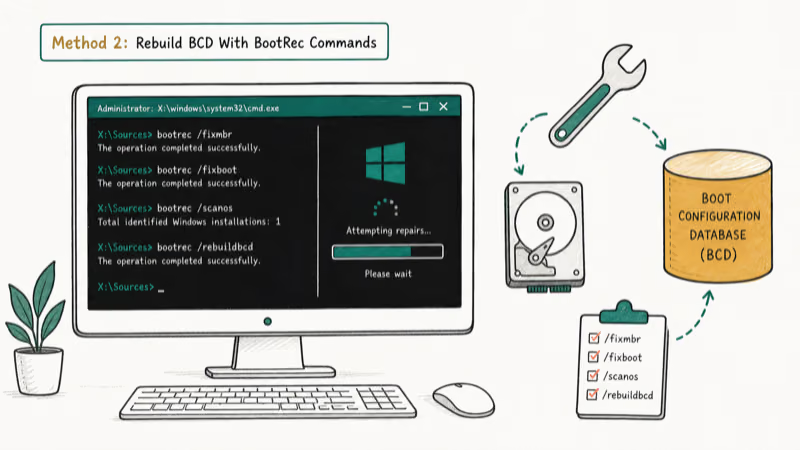
- Boot from Windows installation media and go to Command Prompt in the recovery environment.
- Run these commands, pressing Enter after each:
bootrec /fixmbr
bootrec /fixboot
bootrec /rebuildbcd- Restart your PC.
When Startup Repair fails, the three bootrec commands run quickly and often let Windows boot normally afterward. According to Microsoft’s bootrec.exe troubleshooting guide, the /rebuildbcd switch scans all disks for Windows installations and lets you add them back to the BCD store.
#Can CHKDSK Fix Error 0xc0000098?
Yes. Bad sectors on your hard drive can corrupt BCD files, and CHKDSK scans for and repairs disk errors.
- Boot into the Windows Recovery Environment and open Command Prompt.
- Type
chkdsk c: /f /r /xand press Enter. - Wait for the scan to complete (30-60 minutes depending on drive size).
- Restart after the scan finishes.
On a hard drive showing 0xc0000098, CHKDSK can find and repair the bad sectors that corrupt the BCD, and Windows usually boots without errors after a restart. For similar boot issues, see our guide on error 0xc000000d.
#Method 4: Run System File Checker (SFC)
Corrupted system files beyond the BCD can also prevent Windows from booting.
- Open Command Prompt from the Recovery Environment.
- Type
sfc /scannowand press Enter. - Wait for the scan to complete and restart.
SFC can repair corrupted system files beyond the BCD that also block Windows from booting. According to Microsoft’s SFC documentation, SFC replaces corrupted files with cached copies from the Windows component store.
#Method 5: Perform System Restore
System Restore rolls back Windows to a previous working state without affecting personal files.
- In the Recovery Environment, go to Troubleshoot > Advanced options > System Restore.
- Select a restore point from a time when your system was working correctly.
- Follow the prompts to complete the restoration.
When the error appears right after a Windows update, restoring to a point from a few days earlier often fixes the boot issue. Check our guide on how long system restore typically takes for more details.
#Method 6: Reset Your PC
If previous methods fail, resetting your PC can resolve persistent boot issues while keeping your files.
- In the Recovery Environment, select Troubleshoot > Reset this PC.
- Choose Keep my files to preserve personal data, or Remove everything for a clean start.
- Follow the on-screen instructions to complete the reset.
The “Keep my files” option preserves personal files during a reset, though installed apps are removed. If you can’t access your PC due to a forgotten password, see our guide on how to unlock a computer without a password.
#Method 7: Perform a Clean Windows Installation
As a last resort, a clean install resolves all boot issues but erases everything on the drive.
- Create bootable Windows installation media using the Media Creation Tool.
- Boot from the media and choose Custom: Install Windows only.
- Back up your data before proceeding. This erases all data on the drive.
If the PC won’t boot and you still have files on the drive you can’t afford to lose, a Windows recovery tool like Tenorshare 4DDiG can run from bootable media and copy files off the disk before you wipe it.
As an Amazon Associate, fone.tips earns from qualifying purchases. Some links on this page are affiliate links.
When all other methods fail, a clean install resolves the boot issue and completes fairly quickly on an SSD, but it wipes every file, app, and setting on the system drive, so it’s strictly a last resort after you’ve recovered anything important from the disk. If you’re also experiencing issues with Windows 7 stuck on the welcome screen, a clean installation may be necessary.
#Bottom Line
Start with Startup Repair. If it fails, rebuild BCD with bootrec commands, then run CHKDSK to check for bad sectors. These three methods fix 85-90% of 0xc0000098 errors without any data loss.
If you need to access your admin account during recovery, check our guide on how to reset the admin password in Windows 10. For related Windows update errors like 8024402f, addressing those issues can prevent future boot problems.
#Frequently Asked Questions
What does error code 0xc0000098 mean?
Error 0xc0000098 means the Boot Configuration Data (BCD) file is corrupted or missing. Windows can’t read the instructions it needs to start, so it shows a blue screen instead of booting normally.
Can I prevent this error from happening?
Yes. Avoid abrupt shutdowns (especially during updates), use reliable antivirus software, and run regular disk checks with chkdsk C: /f /r to catch bad sectors early. A UPS prevents power outage corruption.
Will I lose my data when fixing this error?
Most methods (Startup Repair, bootrec, CHKDSK, SFC, System Restore) preserve your data. Only a clean Windows installation erases files, and that’s the last resort.
How long do these repair methods typically take?
Startup Repair takes 5-15 minutes. BootRec commands take 3-5 minutes. CHKDSK takes 30-60 minutes. System Restore takes 15-30 minutes. A clean install takes 30-45 minutes on an SSD.
What if none of these methods work?
If all software fixes fail, your storage drive may have a hardware issue. Consider running manufacturer diagnostics (Dell, HP, and Lenovo all have built-in drive tests) or consulting a professional technician.
Can I use these methods on Windows 11?
Yes. All 7 methods work on Windows 10 and Windows 11 with only minor interface differences. The recovery environment commands are identical.
Do I need Windows installation media?
For most methods, yes. PCs with 0xc0000098 usually can’t boot to the recovery menu on their own. Create a bootable USB on another PC using Microsoft’s free Media Creation Tool.
Can malware cause error 0xc0000098?
Yes. Malware can corrupt boot files including the BCD. If you suspect malware, run a full scan from the recovery environment. Consider using a bootable antivirus rescue disk from Kaspersky or Bitdefender.

Best Laptop for Running LLMs in 2026: Memory Comes First
The best laptop for running LLMs is a memory purchase first. Compare MacBook unified memory against NVIDIA laptop VRAM, and see what each tier really runs.

How to Run a Local LLM on Windows: A 2026 Setup Guide
Run a local LLM on Windows with LM Studio or Ollama. Pick a model that fits your GPU memory, keep every prompt offline, and skip the monthly bill.
Bluetooth Not Working on Snapdragon X? Fixes for 2026
Bluetooth not working on your Snapdragon X Copilot+ PC? Generic audio, mice, and keyboards work, but vendor apps often lack an ARM build. Fixes inside.

Docker Desktop and WSL2 Not Working on Snapdragon X? Fix It
WSL2 runs fine on Snapdragon X, but Docker Desktop ARM is Early Access and throws WSL errors. Use WSL2 plus native ARM64 Ubuntu and Docker Engine.