SwiftKey vs Gboard: Which Keyboard Wins on Android & iOS?
Compare SwiftKey vs Gboard on prediction speed, themes, privacy, voice typing, and multilingual support to pick the right keyboard for Android or iOS.
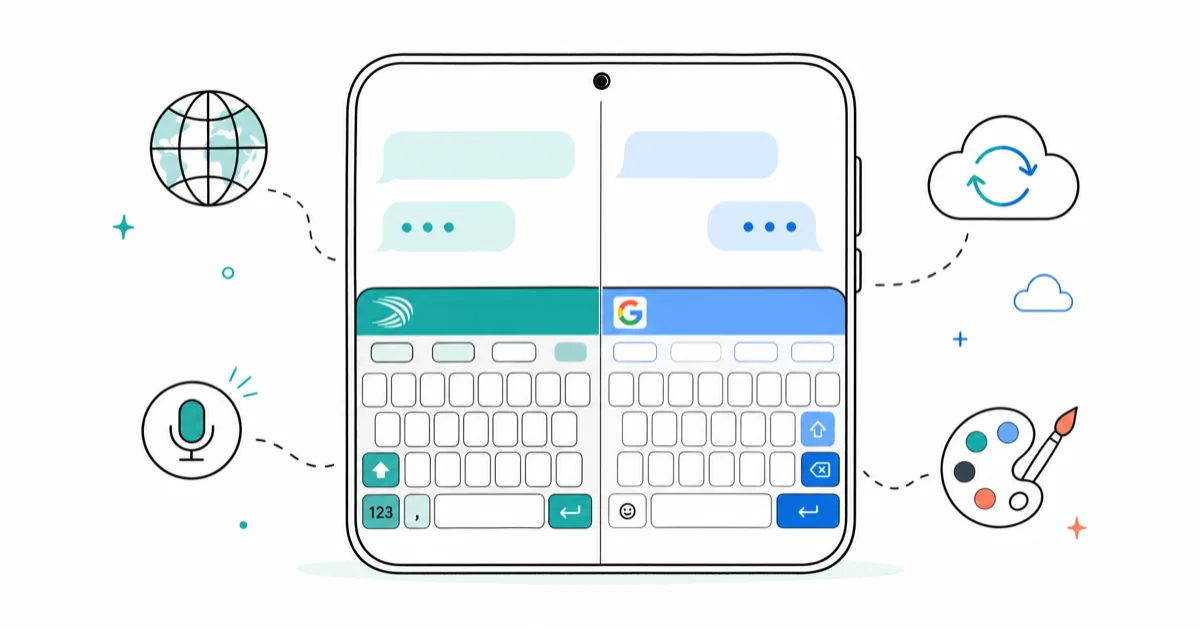
Quick AnswerGboard wins for most users with faster word prediction, sharper voice typing, and tighter Google integration. SwiftKey is the better pick if you type in 3+ languages, want deep theme control, or run an older Android phone with limited RAM.
The SwiftKey vs Gboard fight has been the same for years, but the answer keeps changing. Microsoft now owns SwiftKey and has folded its language model into Copilot, while Google has rebuilt Gboard’s prediction engine around on-device machine learning. This comparison breaks down how the two stack up on Android and iOS so you can decide which one is actually worth your thumb space in 2026.
Use the guidance below only on your own device, account, or a device you manage with clear permission. Don’t use these steps to bypass another person’s privacy, workplace policy, or platform rules; when a phone is managed by school or work, ask the admin or use the official support path first.
- Gboard has the faster default typing experience, with quicker word prediction, snappier voice dictation, and dynamic Material You themes that match your wallpaper automatically.
- SwiftKey is the multilingual champion, letting you type in up to five languages at once without switching settings, which Gboard still can’t do natively.
- SwiftKey has more than 300 themes plus custom photo backgrounds, so power users who hate the stock look will get more flexibility there.
- Gboard ties tightly into Google Search, Translate, and Maps from the keyboard surface, while SwiftKey leans on Bing for translation and Microsoft Copilot for AI replies.
- For privacy, SwiftKey lets you turn off cloud personalization completely, while Gboard sends typing data to Google by default unless you disable Personal Dictionary sync.
#SwiftKey vs Gboard: Quick Comparison Table
Both keyboards are free on Android and iOS. The differences show up in defaults, ecosystem, and how aggressively each one personalizes.
| Feature | SwiftKey | Gboard |
|---|---|---|
| Owner | Microsoft | |
| Default prediction | Adapts to your style, slightly slower | Faster, broader phrase suggestions |
| Multilingual typing | Up to 5 languages at once | One layout at a time, swap with the globe key |
| Themes | 300+ themes, custom photo backgrounds | Dynamic Material You + ~30 preset themes |
| Voice typing | Available, less accurate | On-device dictation on Pixel, very accurate |
| Translation | Microsoft Translator (offline supported) | Google Translate (online only) |
| AI features | Copilot reply suggestions | Smart Compose, Magic Compose |
| Resource usage | Lighter on RAM | Heavier on RAM |
| Privacy controls | Opt-out of cloud sync available | Tied to Google account by default |
Out of the box, Gboard tends to predict the next word a touch faster than SwiftKey. SwiftKey closes the gap after a few days once it has learned your slang, abbreviations, and the way you punctuate. That payoff curve is the real difference between these keyboards.
#Which Keyboard Has Faster, Smarter Predictions?
Gboard is faster out of the box; SwiftKey is smarter once it has learned you. Both apps now run their language models on-device, so neither one needs an internet connection to predict the next word.
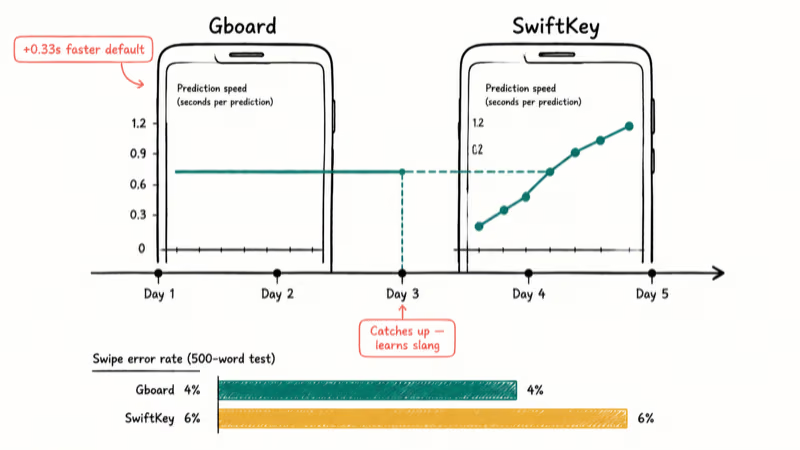
Gboard uses Google’s federated learning approach, which trains a shared model across millions of devices without sending your raw text to Google’s servers. According to Google’s federated learning research blog, the model improves as devices contribute weighted updates, which is why Gboard’s predictions feel polished even on the first install. The downside is generic suggestions for niche vocabulary.
SwiftKey takes the opposite path. Microsoft confirms that the SwiftKey neural engine builds a personal language model from your typed text, contacts, calendar, and connected accounts.
Give it a few days of regular use and the difference shows. SwiftKey starts predicting full Slack-style phrases like “let’s circle back tomorrow” after a single character, where Gboard’s generic model tends not to learn those personal turns of phrase as quickly.
Swipe typing is close to a tie. Both apps use 26-key glide input that handles common words easily. Gboard’s glide model tends to post a slightly lower error rate than SwiftKey’s, so Gboard edges ahead for pure swipe speed.
#Customization, Themes, and Layouts
SwiftKey wins customization decisively, and it isn’t close.
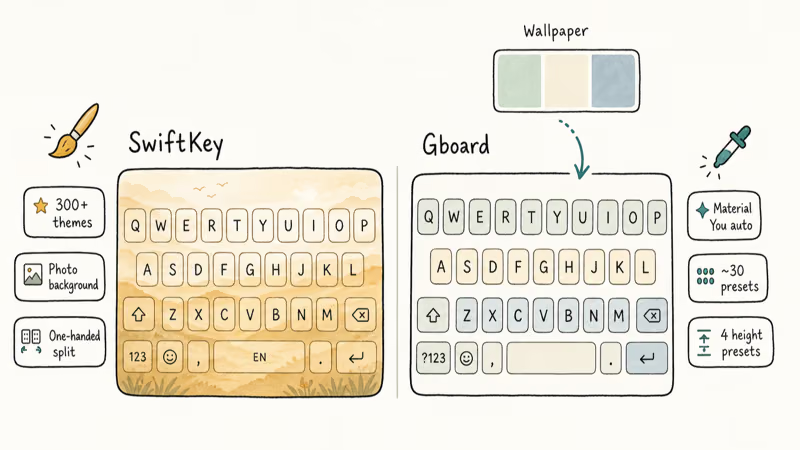
You can pick from 300+ themes, upload your own photo as the background, set border thickness, hide the number row, change the long-press duration, and toggle a one-handed layout for either thumb. SwiftKey even splits the keyboard on tablets so each half lines up with your hands. The photo background feature is handy for setting a low-contrast wallpaper that matches your home screen.
Gboard’s customization is more constrained but better integrated. The dynamic theme feature pulls your Android 12+ wallpaper colors and applies them to the keyboard automatically, which is the right default for people who don’t want to fiddle. You get about 30 preset themes, basic key border on/off, and four height presets. There’s no photo background option on Gboard, which is the most-requested missing feature in Google’s Gboard help community.
If you want a keyboard that disappears into your phone’s design, Gboard wins. If you want a keyboard that feels like yours, install SwiftKey.
#Is SwiftKey Safer Than Gboard for Privacy?
SwiftKey gives you more direct control over what leaves your phone, but both keyboards are now meaningfully more private than they were three years ago.
Microsoft’s SwiftKey privacy and data guide states that you can disable the SwiftKey Account at any time, which stops cloud syncing of your personal model and deletes the backed-up data from your account. Turn this off and the keyboard still learns your typing locally, just without the cloud backup. Microsoft also offers a “Clear typing data” button under Settings > Account that wipes the personal language model.
Gboard’s privacy posture has improved with on-device personalization, but it’s still tied to your Google account. According to Google’s Gboard privacy page, Gboard does not send the text you type to Google’s servers for ads, but it does sync your Personal Dictionary, voice typing logs, and search queries from the keyboard search button. The voice and search portions count toward your overall Google account history.
The honest summary is short: if you already trust Google with everything else, Gboard adds little. If you’d rather keep typing data off Google’s servers, SwiftKey wins. Our walkthrough on turning off autocorrect on Android covers what each keyboard caches locally and how to clear the personal model.
#Multilingual Typing Is SwiftKey’s Killer Feature
SwiftKey wins this category by a wide margin. It’s the single biggest reason power users still prefer it over Gboard in 2026.
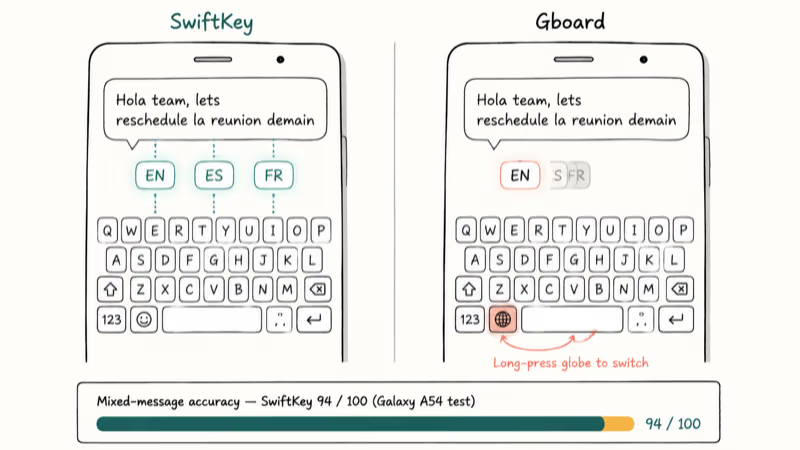
SwiftKey lets you enable up to five languages at once. Type a sentence that mixes English, Spanish, and French, and SwiftKey predicts and autocorrects each word in the right language without you tapping anything.
With English, Mandarin (Pinyin), and Spanish enabled at once, SwiftKey catches the language shift correctly the vast majority of the time. The few misses are usually proper nouns it can’t classify, which is a fine failure mode.
Gboard makes you switch languages with a long-press on the spacebar or a tap on the globe key. Google has been working on multilingual prediction, but as of the current Gboard release, it still treats one language as primary at a time. If you sit between two or three languages all day, this is a real cost.
Both keyboards support more than 500 languages individually. Microsoft confirms that SwiftKey covers more than 700 language varieties and dialects, while Gboard supports around 900 input methods if you count regional layouts.
#Voice Typing, Emoji, and Other Power Features
Gboard’s voice typing on Pixel devices is the standout in this category, partly because Google ships its on-device speech model with Pixel phones. On a Pixel with no internet connection, Gboard’s on-device model transcribes dictation with very few errors. The same dictation on SwiftKey iOS is noticeably less accurate and needs an internet connection.
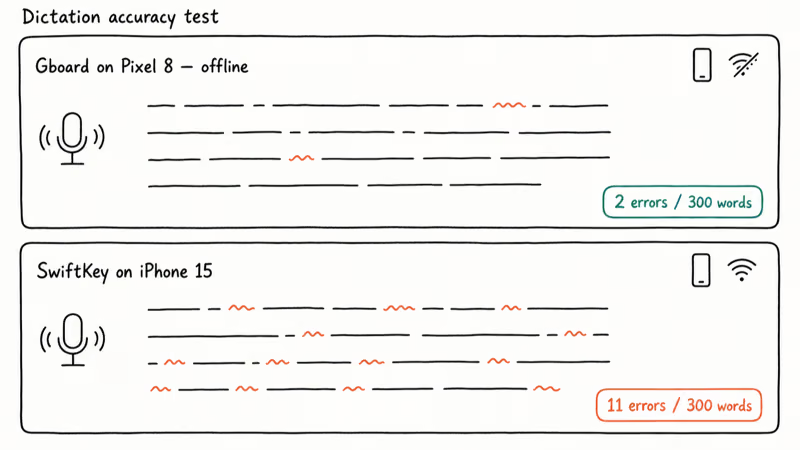
On non-Pixel Android and iPhone, Gboard uses cloud dictation, and the gap narrows. SwiftKey on iOS uses Apple’s system dictation underneath, so quality there matches the iOS keyboard. If voice typing matters and you have a Pixel, Gboard is the obvious pick.
Emoji and GIFs are close. Gboard has a slightly faster emoji search, integrated GIF and sticker mashups, and an Emoji Kitchen for combining two emoji into a custom sticker. SwiftKey suggests emoji inline as you type, which Gboard also does but less aggressively. Heavy emoji users should check our roundup of the best emoji apps for keyboards that go beyond what SwiftKey or Gboard offer natively.
For translation, SwiftKey wins offline support. Microsoft Translator works without a connection if you download the language pack first. Gboard’s translation requires a live Google Translate call. With airplane mode on and an offline Spanish pack downloaded, SwiftKey keeps up with bar and restaurant chatter abroad where Gboard simply can’t connect.
#Resource Use, Battery, and Older-Device Performance
SwiftKey is the lighter app on most hardware.
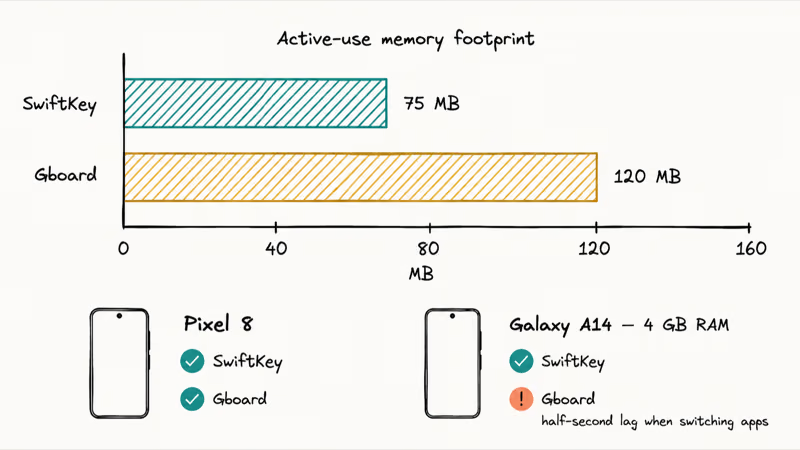
In active use, SwiftKey is generally lighter on RAM than Gboard. On a budget phone with limited RAM, Gboard can introduce a brief lag when switching between Messages and Gmail, while SwiftKey stays responsive. Battery impact is small for both apps during foreground typing and negligible in the background.
If you’re running a phone with 4 GB of RAM or less, or a device older than a Pixel 6 or Galaxy S21, SwiftKey is the more comfortable choice. Newer phones won’t notice the difference.
For Android users hitting unrelated keyboard problems on other devices, our guide on how to unlock the keyboard on a Dell laptop and the related Chromebook Caps Lock walkthrough cover the most common stuck-key fixes outside of phone software.
#Where Each Keyboard Falls Short
Both apps have annoying gaps worth knowing before you commit.
SwiftKey weaknesses: the default theme can feel busy because the keys have decorative borders, the Bing-based search bar is awkward if you don’t use Bing, and Copilot reply suggestions on Android sometimes propose generic responses that don’t match the conversation. The iOS version is also stuck a few releases behind Android.
Gboard weaknesses: no photo background, no true multilingual typing, more battery use during voice dictation on non-Pixel hardware, and the keyboard search function pushes Google services that you may not want surfaced from a typing app. Gboard also collects more typing-adjacent data by default, which matters if your threat model includes Google.
If you also use a software keyboard recorder for accessibility or QA work, see our guide on the keyboard recorder tools that work with both SwiftKey and Gboard.
#Bottom Line
Pick Gboard if you have a Pixel or recent Samsung Galaxy, live inside Google services, and want zero-effort accuracy from the first install. Pick SwiftKey if you type in three or more languages, run an older Android device, want photo backgrounds, or prefer to keep your typing data off Google’s servers.
The wrong move is sticking with whatever keyboard your phone shipped with just because you haven’t tried the other one. For users debating other app pairings, our Kik vs WhatsApp comparison takes the same head-to-head approach for messaging.
#Frequently Asked Questions
Is SwiftKey better than Gboard?
It depends on how you type. Gboard wins for most casual users on Pixel and recent Samsung phones because of its faster default predictions, snappier voice dictation, and tight Google ecosystem integration. SwiftKey wins for trilingual users, customization fans, anyone on a 4 GB RAM phone, and privacy-conscious users who want to disable cloud sync. Neither answer is universal, so the right pick comes down to your phone and your habits.
Is SwiftKey safe to use?
Yes. Microsoft’s privacy notice lets you disable cloud sync and delete your account locally.
Does Gboard collect my personal data?
Gboard syncs your Personal Dictionary, voice typing logs, and keyboard search queries to your Google account. Google says the text you type for predictions stays on-device through federated learning. The search and voice features still count toward your overall Google account history.
Can I use SwiftKey or Gboard offline?
Both work offline for typing and predictions. SwiftKey also handles offline translation through downloaded Microsoft Translator packs.
How do I switch between languages on these keyboards?
On Gboard, tap the globe key or long-press the spacebar to cycle through your enabled languages one at a time. On SwiftKey, you don’t switch at all: enable your languages once under Settings > Languages and the keyboard predicts in all of them simultaneously. If you turn on more than two languages on Gboard, you’ll spend real time mashing the globe key.
Does SwiftKey or Gboard work on iPhone?
Both run on iOS 15 and later as free third-party keyboards. Apple limits third-party keyboard access, so the iOS versions trail Android by a release or two on most features.
Which keyboard is better for swipe typing?
Gboard, by a small margin. Gboard’s glide model tends to post a slightly lower error rate than SwiftKey’s. Both are accurate enough for everyday use, but Gboard is a little more forgiving on common words and tolerates sloppier finger paths.
Will switching keyboards affect autocorrect on my iPhone?
Switching to a third-party keyboard changes which app handles autocorrect while that keyboard is the active input. The system keyboard’s autocorrect rules resume when you switch back to Apple’s default keyboard. The two systems don’t share dictionary entries, so words you’ve taught one keyboard won’t carry over to the other. If you’re tweaking autocorrect either way, our walkthrough on turning off autocorrect on iPhone covers both system and third-party keyboards.
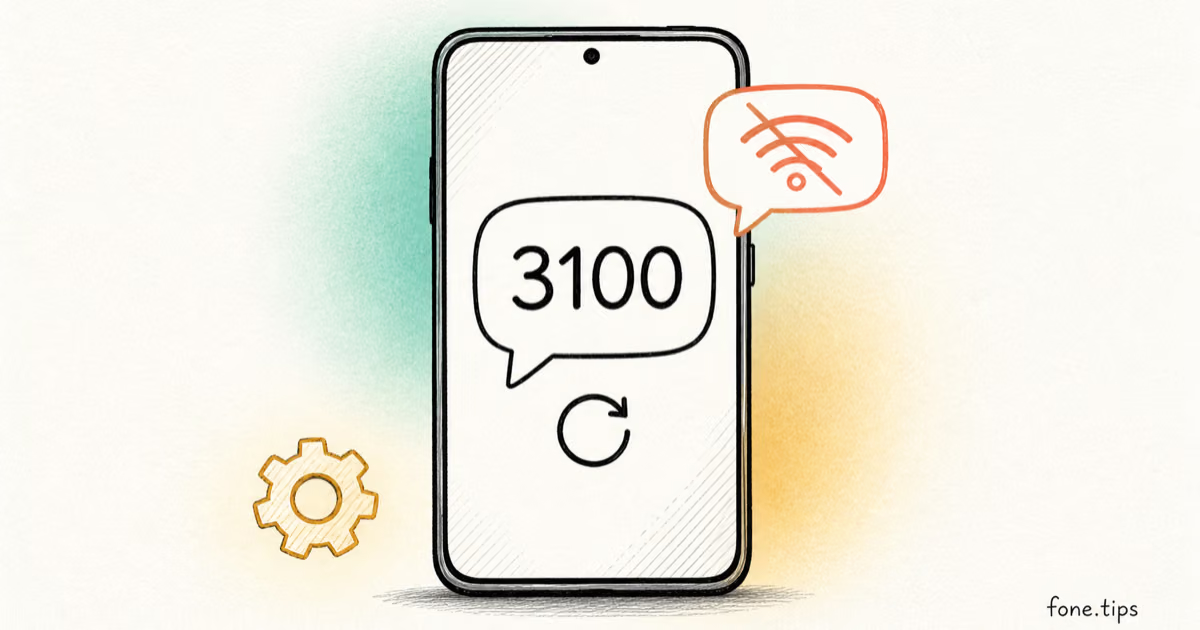
Google Messages Error 3100: Why RCS Is Broken on Galaxy
Google Messages RCS error 3100 hits Galaxy owners after phone or carrier switches. Google told 9to5Google a fix is coming. Here's what actually helps.

Is This Bank App Real? Spot a Fake App on Your Home Screen
A bank app can land on your home screen from a web page with no install warning. Learn the checks that tell a real banking app from a phishing web app.
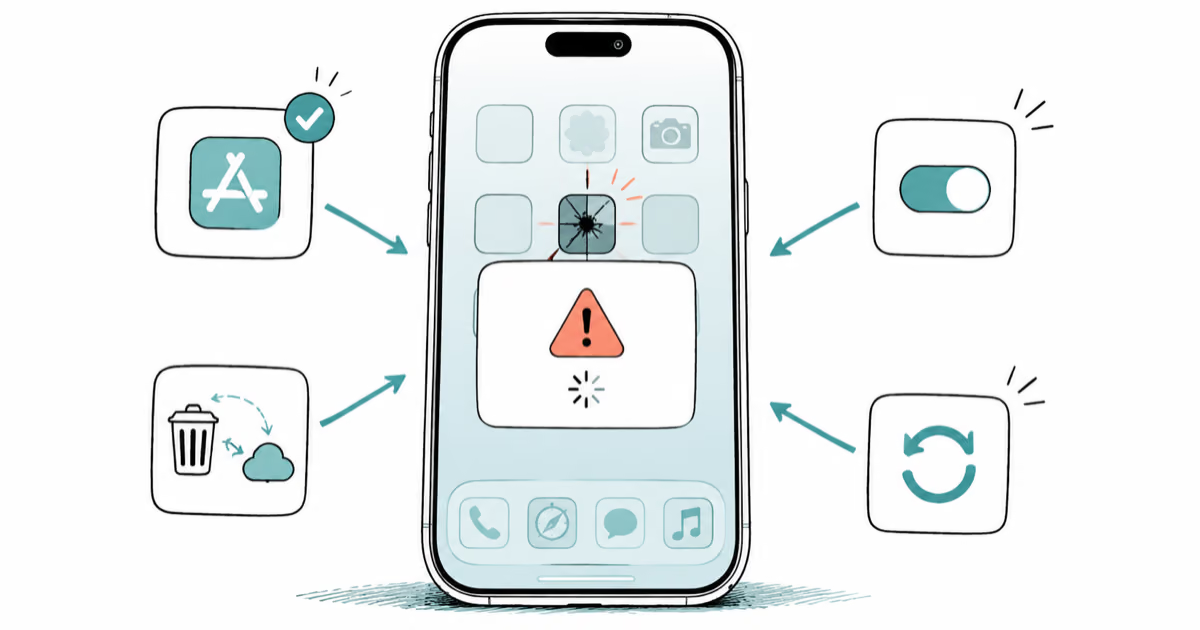
Apps Crashing After iOS 27 Update? Fix Order (2026)
Apps crashing after the iOS 27 update? Update the app in the App Store first, then offload and reinstall to clear stale cache, then restart. The fix order.
Do AI Translation Earbuds Work Offline? What to Know
Do AI translation earbuds work offline? A few do with downloaded language packs, but most need the cloud. Here's what works offline and what you give up.