Best Keyboard Recorders for Windows and Mac (2026)
This guide compares keyboard recorders for Windows and Mac, including Macro Recorder, Jitbit, Keyboard Maestro, Automator, and free options.
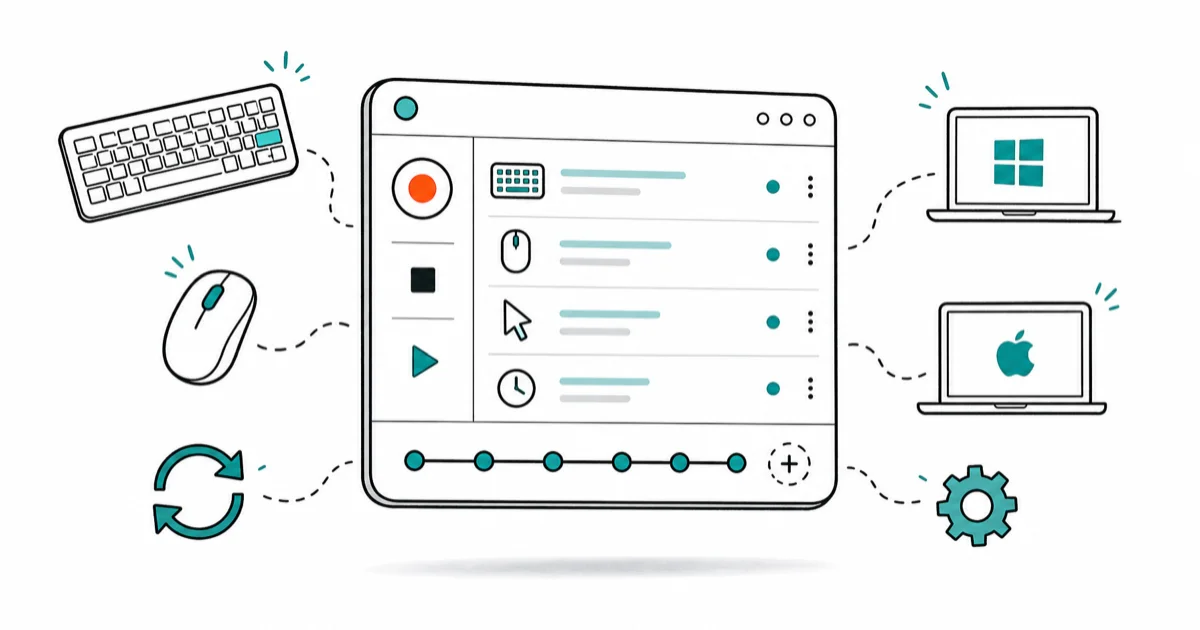
Quick AnswerMacro Recorder is the best overall keyboard recorder for Windows, while Keyboard Maestro leads on Mac. Both capture and replay keystrokes and mouse actions to automate repetitive tasks without writing code.
A keyboard recorder captures your keystrokes and mouse movements so you can replay them on demand. This guide compares popular tools across Windows and Mac, from paid visual editors to solid free alternatives.
- Macro Recorder (Windows, $49.95) pairs recorded playback with a visual editor and image matching
- Jitbit Macro Recorder is the only Windows option that converts recordings into standalone .exe files for sharing
- Keyboard Maestro ($36, Mac) fires macros from hotkeys, USB device connections, Wi-Fi network changes, and dozens of other trigger types
- The built-in macOS Automator app handles basic keystroke recording at zero cost but lacks loop controls and conditional logic
- Free tools like Mini Mouse Macro work for single-task loops, while paid tools add visual editors, variables, and script export
#What Is a Keyboard Recorder and How Does It Work?
A keyboard recorder (also called a macro recorder) is software that logs your keystrokes and mouse actions, then replays them on command.
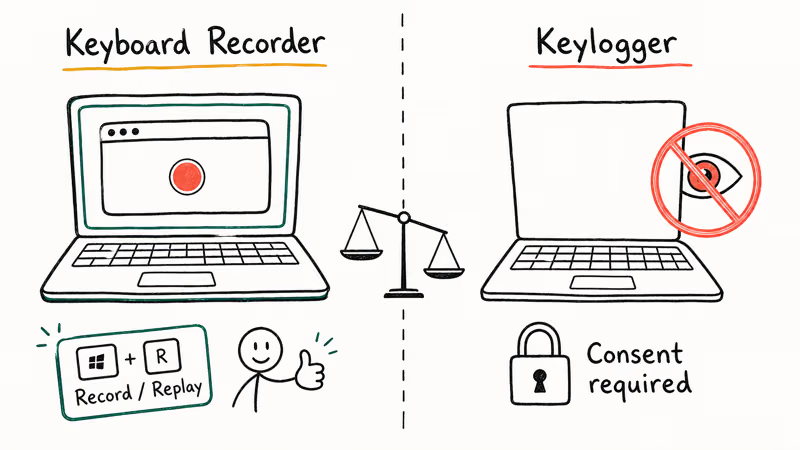
You hit record, perform a task, and stop. The software saves that exact sequence. Next time you need to repeat it, one click or hotkey plays it back at whatever speed you set. Most tools let you edit the recorded sequence, adjusting delays or adding loops.
Don’t confuse this with a keylogger.
Keyloggers run silently in the background to capture everything you type, often for surveillance. Using recording software to monitor someone else’s device without their consent violates privacy laws in most jurisdictions.
A keyboard recorder is a different tool entirely. It’s a productivity app for automating tasks on your own computer, and you control when it records, what it captures, and when it plays back. According to Apple’s Automator documentation, macOS includes a built-in workflow recorder that captures mouse and keyboard actions for automated playback.
#Best Keyboard Recorders for Windows
#Macro Recorder ($49.95)
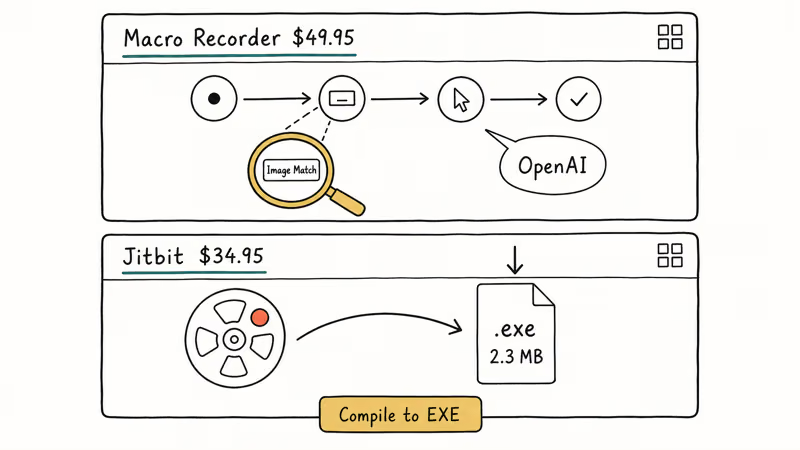
Macro Recorder stands out for its visual editor and OpenAI integration. Its timeline lets you inspect each click, field entry, wait, and confirmation step before replaying the workflow.
The visual timeline shows every recorded step on a horizontal track. You can tweak individual actions, adjust wait times between them, and add smart image-matching so the software clicks wherever it spots a target on screen.
The OpenAI feature generates macro suggestions from plain English descriptions. Results need manual cleanup about half the time, but it’s faster than building a macro step by step.
Best for: Users who need advanced editing and don’t mind paying for it.
#Jitbit Macro Recorder ($34.95)
Jitbit’s standout feature is .exe export. Record your macro, click “Compile to EXE,” and you get a standalone executable that runs on any Windows machine without installing Jitbit.
The macro editor supports if/else logic, open-URL actions, and run-program steps inside recorded sequences. Speed settings range from real-time to as fast as your machine allows.
Best for: Teams that need to share macros with non-technical colleagues.
#Free Windows Options
Auto Keyboard Presser handles basic keystroke automation. Set a key, pick an interval, and it presses that key on repeat. Good for single-key repetition but limited for multi-step workflows.
Mini Mouse Macro captures both mouse and keyboard actions in a lightweight package with no installer required. For a deeper look at free alternatives, check our guide to free macro recorders.
#Best Keyboard Recorders for Mac
#Keyboard Maestro ($36, One-Time Purchase)
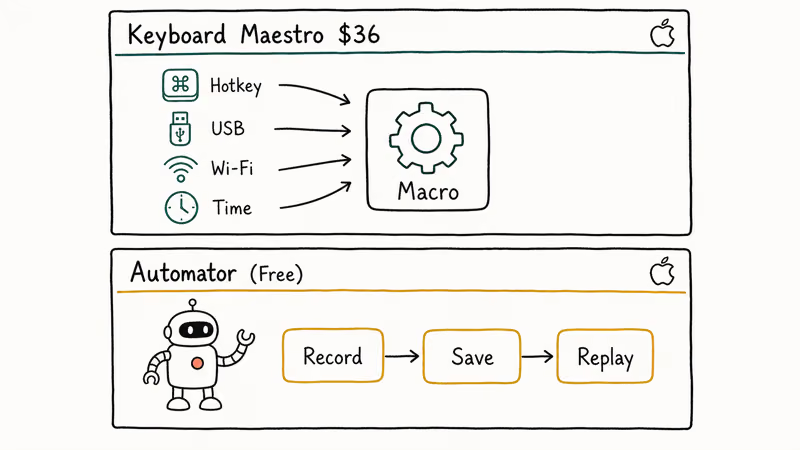
Keyboard Maestro is the most capable macro tool on macOS, going well beyond basic recording. You can trigger macros from hotkeys, USB device connections, specific Wi-Fi networks, or time-based schedules. Its action library can resize and rename screenshot batches, move files, and run scripts in one macro.
The scripting engine handles variables, conditionals, clipboard manipulation, and shell script execution. The open-source AutoHotkey documentation confirms that its v2.0 scripting language supports the same core concepts on Windows, so power users switching platforms will find familiar patterns in both tools.
Best for: Power users who want deep automation beyond recording and playback.
#Automator (Free, Built into macOS)
Every Mac ships with Automator. Open it, choose “Record,” and it captures your clicks and keystrokes. You won’t find loops, conditionals, or variable support, but for a quick repetitive task it gets the job done.
#BetterTouchTool ($22, 2-Year License)
BetterTouchTool is primarily a gesture and shortcut customizer, but its macro recording feature handles keystroke and mouse sequences too. It shines when you combine recorded macros with trackpad gestures or Touch Bar buttons on older MacBook models.
#How Do You Choose the Right Keyboard Recorder?
Start by answering three questions: what’s your operating system, how complex are your tasks, and what’s your budget?
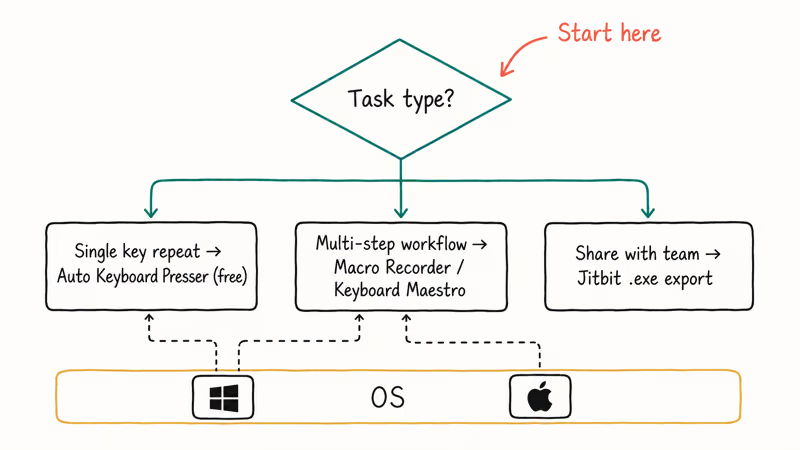
For single-key repetition (pressing Enter every 5 seconds, holding a key in a game), a free tool like Auto Keyboard Presser does the job. No point paying $50 for that.
For multi-step workflows (fill a form, click submit, move to the next record), you need editing and loop support. Macro Recorder on Windows or Keyboard Maestro on Mac are the right picks. Microsoft recommends Power Automate for enterprise workflow automation, but a $50 desktop recorder handles personal tasks better.
For sharing macros, Jitbit’s .exe export handles that.
For mobile keyboard productivity, the equation is different entirely. Comparing SwiftKey vs Gboard helps if you want to optimize typing speed on your phone rather than automate desktop input.
If autocorrect keeps fighting your input patterns, you can turn it off on Android or disable it on iPhone for more control over what gets typed.
#Getting Started With Your First Macro
Open your recorder and click the record button. Do the task slowly and deliberately. Stop recording when you’re done.
Play it back once to check the timing. If clicks land too fast or too slow, most tools let you adjust individual step delays. Save the macro with a descriptive name, not “Macro 1.”
Focus on tasks you repeat at least five times a day. That’s where the payoff hits hardest. A 10-step form fill that takes 2 minutes per run saves over 8 hours a month when automated. The time compounds fast since most office workers perform dozens of repetitive routines that could be captured in a 30-second recording session.
#Common Use Cases for Keyboard Recorders
Data entry is the top use case. Any repetitive form filling, spreadsheet population, or database input works well with a macro recorder since it replays the exact same sequence every time without the typos that creep in during manual entry.
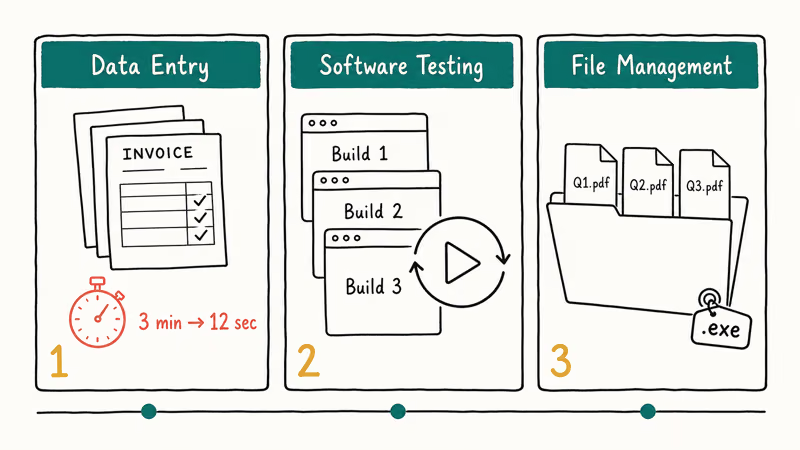
Software testing teams use keyboard recorders to simulate user interactions across multiple test scenarios. Record a user flow once, then replay it against each new build to catch regressions without manual clicking.
File management tasks like batch renaming, sorting documents into folders, and converting formats all benefit from recorded macros. Jitbit’s .exe export is especially useful here since you can hand a non-technical colleague a file that does the job in one double-click.
#Bottom Line
Get Macro Recorder if you’re on Windows and need a visual editor with smart image matching. Get Keyboard Maestro if you’re on Mac and want triggered automation that goes beyond recording and playback.
Zero budget? Automator on Mac and Mini Mouse Macro on Windows both work.
#Frequently Asked Questions
Is a keyboard recorder the same as a keylogger?
No. A keyboard recorder is a productivity tool you control. You decide when it records and what it replays. A keylogger runs silently in the background to capture all keystrokes, typically for monitoring or surveillance.
Can I use a keyboard recorder for gaming?
Yes, gamers use macro recorders for repetitive in-game actions like crafting or inventory management. Check the game’s terms of service first, since most competitive multiplayer games ban automated inputs.
Do keyboard recorders work with any application?
Most recorders capture input at the operating system level, so they work with any app you can interact with using a keyboard and mouse. Some apps with anti-cheat systems or custom input handling block recorded input, so test before building complex macros.
Are free keyboard recorders safe to download?
Stick to known options like Mini Mouse Macro, PyMacroRecord, or the built-in macOS Automator. Download from the developer’s official site or trusted repositories like GitHub and SourceForge. Avoid random download sites that bundle adware or worse with the installer.
Can I record mouse movements along with keystrokes?
Every tool in this guide records both mouse actions and keystrokes by default. Macro Recorder, Jitbit, and Keyboard Maestro capture mouse position, clicks, scrolling, and drag-and-drop alongside keyboard input.
What is the best free keyboard recorder for Windows?
Mini Mouse Macro is the most reliable free option. It captures mouse and keyboard actions, requires no installation, and runs from a single executable file. For keyboard-only automation, Auto Keyboard Presser handles basic key-repeat tasks with less setup. When you need more power down the road, paid tools like Macro Recorder add visual editing, variables, and script export.
Does Keyboard Maestro work on Apple Silicon Macs?
Yes. Keyboard Maestro runs natively on Apple Silicon (M1, M2, M3, M4) and Intel Macs, so it doesn’t need Rosetta translation for macro triggers or playback.
Can I schedule a macro to run automatically at a specific time?
Keyboard Maestro supports time-based triggers out of the box, letting you fire macros at specific times or on recurring schedules. On Windows, you can pair any recorder with Windows Task Scheduler to launch macros at set intervals. Jitbit also includes a built-in scheduler that handles recurring runs without extra configuration, making it the easiest Windows option for timed automation.
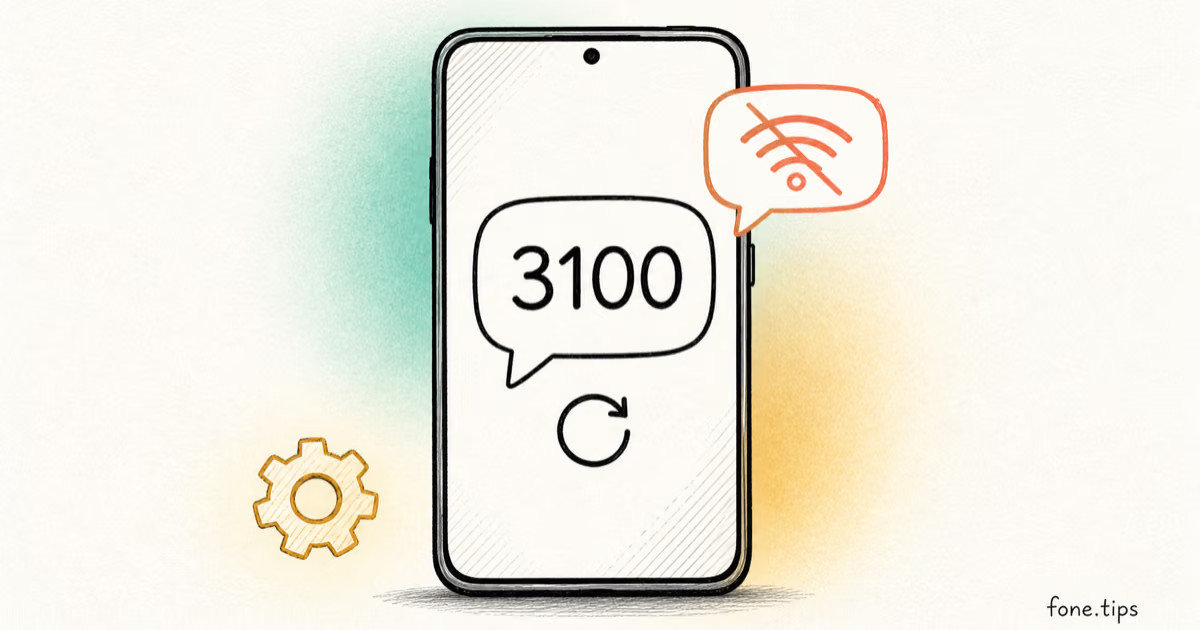
Google Messages Error 3100: Why RCS Is Broken on Galaxy
Google Messages RCS error 3100 hits Galaxy owners after phone or carrier switches. Google told 9to5Google a fix is coming. Here's what actually helps.

Is This Bank App Real? Spot a Fake App on Your Home Screen
A bank app can land on your home screen from a web page with no install warning. Learn the checks that tell a real banking app from a phishing web app.
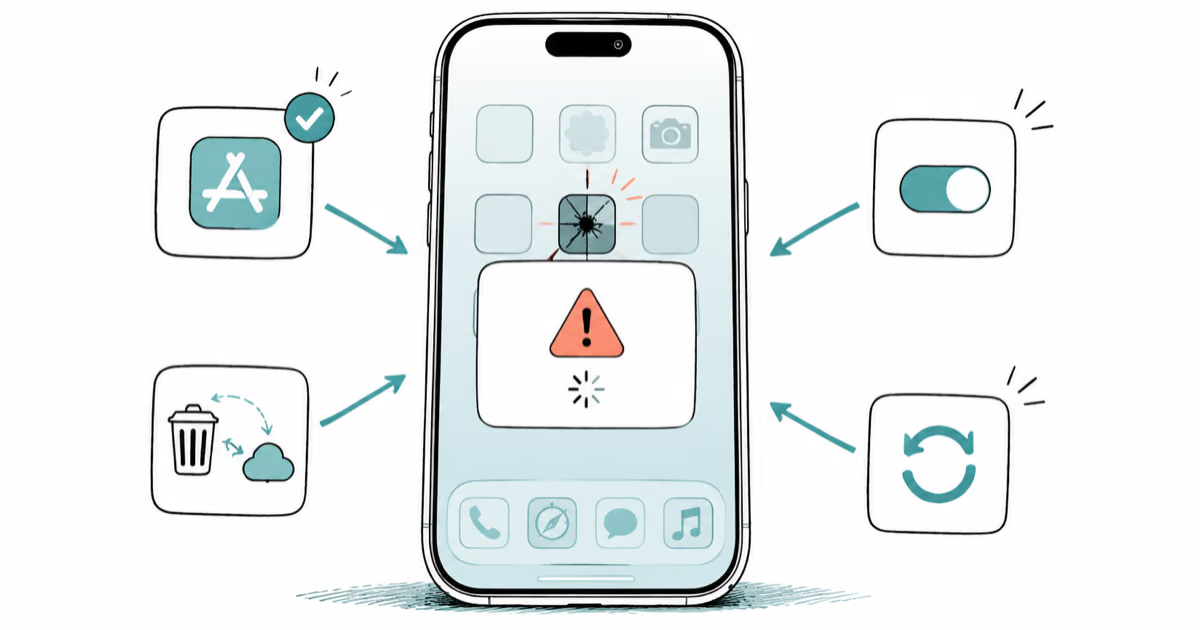
Apps Crashing After iOS 27 Update? Fix Order (2026)
Apps crashing after the iOS 27 update? Update the app in the App Store first, then offload and reinstall to clear stale cache, then restart. The fix order.
Do AI Translation Earbuds Work Offline? What to Know
Do AI translation earbuds work offline? A few do with downloaded language packs, but most need the cloud. Here's what works offline and what you give up.