How to Remove Personal Info From Data Broker Sites
Remove your personal info from data broker sites using California's DROP, free manual opt-outs, or services like Incogni and DeleteMe. Honest 2026 guide.
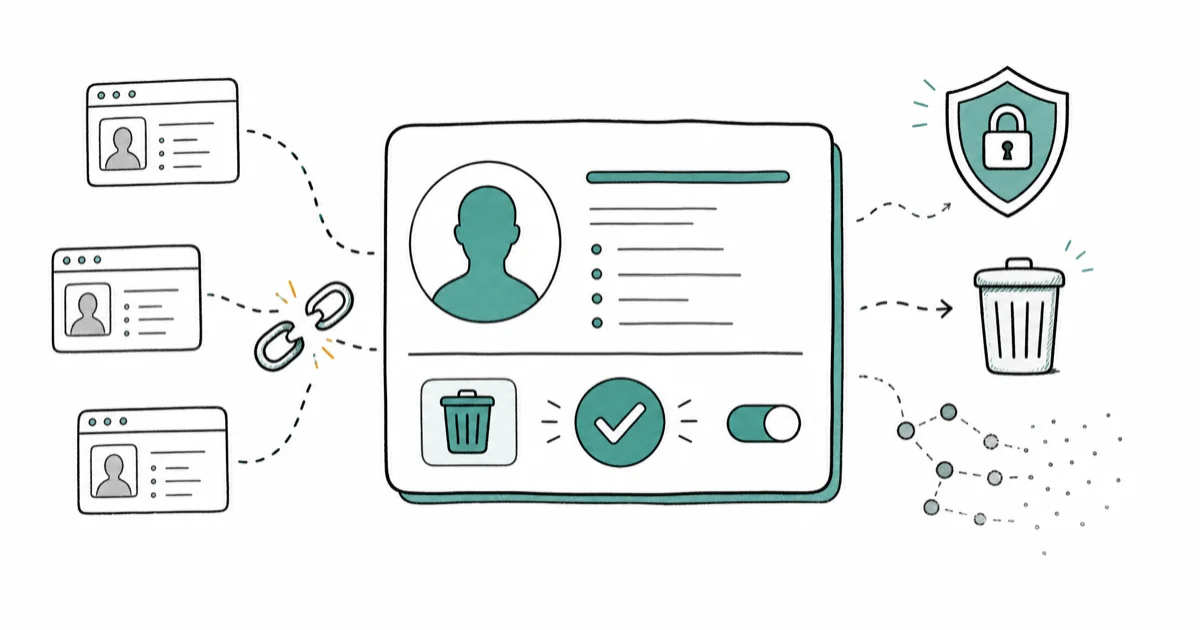
Quick AnswerCalifornia residents can use DROP to delete data from every registered broker in one request. Manual opt-outs are free elsewhere; Incogni or DeleteMe automate them.
Learning how to remove personal info from data broker sites used to mean weeks of opt-out forms. In 2026 the landscape changed: a one-stop California portal, paid services covering hundreds of brokers, and AI scrapers raising the cost of staying exposed.
- California residents can submit a single deletion request through the DROP platform run by the California Privacy Protection Agency, which forwards it to every registered broker.
- The full manual opt-out sweep for the major people-search sites realistically takes 10 to 20 hours of initial work, plus recurring checks every few weeks.
- Paid services like Incogni and DeleteMe automate broker coverage and ongoing scans, typically running between roughly $8 and $15 per month on annual plans.
- Your information reappears because brokers refresh from public records, social profiles, and new commercial feeds. A clean sweep is usually undone within a couple of months.
- Pair removal with email aliases and a masked phone number so future broker scrapes find fewer matches to attach to your name.
#What Data Brokers Are and Why Removal Matters
Data brokers collect, package, and sell personal information about U.S. consumers. The category covers two very different operations.
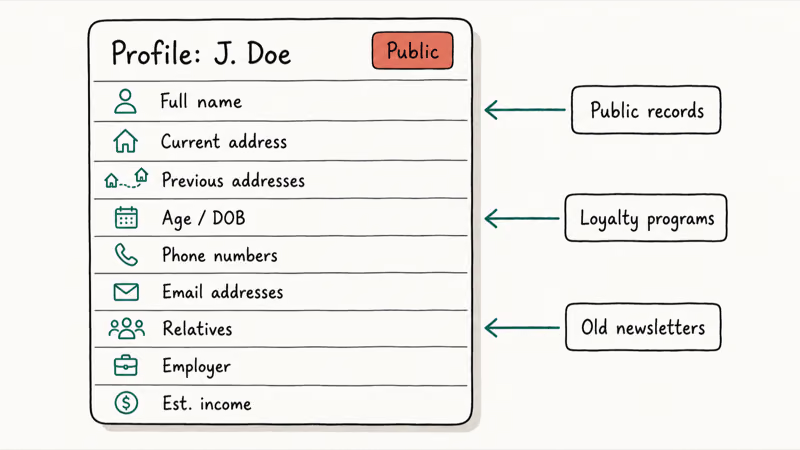
People-search sites like Spokeo, Whitepages, BeenVerified, Radaris, and TruePeopleSearch present a free public-facing profile of you with optional paid background reports. Behind them sit larger commercial brokers like LexisNexis Risk Solutions, Acxiom, and Epsilon that supply data to lenders, insurers, marketers, and government contractors. The Wikipedia overview of the data broker industry is a good neutral primer if you want the longer history.
A typical broker profile includes your full name, current and previous addresses, age or date of birth, phone numbers, email addresses, relatives, employer, and a sketch of estimated income or home value. Some of that comes from public records like property deeds and voter rolls. Much of it comes from data you handed over years ago to a loyalty program, a free app, or a forgotten newsletter that later sold its list.
People most often ask about removal after a specific trigger. A scam call quotes their home address. A reverse-search profile surfaces on the first page of Google. A phishing email knows their family members’ names.
Two adjacent worries often surface alongside a broker profile. If one of those listed email addresses also turned up in a breach, learn how to tell if your email is on the dark web; and when the concern is physical rather than digital, how to find an AirTag that may be tracking you covers the other side of being located.
AI scrapers added a new wrinkle in 2025 and 2026 by harvesting these public profiles in bulk to train models and to power lookup tools. If you’ve used reverse email lookup services yourself, you’ve already seen how easy these profiles are to query.
This article covers removing your own personal information. Acting on someone else’s records requires written authorization.
#How Do You Remove Yourself From Data Broker Sites Manually?
The manual route is free, slow, and limited to one broker at a time. According to the Privacy Rights Clearinghouse data broker guide, every major U.S. people-search site is required by its own privacy policy to honor an opt-out request, but the workflow varies by site.
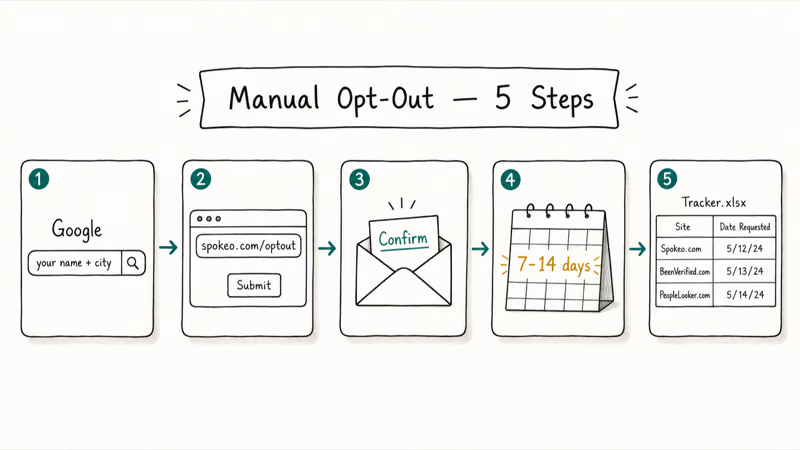
A practical sequence:
- Search your own name in Google together with your city. Note every people-search domain that ranks.
- Visit each domain’s opt-out page directly. Common URLs are
spokeo.com/optout,whitepages.com/suppression_requests,beenverified.com/app/optout/search,radaris.com/control/privacy, andtruepeoplesearch.com/removal. - Confirm the request through the email link each broker sends. Skipping the confirmation cancels the request silently.
- Wait 7 to 14 business days for the listing to disappear, then re-search to verify.
- Save the confirmation emails and the URL of each removed listing in a spreadsheet so you can re-submit when the record reappears.
Across the major people-search sites, the time from email confirmation to profile removal varies. Most requests land in the 7 to 14 day window, but some sites still show the profile after 30 days and need a follow-up email to their privacy address.
The realistic time cost for a first sweep is 10 to 20 hours, depending on how many sites surface your name and how often you’ve moved. Many broker sites operate sister domains under the same parent company, so removing yourself from one doesn’t always cascade.
The Cybernews team published a current data broker opt-out walkthrough that maps the largest people-search clusters and their shared parent companies if you want a longer worked list.
#Using California DROP for One-Stop Deletion
California residents now have a faster lane. The state’s Delete Act, signed as Senate Bill 362 in 2023, requires every broker registered with the California Privacy Protection Agency to honor deletion requests submitted through a single state-run portal.
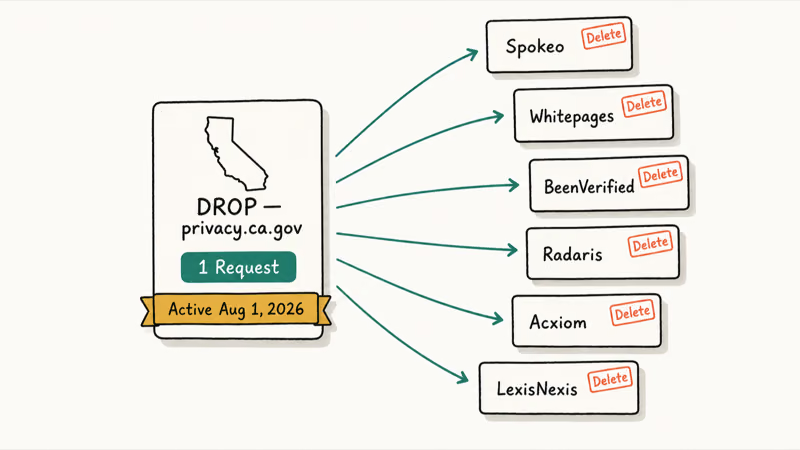
According to California’s Delete Act, the deletion mandate activates on August 1, 2026 and gives California residents a one-stop deletion request that reaches every registered broker through the DROP platform. The agency’s separate broker registry lists every commercial broker that has registered, along with their annual fees and contact addresses.
DROP is free, but it only covers California residents and brokers registered under the Delete Act. Residents elsewhere still need manual opt-outs.
#Paid Removal Services Compared
Paid removal services automate the manual workflow. You hand over your name, addresses, and contact details once. The service then submits opt-out requests to a fixed list of brokers on your behalf and re-checks them on a recurring schedule. Two services dominate the American market: Incogni and DeleteMe.
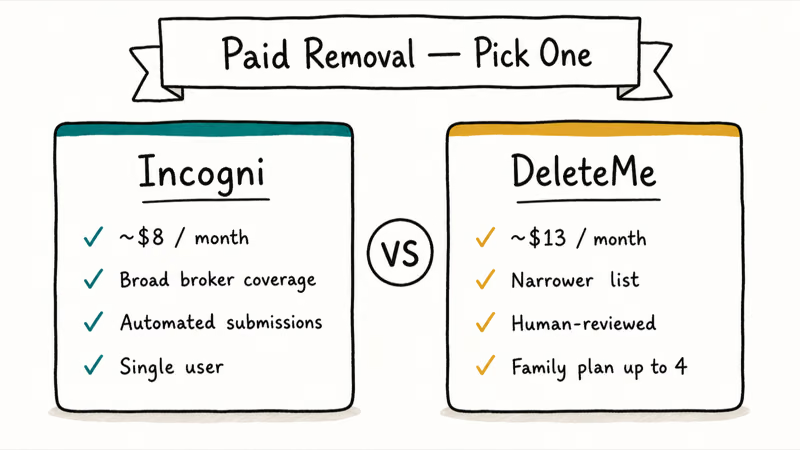
Incogni, run by Surfshark’s parent company, lands around $8 per month for broad broker coverage. CyberInsider’s Incogni vs DeleteMe comparison details the coverage tradeoffs.
DeleteMe, run by Abine, pairs automation with a human review step on every removal request. Its coverage is narrower than Incogni’s headline broker count but includes harder-to-remove people-search sites where automated submissions often fail. DeleteMe also sells family plans that cover up to four members on one subscription, which works out cheaper per person than running individual Incogni plans.
The honest tradeoff:
- Pick Incogni if you want the broadest broker coverage at the lowest single-user cost and you trust automation to handle the submissions.
- Pick DeleteMe if you want a human in the loop, need coverage for a household, or you’ve already tried automated removals and watched profiles linger.
Neither service can guarantee that every listing about you disappears. Both publish their broker lists, and any broker outside that list is your responsibility to handle manually or skip. Both treat the subscription as ongoing maintenance, not a one-time cleanup, because your data reappears.
#Why Does Your Personal Info Keep Coming Back?
A clean sweep doesn’t stay clean. A single email address can generate fresh broker profiles within a couple of months of a clean sweep, which is why data broker removal is best treated as a maintenance task rather than a one-time project.
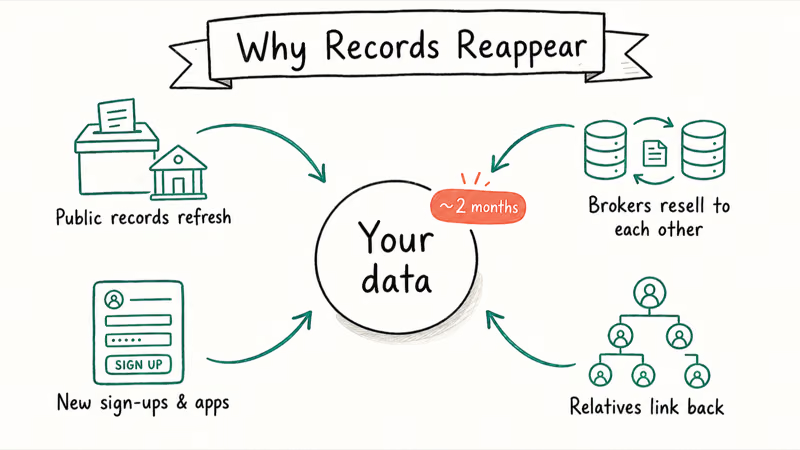
Records reappear for four reasons. Public records refresh constantly through registrations, voting, property, and court filings.
Brokers also buy from each other. When you remove yourself from Broker A but Broker B still has your record, B can re-sell it back to A on the next data swap.
Your social and commercial footprint feeds them. Loyalty cards, app sign-ups, mailing list subscriptions, and resume sites produce new records that brokers ingest. Family and household links pull you back in: if a relative’s profile lists you as an associate, the brokers can rebuild a stub profile for you from that link alone.
The same applies to phone number search tools, which cache broker feeds and social profiles. Pulling your number from a broker doesn’t clear it from cached lookups.
The practical implication: build a re-check schedule. A quarterly calendar reminder to re-search your name, re-submit obvious offenders, and update your paid removal service after a move or a new phone number works well. That cadence catches most reappearances before they collect a year of fresh data.
#Long-Term Privacy Maintenance
Removal is one layer. Reducing the surface area that feeds brokers in the first place is the layer that compounds. Five habits do most of the work.
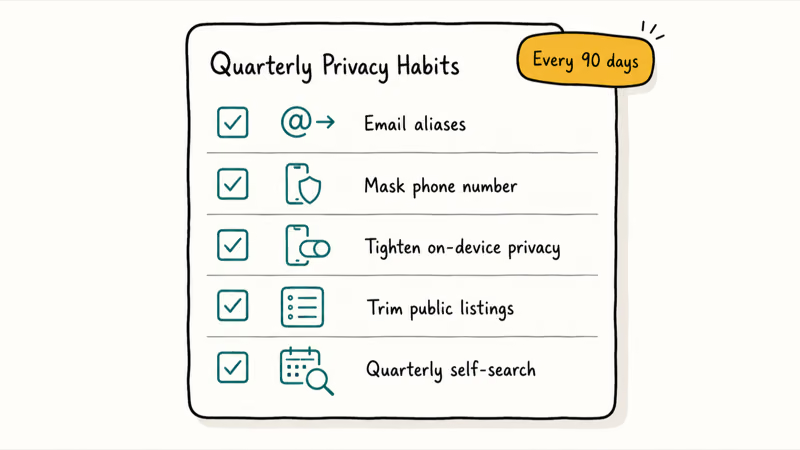
Use an email alias for new sign-ups. Apple’s Hide My Email, SimpleLogin, and Firefox Relay generate disposable addresses that forward to your real inbox. If a service sells its list, the alias is the surface that leaks, not your main address. Most brokers key their profiles to your real email, so cutting off the fresh data is the highest-leverage move you can make.
Mask your phone number. Cloaked, MySudo, and Google Voice issue secondary numbers that route to your phone.
Tighten on-device privacy. The iPhone privacy settings checklist covers tracking permissions, app-level location toggles, and the settings that limit what new apps can collect. Apply the equivalent toggles on Android. Browser-level controls in our prevent cross-site tracking guide cut down on the third-party cookies that feed marketing brokers.
Trim the public records you can trim. Voter registration, property records, and court filings are generally not removable, but library cards, school directories, alumni lists, and HOA rosters often are. Email each one and ask to be removed.
Run a quarterly self-search. Search your name, your old addresses, and your work email in Google with an incognito window. Anything new on the first three pages is the next maintenance task.
The Privacy Rights Clearinghouse, a non-profit consumer organization, recommends combining suppression services with information hygiene because no single tool covers every vector. Their guidance frames data broker rules as state-specific, which matters because California’s Delete Act and SB 361 expansion don’t directly apply to readers in Texas or New York.
#Bottom Line
California residents should make DROP their primary tool once the August 1, 2026 deletion mandate is active. It’s free, government-backed, and reaches every broker registered with the California Privacy Protection Agency in a single request. Stack DROP with a free manual sweep of any non-registered people-search site that surfaces on your name.
Outside California, a paid removal service earns its keep. Pick Incogni for the broadest broker coverage at lowest cost, or DeleteMe for human-reviewed submissions and family plans.
If your data already triggered scam calls or doxxing attempts, pair removal with email aliases and a masked phone number from day one. Otherwise the broker records keep regenerating from the new accounts you sign up for. Anyone seeing strange device behavior on top of broker exposure should also check the signs your phone is monitored so the device side doesn’t undo the data side.
#Frequently Asked Questions
Can you remove yourself from data broker sites for free?
Yes. Major sites honor opt-out requests, and California residents can use DROP for free. The tradeoff is time, not cash.
How long does data broker removal actually take?
A first manual sweep of the major people-search sites usually takes 10 to 20 hours spread across a couple of weekends. Individual broker confirmations land in 7 to 14 business days on average. Paid services compress the effort to about an hour of onboarding but still operate on the same broker-side response times. The records start reappearing within a few months either way.
Do Incogni and DeleteMe really cover the same brokers?
No. Their broker lists overlap on the largest people-search sites but diverge on the long tail. Compare current lists before subscribing, especially the site that prompted your search.
Why does my information come back after I opt out?
Three forces refill broker databases: public records refresh every time you renew a registration, brokers resell records to each other on routine data swaps, and your own ongoing sign-ups feed new addresses and phone numbers into the system. Treat a clean sweep as the start of an ongoing maintenance routine.
Is California’s DROP available to people outside California?
No. DROP is restricted to California residents under the Delete Act. Other states require broker-by-broker opt-outs or a paid service.
Are signs your phone is monitored related to data broker exposure?
They overlap but aren’t the same problem. Broker exposure leaks your address, phone number, and relatives to anyone willing to pay or scrape. Monitoring on the device installs software that watches your phone activity. Broker data can be the starting point for a targeted attack on your device, so it helps to harden both layers.
How often should you re-check data broker sites?
A quarterly re-check works for most readers. Active doxxing victims should re-check monthly until the threat fades.

Is This Bank App Real? Spot a Fake App on Your Home Screen
A bank app can land on your home screen from a web page with no install warning. Learn the checks that tell a real banking app from a phishing web app.
Passkeys Not Syncing Between iPhone and Windows? Read This
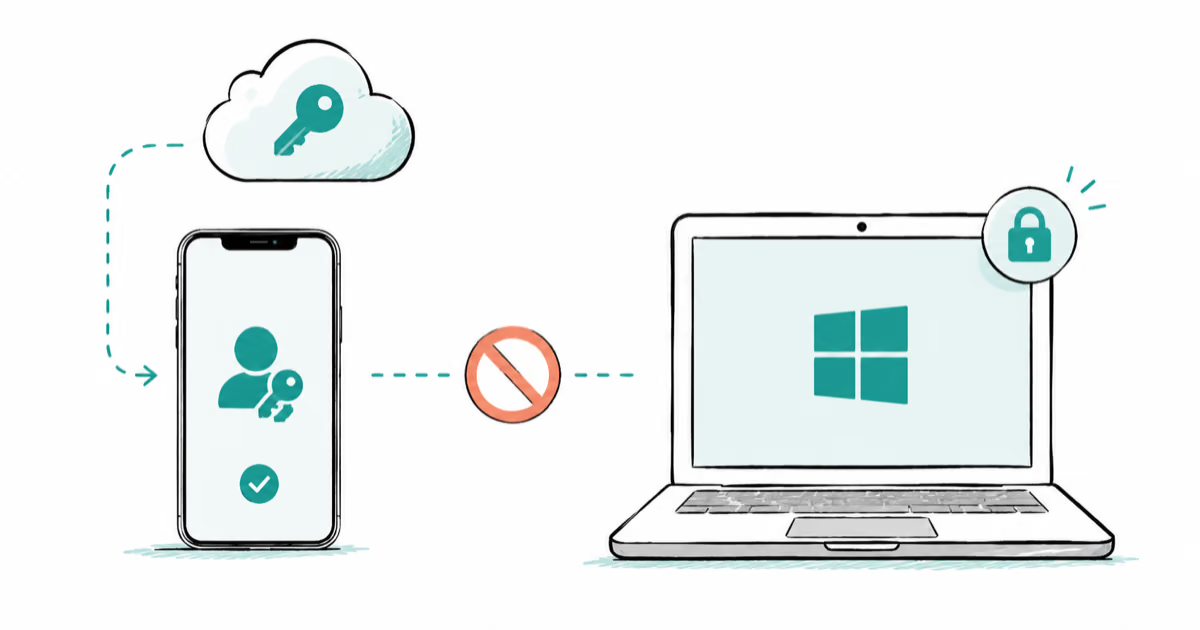
Passkeys not syncing between iPhone and Windows is by design, not a bug. Here is why iCloud passkeys skip Windows Hello and the three ways to fix it.
VPN Not Working on Snapdragon X? Why It Fails, How to Fix
Your VPN won't install or connect on a Snapdragon X Copilot Plus PC because Windows on ARM can't emulate the network driver. Here are the fixes that work.

How to Check If a Link Is Safe Before You Click It
Learn how to check if a link is safe with official-first steps: read the real domain, use the app instead, and treat scanners as a second opinion only.