Pixel 11 vs Pixel 10: What Changed and Who Should Upgrade
Pixel 11 vs Pixel 10: same screen and camera resolution, new Tensor G6, 25W wireless, and Gemini Intelligence. Here is who should actually upgrade.

Quick AnswerThe Pixel 11 keeps the Pixel 10 screen, body, and camera resolutions while adding Tensor G6, 25W wireless charging, and agentic Gemini features for $100 more. Upgrade from a Pixel 9 or older, not from a working Pixel 10.
Pixel 11 vs Pixel 10 is closer than the model number suggests. Google kept the screen, camera resolutions, and body nearly unchanged, then spent the generation on silicon, charging, and Gemini. Whether that’s worth $100 depends on which of the three you use.
- The Pixel 11 starts at $899 against the Pixel 10’s $799 launch price, and the 128GB tier is gone, so every model now begins at 256GB
- Display, ultrawide camera, and body carry over almost unchanged, with weight dropping from 204g to 197g
- Tensor G6 moves to a 2nm process and claims 50 percent more TPU compute for on-device AI
- Wireless charging jumps from 15W to 25W on the base model, the one change most owners would feel daily
- The new agentic Gemini features lean on the G6, so a Pixel 10 is unlikely to inherit them
#What Changed Between the Pixel 10 and Pixel 11?
Less than the name implies.
According to TechCrunch’s launch coverage, this generation brings fewer hardware changes and much more Gemini, and the spec sheet backs that reading. The 6.3-inch Actua OLED carries over at the same 120Hz and the same 3,000-nit peak. The rear camera keeps its 48MP wide, 13MP ultrawide, and 10.8MP 5x telephoto.
What moved is narrower: the chip, the wireless charging tier, the starting storage, and the price.
Google also dropped the 128GB option across the lineup, so the entry model now starts at 256GB. That’s part of why the sticker went from $799 to $899, and it’s worth holding in mind before reading the change as a pure price hike.
#Tensor G6 and the On-Device AI Gap
This is the real generational split.
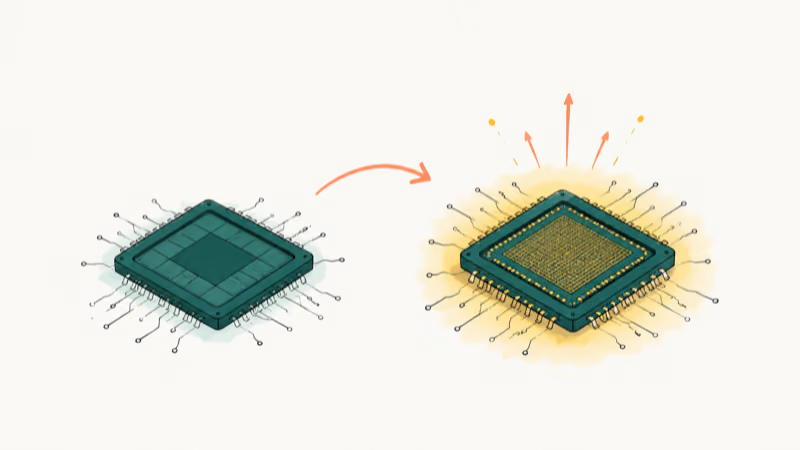
According to Android Authority’s Tensor G6 breakdown, the G6 is the first 2nm chip in an Android phone, with a 7-core CPU, 50 percent more TPU compute, and on-device AI running up to 3.5 times faster while drawing up to 3.5 times less energy on supported tasks. The Pixel 10’s Tensor G5 is a 3nm part.
Google’s headline numbers deserve a caveat.
The 25 percent faster browsing and 15 percent quicker app launches come from Google’s own pre-production testing rather than independent benchmarks, so read them as direction and not as measurement. Efficiency is the claim most likely to surface in daily use, and Google quotes up to 20 percent better CPU power efficiency.
That matters on a line where idle drain has been a running complaint. Our guide to Pixel battery drain after the update tracks which models Google’s fix actually covered.
#The Camera Keeps Its Numbers and Changes Its Sensors
Same megapixels, different hardware behind them.
The main 48MP sensor is physically larger, and Google says it gathers 56 percent more light than the Pixel 10’s. The 5x telephoto moves to a 1/1.95-inch sensor with roughly 30 percent more light while holding the same optical reach. The ultrawide is essentially untouched, and both phones share a 10.5MP front camera.
New on the Pixel 11 side: 4K Portrait Video, Instant Night Sight, and up to 120x Pro Zoom.
So the camera gap is real but narrow. Shoot in good light and the two phones land close together. Shoot at night, or lean on 5x, and the newer sensors do more of the work for you.
#Charging Is Where the Real Upgrade Hides
This is the change a Pixel 10 owner would notice first.
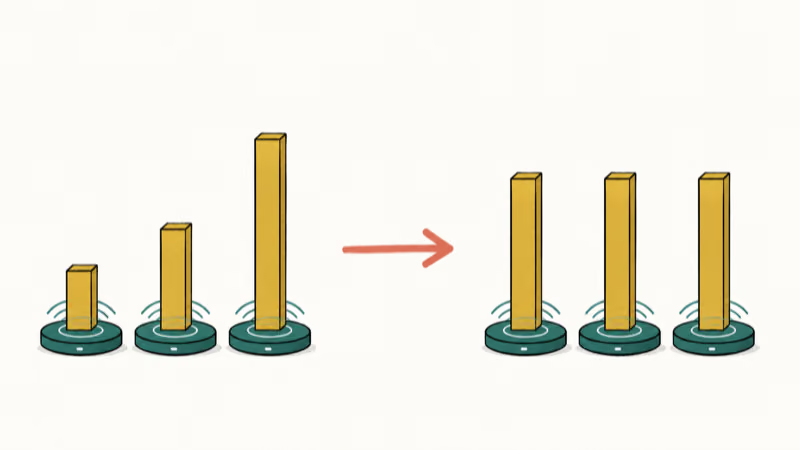
9to5Google’s report on the Qi2 upgrade confirms that all four Pixel 11 models reach 25W wireless on Qi2.2. Across the Pixel 10 line, only the Pro XL managed that. The base Pixel 10 capped at 15W, and third-party pads often settled nearer 12W.
Your accessories survive the jump.
Every Pixel 11 keeps the same built-in Qi2 magnets, so existing Pixelsnap pucks and stands still snap on, and our Pixel wireless charger picks carry straight over. You still need a 35W or higher brick behind the puck to actually see 25W.
Wired charging didn’t move at all. A 30W PPS charger still takes the Pixel 11 and 11 Pro to roughly 55 percent in half an hour, while the Pro XL wants 45W PPS, which is the same split covered in our Pixel PPS charger guide.
One caveat on the 25W figure.
Independent Qi2 testing on Pixel 10 hardware found that the peak holds for only a few minutes before tapering toward 10W, so treat it as a ceiling rather than a sustained rate.
#Pixel 11 vs Pixel 10 Spec Comparison
Here’s the side-by-side for the two base models, which is where most upgrade decisions actually get made.
Base Google Pixel 11 and Pixel 10 specifications side by side.
| Spec | Pixel 10 | Pixel 11 |
|---|---|---|
| Chip | Tensor G5, 3nm | Tensor G6, 2nm |
| Display | 6.3in Actua OLED, 120Hz, 3,000 nits | 6.3in Actua OLED, 120Hz, 3,000 nits |
| RAM | 12GB | 12GB |
| Base storage | 128GB | 256GB |
| Main camera | 48MP | 48MP, 56 percent more light |
| Telephoto | 10.8MP 5x | 10.8MP 5x, larger sensor |
| Ultrawide | 13MP | 13MP |
| Front camera | 10.5MP | 10.5MP |
| Wireless charging | 15W | 25W on Qi2.2 |
| Wired charging | 30W PPS | 30W PPS |
| Battery | 4,970mAh | About 5,000mAh |
| Weight | 204g | 197g |
| Ships with | Android 16 | Android 17 |
| Update window | 7 years | 7 years |
| Launch price | $799 | $899 |
Pixel 10 specs are per GSMArena’s launch coverage. Battery capacity is listed as about 5,000mAh because published figures for the Pixel 11 vary slightly by source, and the difference from the Pixel 10 is too small to notice either way.
#Will Pixel 10 Owners Get the New Gemini Features?
Some of them, and probably not the interesting ones.
Google’s pitch this year is Gemini Intelligence, an agentic layer that runs multistep tasks across apps, books rides, orders groceries, and calls businesses on your behalf. Those tasks lean on the G6’s on-device throughput, which is the usual signal that they stay on the new phone.
Android 17 features are the better bet. Bubbles multitasking, Screen Reactions, and the upgraded threat detection are version-gated rather than chip-gated, and your Pixel 10 already runs Android 17.
Recent history isn’t encouraging, though.
Most of last year’s Gemini features stayed locked to the Pixel 10 on Tensor G5 grounds, and Google only shipped a smaller Gemini Nano model to the Pixel 8 after public pushback. Plan around the features you can see today rather than the ones you hope trickle down.
#Who Should Upgrade and Who Should Not
Skip it if your Pixel 10 works. Android Central states that after a year on the phone, a $100 increase for a faster chip and better sensors is a hard sell when the screen and body are identical.
Upgrade if you’re on a Pixel 9 or older. You’re collecting several generations at once, including the 5x telephoto that the base Pixel didn’t have before the Pixel 10.
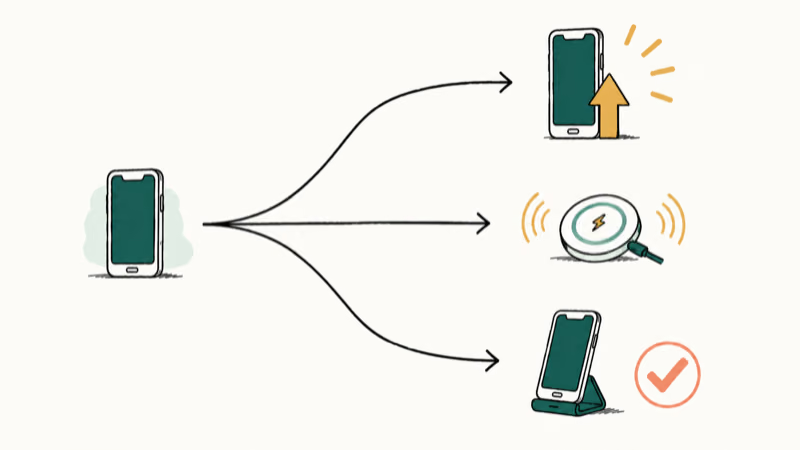
Upgrade if wireless charging is a daily annoyance. Moving from 15W to 25W on a non-XL body is the one line on the spec sheet that changes how the phone fits a desk or nightstand routine, and it’s worth more than the benchmark deltas.
Buy a discounted Pixel 10 instead if price outweighs the chip. It still has years of updates left, and most of its launch bugs are patched, which our Pixel 10 problems guide maps build by build.
#Bottom Line
The Pixel 11 is a refinement, not a reinvention.
Tensor G6, 25W wireless on every model, and better low-light sensors are real gains. An identical screen, an identical ultrawide, unchanged wired charging, and $100 more are the price of admission.
If you own a Pixel 10, keep it and install the latest build. If you’re two or more generations back, the Pixel 11 is the cleanest entry point Google has offered in a while. If your wireless charging has felt slow since launch day, check the software side first with our guide to Pixel wireless charging slow after update before you spend $899 to fix it.
#Frequently Asked Questions
Is the Pixel 11 worth upgrading from the Pixel 10?
For most people, no. The display, ultrawide camera, body, and wired charging are effectively unchanged, so you’d be paying $100 more for Tensor G6, 25W wireless charging, and better low-light sensors. It’s a much easier yes from a Pixel 9 or older.
What is the biggest difference between the Pixel 11 and Pixel 10?
Wireless charging, in day-to-day terms. Every Pixel 11 hits 25W on Qi2.2, while only the Pixel 10 Pro XL did. On paper the bigger change is Tensor G6, the first 2nm chip in an Android phone, which is what unlocks the new on-device Gemini features.
Does the Pixel 11 have a better camera than the Pixel 10?
Yes, but not by resolution. Both use a 48MP main, 13MP ultrawide, 10.8MP 5x telephoto, and 10.5MP front camera. The Pixel 11’s main sensor is larger and gathers 56 percent more light, and its telephoto gains about 30 percent, so the gap shows up at night and at 5x rather than in daylight.
Will my Pixel 10 get Gemini Intelligence?
Probably not the agentic parts. Those tasks depend on Tensor G6’s on-device throughput, and Google kept most of last year’s Gemini features on the newest silicon. Android 17 additions like Bubbles multitasking are version-gated instead, so those are the realistic candidates for a Pixel Drop.
Do my Pixel 10 chargers work with the Pixel 11?
Yes, both kinds. The Pixel 11 keeps the same Qi2 magnets, so Pixelsnap pucks and stands snap on as before, and you need a 35W or higher adapter behind the puck to reach 25W. Wired tiers didn’t change either, so a 30W PPS brick still covers the base model.
How much does the Pixel 11 cost compared to the Pixel 10?
The Pixel 11 starts at $899 against the Pixel 10’s $799 launch price. Part of that gap is storage, since Google removed the 128GB tier and now starts every model at 256GB. The Pixel 10 has also been discounted through its first year, which widens the real-world gap.
Does the Pixel 11 have better battery life than the Pixel 10?
Barely, on capacity. The Pixel 11 sits at about 5,000mAh against 4,970mAh, which is not a difference you’ll feel. The more meaningful claim is Tensor G6’s efficiency, quoted at up to 20 percent better CPU power efficiency, though that’s Google’s own figure rather than an independent test.

Verizon Not Receiving Texts? How to Fix It in 9 Steps
Verizon not receiving texts? Fix it in 9 steps: check Message Blocking in My Verizon, reset network settings, deregister iMessage, and call support.
Pixel Battery Drain: What Google's July Fix Really Covers
Google marked the Pixel idle battery drain bug fixed in July, but only some phones got the patch. Here is who is covered, who is not, and what to try.
iPhone Stuck on EDGE? How to Get 5G or LTE Back (2026)
iPhone stuck on EDGE with crawling data? Here's why the E icon appears, which settings force 5G or LTE back, and when the problem is your carrier.
Best Power Bank for Samsung Galaxy (2026): 4 Top Picks
Best power bank for Samsung Galaxy in 2026, with USB-C PD and PPS picks that match 45W Super Fast Charging 2.0 for reliable daily wired top-ups.