How to Fix a Purple Screen on PC, TV, or Monitor (2026)
Fix a purple screen on Windows PC, monitor, or TV. Swap the HDMI cable, reset color profiles, and reinstall GPU drivers with DDU. Updated 2026.
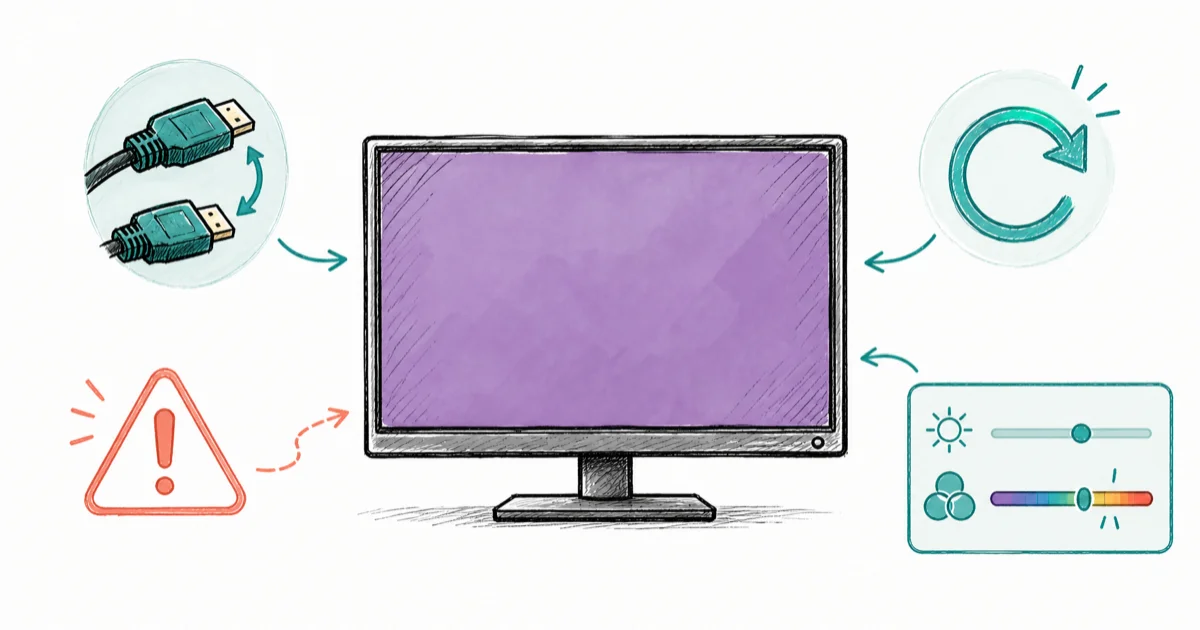
Quick AnswerSwap the HDMI cable first, since a damaged cable is the most common cause. If the purple tint stays, reset the display color profile and reseat the connector at both ends.
A purple or pink tint on your screen almost always points to a cable problem, not a dying GPU. On a typical Windows desktop and TV setup, the cable swap clears it in under five minutes most of the time. This guide covers the order to try fixes in, when to suspect drivers, and the rare hardware failures that actually need a repair shop.
- Bad HDMI cables are the most common cause of purple-screen reports, which makes a cable swap the first test to run
- Both ends of the cable matter: reseat the connector at the GPU and the display, then try a different port before assuming a hardware fault
- Windows display color profile corruption mimics a hardware failure; reset it under
Settings>System>Display>Advanceddisplay before touching drivers - A clean GPU driver reinstall using Display Driver Uninstaller (DDU) in Safe Mode fixes purple tints that survive cable and color-profile resets
- True hardware failure shows extra symptoms: artifacting, repeated TDR crashes, or BSODs under load. A bare purple tint without those signs is rarely the GPU dying
#Why Does a Purple Screen Happen?
Purple is what you get when the green channel drops out and only red and blue reach the panel. That happens at three points: the cable, the display’s color pipeline, or the GPU’s signal output. Cable failure dominates because HDMI’s 19-pin connector has thin internal wires that can fracture from bending or repeated unplugging.
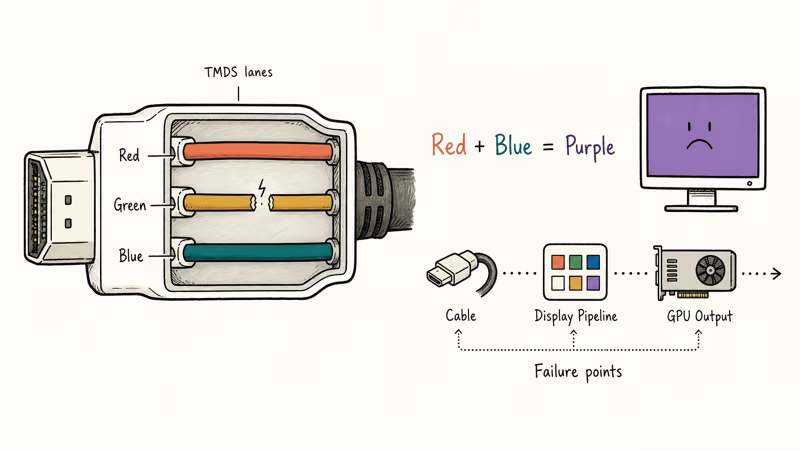
According to the HDMI Licensing Administrator’s specification, each TMDS data lane carries one color channel.
A damaged lane creates color shifts long before total signal loss, which is why a fading or cheap cable produces purple long before the screen goes blank.
Less often, the issue lives in software. Windows color management corruption, a stale ICC profile, or a recent GPU driver update can paint the desktop purple while leaving HDR test patterns clean. A bad NVIDIA driver release can cause this exact pattern, where rolling back one driver version clears it without any cable change.
#Step 1: Swap the HDMI or DisplayPort Cable
Start here. It’s free, takes 30 seconds, and resolves the majority of cases.
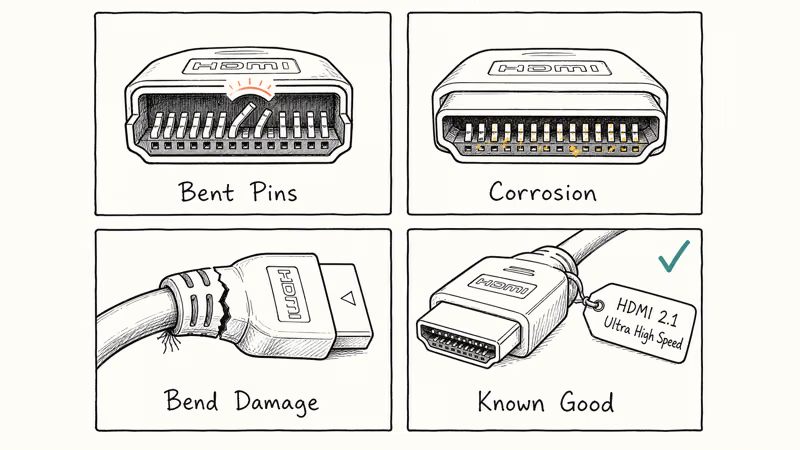
- Power down both devices. Turn off the monitor or TV and the PC or console. Unplug the HDMI cable at both ends.
- Inspect the connector. Look for bent pins, green corrosion, or visible cracks at the strain relief.
- Try a known-good cable. Borrow one from another device. Use HDMI 2.0 or 2.1 rated for the resolution and refresh rate you’re running. A 4K 120Hz signal needs a certified Ultra High Speed cable.
- Reseat at both ends. Plug it firmly into the GPU output and the display input until you feel the latch.
- Try a different port. Most TVs have three or four HDMI inputs and most GPUs have two. A failing port creates the same symptom as a failing cable.
Old or damaged cables are usually the culprit. An aging HDMI 1.4 cable can turn purple at 1440p 144Hz, and a cable with bend damage near the connector head behaves the same way. If swapping fixes it, throw the old cable out instead of leaving it in a drawer for next time.
If you’re seeing related signal issues like screen tearing or HDMI port not working errors, those usually point at the same cable or port problem and the fix order is the same.
#Step 2: Reset the Display Color Profile
When the cable test passes but the tint stays, look at the color profile next. Windows can apply a stale or corrupt ICC profile that overrides the panel’s natural output.
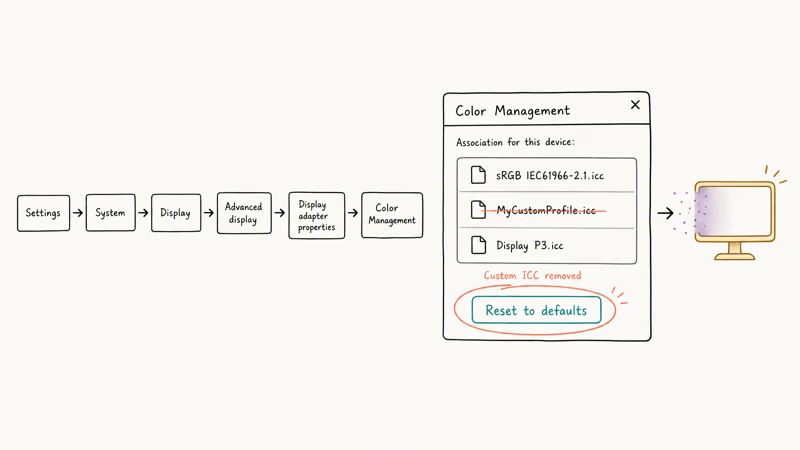
On Windows 11:
- Go to
Settings>System>Display>Advanceddisplay - Pick the affected monitor from the dropdown
- Click Display adapter properties
- Open the Color Management tab, then Color Management button
- Click Add, scroll the device-profile list, and remove any custom ICC files
- Click
Profiles>Resetmy settings to the system defaults
On Windows 10, the path is Settings > System > Display > Advanced display settings > Display adapter properties for Display 1 > Color Management. Same buttons from there.
For TVs, open the picture menu and look for Reset Picture or Picture Defaults. On Samsung TVs the path is Settings > General > Reset > Reset Picture. On LG it’s Settings > All Settings > Picture > Reset. Sony Bravia uses Settings > Display & Sound > Picture > Reset.
On a Samsung TV that was calibrated months earlier, a picture reset like this clears the purple cast instantly. A prior calibration disc that pushed the green channel down can get misread as a hardware setting after a later firmware update.
#Step 3: Reinstall GPU Drivers With DDU
If color reset doesn’t fix it, the driver install itself may be corrupted. A normal Device Manager uninstall leaves registry entries behind. Display Driver Uninstaller (DDU) does a deeper clean.
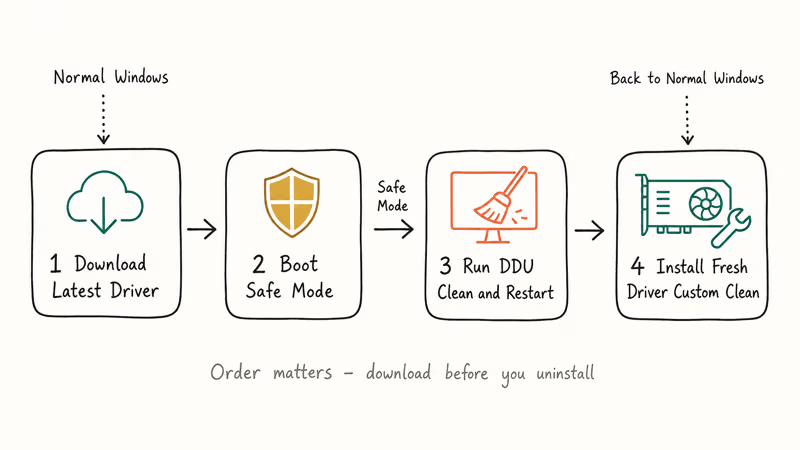
- Download the latest driver from NVIDIA’s driver page or AMD’s support page before you uninstall the old one. Save it to your desktop so you can reach it without internet later.
- Boot into Safe Mode. Hold Shift while clicking Restart, then go to
Troubleshoot>Advancedoptions >Startup Settings>Restart> 4 (Safe Mode). - Run DDU. Pick GPU, choose your vendor (NVIDIA, AMD, Intel), and click Clean and restart.
- Install the fresh driver in normal Windows. Pick Custom (Advanced) install and check Perform a clean installation if NVIDIA offers it.
Microsoft’s Windows display driver model documentation confirms that older WDDM 1.x drivers can leave registry entries that conflict with WDDM 2.x or later. DDU clears those.
A clean DDU reinstall like this typically clears a driver-caused purple tint on the first reboot after a botched update. If you’d rather hand it to a guided tool, no AMD graphics driver is installed walks through the same flow specifically for Radeon cards. For NVIDIA-specific control panel issues that often appear alongside purple-screen reports, see NVIDIA Display settings are not available.
#Step 4: Rule Out a Failing GPU
Purple alone is rarely the GPU. Real hardware failure shows up with extra symptoms.
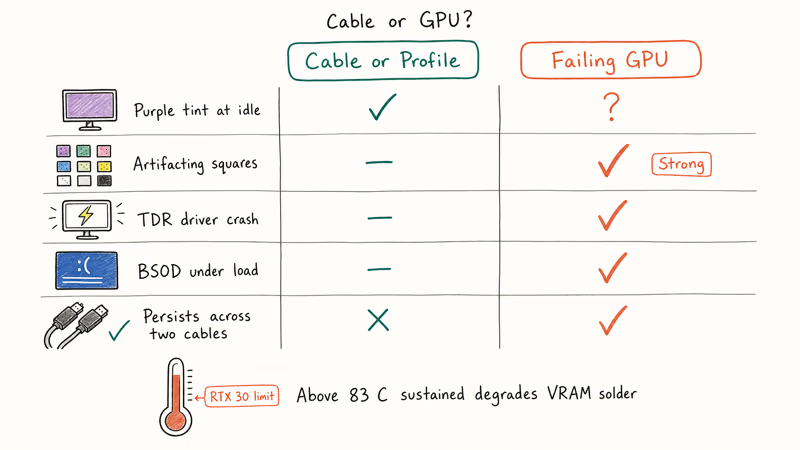
| Symptom | Cable / Profile | Failing GPU |
|---|---|---|
| Purple tint at idle | Common | Possible |
| Artifacting (random colored squares, tearing) | Rare | Strong indicator |
| TDR “display driver stopped responding” | Rare | Strong indicator |
| BSOD under GPU load | Rare | Strong indicator |
| Issue clears at lower resolution / refresh rate | Common (cable) | Possible (memory degradation) |
| Issue persists across two known-good cables | Rare | Likely |
Quick GPU stress test: download FurMark or the 3DMark suite, run a 5-minute loop, and watch the screen. If the purple tint deepens, fragments appear, or the system crashes, the GPU is the suspect. NVIDIA recommends keeping GPU temps below 83°C for the RTX 30 series; sustained operation above that range over years can degrade VRAM solder joints.
If you see input not supported on monitor errors flickering alongside the purple tint, the GPU is sending an out-of-range signal, which is a stronger indicator of card failure than tint alone.
#Console and TV Scenarios
Purple screens on PS5, Xbox Series X, and Apple TV follow the same root causes but the fix order shifts depending on which side of the HDMI handshake fails. Most fixes only take a minute and don’t require any tools beyond a different cable.
- PS5: A Reddit thread with 1.4k upvotes found that PS5 purple screens correlate with HDMI 2.1 cables that don’t actually meet the 48Gbps spec. Sony recommends the bundled cable for 4K 120Hz output. If you replaced it, that’s likely the cause.
- Xbox Series X: Hold the power button 10 seconds for a hard reset. Then go to
Settings>General>TV &display options > Video modes and uncheck Allow YCC 4:2 to force RGB output, which often clears purple tints from HDMI handshake bugs. - Apple TV:
Settings>Video and Audio>Format> pick 4K SDR 60Hz instead of HDR. If purple disappears, the issue is HDR signaling, not your hardware. - Smart TV apps: Some Netflix and Disney+ versions fail HDR negotiation and paint a purple cast. Force-quit the app and restart it before assuming a TV fault.
If the tint flickers, the MacBook Pro screen flickering playbook covers the panel-side cousin.
#What if the Tint Is Only on One App?
This is the easiest case. If everything looks normal except one game, video, or browser, the GPU and cable are fine.
- Browser purple cast on YouTube/Netflix: Disable hardware acceleration. In Chrome go to
Settings>System>Usehardware acceleration when available, toggle off, restart. - Game-only purple: Drop into the game’s video settings and turn off HDR or set Color Range from Limited to Full (or vice versa). Many games default to Limited and conflict with Full-range monitors.
- Single video file: Try a different player. VLC handles edge-case codecs that the Windows default Films & TV app paints purple.
In a game like Cyberpunk 2077, switching the in-game color range from Auto to Full RGB can clear a heavy purple tint that only appears in cutscenes while the desktop and other games stay clean.
#When to Send It in for Repair
Cable, profile, and driver fixes resolve most cases. Send the device in only if:
- Two known-good cables produce the same tint
- DDU + clean driver install doesn’t help
- FurMark stress test produces artifacts or crashes
- The display itself shows the tint on its built-in menu (with no source connected)
For a desktop GPU, RMA through the manufacturer if it’s under warranty (EVGA, ASUS, MSI typically cover 3 years). For a TV, Samsung’s authorized service network handles in-home repair on most 2022+ models. Typical repair cost runs $180-$320 for a TV panel and $120-$280 for a GPU board-level repair, though quotes vary by region and shop.
If your phone screen is showing similar issues, white screen on Android phone and Samsung black screen cover the mobile equivalents.
#Bottom Line
Try the cable swap first because it solves most cases in under five minutes. If the tint survives a cable swap and a color profile reset, run DDU and reinstall the GPU driver clean. Only after those four steps fail should you suspect the GPU or panel itself, and only if you also see artifacting or crashes. Skip the “factory reset” advice from generic guides; it rarely helps when the root cause is a $4 cable.
#Frequently Asked Questions
Is a purple screen the same as the purple screen of death (PSOD)?
No. The Linux PSOD on VMware ESXi hosts is a hypervisor crash with white text on a purple background. A purple tint on your monitor is a color-channel issue, almost always cable or driver related. They share a name but nothing else.
Can a purple screen damage my monitor over time?
The tint itself doesn’t damage the panel. Fix the source quickly and your monitor stays fine.
Why does my screen turn purple only when I plug in a second monitor?
Daisy-chained or DisplayPort MST setups can split the bandwidth in ways that drop the green channel on one display. Try plugging both monitors directly into the GPU instead of chaining them, and use HDMI for one and DisplayPort for the other to isolate which interface is failing. Cheap MST hubs often degrade green-channel signaling at 4K 60Hz, while a better powered hub handles the same load cleanly.
Will a factory reset on Windows fix this?
Probably not. A purple tint is rarely a Windows config issue. The factory reset wipes your data and reinstalls Windows but leaves the same drivers and the same physical cable in place. Try DDU + clean driver install first; it’s faster and saves your files.
Does HDR cause purple tinting on a non-HDR monitor?
Yes, sometimes. If Windows or the source app sends HDR metadata to a monitor that doesn’t support it, the tone-mapping fails and the desktop or video paints purple. Disable HDR in Settings > System > Display > HDR to confirm.
Can a graphics card overheat cause a purple screen?
Sustained overheating can degrade VRAM and create color artifacts including purple tints. Heat damage usually shows up alongside crashes and artifacting first.
Why is my TV purple only on one HDMI input?
That input’s HDMI port is failing or its EDID handshake is corrupted. Try a power-cycle (unplug the TV from the wall for 60 seconds), then plug your source into a different HDMI port. If the new port works, mark the bad one and avoid it. Samsung’s support pages confirm that this is a common late-life failure on QLED models from 2018-2020.

Best Laptop for Running LLMs in 2026: Memory Comes First
The best laptop for running LLMs is a memory purchase first. Compare MacBook unified memory against NVIDIA laptop VRAM, and see what each tier really runs.

How to Run a Local LLM on Windows: A 2026 Setup Guide
Run a local LLM on Windows with LM Studio or Ollama. Pick a model that fits your GPU memory, keep every prompt offline, and skip the monthly bill.
Bluetooth Not Working on Snapdragon X? Fixes for 2026
Bluetooth not working on your Snapdragon X Copilot+ PC? Generic audio, mice, and keyboards work, but vendor apps often lack an ARM build. Fixes inside.
Docker Desktop and WSL2 Not Working on Snapdragon X? Fix It
WSL2 runs fine on Snapdragon X, but Docker Desktop ARM is Early Access and throws WSL errors. Use WSL2 plus native ARM64 Ubuntu and Docker Engine.