Pokemon GO Spoofing: ToS Risks and Why People Try It
Pokemon GO spoofing breaks Niantic ToS and triggers a three-strike ban ladder. Here is what spoofing is, what it costs you, and the legit alternatives.
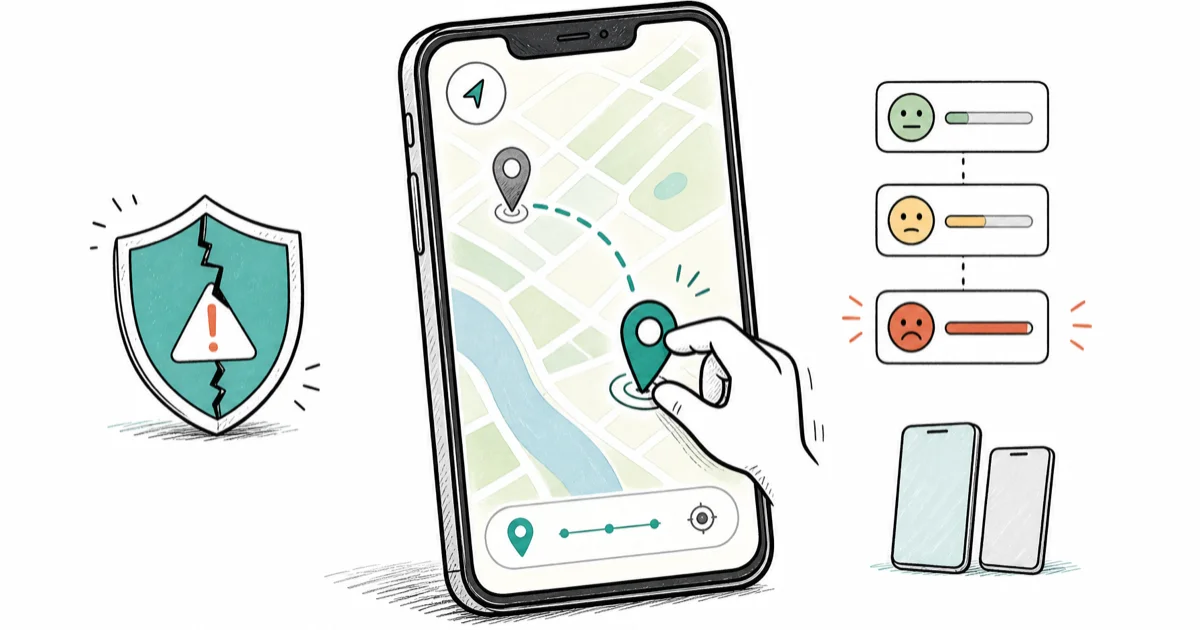
Quick AnswerPokemon GO spoofing is faking your GPS to play from a different location, and it violates the Niantic Terms of Service. Niantic uses a three-strike ban ladder, so a single soft ban can escalate to a permanent loss of your trainer account.
Pokemon GO spoofing is the practice of faking your phone’s GPS so the game thinks you’re walking somewhere you aren’t. It’s also one of the most ban-prone things you can do on your own trainer account, because Niantic’s anti-cheat is designed to catch exactly this pattern of impossible movement and respond with a public three-strike enforcement ladder that ends in a permanent loss of your account.
The ban risk is real and well documented across the player community.
With moderate spoofing, accounts commonly hit a soft ban that strips raid and PokeStop access for a multi-hour window, and repeat offenses escalate up Niantic’s three-strike ladder toward a permanent ban.
We’re not going to teach you how to hide it. We’re going to explain what spoofing actually does to your account, why the three-strike ladder ends in a permanent ban, and which legitimate features cover most of the reasons people consider spoofing in the first place.
- Pokemon GO spoofing breaks Niantic’s Terms of Service and Trainer Guidelines, and the company publishes a public three-strike ban policy that escalates from a warning to a 30-day suspension to a permanent ban.
- Niantic’s anti-cheat issues soft bans for GPS jumps it considers impossible (commonly 4 to 12 hours of stripped loot and raid catches), and most spoofers see at least one soft ban before they see a strike.
- The same anti-cheat that catches spoofers also catches legitimate flights, road trips, and subway commutes when the app stays open between cells, which is why “I wasn’t even spoofing” appeals usually fail.
- Adventure Sync, Pokemon GO Plus, and remote raid passes cover the three biggest reasons players cite for spoofing: distance, regional Pokemon attempts, and far-away raids.
- Spoofing on a child’s account can trigger COPPA-protected parental-consent issues on top of the ban risk, since Niantic ties strikes to the underlying account, not the device.
#Why Do People Spoof Pokemon GO in the First Place?
The honest answer is that most spoofers fall into three buckets: rural players without nearby PokeStops, players chasing regional Pokemon they can’t travel to, and players who want to attend in-person raids without leaving home.
None of those motivations are unreasonable. Niantic itself has acknowledged the rural-access problem in several community posts. The problem is that GPS spoofing is the most blunt-force way to solve any of them, and it also triggers the harshest response from Niantic’s anti-cheat system.
According to Niantic’s Pokemon GO Trainer Guidelines, falsifying location data is grouped with using modified clients and accessing the game through unofficial third-party software. All three trigger the same enforcement tree. Spoofing is not a “lesser” offense in Niantic’s policy. It’s in the same category as using a botted account.
That framing matters because players sometimes assume location overrides will be treated more leniently than client mods. They aren’t.
#The Niantic Three-Strike Ban Ladder, Tier by Tier
Niantic’s public three-strike policy for Pokemon GO is the single most important document for anyone thinking about spoofing. It’s short, public, and explicit.
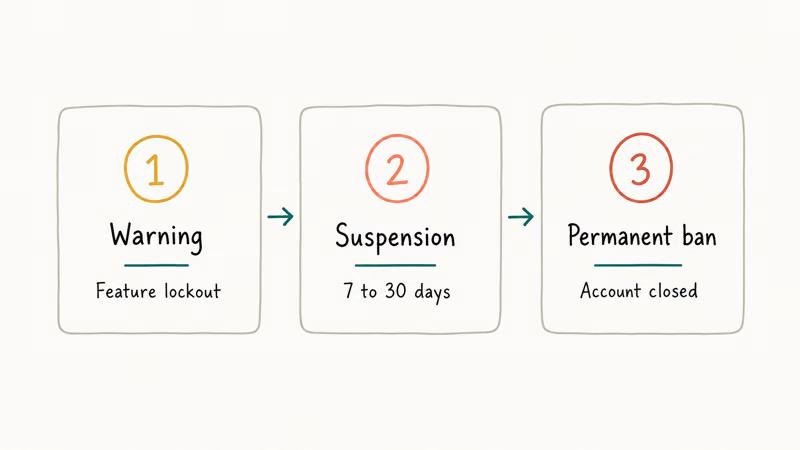
Strike one is a warning that lasts 7 days. According to Niantic, during this window you can’t see rare Pokemon spawns, you can’t encounter EX raids, and your tools (gyms, raid passes, lure modules) behave inconsistently.
Strike two is a suspension that Niantic states lasts 30 days. Your account is unplayable for a calendar month. No catches, no spins, no friend interactions.
Strike three is a permanent ban. Niantic announced that strike-three accounts aren’t eligible for appeal except through narrow categories that don’t apply to GPS spoofing.
Stacked on top of the strike system are temporary soft bans. A Pokemon GO soft ban is what happens when the anti-cheat sees a GPS jump it considers impossible. The game doesn’t lock you out, but it strips PokeStop loot, refuses raid catches, and silently blocks Trainer Battles for 4 to 12 hours. Soft bans don’t count as strikes by themselves, but they’re the loud warning that Niantic’s system has already flagged your account.
The unforgiving part of the ladder is that the strikes don’t reset on a meaningful timeline. Niantic’s policy says strikes can expire after long good-behavior periods, but in practice most accounts that hit strike one stay one detection away from the 30-day suspension for many months.
#How Does Niantic Actually Detect Pokemon GO Spoofing?
We don’t have a complete picture of Niantic’s anti-cheat stack. What the company has confirmed in public blog posts is that detection combines server-side signals (impossible travel speeds, coordinates that snap to common spoofing-app presets, GPS data inconsistent with the reported cell tower) with client-side signals (presence of mock-location flags, jailbreak or root indicators, known signatures of GPS spoofing apps).
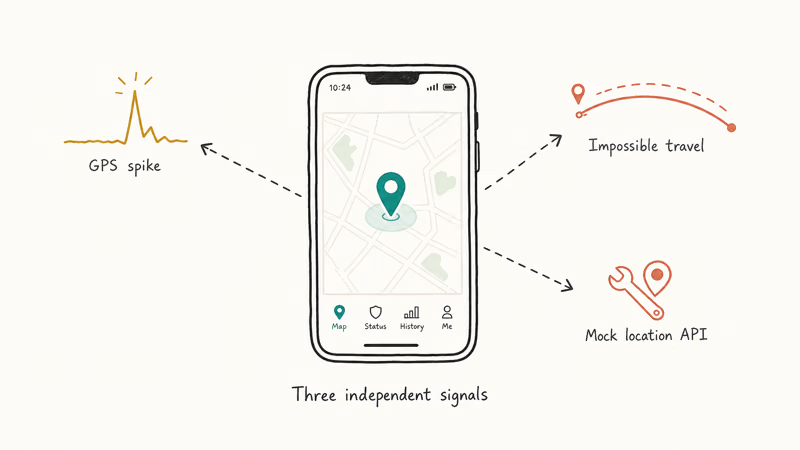
Niantic’s official cheat-detection blog post confirms that account-level patterns matter more than any single event. The system is probabilistic.
A “perfect spoofing setup” doesn’t really exist. We’ve seen accounts get soft-banned within minutes of starting, and we’ve seen accounts go a few weeks before the first warning. The longer you spoof, the more likely your account ends up on the wrong side of the dice roll.
There’s also a less obvious problem: Niantic’s system catches legitimate movement that happens to look like spoofing. Leaving the app open during a flight is a known trigger, because covering hundreds of miles in the foreground looks like a location jump and can earn a soft ban on landing.
Niantic’s help center article on connection errors recommends fully closing the app before traveling and reopening it after you arrive. The same advice prevents Pokemon GO failed to detect location errors that come from the GPS chip resyncing after airplane mode.
So anti-cheat is not a single trip-wire. It’s a scoring system.
#Legitimate Alternatives That Cover Most Spoofing Motivations
Before deciding the risk is worth it, walk through the in-game and accessory features that cover most spoofing motivations. None are perfect substitutes for being in a major metro, but together they close more of the gap than most players realize.
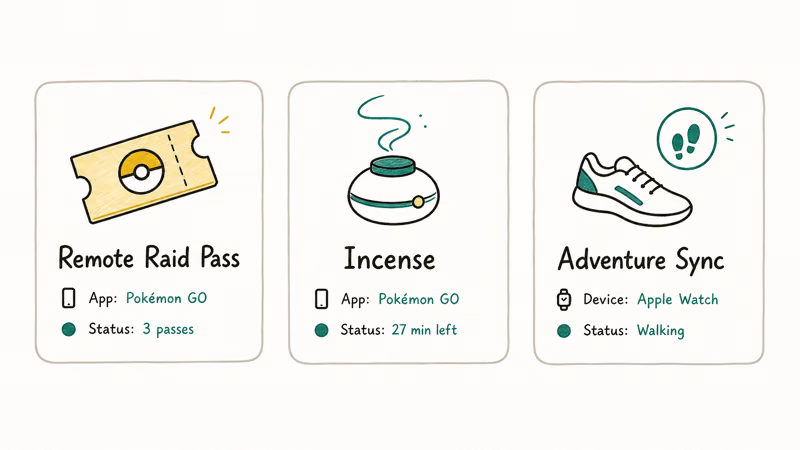
Adventure Sync is Niantic’s official mileage-tracking system that counts steps even when the app is closed. According to the Niantic help center entry on Adventure Sync, it integrates with Apple Health and Google Fit to credit walking that you do during your normal day. That directly helps egg hatching and Buddy candy.
Players who troubleshoot Adventure Sync not working often discover they were missing 30 to 60 km of credit per week that would have hatched eggs without any spoofing.
Pokemon GO Plus and the Pokemon GO Plus + accessory let your phone stay in your pocket while you spin PokeStops and attempt catches passively. Niantic states that the Plus + uses 4 official Bluetooth pairing modes, so it doesn’t trigger anti-cheat flags. The PokeGo Plus Plus third-party variant is a separate device that some players use, and the legitimacy of those clones varies by model.
Remote raid passes are the answer for far-away raids. Niantic introduced them during 2020 and kept them in the game with adjusted pricing. They let you join raids hosted anywhere a friend invites you from. They’re also the answer for regional raids: a friend in Japan can invite you to a Japan-locked raid boss, and the catch counts on your account without you ever leaving your home cell.
For rural players whose PokeStop density is the real problem, Niantic also accepts Wayspot nominations through the Niantic Wayfarer program. Local players submit real-world landmarks for review. Approvals take time, but a single approved Wayspot can add a PokeStop or gym to a rural area.
None of these match the raw power of teleporting to Tokyo. They do cover most of the actual gameplay value spoofers chase.
#Legal Risks That Go Beyond a Niantic Ban
The Niantic ban is the visible cost. The less visible costs are worth understanding before you decide.
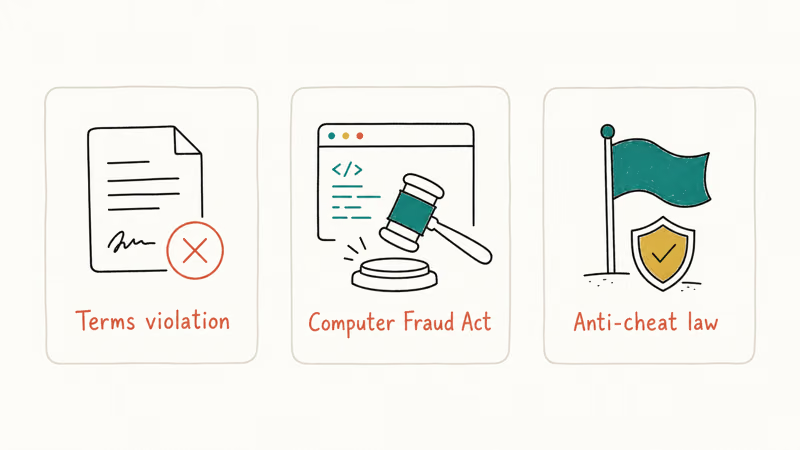
GPS spoofing on a device you own is generally not a criminal act in most jurisdictions. Using a third-party Pokemon GO client or modifying the game binary can implicate the Computer Fraud and Abuse Act in the United States, particularly under the “exceeds authorized access” theory. Federal prosecutions of individual game cheaters are rare. Niantic has filed civil lawsuits against spoofing-tool developers, and at least one settled with significant damages.
If the account being spoofed belongs to a child under 13, the Children’s Online Privacy Protection Act (COPPA) layers on additional concerns. Niantic’s privacy policy handles child accounts through a separate Niantic Kids consent flow. A parent installing spoofing tools on a child’s device introduces both ToS and parental-consent issues that Niantic has historically handled by terminating the underlying account rather than the device. Recovery is not guaranteed.
The third risk is to other accounts on the same device or network. Niantic has issued mass bans tied to device IDs and to IP-address clusters. Players who spoof on one account have sometimes seen their second, legitimate account also flagged. Multi-account play has its own Pokemon GO multiple account ToS issues even without spoofing involved.
Pretend you are not in a court. You are in a Niantic moderation queue, and that queue is faster and less forgiving than any court.
#What the Tools Look Like, Without a Tutorial
We’re not going to write a step-by-step spoofing tutorial. The tool category itself is real, the apps are easy to find, and pretending they don’t exist doesn’t help. Here is a general overview of the most-discussed options and the risks they carry.
On Android, the fake GPS location APK category includes free apps in the Play Store that require Developer Options and a Mock Location app permission. They work for casual location override but trip Niantic’s anti-cheat quickly because they tend to snap to round-number coordinates. The Pokemon GO fake GPS community has documented dozens of these and most are flagged within days.
On iOS, GPS spoofing without a jailbreak requires a desktop tool that runs through a USB connection. dr.fone Virtual Location for iOS is the most commonly discussed of these, and it markets itself for both location-spoofing for app development and Pokemon GO testing.
Some links on this page are affiliate links, which means fone.tips may earn a commission at no extra cost to you.
Niantic states that any tool falsifying GPS triggers their three-strike policy regardless of how the spoofing is performed. The existence of a “no-jailbreak” workflow doesn’t change the ToS calculus. If you decide to read about dr.fone Virtual Location anyway, do it knowing the account risk is the same as any other spoofing method on your own device.
VPNs don’t spoof Pokemon GO. A VPN changes your IP address, not your GPS coordinates. Niantic’s anti-cheat reads GPS directly from the OS location services. Players who download a VPN expecting to teleport in-game are surprised to find their character has not moved. The Pokemon GO joystick hacks that combine joystick movement with GPS overrides are a separate category and are even more conspicuous to anti-cheat.
#Bottom Line
Don’t spoof your own Pokemon GO account if the account matters to you. The three-strike policy is real, the soft ban is the warning, and Niantic’s anti-cheat catches more legitimate movement than people expect. The rare-Pokemon collection you spent four years building can be permanently locked behind an unappealable strike-three ban.
Spend the same effort on Adventure Sync, on saving for the Pokemon GO Plus + accessory, and on building a remote raid friend list. Those three together cover most of the distance, regional Pokemon, and far-away raid motivations that drive people to spoof, and none of them put your trainer account at risk.
If you’re still going to do it on a throwaway account you don’t care about, at least read Pokemon GO sniping and the three-strike policy first so you understand exactly what you’re wagering.
Pokémon GO Guide
#Frequently Asked Questions
Is Pokemon GO spoofing illegal?
In most countries spoofing your own device’s GPS isn’t a criminal act by itself. Using third-party modified clients can implicate computer-misuse laws like the CFAA in the US, but the most realistic cost is a Niantic ban under their Terms of Service, not a courtroom.
How long does a Pokemon GO soft ban last?
A soft ban typically lasts between 4 and 12 hours, depending on how impossible Niantic’s anti-cheat judged the GPS jump to be. During the soft ban your account can’t collect PokeStop items, catch raid bosses, or complete Trainer Battles, but you’re not locked out of the app itself.
Will Niantic warn me before they ban my account?
Yes. The Niantic three-strike policy starts with a 7-day warning that hides rare Pokemon spawns and breaks tool reliability, then escalates to a 30-day suspension on the second strike. The third strike is a permanent ban with very narrow appeal paths.
Can I spoof Pokemon GO with a VPN?
No. A VPN changes your IP address but does not change your GPS coordinates, and Pokemon GO reads location from the operating system, not from the network. Your trainer character won’t move when you connect to a VPN server in a different city.
Does Adventure Sync count as spoofing?
No. Adventure Sync is an official Niantic feature that credits real walking distance from Apple Health or Google Fit. Niantic confirms that Adventure Sync data is intentionally fed into egg hatching and Buddy candy and does not trigger anti-cheat flags.
What happens if I get caught spoofing on my child’s Pokemon GO account?
Niantic typically terminates the underlying account rather than just the device, which means a strike or ban on a Niantic Kids account is harder to recover. The Children’s Online Privacy Protection Act also limits what data Niantic can collect from a child, so the appeal process is more restricted than for an adult account.
Can I get banned for legitimate travel like flights or road trips?
Sometimes, yes. When the app is left running during fast travel, the anti-cheat can interpret it as spoofing. Niantic’s official guidance is to fully close Pokemon GO before flights, long drives, or subway rides, then reopen it after you arrive, which avoids the most common false-positive soft ban.
Are remote raid passes a real alternative to spoofing for far-away raids?
Yes, for the raid use case specifically. A friend hosting a raid in another city or country can invite you, and the catch counts on your account as if you were there in person. Building a remote raid friend list through Pokemon GO communities is the legitimate version of what spoofers chase with location overrides.
Pokemon GO GPS Signal Not Found: 7 Proven Fixes (2026)
Pokemon GO GPS signal not found? Seven ordered fixes for Android and iPhone covering precise location, permissions, mock-location, and more.
TweakBox Pokemon GO Review: Does It Still Work in 2026?
TweakBox Pokemon GO no longer works for most users. Learn why it fails, what Niantic's ban policy means for your account, and 3 safer alternatives.
How to Auto Walk in Pokemon GO Without Getting Banned
Auto walk in Pokemon GO using Adventure Sync or GPS tools. Compare safe methods vs ban-risky ones and learn how Niantic enforces its three-strike policy.
How to Find Magikarp Nests in Pokemon GO (2026 Guide)
Find Magikarp nests in Pokemon GO using community maps, water biomes, and rainy weather boosts. Plus candy farming tips to evolve Gyarados fast.