Pokemon Go Fake GPS: Risks, Bans, and Safer Ways to Play
Pokemon Go fake GPS apps risk a permanent ban under Niantic three-strike rules. See the real ban math, security risks, and legitimate Niantic features.
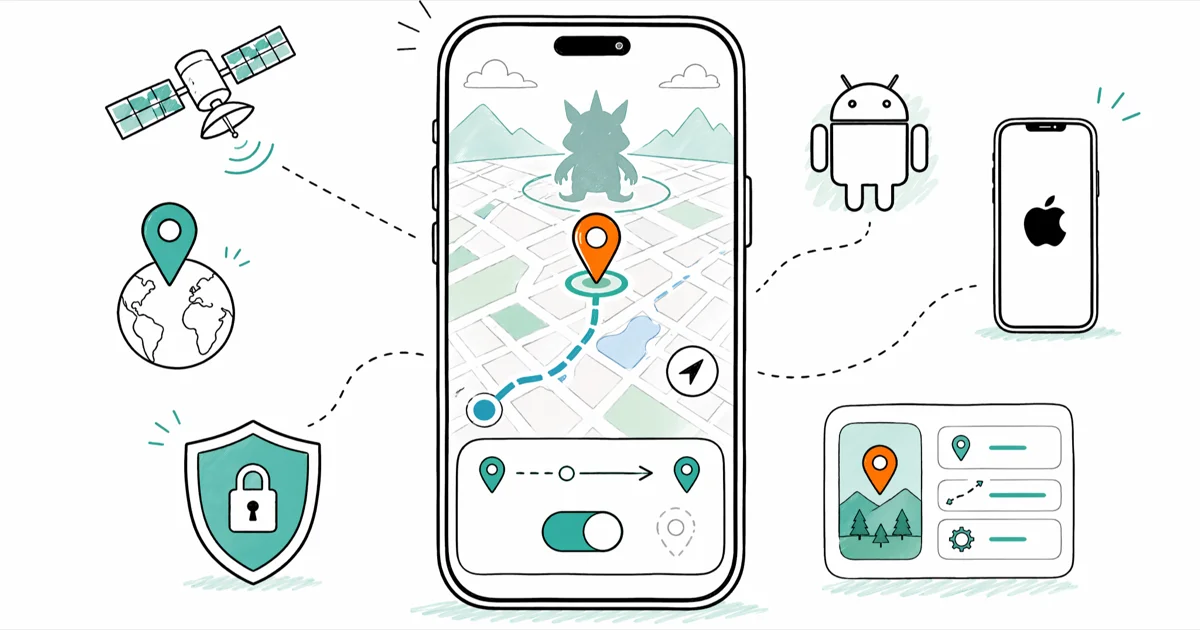
Quick AnswerPokemon Go fake GPS apps spoof your phone location to trick the game, but Niantic treats this as cheating under its three-strike policy and bans repeat offenders permanently. Adventure Sync, Remote Raid Passes, and Routes cover the rural-spawn use case without account risk.
Pokemon Go fake GPS searches spike every regional event because rural trainers, working parents, and curious testers hope a 2020-era trick still works in 2026. The honest answer is short. Most of the original tools are gone, the survivors trigger faster bans than they used to, and Niantic has shipped official features that close the rural gap.
This article walks through the real ban math on your own account, the security risks behind today’s mirror downloads, and the legitimate Niantic features that cover the use case that pushed players toward spoofing in the first place.
- Niantic treats GPS spoofing as cheating under a three-strike policy: a roughly 7-day warning, then a roughly 30-day suspension, then a permanent ban that wipes the account.
- Pokemon Go anti-cheat runs server-side on Niantic infrastructure, so “undetectable” client-side promises can’t be verified by the tool authors and aren’t safe to trust.
- Fake GPS apps in 2026 distribute mostly through enterprise certificate sideloads, jailbreak tweaks, and paid mirror sites, and each of those channels has been documented as a malware or scam vector.
- Adventure Sync awards egg and Buddy distance from normal step counts without GPS movement, and Remote Raid Passes let you join any raid from home with the same encounter chances as on-site raiders.
- A permanent ban removes Pokemon, items, the friends list, and team progress, and Niantic does not migrate any of that to a new account once enforcement lands.
#What Does “Pokemon Go Fake GPS” Actually Mean?
Pokemon Go fake GPS is shorthand for any tool that reports a synthetic latitude and longitude to the game instead of the real reading coming from the phone GPS chip.
The category is broad. It covers desktop USB tethers, sideloaded iOS apps signed with enterprise certificates, Android mock-location toggles inside Developer Options, jailbreak tweaks, and PC emulators with a built-in joystick. On the surface they all do the same thing, which is to make a stationary phone look like it’s jogging through Tokyo or Sydney.
Under the hood, the implementations differ.
A desktop tether like the original iSpoofer wrote coordinates over a USB connection. A sideloaded IPA installer such as iPogo or PokeGo++ runs on the device itself and hooks the Pokemon Go process at the system level. An Android mock-location app uses the developer-mode permission that Google left in place for app developers and accessibility testing. Each method has a different detection footprint.
Two things changed after 2020.
The legal action against the most popular spoofing tools, including iSpoofer and PokeGo++, took the largest distribution channels offline within a few weeks of the lawsuit being filed.
Detection then moved from a client-side check that a spoofing tool could try to bypass to a server-side analysis of movement patterns, IP and GPS mismatch, and account behavior. The shift is documented in the “Cheating and bans” section of the Wikipedia entry on Pokemon Go, and our Pokemon Go spoofing overview covers what each detection signal looks like in practice.
#How Niantic’s Three-Strike Policy Works
Niantic announced its formal three-strike framework in August 2019 and has applied it consistently across all of its location-based games since.
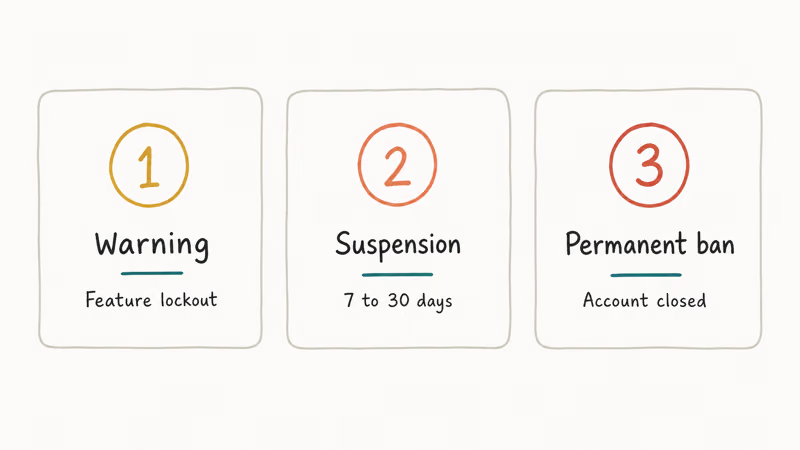
Strike one. A warning that lasts roughly 7 days. During the warning window, the account stays playable, but Niantic suppresses rare and shiny encounters, reduces raid rewards, and cuts Pokestop item drops. According to Niantic’s three-strike discipline policy, the warning rolls off after a clean stretch of play if no further infractions are detected.
Strike two. A suspension that runs roughly 30 days, during which the trainer can’t log in to the affected account. Raid passes already in the bag are wasted, Sponsored Gifts disappear, and any premium time on a Pokemon Go Plus or Go Plus + counter keeps ticking.
Strike three. Permanent termination. The account, Pokemon, items, badges, and friends list all become unrecoverable.
The strike clock is server-side. Reinstalling Pokemon Go, switching from Android to iOS, factory resetting the phone, or even buying a new phone doesn’t reset the warning level.
Niantic states that appeals are accepted only when the trainer can show a clear false positive. The appeal form sits inside the Pokemon Go app under Settings > Help Center > Contact Us, and successful appeals usually have a single primary device on file and no installed certificate profiles. Strikes also stack across the Niantic account rather than the device.
If you used a spoofing tool with the same Pokemon Trainer Club or Google login on Pikmin Bloom or Ingress, that strike history is visible to Pokemon Go enforcement too. Our Ingress GPS spoofing explainer covers how cross-game enforcement has worked since the policy was introduced.
#Why Are “Undetectable” Spoofing Claims a Red Flag?
The marketing copy on most 2026-era spoofing products promises “undetectable” GPS movement, “anti-ban” cooldowns, or “guaranteed safe” usage.
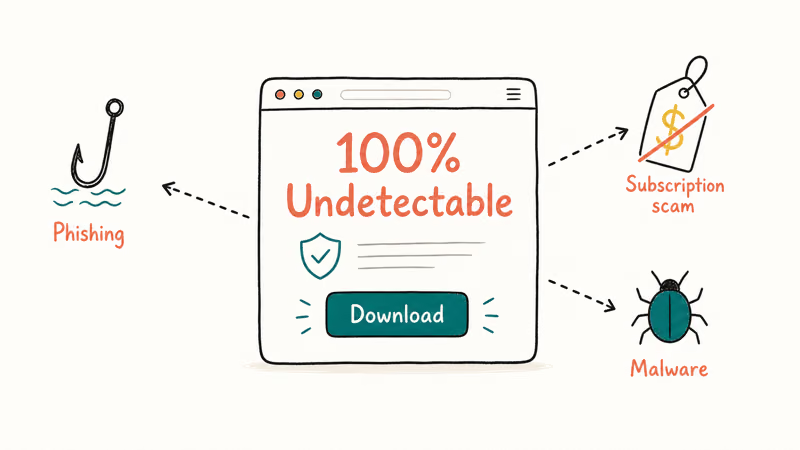
Each phrase should be read as a sales claim, not a safety statement. Anti-cheat detection in Pokemon Go runs on Niantic servers. The tool author has no visibility into which signals Niantic currently weights, which means a confident “won’t be detected” claim is a bet against a rule set the developer has never seen.
Niantic also rotates detection signals on its own schedule.
A tool that survived an iOS 16 detection sweep in 2023 might fail an iOS 18 sweep in 2025 without any code change on the tool side. Niantic added a new signal that the tool isn’t designed to fake, and the silence on the developer side is by design.
The top search results for “Pokemon Go fake GPS download” typically redirect to a paid “support” subscription, demand an Apple Configurator profile with full device-management access, or push an Android APK that Google Play Protect flags on install.
Two related claims show up next to “undetectable.”
One is the “free version” promise that turns into a paid certificate renewal as soon as Apple revokes the enterprise signature. The other is the “lifetime license” promise from a brand that didn’t exist 12 months earlier and won’t exist 12 months from now. Both patterns repeat across the cheating-tool ecosystem, and they show up in the Reddit r/PokemonGoSpoofing megathreads that catalog tool shutdowns each year.
Healthy skepticism is the right default.
If a Pokemon Go fake GPS app could really guarantee invisibility, Niantic’s legal team would have a much smaller target list than it does. The lawsuit pipeline has been steady since 2019, and each tool taken down has been replaced by a smaller, less polished successor with worse safety guarantees.
#The Security and Wallet Risks of Fake GPS Apps
The risks beyond an account ban fall into three buckets that have gotten worse since the major tools went offline.
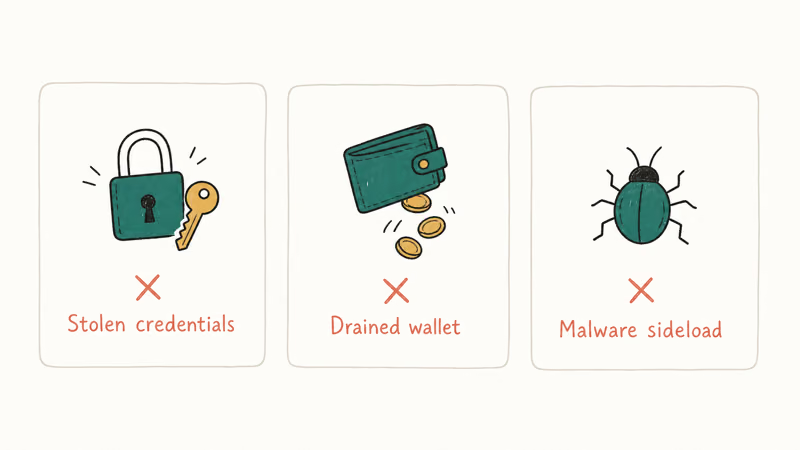
These risks apply to your own device, your own login credentials, and your own payment methods, and they’re worth thinking about even if you set the ban question aside.
Malware on the desktop or sideloaded profile. With the official iSpoofer download gone and the iPogo brand splintered, most search traffic for “Pokemon Go fake GPS” lands on repackaged binaries hosted on file-locker sites.
Many mirror pages push an Apple Configurator profile that demands full device-management access, the same scope enterprise MDM uses.
Credential theft. Several spoofing desktop apps prompt for the Google or Pokemon Trainer Club login during setup, ostensibly to “sync” the account. According to Niantic’s account security guidance, Niantic doesn’t guarantee account recovery once a third-party tool has handled the credentials. Password reuse across services compounds the damage if the third-party server is later breached.
Subscription traps. Free-then-paid spoofing tools commonly autorenew through Apple ID or Google Play with no prominent cancellation path. Disputes against autorenewal charges for cheating tools are inconsistent because Apple and Google both treat in-app purchases as binding, and the cheat developer is rarely available to issue a refund.
The combined risk profile is worse than most tracking and recovery utilities. The audience self-selects for users who are already willing to bypass platform rules, which means support escalations are less likely when something goes wrong.
A jailbreak adds another layer.
Jailbreaking voids the Apple warranty, blocks Apple Pay and several banking apps, and exposes the device to a Pokemon Go integrity check that flags unsigned root partitions. The combination of jailbreak plus spoofing tweak is the fastest path to a strike-two suspension that community recovery threads consistently report. The device itself becomes less useful for everything outside Pokemon Go.
#Legitimate Niantic Features That Cover the Same Use Case
The most common honest reason players reach for fake GPS is that rural areas have sparse spawns and few gyms. Niantic has shipped several official features since 2020 that close most of that gap without putting your account at risk.
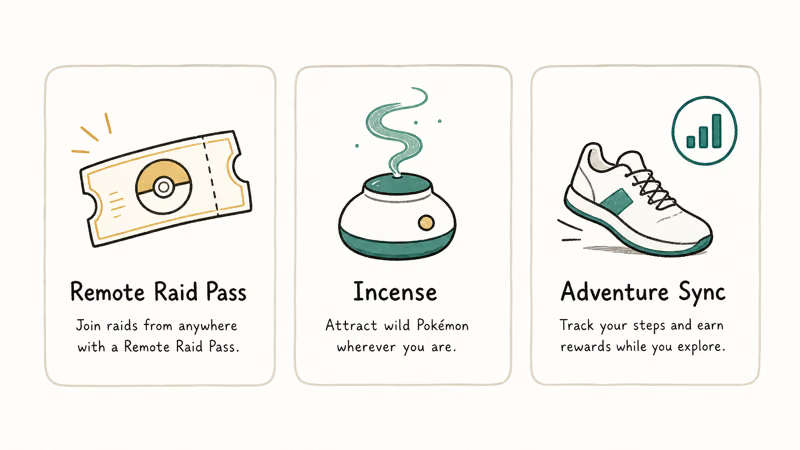
Remote Raid Passes. Introduced in 2020 and revised in April 2023, Remote Raid Passes let you join any in-progress raid from home. The April 2023 revision capped remote raids at 5 per day and raised the price. According to Niantic’s Remote Raid Pass FAQ, remote raiders earn the same encounter chances as in-person raiders, and the in-game lobby shows both groups together.
Adventure Sync. Adventure Sync uses Apple Health or Google Fit step data to credit egg and Buddy distance without GPS movement. Our Adventure Sync troubleshooting guide covers permission issues on each platform.
Routes, Showcases, and Wayfarer nominations. Routes give guided walking paths around real-world landmarks, and they reward unique encounters on completion. Showcases let you enter your largest catches into local leaderboards. The Niantic Wayfarer program accepts nominations for new Pokestops and gyms when the area actually lacks them.
Community Day and Spotlight Hour. These rotating events concentrate a single species into worldwide spawns for a few hours. They flatten the rural-versus-urban gap by saturating the map for everyone simultaneously, and the schedule is published on the official Pokemon Go events calendar 3 to 4 weeks ahead, which gives rural trainers enough notice to plan a walking loop around the event window and book any car or transit they need.
| Use case | Pre-2020 spoofing answer | Official Niantic answer in 2026 |
|---|---|---|
| Joining a regional or T5 raid | Teleport to the gym | Remote Raid Pass (5 per day cap) |
| Egg hatch progress with no walking | Joystick or GPX route | Adventure Sync step credit |
| Empty map at home | Teleport to a city park | Routes, Showcases, Community Day |
| Permanent local Pokestop | Move the spoof anchor | Wayfarer nomination |
Table: How official Niantic features replace the most common pre-2020 spoofing use cases.
For broader context on how the location-spoofing category has hardened across games since iSpoofer, our location spoofer overview walks through the wider anti-cheat shift. Our deeper iSpoofer shutdown explainer tracks the specific Niantic legal action that triggered the 2020 wave of tool closures.
#Real GPS Drift Fixes When You Aren’t Trying to Spoof
A surprising share of “fake GPS” searches come from trainers who aren’t trying to cheat at all. They’re trying to fix a real GPS problem that makes the game think they’re somewhere they aren’t.
The legitimate fixes are different from the spoofing playbook.
On iPhone, an inaccurate GPS reading most often traces back to Location Services accuracy, a stale A-GPS cache, or an indoor signal bouncing off concrete walls.
Apple’s support article on getting an accurate GPS reading on iPhone recommends turning on Location Services under Settings > Privacy & Security > Location Services, enabling Precise Location for Pokemon Go specifically, and giving the phone a clear view of the sky for 30 to 60 seconds before launching the game.
Our deeper iPhone location wrong walkthrough covers the full sequence when the obvious fixes don’t help.
On Android, a stuck location often comes from Mock Locations being enabled in Developer Options for an unrelated debug app, or from Google Location Accuracy being turned off in Settings > Location > Location Services. According to Google’s Android location accuracy support page, turning on Wi-Fi and Bluetooth scanning lets the phone cross-reference cell towers and access points to refine the reading.
The fix in both cases is to give the phone better legitimate data, not to fake it outright.
Our broader Pokemon Go location change guide covers the legitimate ways Niantic supports for travel and account moves, including what happens when you actually cross time zones with the game open.
Multi-account questions sit in the same gray zone. Family devices, shared phones, and parents helping a child level a starter all fall under Niantic’s player guidelines on multi-accounting, and our Pokemon Go multi-account guide walks through what’s permitted, what triggers enforcement, and how Niantic distinguishes legitimate family play from secondary accounts used to boost a main.
#Bottom Line
The most useful thing to take from this article isn’t a replacement tool. It’s the underlying ban math on your own Pokemon Go account.
Niantic’s three-strike policy makes spoofing a one-bad-week problem at minimum and a lost-account problem at worst. The surviving 2026 distribution channels for fake GPS apps carry malware and subscription-trap risks that have gotten worse, not better, since iSpoofer disappeared.
If you’re a rural trainer who just wants more raids and faster egg hatches, Remote Raid Passes plus Adventure Sync cover most of the gap that drove the original spoofing demand. If you’re seeing real GPS drift inside Pokemon Go, the answer is the Location Services fixes in this article, not a third-party tool.
The honest play in 2026 is to stay inside the rules, which is also the cheaper and safer one for the account, the device, and the credit card on file.
Pokémon GO Guide
#Frequently Asked Questions
Is using Pokemon Go fake GPS illegal?
In the United States, it’s a Terms of Service violation rather than a criminal offense. The practical risk is the account ban, not a police call.
Will Niantic ban me right away if I try a fake GPS app once?
Probably not on the first attempt, since the system is built around a three-strike framework. The first detected spoof typically triggers a roughly 7-day warning that cuts shiny encounters and Pokestop drops, the second triggers a roughly 30-day suspension, and the third is permanent. The strike clock is server-side and follows the account across devices, so reinstalling or factory resetting doesn’t reset the count.
What’s the difference between a fake GPS app and Adventure Sync?
A fake GPS app reports synthetic coordinates that the phone never actually visited, which is what Niantic treats as cheating. Adventure Sync uses your phone real step count from Apple Health or Google Fit and awards distance toward eggs and Buddy candy from steps you actually took, even if you didn’t open Pokemon Go during the walk. The first is a Terms of Service violation. The second is an official Niantic feature you can turn on in Pokemon Go settings.
Are PGSharp, iPogo, or PokeGo Plus Plus safe to use?
They aren’t. All three pathways feed into Niantic three-strike enforcement, and Apple certificate revocations also break the iOS apps without notice. Our PGSharp safety review covers the broader pattern.
Does a VPN count as Pokemon Go spoofing?
A VPN changes the device IP address but not the GPS coordinates, so it doesn’t directly affect what Pokemon spawn around you. Niantic anti-cheat does flag accounts with large IP-versus-GPS mismatches. Leave the VPN off while playing.
Can I appeal a ban if I never used a fake GPS app?
Yes. False positives happen, especially for trainers who travel for work, use multiple devices in one household, or live in border regions where GPS drift is common. The appeal form sits inside Pokemon Go under Settings, Help Center, Contact Us, and successful appeals usually show a single primary device, no jailbreak, no installed certificate profiles, and a clear travel explanation for any location jumps.
Can a child or family member share my account if I work and they’re at home?
Sharing one account across a household isn’t directly policed, but the location pattern can trigger an enforcement flag when the device looks like it’s teleporting between a workplace and a home. The cleaner path is each player on their own account. Our Pokemon Go soft-ban guide covers where the line is in practice.
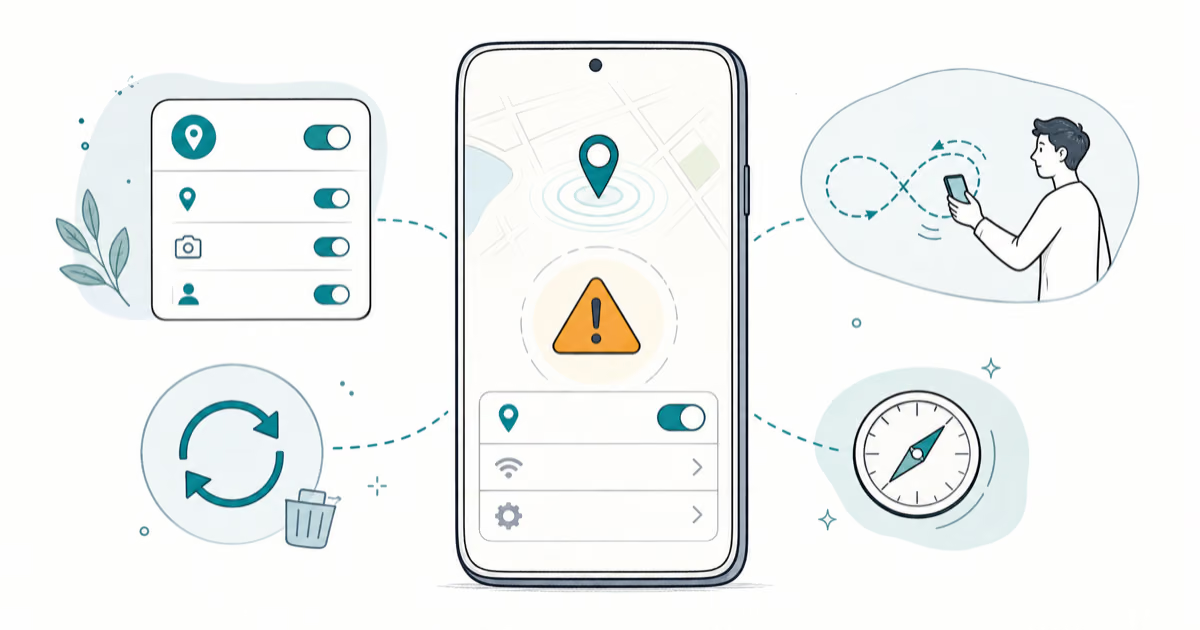
Pokemon GO GPS Signal Not Found: 7 Proven Fixes (2026)
Pokemon GO GPS signal not found? Seven ordered fixes for Android and iPhone covering precise location, permissions, mock-location, and more.
TweakBox Pokemon GO Review: Does It Still Work in 2026?
TweakBox Pokemon GO usually fails. Learn why, what Niantic's ban policy means for your account, and which official alternatives to use instead.
How to Auto Walk in Pokemon GO: Safe and Risky Methods
Learn how Pokemon GO Adventure Sync credits real activity, why fake-step and GPS tools risk account strikes, and which official options to use.
How to Find Magikarp Nests in Pokemon GO (2026 Guide)
Find Magikarp nests in Pokemon GO using community maps, water biomes, and rainy weather boosts. Plus candy farming tips to evolve Gyarados fast.