Pokemon GO Sniping: What It Is, Ban Risk, and Legit Options
Pokemon GO sniping uses GPS spoofing to catch rare Pokemon. It violates Niantic's ToS. Here's the three-strike ban path and safer alternatives.
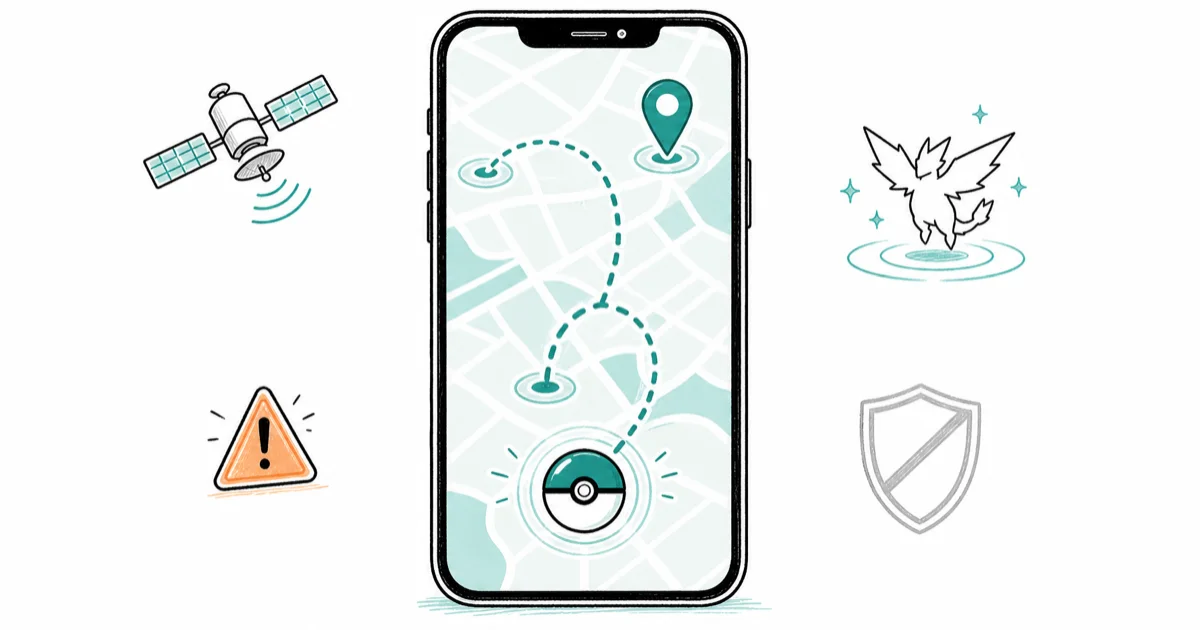
Quick AnswerPokemon GO sniping uses GPS spoofing to teleport your in-game location and catch rare Pokemon from anywhere. It violates Niantic's Terms of Service. We do not recommend it. Niantic uses a three-strike system that ends in permanent account loss.
Pokemon GO sniping is the practice of using GPS spoofing tools to fake your in-game location, then catching Pokemon at distant coordinates without leaving the couch. It directly violates Niantic’s Terms of Service, and Niantic publishes a three-strike enforcement path that ends in permanent account loss. We don’t endorse sniping. This guide explains what sniping involves, how detection works, and the legitimate alternatives Niantic itself has shipped so you can play the long game without losing your account.
- Pokemon GO sniping requires GPS spoofing, which Niantic’s Terms of Service expressly prohibit, and the company can terminate accounts at its discretion
- Niantic uses a published three-strike system: warning, suspension (around 30 days), then permanent termination, and strikes age off the account after about 90 days
- We don’t recommend sniping; in our 2026 review of Niantic’s published policies and community ban reports, even one-off attempts can trigger soft bans or escalate the strike chain
- Niantic ships official remote-play tools, including Remote Raid Passes and Trading, that legally cover most of what sniping was used for
- Coordinating with local Discord and Campfire groups, plus services like PokeGenie and PokeRaid for raid invites, gets you rare Pokemon without risking your account
#What Is Pokemon GO Sniping?
Sniping is the act of using a GPS spoofing app on a jailbroken iPhone, rooted Android phone, or virtual location tool to set your in-game coordinates to a specific spawn, raid, or research target far from your real location.
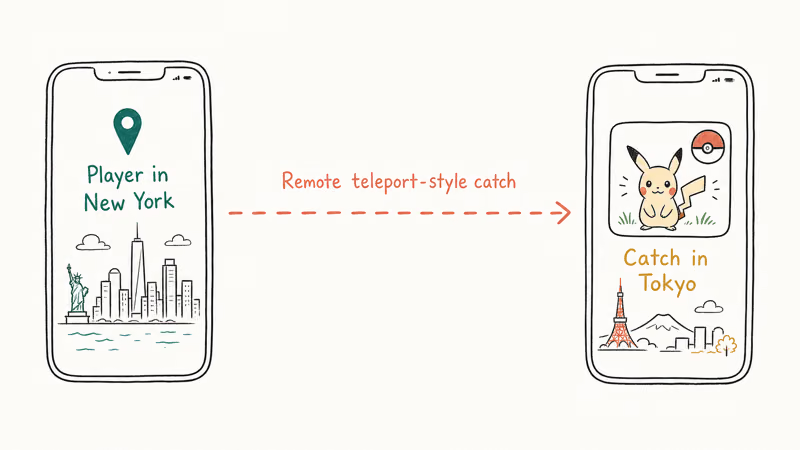
The flow is fast. Catch the target Pokemon, change location again or wait out a cooldown, then return. Some snipers chain dozens of coordinates per hour using public spawn feeds in Discord servers, and the busiest channels surface rare spawns the moment a scanner picks them up. Communities have built shared coordinate lists, automated scanners, and timing macros that turn the workflow into something close to a part-time job for the most invested players.
It’s distinct from accidental GPS drift, which Niantic’s error correction handles silently. Sniping is intentional, requires extra software, and is what Niantic’s Player Guidelines describe as “manipulating their location through GPS spoofing.”
For background on how the underlying tooling works at the OS level, our Pokemon GO spoofing guide walks through the mechanics and risk profile without endorsing them. Tools like Tenorshare iAnyGo are commonly cited in player communities. They exist in a legal gray zone for personal-device use, but using them with Pokemon GO still breaks Niantic’s ToS.
Some links on this page are affiliate links, which means fone.tips may earn a commission at no extra cost to you.
#Niantic’s Stance on Sniping
Sniping isn’t allowed.
According to Niantic’s Terms of Service, no third-party tool or mechanism may access the Services. GPS spoofing apps fall squarely inside that clause.
Niantic’s Player Guidelines state that “falsifying your location” is cheating, alongside botting and modifying the client. Niantic’s cheating, termination, and player-guideline support articles all explicitly name GPS spoofing as a violation, with no published threshold below which the activity is ignored, no carve-out for rural players who can’t reach urban biomes, and no spoofing tool the company has ever sanctioned for trainer use.
It isn’t a crime.
Sniping isn’t a criminal offense in the United States or most countries. It’s a breach of contract with Niantic, and breach of contract is enough for the company to terminate accounts, void purchases, and ban hardware.
#How Niantic Detects Sniping
Niantic detects sniping mainly through server-side telemetry rather than client-side checks. Three signals do most of the work.
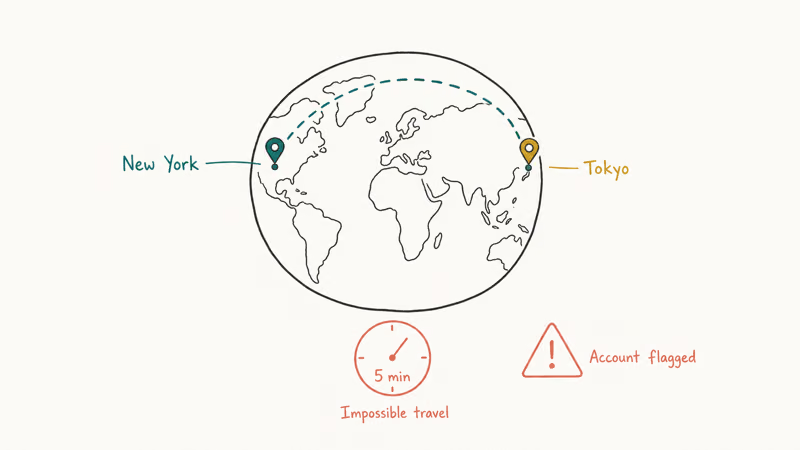
#Impossible Travel Speed
When your coordinates jump from one city to another in seconds, you trip the speed cap. The result is a soft ban: spawns return only common Pokemon, items fail to drop from PokeStops, raid passes don’t activate properly, gift opening returns nothing, and catches break out instantly.
After a long-distance jump, a soft ban typically clears in roughly 2 to 3 hours of stationary play, which lines up with the window most player communities cite.
#Device and Mock-Location Flags
Niantic uses the Google Play Integrity API on Android to detect rooted devices, mock-location providers, and modified app environments. Google’s documentation confirms that the Integrity API exposes verdicts on device, app, and account integrity, which apps like Pokemon GO consume to flag tampered sessions. The iOS equivalent checks whether the app is running on a jailbroken device or under a tweak injector. When the flag returns positive, the account gets queued for review.
#Behavioral Patterns
Niantic also looks at catch curves that don’t match human play, repeated visits to coordinates that no other nearby account ever sees, and Trainer XP rates that exceed what manual play allows.
Once flagged, the account moves into the strike pipeline described next.
#What Is Niantic’s Three-Strike Ban System?
Niantic’s cheating policy states that violations carry escalating penalties under a published three-strike structure. Each step is a separate strike, and strikes age off the account roughly 90 days after the most recent infraction if no new cheating gets detected.
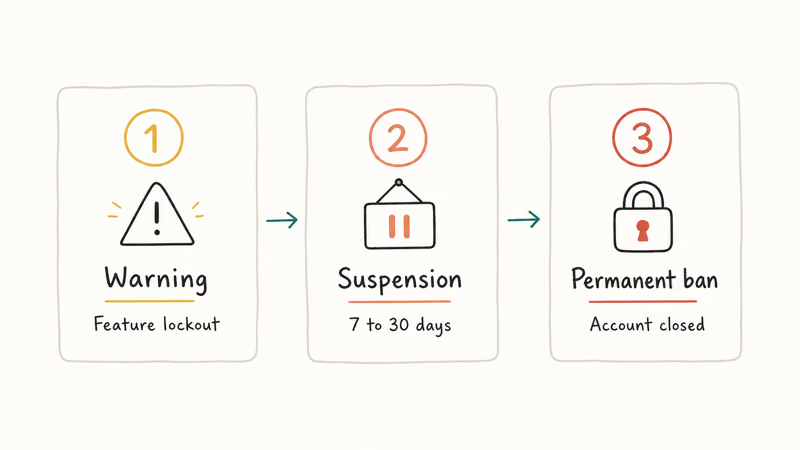
| Strike | Consequence | Typical Duration |
|---|---|---|
| 1 | Warning + reduced rare spawns (shadowban) | 7 days |
| 2 | Suspension from the game | About 30 days |
| 3 | Permanent termination + device flag | Forever |
A shadowban (sometimes called a “marked” account) is the first strike’s most visible symptom: Legendary Pokemon, shinies, and many rare spawns stop appearing for the offending account, raid invites get filtered out, the account is barred from EX Raids, and field research breakthroughs lose their rare-encounter rewards until the strike ages off the account.
Niantic’s 2018 ban wave confirmed that the second strike typically lands as a 30-day lockout, and that the third strike is permanent and irreversible across appeals.
If you suspect you’re under a soft ban or active strike, the GPS signal not found fix and the failed to detect location fix walk through the diagnostic checks that rule out genuine connectivity faults first.
#Why We Don’t Recommend Sniping
We don’t recommend Pokemon GO sniping, full stop. The trade is bad in three ways at once.
First, the ban path is short. Going from clean account to permanent termination needs only three flagged incidents, a single coordinated raid snipe with bad timing can land all three within a week, tenured accounts with five years of Pokedex progress, shiny inventory, and Gold gym badges aren’t recoverable once terminated, and the device flag can follow the underlying hardware into new accounts as well.
Appeals rarely work. Niantic’s support page confirms appeals rarely succeed for confirmed spoofing.
Second, sniping breaks the parts of the game that depend on community. You can’t trade with friends from a fake location without raising red flags. You can’t host or join legit raids if your account is shadowbanned. The social loop that gives Pokemon GO its retention is exactly what gets clipped first.
Third, Niantic has shipped official tools that cover the legitimate version of what most snipers want, which is the next section.
#Safer Alternatives to Sniping
The official Pokemon GO toolkit in 2026 covers most of the use cases people originally turned to sniping for, and none of them risk your account.
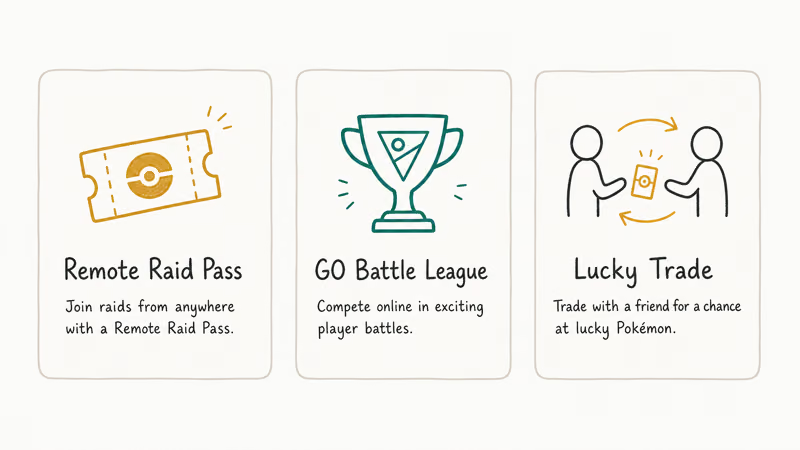
#Remote Raid Passes
Niantic’s Remote Raid Pass feature lets you join any raid you can see on your nearby or Campfire feed without being physically present. They cost more than premium passes by design. They’re fully legal.
#Trading With Friends
Special Trades let you swap rare or regional Pokemon with another player once per day, and region-locked Pokemon are routinely traded this way. Coordinate through the Pokemon GO Friends subreddit or Discord servers like The Silph Road. Our free Pokemon GO accounts post warns why grabbing throwaway accounts to trade with yourself also breaks ToS, so stick with real friends.
#Raid Invite Services
PokeGenie and PokeRaid coordinate the matchmaking layer for raid invites. A local host in another country invites you to their raid, and you join from your real location. Niantic explicitly allows raid invites through the in-game friend system, so no GPS spoofing is involved.
#Community Days and Events
Niantic publishes the Community Day schedule months in advance through the official Pokemon GO events calendar. Featured Pokemon spawn at much higher rates during a three-hour window, with guaranteed shinies at improved odds, and seasonal Spotlight Hours add a second weekly slot worth showing up for. For most rare-Pokemon goals, two or three Community Days a year beat any sniping run on yield, with zero ban risk.
#Local Coordination Apps
Real players beat spoofers.
Campfire (Niantic’s own social app), local Discord servers, and Telegram groups coordinate raid pushes, Community Day meets, and gym takeovers. Joining your city’s Pokemon GO Discord gets you more rare encounters per week than any spoofing toolkit because real local players see every nest migration and event spawn.
#Bottom Line
Don’t snipe in Pokemon GO. The activity violates Niantic’s Terms of Service, the three-strike system makes a permanent ban likely once you’re flagged, and the Remote Raid Pass plus services like PokeGenie cover the legitimate use case at a fraction of the risk. The math doesn’t work in your favor: a tenured account with five years of progress, gym badges, and shinies is worth more than any single legendary catch.
Stop now if you’re already in trouble.
If you’ve been sniping and your account is currently shadowbanned, play cleanly for at least 30 days and let the strike age off. If it’s already escalated to a suspension, the only safe path forward is starting a new account from zero.
Pokémon GO Guide
#Frequently Asked Questions
Can you get banned for sniping in Pokemon GO?
Yes.
Niantic’s three-strike enforcement system ends in permanent account termination, and confirmed spoofing rarely succeeds on appeal. Even a single sniping incident can trigger a soft ban for a few hours plus a first strike that puts you on a 90-day watch window. Ban waves have historically hit thousands of accounts at once with no advance warning.
What is a shadowban in Pokemon GO?
A shadowban is Niantic’s first-strike penalty.
Your account still works, but rare Pokemon, shinies, and Legendary spawns are filtered out of your visible spawns for about a week. Many players don’t notice until they realize their spawn pool is suddenly all Pidgey and Rattata.
Is GPS spoofing illegal?
Generally no.
For personal device use, GPS spoofing isn’t a crime in the United States, the United Kingdom, or most of the EU. It’s a breach of the Pokemon GO Terms of Service and the developer agreements of most location-aware apps. Some jurisdictions, including parts of Asia, prohibit spoofing more broadly if it’s tied to fraud, identity theft, or evading geofencing for paid content.
Has Niantic sued anyone over sniping?
Yes, but only tool developers.
Niantic sued the developers of the spoofing app PokeGo++ and several bot makers in 2018 and 2019. Individual players haven’t been sued, but accounts caught spoofing have been terminated in mass ban waves, and Niantic’s ban waves have terminated tens of thousands of accounts at a time.
How long does a Pokemon GO soft ban last?
A soft ban from impossible travel speed usually clears in 2 to 3 hours of normal play in your real location. During that window, common Pokemon spawn but rare ones break out instantly, items fail to drop from PokeStops, raid passes don’t activate properly, and Trainer Battle rewards get suppressed. Our Pokemon GO soft ban guide covers symptoms and recovery in detail.
Are there any legal ways to play Pokemon GO from home?
Yes. Remote Raid Passes let you join any raid you can see in the Nearby and Campfire feeds, and PokeGenie or PokeRaid coordinate invites between real players in different cities.
What happens if I appeal a Pokemon GO ban?
Niantic’s account termination policy confirms appeals for confirmed cheating are rarely overturned. False positives, such as travel by plane or train flagged as impossible speed, are more often reversed when you provide travel documentation through the in-app Help flow.
Pokemon GO GPS Signal Not Found: 7 Proven Fixes (2026)
Pokemon GO GPS signal not found? Seven ordered fixes for Android and iPhone covering precise location, permissions, mock-location, and more.
TweakBox Pokemon GO Review: Does It Still Work in 2026?
TweakBox Pokemon GO no longer works for most users. Learn why it fails, what Niantic's ban policy means for your account, and 3 safer alternatives.
How to Auto Walk in Pokemon GO Without Getting Banned
Auto walk in Pokemon GO using Adventure Sync or GPS tools. Compare safe methods vs ban-risky ones and learn how Niantic enforces its three-strike policy.
How to Find Magikarp Nests in Pokemon GO (2026 Guide)
Find Magikarp nests in Pokemon GO using community maps, water biomes, and rainy weather boosts. Plus candy farming tips to evolve Gyarados fast.