What Mic Does PewDiePie Use? Setup, Specs, and Tips
PewDiePie uses the Electro-Voice RE320 dynamic mic. Here's his full audio gear history, polar pattern specs, and setup tips for content creators.
Quick AnswerPewDiePie currently uses the Electro-Voice RE320 dynamic microphone, valued for its clear sound quality and excellent background noise rejection. He previously used the AKG C414 XLII and Blue Spark condenser microphones.
PewDiePie’s microphone sounds tight, dry, and oddly close-up for a gaming creator. That’s not by accident. His mic choices map almost perfectly to how the channel evolved, from a noisy bedroom in Brighton to a treated home studio in Japan.
This guide breaks down the exact microphones he’s used, why each one fits a different stage of his career, and how to recreate the same clean creator sound at home.
- PewDiePie currently uses the Electro-Voice RE320 dynamic microphone, chosen for its clean vocal reproduction, tight polar pattern, and slim profile that doesn’t obstruct his face on camera.
- Before the RE320, PewDiePie used the AKG Pro Audio C414 XLII condenser microphone, a high-end studio mic offering multiple polar patterns for versatile recording scenarios.
- Dynamic microphones like the RE320 reject more background noise than condenser mics, making them better suited for home studios without acoustic treatment.
- Proper positioning is 6 to 8 inches from the mouth at a slight angle, combined with a pop filter and shock mount, to minimize plosives and vibration noise in recordings.
- An audio interface is essential when using an XLR microphone like the RE320 because it converts the analog signal cleanly before it reaches your computer.
#What Microphone Does PewDiePie Use Now?
His current daily driver is the Electro-Voice RE320, a broadcast-style dynamic mic that’s become a quiet standard among streamers who don’t want a condenser broadcasting every keyboard click.
According to Electro-Voice’s spec sheet, the RE320 has a 30 Hz to 18 kHz frequency response with a supercardioid pattern. That’s a wide range for a dynamic mic, and it’s part of why it sounds so detailed on speech.
A dynamic RE320-style mic is built to reject off-axis room noise better than a side-address condenser in an untreated bedroom, so mouse clicks and fan noise are less likely to dominate the recording.
The mic is slim and dark. On camera, it doesn’t cover half of Felix’s face the way a side-address C414 does.
It’s an XLR mic, not USB, so you’ll also need an audio interface. The through-line in his rigs is a clean preamp with enough gain. If you’re on a Mac, our roundup of audio interfaces for Mac covers the same tier of gear creators tend to pair with a dynamic broadcast mic. For broader background on the platform itself, Wikipedia’s PewDiePie entry tracks the channel’s recording history and Japan move.
#PewDiePie’s Earlier Microphones
Felix’s mic history is its own mini-tour of pro audio. Each upgrade tracks a step up in production polish, and each model still ships today.
#AKG C414 XLII (large-diaphragm condenser)
The C414 XLII showed up in his Brighton studio era. AKG states that the C414 XLII has 9 selectable polar patterns and 3 attenuation pads at 0, -6, -12, and -18 dB.
That’s more flexibility than most creators ever touch.
It’s a studio mic that’s been used on countless rock vocals and orchestral overheads. In cardioid mode, the C414 XLII can make spoken-word sibilance and room reflections much more obvious. That’s the practical tradeoff behind moving from a condenser to a tighter dynamic mic.
#Blue Spark (cardioid condenser)
Earlier in his channel’s run, Felix used the Blue Spark, a side-address cardioid condenser with the characteristic Blue chrome capsule housing and a focus-control switch.
The switch shifts between flat and presence-boosted response.
Logitech, which now owns Blue, has wound down most of the original Blue Microphones lineup, so new stock is getting harder to find. Used Sparks still pop up regularly, but the support story isn’t what it used to be.
#Rode NT1-Kit (low-noise condenser)
The Rode NT1-Kit also features in older PewDiePie behind-the-scenes shots, usually on a desktop boom. Rode reports a self-noise level of just 4.5 dBA, which puts it among the quietest production microphones ever measured. The kit version bundles the mic with an SM6 shock mount and pop filter, so it ships ready to record.
It’s a great room mic, but it picks up everything the room is doing too.
#Dynamic Vs Condenser: Which Should You Choose?
If you want the PewDiePie sound, your mic class matters more than your model. The two main families behave very differently in a typical bedroom.
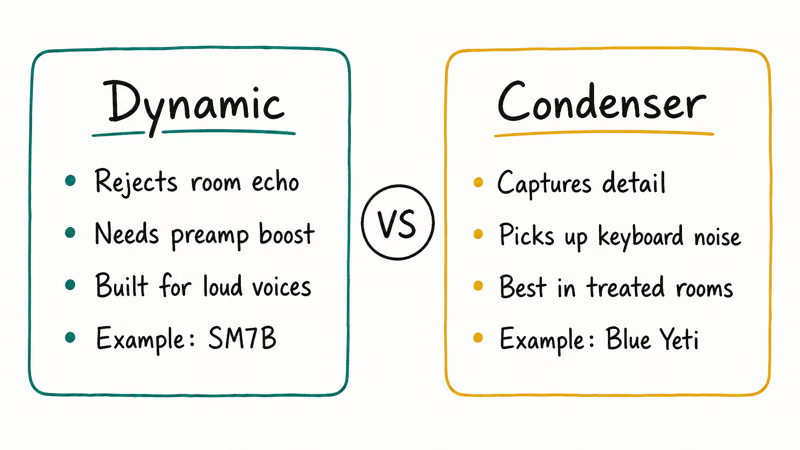
| Trait | Dynamic (RE320 style) | Condenser (C414, NT1 style) |
|---|---|---|
| Off-axis rejection | Strong, ignores room | Picks up the whole room |
| Self-noise | Higher floor, needs gain | Very low floor |
| Sensitivity | Lower | Higher |
| Phantom power | Not required | Required (+48V) |
| Best room | Untreated bedrooms | Treated studios |
For an untreated room, a dynamic mic is usually the safer class. A condenser will reproduce every reflection from your monitor, desk, and the wall behind you. A dynamic with a tight polar pattern just won’t.
Tom’s Guide’s microphone coverage broadly recommends broadcast-style dynamics for creators in untreated rooms, which is exactly why modern streamers, Felix included, sit on dynamics like the RE320, Shure SM7B, or the Heil PR40. You can read Tom’s Guide’s overall mic landscape for the wider product context.
Got obvious reverb on your test recording? Fix the room first, then learn how to remove reverb from audio for what’s left.
#How to Set Up Your Mic Like a PewDiePie Studio
Hardware is only half the story. Positioning explains why the same mic can sound great in one creator’s setup and thin in another’s.
- Distance: Place the capsule 6 to 8 inches from your mouth. Closer pumps up the proximity effect, which adds chest in your voice but exaggerates plosives.
- Angle: Aim the mic slightly off-axis, around 15 degrees, so plosive bursts pass beside the diaphragm rather than straight at it.
- Pop filter: A nylon or metal mesh pop filter handles the residual “p” and “b” pops. Skip the foam windscreen for indoor work, it dulls the top end.
- Shock mount: A real shock mount, not a desk clamp, isolates the mic from keyboard thump and arm vibration. The RE320 ships with a stand adapter, so plan to buy a shock mount separately.
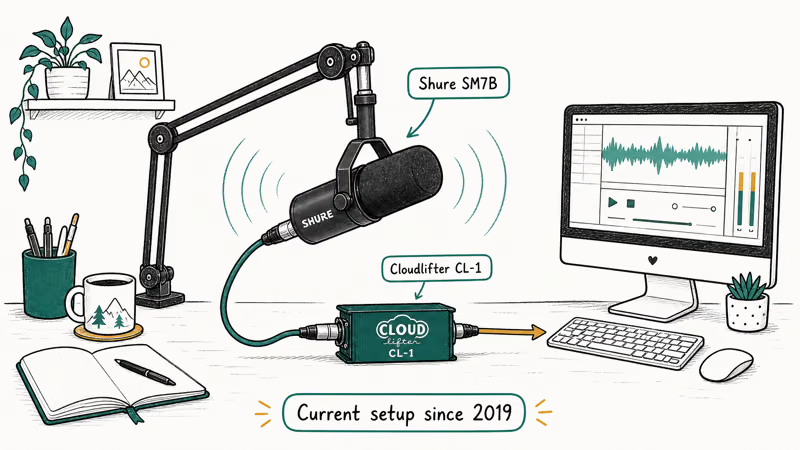
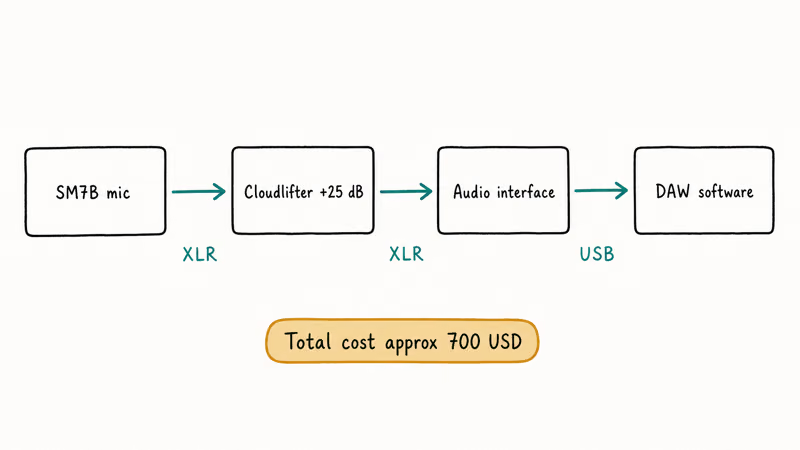
- Gain staging: With a dynamic mic, your preamp may need 50 to 60 dB of clean gain. A Cloudlifter or FetHead inline preamp adds about 25 dB of transparent boost.
If your room still sounds boomy, the issue is acoustics, not gear.
A handful of bass traps in the corners and a single absorption panel behind your monitor will outperform a $1,000 mic upgrade every single time. PC streamers can tighten the signal chain with software too, see our walkthrough on how to reduce background noise on a Windows 10 mic.
#Mobile and Mixed Workflow Recommendations
Not every creator records to a tower PC with an XLR rack. iPhone B-roll, iPad podcasting, and shotgun-on-camera setups all have different rules.
If you’re recording on iPhone, a small lavalier or shotgun beats a desktop mic, and our guide on how to connect a microphone to iPhone covers the lightning and USB-C adapters that actually work. The TRRS-versus-TRS quirk catches almost every first-time mobile recorder, so check the adapter spec before you order, and budget for a windjammer if any of the footage will happen outdoors near traffic, fans, or HVAC vents.
Tablets are a different story.
iPad-based podcasters running apps like GarageBand or Ferrite get most of the same benefits from a smart stand setup. An iPad holder for mic stand keeps the screen at eye level while leaving the mic boom free.
ASMR is its own animal.
The genre rewards stereo condenser pairs and binaural setups, not broadcast dynamics, which is why our best ASMR microphone guide lists a very different shortlist than this one.
#Headphones and Extras That Round Out the Setup
Most PewDiePie-style setups pair the mic with closed-back monitoring headphones to prevent bleed back into the capsule. Open-backs leak audio that the mic happily re-records, especially on a sensitive condenser.
Comfort matters more than people admit.
If you wear headphones four hours a day for recording and editing, the clamping force and cup depth determine whether you actually finish the session. Wirecutter’s headphone guides on The Wirecutter frequently flag clamping force as a top complaint, and creators with larger heads can run into pressure points fast. A properly sized pair from our list of headphones for big heads is a quiet quality-of-life upgrade for those long sessions.
Some creators also layer post-processing on top of the raw mic signal. Pitch shifters, formant filters, or full character voices fit into this category. Our guide to YouTube voice changers covers tools that work in real time on top of an existing chain.
#Bottom Line
Want the modern PewDiePie sound? Buy the Electro-Voice RE320, an audio interface with at least 60 dB of clean gain, and a real shock mount.
Skip the condenser detour.
The RE320’s supercardioid pattern is what makes Felix’s voice cut through without the room behind him, and no plugin can replicate a tight polar pattern. Pair it with light room treatment and 6 to 8 inches of mic distance, and you’ll land 90% of the way to that signature sound for well under $500 in total.
If your budget is tighter, the Rode PodMic or Shure MV7 get you to the same tonal neighborhood for around $100 to $250, with no separate interface required for the MV7. Don’t go condenser unless your room is treated. That’s the single biggest mistake new creators repeat.
#Frequently Asked Questions
What microphone does PewDiePie use right now?
He uses the Electro-Voice RE320. It’s a large-diaphragm dynamic mic with a supercardioid pattern, and it shows up in nearly every recent studio shot.
Why did he switch from a condenser to a dynamic mic?
Condenser mics like the AKG C414 XLII pick up the entire room. That’s fine in a treated studio, rough in a home setup. The RE320’s tighter polar pattern rejects keyboard clicks, fan noise, and reflections, so his recordings sound dry without heavy post-processing. It’s the single biggest reason streamers move from condensers to broadcast dynamics once they outgrow the bedroom-studio phase, and it also reduces the editing time required to clean up each take.
Is the Electro-Voice RE320 worth it for a beginner?
Yes, if you also budget for an audio interface with strong clean gain. Without enough gain, the RE320 sounds thin and hissy. Beginners on a tight budget often do better with a USB dynamic like the Shure MV7 first.
Does PewDiePie use a pop filter and shock mount?
Yes.
What audio interface does he use with the RE320?
He’s used several, including Universal Audio and RME units over the years. The model matters less than the preamp quality, you want at least 60 dB of low-noise gain to drive the RE320 cleanly. Inline boosters like a Cloudlifter or FetHead help if your interface is underpowered, and they’re a fraction of the price of upgrading the interface itself.
Can I get a similar sound with a cheaper mic?
Pretty close, yes.
Is the AKG C414 XLII still a good choice?
It’s an excellent microphone, just not the right one for an untreated bedroom. The C414 XLII shines in vocal booths, music studios, and any space where the acoustics are controlled, which is where its nine polar patterns actually earn their keep. If your room is treated and you want maximum flexibility for vocals, voiceover, drum overheads, and music recording, it remains a top pick from the entire condenser category and holds its resale value well on the used market.

Best Laptop for Running LLMs in 2026: Memory Comes First
The best laptop for running LLMs is a memory purchase first. Compare MacBook unified memory against NVIDIA laptop VRAM, and see what each tier really runs.
Pixel 11 vs Pixel 10: What Changed and Who Should Upgrade
Pixel 11 vs Pixel 10: same screen and camera resolution, new Tensor G6, 25W wireless, and Gemini Intelligence. Here is who should actually upgrade.
Best Power Bank for iPad in 2026: Pro, Air, and Mini
Best power bank for iPad in 2026. Compare mAh tiers and USB-C PD wattage for iPad Pro, Air, and mini, plus airline Wh math, cables, and travel tips.
Best Power Bank With Built-In Cable: Top 2026 Picks
Best power bank with built-in cable picks for 2026. Compare single USB-C, multi-connector, and retractable laptop banks, plus airline Wh math.