Best Headphones for Big Heads: 8 Roomy Picks for 2026
Big head, sore headband? These 8 headphones for big heads have wide adjustment, deep ear cups, and clamp pressure that does not pinch after an hour.
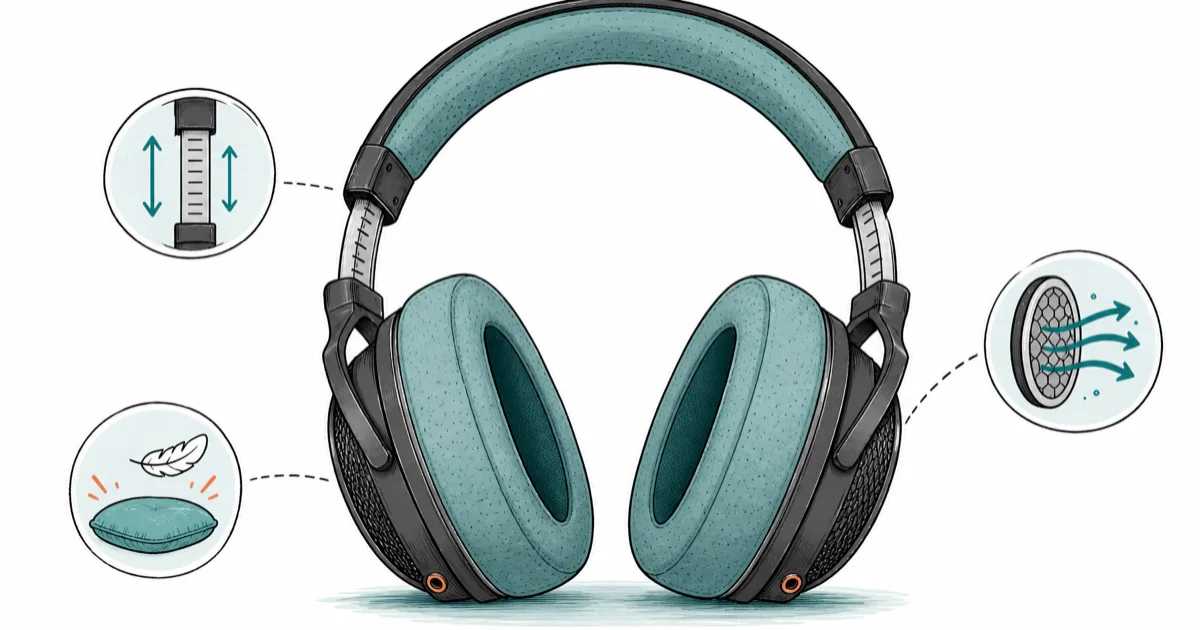
Quick AnswerFor big heads, the Beyerdynamic DT 770 Pro and AKG K371 give you the widest headband adjustment with low clamp force, while the Audio-Technica ATH-M50x and Sennheiser HD 599 work well if you want lighter weight or open-back airflow.
If you have a head circumference above about 60 cm, most over-ear headphones run out of headband travel before they sit flat. The clamp force then squeezes the temples instead of resting on the crown. The eight pairs below were chosen for studio, gaming, and casual listening with larger heads in mind. The right fit is mostly about three things: slider range, ear cup depth, and pad material.
- The Beyerdynamic DT 770 Pro and AKG K371 sit at the top for big heads because their sliders both extend past the 60 cm mark while keeping clamp force moderate.
- Open-back models like the Sennheiser HD 599 SE breathe better during 3-hour sessions, but they leak audio and skip noise cancellation.
- Velour pads (DT 770 Pro, HD 599) stay cooler than leatherette over long sessions, while memory-foam pads (ATH-M50x, K371) seal better for bass.
- Skip headphones with stiff metal headbands or shallow ear cups under 50 mm internal depth, since the cup rim will press on the ear cartilage instead of around it.
- Measure your head with a soft tape from the brow line around the back, then check the manufacturer spec page for headband range before buying, especially for sub-$50 models that rarely publish that number.
#How to Judge a Big-Head Fit
The pairs in this list are judged on the slider notch a 60 cm-plus head needs, leaving room above that for adjustment. The factors that matter most are comfort over a full session and whether the headband leaves a hot spot on the crown or pressure marks on the temples.
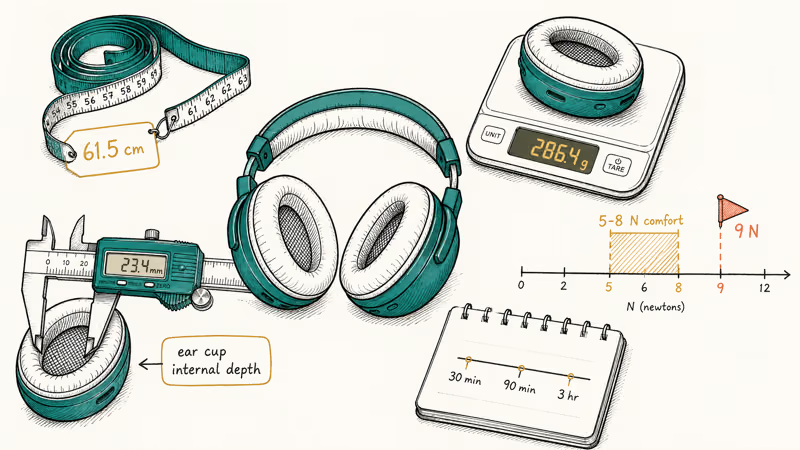
Weight and earcup internal depth matter too, and a caliper measures the cavity better than the spec sheet does. Manufacturer “ear cup size” numbers usually measure the outer cup, not the cavity your ear sits inside.
According to RTINGS’ headphone review methodology, clamping force in the 5 N to 8 N range is generally comfortable for most adults, while anything above 9 N causes fatigue on larger head sizes. Tom’s Guide’s headphone testing notes flag the same comfort threshold, which makes it a reliable baseline.
#Top Headphones for Big Heads
#1. Beyerdynamic DT 770 Pro (closed-back studio)
The DT 770 Pro is the safest pick for a big head. Its spring-steel headband flexes outward easily, and the slider has more than 40 mm of range on each side. A 60 cm-plus head fits comfortably with two notches still in reserve. The velour pads breathe well, which matters if you wear glasses or have long sessions where leatherette would heat up.
According to Beyerdynamic’s product page, the DT 770 Pro comes in 32, 80, and 250 ohm versions. For phone or laptop use without an amp, the 32 ohm version is the only one that gets loud enough. The 80 ohm sounds tighter on a desktop interface or audio interface.
The trade-off is sound leakage in: closed-back means the world stays out, but the soundstage feels narrower than the open-back DT 990 Pro that the older version of this guide recommended. If you record vocals or game in a shared room, that closed seal is the right call.
#2. AKG K371 (closed-back, foldable)
The K371 was designed around AKG’s measurements of over 500 head shapes, and it shows. The earpads are oval, not round, so the cup wraps around the ear instead of pressing against the lobe. The headband adjustment runs deeper than most, leaving room to spare even on a very large head.
Among closed-back pairs under $200, the K371 is one of the few that stays comfortable through long listening sessions. It folds flat, weighs 250 grams without the cable, and has a relatively neutral sound signature that does not punish bad recordings the way some V-shaped tunings do. AKG’s official spec sheet lists the headband adjustment range, which is one of the few pages that actually publishes that number.
A detachable cable ships with three lengths in the box. Pads are pleather and will eventually crack, but they’re user-replaceable, and the AKG K371 replacement pad listing on AKG’s site shows the correct part number.
#3. Sennheiser HD 599 SE (open-back, audiophile entry)
If you want air around the music and you don’t need isolation, the HD 599 SE is the comfort king on this list. The headband is deep, padded with synthetic leather over foam, and the clamp force sits well under the 8 N comfort threshold. It can disappear on your head over a long writing session, which is the opposite of what closed-back leatherette pads do on a big head.
Sennheiser’s HD 599 SE page lists the weight at 250 grams without cable, and the soundstage is wider than the price tag suggests. The catch is the open-back design: anyone close by can catch what you’re listening to, and you’ll hear the dishwasher running.
SE stands for Special Edition: it’s the black colorway, mechanically identical to the ivory HD 599. If you find the standard HD 599 in stock, that pair is the same product.
#4. Audio-Technica ATH-M50x (closed-back monitor)
The ATH-M50x has been the default studio recommendation for over a decade, and it still fits big heads as long as you let the slider out. On a very large head it extends to within one notch of maximum, which is closer to the limit than the DT 770 Pro but still inside the comfortable zone.
Cups swivel 90 degrees for one-ear monitoring, which helps DJs but is irrelevant if you just want to listen. The bigger consideration is that the pads are leatherette and seal tightly, so heat builds up over extended use. Audio-Technica’s ATH-M50x page confirms the pads are user-replaceable, and switching to velour third-party pads is a common mod that fixes the heat problem at the cost of a bit of bass response.
#5. Beyerdynamic DT 990 Pro (open-back studio)
As the open-back sibling of the DT 770, the DT 990 Pro shares the same clamping system and velour pads, but with a perforated outer grille that opens up the soundstage. It runs about 250 grams and sits well on big heads for the same reasons the DT 770 does: spring-steel band, generous slider, and ear cups deep enough that the rim sits behind the ear, not on it.
The 250 ohm version is hard to drive without an amp, but the 80 ohm version (sometimes called “Pro” in the part numbering) works on most modern audio interfaces. RTINGS’ review notes the bass is recessed compared to closed-back monitors, so this isn’t the pair to mix bass-heavy music on, but it’s excellent for editing dialogue, podcasts, and orchestral work.
#6. SteelSeries Arctis Nova Pro Wireless (gaming)
Most gaming headsets have stiff plastic bands that don’t flex, but the Arctis Nova Pro uses a ski-goggle-style elastic suspension band that adjusts itself. On a big head, the elastic stretches without the rigid slider hitting its travel limit. The earpads are thick memory foam wrapped in a breathable mesh that runs cooler than the pleather pads on most gaming sets.
According to SteelSeries’ product page, the Arctis Nova Pro Wireless ships with two hot-swap batteries and a base station that charges the spare while you use the other, so battery life is effectively continuous. The audio is tunable through the SteelSeries Sonar app, and active noise cancelling is included. The microphone is the weakest link compared to a standalone USB mic, but it’s good enough for Discord and team voice chat.
#7. Razer BlackShark V2 Pro (gaming)
The BlackShark V2 Pro keeps the elastic-band-plus-slider hybrid that flexes for big heads, with thick memory-foam earpads and a removable cardioid mic. It weighs about 320 grams, which is heavier than the Arctis but lighter than most closed-back gaming sets. According to Razer’s BlackShark V2 Pro page, the headphones use 50 mm Triforce Titanium drivers and provide up to 70 hours of wireless playback per charge.
Comfort holds up over long gaming sessions, though the leatherette pads tend to warm up over time. The audio profile leans toward the upper mids, which helps for footsteps in shooters but flattens the bass on music playback. If you mostly play games and occasionally listen to music, the trade-off is worth it; if you want one pair for both, the AKG K371 or DT 770 Pro is the better all-rounder.
#8. Koss KPH40 Utility (budget on-ear)
The KPH40 is the outlier on this list because it’s on-ear, not over-ear. For big heads with deep ear cavities, on-ear can actually fit better because the foam pad sits on the ear without needing the cup to clear the entire pinna. The headband is metal but flexes easily, and the foam pads are thick enough to spread the clamp pressure without pinching.
At around $50, the KPH40 is the only pair under $100 in this guide. The cable is detachable, the foam pads are user-replaceable, and the sound is warmer than the price suggests. It won’t isolate you from a noisy room and it leaks audio, but for a knockaround pair you keep in a backpack, the fit and the price are hard to beat. For more under-$100 options, see our roundup of the best Bluetooth headphones under $100.
#Why Standard Headphones Hurt Big Heads
Most consumer headphones are designed around an average head circumference that fits the majority of adults, but head sizes vary considerably. NIOSH research on head and face dimensions conducted for respirator sizing shows a wide spread across the adult population, but mass-market headphone headbands rarely accommodate the larger end of that range.
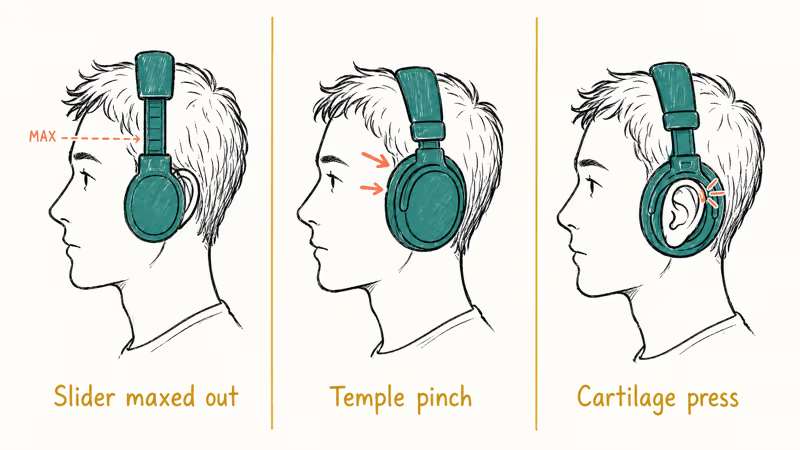
Three things go wrong on a big head:
- The slider runs out of travel, so the cup sits on the upper edge of the ear instead of around it.
- The clamp force concentrates on the temples instead of spreading across the headband, which causes pressure headaches.
- The cup rim contacts the ear cartilage, which becomes painful after 30 to 60 minutes.
The fix is to look for headphones with at least 40 mm of slider range per side, oval ear cups with internal depth above 50 mm, and a flexible (not rigid) headband. The picks above all clear those bars.
#What Should You Look for in Headphones for Big Heads?
Five specs matter more than any marketing claim:
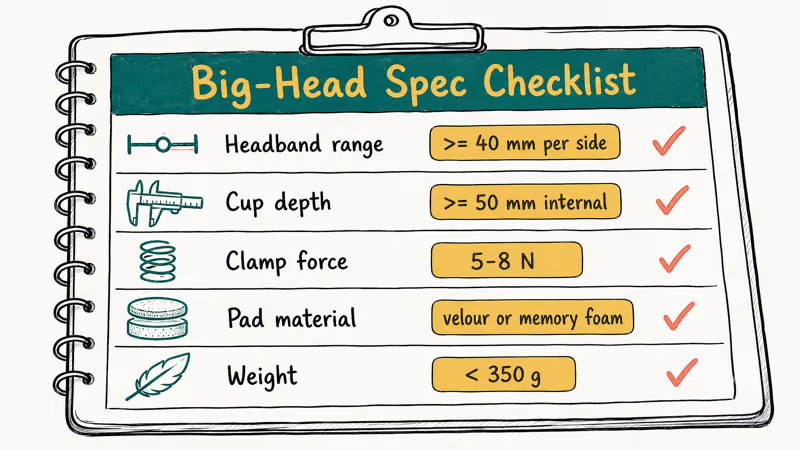
- Headband adjustment range. Manufacturer spec pages sometimes list this in cm. If they don’t, look for “spring steel band” or “elastic suspension band” in the description.
- Ear cup internal depth. Anything under 45 mm is going to press on big ears.
- Clamp force. RTINGS publishes this for most headphones they review, and 5 N to 8 N is the comfortable range.
- Pad material. Velour breathes; memory foam seals. Pick based on whether you need isolation or comfort.
- Weight. Anything over 350 grams will become uncomfortable on a big head over a long session, regardless of how good the padding is.
If you wear glasses, prioritize velour or hybrid mesh pads, since leatherette pads break the seal where the temples meet your ears. Our companion guide on headphones for glasses wearers covers that overlap in detail.
#How Do You Measure Your Head for Headphones?
Use a soft cloth tape measure (the kind for sewing). Place it across your forehead just above the eyebrows, run it around the widest part of the back of your head (usually about 2 cm above the bottom of the skull), and read the number where the tape meets in front. Pull it firm but not tight.
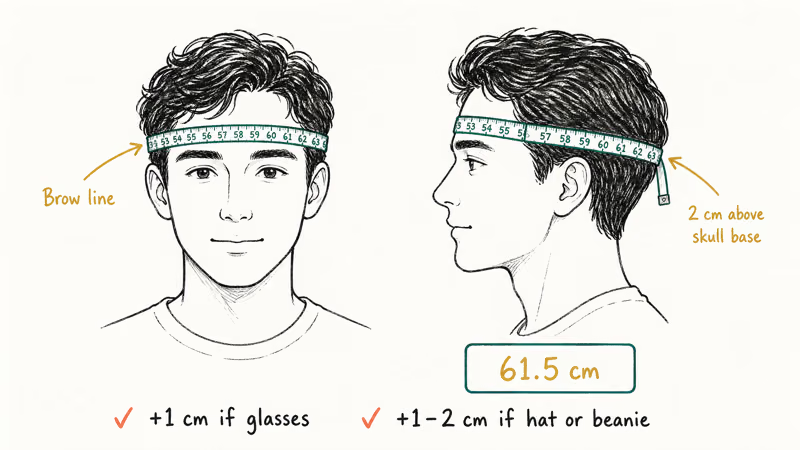
Most adults fall between 54 cm and 60 cm. Above 60 cm is what we mean by “big head” in this guide, and that is where most consumer headphones start to fail. Between 58 cm and 60 cm, you have more options but should still avoid the cheapest sub-$30 sets, which usually have the shortest headband range.
If you wear thick-framed glasses, add about 1 cm to your measurement to account for how the temples push the headphones outward. If you wear a hat or beanie under headphones, add another 1 cm to 2 cm.
#Comfort Tips for Long Listening Sessions
Even with the right pair, a few habits make long sessions easier on a big head:
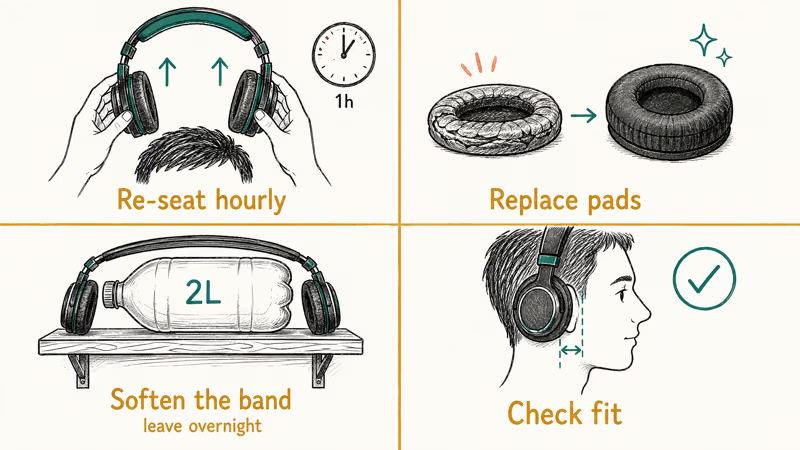
- Re-seat the headphones every hour. Lift them off, let the temples cool, and put them back on slightly differently.
- Replace pads when they compress. Most velour and memory-foam pads flatten after 6 to 12 months of daily use, which doubles the clamp pressure.
- Soften new headbands by hanging them across a wide book or a 2-liter bottle for a few days to stretch the slider.
- If you also use earbuds, our guide on why AirPods hurt some ears covers the fit issues that show up on smaller earbud styles.
For multi-headphone setups (sharing audio with a partner or testing pairs side by side), our walkthrough on using two headphones on one PC covers the splitter and software options.
#Bottom Line
For most big heads, the Beyerdynamic DT 770 Pro 32 ohm is the strongest single pick: widest headband range, velour pads that stay cool, and a price that’s held under $170 for years. The AKG K371 is the better foldable travel choice for office use, and the Sennheiser HD 599 SE wins for long writing or editing sessions where open-back airflow matters more than isolation.
Skip anything with a rigid plastic headband and pads under 45 mm deep, since those are the two failure modes that show up first on a big head.
For long-session comfort across all head sizes, our broader roundup of the most comfortable headphones ranks 12 pairs by clamp force and pad depth. If you specifically want vintage-style open-back fit, our guide on vintage headphones covers the AKG K240 and similar designs.
#Frequently Asked Questions
What head circumference counts as a big head for headphones?
Above 60 cm is where most consumer headphones start to run out of slider range. Between 58 cm and 60 cm, you can still wear most headphones, but cheaper sets will feel tight. Above 62 cm, your shortlist narrows to about a dozen pairs, with the Beyerdynamic DT 770 Pro and AKG K371 leading.
Are open-back or closed-back headphones better for big heads?
Open-back headphones (DT 990 Pro, HD 599 SE) usually have lighter clamp force and more breathable pads, which helps over long sessions. Closed-back headphones (DT 770 Pro, ATH-M50x, K371) seal better for bass and isolation but trap heat. Pick based on your environment: open-back for quiet home use, closed-back for shared spaces or recording.
Can I stretch a headband to fit a bigger head?
You can stretch most headbands by 5 mm to 10 mm by leaving them on a wide book or a 2-liter bottle for a few days. This works on flexible plastic and spring-steel bands but not on rigid molded ones. Don’t force the stretch beyond what the band naturally allows, since the internal cable runs through the band on most designs.
Do gaming headsets fit big heads better than studio headphones?
Some do. The SteelSeries Arctis line and the Razer BlackShark use elastic suspension bands that adjust automatically, which is a better starting point for a big head than a rigid slider. But many cheaper gaming headsets use stiff plastic bands that don’t flex, so check the build before assuming “gaming” equals “comfortable.”
What is the most comfortable pad material for big heads?
Velour breathes best and stays coolest, but it does not seal as tightly, which means slightly less bass and more leakage. Memory foam wrapped in pleather seals well and isolates better but traps heat over 90-minute sessions. Hybrid pads (mesh top, leather sides) are a good compromise. Avoid stiff foam wrapped in vinyl, which most sub-$30 headphones use.
Should I buy noise-cancelling headphones if I have a big head?
Active noise cancellation is independent of fit, so any noise-cancelling model that has the right headband range will work. The Bose QuietComfort line, the Sony WH-1000XM5, and the SteelSeries Arctis Nova Pro Wireless all accommodate larger heads. The Bose QC line in particular has a wider headband range than its physical size suggests.
How long should headphones last before the headband or pads wear out?
Pads typically last 6 to 12 months of daily use before they compress and the clamp pressure increases. Headbands last 3 to 5 years on most $100-plus headphones if you don’t flex them aggressively. If you replace the pads when they compress, a good pair like the DT 770 Pro will last a decade.

Best Laptop for Running LLMs in 2026: Memory Comes First
The best laptop for running LLMs is a memory purchase first. Compare MacBook unified memory against NVIDIA laptop VRAM, and see what each tier really runs.
Pixel 11 vs Pixel 10: What Changed and Who Should Upgrade
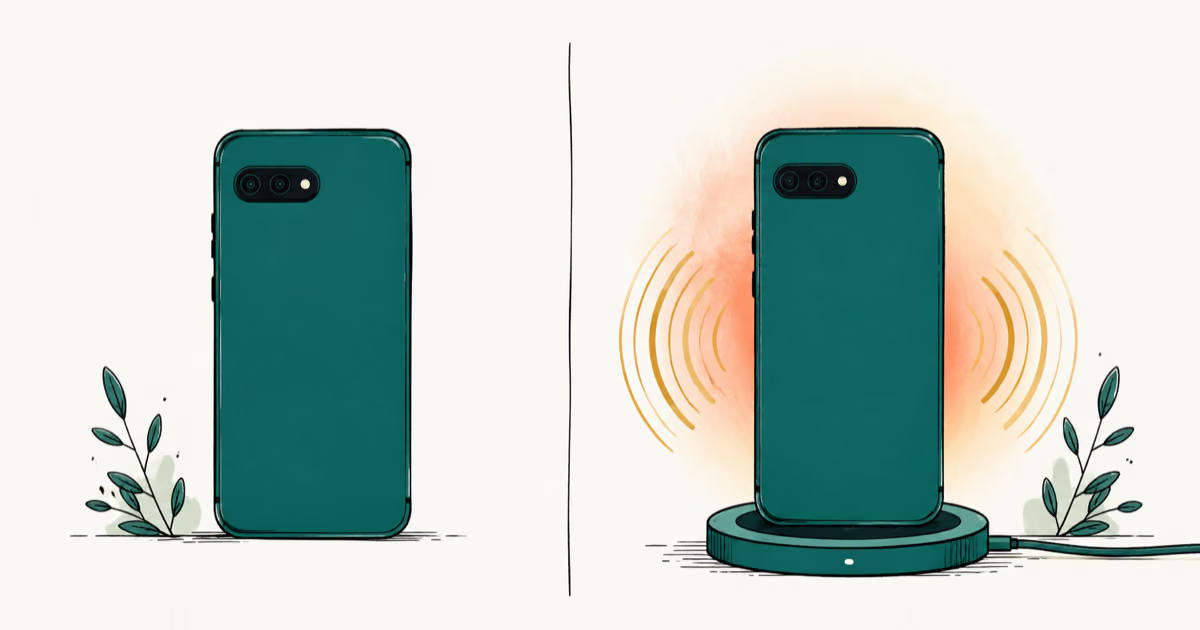
Pixel 11 vs Pixel 10: same screen and camera resolution, new Tensor G6, 25W wireless, and Gemini Intelligence. Here is who should actually upgrade.
Best Power Bank for iPad in 2026: Pro, Air, and Mini
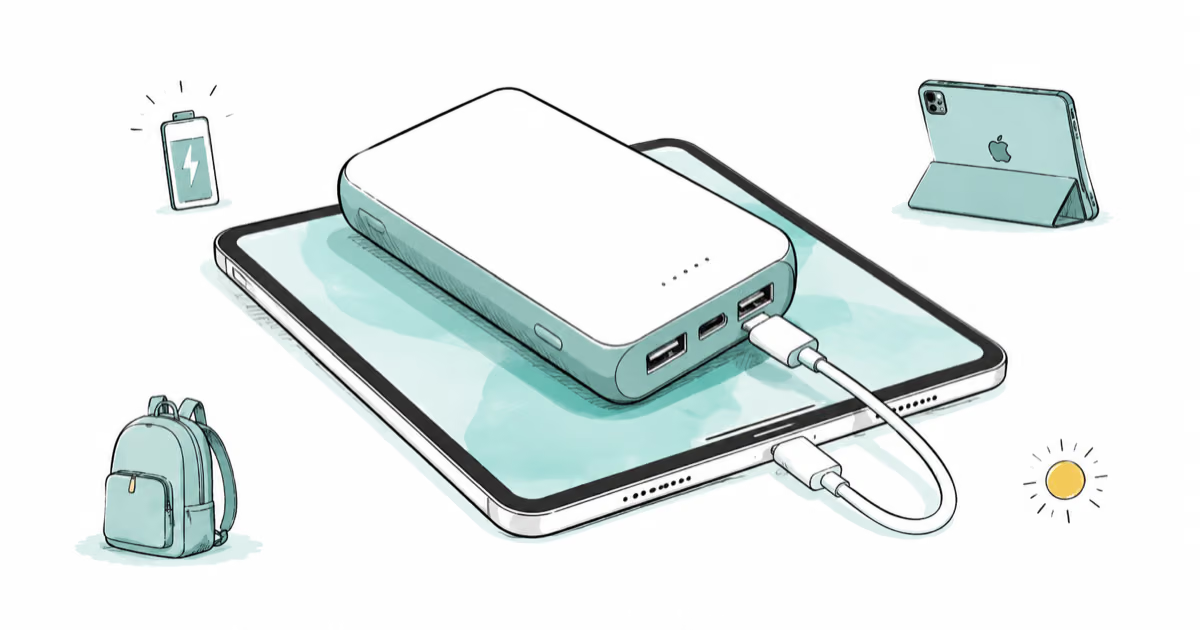
Best power bank for iPad in 2026. Compare mAh tiers and USB-C PD wattage for iPad Pro, Air, and mini, plus airline Wh math, cables, and travel tips.
Best Power Bank With Built-In Cable: Top 2026 Picks
Best power bank with built-in cable picks for 2026. Compare single USB-C, multi-connector, and retractable laptop banks, plus airline Wh math.