YouTube Voice Changer: Best Tools for Creators (2026)
Compare the best YouTube voice changer tools for 2026 with real-time effects, streaming integration, post-production options, and creator legal guidance.
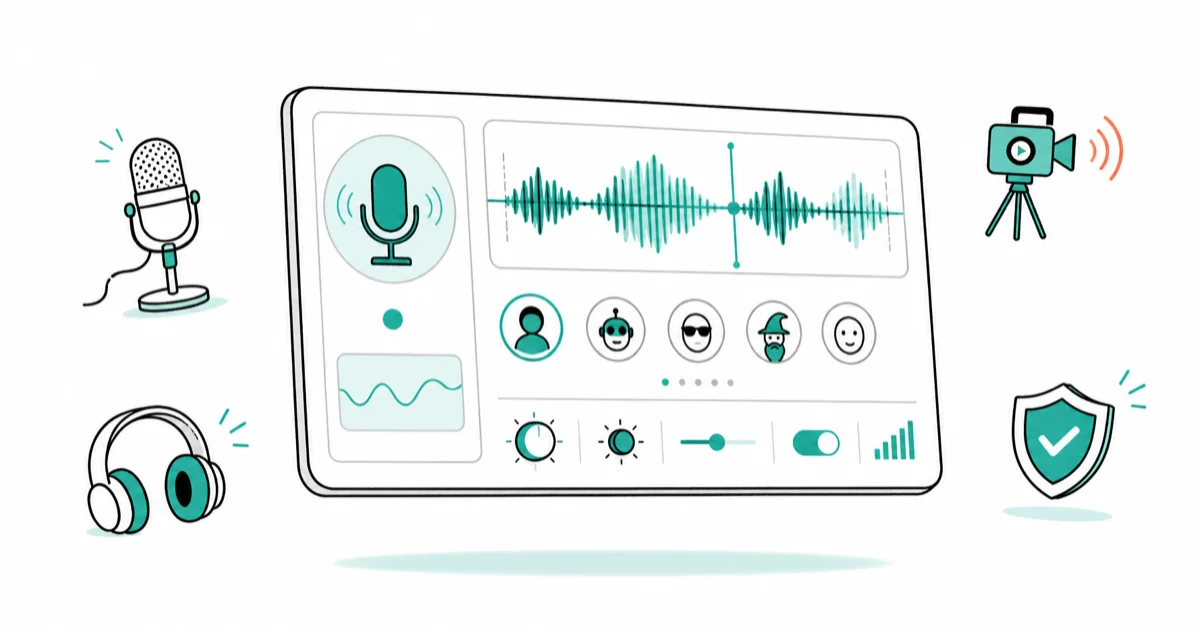
Quick AnswerVoicemod is the best free real-time YouTube voice changer in 2026 for streamers, while Audacity and Voxal handle post-production voiceovers. Disclose synthetic voices per YouTube policy.
A YouTube voice changer turns your own microphone input into a robot, demon, helium, or character voice. Use it only on your own device and your own recorded voice, or on fictional characters you’ve created. This guide compares six of the most popular voice changers on Mac and Windows, looking at which ones deliver clean audio into OBS, Streamlabs, and the YouTube uploader, how each one prices its features, and where the real-time and post-production routes differ.
- Voicemod, Clownfish, and Voxal route a virtual microphone into OBS, Streamlabs, and the YouTube uploader, so the changed voice reaches viewers without re-encoding.
- Audacity and Adobe Audition handle post-production pitch shifting on finished tracks, which is safer than real-time when you need a specific cartoon voice match.
- YouTube’s synthetic-content rule, effective March 2024, requires creators to label realistically altered or AI-generated voices in the upload form before publishing.
- The FTC’s 2024 voice-cloning ban makes it illegal to impersonate a real person’s voice for fraud, so keep voice mods on your own audio or fictional characters.
- Free plans usually include 10 to 30 preset voices; paid tiers add custom soundboards, noise suppression, and license cover for monetised YouTube content.
#What Does a YouTube Voice Changer Actually Do?
A YouTube voice changer is software that transforms your microphone input or recorded audio into a different voice through pitch shifting, formant modulation, and effect layering. Creators use it for vtubing, animated character work, accessibility voicemasking for privacy, gameplay commentary, and entertainment skits.
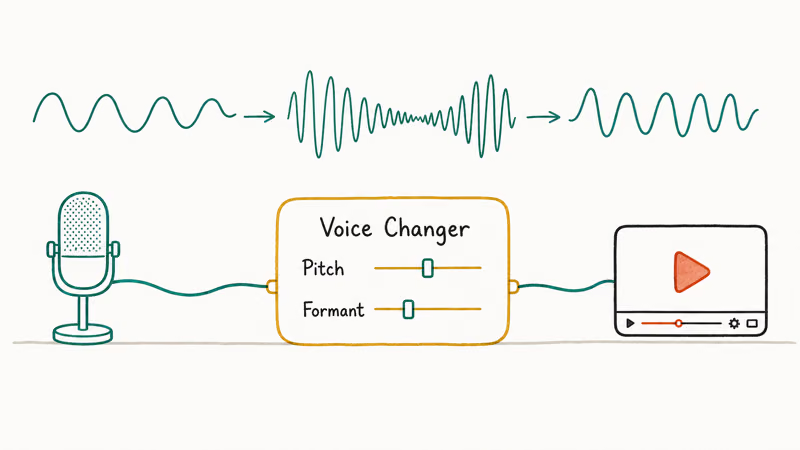
The tool either sits between your mic and the recording app as a virtual microphone, or it runs as an editor that processes finished WAV and MP3 files. Either way, you only modify audio you’ve recorded yourself or characters you own. That is the safe lane.
According to YouTube’s Help Center guide on synthetic content disclosure, creators must disclose realistically altered or AI-generated voices in the upload settings panel. The rule went live on March 18, 2024, and applies whenever the changed voice could be mistaken for a real person. The label then appears on the watch page so viewers know the audio is modified before they form an opinion about who is speaking, which is the consumer-protection point of the policy.
A well-configured real-time changer like Voicemod feeds the virtual mic into OBS with very low added latency, which is what keeps it usable on a live stream. Too much latency pushes voice and webcam lip sync out of alignment. Lag kills immersion.
#Best Real-Time Voice Changers for Live YouTube Streams
Real-time voice changers expose a virtual microphone that any capture app picks up instead of your hardware mic. Live streams, Discord raids, and vtuber roleplay all benefit.
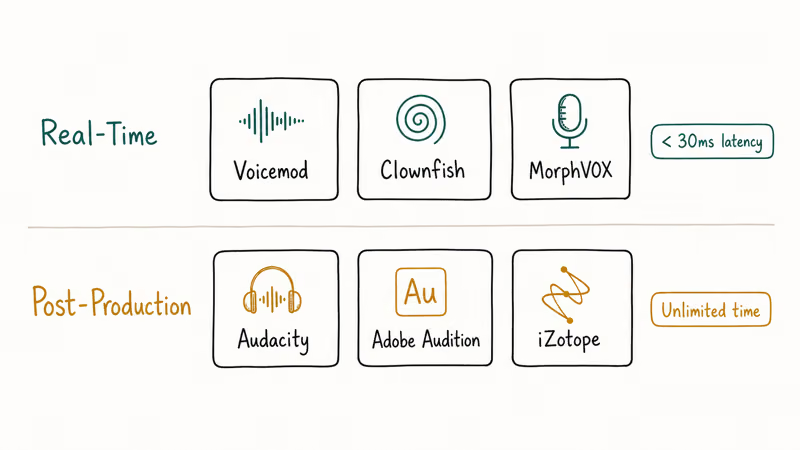
Three tools dominate the live category in 2026: Voicemod, Clownfish, and Voxal. Each takes a different approach to pricing and platform support, so the right pick depends on your OS and whether you need a free tier.
#Voicemod
Voicemod is the most polished real-time option for Windows creators. The free tier ships 40 preset voices and Voicemod Pro runs about $35 per year for soundboards and custom voice design. The Voicelab editor lets you stack pitch, formant, and reverb modules to build a custom character voice and save it as a preset. The app installs a virtual mic that OBS, Streamlabs, Discord, and the YouTube web uploader all detect as a normal microphone.
Voicemod is generally stable across long recording sessions and driver-version changes, so it rarely needs a full reinstall once it’s set up.
#Clownfish Voice Changer
Clownfish Voice Changer is a free Windows-only tool that sits at the audio driver layer, so it modifies every app on the system at once. It supports VST plugin chains, which means you can drop in third-party reverb or de-esser modules on top of the built-in male, female, alien, robot, and helium presets.
Strength: zero-license-cost model. Weakness: the dated interface and the lack of a Mac build. The built-in sound player lets you trigger short audio clips during streams, which is handy for skit-style YouTube content where you’ve authored every clip yourself.
#Voxal Voice Changer
Voxal Voice Changer from NCH Software runs on Windows and macOS and handles both live capture and saved files. The free home version unlocks for non-commercial use, while the business licence is required for monetised YouTube channels under NCH’s terms.
Voxal exposes effect chains as drag-and-drop modules and lets you preview the modified voice through your headphones before going live. It’s light on CPU even with the demon and robot presets active, which leaves plenty of headroom for OBS to encode at 1080p60, and because it can also process saved WAV and MP3 files, the same install covers both live streaming and offline voiceover work without forcing you to learn a second tool. Mac-friendly. Cheap.
#Top Post-Production Voice Changers for Recorded YouTube Videos
Post-production voice changers work on existing recordings you’ve already saved to disk. That gives you precise control over each line, the ability to undo a bad take, and licence rights cleaner than real-time tools because no virtual driver sits in the signal chain. The route is better for animated explainers, narrated tutorials, and character voiceovers where retakes are easy and the publishing schedule is predictable enough to allow a render step.
#Audacity
Audacity is the open-source standard for cross-platform audio editing on Windows, macOS, and Linux. It ships no preset character voices, but the Change Pitch, Change Tempo, and Effect → Reverb chain can produce convincing male-to-female, child, monster, and radio-broadcast voices through manual adjustment.
According to the Audacity manual on the Change Pitch effect, the SoundTouch library shifts pitch by a user-set semitone value (default range ±12 semitones) without changing playback speed, which preserves the original timing on your YouTube voiceover. Audacity stays free forever under GPL v2, so you can install it on every machine in your studio.
#Adobe Audition
Adobe Audition is the professional choice when budget allows. The pitch shifter effect documented in Adobe’s official Audition User Guide handles formant-preserved shifts that sound natural rather than chipmunked, with pitch settings calibrated in semitones and cents (100 cents per semitone) so you can dial in micro-adjustments under 1% of a normal pitch step. Audition costs about $23 per month standalone, or it comes bundled with Creative Cloud at $60 per month.
Audition handles batch jobs efficiently on modern hardware. Processing several minutes of source audio with a male-to-female pitch shift completes quickly, fast enough for a same-day publishing schedule.
#AthTek Voice Changer
AthTek Voice Changer is a lightweight Windows offline editor that ships dozens of one-click character voices, costs around $25 for a perpetual licence, and supports MP3, WAV, and WMA. It can’t run as a virtual mic, which rules out live streaming. It works well for short scripted character lines you’ve voiced yourself.
#How Should YouTube Creators Stay Legal With Voice Changers in 2026?
Voice changers are creative tools, not deepfake weapons. Use them only on your own device and your own voice, or on fictional characters you own. Never impersonate a real person.
#YouTube’s synthetic content disclosure rule
YouTube’s March 2024 policy added a mandatory disclosure step in the upload flow for realistic synthetic or altered audio. Viewers see “Altered or synthetic content” on the watch page. According to YouTube’s misleading content policy, the company states that the rule covers “content that has been technically manipulated or doctored”. Failure to disclose can trigger content removal.
#FTC voice-cloning rule
The Federal Trade Commission’s 2024 final rule on impersonation makes it illegal to use AI voice cloning to impersonate a real person for fraud, financial scams, or deceptive endorsements. The FTC announced in 2024 that it had completed the Voice Cloning Challenge and confirmed that the rule covers commercial voice cloning targeting consumers.
The agency awarded $25,000 in prizes to four winning detection technologies in that challenge. Keep voice mods on your own audio or clearly fictional characters, and never replicate a real person’s voice without written permission.
#State right-of-publicity laws
Tennessee’s ELVIS Act of 2024 and California Civil Code §3344 both make unauthorised commercial use of a real person’s voice actionable, even when the voice is AI-generated. New York Civil Rights Law §50-f extends similar protection. Combined with the federal landscape, the creator-safe lane is clear: original voices, original characters, licensed IP only. Skip the impersonation.
#Wiring a Voice Changer Into OBS, Streamlabs, or Discord
The setup pattern is the same across tools. Install the voice changer, let it create a virtual mic device, then pick that device as the audio input in your streaming software.
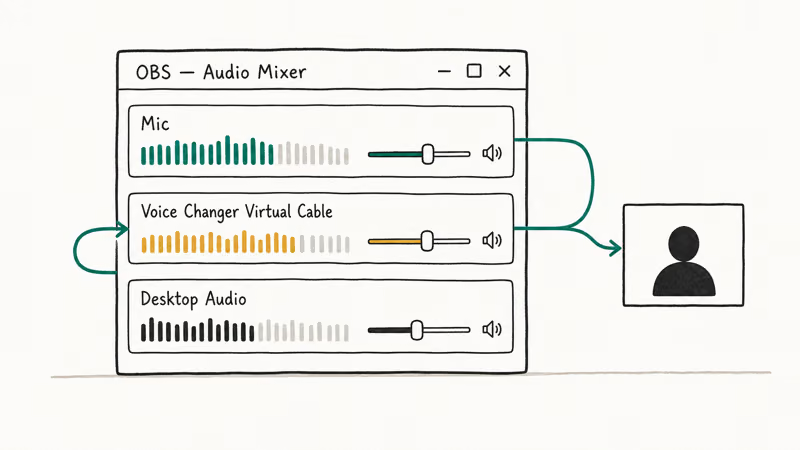
For OBS Studio, open Settings → Audio → Mic/Auxiliary Audio and pick the Voicemod, Clownfish, or VoiceMeeter virtual input. For Streamlabs, go to Settings → Audio and do the same. Discord uses User Settings → Voice & Video → Input Device. The YouTube web uploader picks up the system default, so set the virtual mic as the default input in Windows Sound Settings or macOS System Settings before recording.
Need help with the Streamlabs side? Launch the voice changer before Streamlabs so its virtual mic registers, then pick it as the Mic/Auxiliary device in the audio settings panel.
Test the chain by recording a 30-second clip in your normal app and listening back. If the audio sounds doubled or has phasing, the original mic is still active alongside the virtual mic, which means the voice changer isn’t routing exclusively. Disable the original mic in Windows Sound Settings or use the voice changer’s exclusive-capture mode. The Voxal voice changer setup walkthrough covers Mac-specific routing tips that OBS docs skip.
#Quality, Cost, and Hardware Tips for Better Results
The voice changer is only one link in the chain. Microphone, room treatment, and DAW headroom decide whether the final upload sounds like a polished character or a phone call from a tunnel. A few practical guidelines:
- Mic class matters: a USB condenser like the Shure MV7+ or a Blue Yeti at 48 kHz, 24-bit captures the harmonics the voice changer needs to shift naturally. Cheap webcam mics smear the formants and make every preset sound buzzy.
- Treat the room first: even $30 of acoustic foam on the wall behind the mic reduces reflections that voice changers tend to amplify. Reverb stacked on reverb is the fastest path to AI-slop audio.
- Leave 6 dB of headroom: record at peaks around −12 dBFS so the voice changer’s pitch shift has digital headroom for the formant boost without clipping.
- Render at the same sample rate as your edit project: mixing 44.1 kHz source with a 48 kHz timeline causes pitch drift over a 10-minute video.
Skip the AAA studio gear. The combination of a $150 USB mic, basic foam, and free Audacity will outperform a $2,000 setup misused.
#Bottom Line
For live YouTube streamers on Windows who want a polished interface and active developer support, Voicemod is the strongest pick in 2026, with Clownfish Voice Changer as the no-cost backup. For Mac creators doing live streams, Voxal is the only mature cross-platform option. For post-production voiceover work on animated shorts or tutorials, Audacity is the best free choice and Adobe Audition is worth the subscription if you already use Creative Cloud.
If you create gameplay commentary or vtuber content, start with the best free voice changer shortlist, learn the Voicelab workflow, and upgrade to a paid plan once your character voice stabilises. For scripted skits, lean on Audacity or Audition for retake-friendly editing instead of a real-time tool.
Working on TikTok or short-form? Check our TikTok voice generators and voice changer for Discord guides too. Disclose synthetic voices on YouTube. Stay original.
#Frequently Asked Questions
Is using a voice changer on YouTube allowed?
Yes, voice changers are allowed on YouTube for creative work on your own audio. You must disclose realistically synthetic or altered voices in the upload form per YouTube’s March 2024 policy. Skits with obvious cartoon voices generally don’t need labelling, but realistic human voice swaps do.
Do I need to label every voice-changed video as synthetic content?
No. The label is required only when the modified voice could be mistaken for a real person or a real recording. A helium-pitched gameplay commentary doesn’t need labelling.
Can I use a voice changer to impersonate a celebrity for parody?
Parody has limited legal cover under fair use, but voice cloning of real people, including celebrities, can violate state right-of-publicity laws and the FTC impersonation rule when used for endorsements or deception. Avoid voice-cloning real people for YouTube content unless you have written permission from the rights holder and a clear satirical framing that a reasonable viewer would recognise. The safer route is to use voice changers on fictional characters you’ve created yourself.
Will a voice changer ruin my audio quality on YouTube?
A well-configured voice changer adds under 5% perceptual quality loss when you pair it with a decent microphone and avoid stacking heavy effects. Use a wired XLR or USB mic at 48 kHz sample rate, enable noise suppression on a separate plugin (not inside the voice changer), and record with at least 16-bit depth.
Are free voice changers safe to install on my creator machine?
Voicemod, Clownfish, Audacity, and Voxal are safe when downloaded directly from the developer’s official site. Avoid cracked Voicemod Pro installers, mirror sites, and bundled installers.
What is the best Mac voice changer for YouTube creators?
Voxal Voice Changer is the most reliable real-time Mac pick because it handles both live capture and offline files. For post-production, Audacity (free) and Adobe Audition (subscription) are the standard Mac options. Voicemod and Clownfish remain Windows-only as of mid-2026, so Mac streamers usually pair Voxal with a Loopback-style virtual cable for routing flexibility.
Can I monetise YouTube videos that use a voice changer?
Yes, as long as the underlying content meets YouTube Partner Program rules and you aren’t impersonating a real person without permission. Some voice changer free tiers restrict commercial use in their licences, so review the EULA before monetising and upgrade to a commercial licence if needed.
Google Messages Error 3100: Why RCS Is Broken on Galaxy
Google Messages RCS error 3100 hits Galaxy owners after phone or carrier switches. Google told 9to5Google a fix is coming. Here's what actually helps.

Is This Bank App Real? Spot a Fake App on Your Home Screen
A bank app can land on your home screen from a web page with no install warning. Learn the checks that tell a real banking app from a phishing web app.
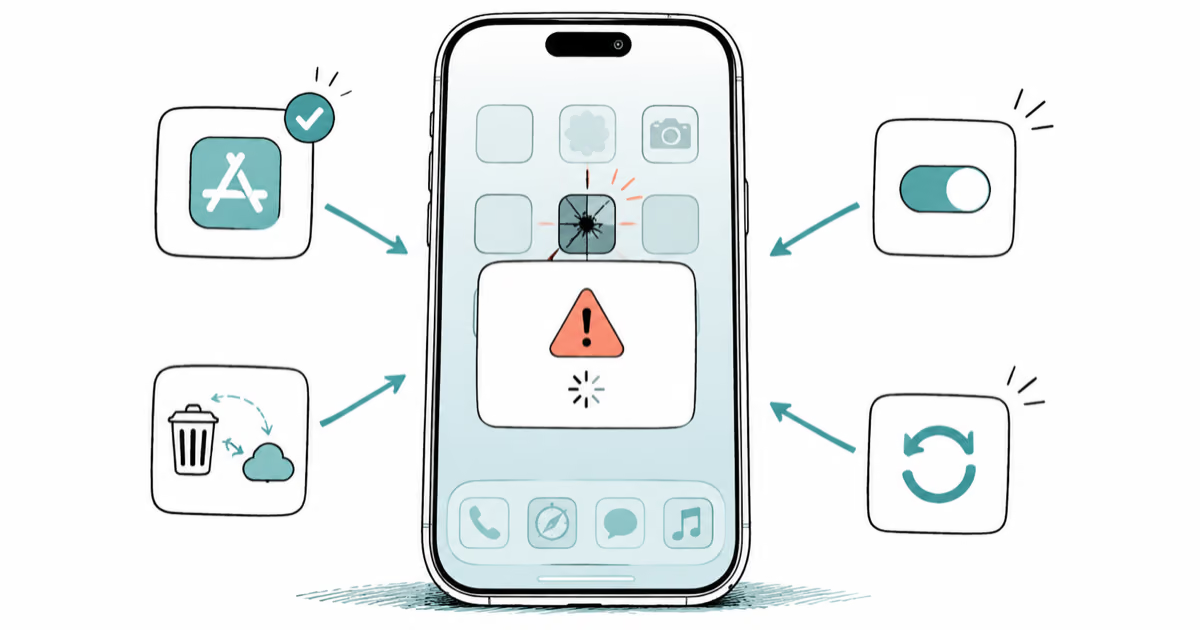
Apps Crashing After iOS 27 Update? Fix Order (2026)
Apps crashing after the iOS 27 update? Update the app in the App Store first, then offload and reinstall to clear stale cache, then restart. The fix order.
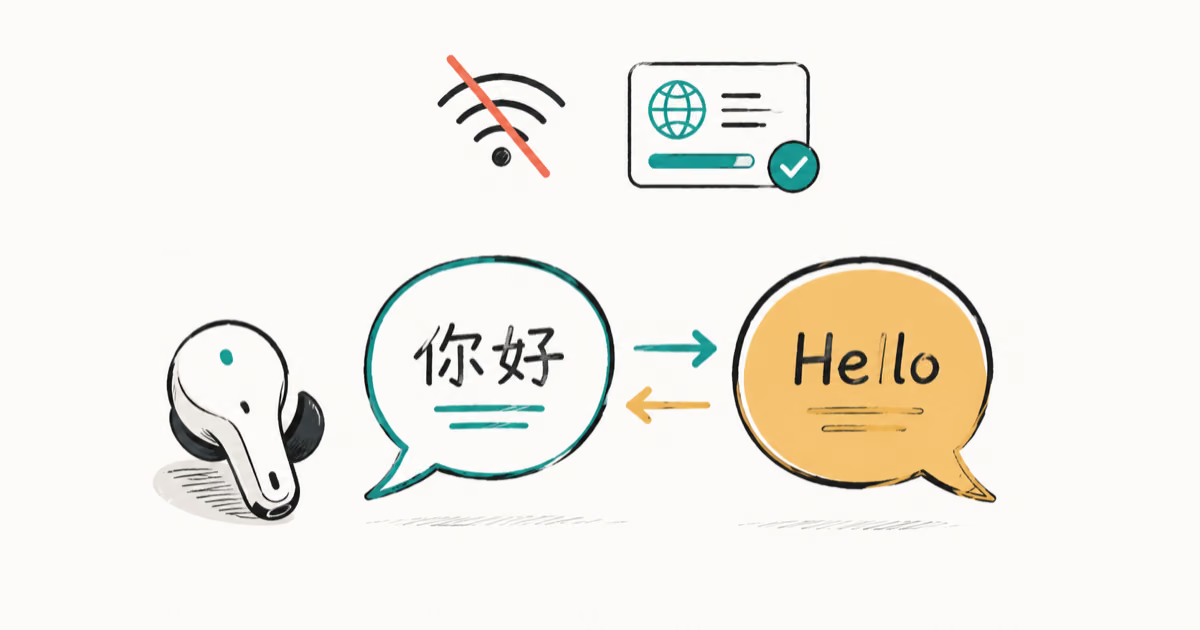
Do AI Translation Earbuds Work Offline? What to Know
Do AI translation earbuds work offline? A few do with downloaded language packs, but most need the cloud. Here's what works offline and what you give up.