Best ASMR Microphones for Whispers and Tingles (2026)
Find the best ASMR microphone for whispers, tingles, and triggers. We compare 7 top picks by polar pattern, sensitivity, and price for 2026.
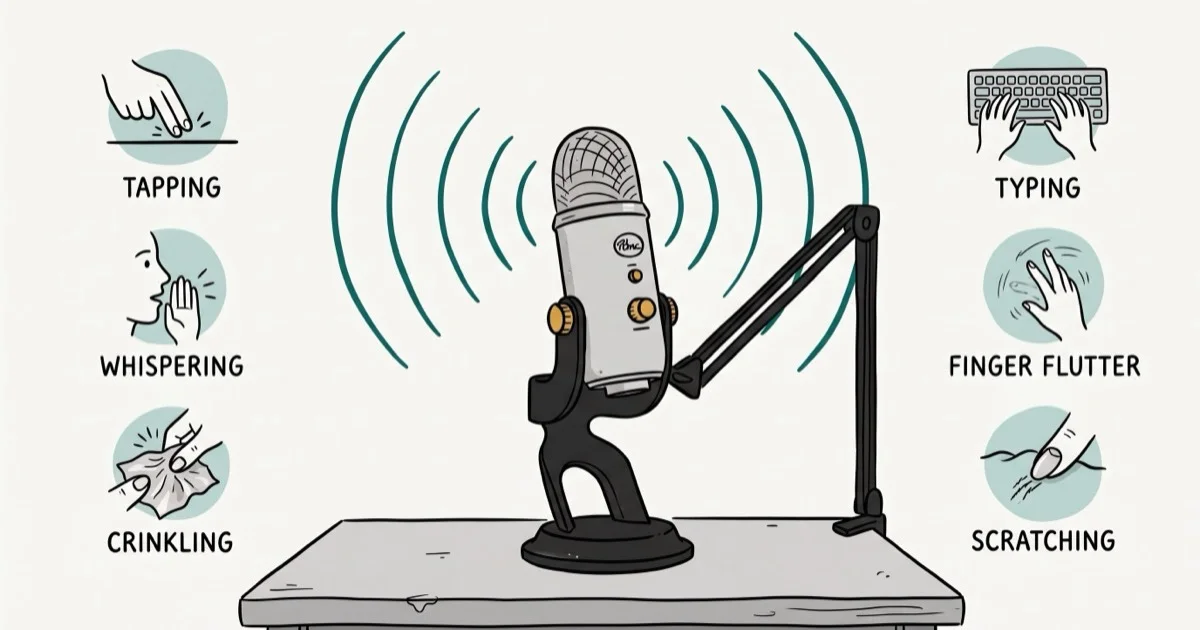
Quick AnswerThe Shure SM7B is the best ASMR microphone overall for its flat frequency response and built-in pop filter, while the Blue Yeti offers the best value with four polar patterns under $130.
Picking the wrong microphone can ruin an ASMR recording before you even start whispering. This guide compares seven popular models by polar pattern, sensitivity, noise handling, and price for whisper triggers, tapping sounds, and mouth sounds. The difference between a $30 USB mic and a $400 dynamic mic isn’t just price. It’s whether your audience gets tingles or static.
- Condenser mics pick up more detail than dynamic mics, making them better for whispers under 12 inches
- The Shure SM7B ($399) eliminates computer hum with electromagnetic shielding
- USB microphones like the Blue Yeti work without an audio interface, saving $100-200
- Cardioid polar patterns reject room noise while omnidirectional captures spatial triggers
- Budget picks under $60 like the Fifine K669B produce clean whisper recordings with a pop filter
#What Makes a Good ASMR Microphone?
ASMR recordings demand something specific from a microphone: the ability to pick up extremely quiet, detailed sounds without introducing noise. That rules out most microphones designed for live performance or conference calls.
Three specs matter most for ASMR. Sensitivity determines how well the mic captures whispers at low volumes. Look for a rating of -30 dBV or higher.
Self-noise is the second factor. Microphones with self-noise above 20 dB A-weighted add a constant hiss that competes with your triggers. PCMag’s microphone buying guide found that 5-10 dB lower self-noise separates condenser mics from dynamic mics at the same price point — see PCMag’s full breakdown for the comparison. That gap is meaningful when recording quiet whispers that would otherwise get buried in the noise floor.
The third factor is polar pattern. Cardioid patterns focus on sound directly in front of the mic, which works well for single-source triggers like whispering. Omnidirectional patterns capture sound equally from all directions, making them better for binaural setups where you want listeners to feel surrounded. If you’re curious about what mic popular creators use, most top YouTubers choose cardioid condensers for this exact reason.
#Top 7 ASMR Microphones Compared
#Blue Yeti USB Microphone
The Blue Yeti remains one of the most popular entry points for ASMR creators, and for good reason. It has four selectable polar patterns (cardioid, bidirectional, omnidirectional, and stereo) packed into a single USB mic that costs around $130.
- Four polar patterns cover any recording scenario
- Plug-and-play on Mac, Windows, PS4/PS5
- Solid metal build holds up for years
As an Amazon Associate fone.tips earns from qualifying purchases. Prices and availability on Amazon are accurate as of the date shown and subject to change.
Stereo capture is the Yeti’s standout mode for creating a wider soundstage than most USB mics in this price range.
The built-in gain control knob on the front lets you dial in sensitivity without opening software, which saves time between takes. One limitation: the Yeti picks up vibrations through its included stand. A shock mount (sold separately for about $30) fixes this issue and is practically required for tapping triggers.
Sample rate tops out at 48 kHz/16-bit over USB. That’s enough for YouTube and podcast distribution, though professional studios will want higher resolution.
#Shure SM7B
The SM7B has earned a reputation as the studio workhorse, and ASMR creators have adopted it for one specific reason: electromagnetic shielding. If you record near a computer, monitor, or any electronics, cheaper mics pick up a low hum. The SM7B’s electromagnetic shielding helps reject that kind of computer hum.
At $399, it’s the priciest pick on this list. You’ll also need an XLR audio interface ($150+).
Based on Audio-Technica’s polar pattern guide, the SM7B’s cardioid pattern is tighter than most condensers, which helps isolate your voice from room reflections. Stay within 4-6 inches of the capsule for whisper work.
#Audio-Technica AT2020USB+
Audio-Technica’s AT2020USB+ hits a sweet spot between the Blue Yeti’s convenience and professional condenser quality. It runs about $80 and connects directly via USB. The 16mm diaphragm is smaller than the Yeti’s capsule but more consistent across the frequency spectrum.
Mouth sounds and soft-spoken ASMR are where it shines.
If you connect a microphone to your iPhone for mobile ASMR, the AT2020USB+ works with a Lightning-to-USB adapter.
One downside: it only has a cardioid pattern. For binaural recordings, look elsewhere.
#Rode NT1 5th Generation
The Rode NT1 5th Gen holds the record for the world’s quietest studio microphone at just 4.5 dBA self-noise. For ASMR, that stat matters more than almost anything else because lower self-noise means your whispers come through clearly without the background hiss that plagues cheaper condenser mics and forces heavy-handed noise reduction in post-production editing.
It costs around $269 and includes both USB-C and XLR outputs. That dual connectivity is unusual, letting you start with USB on your laptop and later upgrade to an XLR interface without buying a new mic.
According to Rode’s official specs, the frequency response extends from 20 Hz to 20 kHz, covering the full range of human hearing.
The large 1-inch capsule captures rich low-end detail that makes breathing sounds and deep whispers feel more intimate, which makes it a warmer-sounding option than the AT2020USB+ for whisper-focused ASMR.
#XLR vs USB Microphones for ASMR
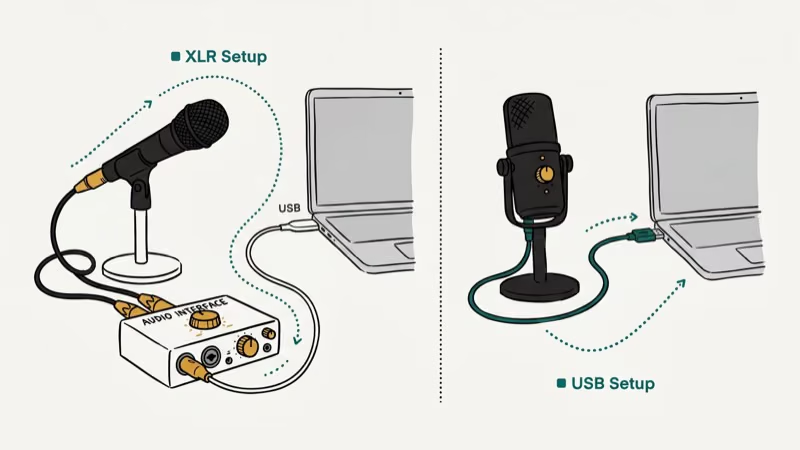
This decision shapes your entire setup and budget. USB microphones have a built-in audio interface, so you plug into your computer and start recording immediately. XLR microphones need a separate interface ($100-300) but give you more control over gain staging, phantom power delivery, and multi-channel signal routing, which matters for binaural ASMR setups with two or more mics.
For beginners recording in a bedroom, USB saves money and complexity. The Blue Yeti and AT2020USB+ both produce broadcast-quality ASMR without extra hardware. If you’re dealing with speaker buzzing issues, USB mics are easier to troubleshoot.
XLR unlocks better preamps and multi-mic setups for binaural recording. The Shure SM7B and Rode NT1 both support XLR.
#Budget ASMR Microphones Under $100
#Fifine K669B
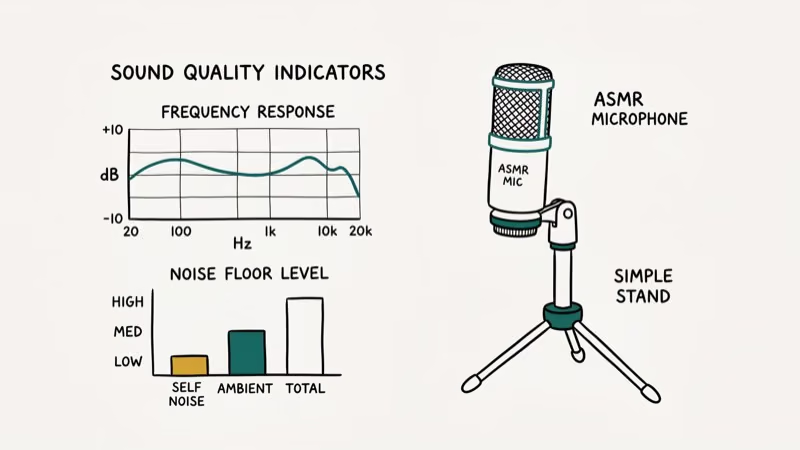
The Fifine K669B proves you don’t need to spend $100+ to record decent ASMR. At roughly $26, it’s the cheapest mic on this list by a wide margin. It connects via USB, has a cardioid pattern, and includes a basic desk stand.
Sound quality won’t match the Rode NT1 or Shure SM7B. But for creators testing whether ASMR content is right for them, the K669B is a risk-free starting point. With a pop filter and light noise reduction in Audacity, the K669B can be usable for starter whisper recordings.
The metal body feels solid despite the low price. No gain knob on the mic itself, so you control input levels through your computer’s sound settings or recording software.
#Samson Go Mic
The Samson Go Mic weighs just over an ounce and clips directly to your laptop screen, making it the only truly portable option on this list for creators who record ASMR in hotel rooms, dorm rooms, or anywhere outside a home studio. It switches between cardioid and omnidirectional patterns with a physical toggle on the back.
At around $40, the Go Mic records at 16-bit/44.1 kHz. That’s CD quality. The compact size means a smaller diaphragm, which translates to less low-end sensitivity compared to full-sized condensers.
For travel ASMR or spontaneous recordings, it works well enough. For dedicated studio sessions, the Blue Yeti or AT2020USB+ will outperform it. If your Discord stream has no sound, the Go Mic’s plug-and-play USB connection usually resolves driver issues faster than XLR setups.
#JLab Talk USB Microphone
JLab’s Talk mic costs about $70 and has four directional modes with a built-in volume wheel. Its 96 kHz/24-bit sampling rate is the highest on this list.
A quick-mute button on the front glows blue when active and red when muted. Useful during live ASMR streams when you need to cough or adjust your position. Compared with the Blue Yeti, the JLab Talk emphasizes high-frequency detail in tapping triggers more than mid-range warmth.
Build quality is the trade-off. The plastic body feels lighter than the Yeti or AT2020, and the included stand isn’t heavy enough to prevent tipping. A third-party boom arm ($25) fixes that. Creators using a voice changer for Discord should know the JLab Talk’s onboard processing can sometimes conflict with third-party audio effects software.
#How to Set Up Your ASMR Mic for the Best Sound?
Buying the right microphone is half the equation. Setup determines whether you get clean audio or a noisy mess that no editing can save.
Room treatment comes first. Hard walls and flat surfaces create reflections that muddy quiet recordings. Hanging blankets or foam panels can reduce room echo by 40-60%.
Gain staging is where most beginners fail. Set your input gain so whispers peak around -12 to -6 dB on your recording meter. Too high and you’ll clip on louder triggers. Too low and you’ll amplify noise when boosting in post.
According to iZotope’s recording guide, proper gain staging at the mic level prevents noise issues that no amount of editing can fully fix.
Pop filter placement matters for ASMR. Position it 2-3 inches from the capsule. Mouth sounds and plosives (p, b, t sounds) hit the filter instead of the diaphragm, preventing those harsh pops that ruin an otherwise perfect take.
The Shure SM7B already has a built-in pop filter, but every other mic on this list benefits from adding one.
Monitor with closed-back headphones. Open designs like AirPods bleed audio back into the mic. Use wired, closed-back models like the Sony MDR-7506 or Audio-Technica ATH-M50x for accurate real-time monitoring during ASMR sessions. This single change can dramatically improve recording quality, especially during quiet whisper takes where even faint headphone bleed becomes audible in the final mix.
#Accessories That Improve ASMR Audio
A good microphone alone won’t give you studio-quality ASMR. Three accessories make the biggest difference for under $100 total.
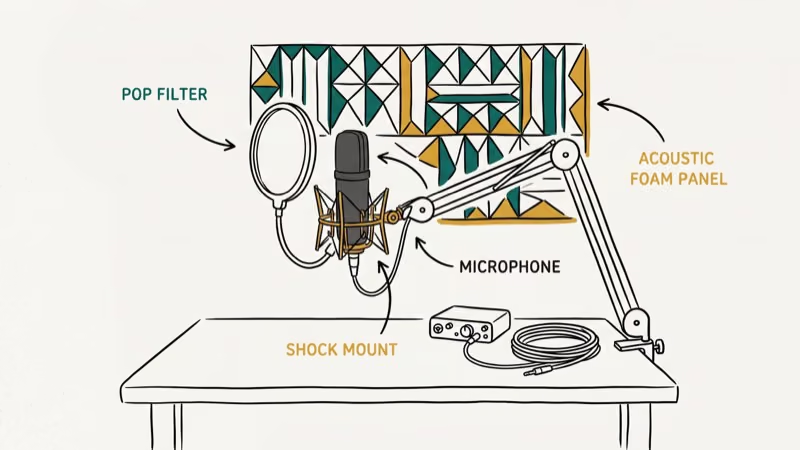
A shock mount ($20-50) isolates the mic from desk vibrations, keyboard taps, and accidental bumps. Without one, tapping triggers on your desk will produce a low thud that overpowers the intended sound. The Blue Yeti and Rode NT1 both have model-specific shock mounts available.
A boom arm ($25-80) positions the mic exactly where you need it without a desk stand taking up space. Boom arms also reduce the vibration path between your desk and the microphone. The Rode PSA1+ is a popular option that works with most microphones under 2.4 pounds.
#Bottom Line
For most ASMR creators, the Blue Yeti at $130 is the best overall pick. It balances sound quality, polar pattern flexibility, and USB convenience better than anything else at this price.
On a tight budget, the Fifine K669B ($26) records surprisingly clean whispers for the price of a takeout meal. Focus on room treatment and gain staging first, and upgrade only when your current mic becomes the weakest link in your signal chain. If you’re also troubleshooting HyperX Cloud 2 mic issues, many of the gain staging tips here apply to gaming headsets too.
#Frequently Asked Questions
What polar pattern is best for ASMR recording?
Cardioid works best for solo whisper content because it rejects room noise behind the mic. For binaural ASMR, omnidirectional captures a more immersive spatial experience. The Blue Yeti lets you switch between both.
Can I record ASMR with my phone’s built-in microphone?
Phone microphones are designed for voice calls, not quiet whisper recordings. They introduce significant background noise and lack the sensitivity needed for subtle ASMR triggers. Even a $26 USB mic like the Fifine K669B captures noticeably more detail than the built-in mic on an iPhone 16 or Samsung Galaxy S25.
How close should I be to the microphone for ASMR?
Stay within 2-8 inches for most whisper content. Moving closer increases bass response (the proximity effect), making your voice sound deeper and more intimate.
Do I need an audio interface for ASMR?
Not if you use a USB microphone. Models like the Blue Yeti, AT2020USB+, and JLab Talk connect directly to your computer. You only need an audio interface ($100-300) if you choose an XLR-only mic like the Shure SM7B, or if you want to run multiple microphones simultaneously for binaural setups.
What is the best free software for recording ASMR?
Audacity is the most popular free option and runs on Windows, macOS, and Linux with multi-track recording, noise reduction, and basic EQ built in. GarageBand comes free on macOS and iOS. For more advanced editing with features like spectral analysis and automatic crossfades, Reaper offers a free 60-day trial with zero feature restrictions, and many ASMR creators use it as their primary DAW even after the trial because the license reminder is non-intrusive.
How do I reduce background noise in ASMR recordings?
Start with your recording environment before touching software. Close windows, turn off fans and AC units, and add soft materials to your room to absorb reflections. During recording, use a cardioid polar pattern to reject sound from behind the mic. In post-production, apply noise reduction in Audacity using a noise profile sample from a silent section of your recording.
Is a condenser or dynamic microphone better for ASMR?
Condenser microphones are generally better because their powered capsules pick up quieter sounds with more detail. Dynamic mics like the Shure SM7B need more gain but reject electromagnetic interference near computers.
How much should I spend on an ASMR microphone?
Budget $50-150 for a capable USB mic that handles whispers, tapping, and mouth sounds well. The Blue Yeti ($130) and AT2020USB+ ($80) both fall in this range. Spending $300-500 on an XLR setup (mic plus interface) makes sense only if you’re producing ASMR content regularly and need features like ultra-low self-noise or multi-mic support.

Best Laptop for Running LLMs in 2026: Memory Comes First
The best laptop for running LLMs is a memory purchase first. Compare MacBook unified memory against NVIDIA laptop VRAM, and see what each tier really runs.
Pixel 11 vs Pixel 10: What Changed and Who Should Upgrade
Pixel 11 vs Pixel 10: same screen and camera resolution, new Tensor G6, 25W wireless, and Gemini Intelligence. Here is who should actually upgrade.
Best Power Bank for iPad in 2026: Pro, Air, and Mini
Best power bank for iPad in 2026. Compare mAh tiers and USB-C PD wattage for iPad Pro, Air, and mini, plus airline Wh math, cables, and travel tips.
Best Power Bank With Built-In Cable: Top 2026 Picks
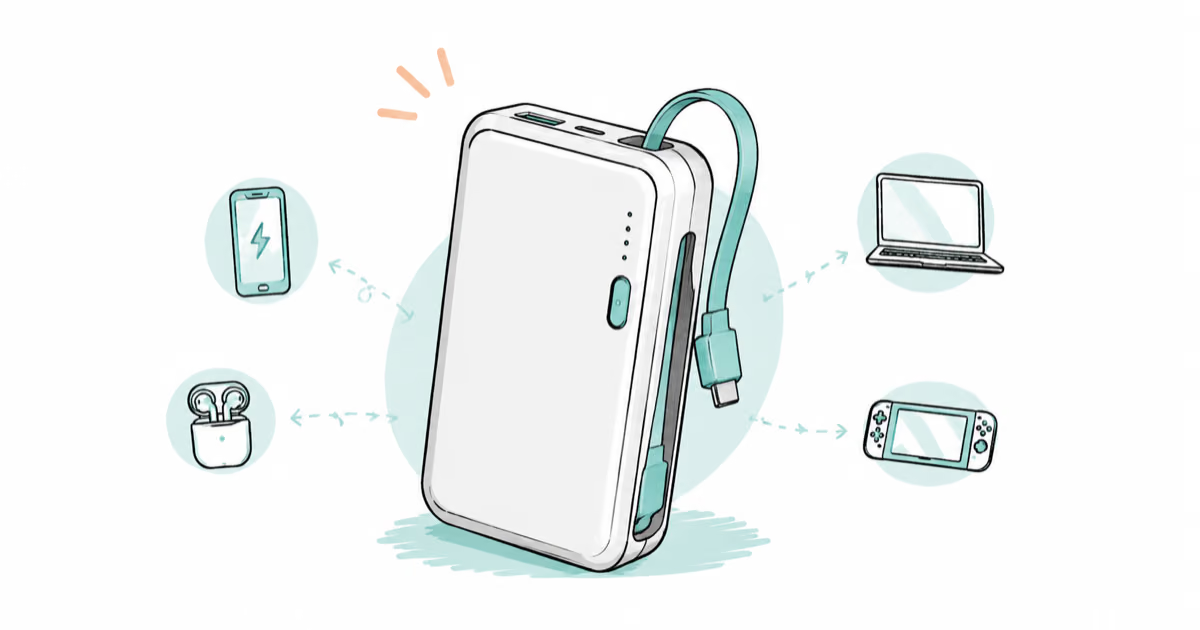
Best power bank with built-in cable picks for 2026. Compare single USB-C, multi-connector, and retractable laptop banks, plus airline Wh math.