Verizon Wi-Fi Not Working? How to Fix It Fast in 2026
Verizon Wi-Fi not working? Restart your Fios router, check ONT lights, scan for outages, and reset Wi-Fi from the admin page in under 10 minutes.
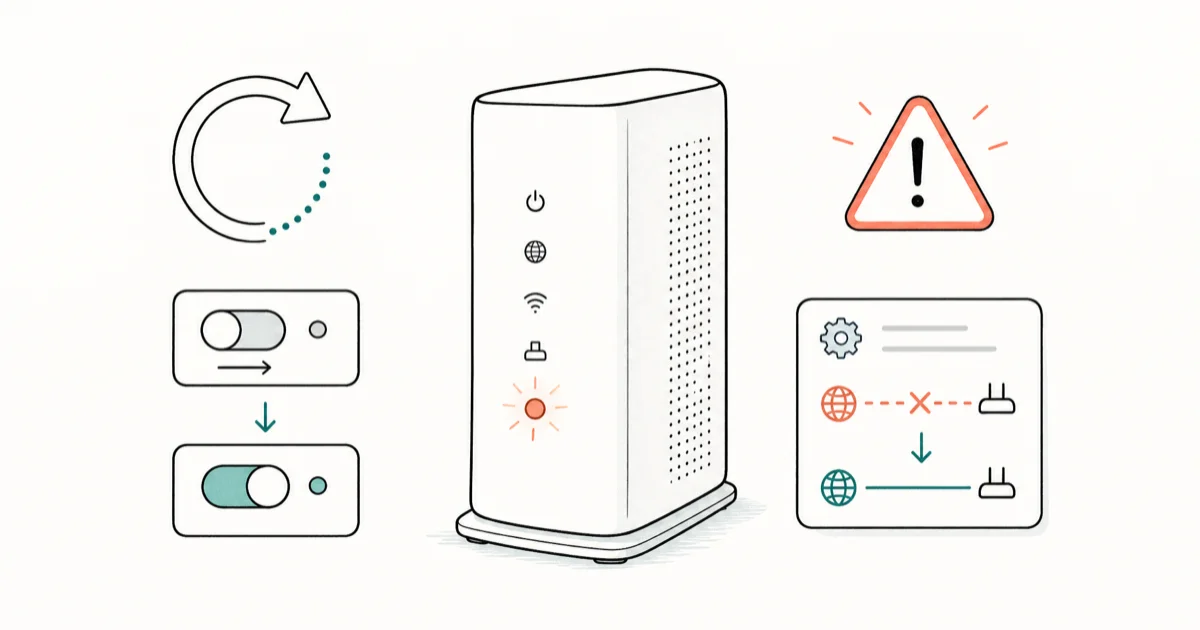
Quick AnswerUnplug your Verizon Fios router or 5G Home Internet Gateway for 30 seconds, plug it back in, and wait two to three minutes for the status light to turn solid white. If Wi-Fi still hasn't returned, sign in at 192.168.1.1, run the Verizon outage checker, then reset the router with the pinhole button.
Verizon Wi-Fi failures are almost always a router, cable, or service-outage problem rather than a broken account. The good news is that the Fios G3100, the older Quantum Gateway, and the 5G Home Internet Gateway all respond to the same short fix list. These steps apply to both Fios fiber and 5G Home Internet setups, and most outages clear in under ten minutes when you work through them in order.
- A 30-second power cycle of the Verizon Fios G3100 or 5G Home Internet Gateway clears stale DHCP leases and fixes most short Wi-Fi drops without changing any settings.
- The Verizon outage checker inside My Verizon shows real-time service status for your address, so you can rule out a regional outage in under a minute from a phone on cellular data.
- The router admin page lives at 192.168.1.1 on every modern Verizon gateway, and the default password is printed on a sticker on the side or bottom of the unit.
- A pinhole factory reset wipes the router back to default Wi-Fi name and password but does not touch your Verizon account, your billing, or your service plan.
- If the white ONT box on a Fios install shows no green light at all, the problem is upstream of the router and only Verizon can fix it.
#Why Is Your Verizon Wi-Fi Not Working?
Most Verizon Wi-Fi failures come down to five things.
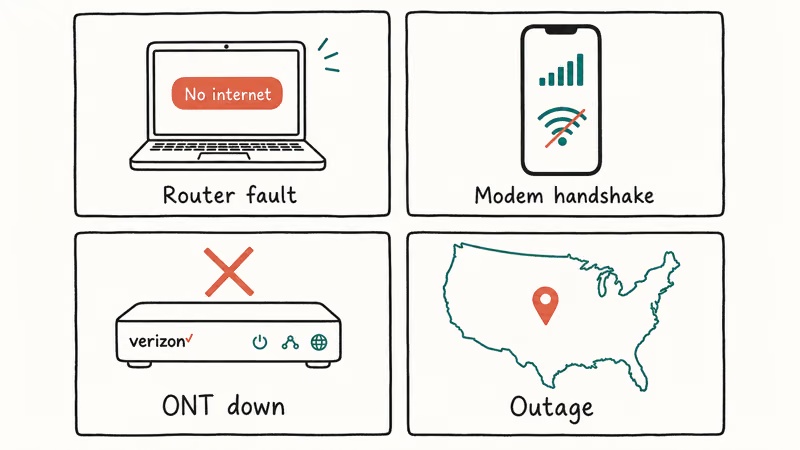
The router lost its handshake with the ONT or 5G modem, a coax or Ethernet cable wiggled loose, a regional outage is in progress, a firmware update is half-finished, or the Wi-Fi radio is stuck after a power blip. Working through these in order is faster than guessing, because each fix rules out a specific class of failure before you reach the bigger hammers like a factory reset.
Fios fiber customers have a white optical network terminal (the ONT) tucked into a closet, basement, or garage. That box is the handoff between Verizon’s fiber line and your router.
Verizon 5G Home Internet customers skip the ONT. The gateway talks straight to a cell tower, so a metal wall or tower outage can drop the connection.
Most Wi-Fi failures clear with either a 30-second power cycle or a regional Verizon outage that resolves on its own in under an hour, which is why those two checks belong at the top of the list. The stubborn cases that survive both usually need a factory reset, almost always because a firmware update failed partway through and left the radio stuck in a half-applied state.
Front-light color is the fastest signal of what’s wrong. Solid white means a healthy internet connection. Any other color (solid red, blinking white, blinking blue, yellow) is a specific failure code worth checking before you touch the reset pinhole. If your router shows a Verizon router blinking white light or a Verizon router yellow light, those mean different things and need targeted fixes.
#Power Cycle Your Verizon Router the Right Way
A power cycle isn’t just flicking the router off and on. The trick is the wait time, because the router needs to fully drain capacitors and release its DHCP lease before it can pull a fresh address from Verizon’s network.
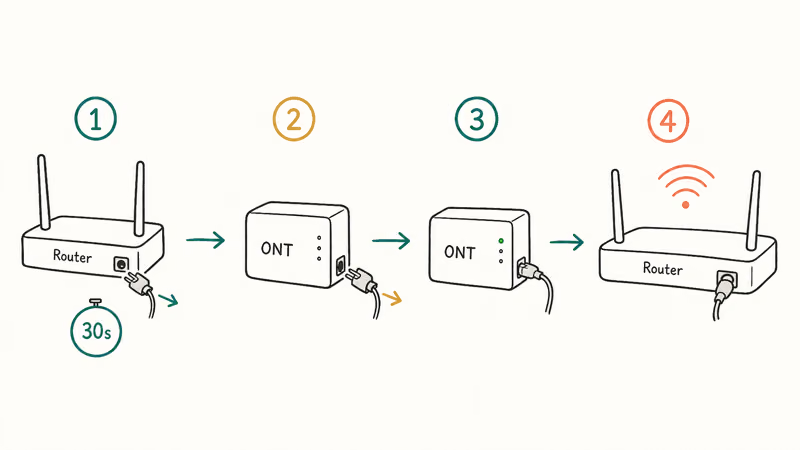
Here’s the sequence that works:
- Unplug the power cord from the back of the router. Don’t just hit a side power button, since some Fios models keep memory active on standby.
- Wait 30 seconds. Set a timer if it helps. Five seconds isn’t enough for the lease to drop.
- Plug the cord back in and wait two to three minutes. The front light cycles through several colors during boot. The only color you want is solid white.
- Open a webpage on Wi-Fi to confirm the connection. If you get a “DNS server not responding” error or dns_probe_finished_no_internet, the router is up but DNS hasn’t caught up yet. Give it another minute.
If you have a 5G Home Internet Gateway, the power cycle is identical, but the front bar has different stages. Verizon’s 5G Home Internet support page covers the gateway’s setup and restart steps; the gateway can need a few minutes after a reboot before it pulls a usable signal, so wait for the light to settle before assuming it failed.
On a Fios G3100, the front light typically cycles from red to blinking white to solid white over a couple of minutes total, and Wi-Fi reappears on connected devices shortly after the white light goes solid. If your unit takes longer than five minutes to reach solid white, treat the boot as failed and move on to the cable check.
#Check Cables, Coax, and ONT Status Lights
Before going deeper, walk the physical layer once. Loose cables cause more Verizon Wi-Fi failures than firmware bugs.
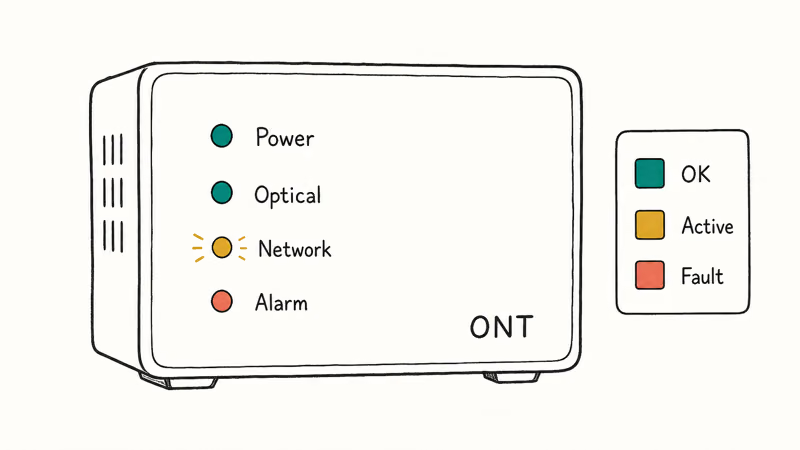
For Fios fiber installs:
- Check the white ONT box in the basement, garage, or closet. The Power light should be solid green, and the Optical light should be solid green or off. A blinking red or solid red on the Optical light means the fiber has lost light, and only Verizon can fix it from their end.
- Look at the Ethernet cable between the ONT and the router. If yours uses coax instead of Ethernet, the coax should be hand-tight at both ends. Older Fios installs sometimes ship with a coax-to-Ethernet MoCA bridge that loses sync if the screw connector vibrates loose over time.
- The cable from the router to a wired computer (if you use one) should click into place at both ends.
For Verizon 5G Home Internet:
- The gateway is wireless on the WAN side, so there’s no coax or fiber to check. The cables that matter are the power cord and any Ethernet to a switch or device.
- Move the gateway closer to a window or to a higher floor if you can. The signal-strength indicator on the front shows three or four bars when the install is correct.
Placement matters more than people expect: keep the router away from microwaves, baby monitors, and Bluetooth speakers, since those devices compete on the 2.4 GHz band. Verizon’s home internet setup resources walk through gateway and router placement during install. Moving a G3100 off a metal media console can take Wi-Fi from unusable to fine. Cabinets with metal mesh doors are even worse, since the mesh acts as a small Faraday cage for 5 GHz signals in particular.
If everything’s plugged in and the lights are correct but Wi-Fi is still slow or dropping on specific devices, our phone Wi-Fi slow checklist walks through the device-side tests that rule out a phone issue rather than a router issue.
#Is There a Verizon Outage in Your Area?
Half of the “my Wi-Fi isn’t working” calls turn out to be a Verizon outage that the customer didn’t realize was happening. The router can show a solid white light and still have no upstream service.
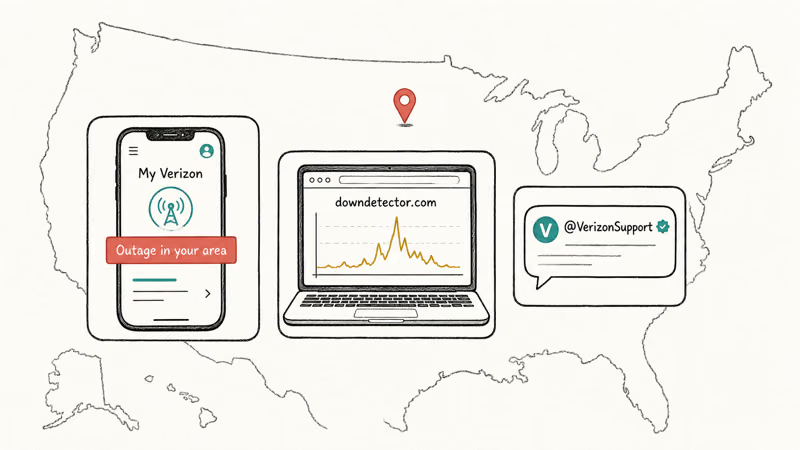
Here’s the fastest way to check.
- Pick up a phone with cellular data turned on. Don’t rely on a device that’s currently on the broken Wi-Fi.
- Go to verizon.com/support/check-network-status and sign in to My Verizon. The outage checker pulls in your account address automatically.
- If the dashboard lists an active outage with an estimated restore time, the only useful move is to wait. Verizon won’t give you a faster fix than the engineering team is already running.
- While you wait, switch your devices to a personal hotspot from a phone with cellular data so the rest of your day keeps moving.
Verizon’s check network status page confirms that service interruptions show up with a ticket number and an estimated repair window. If no outage shows for your area and your router still has no internet, the problem is local: cable, router, or firmware.
If you can’t tell whether the issue is upstream or local, plug a laptop directly into one of the LAN ports on the back of the router with an Ethernet cable. Wired-works-but-Wi-Fi-doesn’t points at the radio inside the gateway. Wired-also-fails points at the WAN side or the router as a whole.
#Sign In at 192.168.1.1 and Reset Wi-Fi Settings
If the router is up but Wi-Fi is broken, the next step is the router admin page. The Verizon admin lives at 192.168.1.1 on every Fios gateway and on the 5G Home Internet Gateway.
To sign in:
- Connect a phone or laptop to the router by Ethernet, or by the wired backup network name printed on the back of the gateway.
- Open a browser and go to 192.168.1.1.
- The username is admin. The password is printed on a sticker on the side or bottom of the router. Older Fios installs used “password” or the serial number as the default, but newer G3100 and CR1000A units ship with a unique strong password per unit.
- From the admin dashboard, go to Wireless Settings.
The three fixes that work most often from here are channel changes, SSID splits, and a soft radio toggle.
On 2.4 GHz, set the channel to 1, 6, or 11, since those are the only non-overlapping channels in the spec. On 5 GHz, let the router auto-select. If your G3100 or 5G Gateway is broadcasting a single Wi-Fi name that auto-steers devices between bands, splitting it into two SSIDs (one per band) sometimes fixes devices that get stuck on the wrong band.
Toggling the radio off, saving, and then toggling it back on is a softer fix than a factory reset. It keeps your Wi-Fi name and password while clearing whatever stuck state was breaking new connections.
If you’re getting an authentication error on Wi-Fi instead of no signal at all, the cause is usually a stored password mismatch on the device side, not the router. For VPN users, a stuck client on a laptop can also look like Wi-Fi failure. Our guide on Private Internet Access not working walks through how to rule out a VPN before blaming the router.
#Factory Reset and When to Call Verizon Support
The pinhole factory reset is a bigger hammer than a power cycle, but it’s reversible.
It wipes every setting on the router back to factory default: Wi-Fi name, password, admin password, port forwarding, parental controls. It doesn’t touch your Verizon account, your service plan, or your billing.
Reset steps:
- Find the pinhole on the back of the router. On the Fios G3100 and the 5G Gateway it’s labeled Reset. On older Quantum Gateway models it’s labeled with a red ring.
- Press and hold the pinhole with a straightened paperclip for 10 seconds, then release.
- The router reboots. The front light cycles back through red, blinking white, and solid white.
- Reconnect your devices using the default Wi-Fi name and password printed on the sticker. Change them inside the admin page once you’re back online.
A reset is the right move when Wi-Fi keeps dropping every five to ten minutes after a power cycle, when the admin page won’t load even though the router has a solid white light, or when you suspect a partial firmware update.
The FCC’s home broadband guide recommends a factory reset only after a power cycle and an outage check, since the reset wipes custom settings that may have taken hours to configure.
If a reset doesn’t bring back Wi-Fi, call Verizon. The fast path is My Verizon chat from a cellular phone, or the support line printed on the back of your bill. If the agent confirms the line is fine but your hardware is dead, ask whether your gateway is past its 1-year warranty and what the replacement fee is. If the bill itself is making you reconsider the plan, we covered why Verizon is so expensive in a separate post.
#Bottom Line
Start with a 30-second power cycle on whichever Verizon gateway you have. Most Wi-Fi failures clear at that step.
If the front light is anything other than solid white after the power cycle, check the outage page at verizon.com/support/check-network-status from a phone on cellular data before touching anything else.
Save the pinhole factory reset for the case where Wi-Fi keeps dropping after a clean power cycle and a clean outage check, since the reset wipes your custom Wi-Fi name and password and forces you to rebuild port forwarding rules from scratch.
#Frequently Asked Questions
How long should you unplug a Verizon router?
At least 30 seconds. Anything under 10 seconds usually isn’t long enough for the DHCP lease to drop, so the router pulls the same stale address right back when it boots.
What is the default password for a Verizon router?
On older Fios installs the default password was “password” or “admin” on the back-of-router sticker. Newer Fios G3100 and 5G Home Internet Gateway units ship with a unique strong password printed on a sticker on the side or bottom of the unit. Verizon recommends changing both the admin login and the Wi-Fi password the first time you sign in, since the default is printed on the hardware and visible to anyone in the room.
Will a factory reset cancel my Verizon service?
No, a factory reset only touches the router. Your account, plan, and billing all stay exactly the same. The only side effects are losing your custom Wi-Fi name, password, and any port-forwarding or parental-control settings.
Why is my Verizon router showing a solid red light?
A solid red front light means the router hasn’t established a healthy connection to Verizon’s network. If it stays red for more than five minutes after a fresh boot, do a power cycle and watch the light again. If it’s still red after that, the unit is failing and Verizon support can confirm whether the gateway or the upstream ONT is at fault. Audible fan noise alongside the red light usually means the hardware is dying.
Can I use my own router with Verizon Fios?
Yes, on Fios fiber you can connect your own router to the ONT by Ethernet, but you lose Verizon’s TV-guide features and remote support. Verizon 5G Home Internet doesn’t allow third-party gateways at all, since the cellular modem and the gateway are integrated into one unit.
How do I check for a Verizon outage in my area?
Sign in to your My Verizon account from a device that isn’t on the broken Wi-Fi, ideally a phone on cellular data, and open the outage checker. The tool pulls in your address automatically, so if there’s an active ticket it shows a status and an estimated restore time. There isn’t much you can do to speed up an active outage on Verizon’s side. The fastest workaround is tethering your devices to a phone hotspot until the restore window passes.
What if Verizon Wi-Fi is on but the internet is slow?
A solid white front light means the router has a healthy connection, so slow speeds usually come from device-side congestion, neighbor-network interference, or distance. Move the gateway higher and more central, switch the 2.4 GHz channel to 1, 6, or 11 in the admin page, and run a wired speed test to confirm whether the bottleneck is the line or the Wi-Fi.
Pixel 11 vs Pixel 10: What Changed and Who Should Upgrade
Pixel 11 vs Pixel 10: same screen and camera resolution, new Tensor G6, 25W wireless, and Gemini Intelligence. Here is who should actually upgrade.

Verizon Not Receiving Texts? How to Fix It in 9 Steps
Verizon not receiving texts? Fix it in 9 steps: check Message Blocking in My Verizon, reset network settings, deregister iMessage, and call support.
Pixel Battery Drain: What Google's July Fix Really Covers
Google marked the Pixel idle battery drain bug fixed in July, but only some phones got the patch. Here is who is covered, who is not, and what to try.
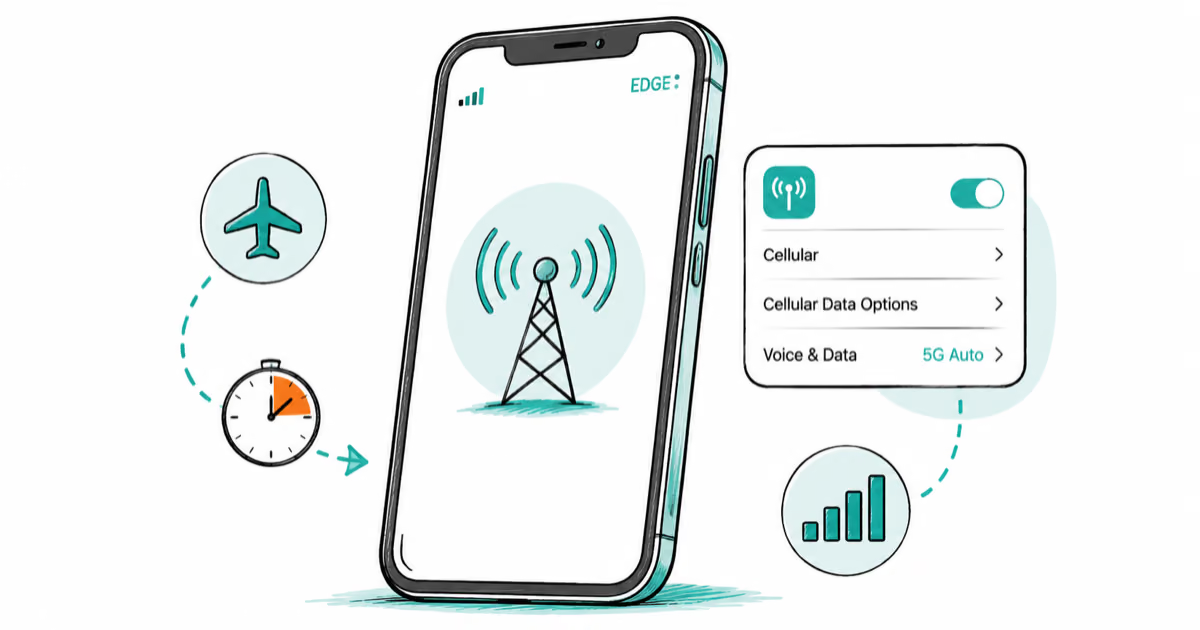
iPhone Stuck on EDGE? How to Get 5G or LTE Back (2026)
iPhone stuck on EDGE with crawling data? Here's why the E icon appears, which settings force 5G or LTE back, and when the problem is your carrier.