Why Is Verizon So Expensive? 7 Reasons Behind High Costs
Verizon costs more due to massive network infrastructure investments, superior 5G coverage, and hidden fees that add $15-25 monthly to your total bill.
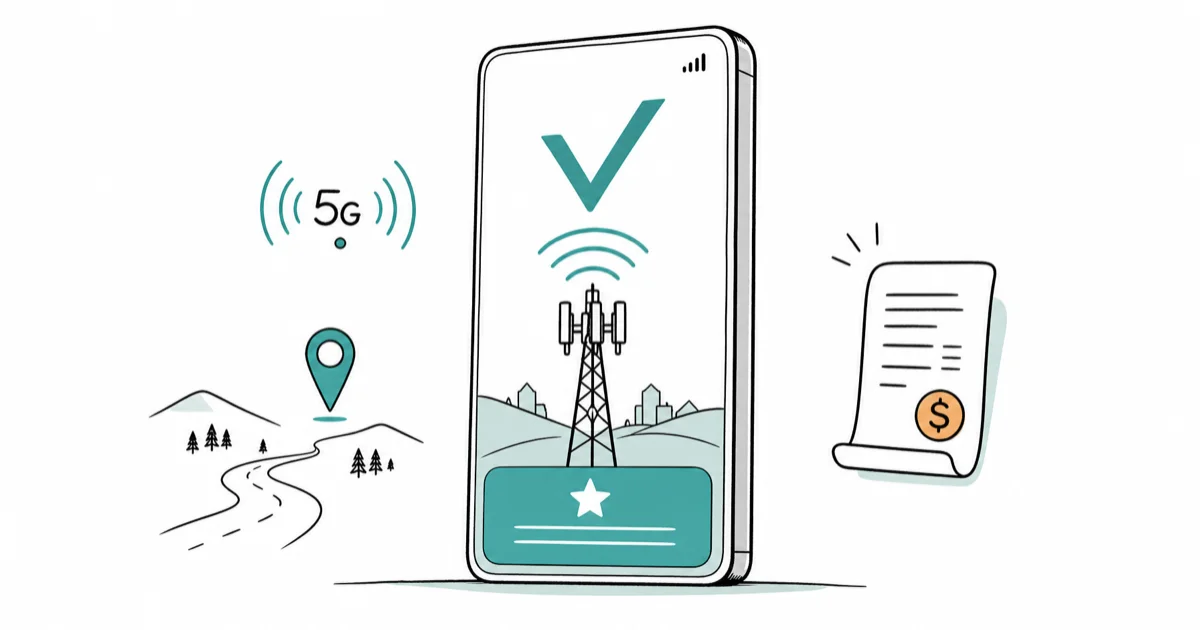
Quick AnswerVerizon is expensive because it operates America's most reliable wireless network, requiring massive infrastructure investments. The carrier spends $20+ billion annually on network upgrades, 5G rollout, and maintaining coverage in rural areas where competitors don't venture.
Verizon charges premium prices because it built the most reliable network in America. You’re paying for infrastructure that AT&T and T-Mobile can’t match.
Use these steps only for your own device, account, files, or content you have explicit permission to manage. Unauthorized access or sharing can violate law, privacy rights, and platform terms, so don’t use this guide to bypass someone else’s controls. When available, start with the official support option, built-in settings menu, or vendor documentation before trying manual fixes.
If you’re considering unlocking your AT&T iPhone to switch carriers, understanding Verizon’s pricing helps you make informed decisions about where your monthly dollars go.
- Verizon invests $20+ billion annually in network infrastructure, significantly more than competitors, driving up operational costs reflected in plan pricing
- The carrier’s 5G Ultra Wideband network uses expensive mmWave technology requiring 10x more cell sites than traditional coverage
- Base unlimited plans start at $80/month compared to T-Mobile’s $60, but include premium features like Disney+ and Apple Arcade bundles
- Hidden fees add $15-25 monthly through federal taxes, regulatory charges, and state-specific telecommunications surcharges
- Rural coverage costs 3-4x more per subscriber than urban markets, but Verizon maintains service where others don’t
#Network Infrastructure Investment Is the Primary Cost Driver
Verizon spends more on network infrastructure than any other US carrier. That infrastructure is a major reason Verizon charges premium prices, especially in places where competing networks have weaker coverage.
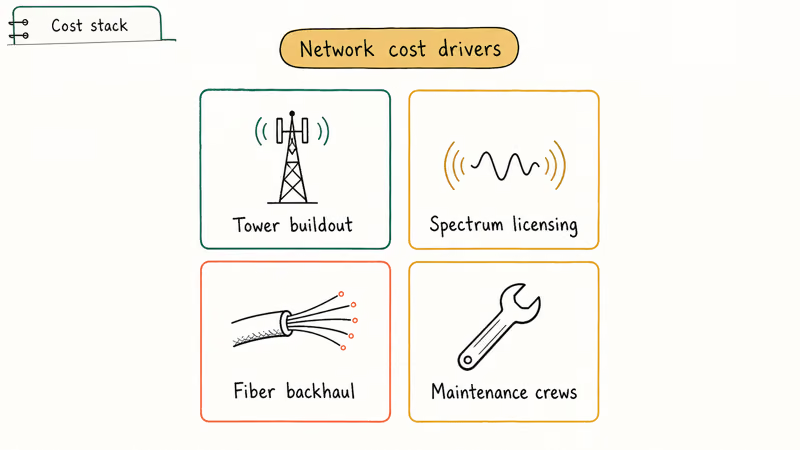
According to Verizon, total 2024 revenue reached about 134 billion dollars, much of which feeds back into network infrastructure and spectrum, as detailed in its annual report. That keeps Verizon among the highest capital spenders of any U.S. carrier.
This massive spending shows up in your monthly bill.
Coverage differences matter most on rural routes: Verizon prioritizes broad LTE availability, while AT&T and T-Mobile may be cheaper in areas where their coverage is already strong.
The reliability difference becomes crucial if you’re dealing with iPhone text message issues that stem from poor carrier connectivity rather than device problems.
#Why Does Verizon’s 5G Cost More Than Competitors?
Verizon’s 5G Ultra Wideband uses millimeter wave (mmWave) spectrum in the 28 GHz and 39 GHz bands.
Compare that to traditional cell towers that cover 1-3 miles, and you’ll understand why Verizon’s 5G costs so much to build.
Massive infrastructure difference.
Verizon’s Ultra Wideband can be faster than standard 5G where the network is available, but the extra cell sites and spectrum costs are part of what subscribers pay for.
This advanced network infrastructure becomes especially important when checking if your iPhone is unlocked for carrier switching decisions.
#Premium Plan Features Drive Up Base Costs
Verizon bundles premium services into its unlimited plans that competitors charge extra for. The Play More plan ($90/month) includes Disney+, Hulu, ESPN+, Apple Arcade, and 50 GB of premium mobile hotspot data.
Those included services can offset part of the higher plan price if you already use them. If you don’t use the bundles, a cheaper base plan from another carrier may make more sense.
Real value becomes clear when you do the math. T-Mobile’s equivalent Magenta Max plan costs $85 but doesn’t include Disney+ or Apple Arcade.
AT&T’s Unlimited Elite is $85 and includes HBO Max but lacks the gaming and ESPN+ bundles. If you’re experiencing connectivity issues that make you question your carrier choice, the guide on unlocking Straight Talk iPhones can help you explore switching options.
#Rural Coverage Costs 3-4x More Per Customer
According to Verizon background, maintaining service in rural America is expensive.
Urban customers subsidize this rural coverage through higher plan prices. Verizon maintains coverage in some rural towns where cheaper carriers may be weaker or unavailable.
This investment in rural infrastructure benefits everyone but comes at a cost that shows up in monthly bills. The extensive coverage also means fewer issues with features like airplane mode affecting GPS in remote areas.
#Hidden Fees Raise Every Verizon Bill
Verizon’s advertised prices don’t include mandatory government fees and taxes. These charges vary by location and can make the final bill higher than the plan price:
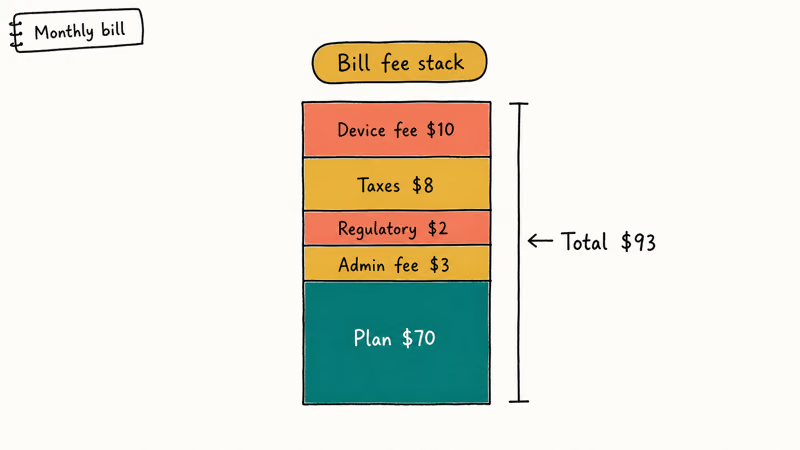
- Federal Universal Service Charge
- Regulatory recovery fee
- Administrative and telco recovery charge
- State and local taxes
These aren’t Verizon fees — they’re government-mandated charges. But other carriers sometimes absorb some of these costs or advertise prices that include them.
Key difference here.
T-Mobile’s “taxes and fees included” marketing means their advertised price is what you pay. With Verizon, expect your actual bill to be higher than the plan price.
#Enterprise Customer Focus Affects Consumer Pricing
Verizon serves a large enterprise and government customer base alongside consumers, according to its company financial reports. This enterprise focus influences their entire pricing strategy.
Business customers pay premium prices for reliability and customer support. Features like priority network access during congestion, dedicated account managers, and 99.9% uptime guarantees matter more than rock-bottom pricing.
Enterprise customers drive the infrastructure investment decisions that affect everyone.
This enterprise-first approach means consumer plans carry higher base costs to maintain the network reliability that business customers demand. It’s one reason why locating a lost phone can work more reliably on stronger carrier infrastructure.
#Competition Strategy: Premium Positioning vs Price Wars
Verizon deliberately positions itself as the premium carrier. While T-Mobile and AT&T compete on price, Verizon competes on network quality and reliability.
That strategy explains why Verizon doesn’t chase every discount shopper.
Some customers switch to cheaper carriers and later return because coverage gaps or slower speeds matter more than the lower bill. The carrier would rather lose price-sensitive customers than compromise network investment, which means plan prices stay high to fund continuous infrastructure upgrades.
#Is Verizon Worth the Extra Cost?
Choose Verizon if you travel frequently, live in rural areas, or need absolutely reliable service for work. The premium you pay delivers measurably better coverage and speeds in challenging locations.
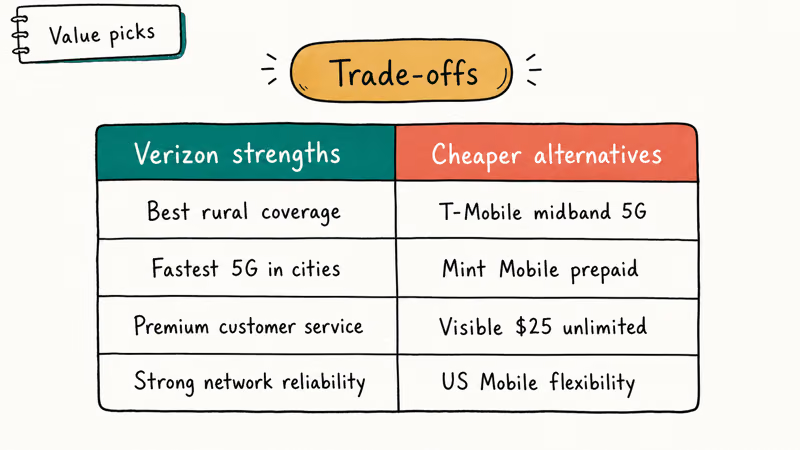
Stick with cheaper carriers if you mainly use your phone in major cities and prioritize saving money over coverage perfection. T-Mobile and AT&T offer adequate service for most urban and suburban users at lower costs.
#Bottom Line
Verizon’s high prices reflect genuine infrastructure advantages. You’re paying for the most reliable network in America, 5G speeds that beat competitors, and coverage in places others can’t reach. Whether that’s worth $20-30 extra monthly depends on how much you value network quality over savings.
#Frequently Asked Questions
Can you negotiate lower prices with Verizon?
Limited success is possible through retention departments, but Verizon rarely matches competitor prices directly. Try calling customer service and mentioning you’re considering switching for better deals.
Which Verizon plan offers the best value?
The Start Unlimited plan at $70/month provides unlimited data without premium features. It’s $15 less than Play More but lacks streaming service bundles and premium hotspot data.
Expect $15-25 monthly in taxes and government fees beyond your plan price. Rural customers often pay slightly more due to state-specific telecommunications taxes.
Is Verizon’s 5G actually faster than competitors?
Yes, Verizon’s Ultra Wideband can deliver faster speeds than standard 5G where coverage is available. However, Ultra Wideband is only available in select urban areas.
Do family plans make Verizon more affordable?
Four-line family plans drop per-line costs to around $40-45 monthly with autopay discounts. This makes Verizon competitive with other carriers for families.
Should you switch from Verizon to save money?
Switch if you primarily use your phone in major cities and don’t travel to rural areas frequently. Keep Verizon if you need reliable coverage everywhere or use your phone for business.

Best Laptop for Running LLMs in 2026: Memory Comes First
The best laptop for running LLMs is a memory purchase first. Compare MacBook unified memory against NVIDIA laptop VRAM, and see what each tier really runs.

Pixel 11 vs Pixel 10: What Changed and Who Should Upgrade
Pixel 11 vs Pixel 10: same screen and camera resolution, new Tensor G6, 25W wireless, and Gemini Intelligence. Here is who should actually upgrade.
Best Power Bank for iPad in 2026: Pro, Air, and Mini
Best power bank for iPad in 2026. Compare mAh tiers and USB-C PD wattage for iPad Pro, Air, and mini, plus airline Wh math, cables, and travel tips.
Best Power Bank With Built-In Cable: Top 2026 Picks
Best power bank with built-in cable picks for 2026. Compare single USB-C, multi-connector, and retractable laptop banks, plus airline Wh math.