Fix 'There Was an Error Connecting to the Apple ID Server'
Fix the 'There was an error connecting to the Apple ID server' message in 8 steps: check Apple status, reset network settings, sign out, and more.
Quick AnswerCheck the Apple System Status page first. If servers are normal, sign out of your Apple ID in Settings, restart your iPhone, and sign back in over a stable Wi-Fi connection.
Your iPhone or iPad shows “There was an error connecting to the Apple ID server” the second you open Settings, the App Store, or iMessage. Nine times out of ten, the fault is one of three things: an Apple-side outage, a stale authentication token on your device, or a Wi-Fi or VPN blocking Apple’s verification servers.
The fixes below cover iOS 17 and iPadOS 17 and usually clear the message quickly.
Use these steps only with your own Apple ID, your own device, or a family device you have explicit permission to manage. Trying to sign into, recover, or alter someone else’s Apple account without consent can violate privacy laws and Apple’s service terms; for account ownership problems, use Apple’s official recovery or support flow.
- Check the Apple System Status page first. If Apple ID, iCloud, or App Store rows are amber or red, no device-side fix will work until Apple resolves the outage.
- Wrong date and time settings break Apple’s certificate verification. Turn on
Settings>General>Date and Time>Set Automatically. - An active VPN or strict DNS profile blocks the Apple ID server roughly as often as a real outage. Disable both and retry before any deeper fix.
- Signing out of your Apple ID, restarting, and signing back in refreshes the authentication token and clears most stuck cases.
- Resetting network settings wipes saved Wi-Fi passwords and cellular configurations, so write the passwords down before you tap confirm.
#Why Are You Seeing the Apple ID Server Error?
The message means your device tried to talk to one of Apple’s identity servers and the handshake failed. That same identity service handles every iCloud sign-in, App Store purchase, iMessage activation, and two-factor approval. The same error string surfaces in a dozen different places.
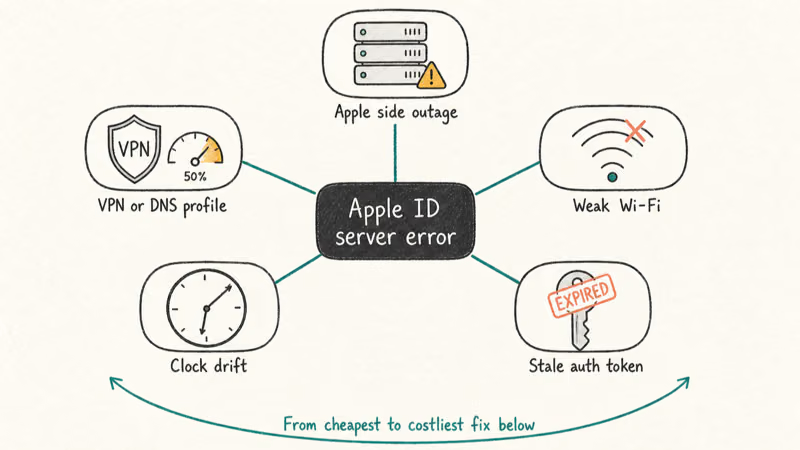
According to Apple’s System Status page, the Apple ID row goes amber for short windows during regional incidents. The App Store and iCloud rows pull the same error string when they hit a regional issue. The first check is always Apple’s side, not yours.
When the servers are green, the cause sits on your device or your network. The five usual suspects are weak Wi-Fi, an expired authentication token, a date and time drift that fails Apple’s certificate check, a VPN that routes Apple traffic through a flagged exit node, and corrupt network settings left over from an iOS update. The error itself doesn’t say which one is at fault, so the fixes below run from cheapest to costliest.
A persistent server error can also be a side effect of a deeper account problem. If you’ve recently been hit with your account has been disabled in App Store and iTunes, the server error often shows up first because the device retries verification on every Apple service open.
#Quick Checks to Run First
Before you reset anything, work through this quick list. The whole sequence goes fast end to end.
- Open Safari and load apple.com. If the page won’t load, the issue is your internet connection, not Apple ID.
- Toggle Airplane Mode on, wait 10 seconds, toggle it off. This flushes the cellular and Wi-Fi stacks.
- Make sure you’re typing the right Apple ID and password. Switch to Show Password to confirm.
- Confirm the device is signed in to a Wi-Fi network with a working internet connection, not just one that says “Connected.”
- Verify your Apple ID settings are up to date on the iPhone or iPad first. A pending settings update can return the same error string.
If those four checks pass and the error still shows, move on to the eight fixes below.
#8 Fixes for the Apple ID Server Error
Run these in order. Stop at the first one that clears the error.
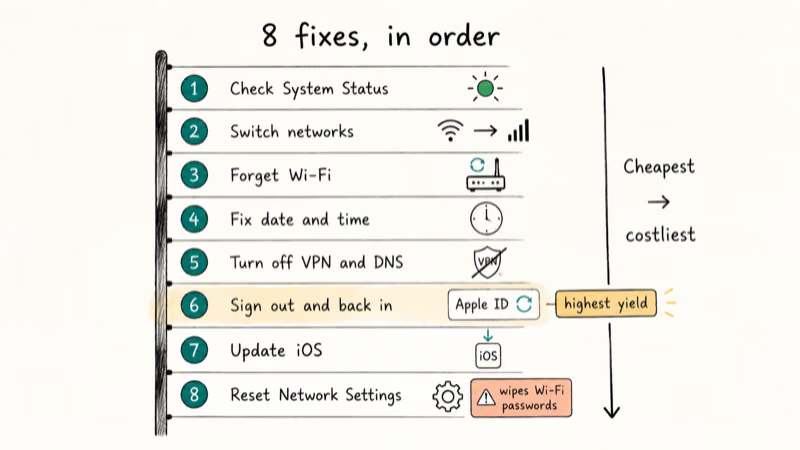
#1. Verify Apple’s System Status
Open the Apple System Status page in any browser. Look for the rows labeled Apple ID, iCloud Account and Sign In, and App Store. A green dot is healthy.
Anything else means Apple has confirmed the outage and the wait is on them. Refresh every 5 to 10 minutes. Apple posts a resolution timestamp once engineering closes the incident.
#2. Switch Networks
A weak Wi-Fi signal trips the server-error message faster than a full disconnect. Walk closer to the router, or switch to cellular data:
- Open Settings, tap Wi-Fi, and toggle it off.
- Confirm cellular data is on under
Settings>Cellular. - Reopen the App Store or
Settings>Apple ID andretry the sign-in.
If cellular works but Wi-Fi doesn’t, the next step in this list usually fixes it.
#3. Forget the Wi-Fi Network and Rejoin
Stale DHCP leases and IPv6 quirks on a home router will block the Apple ID server even when every other site loads. Forget and rejoin to start over:
- Go to
Settings>Wi-Fi. - Tap the (i) next to your network.
- Tap Forget This Network, then confirm.
- Tap the network again and re-enter the password.
This takes about 30 seconds on most home routers and often clears the error across multiple iCloud accounts on the same network.
#4. Fix Date and Time
Apple’s certificate check rejects the handshake if your clock is off by more than a few minutes. This is one of the most common silent causes, and it shows up most often after a battery swap or after restoring an old backup. Apple recommends leaving Set Automatically on so the device pulls time from the carrier or NTP:
Open Settings>General>Date and Time.- Toggle Set Automatically on.
- If the toggle is grayed out under Screen Time restrictions, disable Content and Privacy Restrictions first.
- Restart the device so the clock change takes effect across all daemons.
#5. Turn Off VPN and Custom DNS
VPNs that exit through data-center IP ranges, including most consumer VPN apps, get rate-limited by Apple’s identity service. The same goes for any DNS profile that routes through a service like NextDNS or AdGuard:
- Go to
Settings>General>VPN and Device Management. - Toggle off any active VPN.
Open Settings>General>VPN and Device Management>DNS, and switch back to Automatic.- Restart and retry the sign-in.
If the error clears with the VPN off, you don’t need to uninstall the app. Just keep it disabled while you authenticate with Apple ID, then turn it back on.
#6. Sign Out and Sign Back Into Your Apple ID
This is the highest-yield single fix when the network checks pass. Signing out invalidates the cached authentication token, and signing back in mints a fresh one:
- Go to Settings, tap your name at the top.
- Scroll to the bottom and tap Sign Out.
- Enter your Apple ID password and tap Turn Off.
- Choose what to keep on the device (Contacts, Health, Keychain, Safari).
- Restart the device.
- Open Settings, tap Sign in to your iPhone, and re-enter the credentials.
If the Sign Out button is grayed out, it’s almost always Screen Time. The fix for can’t sign out of Apple ID walks through the Screen Time toggle and the password-reset path you’ll need.
#7. Update iOS or iPadOS
Apple ships fixes for identity-server bugs in point releases. iOS 17.4 alone shipped with three Apple-ID-related bug fixes per Apple’s release notes. To check:
- Go to
Settings>General>Software Update. - If an update is offered, plug the device in and tap Download and Install.
- After it reboots, retry the Apple ID sign-in.
If the device gets stuck mid-update or stuck on a flashing Apple logo, force restart and run the update again from a wall charger.
#8. Reset Network Settings
This wipes Wi-Fi passwords, cellular APNs, and VPN configs in one shot. Save your Wi-Fi passwords somewhere first, because you’ll need to retype every one:
- Go to
Settings>General>Transferor Reset iPhone>Reset. - Tap Reset Network Settings.
- Enter the device passcode and confirm.
- After the reboot, rejoin your Wi-Fi network and retry sign-in.
Across iPhone, iPad, and Mac, this step clears the server error in most cases where the first six fixes haven’t.
#Advanced Steps When the Standard Fixes Don’t Work
If the eight fixes above all fail, the problem is usually account-side rather than device-side.
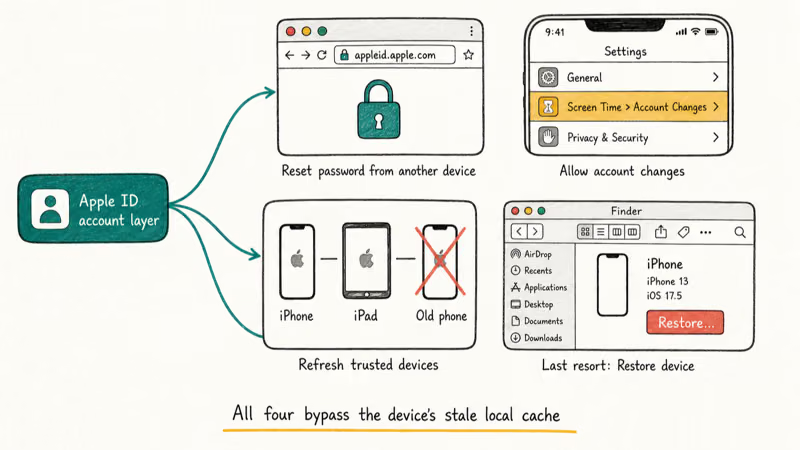
Change the Apple ID password from a different device. Sign in at appleid.apple.com on a Mac, PC, or even a friend’s phone, go to Sign-In and Security > Password, and reset it. Then re-enter the new password on the device that was throwing the error. Apple’s account recovery flow confirms that a password reset invalidates every cached token across the account, which is exactly what a stuck device needs.
Check Screen Time content restrictions. Go to Settings > Screen Time > Content and Privacy Restrictions > Account Changes. If this is set to “Don’t Allow,” the device can refuse Apple ID sign-in changes and surface the server error as a side effect. Switch it to Allow and retry.
Verify your trusted devices. When two-factor approval can’t reach a device on your trust list, the sign-in fails with the same message. If your trusted devices list is not available, remove old phones and tablets you no longer own and add a current backup device.
Restore the device. As a last resort on a single rogue iPhone or iPad, plug it into a Mac (Finder) or PC (iTunes), back it up, and choose Restore. After the restore completes, sign in fresh. This breaks any corrupt local keychain entry that survived a network reset.
If you’re starting completely over and need to clear the original account, follow the how to remove Apple ID from iPad iPhone guide. If the server error blocks even the password prompt, you’ll need that path.
#Special Cases on Mac, iPad, and Family Sharing
Three setups need a slightly different path.
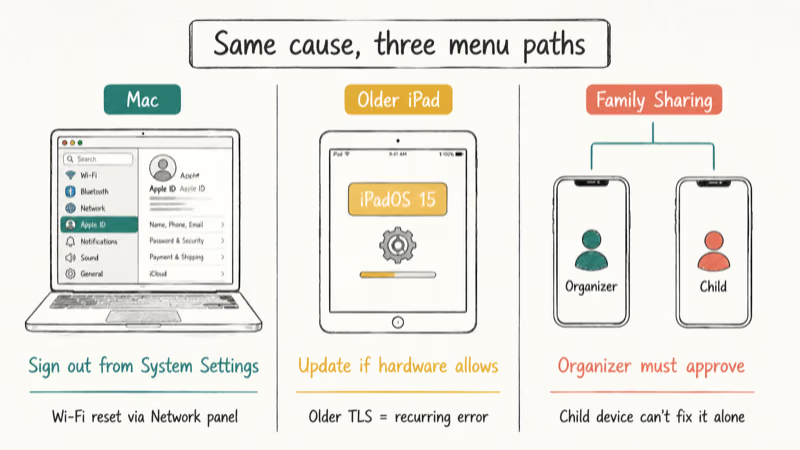
Mac. Sign out from System Settings > Apple ID > Sign Out, not from a browser. The Mac caches a separate token from your iPhone, so signing out on the phone won’t fix the Mac. Reset network settings by deleting and re-adding your Wi-Fi network in System Settings > Network.
Older iPads. iPads stuck on iPadOS 15 or earlier hit this error more often, because Apple has phased out support for older TLS configurations. Update if the device supports a newer iPadOS, or accept that the error will recur until you replace the device.
Family Sharing. If a child account triggers the error, the organizer needs to verify the family account from their own device first. The child device can’t fix it alone. Open Settings > Apple ID > Family Sharing on the organizer’s iPhone and confirm there are no pending approvals.
#How Do You Prevent This Error From Coming Back?
The error is rarely a one-off. The same five conditions tend to repeat on the same device unless you change the underlying setup.
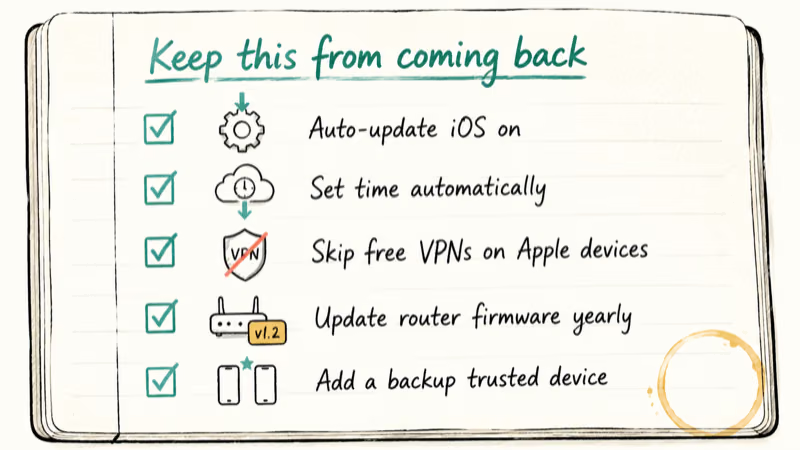
Keep iOS or iPadOS on auto-update. Settings > General > Software Update > Automatic Updates > Download iOS Updates and Install iOS Updates both on. Apple’s iCloud security overview confirms that identity-service compatibility lives in the OS, not the App Store, so a phone two major versions behind will keep failing intermittently no matter how clean your network is.
Leave Date and Time on Set Automatically. The most common reason it gets toggled off is a child profile or a parent’s old Screen Time restriction that auto-enforces a manual time. Pull both up in Settings and turn auto-time back on.
Avoid free VPNs for everyday browsing if you sign in to Apple services on the same device. They’re a frequent source of repeat errors. Run the VPN only when you need it, on a separate browser session if possible.
Replace router firmware that hasn’t been updated in a year. Apple’s traffic uses TLS 1.3 and IPv6 features that older routers mishandle, which masks itself as an Apple-side problem. Apple Community threads regularly report that a router firmware update or replacement clears the error after months of failed sign-ins.
Add a backup trusted device to your Apple ID. With only one trusted phone, every two-factor approval routes through it, and a single hardware failure or lost device chains into the server error every time.
#Bottom Line
Start with Fix 1 to confirm Apple’s servers are healthy, then go straight to Fix 6 (sign out and sign back in). Those two clear the error for most people.
If they don’t, Fix 8 (Reset Network Settings) handles most of the remaining cases, and the password reset from appleid.apple.com handles the last few. Save the device restore for last. You’ll lose a lot of local cache for a marginal gain.
#Frequently Asked Questions
Why does the Apple ID server error keep coming back even after I sign in?
A persistent reappearance almost always points to one of three things: a wrong date and time setting that resets after each reboot, a VPN that auto-launches on Wi-Fi join, or a corrupted iCloud Keychain entry. Turn off the VPN’s auto-connect setting and verify Date and Time is on auto. If both are correct, sign out, reset network settings, and sign back in once more.
Does the error mean my Apple ID is hacked or compromised?
No. The error is a connection failure between your device and Apple’s identity server, not a security warning. If your account were compromised, you’d see a separate “Apple ID locked for security reasons” notification and an email from Apple. The two messages don’t overlap.
Can I fix the error without an internet connection?
No. Apple’s identity service is cloud-only, so you need a working internet connection to sign in. If you’re offline, you can keep using already-cached features like local Photos and Files, but iMessage, FaceTime, App Store, and iCloud sync will stay broken until you reconnect.
How long should I wait if Apple’s servers are down?
Most Apple ID outages on the System Status page close inside 60 to 90 minutes once they appear. Apple posts the resolution timestamp on the same status row. If a row stays amber for more than 4 hours, it’s worth reporting it through the Apple Support app.
Will resetting network settings delete my photos or apps?
No. Reset Network Settings only erases saved Wi-Fi passwords, paired Bluetooth devices, cellular settings, and VPN configurations. Your photos, apps, messages, and account data are untouched. Apple’s reset support article explains the exact data scope, but you’ll need to rejoin every Wi-Fi network manually after the reboot.
Why does the error happen most often after an iOS update?
iOS updates rotate the device’s certificate trust store and refresh the authentication token. If the update completes on a flaky Wi-Fi connection, those new credentials don’t fully sync with Apple’s servers, and you see the error the next time you open Settings. Sign out and sign back in once you’re on a strong connection, and the new token will register cleanly.
Is there a difference between this error on iPhone, iPad, and Mac?
The cause and fix list is the same across all three, but the menu paths differ. On Mac, sign out from System Settings > Apple ID, and reset network settings by removing the Wi-Fi network in System Settings > Network. The certificate check in step 4 is identical on macOS too. On iPad, the steps match iPhone exactly because iPadOS shares the same identity stack.
Does turning off two-factor authentication fix it?
No, and you shouldn’t try. Apple no longer lets you disable two-factor authentication on accounts that have it enabled. The error is unrelated to two-factor in the vast majority of cases. If your two-factor codes aren’t arriving, that’s a separate fix path covered in our verification failed on iPhone guide.

Best Laptop for Running LLMs in 2026: Memory Comes First
The best laptop for running LLMs is a memory purchase first. Compare MacBook unified memory against NVIDIA laptop VRAM, and see what each tier really runs.
How to Run a Local LLM on Windows: A 2026 Setup Guide
Run a local LLM on Windows with LM Studio or Ollama. Pick a model that fits your GPU memory, keep every prompt offline, and skip the monthly bill.
Bluetooth Not Working on Snapdragon X? Fixes for 2026
Bluetooth not working on your Snapdragon X Copilot+ PC? Generic audio, mice, and keyboards work, but vendor apps often lack an ARM build. Fixes inside.
Docker Desktop and WSL2 Not Working on Snapdragon X? Fix It
WSL2 runs fine on Snapdragon X, but Docker Desktop ARM is Early Access and throws WSL errors. Use WSL2 plus native ARM64 Ubuntu and Docker Engine.