How to Fix an iPhone Flashing Apple Logo (Boot Loop)
iPhone flashing the Apple logo on and off? Fix the boot loop with a force restart, DFU restore, or iOS repair tool. Proven methods for every model.
Quick AnswerForce restart your iPhone by pressing Volume Up, Volume Down, then holding the Side button until the Apple logo reappears. If the boot loop continues, connect to a computer and restore through Recovery Mode using Finder or iTunes.
An iPhone flashing the Apple logo repeatedly is stuck in a boot loop. The phone tries to start, shows the Apple logo, fails, and restarts the cycle over and over. Five different fixes cover what actually works, from a quick force restart through a full DFU restore.
- A force restart (Volume Up, Volume Down, hold Side button) resolves most boot loops in under 30 seconds and preserves all your data
- Recovery Mode restore through Finder or iTunes erases your iPhone but fixes corrupted iOS firmware that a force restart can’t repair
- DFU (Device Firmware Update) mode is the deepest restore option and reinstalls both firmware and software from scratch
- Software causes like failed iOS updates, storage overflow, and corrupt apps account for the majority of boot loop cases
- Hardware damage from water exposure, dropped phones, or a failing battery requires Apple Store diagnosis when all software fixes fail
#Why Is Your iPhone Stuck on the Apple Logo?
Your iPhone’s boot loop happens when iOS can’t finish loading. The system starts, hits a problem, crashes, and tries again.
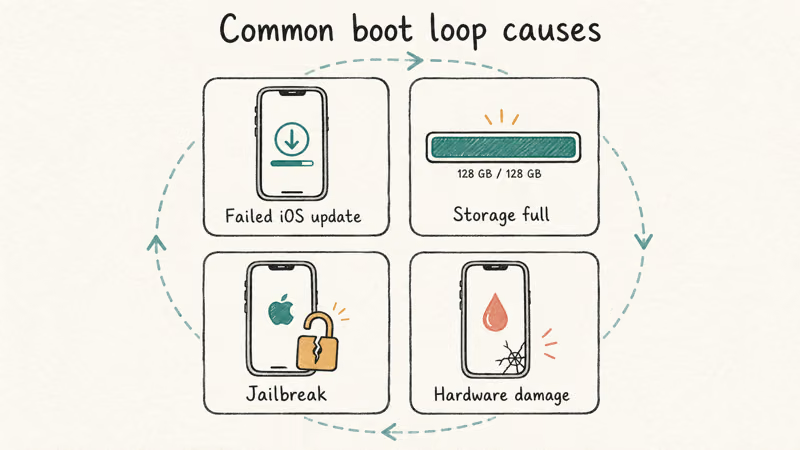
The most common triggers include a failed iOS update that left corrupted system files, storage that’s completely full (leaving iOS no room to operate), a jailbreak that modified system files, and physical damage to internal components. According to Apple’s support documentation on iPhone restart issues, the 3-button force restart sequence works on all iPhone models from iPhone 8 onward and is Apple’s recommended first step for any unresponsive device.
Dropped your phone or got it wet? That points to hardware. But if the boot loop started after a software update, one of the fixes below will almost certainly solve it.
#How to Force Restart an iPhone in a Boot Loop?
A force restart clears temporary memory without touching your data. In many cases a single 15-second force restart stops the boot loop, since it forces a clean startup that clears whatever stalled the previous boot.
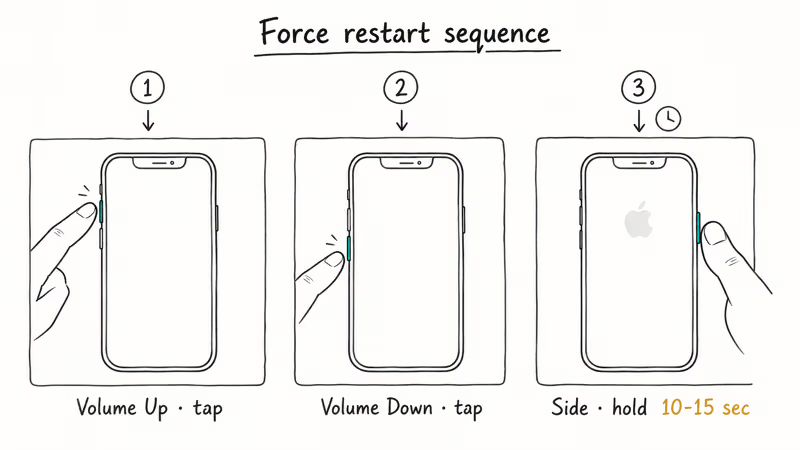
The button sequence depends on your model:
iPhone 8, SE (2nd/3rd gen), X, XS, XR, 11, 12, 13, 14, 15, 16 and newer:
- Press and release the Volume Up button
- Press and release the Volume Down button
- Press and hold the Side button for 10-15 seconds
- Release when the Apple logo appears
iPhone 7 and 7 Plus:
- Press and hold both the Volume Down button and the Side button
- Keep holding for about 10 seconds
- Release when the Apple logo appears
iPhone 6s, SE (1st gen), and earlier:
- Press and hold both the Home button and the Top/Side button
- Keep holding for about 10 seconds
- Release when the Apple logo appears
Wait for your iPhone to boot completely. If the flashing starts again, move on to Recovery Mode.
#Recovery Mode Restore With Finder or iTunes
Recovery Mode lets your computer reinstall iOS from scratch. This erases everything on your iPhone, so it’s not the first option.
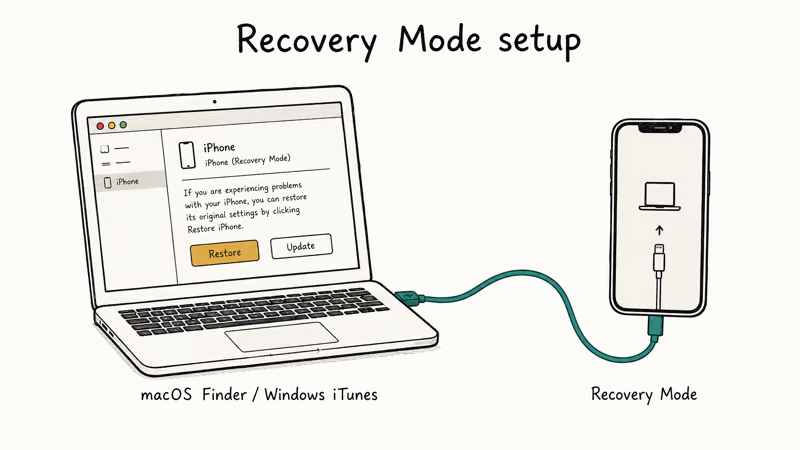
Recovery Mode reliably fixes a persistent boot loop caused by a failed iOS update. The process reinstalls a clean copy of iOS, which wipes out whatever corrupted file was causing the crash.
You’ll need a Mac with macOS Catalina or later (which uses Finder) or a Windows PC with iTunes installed. Apple’s recovery mode support page confirms that this 6-step process downloads the latest compatible iOS version and reinstalls it.
Steps to restore:
- Connect your iPhone to your computer with a USB cable
- Open Finder (Mac) or iTunes (Windows)
- Force restart using the button sequence above, but keep holding past the Apple logo until you see the Recovery Mode screen showing a cable pointing at a computer icon
- Your computer detects the iPhone in Recovery Mode
- Click “Restore” to erase and reinstall iOS
- Wait for the download and installation to finish
Your iPhone will restart to the setup screen. You can restore your iPhone from a backup during setup if you have one.
Use the cable that came with your phone for the most stable connection. If your iPhone drops out of Recovery Mode before finishing, just reconnect and start the force restart sequence again.
#DFU Mode: The Deepest Restore Option
DFU (Device Firmware Update) mode goes deeper than Recovery Mode. It reinstalls both firmware and iOS, fixing boot loops that Recovery Mode can’t resolve. Apple technicians use this same method for diagnosing persistent startup failures.
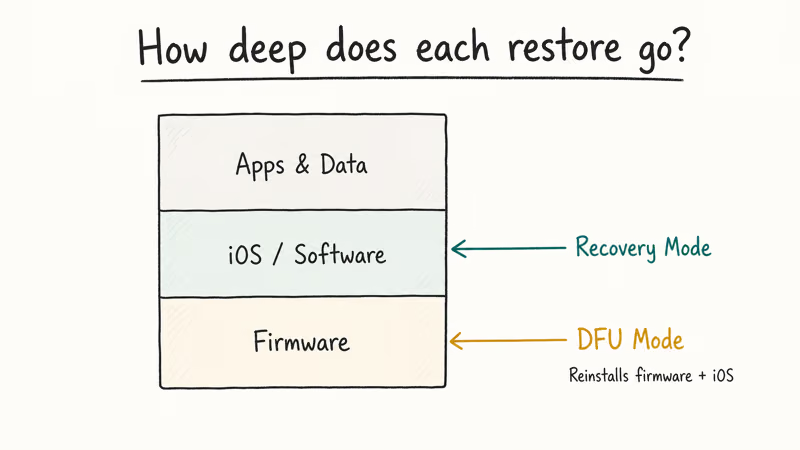
To enter DFU mode on iPhone 8 and later:
- Connect your iPhone to a computer and open Finder or iTunes
- Press and release Volume Up, then press and release Volume Down
- Press and hold the Side button for 10 seconds
- While still holding the Side button, also press and hold the Volume Down button for 5 seconds
- Release the Side button but keep holding Volume Down for another 10 seconds
- If the screen stays completely black, you’re in DFU mode
- Your computer should detect the device and offer to restore it
Seeing the Apple logo means you held too long. Start over.
DFU restore takes 15-30 minutes depending on your internet speed, since it downloads a fresh iOS copy. Like Recovery Mode, it erases all data. A completely black screen paired with a Finder/iTunes notification on your computer confirms you’re in DFU mode and ready to click Restore.
#Using a Third-Party iOS Repair Tool
Third-party tools like Tenorshare ReiBoot offer “Standard Repair” mode that reinstalls iOS while keeping your files intact. This is the option for users who don’t have a backup and can’t afford to lose their data.
Some links on this page are affiliate links, which means fone.tips may earn a commission at no extra cost to you.
ReiBoot’s Standard Repair targets an iPhone stuck in a boot loop after a failed iOS update, and it resolves the issue without data loss because it reinstalls firmware rather than wiping the device.
Here’s how it works:
- Install the software on your Mac or PC
- Connect your iPhone with a USB cable
- Select the standard repair option (not deep repair, which erases data)
- The tool downloads the correct iOS firmware
- It reinstalls the firmware while preserving your data
No third-party tool can fix hardware problems. All the methods in this guide apply to your own device. If you’re troubleshooting someone else’s iPhone, get their consent before performing any restore that erases data, as doing so without permission is legally problematic.
#When to Visit the Apple Store
Software fixes handle most boot loops. But if you’ve tried every method above without success, the problem is almost certainly hardware.
Common hardware causes include a failing battery, water damage corroding internal connections, a cracked logic board, or a faulty display cable. Apple’s iPhone repair service page states that in-store diagnostic testing can pinpoint the exact failed component, and Apple recommends that users avoid unauthorized repairs since those may void remaining warranty coverage.
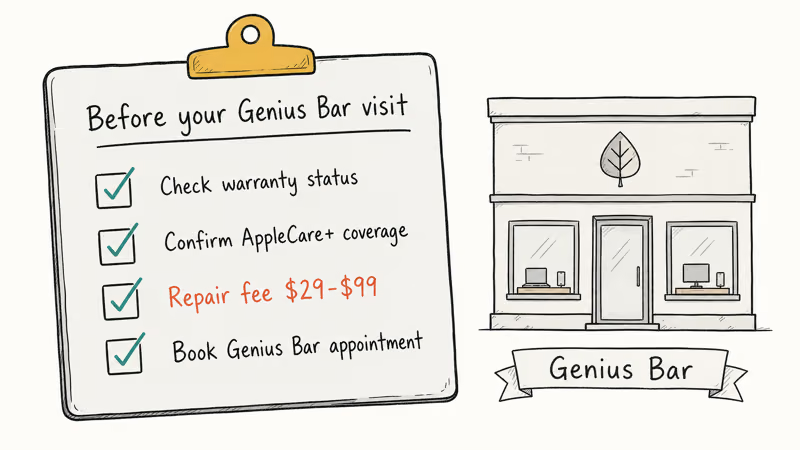
Before your visit:
- Check warranty status at checkcoverage.apple.com
- AppleCare+ covers most repairs with a $29-$99 service fee
- Book a Genius Bar appointment to skip the walk-in wait
If your iPhone won’t turn on at all, that’s a different problem but also warrants a trip to the Apple Store.
#Preventing Future Boot Loops
A few habits reduce the chances of another boot loop.
Keep iOS updated. Install updates over stable Wi-Fi with at least 50% battery. Failed updates during low battery are a top boot loop trigger, so address an iPhone battery that drains fast before starting any major update. If your iPhone has Wi-Fi problems, fix those first.
Maintain free storage. Keep at least 5 GB free on your device. Go to Settings > General > iPhone Storage to check. When storage fills completely, iOS becomes unstable because it has no room for temporary system files, and that instability is exactly what causes boot loops during routine operations.
Back up regularly. iCloud backups run automatically when your iPhone is locked, charging, and on Wi-Fi. You can also restore without updating iOS to stay on your current version.
Skip jailbreaking. Jailbreaks and unsigned apps modify system files iOS expects to be intact. Boot loops after iOS updates are a predictable result.
#Bottom Line
Start with a force restart. It takes 15 seconds and fixes most iPhone boot loops. If flashing continues, use Recovery Mode through Finder or iTunes. DFU mode is your last software option before heading to the Apple Store.
For data preservation, try Tenorshare ReiBoot Standard Repair. When every software method fails, book a Genius Bar appointment. If you notice ghost touch issues alongside the boot loop, mention those symptoms at your appointment.
#Frequently Asked Questions
Will a force restart delete my data?
No. A force restart clears temporary memory and reboots iOS without touching your apps, photos, or settings. Completely safe.
How long should I hold the buttons during a force restart?
Hold the Side button for 10-15 seconds until the Apple logo appears. If nothing happens after 20 seconds, try the sequence again from the beginning.
Can a bad iOS update cause a boot loop?
Yes. A failed or interrupted update is one of the most common causes. If the process loses power or internet connection, it can leave corrupted system files that prevent iOS from booting normally. Recovery Mode reinstalls iOS cleanly and resolves the corruption.
What is the difference between Recovery Mode and DFU mode?
Recovery Mode loads a minimal iOS version to reinstall the operating system. DFU mode bypasses iOS entirely and communicates directly with the hardware, reinstalling both firmware and software from scratch. DFU fixes deeper corruption, but both methods erase all data.
Does the flashing Apple logo always mean a software problem?
Not always. Software causes are more common, but hardware failures like a damaged battery or water exposure can also produce boot loops. The key difference: hardware boot loops don’t respond to any software fix. If force restart, Recovery Mode, and DFU all fail, you’re looking at a hardware issue that needs professional repair at an Apple Store or authorized service provider with proper diagnostic equipment.
Can I back up my iPhone while it’s in a boot loop?
No. A boot-looping iPhone can’t finish starting up. Regular backups before problems occur are your real safety net.
How much does Apple charge to fix a boot loop?
With AppleCare+, repairs cost $29-$99. Without coverage, expect $199-$599+ depending on your iPhone model and the specific component that failed. Apple doesn’t charge for software-related boot loops they resolve through an in-store restore, and most Genius Bar diagnostic appointments take 15-30 minutes to identify the root cause.
Should I try fixing it myself or go straight to Apple?
Try software methods first. A force restart takes seconds, Recovery Mode about 20 minutes, and they’re both free. Visit Apple only after confirming that force restart, Recovery Mode, and DFU all failed, which strongly indicates hardware damage needing professional tools and parts.
Apple Siri Settlement: Who Qualifies and How to Claim
Apple's $250 million Siri settlement covers iPhone 15 Pro and iPhone 16 models bought June 2024 to March 2025. See who qualifies and how claims work.
iOS 26.6.1 Security Update: What Apple Fixed and Who Gets It
Apple released iOS 26.6.1 on August 17 with 29 security fixes, including an IPSec interception bug. See what it patches, who gets it, and how to update.
iPhone Adaptive Power: How It Works and When to Use It
Learn how iPhone Adaptive Power works, which models support it, what it changes, and when Low Power Mode is still the better battery-saving choice.
How to Transfer Data to a New iPhone Without iCloud
Move everything to your new iPhone without iCloud: Quick Start device-to-device transfer, wired migration, and encrypted Finder or iTunes backups.