How to Update Apple ID Settings on Your iPhone or iPad
Update Apple ID settings on iPhone or iPad: change password, swap trusted phone, manage 2FA, add a recovery contact, clear stuck Update prompts.
Quick AnswerOpen Settings, tap your name, then use Sign-In and Security to change your password, trusted phone number, two-factor authentication, recovery contact, or recovery key on your own Apple ID. Re-enter your password if a stuck Update Apple ID Settings banner appears.
How to update Apple ID settings on your iPhone or iPad comes up in two situations. Routine maintenance covers your password, trusted phone, and recovery contact. Stuck “Update Apple ID Settings” banners need a separate fix.
This guide walks through both on your own iPhone or iPad signed into your account, using Settings > Apple ID and appleid.apple.com. Every step follows the current iOS and iPadOS layout.
- Almost every Apple ID setting lives under Settings > [Your Name] > Sign-In and Security, including password, trusted phone, two-factor authentication, recovery contact, and recovery key.
- A stuck “Update Apple ID Settings” banner usually clears after you tap it, choose Continue, and re-enter your Apple ID password; sign out and back in if it returns after three attempts.
- Rotate your Apple ID password, review trusted devices, and confirm your recovery contact every six months because the Apple ID controls iCloud, App Store, and Find My on every signed-in device.
- Two-factor authentication is mandatory for new Apple IDs and protects you against unauthorized access; never disable it on the only account on your iPhone or iPad.
- A recovery key or recovery contact restores access if you lose your trusted devices, and Apple does not store either value, so write the 28-character key down before you leave the setup screen.
#Where Are the Apple ID Settings on iPhone and iPad?
All Apple ID settings on your own iPhone or iPad live under one menu. Open Settings, then tap your name at the top of the list. The screen that opens shows your name, profile photo, email, and rows for Personal Information, Sign-In and Security, Payment and Shipping, iCloud, Media and Purchases, Family Sharing, Find My, and the list of devices signed in with the same Apple ID. iPadOS uses the same layout, only wider.
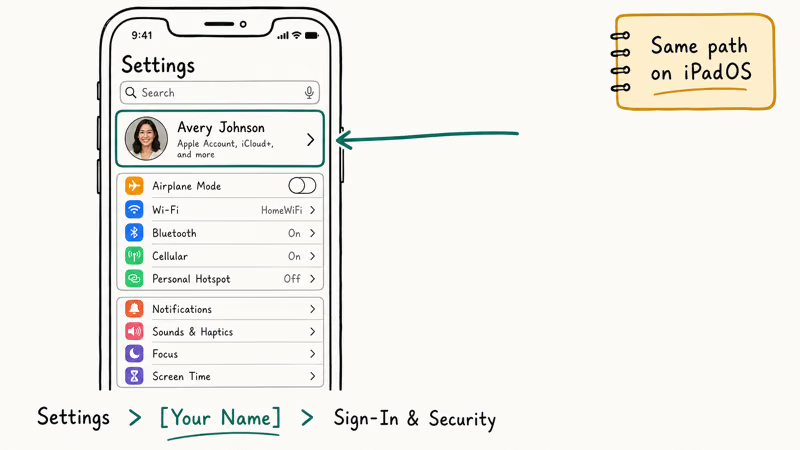
Sign-In and Security is the row most people need.
It holds your password, trusted phone numbers, two-factor authentication toggle, account recovery options, and the legacy contact for digital inheritance. Personal Information holds your name, birthday, and the language Apple uses for receipts. iCloud controls which apps sync, while Find My controls activation lock and the network that helps locate a missing device.
You can also manage every Apple ID setting from a browser at appleid.apple.com, and Apple’s Apple ID overview page confirms that changes made on the web sync to all signed-in devices within minutes. Use the browser for bulk edits like reviewing every signed-in device or removing an old MacBook from the trusted list.
#How Do You Change Your Apple ID Password on iPhone or iPad?
The password change flow on your own iPhone or iPad takes about 90 seconds when you remember the current password and slightly longer if you use a recovery key. The path is Settings > [Your Name] > Sign-In and Security > Change Password. iOS asks for your iPhone passcode first because the Secure Enclave protects this screen. After you enter the passcode, type the new password twice and tap Change.
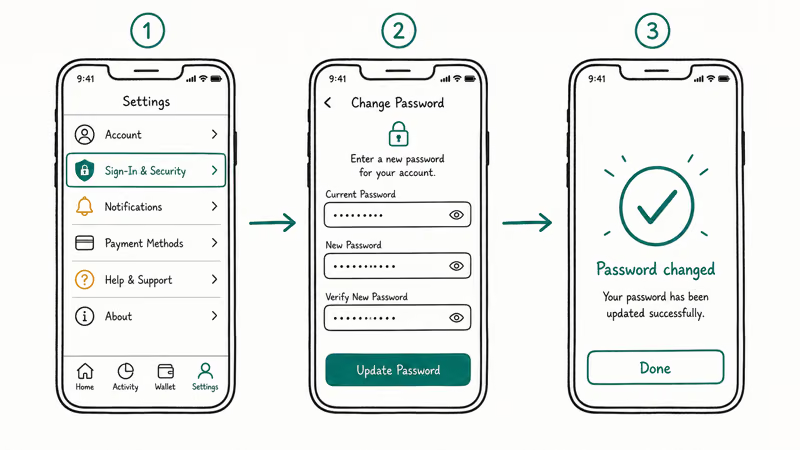
Apple Support article 102560 states that the new password needs at least eight characters, one uppercase letter, one lowercase letter, and one number, and that previously used passwords are rejected for security reasons. Reusing a recent password gets rejected with “Password used too recently.”
Use a password manager. Generate something unique you’ve never used elsewhere.
After the change, every signed-in device prompts you for the new password the next time it talks to iCloud, the App Store, or iMessage. You may also see the “Update Apple ID Settings” banner we cover below until each device verifies the new credential. If you’ve forgotten the current password, tap Forgot Password on the same screen and complete the two-factor flow instead.
#Reset the Password From Your iPhone Without Knowing the Old One
Can’t remember the password? Go to Settings > [Your Name] > Sign-In and Security > Change Password and tap Forgot Password. iOS uses your device passcode plus a trusted phone number to prove your identity, then it lets you set a new password without sending an email link. This is the fastest path for your own account because nothing else needs to be installed.
#Use appleid.apple.com From a Computer
Sign in at appleid.apple.com and pick Sign-In and Security from the sidebar. Click Password, enter the current value, and confirm the new one. The browser path is useful when your iPhone or iPad is missing or wiped, and Apple’s documentation confirms that the recovery key, trusted device prompt, or trusted phone all work as the second factor here.
#How to Change the Trusted Phone Number and Email on Your Apple ID
A trusted phone receives the six-digit codes Apple sends when you sign in on a new device, so the number on file must always be one you control. Open Settings > [Your Name] > Sign-In and Security > Trusted Phone Numbers. Tap the existing entry to remove it, or tap Add a Trusted Phone Number to register an extra one. iOS sends a verification code to the new number before it activates.
Apple’s support article 102251 recommends that you keep at least two trusted phone numbers in case the primary line is lost or ported. Apple confirms that the secondary number can be a family member’s phone, a household landline tied to VoIP, or a second SIM in a dual-SIM iPhone. After you add a backup number, the verification code usually arrives within a few seconds.
To change your Apple ID email, open Settings > [Your Name] > Sign-In and Security > Email and Phone Numbers > Edit. Remove the alias you want to drop and add the new address. If you can’t add a new email because the screen says it’s already linked to another Apple ID, see Apple ID verification for the resolver flow. Removing a phone or email also clears it from Find My, iMessage, and FaceTime, so update those sections together.
#How to Manage Two-Factor Authentication on Your Apple ID
Two-factor authentication on your own Apple ID protects every iCloud, App Store, and Find My transaction. Apple support article 102660 states that 2FA is on by default for every Apple ID created since 2019 and can’t be turned off on those accounts after a two-week grace window. The toggle is visible at Settings > [Your Name] > Sign-In and Security > Two-Factor Authentication, but on modern accounts it shows “On” without an off switch.
On older accounts that still allow the toggle, switching 2FA off is a serious move. Federal computer-fraud law in the United States (the Computer Fraud and Abuse Act) treats unauthorized access to an iCloud account as a federal offense. A strong second factor is the cheapest legal deterrent. Leave 2FA on unless you’re actively replacing it with hardware security keys, and never disable it on a phone you share with others.
Short version: don’t turn 2FA off.
If you stop receiving verification codes, jump to the trusted devices list is not available walkthrough. A common cause is a swapped SIM that broke the trusted phone number, which the same Settings menu lets you fix in under a minute.
#Add a Hardware Security Key
iPhone and iPad users on iOS 16.3 or later can register up to six FIDO2 security keys under Settings > [Your Name] > Sign-In and Security > Security Keys. Insert or tap the key when prompted, give it a label like “office YubiKey,” and confirm. Once enabled, six-digit codes stop working and only a physical key can complete a new device sign-in. Keep two keys in different physical locations so a lost key never locks you out.
#How to Add a Recovery Contact and Recovery Key
A recovery contact is a person you trust who can read your one-time recovery code if you ever lose access to every signed-in device. Open Settings > [Your Name] > Sign-In and Security > Account Recovery > Add Recovery Contact and pick someone from Family Sharing or your iCloud contacts. They receive an invitation and the iOS prompt tells them what their role is. Apple’s article 102241 confirms that the contact never sees your data, only the recovery code.
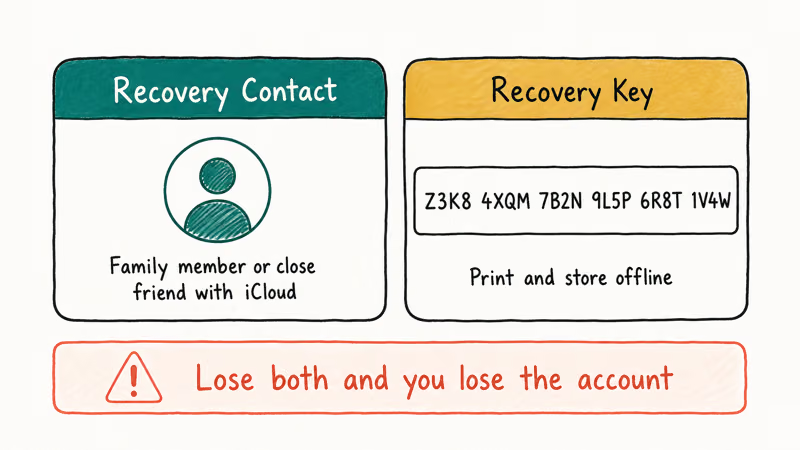
A recovery key is a 28-character alphanumeric string that bypasses every other check. From the same menu, tap Recovery Key, turn the toggle on, and write the key down on paper before you leave the screen. Apple does not store this key, so losing it can permanently lock the account. The safest workflow is to generate the key, write it on paper, and store it somewhere secure like a fireproof envelope, which is what Apple’s 102254 article recommends.
After you add either option, the Sign-In and Security screen shows a green checkmark next to Account Recovery. Apple recommends pairing a recovery contact with a recovery key so you always have a second option if one fails, which is sound advice given that relying on a single method leaves no fallback.
#How to Clear a Stuck “Update Apple ID Settings” Notification
The red badge on your Settings app usually means the system needs you to verify Apple ID credentials, often after a password change, a new device sign-in, or a server outage. On your own iPhone or iPad, open Settings, tap the Update Apple ID Settings banner near the top, then tap Continue and re-enter your Apple ID password. The banner clears within seconds when the password matches the current one.
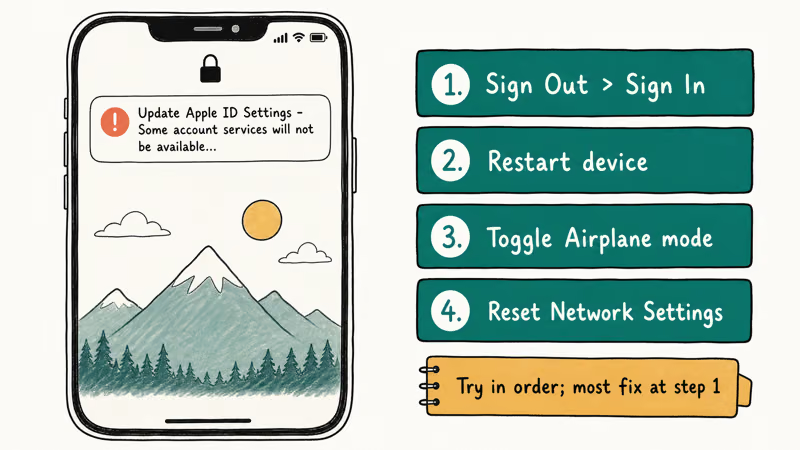
If the badge keeps reappearing, work through the fallback steps in this order. First, check Apple’s System Status page for an active iCloud or Apple ID outage that blocks verification. Second, confirm Settings > [Your Name] shows the correct Apple ID. It’s a common mistake to sign back into a personal account on a work-managed iPhone.
If those two checks don’t help, sign out completely with Settings > [Your Name] > Sign Out. Enable Keep a Copy for Contacts, Calendars, and Keychain so local data stays on the device. Then sign back in.
A reboot between sign-out and sign-in clears the verification queue, and the stuck on updating iCloud settings walkthrough has the longer version of this fix when the prompt freezes. If you also see “error connecting to the Apple ID server”, the root cause is usually a date or Wi-Fi issue that the linked article addresses in three steps.
#What If You Can’t Sign Out?
When the Sign Out button is grayed out or the password prompt loops, the device is usually under Screen Time restrictions, a Mobile Device Management profile, or Apple ID grayed out state after too many failed attempts. The sign-out blocked walkthrough covers removing Screen Time blocks and clearing the MDM profile when you own the device. Don’t use a third-party bypass tool on someone else’s iPhone, as that crosses the legal line in most jurisdictions.
#How to Update Apple ID Settings Across All Your Apple Devices
Apple ID changes propagate across every signed-in device automatically, but the timing depends on the network and which feature changed. Password changes push within five minutes; email and phone updates take longer because each device verifies the new value the next time it talks to iCloud. There’s often a noticeable gap between changing a password on one device and seeing the sign-in prompt appear on another over the same Wi-Fi network.
To force a sync, open Settings > [Your Name] > [Device Name] for each Apple device and confirm the device is still listed. If a device you no longer own shows up, tap it and pick Remove From Account. This signs that device out and cuts its access to iCloud, Apple Pay, and Find My.
Removing an old device is a privacy hygiene step rather than a legal requirement. It shrinks the surface area an attacker could use to fish for verification codes.
For deeper account control, jump to how to remove Apple ID from iPad or iPhone when you are passing a device along, or change or delete iCloud account from iPhone when you are switching to a different Apple ID. Both flows assume you are working on your own iPhone or iPad signed into your account.
#Bottom Line
Update Apple ID settings on your own iPhone or iPad twice a year: rotate the password every six months, confirm at least two trusted phone numbers, verify the recovery contact still answers their phone, and generate a fresh recovery key after every move or job change. The whole pass takes under 15 minutes from Settings > [Your Name] > Sign-In and Security. If you only do one thing today, write down a recovery key and store it offline.
iPhone tips & tricks
#Frequently Asked Questions
How long does the Update Apple ID Settings notification take to clear?
Tapping the banner and entering your password clears it within five to ten seconds on a healthy connection. If the prompt sticks for more than a minute or reappears after restart, sign out of iCloud and back in to flush the queue.
Does updating Apple ID settings on iPhone change them on iPad too?
Yes. Apple ID is account-level, so a password change, new trusted phone, or updated recovery contact propagates to every device signed in with the same Apple ID, usually within 15 minutes over Wi-Fi.
Can I disable two-factor authentication after I turn it on?
Apple support page 102660 confirms that 2FA can’t be disabled on Apple IDs created after 2019. On older accounts the toggle only works for two weeks after activation. After that grace window, the toggle disappears and 2FA stays on permanently.
What happens if I lose my trusted phone and recovery key?
You can still recover with the help of a recovery contact, or by starting an account recovery request that takes several days while Apple verifies your identity. This is exactly why it’s worth keeping both a recovery contact and a written recovery key in two different locations.
Why does my Apple ID say Update Settings after every iOS update?
Major iOS updates sometimes refresh the security baseline and request a fresh credential check. Re-enter your password once when the banner appears and the request won’t repeat for that update cycle.
Is it safe to change my Apple ID email to one you don’t own?
No, never use an email address you don’t control. The new address has to verify with a six-digit code Apple emails to it, and an attacker who controls the inbox could lock you out. Stick to an inbox you own and check daily.
How do I find which devices are signed in with my Apple ID?
Open Settings, tap your name, and scroll to the device list near the bottom. Tap any device to see the model, iOS version, serial number, and the option to remove it. Removing an old device immediately signs it out of iCloud and Find My.
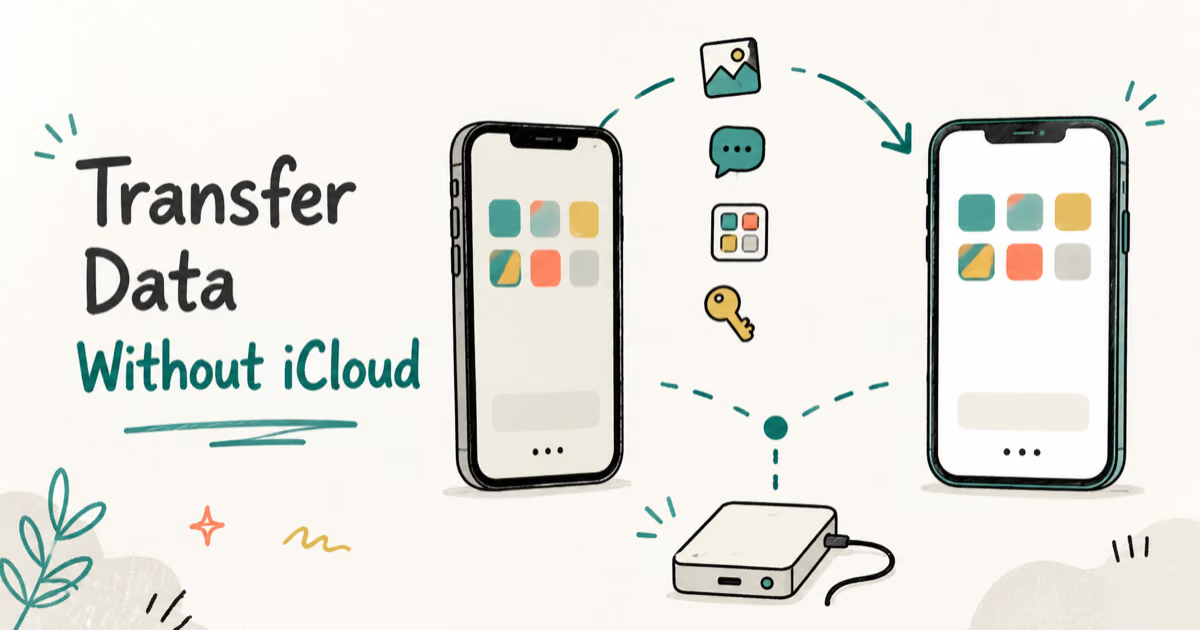
How to Transfer Data to a New iPhone Without iCloud
Move everything to your new iPhone without iCloud: Quick Start device-to-device transfer, wired migration, and encrypted Finder or iTunes backups.
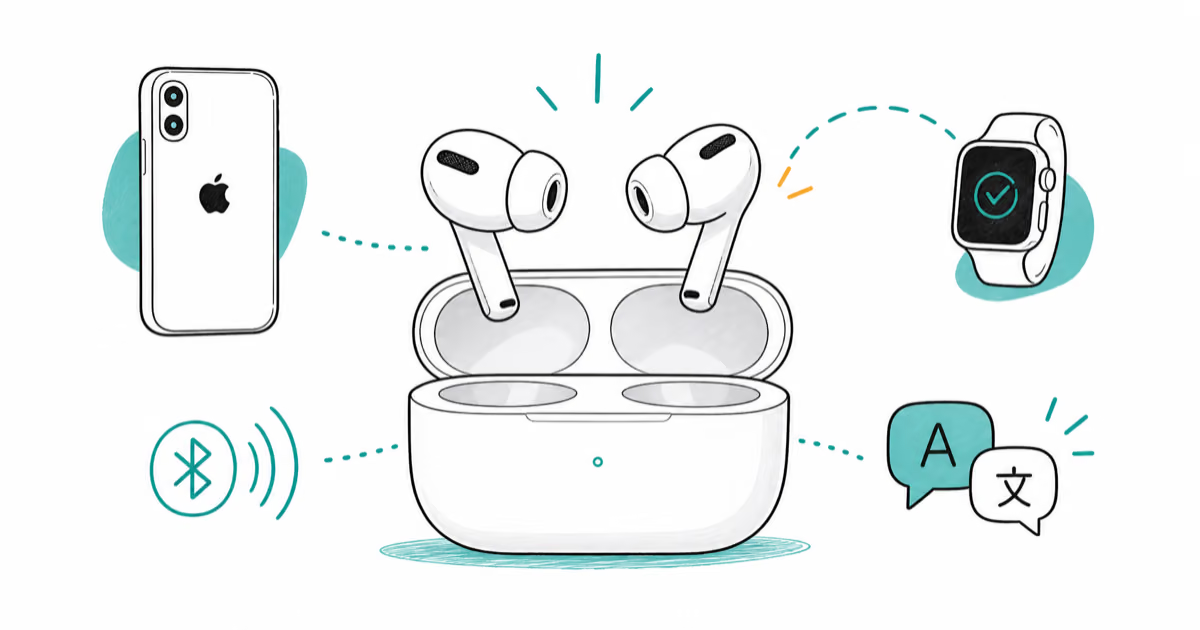
Best Wireless Earbuds for iPhone in 2026: USB-C Era Picks
Best wireless earbuds for iPhone in 2026, comparing AirPods Pro 3, Sony WF-1000XM6, Bose QC Ultra, and Anker Liberty 4 NC on the USB-C iPhone lineup.
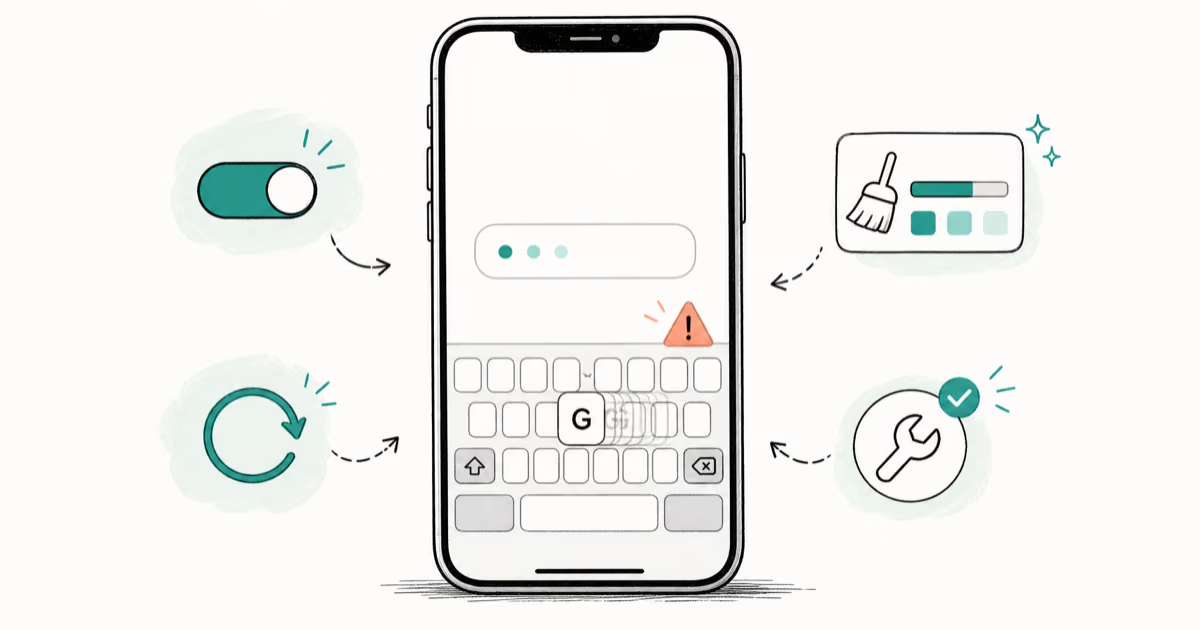
iPhone Keyboard Lag? 7 Proven Fixes for iOS 26 (2026)
Fix iPhone keyboard lag with 7 proven fixes for iOS 26. Covers restart, storage, predictive text, third-party keyboards, and dictionary reset.
How to Block Porn on an iPhone: A Guide for Parents
Learn how to block porn on iPhone using Screen Time, DNS filtering, and safe browsers. Step-by-step guide for parents to protect kids' devices.