Fix Samsung Pay Not Working: 5 Working Methods (2026)
Samsung Pay won't work? Toggle NFC, clear cache, update from Galaxy Store, re-add cards. Five fixes that work on Galaxy S, A, and Note phones.
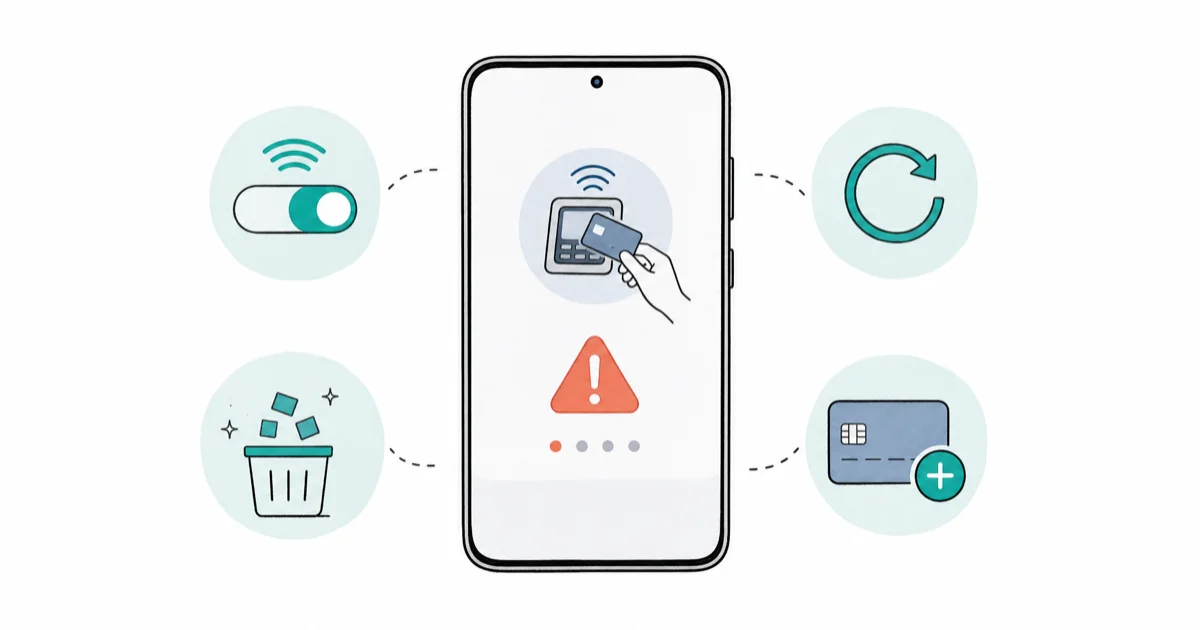
Quick AnswerRestart Samsung Pay, toggle NFC on in Settings, clear the app cache from Storage, and re-add your cards. These four fixes resolve payment errors on most Galaxy devices in under five minutes.
Samsung Pay won’t process your transaction or keeps crashing at the checkout. You’ve already restarted the phone. Nothing changes. The five fixes below work on Galaxy S, Galaxy A, and Galaxy Note devices running Android 12 through 15, and they’re the same checks Samsung’s own support flow walks you through before booking a hardware repair.
Use these steps only on your own device or a phone you have explicit permission to repair. Don’t use payment-app troubleshooting to access another person’s cards, banking sessions, or Samsung account.
- NFC must be on at
Settings>Connectionsbefore any tap will go through - Clearing the Samsung Pay cache from
Settings>Apps>Samsung Pay>Storagerebuilds the payment session without deleting your saved cards or biometric setup - Removing and re-adding a card forces a fresh tokenized credential request to your bank, which is the standard fix for “card no longer valid” rejections that show a green checkmark in the app but fail at the contactless terminal
- Samsung Pay supports up to 10 cards per device on Galaxy S, Note, Z Fold, Z Flip, and select A-series phones (A25 and newer in the US)
- An outdated Galaxy Store build is a common silent failure cause because newer NFC terminals expect the updated compatibility tables and security patches
#What Causes Samsung Pay to Stop Working?
Samsung Pay needs three things at once: an internet connection to register cards, NFC active for the contactless tap, and a supported device with a valid bank token. When any single piece breaks, the app surfaces vague errors like “Transaction declined,” “Samsung Pay not responding,” or “Can’t register card.”
Common causes include an outdated app build, NFC being off, a stale payment token, unsupported regional hardware, corrupted cache data, and card-token expiration. Those are the same buckets behind many reports of the app freezing at checkout.
According to Samsung’s Samsung Pay support answer page, corrupted cache data is the leading cause of payment failures even when the card itself works on other contactless readers.
#Why Does Samsung Pay Keep Crashing?
App crashes during checkout almost always trace back to a stale payment session. Samsung Pay generates a short-lived token each time you open the app, and if the token times out without being refreshed, the next swipe attempt either freezes the screen or kicks you back to the home screen.
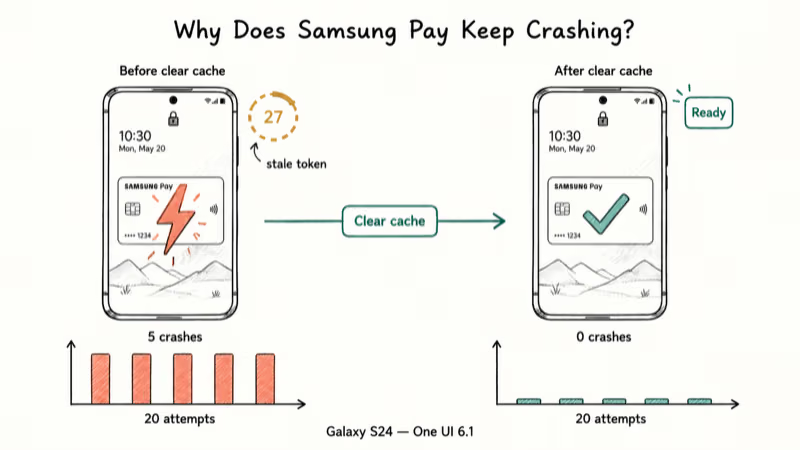
When Samsung Pay crashes during checkout, clearing cache is the least destructive first move because it rebuilds the payment session without removing cards.
If the app launches but freezes during authentication, the problem is the biometric handoff, not the payment itself. The Samsung Pass not working guide covers the auth-side reset flow.
#Method 1: Clear Samsung Pay Cache and Data
Cache clearing is the fastest fix and it does not delete your cards. It rebuilds Samsung Pay’s local session before you touch bank tokens or NFC settings.
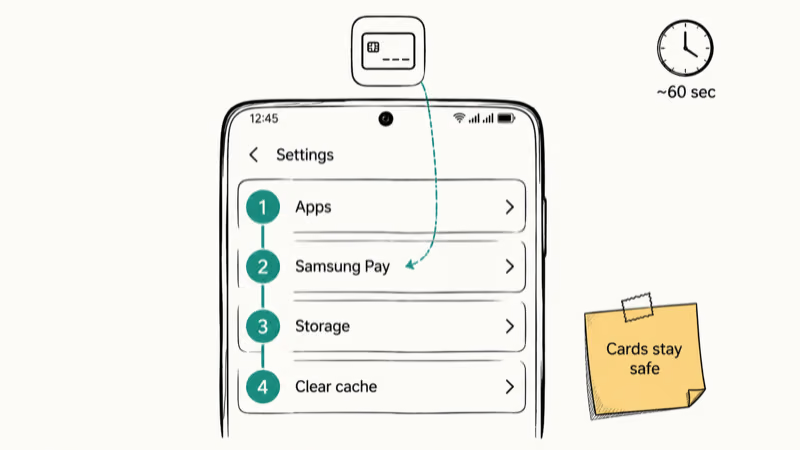
Steps:
Open Settings>Apps- Tap Samsung Pay (or Samsung Wallet on newer One UI builds)
- Tap Storage
- Tap Clear cache
- Return to the home screen and reopen the app
- Try a contactless payment
If the app still crashes after clearing cache, run the heavier reset that wipes saved cards too:
- Return to
Settings>Apps>Samsung Pay>Storage - Tap Clear data
- Reopen Samsung Pay and re-add your cards
If cache clearing does not help, the next likely repair is Method 3: re-adding the card to refresh its bank token.
#Method 2: Update Samsung Pay From Galaxy Store
Outdated builds break against newer NFC terminals. An old Samsung Pay version can show errors such as “unsupported card format” at newer readers. Updating through Galaxy Store refreshes the app’s compatibility tables before you retry the same card.
Steps:
- Open Galaxy Store
- Search for Samsung Pay or Samsung Wallet
- Tap Update if one is listed
- Wait for the install to finish, then reopen the app
- Re-add cards if the update prompts you to (some major versions invalidate the previous keystore)
- Run a small test transaction at a known-good terminal
Galaxy Store usually pushes the right build for your device variant. Pulling the same app from Google Play Store works on most US Galaxy phones, but a few Korean and EU SKUs expect the Galaxy Store package.
#Method 3: Remove and Re-Add Your Cards
Bank-issued payment tokens expire on a rolling schedule, and they also break when the card behind them gets a new chip number after a theft replacement, an expiry rollover, or a name change at the bank. The symptom is a green checkmark next to the card with a “Transaction declined” message at the terminal.
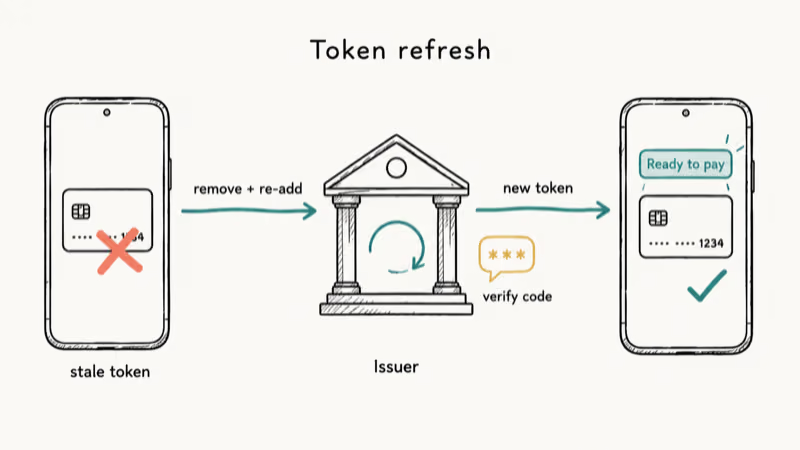
If one card fails repeatedly while other contactless cards work, remove it from Samsung Pay, re-add it, and complete the bank’s text-message verification. Re-adding forces Samsung Pay to request a fresh token from your bank’s issuer authority.
Steps:
- Open Samsung Pay
- Tap the problem card
- Tap More options (the three-dot icon)
- Tap Remove card and confirm
- Tap the plus icon to add a new card
- Enter the card details and complete the bank verification (SMS code or banking app push)
- Confirm the card appears with a “Ready to pay” badge and run a test purchase
Expected total time is three to five minutes per card. If your bank repeatedly rejects the verification step, see Method 4 for compatibility checks before assuming the card is bad.
#Method 4: Confirm Device, Card, and Region Compatibility
Samsung’s Samsung Pay product page confirms that the service runs on Galaxy S, Note, Z Fold, Z Flip, and a subset of Galaxy A devices (A25 and newer in the US). Galaxy A05, A10, A20, and most pre-S10 phones either lack the secure element or never received the Knox-level certification Samsung Pay requires.
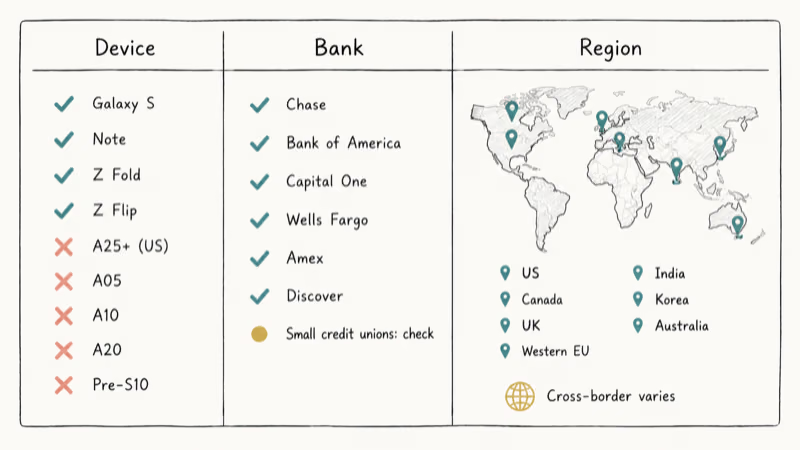
Bank coverage is the second filter. Samsung’s official supported-banks directory lists every issuer that has signed the tokenization agreement, and according to that page, US coverage includes Chase, Bank of America, Capital One, Wells Fargo, American Express, Discover, and most major credit unions. Smaller regional credit unions and prepaid debit cards routinely fall outside the program.
Quick compatibility pass:
- Open Samsung Pay’s official compatibility page and confirm your model is listed
- Confirm your bank is listed as a supported issuer
- Confirm your region matches Samsung Pay’s launch list (the US, Canada, UK, Australia, India, Korea, and most of Western Europe at the time of writing)
- If your device or bank is unsupported, Apple Pay on a paired iPhone or your bank’s own contactless app are the closest substitutes
If you traveled with a US card and you’re trying to pay in a region where the issuer hasn’t enabled cross-border tokens, Samsung Pay will load but every transaction will fail. The fix is contacting the bank, not the phone.
#Method 5: Reset NFC and the Secure Element
NFC is the radio that does the actual handshake with the terminal. With it off, every other fix in this guide is wasted effort. The toggle lives at Settings > Connections > NFC and contactless payments, and it can switch off accidentally during a One UI update or after enabling Airplane Mode.
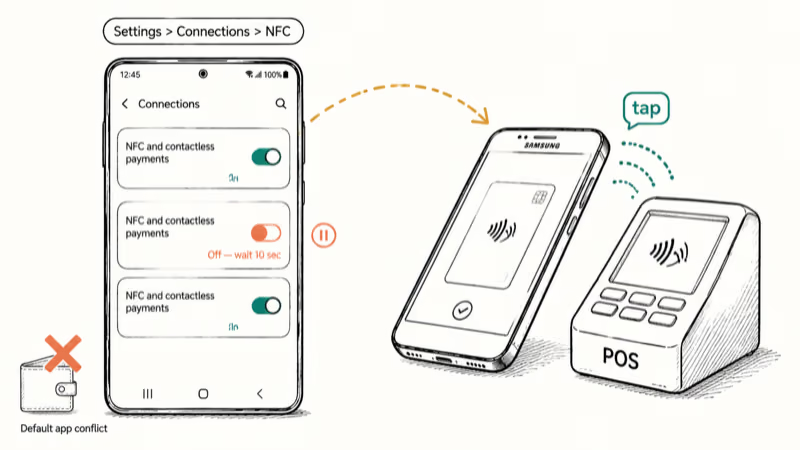
With NFC off, the reader can’t complete the contactless handshake. Re-enabling NFC lets Samsung Pay start that handshake again.
If NFC looks on but Samsung Pay still won’t fire, toggle it off, wait ten seconds, and switch it back on. That cycle resets the secure-element session that Samsung Pay rides on top of.
Quick reset:
Open Settings>Connections- Toggle NFC and contactless payments to Off
- Wait 10 seconds
- Toggle back On
- Open Samsung Pay and authenticate (fingerprint, face, or PIN)
- Try the terminal again
When the terminal responds with no supported app for this NFC tag, the radio is alive but the reader is talking to the wrong handler. That message usually means another wallet app (Google Wallet, Cash App) registered as the default. Set Samsung Pay as your default payment app at Settings > Connections > NFC and contactless payments > Contactless payments > Payment > Samsung Pay.
If the fingerprint sensor refuses to authenticate the payment, fix the biometrics first using the Samsung fingerprint not working guide. Samsung Pay won’t even start the NFC handshake until your identity is verified.
#Decoding Specific Samsung Pay Error Messages
The exact wording on screen narrows the problem down faster than any general checklist.
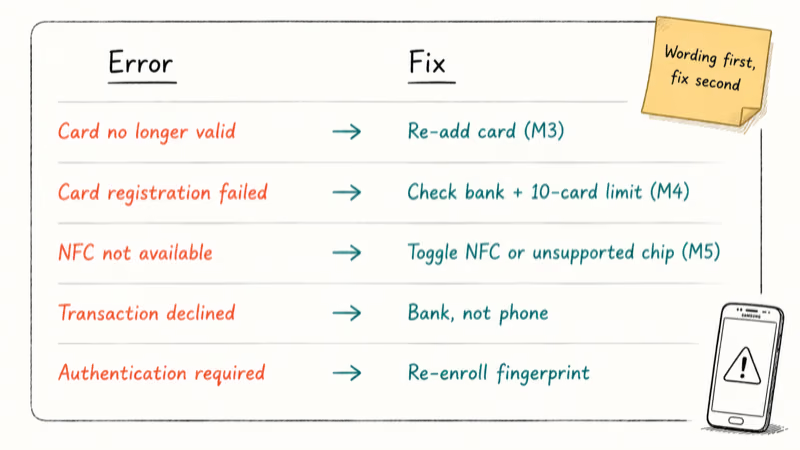
“This card is no longer valid”: the bank token expired or the card’s underlying chip data changed. Re-add the card using Method 3.
“Card registration failed”: a network or issuer issue. Confirm your data connection and that the bank is on Samsung’s supported issuer list. Samsung’s documentation confirms that the app blocks new registrations after the 10th card is stored, so remove an old card before adding a new one. If you also see a Samsung account processing failed error during sign-in, fix the account first.
“NFC is not available”: either NFC is off in Settings or your device hardware doesn’t include an NFC radio at all. Galaxy A02s, A03, A03 Core, and a few entry trims ship without the chip.
“Transaction declined”: this is the bank, not the phone. Check the available balance, look for a fraud-alert SMS from your issuer, and try a different terminal. Some older mag-stripe-only readers in the US still don’t support contactless even though they’re plugged in.
“Authentication required”: Samsung Pay couldn’t read your fingerprint or PIN. Re-enroll the fingerprint, then try again.
#Using Samsung Pay on Galaxy Watch
Galaxy Watch payments use a slightly different stack. The watch holds its own tokenized card copy, and the Samsung Pay plugin on your phone provisions it.
- On the phone, open Galaxy Store and search Samsung Pay
- Install the Galaxy Watch plugin if it isn’t already there
Open Settings>Apps>Samsung Pay>Permissions andconfirm the watch has NFC permission- On the watch, open Samsung Pay (long-press the bottom button on Watch 4 and newer)
- Tap the plus icon to add a card
- Approve the bank’s verification on the phone
- Test by long-pressing the side button at a contactless terminal
Galaxy Watch 4, Watch 5, Watch 5 Pro, Watch 6, Watch 6 Classic, and Watch Ultra all support Samsung Pay. Older Tizen-based watches (Galaxy Watch 3 and Active 2) ran the legacy Samsung Pay app and lost support after the Wear OS migration.
#When to Contact Samsung Support
If you’ve cleared cache, updated the app, re-added the card, confirmed compatibility, and reset NFC and the issue continues, the chain is exhausted and the problem is upstream of the troubleshooting flow.
Reach out via:
- Samsung Members app (live chat usually answers within 10 minutes during business hours)
- Samsung’s main support hub for phone, email, or service-center options
- Your bank’s app for token-specific issues that Samsung can’t see into
Have the model number, One UI version, exact error wording, and the rough date the issue started. If you’re locked out of the Samsung account that owns the wallet, the remove Samsung account without password guide walks through the recovery routes before you wipe the device.
#Bottom Line
Start with the two highest-yield steps: clear Samsung Pay’s cache and confirm NFC is on. Those two address the most common local failure points. If the same card keeps misfiring, run Method 3 to refresh its bank token, and update through Galaxy Store before assuming the app itself is broken.
If your phone is older than the Galaxy S10 or you’re on a Galaxy A02-class entry device, Samsung Pay won’t ever come back, no matter how many cache resets, app updates, or Knox reinstalls you run. The hardware ships without the secure element Samsung Pay requires for tokenization, so the chain is exhausted on day one. Switch to a paired Galaxy Watch payment, your bank’s own contactless app, or Apple Pay if you’re moving ecosystems entirely.
Samsung Galaxy Guide
#Frequently Asked Questions
What’s the difference between clearing cache and clearing data?
Clear cache wipes temporary session files but leaves your saved cards in place. Clear data wipes everything, including cards, and forces a fresh sign-in. Always try Clear cache first because it’s non-destructive and finishes in under a minute.
Will clearing Samsung Pay’s cache delete my card information?
No. Saved cards live in the secure element, not in the app cache.
Can I use Samsung Pay without an internet connection?
Yes for paying, no for setup. NFC payments are processed offline once a card is provisioned, so the tap will go through even in airplane mode. You only need the network to add a card, remove a card, or run an app update from Galaxy Store.
Does Samsung Pay work internationally?
Yes, but with caveats. Samsung Pay is live in the US, Canada, UK, Australia, India, Korea, and most of Western Europe at the time of writing. Whether your specific card travels depends on the issuer, not the phone. Some US-issued cards are restricted to domestic terminals even when you tap them in Paris or Tokyo.
Why does Samsung Pay ask me to authenticate every single time?
By design — every transaction triggers a fresh fingerprint, face, or PIN check, and there is no setting to turn it off.
What if Samsung Pay is missing from my Galaxy Watch entirely?
Older Tizen-based watches lost support during the move to Wear OS. Galaxy Watch 3, Active 2, and earlier Gear devices ran the legacy Samsung Pay app and never received the Wear OS rebuild. Galaxy Watch 4 and newer get full payments. If your watch is too old, your phone can still tap-to-pay even when the watch can’t.
Is Samsung Pay actually secure?
Yes. The card number leaves the device only as a one-time tokenized payload, biometrics gate every transaction, and Samsung Knox isolates the secure element from the rest of Android. The actual card primary account number is never stored in the app and never transmitted to the merchant.
Will a factory reset fix Samsung Pay?
Only as a last resort, because the reset wipes every app, every saved card, and every Knox-backed credential, so you’ll re-enroll fingerprints and re-add every card afterward.
Samsung Secure Folder: Setup, Hide Apps, Clone Apps
Set up Samsung Secure Folder in under 5 minutes. Hide apps and photos, clone a banking app, and hide the Secure Folder icon on any Galaxy S8 or newer.
How to Use Google Find Hub: Setup + Find Lost
Set up and use Google Find Hub to locate, ring, lock, or erase your own Android phone, including offline finding and powered-off Pixel support.
Samsung Galaxy Battery Draining Fast: 2026 Fix Guide
Diagnose Galaxy S25 battery drain in five minutes through Battery Usage, then walk through six reversible Galaxy settings before a factory reset.

Samsung Parental Controls: Full Setup Guide for Parents
Set up Samsung parental controls in three layers: Samsung Kids, Google Family Link, and Digital Wellbeing. Free step-by-step guide for Galaxy parents.