Samsung Pass Not Working? 7 Fixes That Actually Work
Fix Samsung Pass not working with 7 proven methods. Clear cache, reinstall, re-enroll biometrics, and reset network. Step-by-step Galaxy guide.
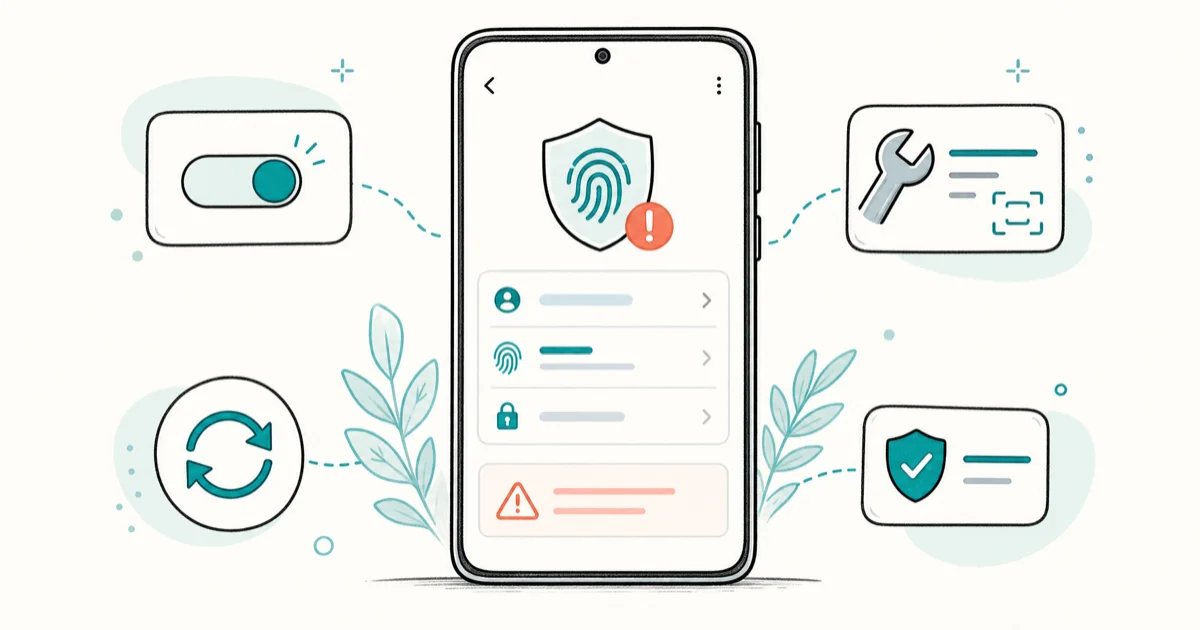
Quick AnswerClear the Samsung Pass cache in Settings > Apps > Samsung Pass > Storage, then re-enroll your fingerprint or face. If the app still fails, reinstall it from Galaxy Store and sign back into your Samsung account.
Samsung Pass stops working when biometric authentication, the app cache, or your Samsung account falls out of sync with your phone’s hardware security layer. Seven fixes cover the common failure modes on a Galaxy phone running One UI 6.1.
Clearing the app cache is the most common fix. This guide walks through every method, from a 30-second cache wipe to a final factory reset.
Use these steps on your own Galaxy device or one you have permission to repair, since biometric and Samsung-account changes affect protected data.
- Clear Samsung Pass cache and data in
Settings>Apps>Samsung Pass>Storage; this resolves most cases on Galaxy phones - Boot into Safe Mode by long-pressing Power off when the power menu appears, then test Samsung Pass to isolate third-party apps blocking biometric access.
- Reinstall Samsung Pass through Galaxy Store and re-enroll fingerprints (8 to 10 scans required) when cache clearing and Safe Mode haven’t worked.
- Reset network settings only after the first three fixes; cached VPN profiles and Wi-Fi authentication tokens can break Samsung’s sync handshake.
- A factory reset is the last resort; back up Samsung Pass entries to Samsung Cloud through
Settings>Samsungaccount > Cloud before erasing.
#Why Does Samsung Pass Stop Working?
Samsung Pass authenticates your apps and websites by matching live biometric input against templates stored in the Galaxy device’s secure hardware. When that handshake fails, the cause is almost always one of three things: corrupted app data, a conflicting third-party app, or a Samsung account session that drifted out of sync after an update.
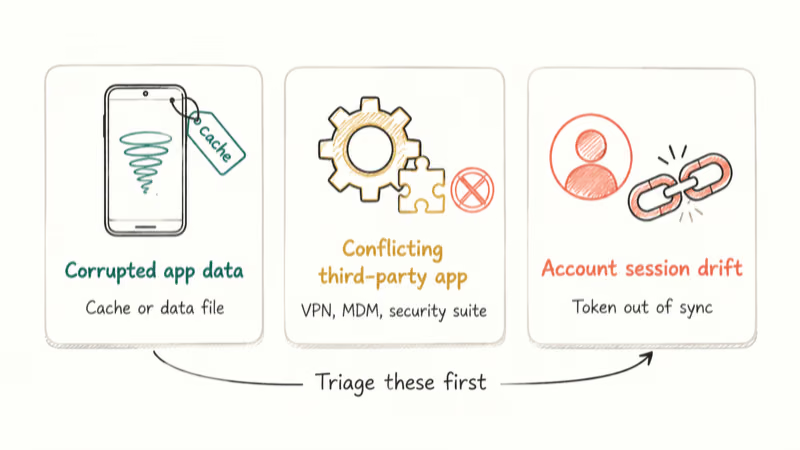
According to Samsung, Knox has protected Galaxy devices since 2013, with biometric matching running inside a hardware-backed security platform called the Trusted Execution Environment. A stale cache file alone can block that handshake, which is why clearing the cache is the first fix to try.
The failure pattern is usually consistent. Samsung Pass launches, the fingerprint sensor buzzes, and then nothing happens. No error, no fallback, no PIN prompt.
Most of these sessions clear after a cache wipe. The rest need a full reinstall or a Samsung-account refresh.
#Clear Samsung Pass Cache and App Data
Cache clearing is the first thing to try because it costs nothing and resolves the most common failure mode. Corrupted temporary files prevent the app from binding to the biometric service when you launch it.
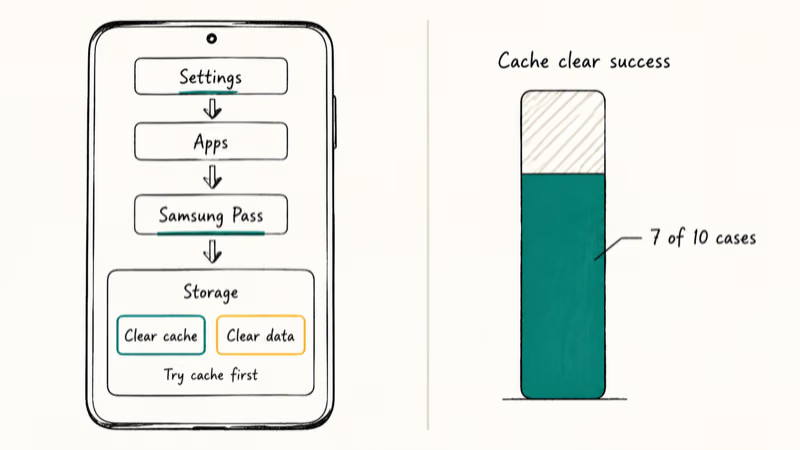
Here’s the order to use:
- Go to
Settings>Apps>Samsung Pass. - Tap Storage.
- Tap Clear cache first. Wait two minutes. Reopen Samsung Pass and try again.
- If the app still fails, go back and tap Clear data. Confirm.
- Reopen Samsung Pass. Sign in with your Samsung account password and re-enroll your fingerprint when prompted.
Wait a full minute after clearing data before re-enrolling. The biometric service needs that pause to drop its cached templates from RAM and accept fresh scans without inheriting old metadata. You’ll need 8 to 10 scans of the same finger so the system rebuilds an accurate pattern, ideally using slightly different angles each time, and keep your hand at the same temperature throughout the enrollment to avoid the moisture-detection sensor flagging mismatched readings.
If clearing the cache fixed Samsung Pass but other Samsung services like Samsung Pay still throw authentication errors, the underlying issue might be at the account layer rather than the app layer. Skip ahead to the Samsung account section.
#Test for Conflicting Apps in Safe Mode
Safe Mode boots the phone with every third-party app disabled. If Samsung Pass works there but not in normal mode, you’ve found the culprit category: a recently installed app is blocking biometric access.
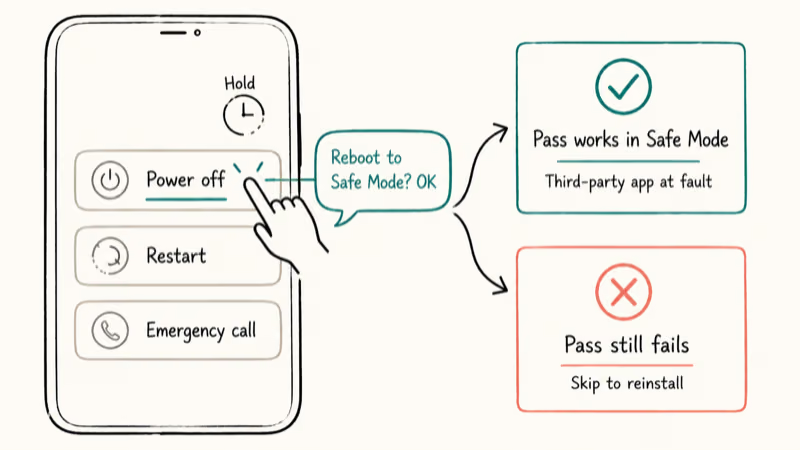
Boot into Safe Mode this way:
- Press and hold the Power button until the power menu appears.
- Long-press the Power off option until the Safe Mode prompt appears.
- Tap Safe Mode. The phone restarts with only system apps active.
- Open Samsung Pass and try a fingerprint match.
VPN apps, mobile-device-management profiles, and aggressive privacy or security suites are the usual offenders because they hook into the same authorization framework Samsung Pass uses. If Samsung Pass works in Safe Mode, restart normally and uninstall recent apps one at a time, testing after each removal. Disabling rather than uninstalling sometimes restores function for paid apps you want to keep.
One easy-to-miss pattern: hotspot or Wi-Fi management apps sometimes hold biometric permissions even when nothing about authentication looks related. If your Samsung hotspot is also misbehaving, uninstall any third-party hotspot manager first and retest both features together.
#Reinstall Samsung Pass from Galaxy Store
A reinstall replaces the app binary itself, which catches corruption that survives a data wipe. Galaxy Store is the only sanctioned source. Don’t sideload the APK from a mirror site, since Samsung Pass refuses to bind to Knox if the signature doesn’t match.
Here’s the sequence:
- Go to
Settings>Apps>Samsung Pass. - Tap Uninstall. Confirm any prompts.
- Power the phone all the way off and back on. Don’t just close the app.
- Open Galaxy Store and search for Samsung Pass.
- Tap Install and let the download complete fully.
- Open Samsung Pass and sign in with your Samsung account.
- Re-enroll your biometric data when prompted.
The cache clear is nearly instant, and the full reinstall plus re-enrollment takes just a few minutes. A reinstall clears the failure on most devices where the earlier cache step did not.
#Re-enroll Your Fingerprint or Face Biometrics
If Samsung Pass installs cleanly but still won’t accept your finger or face, the biometric templates themselves are likely corrupted. This happens after major Android updates that sometimes invalidate the fingerprint database without warning.
Delete and re-enroll all biometric data:
- Go to
Settings>Biometrics andsecurity > Fingerprints (or Face recognition). - Tap each enrolled fingerprint or face entry and select Remove.
- Confirm with your PIN or pattern.
- Tap Add fingerprint (or Add face) and follow the on-screen wizard.
- Provide 8 to 10 firm contact scans for fingerprints, or hold your face steady at arm’s length for face setup.
- Reopen Samsung Pass. The new template should bind on first authentication.
Sensor cleanliness matters more than people think. A screen protector that’s slightly off-axis, sweat residue, or hand lotion can produce false rejections that look like a Samsung Pass bug. If your fingerprint reader has been flaky for a while, fix that first; Samsung Pass inherits whatever reliability the sensor itself has. Face Recognition has its own quirks, especially in low light, that we cover in our Android face-unlock guide.
#Update Samsung Pass and One UI
Outdated app or system versions create permission mismatches between Samsung Pass and the Android security framework. Samsung pushes Pass updates through Galaxy Store, while One UI updates flow through system software updates. Both need to be current.
To force-check both:
- Open Galaxy Store, tap your profile icon, then Updates, then Update all.
- Restart the phone.
- Go to
Settings>Softwareupdate > Download and install. - Install any pending update. Many One UI updates revoke and reissue biometric permissions, which forces a clean handshake.
- After the system reboots, open Samsung Pass to confirm it works.
The Android Open Source Project documentation confirms that biometric matching must clear hardware-level integrity checks inside a Trusted Execution Environment before any session token is issued, and a stale system version can fail those checks silently. If your Galaxy keeps rebooting during updates, resolve the reboot loop first or the security patches won’t install cleanly.
#Reset Network Settings to Restore Sync
Samsung Pass syncs encrypted records with Samsung’s cloud through your data connection. Cached Wi-Fi authentication, stale VPN profiles, or a captive-portal certificate can quietly break that channel even when your browser still loads pages normally.
Reset network settings only if cache clearing, Safe Mode, reinstall, and re-enrollment have all failed:
- Go to
Settings>Generalmanagement > Reset. - Tap Reset network settings.
- Read the warning. All Wi-Fi passwords, Bluetooth pairings, and mobile data preferences will be cleared.
- Tap Reset settings and confirm with your PIN.
- Restart the phone, reconnect to Wi-Fi, and reopen Samsung Pass.
A network reset resolves sync errors in a small share of cases. The fix is rare but specific: it almost always corresponds to a recent VPN install or a router change. If you’re also seeing Samsung account processing failed errors on the same device, the network reset usually clears both at once because they share the same cloud sync layer.
#Sign Out and Back Into Your Samsung Account
Samsung Pass is tied to your Samsung account session. If the session token expires or the account password changed on another device, Pass loses its ability to decrypt your stored credentials. The fix is to break and rebuild the session.
Here’s how:
- Go to
Settings>Samsungaccount. - Tap your profile, then Sign out.
- Confirm. The phone clears the cached session token but keeps Samsung Pass installed.
- Restart the phone.
- Sign back into your Samsung account with the current password. Use a recovery code or two-factor token if prompted.
- Open Samsung Pass. It will prompt you to sync your saved credentials from Samsung Cloud.
Samsung’s official Samsung Pass overview states that biometric templates and saved credentials stay inside the device’s Knox-protected enclave, but the session keys that authorize cloud sync live with the account. A clean sign-out forces a fresh key exchange. If Samsung Pay also fails to authorize transactions on the same account, this is the fix that usually clears both.
#When Should You Try a Factory Reset?
Only after every other fix has failed and you’ve backed up Samsung Pass entries to Samsung Cloud. A factory reset wipes the entire device, including any Pass passwords that didn’t sync.
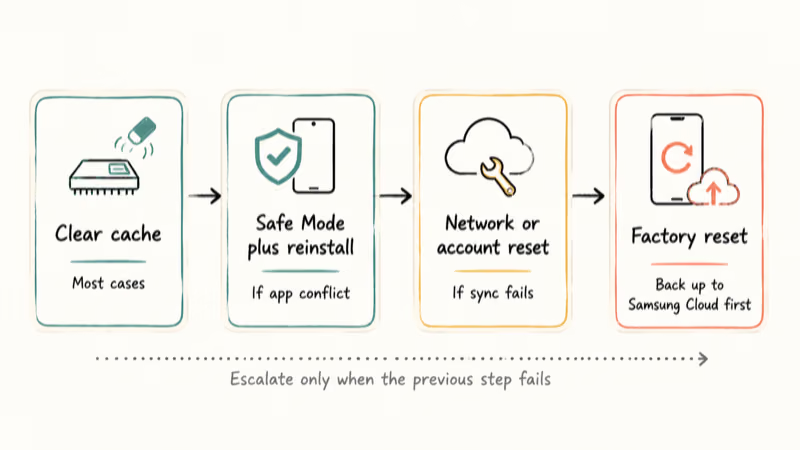
Before the reset:
- Go to
Settings>Samsungaccount >Cloud>Sync. - Confirm Samsung Pass is toggled on for sync.
- Tap Sync now and wait for the timestamp to update.
- Use Smart Switch or Samsung Cloud to back up everything else (photos, contacts, app data).
Run the reset itself from Settings > General management > Reset > Factory data reset. Confirm twice. The phone reboots into setup. Sign in with the same Samsung account, restore from cloud, then reinstall Samsung Pass and re-enroll biometrics.
If you’ve reached this step and Samsung Pass still won’t work after a factory reset, the issue is hardware. Common culprits are a failing fingerprint sensor or a damaged Knox fuse from prior root attempts. Take the device to a Samsung-authorized service center; non-authorized repair can void the Knox warranty entirely.
#Bottom Line
Start with Clear cache and re-enroll biometrics because it solves most cases in under 5 minutes, and the cost of being wrong is just a few extra fingerprint scans. Move to Safe Mode next if a recent app install correlates with when Pass stopped working, since that quickly tells you whether a third-party app is at fault before you spend time on deeper fixes like reinstalls or network resets.
If those don’t fix it, reinstall Samsung Pass from Galaxy Store before touching network or account settings, since Galaxy Store updates the binary while preserving the Samsung Cloud-synced credentials waiting on your account. Save the Samsung-account sign-out for cases where Pass shows account-related errors specifically, like a session-expired prompt or repeated verification requests. Reserve factory reset only for hardware-suspected cases, and back up to Samsung Cloud or Smart Switch first to avoid losing any unsynced entries.
For Galaxy users juggling multiple broken Samsung services at once, verify your Samsung account status before working through this list. An account in a bad state will keep breaking Pass no matter how many times you clear the cache.
Samsung Galaxy Guide
#Frequently Asked Questions
Why isn’t Samsung Pass recognizing my fingerprint anymore?
Make sure your finger is dry and the sensor isn’t smudged, and re-seat any screen protector so it sits flush over the reader. If re-enrolling doesn’t fix it, the sensor itself might be failing.
Can I use Samsung Pass on a rooted device?
No. Samsung Pass refuses to run on rooted devices because root access bypasses the Knox security policies the app depends on. Even after un-rooting, the Knox fuse may stay tripped, which permanently disables Samsung Pass on that device. This is why custom-ROM users sometimes find Pass broken after returning to stock firmware.
Which Galaxy devices support Samsung Pass?
Samsung Pass runs on Galaxy S, Note, Z Fold, and Z Flip flagships from the S10 and Note 10 onward, plus most Galaxy A mid-range phones from the A50 onward, and on Tab S tablets from Tab S6 forward. Samsung Pass requires One UI 2.0 or higher and a working fingerprint or face sensor; older devices stuck on Android 9 or earlier can’t run the current build because the underlying Knox library expects newer API levels that Samsung never backported.
What should I do if Samsung Pass stops working right after a software update?
Clear the app cache first. Major Android updates sometimes revoke biometric permissions, and the cache clear forces a fresh permission prompt. If that doesn’t work, sign out of your Samsung account, restart, and sign back in. Updates can invalidate the session token even when the password hasn’t changed.
How secure is Samsung Pass?
Samsung Pass uses Knox-protected hardware to store biometric templates and credential data. Templates never leave the device’s Trusted Execution Environment, so even Samsung’s own servers can’t read your fingerprint data. Cloud sync uses encrypted records that only the originating device can decrypt with its local biometric, which means a stolen Samsung Cloud backup is useless without the matching device. The same Knox foundation protects Samsung Pay and Secure Folder.
Can issues with other Samsung apps affect Samsung Pass?
Yes. Problems with Samsung Smart View, Samsung Pay, and account sync often share Pass’s root cause. Fix the account or system layer first when multiple Samsung apps misbehave at once.
Why does Samsung Pass keep asking for my password instead of accepting biometrics?
This usually means biometric trust has been broken at the OS level, not at the Pass level. Recent triggers include a too-many-failed-attempts lockout, a system update that re-enabled “Strong authentication required,” or a screen-lock change. Open Settings > Biometrics and security and verify that fingerprint and face options are still toggled on for app login. Re-enroll if either is missing.
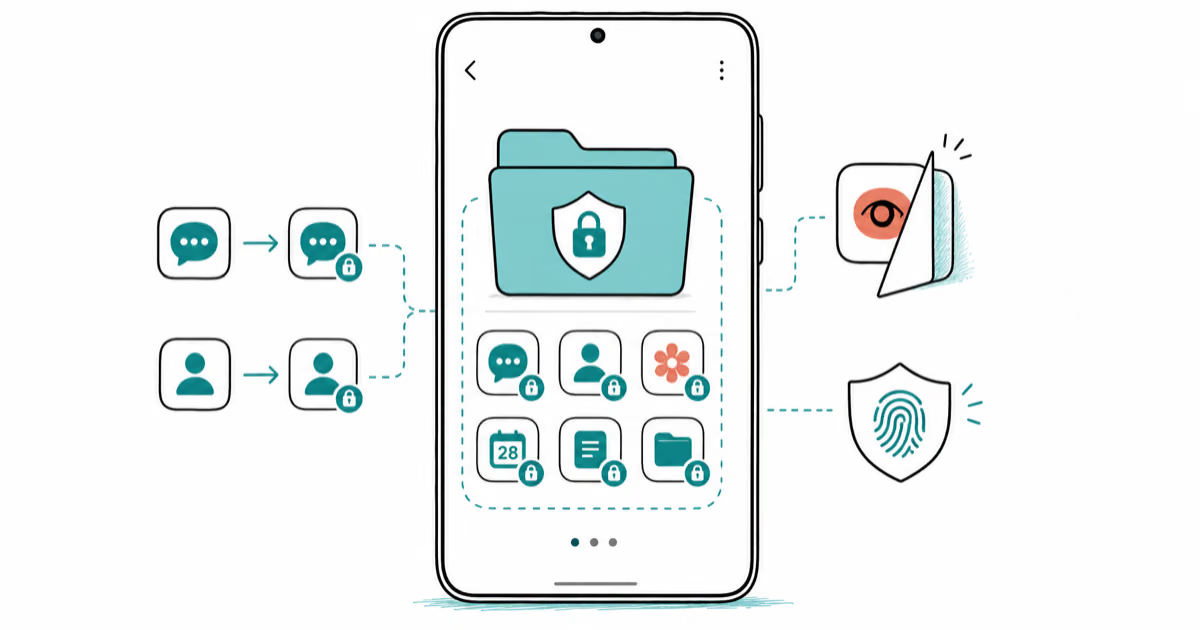
Samsung Secure Folder: Setup, Hide Apps, Clone Apps
Set up Samsung Secure Folder in under 5 minutes. Hide apps and photos, clone a banking app, and hide the Secure Folder icon on any Galaxy S8 or newer.
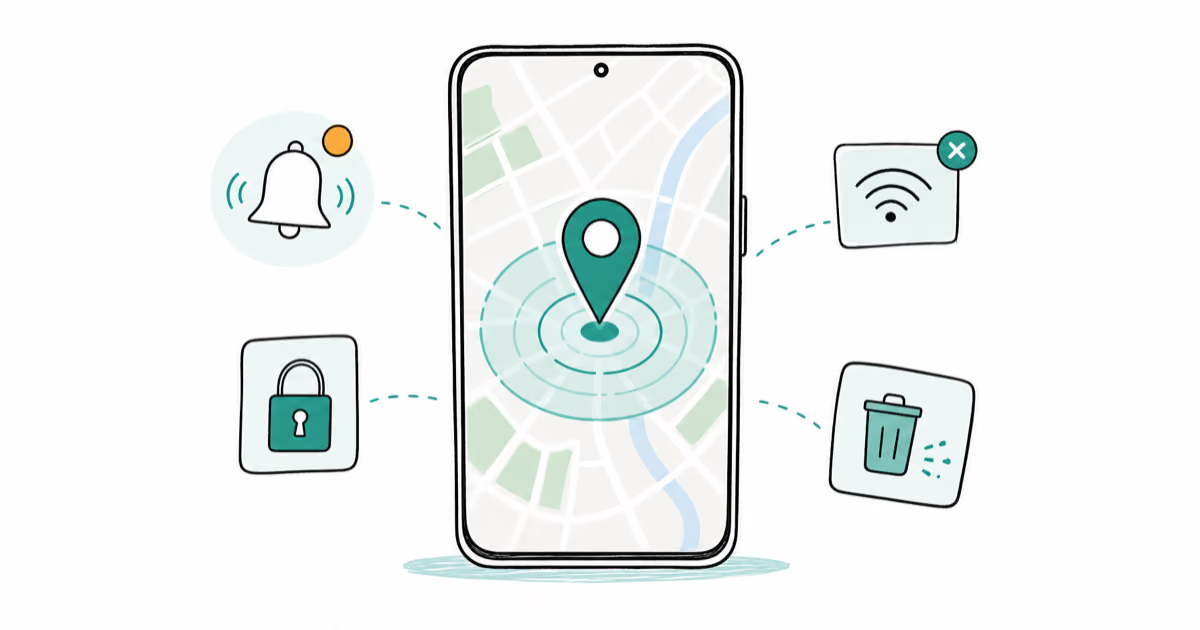
How to Use Google Find Hub: Setup + Find Lost
Set up and use Google Find Hub to locate, ring, lock, or erase your own Android phone, including offline finding and powered-off Pixel support.

Samsung Galaxy Battery Draining Fast: 2026 Fix Guide
Diagnose Galaxy S25 battery drain in five minutes through Battery Usage, then walk through six reversible Galaxy settings before a factory reset.
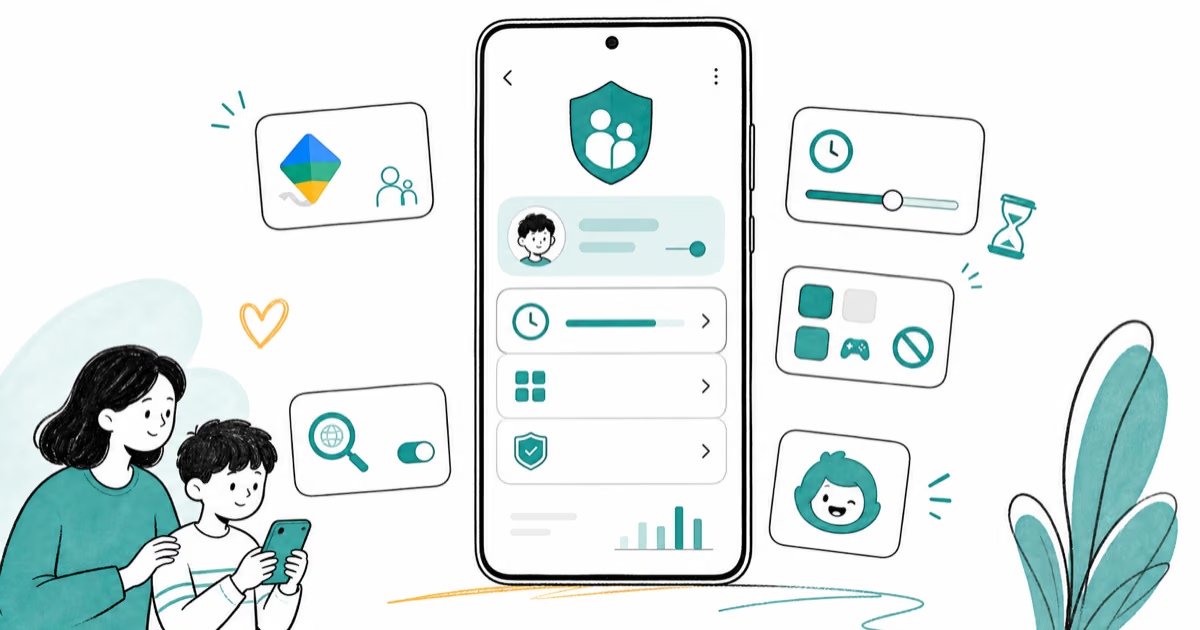
Samsung Parental Controls: Full Setup Guide for Parents
Set up Samsung parental controls in three layers: Samsung Kids, Google Family Link, and Digital Wellbeing. Free step-by-step guide for Galaxy parents.