How to Reset Admin Password in Windows 10 (Own PC Guide)
Locked out of your own Windows 10 admin account? Five proven recovery methods, ranked from official Microsoft reset to last-resort installation media.
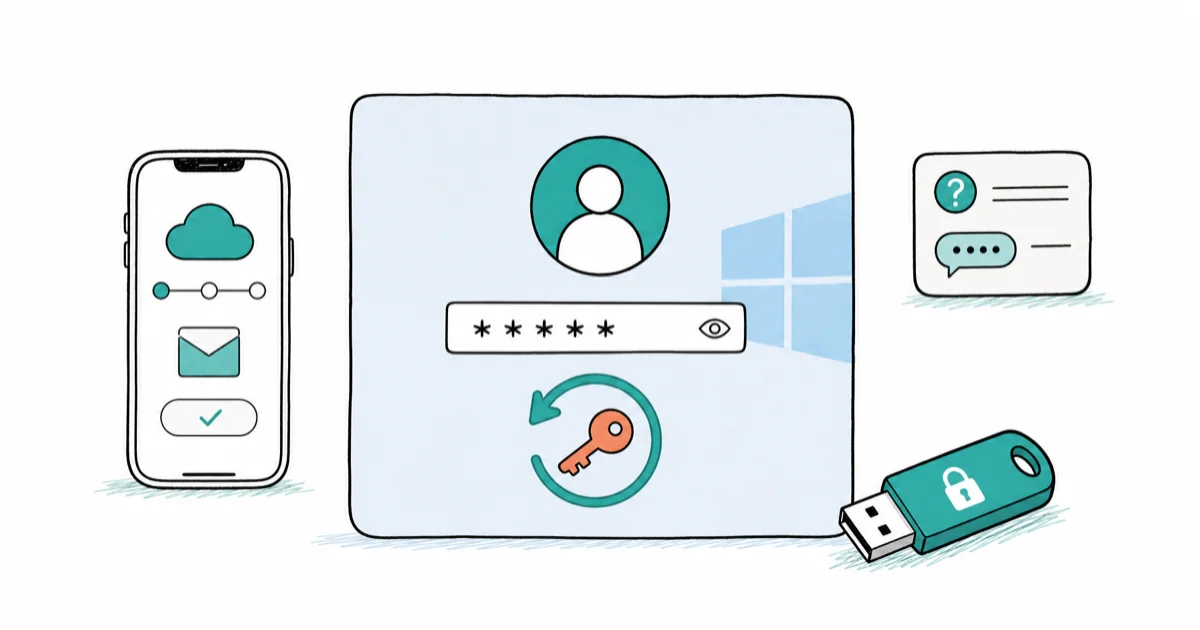
Quick AnswerIf you forgot the admin password on **your own Windows 10 PC**, start with the official Microsoft account reset at account.live.com/password/reset, which works for cloud-linked accounts from any other device. For a local account, use your security questions on the lock screen or a password reset disk you created earlier. These methods apply only to a PC you own or have explicit authorization to administer.
Forgetting the admin password on your own Windows 10 PC happens more often than people admit, especially after a long vacation, a switch to Face ID on every other device, or inheriting a family computer with paperwork showing ownership transferred. This guide walks through five proven recovery paths from the safest official Microsoft route to the last-resort PC reset, plus the legal scope you need to understand before touching the more advanced methods.
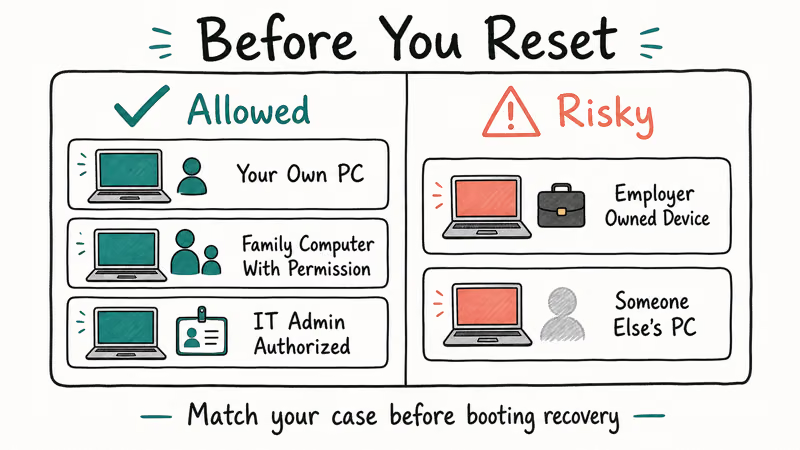
A scope note before we begin. Every method below assumes you are recovering access to a PC you own or that you have explicit written authorization to administer, like your personal laptop, a family desktop transferred to you, or a corporate device where IT has cleared the recovery in writing. None of this is for gaining access to someone else’s computer without their permission.
- Microsoft account password resets through account.live.com take about 5 minutes from another device and don’t touch any files on the locked PC.
- Local accounts created in Windows 10 version 1803 or later support security-question recovery directly on the lock screen with no extra tools needed.
- A password reset disk created on a USB drive before lockout is the only built-in method that always works for older local accounts, but it has to exist beforehand.
- Installation-media password resets work as a last resort but require a bootable Windows 10 USB and several command-prompt steps inside the recovery environment.
- A full PC reset through Recovery options will always restore access but wipes every installed app and personal file, so try it last.
#Is It Legal to Reset a Windows 10 Admin Password Without the Old One?
Yes, on a PC you own or have explicit authorization to administer. The legal line gets sharp the moment the computer belongs to someone else. The technical tricks below, especially the installation-media method, can also be misused for unauthorized access, which is why the boundary statement matters before any tool comes out.
According to the Department of Justice manual on the Computer Fraud and Abuse Act, accessing a protected computer “without authorization or exceeding authorized access” can carry civil and criminal penalties under 18 USC 1030, with maximum prison terms up to 10 years for certain offenses.
Most state computer-access laws mirror this framework. Practical translation: if the PC is your personal device, your inherited family computer with documented transfer, or a corporate machine where IT has formally cleared the recovery, you are fine. If it belongs to a coworker, ex-partner, or a previous employer who has not authorized you, stop here.
Every method below applies to machines you own or are authorized to administer: a local-account laptop, a Microsoft-account-linked device, or a corporate machine handed over with written approval. None of them should be used on a device you can’t document ownership or authorization for.
#Method 1: Reset a Microsoft Account Password Online
If you sign in to Windows 10 with a Microsoft account (your login email ends in @outlook.com, @hotmail.com, @live.com, or any account you linked to Microsoft services), this is the easiest path. You don’t need physical access to the locked PC, and the reset takes about 5 minutes from a second device.
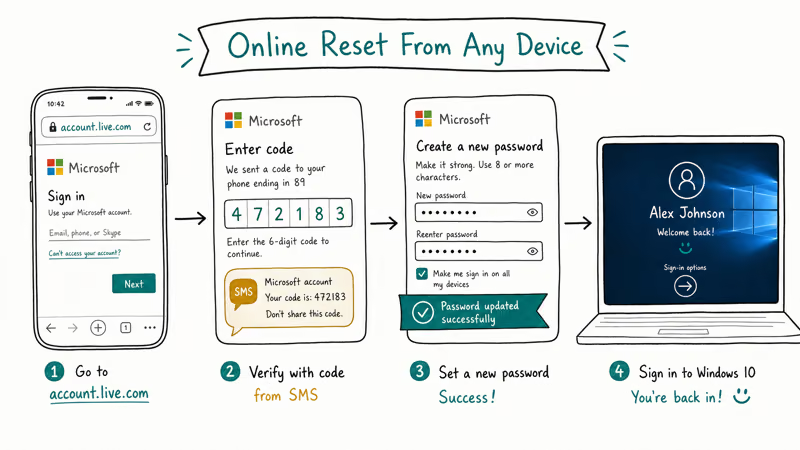
- On any phone, tablet, or second computer, go to account.live.com/password/reset.
- Enter the email address, phone number, or Skype name tied to the locked account.
- Choose how Microsoft should verify your identity (email to a backup address, text code to a recovery phone, or the Microsoft Authenticator app).
- Enter the verification code, then set a new password (minimum 8 characters, mixed case and a number).
- Wait 1 to 2 minutes for the change to propagate, then log into Windows 10 with the new password.
According to Microsoft’s account password reset documentation, the new password takes effect across all Microsoft services within a few minutes, including the Windows sign-in screen on a connected PC. If your recovery email or phone is outdated and you can’t pass verification, Microsoft also offers an account recovery form that takes 24 to 72 hours to process.
On a Microsoft-account-linked PC, the password change propagates to the lock screen within a minute or two after you confirm the new password on another device. The PC needs an active internet connection at the lock screen, which saved Wi-Fi credentials usually provide.
#Method 2: Use Security Questions on the Lock Screen (Local Accounts)
For local accounts created in Windows 10 version 1803 (April 2018 Update) or later, the lock screen itself can show your security questions if you set them up during account creation. This is the simplest path for newer local accounts.
- On the Windows 10 sign-in screen, enter any password to trigger the failed-attempt prompt.
- Click the Reset password link that appears below the password box.
- Answer the three security questions you chose when creating the account.
- Type a new password and confirm it.
- Sign in immediately with the new password.
Microsoft’s local account security questions documentation confirms that security-question recovery is only available for accounts created on Windows 10 version 1803 or newer, and only if you actually answered the questions during setup. Accounts upgraded from earlier Windows versions or those who skipped the questions step won’t see the Reset password link.
On a local account that had security questions set during creation, the Reset password link appears on the second wrong-password attempt, and the whole reset takes well under two minutes.
#Method 3: Use a Password Reset Disk You Created Earlier
A password reset disk is a USB drive (or floppy in older systems) you create from inside Windows 10 while you still know the password. It always works for that local account, even years later, as long as the account hasn’t been deleted.
- Insert the password reset disk USB into a free port on the locked PC.
- On the Windows 10 sign-in screen, enter any wrong password to trigger the Reset password link.
- Click Reset password, which launches the Password Reset Wizard.
- Choose the USB drive from the dropdown.
- Type and confirm a new password, then add a password hint if desired.
- Sign in with the new password.
Microsoft’s documentation on creating a password reset disk recommends storing the USB drive in a safe place because anyone with physical access to that drive can reset the account password. The drive doesn’t expire and can be reused indefinitely on the same account.
The catch: this method only works if you already created the reset disk before the lockout. If you didn’t, this method is unavailable; skip to Method 4 or 5. If you’re having related trouble at the sign-in screen, our guide on what to do when Windows 10 PIN is not working covers PIN-side recovery using the same lock-screen tools.
#Method 4: Reset a Local Password Using Windows 10 Installation Media
When the above methods don’t apply, you can use a Windows 10 installation USB to reach a command-prompt environment and reset a local account password. This method requires a second working PC to create the bootable USB and walks the line between recovery and bypass, which is why the authorization-scope statement at the top of this guide is critical.
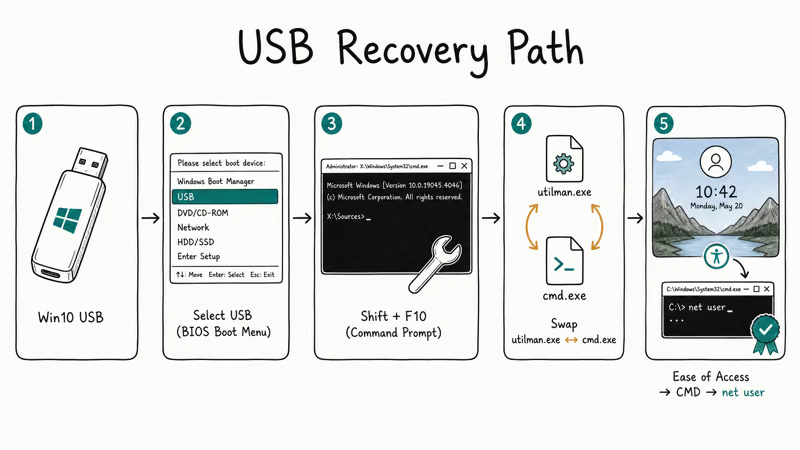
- On a working PC, download the Windows 10 Media Creation Tool from Microsoft and create a bootable USB drive (8 GB or larger).
- Insert the USB into the locked PC, then power on and press the boot-menu key (commonly F12, F11, ESC, or DEL depending on the manufacturer) to boot from USB.
- At the Windows Setup screen, press Shift + F10 to open a command prompt.
- Type
diskpart, press Enter, then typelist volumeto identify the drive letter where Windows is installed (typically C: but sometimes D: in the recovery environment). - Exit diskpart with
exit, then run these two commands, replacingC:with your actual Windows drive letter:move C:\Windows\System32\utilman.exe C:\Windows\System32\utilman.exe.bakcopy C:\Windows\System32\cmd.exe C:\Windows\System32\utilman.exe
- Close the command prompt and reboot the PC normally (remove the USB).
- At the sign-in screen, click the Ease of Access icon in the bottom-right corner. A command prompt with SYSTEM privileges opens.
- Type
net user "YourUsername" NewPasswordand press Enter, replacing the placeholders with your actual local username and chosen password. - Close the command prompt and sign in with the new password.
- After signing in, reverse the swap to restore the Ease of Access tool. Boot from the USB again, open the command prompt, and run
copy C:\Windows\System32\utilman.exe.bak C:\Windows\System32\utilman.exeto put the original file back.
Microsoft’s Windows recovery options documentation describes the broader recovery environment that the installation USB launches into, and confirms that command-prompt access from this environment runs with system privileges, which is why password resets are possible there. If you get stuck before reaching the boot menu, our guide on what to do when your Lenovo is stuck on the boot menu covers the most common boot-menu hangs.
The full sequence takes a while once you include creating the USB on a second PC. The lock screen behaves normally after the swap, and the new password works immediately. Booting from the USB a second time restores utilman.exe so the Ease of Access button works again.
#Method 5: Try a Dedicated Recovery Tool (When Other Methods Fail)
Third-party Windows password recovery tools offer a more guided alternative to the installation-media method, with a wizard that handles the USB creation and the password reset in one workflow. They cost money, and you should only buy after confirming the free methods above don’t apply to your account type or PC configuration.
Some links on this page are affiliate links, which means fone.tips may earn a commission at no extra cost to you.
PassFab 4WinKey is one of the more established options. It creates a bootable USB or DVD from a working PC, boots the locked machine into its own recovery shell, and walks you through resetting the local-account password or unlinking a Microsoft account so you can re-add it after sign-in. The published workflow matches what we covered in the PassFab 4WinKey review on this site.
4WinKey’s guided process, from USB creation to a fresh login, is generally faster than the manual utilman.exe walkthrough. The trade-off is the license cost. For a one-time recovery on your own PC, the installation-media method is free; for repeated use across multiple devices (an IT scenario), a dedicated tool starts to make sense.
A non-paid alternative for technically comfortable users is the open-source chntpw utility, available through Ubuntu’s package repository. The workflow boots from a Linux live USB, mounts the Windows partition, and edits the SAM registry file to clear the account password. Expect a steeper learning curve than the Windows-native methods.
#How Can You Prevent This From Happening Again?
The fastest fix for repeated lockouts is a layered approach rather than a single trick. The most reliable safeguards boil down to four habits.
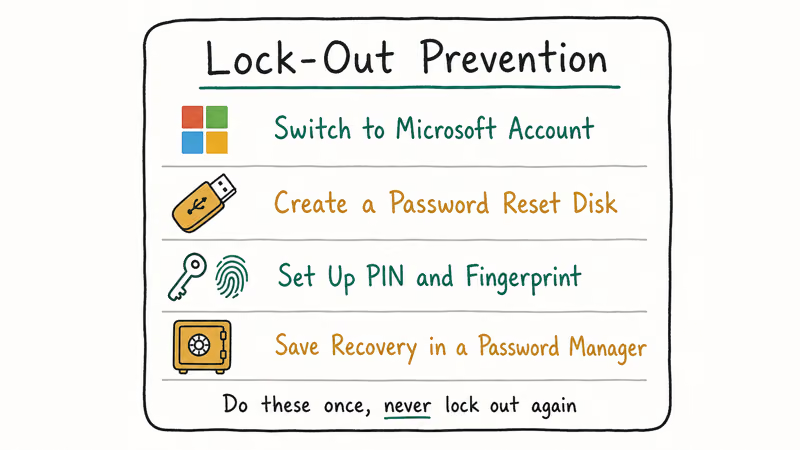
- Switch the account from local to Microsoft account sign-in if you don’t already, so you get cloud-based password reset from any device.
- Add at least one trusted phone number and a backup email to your Microsoft account for verification.
- Set up Windows Hello (PIN, fingerprint, or face) as your daily sign-in method, with the password as a fallback only.
- Store the master password in a reputable password manager that syncs across your devices.
If you skip all of the above, the next time you forget the password the recovery cost is the same one to two hours of installation-media work covered above. Our broader computer-without-password unlock guide covers cross-platform habits for both Windows and Mac.
Devices configured with a Windows Hello PIN plus a Microsoft account rarely lock out again, because there’s always a cloud-based reset path. A local account secured only by a memorized password is the most likely to lock out a second time, which is exactly when a reset disk created after the first incident earns its keep.
#Bottom Line
For a Microsoft-account-linked Windows 10 PC you own, Method 1 (online password reset at account.live.com) is the right first move every time. It’s free, takes 5 minutes, and doesn’t touch your files.
For a local account on a PC built in 2018 or later, Method 2 (lock-screen security questions) is the next stop. Method 3 (password reset disk) is the safety net for older local accounts that you set up while you still had the password.
Method 4 (installation media + utilman.exe swap) is the right last-resort free option when nothing else applies. Method 5 (PassFab 4WinKey or a similar dedicated tool) is worth the license cost mainly for IT scenarios where you recover passwords on multiple PCs regularly. A full Windows reset wipes data and should only happen after every other method fails on a PC you own.
#Frequently Asked Questions
Can I reset my Windows 10 admin password without losing files?
Yes, Methods 1 through 5 above all preserve your installed apps and personal files. The only method that wipes data is a full PC reset through Recovery options, which is the last resort when nothing else works. If you go that route, choose Keep my files instead of Remove everything to save your documents folder.
What if I forgot my Microsoft account password and don’t have the recovery email?
Use Microsoft’s account recovery form at account.live.com/acsr. It takes 24 to 72 hours for Microsoft to review your identity proof and respond. You’ll need to provide information like the email subjects of recent messages, the names of folders you created, and approximate account creation date. Microsoft’s documentation states that providing more accurate detail increases the chance of a successful recovery.
Is the utilman.exe swap method safe for my PC?
The swap itself is safe on a PC you own as long as you reverse it after signing in by restoring the original utilman.exe from the .bak backup. The change is fully reversible. The risk is leaving the swap in place, because it lets anyone with physical access click the Ease of Access icon and get a SYSTEM-level command prompt without signing in. Always reverse the swap immediately after recovery.
Why doesn’t the Safe Mode trick work anymore on modern Windows 10?
The classic F8 menu and the hidden built-in Administrator account in Safe Mode were disabled by default starting in Windows 8, and Windows 10 inherits that behavior. The built-in Administrator account exists but is disabled out of the box, and Safe Mode requires the same sign-in credentials as normal mode unless you previously enabled the hidden account. That’s why this guide focuses on the five methods above instead.
Will a Windows 10 password reset work on Windows 11?
Methods 1, 2, and 5 work identically on Windows 11. Microsoft account recovery, lock-screen security questions, and PassFab 4WinKey workflows haven’t changed across versions.
Method 3 (password reset disk) still works the same way, though the disk needs to be created from inside Windows 10 or Windows 11 on the same account. Method 4 (installation media + utilman.exe) also works on Windows 11, though you’ll use a Windows 11 installation USB instead. The boot-menu hotkeys and command-prompt steps are otherwise identical.
Can I reset the password if BitLocker is enabled on the drive?
Not without the BitLocker recovery key.
If your drive is BitLocker-encrypted (common on business and recent consumer laptops), the installation-media method in Method 4 will be blocked at the volume-mount step because the C: drive will appear as a locked BitLocker volume. You’ll need to provide the 48-digit recovery key first, which Microsoft stores in your Microsoft account at account.microsoft.com/devices/recoverykey for personal devices, or your IT department holds for managed corporate devices.
If you’ve also lost the recovery key, our Windows error 0xc0000098 guide and the Windows 10 repair without CD walkthrough cover related recovery-environment scenarios. For a fully encrypted drive with no key, professional data-recovery services are the only option.
What’s the difference between a local account and a Microsoft account in Windows 10?
A local account exists only on the specific PC and stores its password in the local SAM (Security Account Manager) database; it can’t be reset from outside the device without one of the methods above.
A Microsoft account is tied to your @outlook.com / @hotmail.com / @live.com email (or a third-party email you registered with Microsoft) and authenticates against Microsoft’s cloud servers, so the password can be reset from any internet-connected device. Microsoft accounts also sync settings, OneDrive files, and Microsoft Store purchases across PCs, which is why the recovery story is simpler. For older accounts, see our forgot laptop password guide for cross-vendor recovery steps.

Best Laptop for Running LLMs in 2026: Memory Comes First
The best laptop for running LLMs is a memory purchase first. Compare MacBook unified memory against NVIDIA laptop VRAM, and see what each tier really runs.

How to Run a Local LLM on Windows: A 2026 Setup Guide
Run a local LLM on Windows with LM Studio or Ollama. Pick a model that fits your GPU memory, keep every prompt offline, and skip the monthly bill.
Bluetooth Not Working on Snapdragon X? Fixes for 2026
Bluetooth not working on your Snapdragon X Copilot+ PC? Generic audio, mice, and keyboards work, but vendor apps often lack an ARM build. Fixes inside.
Docker Desktop and WSL2 Not Working on Snapdragon X? Fix It
WSL2 runs fine on Snapdragon X, but Docker Desktop ARM is Early Access and throws WSL errors. Use WSL2 plus native ARM64 Ubuntu and Docker Engine.