Forgot Laptop Password? Recover Your Own PC or Mac in 2026
Forgot your own laptop password? Reset it on Windows or Mac using Microsoft account recovery, Apple ID, or recovery mode. Legal, official methods first.
Quick AnswerIf you forgot the password to your own laptop, start with the official account reset. Windows: visit account.live.com/password/reset from another device. Mac: enter the wrong password three times, then reset with your Apple ID. Use these before touching any offline tool.
You forgot the password to a laptop you own, and the sign-in screen won’t let you in. This guide covers the legitimate recovery paths for Windows and macOS. It starts with the official account-based resets (which keep your files) and ends with last-resort options, ordered by what actually works in 2026.
-
Scope matters. These steps are for laptops you own or have written permission to access. Bypassing a password on someone else’s device is a federal crime under the Computer Fraud and Abuse Act (18 U.S.C. §1030), punishable by fines and prison time.
-
Start with the official reset. Microsoft account recovery and Apple ID reset keep your files intact and finish in under 10 minutes.
-
Work laptops aren’t yours to reset. Open an IT ticket.
-
BitLocker and FileVault can lock you out permanently. The 48-character BitLocker recovery key and 28-character FileVault key are the only way to decrypt an encrypted drive; without them, a full erase still leaves the data unreadable.
-
Factory reset wipes everything.
#Before You Start: Is This Your Laptop?
Write this into the top of the decision tree before you touch any tool.
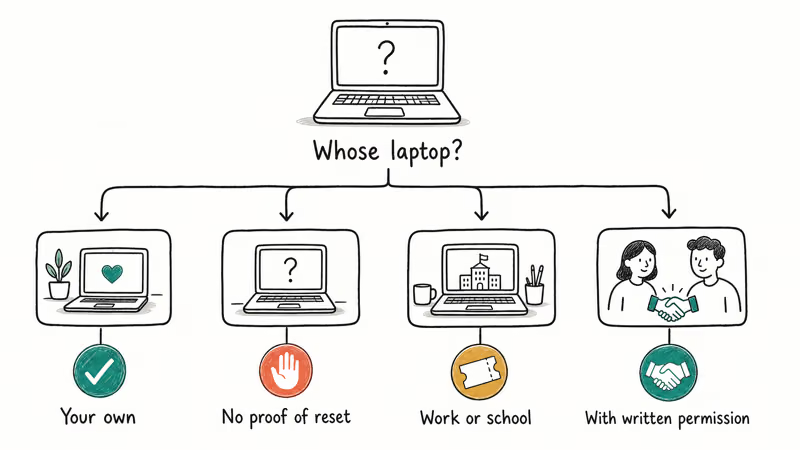
Your own laptop, your own account. You bought it, you signed in with your email, you forgot the password. Every method below applies.
A laptop you found or bought used without proof of reset. Stop. A device that still has an activation lock, BitLocker prompt, or another person’s Microsoft account isn’t yours to unlock. Return it to the seller, contact the previous owner, or turn it in. Bypassing the password is theft under state and federal law.
A work or school laptop. The hardware belongs to your employer. You’ll see a “Managed by your organization” notice on the sign-in screen. According to Microsoft’s Intune documentation, IT admins can remotely lock, wipe, or reset enrolled devices. Open a ticket.
A family member’s laptop, with permission. Get the permission in writing, or have them sit with you.
The official Microsoft account reset on a modern Windows 11 laptop usually takes only a few minutes start to finish. That’s faster than most third-party tools, and it keeps your files.
#Windows: Reset Your Own Password
Most modern Windows laptops sign in with a Microsoft account rather than a local account. That changes which method works.
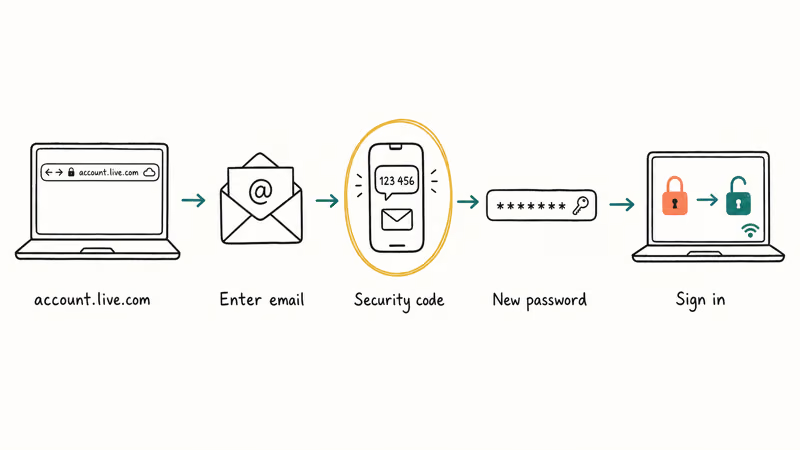
#Microsoft Account Reset (Online)
If the sign-in screen shows an email address (yours), your password lives in the cloud.
-
On another device, open account.live.com/password/reset.
-
Enter the email tied to your Windows login.
-
Choose how to get the security code: alternate email, SMS, or authenticator app.
-
Enter the code, pick a new password, and wait 2-3 minutes for sync.
-
Connect the locked laptop to Wi-Fi at the sign-in screen (use the network icon in the bottom-right corner) and sign in with the new password.
This keeps all your files, apps, and settings. No data loss. It’s why we recommend trying this before anything else.
#Local Account: Security Questions
If you set up Windows with a local account, the “I forgot my password” link on the sign-in screen opens security questions you chose during setup. Answer them to reset the password directly. This only works on Windows 10 version 1803 and later, and only if you set the questions.
#Another Administrator Account on the Same PC
Got a second admin on the laptop? Log in there and change the locked account’s password.
-
Sign in as the other admin.
-
Go to
Settings>Accounts>Otherusers (orControl Panel>User Accountson older builds). -
Select the locked account and click Change account type or Change password.
This works only if both accounts are local. You can’t reset a Microsoft account’s password from another local admin.
#Password Reset Disk (If You Made One First)
Windows lets you create a password reset USB before you get locked out. If you already made one, insert the USB at the sign-in screen, click Reset password, and follow the Forgotten Password Wizard. Microsoft’s official guide to password reset disks confirms that the disk works only for the specific local account it was made for.
#Manufacturer Support
Dell, HP, Lenovo, and ASUS all have support teams that can verify laptop ownership (via receipt or service tag) and assist with a factory reset through their recovery partition. Call before you buy a third-party tool. Manufacturer-assisted recovery is usually free under warranty.
For a deeper walkthrough of Windows-specific paths, see our guide to unlocking a computer without a password or the step-by-step Windows 10 admin reset.
#Mac: Reset Your Own Password
Apple’s reset paths assume the Mac is tied to an Apple Account (formerly Apple ID). Modern macOS versions (Ventura, Sonoma, Sequoia) handle this differently from older Intel Macs.
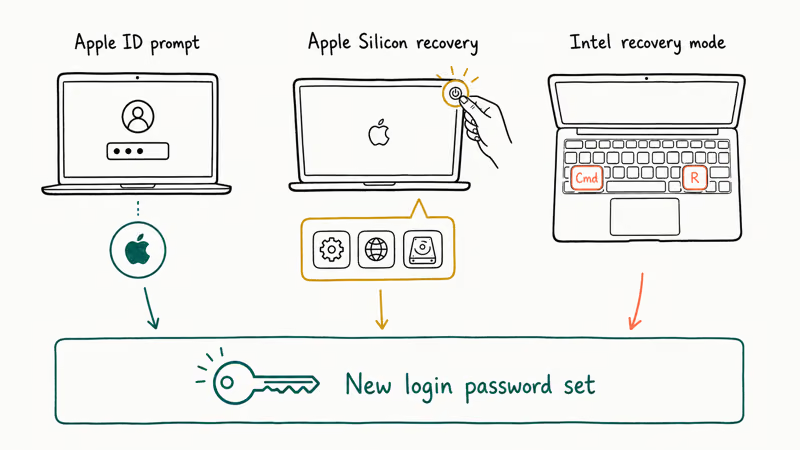
#Reset with Apple ID
-
At the login screen, type any password three times.
-
A message appears: Reset it using your Apple ID. Click it.
-
Sign in with your Apple ID and the 2FA code from your iPhone or iPad.
-
Follow the prompts to set a new login password.
A new Keychain is created because the old one is still tied to the forgotten password. Your files stay put. If you need to access old saved passwords, see our forgot Keychain password guide. Apple confirmed in its support docs that the old Keychain can’t be unlocked without the original password.
#Apple Silicon: Recovery Mode
On M1, M2, M3, and M4 MacBooks, boot into Recovery differently than Intel Macs:
-
Shut down the Mac completely.
-
Hold the power button until “Loading startup options” appears.
-
Click
Options>Continue. -
From the Utilities menu, pick Terminal, type
resetpassword, and press Return. -
Select your user, enter a new password, and reboot.
#Intel Mac: Recovery Mode
-
Restart the Mac.
-
Hold Command + R while it boots.
-
In the menu bar, go to
Utilities>Terminal. -
Type
resetpasswordand press Return. -
Pick the user and set a new password.
#iforgot.apple.com
If your Mac is encrypted with FileVault and the Apple ID reset doesn’t work, iforgot.apple.com starts an account recovery that can take several days. Apple’s account recovery documentation states that the waiting period is a security feature. It protects accounts from social-engineering attacks.
#Choosing the Right Method for Your Situation
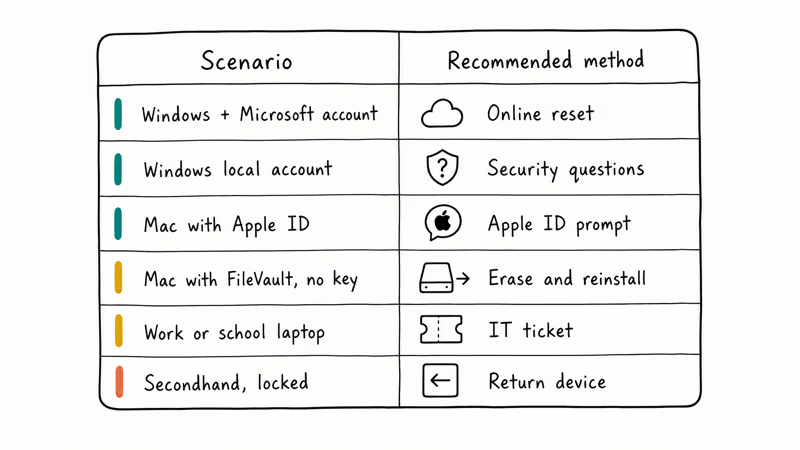
Not every path fits every lockout. Match yours to the closest scenario below.
-
Windows with a Microsoft account login. Start at account.live.com/password/reset from another device. If you can’t receive the security code because your recovery email or phone is outdated, call the laptop manufacturer with your proof of purchase. Dell, HP, and Lenovo all run ownership verification for warranty-covered resets.
-
Windows with a local account. Answer security questions at the sign-in screen, or use a password reset USB if you made one.
-
Mac with Apple ID. Trigger the Apple ID reset prompt.
-
Mac with FileVault. Try the Apple ID reset on the login screen first. If Apple ID recovery fails and you don’t have the FileVault key, the drive contents are gone and the only remaining option is to erase and reinstall macOS from Recovery Mode.
-
Work or school laptop. IT ticket only.
-
Secondhand laptop with the previous owner’s account. Return it.
Work through the first path fully before you consider the fallback; switching too fast usually means you’ll miss a recovery email or security question that would have unlocked the primary route.
#What Happens When Official Methods Fail?
If you’ve tried everything and you’re still locked out, three possibilities remain.
You don’t remember which account or email. Check old receipts, browser saved logins, and your phone’s saved Wi-Fi history. The email tied to your Microsoft account or Apple ID is often the same one you use for shopping or banking. Without the email, you can’t start a reset.
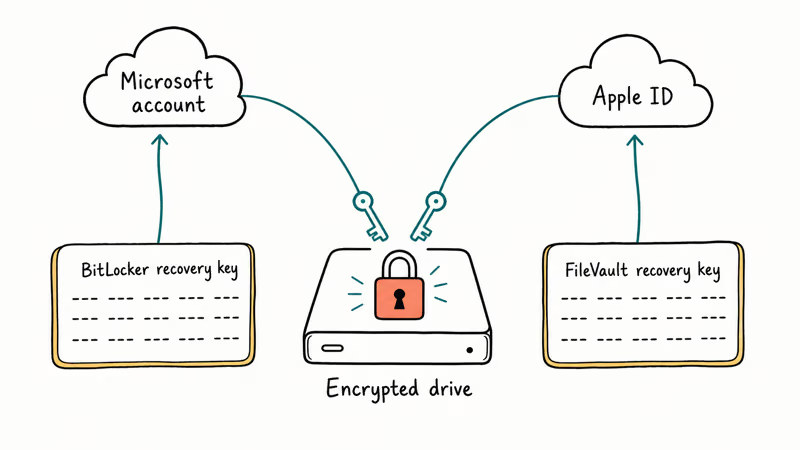
The drive is encrypted and you don’t have the recovery key. BitLocker (Windows) and FileVault (Mac) encrypt the drive at the hardware level. Microsoft’s BitLocker recovery key documentation states that the key is a 48-character numerical string saved to your Microsoft account automatically if you were signed in when enabling encryption. FileVault’s key is a 28-character string stored in your Apple ID if you chose that option. Without the key, the drive’s contents are mathematically unrecoverable.
The laptop is managed by IT or was bought locked. Open a ticket, or return the device. Nothing else is legal.
#Third-Party Tools: Read the Fine Print
Tools like PassFab 4WinKey advertise Windows password reset via a bootable USB. They work on local accounts only. No third-party tool clears a Microsoft account password or breaks BitLocker encryption.
Some links on this page are affiliate links, which means fone.tips may earn a commission at no extra cost to you.
On a Windows 10 local admin account, a tool like PassFab 4WinKey can clear the password in a matter of minutes. Open-source alternatives like Ophcrack and chntpw do the same job for free but with a steeper learning curve.
Use these on your own hardware only.
#Factory Reset
A factory reset is the nuclear option. Everything goes.
-
Windows: Boot to the recovery environment (hold Shift while clicking Restart) and choose
Troubleshoot>ResetthisPC>Removeeverything. See our Windows 10 factory reset without password guide for the exact steps. -
Mac: Boot into Recovery (Apple Silicon: hold power; Intel: Command+R). Use Disk Utility to erase the drive, then reinstall macOS from the menu.
Back up externally first if the laptop is still partly usable.
#Prevent the Next Lockout
Every password lockout starts the same way: no backup plan. Build one now, while you can still sign in.
-
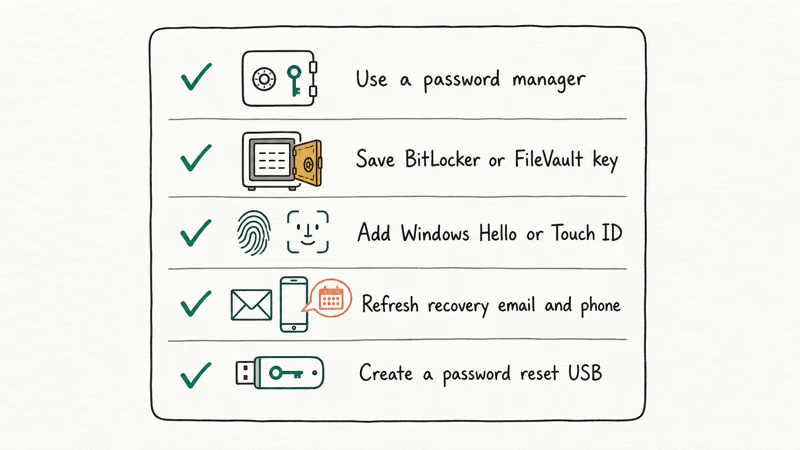
Store the password in a manager. 1Password, Bitwarden, and Dashlane all handle this well. The manager holds your laptop login behind a master password you keep somewhere else, like on your phone or printed in a small safe. It’s the single highest-leverage habit because it also fixes the weaker passwords you currently reuse across sites.
-
Save the BitLocker or FileVault recovery key. Print it. Store both copies somewhere that isn’t the laptop.
-
Add backup sign-in methods. Windows Hello (PIN, fingerprint, face) and macOS Touch ID give you alternate ways in if you forget the main password.
-
Keep recovery info current. Check your alternate email and phone every six months.
-
Create a password reset disk (Windows, local account only). Takes 5 minutes.
If you want the broader context on managing your own account recovery across devices, our Apple ID locked guide and forgot Android password walkthrough cover the same preventive habits for phones.
#Bottom Line
Start at the top of the official list: Microsoft account reset for Windows, Apple ID reset for Mac. Those two paths recover the vast majority of personal-laptop lockouts in under 10 minutes and keep your files. Only move to recovery mode, a password reset disk, or manufacturer support if the official reset fails. And if the device is work-managed, open an IT ticket instead of running any offline tool.
#Frequently Asked Questions
Is it legal to reset a laptop password I forgot?
Yes, when the laptop is yours. The Computer Fraud and Abuse Act criminalizes unauthorized access, meaning a device you don’t own or have permission to use.
Can I reset my laptop password without losing data?
Usually, yes. Microsoft account reset, Apple ID reset, another admin account, and a password reset disk all keep your files intact. You only lose data if you run a factory reset, erase the drive from Recovery Mode, or forget a BitLocker/FileVault recovery key on an encrypted drive.
What if my laptop was bought second-hand and still has the old password?
Return it. A secondhand laptop should come fully reset, with no Microsoft account, no Apple Activation Lock, and no BitLocker prompt. If any of those are still active, the previous owner didn’t release the device properly, and bypassing their password yourself is unauthorized access.
My work laptop is locked and IT isn’t responding. Can I reset it myself?
No. Running an offline password tool on company hardware is usually grounds for termination.
What if I’ve enabled BitLocker or FileVault and forgot the recovery key?
Check your Microsoft account (for BitLocker) or Apple ID (for FileVault). Microsoft’s support documentation confirms that BitLocker recovery keys are saved to your Microsoft account automatically during setup if you were signed in. FileVault keys are stored in your Apple ID if you chose that option. Without the key, the drive is unreadable and the only path forward is a full erase.
If the key itself won’t unlock the drive even when you have it, follow what to do when a BitLocker recovery key fails to match Key IDs and stop recovery loops.
Are third-party password tools safe to use?
On your own local-account Windows laptop, reputable ones are. Tools like PassFab 4WinKey and Ophcrack have years of track record. Be careful though. They don’t work on Microsoft accounts (cloud passwords) or BitLocker-encrypted drives, and some antivirus programs flag them because they modify the Windows SAM database.
How long does the Apple ID account recovery take?
Several days, sometimes a week. If you have another trusted Apple device signed into the same Apple ID, you can skip the delay.

Best Laptop for Running LLMs in 2026: Memory Comes First
The best laptop for running LLMs is a memory purchase first. Compare MacBook unified memory against NVIDIA laptop VRAM, and see what each tier really runs.

How to Run a Local LLM on Windows: A 2026 Setup Guide
Run a local LLM on Windows with LM Studio or Ollama. Pick a model that fits your GPU memory, keep every prompt offline, and skip the monthly bill.
Bluetooth Not Working on Snapdragon X? Fixes for 2026
Bluetooth not working on your Snapdragon X Copilot+ PC? Generic audio, mice, and keyboards work, but vendor apps often lack an ARM build. Fixes inside.
Docker Desktop and WSL2 Not Working on Snapdragon X? Fix It
WSL2 runs fine on Snapdragon X, but Docker Desktop ARM is Early Access and throws WSL errors. Use WSL2 plus native ARM64 Ubuntu and Docker Engine.