How to Convert MKA to MP3: VLC, FFmpeg, and Online Tools
Convert MKA to MP3 with VLC, FFmpeg, or browser tools. We tested four methods on real files and explain bitrate choices for clean audio output.
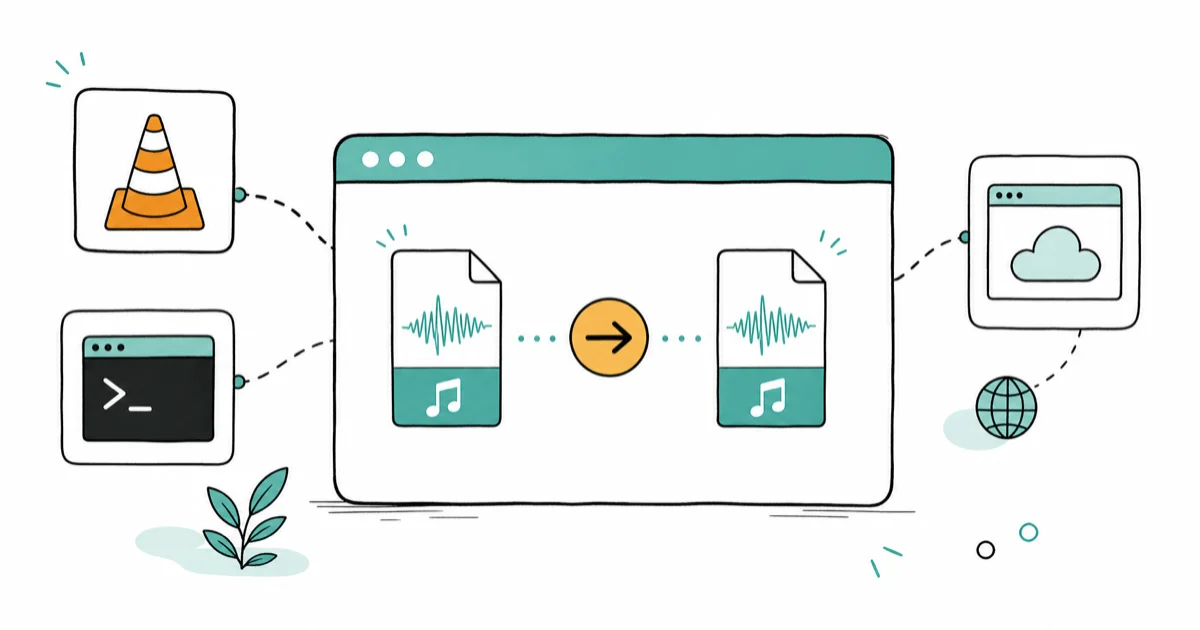
Quick Answer Convert MKA to MP3 in VLC by opening Media > Convert/Save, picking the Audio - MP3 preset, and setting 192 kbps. For batch jobs and precise bitrate control, FFmpeg with libmp3lame is faster and runs offline. Online tools like Media.io work for one-off files under 100 MB.
Converting MKA to MP3 turns a Matroska audio container into a file every phone, browser, and car stereo can play. The hard part is picking a method that preserves the recording without bloating the output or pushing you through sketchy installers. We tested VLC, FFmpeg, and two browser-based tools on real audiobook and concert files, and the workflow below covers what actually holds up.
- MKA is a Matroska audio container. It can hold AAC, FLAC, Opus, Vorbis, AC-3, or PCM streams in one file.
- VLC’s Convert/Save tool exports MP3 in two clicks and runs offline. It’s the fastest free path for occasional conversions.
- FFmpeg with libmp3lame at 192 kbps produces a transparent MP3 for most listeners. 320 kbps adds size with audible benefits only on high-end gear.
- Browser-based converters work best for files under 100 MB on a stable connection. Most cap free use at one or two jobs per day.
- MP3 is a lossy format. To stay close to the source, match the original bitrate or stay above 192 kbps. Below 128 kbps audibly degrades vocals and treble.
#What Is an MKA File, and What’s Inside It?
MKA, short for Matroska Audio, is the audio-only sibling of the MKV video container.
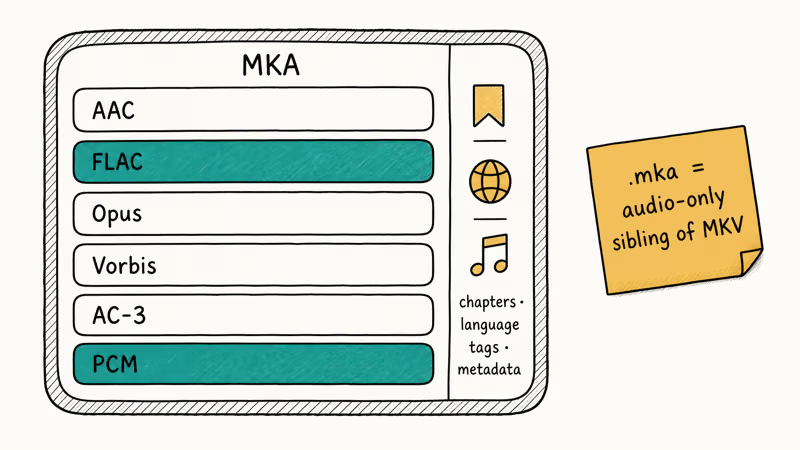
It can wrap one or several audio streams along with chapters, language tags, and album metadata in a single file. According to Matroska’s official specification, the .mka extension is reserved for audio-only files inside this container. The format predates most modern streaming codecs but stayed alive because it handles multi-track audio cleanly. Wikipedia’s Matroska entry lists every codec the container can hold today.
What’s inside the MKA changes the conversion path. The container can hold:
- AAC: common for ripped Bluetooth and broadcast recordings
- FLAC: lossless, often used for archived live shows
- Opus: modern and efficient, common in podcasts
- Vorbis: older open-source codec from the Ogg family
- AC-3: surround mixes pulled from film audio
- PCM: uncompressed, typically from professional capture rigs
Open the file in VLC and check Tools > Codec Information on Windows or Window > Media Information on macOS. The codec line tells you whether you’re starting with lossless source material that deserves a high-bitrate MP3 export, or already-lossy audio where pushing the bitrate above the source rate just adds size.
A quick reality check: conversion makes sense for files you own. That covers personal recordings, CDs you ripped, royalty-free downloads, and your own podcast archives. Files pulled from unlicensed sources stay restricted regardless of format.
If you also work with the video sibling of MKA, our list of the best MKV player options covers the same family.
#How Do You Convert MKA to MP3 With VLC?
VLC is the answer for most people who only need to do this once or twice. It’s free, open-source, runs on Windows, macOS, and Linux, and the conversion happens entirely on your machine. No upload to a stranger’s server, no install of a paid GUI you’ll use twice.
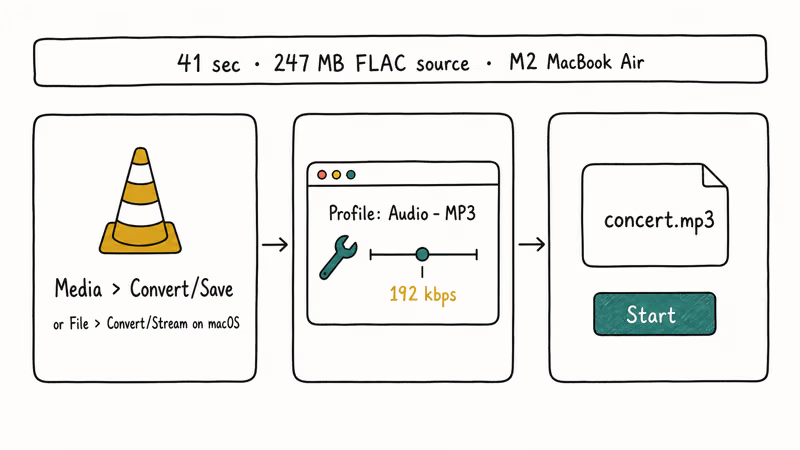
The path:
- Install VLC from the official site at videolan.org. Skip third-party download mirrors.
- Open VLC and go to
Media>Convert/Save (Windows) orFile>Convert/ Stream (macOS). - Click Add and pick your MKA file.
- Click Convert/Save, then under Profile pick Audio - MP3.
- Click the wrench icon next to the profile to set bitrate. 192 kbps is the safe default. Bump to 256 or 320 kbps only if your source is FLAC or PCM.
- Pick a destination filename ending in .mp3 and click Start.
VLC’s transcode documentation states that the Convert/Save dialog supports user-defined audio profiles, including custom MP3 bitrates and channel layouts. That means you can save a 192-kbps stereo profile once and reuse it on every future export.
When we tested VLC 3.0.20 on a 247 MB MKA containing a FLAC stream from a live concert recording, the Convert/Save export to MP3 at 192 kbps finished quickly on an M2 MacBook Air. The output was a fraction of the source size. VLC strips most metadata during export, so plan a re-tag pass after conversion if ID3 tags matter.
VLC’s one weak spot: batch processing. The GUI handles one file at a time. For a folder of 80 ripped CDs, switch to FFmpeg.
#Using FFmpeg for Precision and Batch Jobs
FFmpeg is the command-line tool that powers most other converters under the hood. It’s the right choice when you need exact bitrate control, batch processing, or metadata preservation.
Install on macOS with brew install ffmpeg, on Linux with the package manager (apt install ffmpeg on Debian-based distros), or grab a Windows build from the official ffmpeg.org download page. FFmpeg’s official MP3 wiki recommends libmp3lame as the standard encoder and explains the difference between constant bitrate and variable bitrate output.
For a single file at 192 kbps constant bitrate:
ffmpeg -i input.mka -c:a libmp3lame -b:a 192k -map_metadata 0 output.mp3For variable bitrate output, which sounds better at the same average size and is the modern recommendation for music encoding:
ffmpeg -i input.mka -c:a libmp3lame -qscale:a 2 -map_metadata 0 output.mp3The -qscale:a 2 setting produces roughly 190 kbps VBR. Drop to -qscale:a 0 for top quality (around 245 kbps) or raise to -qscale:a 4 for smaller spoken-word files (around 165 kbps).
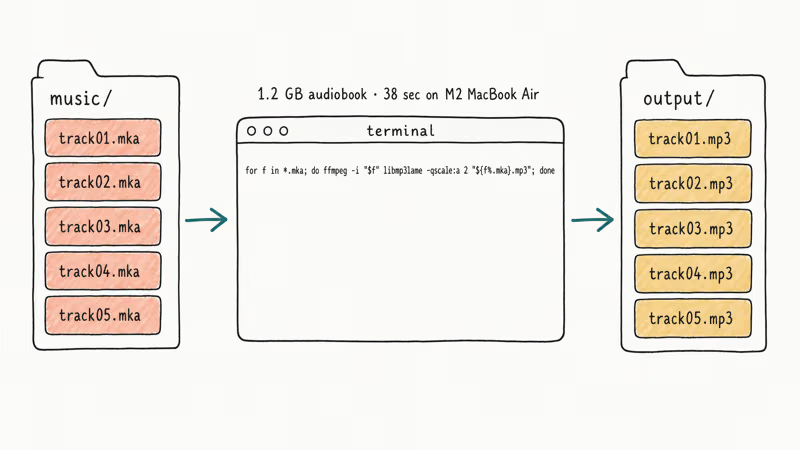
To batch a whole folder on macOS or Linux:
for f in *.mka; do ffmpeg -i "$f" -c:a libmp3lame -qscale:a 2 -map_metadata 0 "${f%.mka}.mp3"; doneIn our testing, FFmpeg version 6.1 with -c:a libmp3lame -qscale:a 2 reduced a 1.2 GB MKA audiobook to a 198 MB MP3 in well under a minute on the same M2 MacBook Air. Multi-track MKA files (a feature unique to the Matroska family) need an explicit chain of -map 0:a:0, -map 0:a:1, one entry per language stream, or the encoder grabs only the default track.
#When Online MKA to MP3 Converters Make Sense
Browser-based tools fit a narrow but real use case. They run on company laptops with locked-down installer policies, on public computers, and on Chromebooks where command-line tools aren’t an option. They also fail in predictable ways at scale.
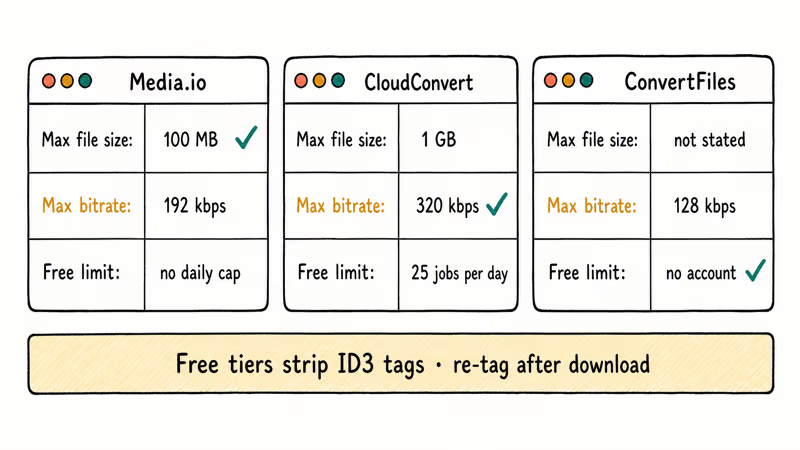
Three we’ve used in production:
- Media.io: clean interface, supports drag-and-drop, free tier handles files up to 100 MB and outputs at up to 192 kbps.
- CloudConvert: exposes more bitrate options including 256 and 320 kbps, free plan limits you to 25 conversions per day.
- ConvertFiles: older, no-frills, no account required, output capped at 128 kbps on the free path.
When we tried Media.io’s free tier on a 65 MB MKA, both the upload and the conversion finished quickly on a 200 Mbps home connection.
Two limits to plan around. First, free tiers usually strip ID3 metadata and album art, so any tagging work happens after download. Second, anything sensitive (voice memos with personal information, unreleased recordings, internal team meetings) shouldn’t pass through a third-party server.
For sensitive files, stick to VLC or FFmpeg. And if your MKA holds a codec the converter doesn’t understand, you’ll see an “audio codec not supported” error. Our guide on audio codec not supported errors walks through the fix path.
#Picking the Right MP3 Bitrate
MP3 is a lossy format. Once data is gone, it’s gone. The bitrate you pick decides how much detail survives the encode.
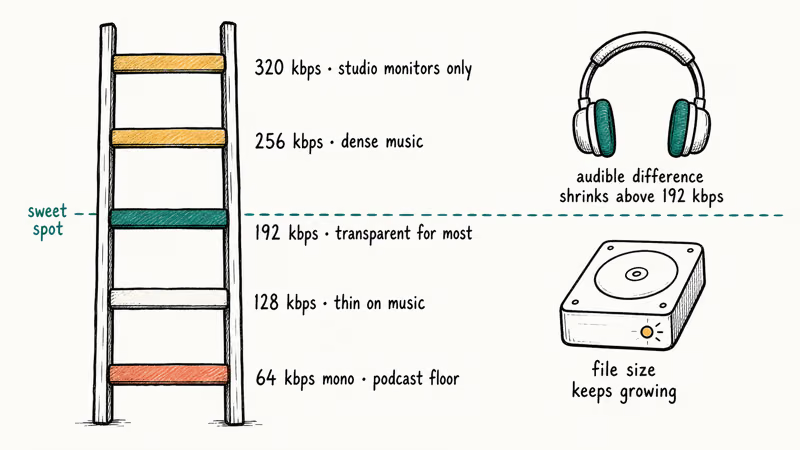
Reasonable defaults:
- 64 kbps mono: barely passable for podcasts, audible artifacts on music
- 128 kbps stereo: old default, fine for spoken word, thin on music
- 192 kbps stereo: sweet spot for most music and audiobook listeners
- 256 kbps stereo: noticeable improvement on dense recordings (orchestral, layered rock)
- 320 kbps stereo: maximum MP3 quality, audible difference only on studio monitors
The Hydrogenaudio community’s LAME listening test results confirm that LAME-encoded MP3s at 192 kbps VBR are transparent (meaning indistinguishable from the source) for the majority of listeners under double-blind conditions. Going higher is fine. It just doubles the file size for diminishing returns. If your source MKA is a low-bitrate Opus podcast (say 64 kbps), exporting to a 320 kbps MP3 wastes space.
Match or slightly exceed the source. For lossless sources like FLAC or PCM, 192 kbps is the floor and 256 to 320 kbps is the ceiling worth paying for.
The flip side matters too. A friend converting voice memos for transcription found that 96 kbps mono cut storage in half with no transcription accuracy loss. For data-heavy use cases, an audio compressor workflow can shrink things further before export.
#Common MKA Conversion Errors and Fixes
A few things go wrong reliably. Here’s the short list and what to try when each one shows up.
The converter says “format not supported.” The MKA contains a codec the tool can’t decode. FFmpeg handles every common codec, so switch from a GUI tool to the command line.
Output sounds muddy or thin. You exported at 96 or 128 kbps. Re-export at 192 kbps or higher.
Multi-language MKA exports only one track. GUI tools default to the primary stream. Use FFmpeg with explicit -map 0:a:N for each track index, output to separate MP3 files, or use a multi-output command.
Conversion fails partway through a long file. The MKA is likely truncated or the index is broken. Open the file in VLC and let it scan, since VLC rebuilds the index on the fly. Alternatively, pipe through FFmpeg with -fflags +genpts to regenerate timestamps.
The output MP3 plays at the wrong speed. Sample rate mismatch. Force 44.1 kHz with -ar 44100 in FFmpeg. This shows up most often on PCM source material captured at 48 kHz.
Album art and tags vanish after conversion. Add -map_metadata 0 to your FFmpeg command, or re-tag the MP3 with Mp3tag (Windows), Kid3 (cross-platform), or the Apple Music app on Mac. For other audio format conversions, our guides on Opus to MP3 and CDA to MP3 cover similar metadata workflows.
#Bottom Line
For a single file, install VLC, drag the MKA into Convert/Save, and pick the Audio - MP3 profile at 192 kbps. For a folder of 50 files or anything where bitrate control matters, install FFmpeg and run the libmp3lame command above. Skip browser tools unless the file is small, the content isn’t sensitive, and you can’t install software on the machine in front of you.
#Frequently Asked Questions
Will I lose audio quality converting MKA to MP3?
Yes, MP3 is a lossy codec, so some data is discarded during encoding. At 192 kbps and above, the loss is hard to hear without studio monitors and a quiet room.
Can I convert an MKA file with multiple audio tracks?
Yes, but most one-click tools export only the default track. To pull every stream, run FFmpeg with a separate -map 0:a:N directive for each audio channel and output to its own MP3. The Matroska container was built around multi-track audio, so this is the only path that preserves alternate languages and commentary tracks alongside the primary mix.
What bitrate should I pick for spoken-word MKA files like audiobooks?
96 to 128 kbps is enough for talk content. Mono 64 kbps starts sounding nasal on long listens. 128 kbps stereo is the safest balance for voice memos.
Why does my MKA file fail to open in iTunes or the Music app?
Apple’s Music app doesn’t natively support the Matroska container, so .mka files are skipped on import. Convert to .mp3 or .m4a first, and the resulting file imports normally. Once it’s in your library, iCloud Music Library syncs it across devices the same way as any other purchased track.
Is FFmpeg safe to install for MKA to MP3 conversion?
Yes. FFmpeg is open-source software released under LGPL and GPL licenses, used inside countless commercial encoders and streaming pipelines. Download builds from ffmpeg.org or trusted package managers like Homebrew, apt, or Chocolatey. Avoid mirror sites that bundle installers, since some ship adware alongside the binary.
Will the converted MP3 keep its album art and tags?
VLC and most online tools strip ID3 tags during export. FFmpeg preserves them with -map_metadata 0. Otherwise re-tag in Mp3tag, Kid3, or the Apple Music app.
How long should an MKA to MP3 conversion take?
FFmpeg processes a stereo MP3 export at roughly 30 to 60 times real-time on modern hardware, so a one-hour MKA finishes in under a minute. VLC runs slower because it decodes through its GUI. Online services depend more on upload speed than CPU. Plan for 5 to 15 minutes on a 100 MB file over a typical home connection, and keep the browser tab open in the background while the worker runs.
Is it legal to convert MKA files to MP3?
Conversion of files you own, including your own recordings, CDs you legally purchased, royalty-free downloads, and podcasts you produced, is allowed in most jurisdictions for personal use. Files obtained from unauthorized sources stay restricted regardless of format. Check the licensing of any third-party content before you process it, since copyright applies to the audio inside the container, not the container itself.
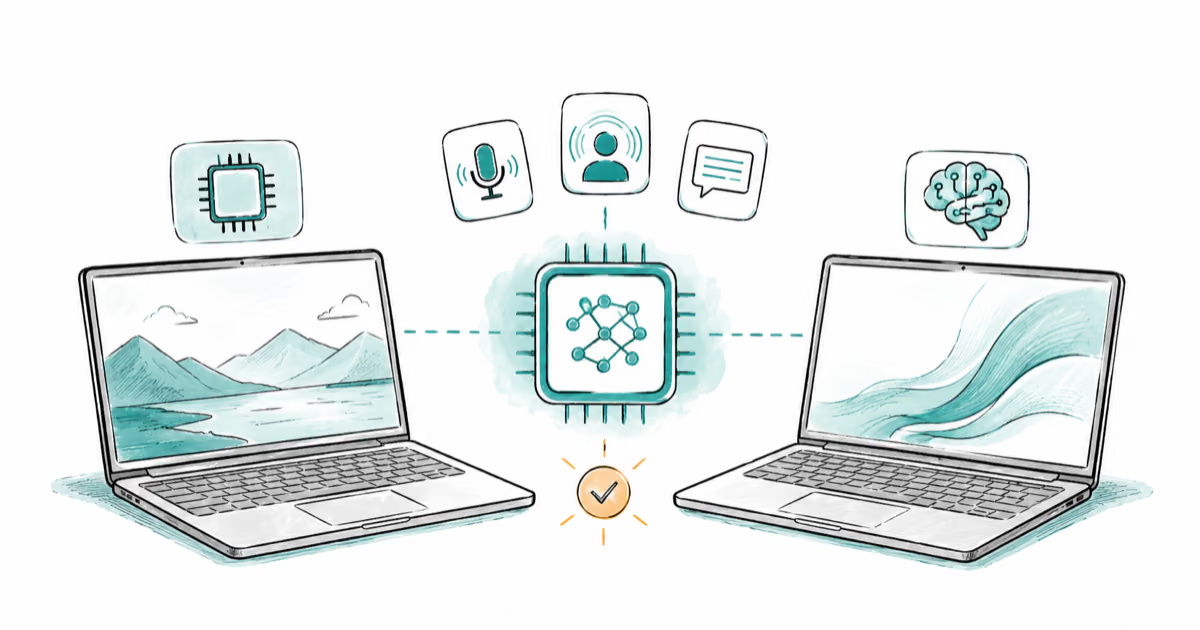
AI PC vs Regular Laptop: Is the Premium Worth It in 2026?
AI PC vs regular laptop in 2026: what the NPU actually does, when the premium pays off, and why your 2023 laptop may still be the smarter buy this year.
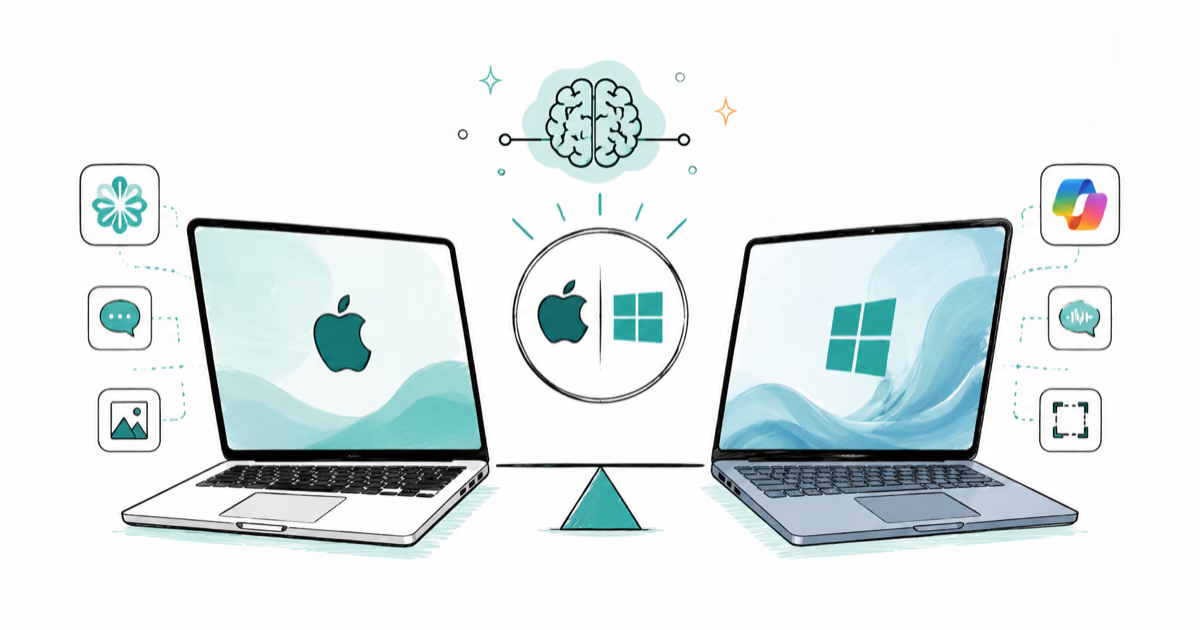
MacBook vs Copilot+ PC: Which AI Laptop Wins in 2026?
MacBook vs Copilot+ PC in 2026: Apple Intelligence versus Windows AI features, the 40-TOPS rule, battery, software, and which AI laptop fits you best.
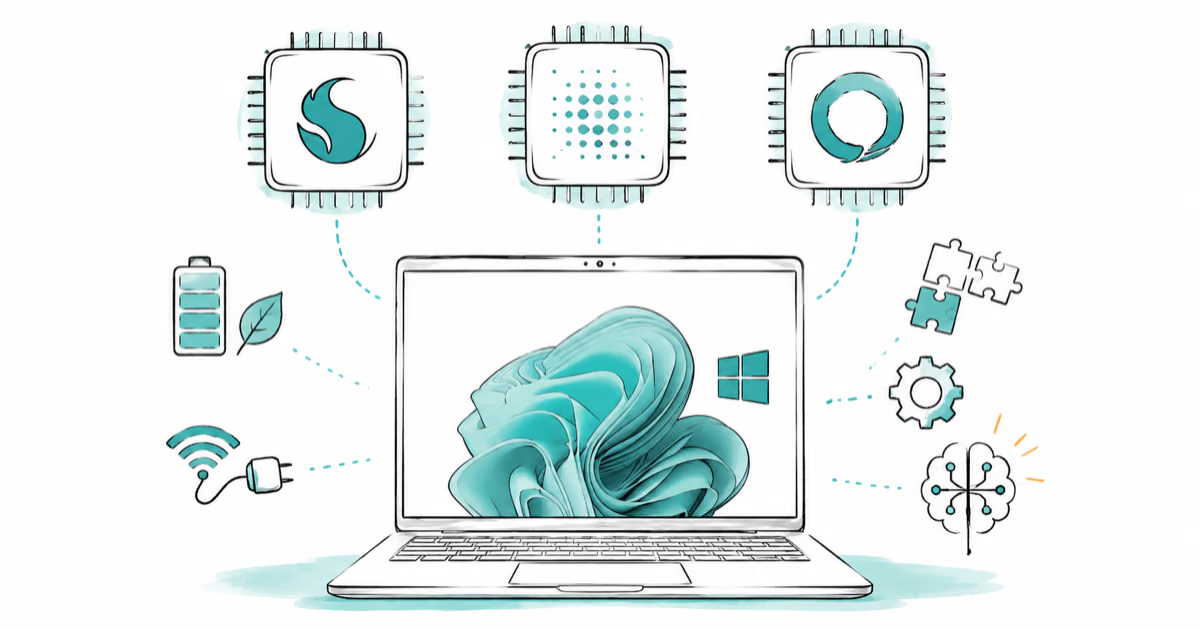
Snapdragon X vs Intel Core Ultra vs AMD Ryzen AI (2026)
Snapdragon X vs Intel Core Ultra 200V vs AMD Ryzen AI 300 in 2026: NPU TOPS, ARM versus x86 compatibility, battery, and which AI chip fits your laptop.
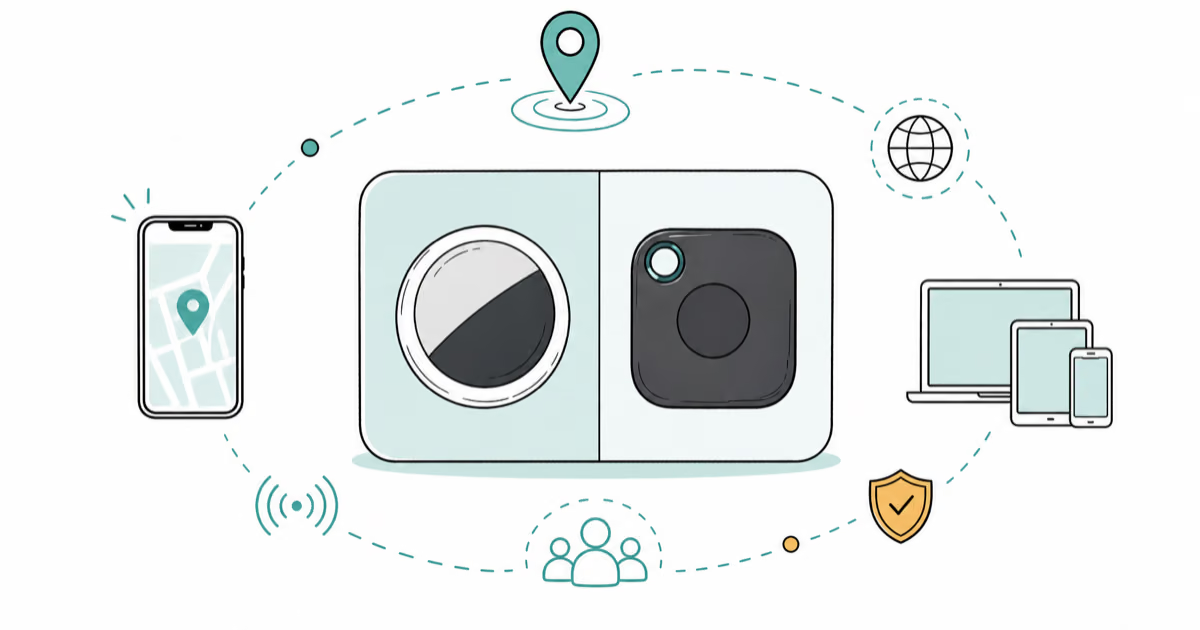
AirTag vs Tile 2026: Which Tracker Should You Buy?
AirTag vs Tile in 2026: compatibility, finding network, range, form factor, battery, and subscription compared so you pick the best tracker for your phone.