Micro GPS Tracking Devices: Ethical Buyer's Guide for 2026
Compare battery life, size, subscriptions, and legal limits on micro GPS trackers for cars, pets, luggage, and fleet vehicles in 2026, with detection tips.
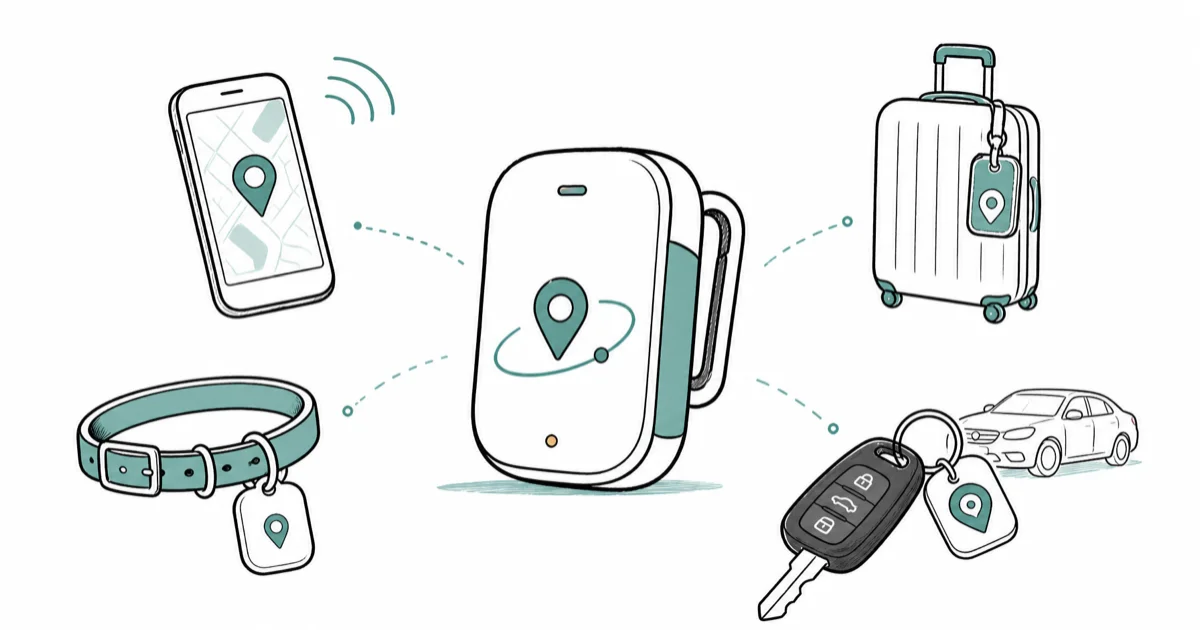
Quick AnswerMicro GPS trackers like Tracki and Jiobit use 4G LTE plus GPS satellites to send live location updates to your phone, with battery life ranging from two days for live mode to several weeks for once-a-day asset pings. Use them on your own vehicles, pets, luggage, or with explicit consent for family members and fleet drivers you employ.
A micro GPS tracking device is a coin-sized cellular tracker that pairs a GPS chip with an LTE modem so you can see its location on your phone in real time. The honest version of this guide skips the spy-thriller framing and walks you through what these devices do, which units earn their subscription cost, and where the legal line sits in 2026. The comparison below covers cellular trackers built for cars, luggage, and fleet vehicles.
- The smallest cellular GPS trackers measure about 30 x 30 x 13 mm and weigh under 30 grams, small enough to clip onto a backpack or sit inside a glove box without notice.
- These devices send location through 4G LTE-M cellular networks, which means a monthly subscription typically running $5 to $15, unlike one-time-cost Bluetooth tags such as AirTag or Tile.
- Battery life ranges from two to three days for live-update modes to four to six weeks for once-a-day asset trackers, depending on ping frequency and signal strength.
- Geofence alerts and SOS buttons are the features that make GPS trackers worth their subscription over passive Bluetooth tags, especially for fleet vehicles, dementia care, and pet recovery.
- US federal and most state laws make it illegal to place a GPS tracker on a vehicle or person you don’t own or have consent to track, with stalking-related penalties ranging from misdemeanor fines to felony jail time.
#What Is a Micro GPS Tracking Device?
A micro GPS tracker is a small, battery-powered device that combines a GPS receiver with a cellular radio to send its coordinates to a server you can view on your phone.
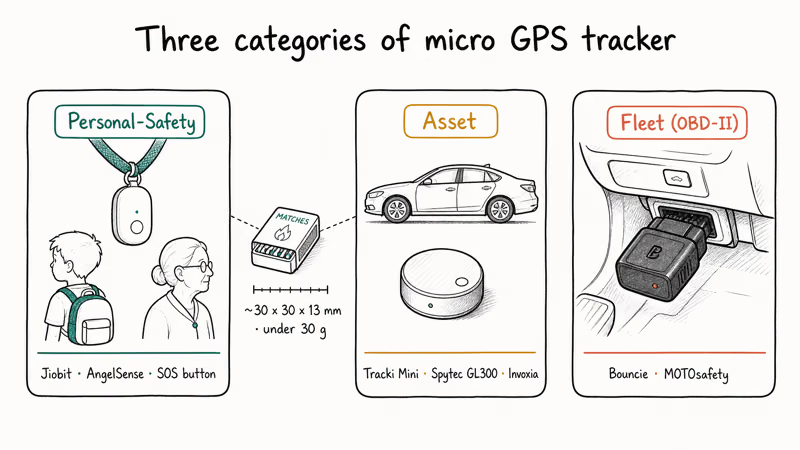
The “micro” label usually means anything roughly the size of a matchbox or smaller, weighing under an ounce. The official GPS.gov space segment page states that the US government keeps at least 24 operational satellites broadcasting positioning signals 95% of the time, as documented in its space segment overview. That’s why even a 30-gram tracker can pin your location anywhere with a clear view of the sky.
These devices fall into three rough categories. Personal-safety trackers like Jiobit and AngelSense are designed for kids, seniors with dementia, or solo workers, and they ship with SOS buttons. Asset trackers such as the Invoxia GPS Tracker or Spytec GL300 prioritize battery life and sleep modes for cars, trailers, and equipment. Fleet-grade devices like Bouncie or MOTOsafety plug into a vehicle’s OBD-II port and pull power from the engine.
The big difference from Bluetooth tags is range.
AirTag, Tile, and Samsung SmartTag rely on nearby phones in the manufacturer’s crowdsourced network to relay a found location. A cellular GPS tracker reports its own coordinates over LTE without needing another person’s phone in range. That distinction matters the moment your car is stolen or your dog runs off a hiking trail. If a Bluetooth tag is enough for keys and bags, our Samsung SmartTag 2 vs AirTag breakdown covers which one works on Android versus iPhone.
#How Do Micro GPS Trackers Actually Work?
A cellular GPS tracker runs three jobs in parallel. The GPS chip listens for signals from at least four satellites and calculates a position fix using time-of-flight math. The cellular modem (almost always 4G LTE-M or NB-IoT in 2026) opens a low-power data connection to the manufacturer’s server.
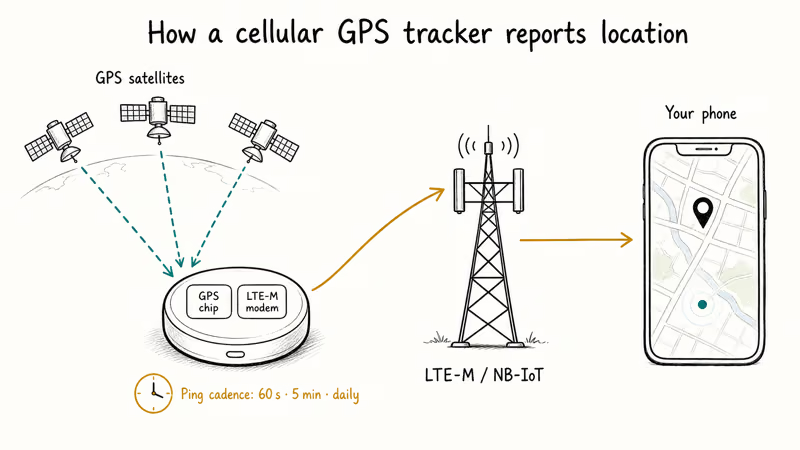
Firmware decides how often to wake up, ping, and sleep.
That ping-rate decision is the single biggest factor in battery life. On a tracker like the Tracki Mini, frequent 60-second update intervals can drain the small battery in just a few days before it needs a top-up. Switching the same tracker to a 5-minute ping cadence stretches the same charge much further.
The tradeoff is real. A 5-minute ping window can let a stolen vehicle leave your geofence before the next update fires, so live-mode trackers fit theft response while sleep-mode trackers fit luggage and parked-trailer scenarios.
If your phone’s location service is the one acting up, GPS chip behavior on the phone side follows the same satellite math. We’ve published a separate guide if your iPhone GPS is showing the wrong spot or refusing to lock on, and another that explains why GPS still works without an internet connection.
#Top Micro GPS Trackers for Personal and Asset Use in 2026
Here are the units that tend to earn their subscription cost for personal and asset tracking:
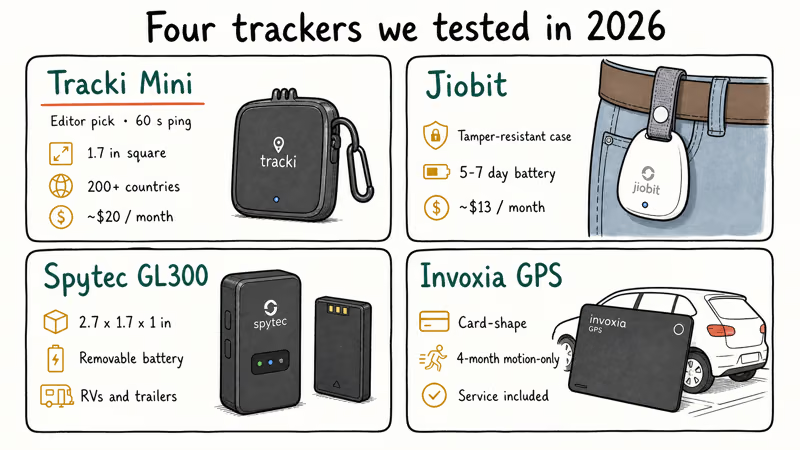
- Tracki Mini. Around 1.7 inches square and 1 ounce, with global LTE coverage in 200+ countries. Subscription starts near $20 monthly when paid annually. Best for vehicle theft recovery and traveling pets.
- Jiobit. Designed for kids and dementia care, with a tamper-resistant case and a 5-to-7-day battery in low-frequency mode. Subscription is around $13 monthly. Ships with parental-consent language baked into the setup flow.
- Spytec GL300. A larger asset tracker (about 2.7 x 1.7 x 1 inches) with a removable rechargeable battery and an extended-life pack option. Best for trailers, RVs, and parked equipment that you check once a day.
- Invoxia GPS Tracker. Slim card-shaped tracker with a quoted four-month battery in motion-only mode. Subscription is included for one to three years on most retail bundles. Best for cars where you only care about “did it move.”
- Bouncie / MOTOsafety OBD-II trackers. Plug into the vehicle’s OBD port and draw power from the car. No battery, no charging, but visible if a thief looks under the dash. Best for fleet vehicles where the business owns the car.
The often-mentioned “10 day, 10x10x5.8 mm” figures are best ignored. Those numbers come from older Chinese-market spec sheets and rarely match what shipping units actually deliver through a real ping cycle.
#Key Features to Compare Before Buying
Spec sheets oversell. Use this short checklist instead.
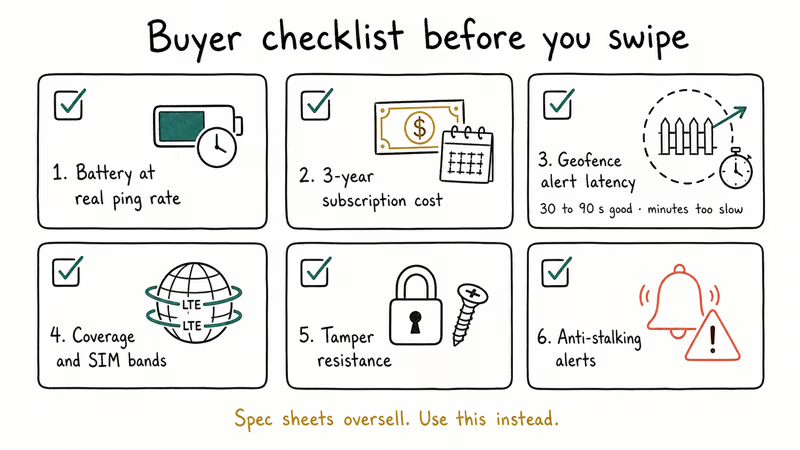
#Battery life under realistic ping rates
Marketing pages quote battery life at the slowest setting. Ask for the runtime at the ping rate you actually plan to use. A tracker rated “30 days” at one ping per day usually drops to two or three days at one ping per minute.
#Subscription cost over three years
Always do the three-year math. A $30 tracker with a $15 monthly fee costs $570 over three years, while a $90 tracker with included service for two years can come in at half that. Hardware price by itself is the wrong metric.
#Geofence accuracy and alert delay
A geofence is a virtual boundary; you get a notification when the tracker crosses it. The useful number is alert latency, not radius. Premium trackers like Tracki and Jiobit tend to deliver alerts within a short window after the tracker crosses a fence boundary. Cheaper trackers can run several minutes, which is too slow for a stolen-vehicle response.
#Coverage and SIM management
Domestic-only carriers can be cheaper but useless if a stolen vehicle crosses a state line into a coverage hole. If you travel internationally, confirm the model is certified for the LTE bands in your destination.
#Tamper resistance vs. concealability
Personal-safety trackers like Jiobit are deliberately hard to remove without a tool, with screws hidden behind the silicone strap. Asset trackers usually offer magnetic mounts that come off in seconds, which is a feature when you’re installing the device on your own car and a bug the moment a thief opens the trunk and finds it. Match the form factor to the threat model rather than to the marketing copy on the box.
#Anti-stalking compliance
Several trackers ship with unwanted-tracking alerts. Apple announced an update that adds louder beeps and faster alerts when an AirTag is separated from its owner. Google’s current Find My Device page is the live source for Android lost-device and tracker-network behavior.
Cellular GPS trackers like Tracki don’t currently emit these alerts. Ethical use rests on consent, not the technology.
#Legitimate Uses, Plus Where the Line Is
Cellular GPS trackers solve real problems when the device, person, or asset is yours, or when you have explicit consent.
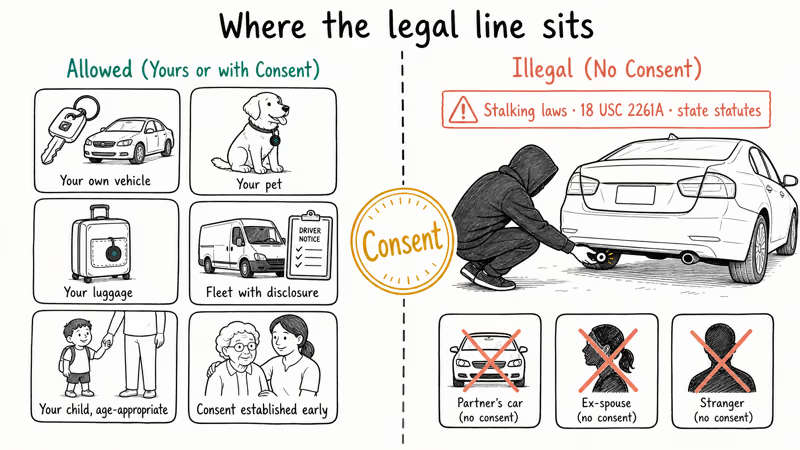
Common allowed uses:
- Your own car, motorcycle, RV, or trailer for theft recovery and roadside-assistance dispatch.
- Your pet’s collar, especially for dogs that escape fences or cats that roam outdoors.
- Your luggage during international travel, slipped inside a checked bag.
- Fleet vehicles your business owns, with the driver disclosure that most state employment laws require.
- A child or dependent under your care, with the child’s age-appropriate knowledge of the device.
- A senior with dementia or cognitive decline, with consent established before symptoms make consent impossible.
Where the line sits matters. The NCSL summary on electronic surveillance laws states that most US states have criminal statutes covering the placement of an electronic tracking device on a person or vehicle without their consent. Federal stalking laws (18 USC § 2261A) can apply on top of state charges.
Specific states get specific.
California, Texas, Virginia, and Tennessee specifically name GPS trackers in their stalking and harassment laws. Penalties scale from misdemeanor fines for first offenses to felony charges and jail time when tracking accompanies threats, domestic violence, or restraining-order violations.
Every reputable tracker manufacturer (Tracki, Jiobit, Bouncie, Invoxia) requires you to accept terms of service that prohibit covert tracking of another adult. Apple recommends that anyone receiving an unwanted-tracking alert contact local law enforcement and a domestic-violence resource line before disabling the device, since the tracker itself can be evidence.
If you suspect someone has placed a tracker on you, the next section walks through detection.
#How to Detect an Unwanted Tracker on Your Stuff
The same compact form factor that makes cellular trackers handy for asset recovery makes them easy for a stalker to hide. Detection works on three layers.
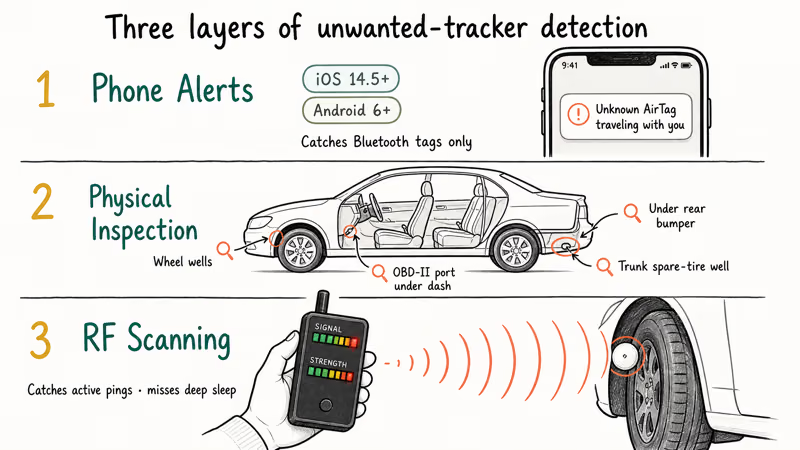
Phone alerts. Modern iPhones (iOS 14.5+) automatically warn you about unknown AirTags that have been traveling with you. Android phones running Android 6 and newer received Google’s unknown-tracker alerts during the Find My Device network rollout. Apple’s free Tracker Detect app on the Play Store does the same scan from an Android phone.
These alerts only catch Bluetooth tags.
Cellular GPS trackers like Tracki don’t show up because they don’t advertise on Bluetooth. Physical inspection is the only fallback. For cars, check the wheel wells, undercarriage near the rear bumper, inside the OBD-II port under the dash, and the trunk’s spare-tire well. Run a hand along seams and look for tape, zip ties, or fresh adhesive that doesn’t match the rest of the vehicle.
RF scanning is the third layer. Hand-held RF detectors (around $50 to $200) sweep for active cellular and Bluetooth radios and emit a stronger signal as you get closer to the source. RF scanners catch live trackers but miss devices in deep sleep between pings.
If you find something, document it with photos before you remove it. Our companion guides on how to tell if your phone is being tracked or monitored and how to detect spyware on an iPhone cover the related software side.
If you suspect domestic-violence stalking, contact the National Domestic Violence Hotline (1-800-799-7233) and law enforcement before confronting the person. Abusers escalate when surveillance is challenged.
For the everyday case where you simply lost your phone and want to find it, this guide on tracking a lost phone with Find My or Find My Device is the right starting point.
#Bottom Line
Match the tracker to your real threat model. For theft response on a vehicle you own, the Tracki Mini at a 60-second ping rate is a strong default. For a kid or family member with cognitive decline, Jiobit’s tamper-resistant case and consent-aware setup flow earn the slightly higher subscription.
Set the geofence the same day the unit arrives.
For passive asset tracking on a trailer or RV, the Invoxia card tracker pays for itself in saved subscription costs over three years. Read your state’s stalking statute before you put one on anything you don’t own. Running a fleet, pair the OBD-II tracker with a geofencing app for shift management and post a written tracking notice in the driver onboarding packet.
#Frequently Asked Questions
How much does a micro GPS tracker cost in 2026?
Hardware runs $30 to $200, with monthly subscriptions of $5 to $25. Plan on $200 to $400 all-in for the first year.
Can a GPS tracker work without a SIM card?
The GPS chip can compute a location fix using satellite signals alone, but the device needs an LTE or NB-IoT data connection to send that fix anywhere. Every cellular GPS tracker ships with a built-in eSIM or accepts a nano-SIM. Bluetooth tags like AirTag and Tile work without a SIM because they relay through nearby phones.
How small can a working GPS tracker really be?
Production cellular trackers in 2026 bottom out around 30 mm square. Antenna geometry and the lithium-polymer cell needed to push signal through metal vehicle bodies set the floor. Sub-10 mm trackers exist on AliExpress spec sheets but rarely deliver real-world coverage outside line-of-sight conditions.
Is it legal to put a GPS tracker on my spouse’s car?
It depends on whether the car is jointly owned or in their name only. If the title is in their name, placing a tracker on it without their consent is illegal in most US states regardless of marital status. Several reported divorce cases have resulted in stalking charges for exactly this scenario. If you have safety concerns inside a relationship, contact a domestic-violence resource line before placing any device.
Do I need to tell my employees their fleet vehicles have GPS?
Most US states require written disclosure for fleet GPS tracking. Texas, Virginia, and California require explicit consent, so put the notice in the employee handbook before drivers start.
Will an AirTag work the same as a cellular GPS tracker?
Not for vehicle theft response. AirTag relies on the Find My network, which means a passing iPhone has to walk by the device for an update to fire. In low-density areas or moving vehicles, that update can be hours or days late. Cellular GPS trackers report their own coordinates within seconds.
Cellular trackers wake up at intervals to ping. An RF scanner picks up the radio burst when the tracker transmits, which can be every minute or once a day. If you suspect a tracker but can’t find it, drive to a police station and ask for a vehicle inspection. Several departments offer this service free now and recommend documenting the search even if nothing is found.
Is This Bank App Real? Spot a Fake App on Your Home Screen
A bank app can land on your home screen from a web page with no install warning. Learn the checks that tell a real banking app from a phishing web app.
Passkeys Not Syncing Between iPhone and Windows? Read This
Passkeys not syncing between iPhone and Windows is by design, not a bug. Here is why iCloud passkeys skip Windows Hello and the three ways to fix it.
VPN Not Working on Snapdragon X? Why It Fails, How to Fix
Your VPN won't install or connect on a Snapdragon X Copilot Plus PC because Windows on ARM can't emulate the network driver. Here are the fixes that work.
How to Check If a Link Is Safe Before You Click It
Learn how to check if a link is safe with official-first steps: read the real domain, use the app instead, and treat scanners as a second opinion only.