How to Track a Lost Phone: Find Hub Guide for iPhone
Step-by-step guide to tracking a lost iPhone or Android phone using Find My, Google Find Hub, and IMEI. Works even when the phone is offline.
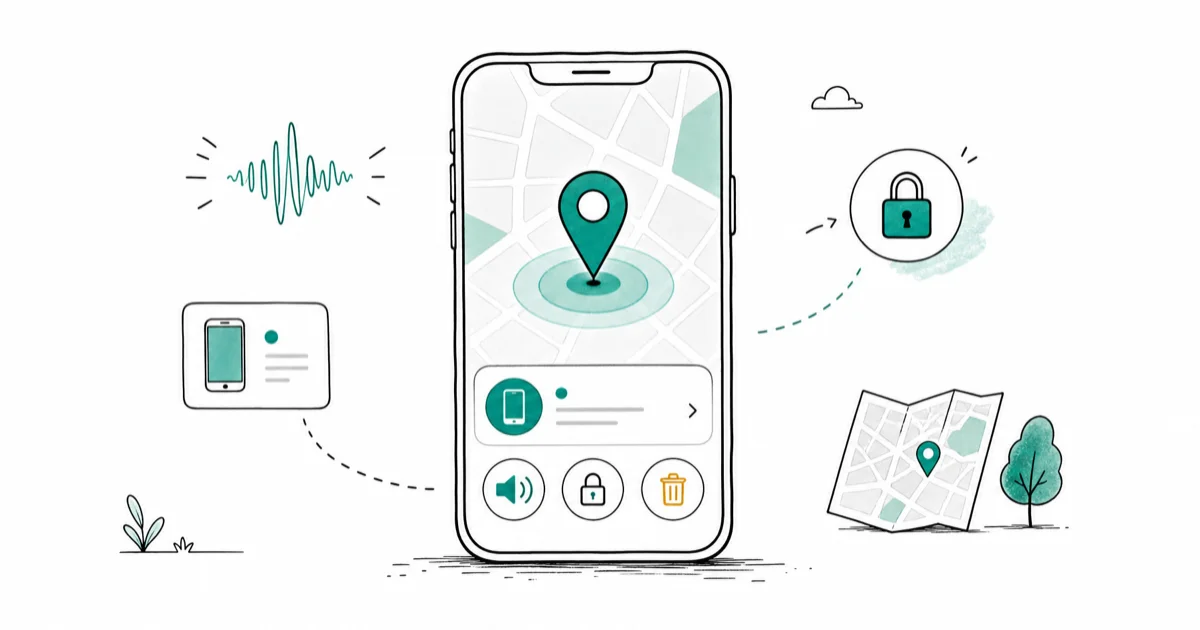
Quick AnswerFor iPhone, go to icloud.com/find or use the Find My app on another Apple device. For Android, go to android.com/find. Both services show your phone on a map and let you play a sound, lock, or erase it remotely.
Losing your phone is stressful, but Apple and Google both have free built-in tracking tools that work even when the phone is offline or on silent. The critical catch: you must enable them before the phone goes missing. This guide walks through the exact steps for both iPhone and Android.
- Apple’s Find My and Google’s Find Hub are free, built-in, and the most reliable tracking tools available.
- Both services can locate your phone even when it’s powered off, using Bluetooth signals from nearby devices.
- You must enable tracking before losing your phone for any of these methods to work.
- Playing a loud sound is the fastest way to find a phone that’s nearby, even when it’s on silent.
- If your phone is stolen, lock it remotely and file a police report with the IMEI number.
#Before You Lose Your Phone: Enable Tracking
These settings must be on before the phone goes missing. Take two minutes now to check them.
iPhone setup:
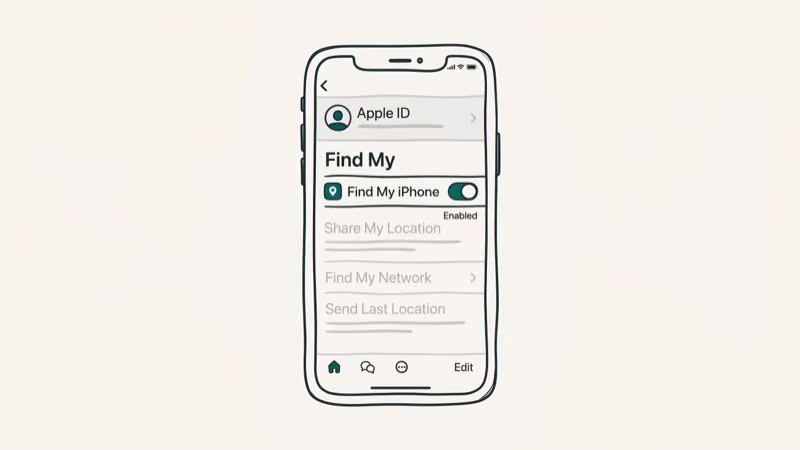
- Go to Settings > [Your Name] >
Find My>Find MyiPhone - Turn on Find My iPhone
- Turn on Find My Network (locates phone offline via nearby Apple devices)
- Turn on Send Last Location (sends GPS to Apple when battery hits critical)
Android setup:
- Go to
Settings>Security>Find Hub(path varies by manufacturer) - Turn on Find Hub
- Confirm Location is on in
Settings>Location - Make sure your Google account is signed in
According to Apple’s Find My support page, Find My Network uses over 1 billion Apple devices worldwide to anonymously relay your phone’s Bluetooth signal, which is why offline tracking is so effective.
#How Do You Find a Lost iPhone?
Method 1: iCloud.com (any browser)
- Go to icloud.com/find
- Sign in with your Apple ID
- Select your missing device from the list
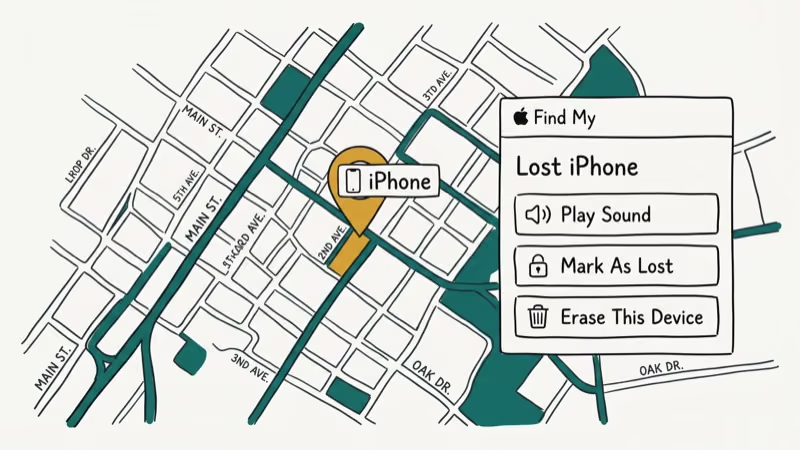
- The map shows your phone’s current or last known location
From the map, you can Play Sound (loud ping even on silent), Mark As Lost (locks the phone and shows your contact number on the lock screen), or Erase iPhone (wipes all data permanently).
Method 2: Find My app on another Apple device
Open the Find My app, tap Devices, then select your missing iPhone. You’ll see its location, and can play a sound or activate Lost Mode directly from there.
Method 3: Ask Siri
On a HomePod, Apple Watch, or another iPhone signed into the same Apple ID, say “Hey Siri, find my iPhone.” Your missing phone plays a sound immediately.
The iCloud.com method updates the phone’s location quickly when the iPhone has Wi-Fi or cellular signal. Offline location via Find My Network is usually reasonably accurate.
#How Do You Find a Lost Android Phone?
Method 1: Google’s website (any browser)
- Go to android.com/find
- Sign in with your Google account
- Select your missing phone
Actions available: Play Sound (rings at full volume for 5 minutes even on silent), Secure Device (locks the phone and shows a recovery message), or Erase Device (wipes all data).
Method 2: Google Search
Just Google “find my phone” while signed into the same Google account. Google shows a map with your phone’s location and a “Play Sound” button right in the search results. This is the fastest single-step method.
Method 3: Find Hub app
Install the Find Hub app on another Android phone, sign in with your Google account, and track your missing device from there.
According to Google’s Find Hub documentation, the Play Sound option rings for a full 5 minutes at maximum volume regardless of the phone’s volume or DND settings. Google states that Find Hub is available on all Android phones running Android 6.0 or later with a Google account signed in.
#How IMEI Tracking Works for Stolen Phones
Every phone has a unique 15-digit IMEI number. Find yours now by dialing *#06# or checking Settings > About. Save it somewhere separate from your phone.
If your phone is stolen, the IMEI helps in two ways:
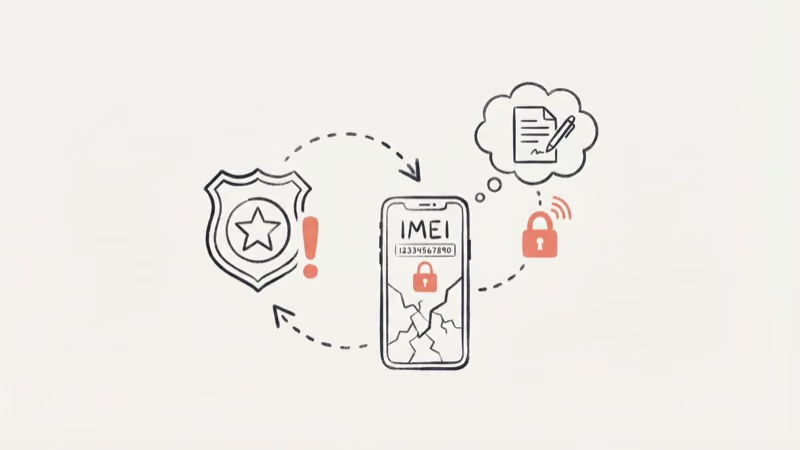
Carrier blacklisting: Your carrier can add the IMEI to a national stolen device registry. Once blacklisted, the phone can’t be activated on any US carrier, making it useless to thieves. This is one of the most effective deterrents available.
Police reports: File a report and include the IMEI number, phone model, and last known location from Find My. Police can submit the IMEI to the GSMA database at imeidb.gsma.com for cross-carrier blocking.
Note that IMEI doesn’t provide real-time location tracking on its own. Its main value is making stolen phones unusable.
#What to Do Right Now If Your Phone Is Stolen
Do these steps in order:
- Lock it remotely using Find My iPhone or Google Find Hub immediately
- Don’t confront anyone at the location shown on the map
- File a police report with your IMEI number and last known location
- Contact your carrier to report the theft and blacklist the IMEI
- Change your passwords for email, banking, and social accounts
- Erase remotely if recovery seems unlikely
For a stolen iPhone specifically, our guide on removing Find My iPhone Activation Lock explains why Activation Lock makes your phone unusable to anyone who doesn’t have your Apple ID.
#Extra Tracking and Privacy Guides
If you’re concerned about someone tracking your phone without permission, see our article on detecting if your cell phone is being monitored.
For more on iPhone tracking tools, our Find My iPhone checker guide covers additional methods including using family sharing to track a lost device. You can also track a SIM card separately if you think the SIM was removed and placed in another device.
If your iPhone is dead and you’re wondering if offline tracking still works, we cover that in detail in our guide on finding your iPhone when it’s dead.
#Bottom Line
Find My iPhone and Google Find Hub are your best options. They’re free, built-in, and work even when the phone is offline. Enable them now if you haven’t already.
If your phone is nearby, play a sound at full volume first. If it’s stolen, lock it remotely, file a police report with the IMEI number, and erase it if you can’t recover it. Don’t risk your safety confronting anyone over a lost phone.
iPhone tips & tricks
#Frequently Asked Questions
Can I track my phone if it’s turned off?
Yes, on both iPhone (iOS 15+) and Android (Android 15+). When powered off, these phones send low-energy Bluetooth signals that nearby devices relay to Apple’s or Google’s servers. The location is less precise than GPS but can narrow the search to a building or city block.
What if I never enabled Find My iPhone or Google Find Hub?
Your options are limited. Check Google Maps Timeline at timeline.google.com if Location History was on. Contact your carrier for basic location assistance. Going forward, enable tracking on every device you own right after setup.
Does a factory reset make a stolen phone untraceable?
On iPhone, Activation Lock prevents setup without your Apple ID even after a factory reset. On Android, Factory Reset Protection (FRP) locks the phone to your Google account after a wipe. Both make the device unusable to anyone who doesn’t have your credentials.
Can police track a stolen phone?
Police can request location data from your carrier with a warrant and use the IMEI number to flag the device in national databases. File a report and provide the IMEI, phone model, and last known location from Find My. Having this information ready significantly helps the investigation.
Should I erase my phone remotely or wait?
If you think you simply lost it (at a restaurant or in a car), wait and try tracking first. Use Lost Mode to lock and display a callback number. If the phone is clearly stolen and moving away from you, erase it to protect your personal data. You can restore from a backup on a new phone.
Does tracking still work if the SIM card is removed?
Yes, as long as the phone has Wi-Fi or the offline Bluetooth network is enabled. Find My and Google Find Hub don’t depend on the SIM card. However, cellular-based tracking through your carrier stops without the SIM installed.
How accurate is phone location tracking?
GPS accuracy outdoors is typically within 5 to 20 meters. Indoor Wi-Fi positioning is accurate to about 15 to 40 meters. Offline Bluetooth finding is the least precise and may only identify a general neighborhood. Playing a sound is always the best method when you think the phone is nearby.
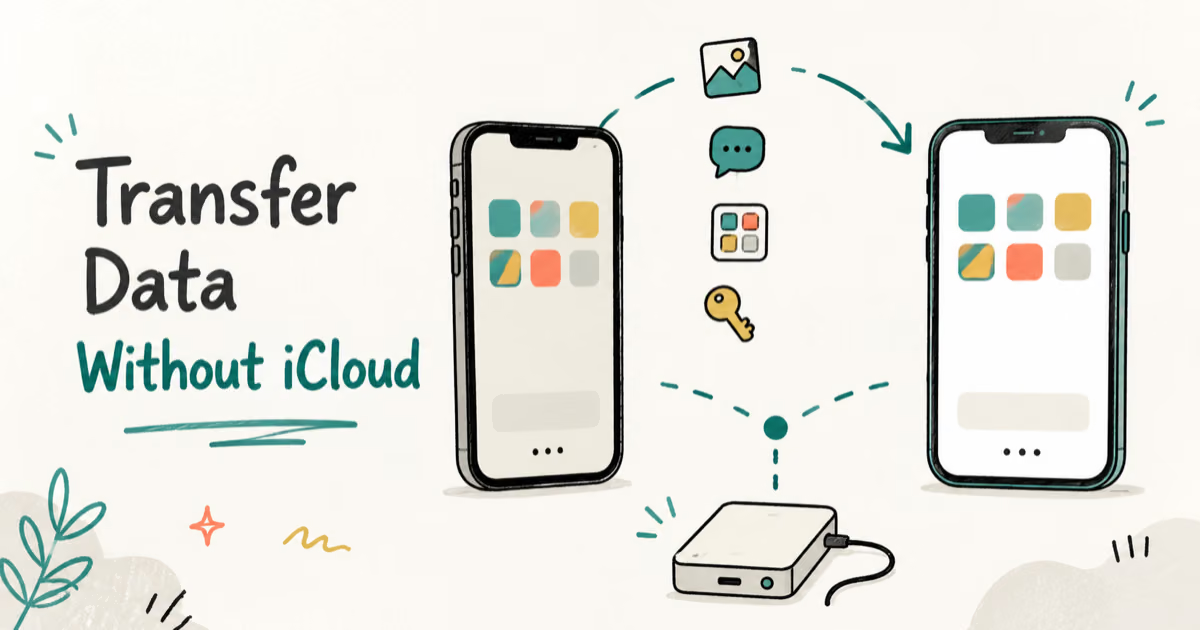
How to Transfer Data to a New iPhone Without iCloud
Move everything to your new iPhone without iCloud: Quick Start device-to-device transfer, wired migration, and encrypted Finder or iTunes backups.
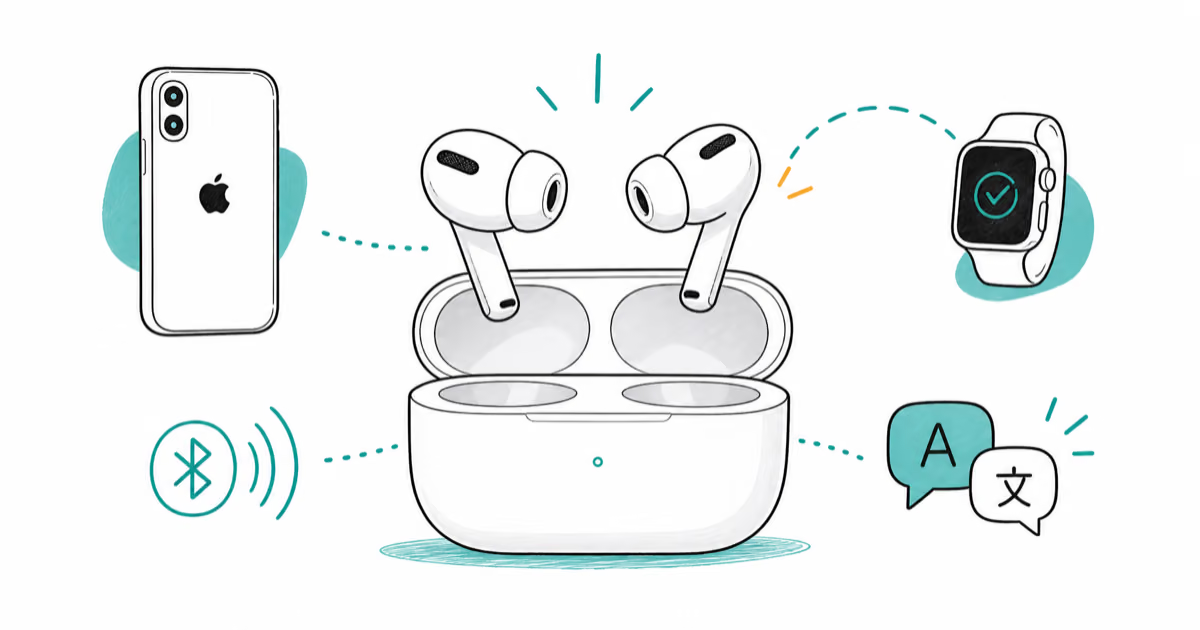
Best Wireless Earbuds for iPhone in 2026: USB-C Era Picks
Best wireless earbuds for iPhone in 2026, comparing AirPods Pro 3, Sony WF-1000XM6, Bose QC Ultra, and Anker Liberty 4 NC on the USB-C iPhone lineup.
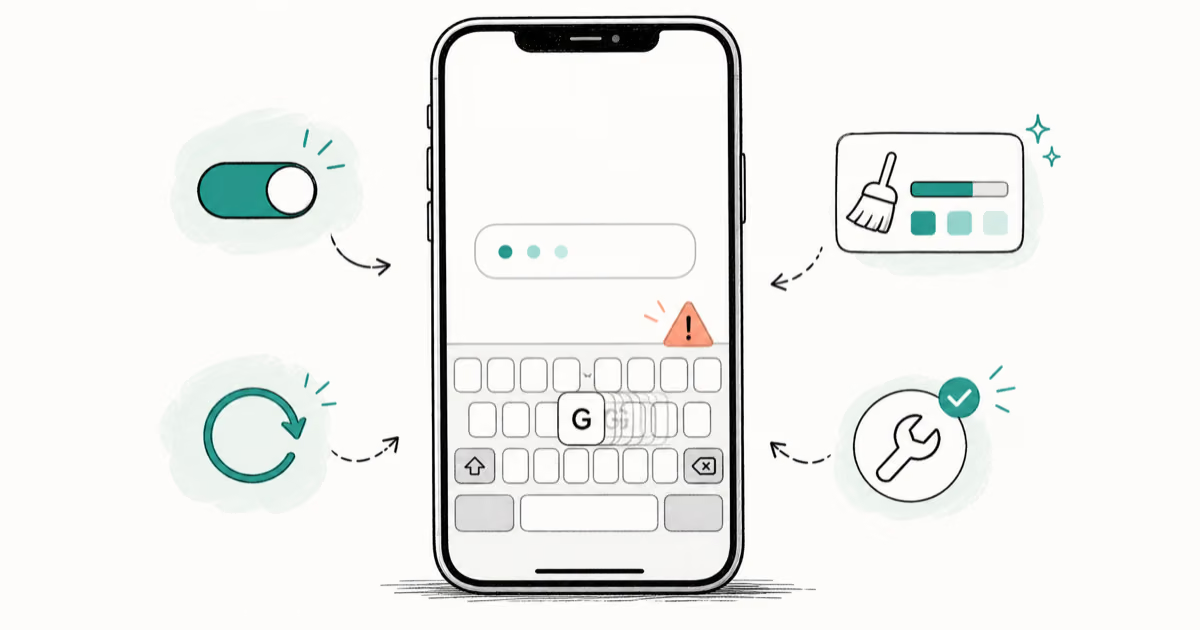
iPhone Keyboard Lag? 7 Proven Fixes for iOS 26 (2026)
Fix iPhone keyboard lag with 7 proven fixes for iOS 26. Covers restart, storage, predictive text, third-party keyboards, and dictionary reset.
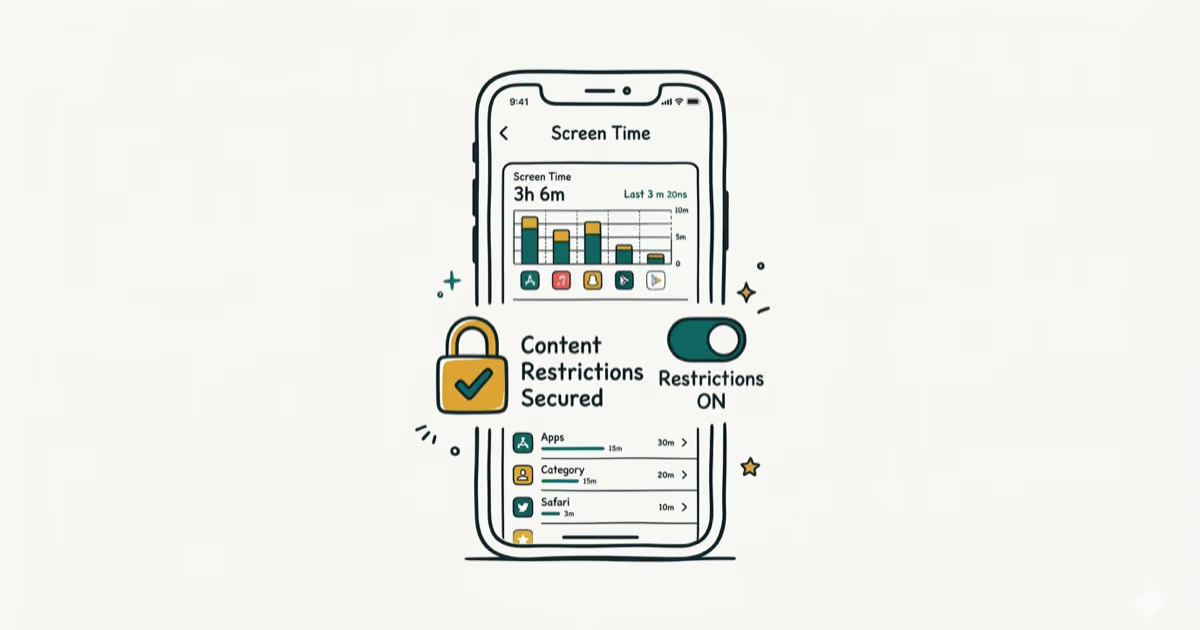
How to Block Porn on an iPhone: A Guide for Parents
Learn how to block porn on iPhone using Screen Time, DNS filtering, and safe browsers. Step-by-step guide for parents to protect kids' devices.