KineMaster Review: Mobile Video Editor Rated for 2026
This 2026 KineMaster review breaks down features, the watermark, pricing, and how the mobile video editor performs on both iPhone and Android.

Quick AnswerKineMaster is a mobile video editor for iOS and Android with multi-layer editing, chroma key, keyframe animation, and 4K export. The free version stamps a watermark on every export and Premium runs $4.99 per month or $39.99 per year.
KineMaster has been the go-to mobile video editor for YouTubers, TikTok creators, and Reels editors for almost a decade. This review covers how the 2026 version holds up on iPhone and Android, and whether it still earns that reputation. The short answer: yes for serious mobile creators, with two caveats around the watermark and battery drain.
- KineMaster supports multi-layer editing, chroma key, keyframe animation, and 4K 30fps export on both iOS and Android, which puts it ahead of most free mobile editors on feature depth.
- The free tier stamps a visible KineMaster watermark on every exported clip; the Premium subscription removes it for $4.99 per month or $39.99 per year.
- The circular radial menu keeps the editing surface uncluttered on a 6-inch phone screen, so you can reach trim, transitions, and audio without hunting through nested panels.
- Vertical 9 and square 1 project presets are first-class options, which makes the app a practical pick for TikTok, Instagram Reels, and YouTube Shorts.
- Older mid-range Android phones get noticeable lag during multi-layer playback, so dropping a heavy 1080p timeline down to two layers keeps preview smooth on budget hardware.
#What KineMaster Does Best
KineMaster is a video editor built specifically for phones and tablets, not a desktop port. KineMaster Corporation, the Seoul-based developer, has been shipping it since 2013, and the 2026 release is mature in a way most “free” social-video apps still aren’t.
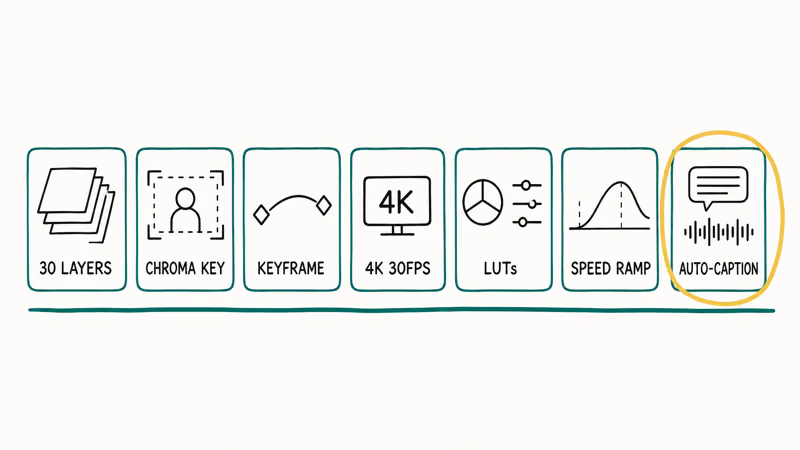
The headline feature set is what gets it talked about. The term “feature parity” applies loosely here, because true desktop apps still win on color grading and effects plugins, but the gap on mobile is smaller than it used to be:
- Up to 30 video, image, and overlay layers per project on Premium (free is capped lower).
- Frame-accurate trim, slip, and ripple edits via a draggable timeline.
- Chroma key with adjustable spill suppression for green screen work.
- Keyframe animation on position, scale, rotation, and opacity.
- Speed ramping with smooth curves, plus reverse playback.
- LUT support for color grading and a cinematic film look.
- 4K export at up to 30fps (60fps on supported flagship devices).
KineMaster’s Auto Captions feature page documents an AI-powered tool that transcribes speech into captions automatically. You can subtitle a 60-second clip without uploading it anywhere, and the captions land as an editable text layer, so you can restyle the font, recolor each line, or split a sentence into word-by-word slices afterward. Transcription accuracy tracks closely with audio quality: clean voice recordings come through reliably, while noisy outdoor clips need more manual correction.
That feature alone closes a big gap with CapCut.
#How Does the Editing Workflow Feel on a Phone?
The editing screen lives or dies on small touchscreens.
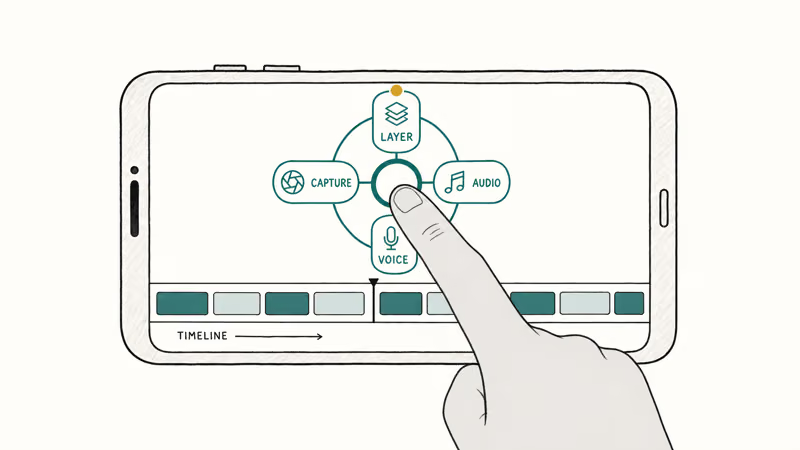
KineMaster’s circular radial menu is the part most reviewers single out for a reason. Tap the project preview and a wheel of icons fans out within thumb reach: Layer, Audio, Voice, and Capture. You don’t lose timeline real estate to a settings sidebar, which is the single biggest difference between editing on this app and editing on a stretched-down desktop port.
The timeline sits at the bottom in landscape mode. Two-finger pinch zooms in to single-frame resolution. The playhead snapping runs a bit aggressive at default settings, where clips lock to their neighbours even when you want a tiny gap, but turning off magnet-snap in preferences fixes it.
A few interface quirks worth knowing before you commit:
- Tutorial overlays trigger every time you open a tool you haven’t used in a week. Helpful at first, mildly annoying later.
- Long projects (over 15 minutes) take several seconds to load on a mid-range Android phone, and load times are generally faster on recent iPhones.
- Undo history is capped at 30 steps. Past that, you can’t roll back a mistake.
- Asset Store downloads happen inline; large effect packs (50 MB+) pause editing while they install.
In-app tutorials cover the basics; if you’ve used CapCut, the CapCut for PC workflow translates here.
#Premium Features and Pricing
KineMaster runs on a freemium model. The free tier is unusually generous compared to apps like Adobe Premiere Rush, which gates 4K behind a subscription. The catch is the watermark, and once you see it on an exported clip you can’t unsee it.
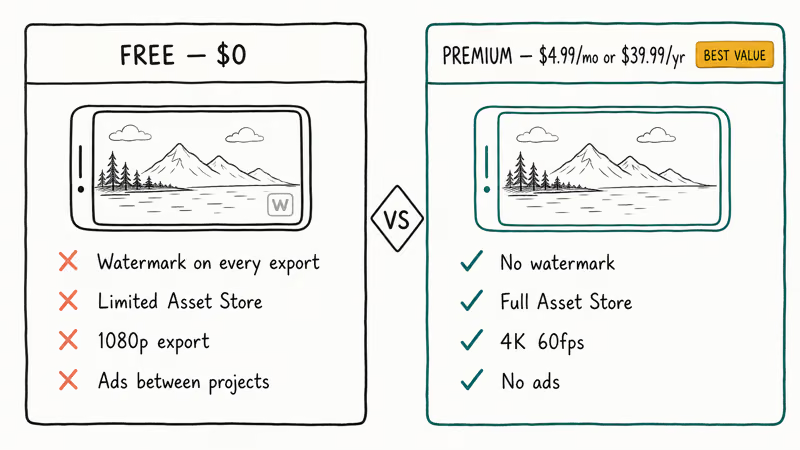
Premium pricing on the KineMaster App Store listing shows two billing options: $4.99 per month or $39.99 per year. The yearly plan works out to about $3.33 per month, a 33% discount versus monthly billing. Premium unlocks:
- No watermark on exports.
- Full Asset Store access (transitions, fonts, sound effects, 3D stickers).
- 4K 60fps export on supported devices.
- Premium-only effects: glitch, VHS, film grain, advanced LUT packs.
- Removes the in-app ads that the free tier shows between projects.
If the watermark is your only blocker, our KineMaster watermark guide walks through the legitimate ways. Some creators also try KineMaster no-watermark workarounds, but most either violate KineMaster’s terms or stop working after the next update. Paying for Premium remains the only reliable route, and splitting the yearly cost across a small editing team keeps the per-head price low.
A 7-day free trial of Premium is available on both iOS and Android. After the trial, billing happens automatically through your App Store or Google Play account. To cancel, go to Subscriptions in your store account, not inside the app itself. Cancelling stops the next renewal and keeps Premium active until the period ends.
Quick warning: the trial auto-converts.
#Vertical Video and Social Format Support
Mobile creators today shoot mostly vertical. KineMaster recognised this earlier than most desktop ports. The project setup screen has dedicated 9
, 1, 4, and 16 presets, and the canvas reorients the editing tools to match.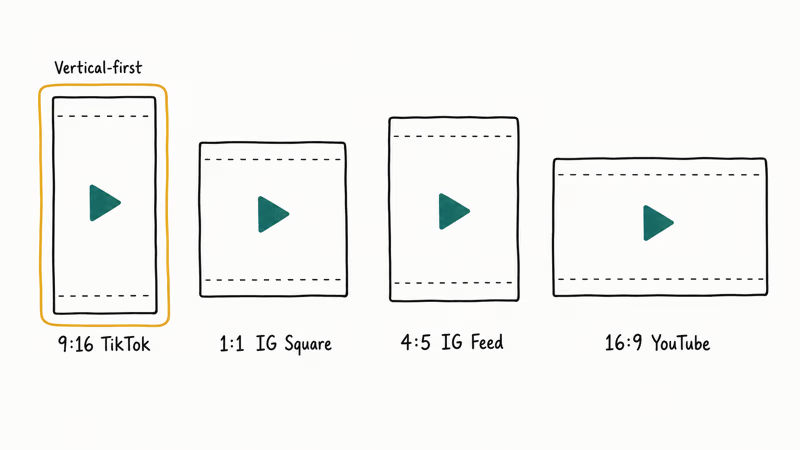
A typical 60-second vertical edit moves quickly: import 4K footage, trim, add caption keyframes, drop in a music bed, then export. Exporting a short 1080p 9
clip finishes in well under a minute on recent flagship phones, so the bottleneck is editing time rather than the render.Two things vertical creators will notice:
- Safe-area guides show where Instagram and TikTok overlay their UI, so your captions don’t get covered by the like button or “follow” prompts.
- Shorts-friendly transitions (whip pan, zoom punch) are clustered in their own Asset Store pack rather than buried among 200 generic options.
For a fuller comparison of vertical-first apps, see our roundup of the best vertical video editors, which puts KineMaster head-to-head with CapCut and InShot.
#How Does It Compare to CapCut, iMovie, and LumaFusion?
KineMaster sits in the middle of the mobile editor pricing curve. Free apps undercut it; pro apps out-feature it. Here’s how it stacks up against the three most common alternatives creators weigh against it.
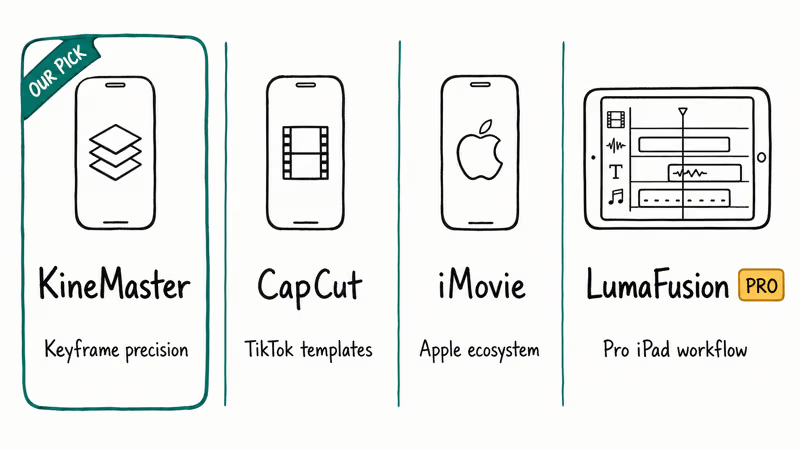
CapCut is free and has a deeper TikTok template library. KineMaster wins on manual keyframe precision instead.
iMovie is Apple’s free editor. Apple’s iMovie support page states that it runs on iOS, iPadOS, and macOS only and stays locked to Apple’s ecosystem. iMovie is fine for trimming and basic transitions, but it has no keyframe animation, no chroma key on iPhone, and a hard 4-layer cap. KineMaster outclasses it on every feature except first-launch simplicity.
LumaFusion is the closest desktop-class competitor on iOS. According to LumaTouch, the 2026 LumaFusion pricing is a one-time purchase plus optional add-ons, and many pro creators consider it the iPad editing standard. It edges KineMaster on color grading and external monitor support but costs more upfront. KineMaster’s monthly plan is friendlier if you only edit occasionally.
The key trade-off: LumaFusion gives you ownership; KineMaster gives you flexibility.
For creators focused on YouTube and vlogging, our vlog app comparison covers how KineMaster fits alongside Filmic Pro and Beastcam in a typical mobile vlog workflow.
#What Stands Out and What Frustrates
Here’s the honest breakdown of where KineMaster shines and where it grates during regular use.
What works well:
- The radial menu saves time once you stop fighting it, and editing speed picks up fast after a couple of sessions.
- Audio ducking is automatic and accurate; voice-overs cut through music beds without manual gain riding.
- Project files sync via the cloud backup option, so you can start on one phone and finish on another.
- Battery use during a 30-minute editing session is high but not unreasonable for what the multi-layer engine does.
What frustrates:
- The Asset Store loads inline, so a single tap to preview a transition pulls in 30-80 MB before you can decide to keep it.
- Exporting a 4K timeline makes the phone noticeably warm, so a short cooldown between consecutive exports helps.
- The free tier’s watermark sits in the lower-right corner and can’t be moved or resized, so you can’t crop it out without losing footage.
- Auto-save fires only when you switch tools, not on a timer, so an app crash mid-edit can cost the last minute or two of work.
#Bottom Line
If you edit vertical video for TikTok, Reels, or Shorts on your phone more than once a week and want frame-level control without a desktop, pay the $39.99 a year for KineMaster Premium. The watermark removal alone justifies the cost, and the keyframe and chroma-key tools are the best you’ll find in any mobile-first app at that price.
If you edit casually, like birthday clips or a vacation montage twice a year, stay on the free tier or use CapCut instead. KineMaster’s depth is wasted at that volume, and the battery and storage cost outweigh the polish.
Don’t pick KineMaster if your phone is more than three years old or your storage is tight. The multi-layer engine punishes older silicon, and the Asset Store will eat 2-3 GB before you notice.
#Frequently Asked Questions
Is KineMaster really free to use?
Yes, the base app is free on both iOS and Android. Every export includes a KineMaster watermark in the lower-right corner. Premium subscription removes the watermark and unlocks the full Asset Store, premium effects, and 4K 60fps export on supported devices. There’s no time limit and no project cap on the free tier either.
Can KineMaster export in 4K?
According to KineMaster’s published 4K specs on the official website, 4K export needs hardware H.265 encoding and at least 4 GB of RAM. Older phones cap at 1080p.
How much does KineMaster Premium cost?
KineMaster Premium is $4.99 per month or $39.99 per year. The yearly plan saves about 33%.
Does KineMaster work on iPad?
Yes, KineMaster runs natively on iPad and takes advantage of the larger screen with a wider timeline and split-tool palette. It handles both touch and Apple Pencil input smoothly. External keyboard shortcuts are limited compared to LumaFusion, however.
Will my phone overheat while editing 4K in KineMaster?
Most flagship phones from the past three years handle KineMaster fine. Exporting 4K does warm the phone noticeably, since the encode pushes the chip hard for the duration of the render.
Can I cancel KineMaster Premium and keep my projects?
Cancelling drops you back to the free tier, but your projects stay on your device intact. Future exports will get the watermark, and Premium-only effects in saved projects render with a watermark over them on export. Files saved before cancellation keep their existing exports unchanged. Export anything you care about before the subscription ends.
Is KineMaster safe to install on Android?
The official KineMaster app listed on Google Play is safe and signed by KineMaster Corporation. Avoid third-party APKs that promise “Premium unlocked”, since they often bundle malware and break with each app update.

Best Laptop for Running LLMs in 2026: Memory Comes First
The best laptop for running LLMs is a memory purchase first. Compare MacBook unified memory against NVIDIA laptop VRAM, and see what each tier really runs.

Pixel 11 vs Pixel 10: What Changed and Who Should Upgrade
Pixel 11 vs Pixel 10: same screen and camera resolution, new Tensor G6, 25W wireless, and Gemini Intelligence. Here is who should actually upgrade.

Best Power Bank for iPad in 2026: Pro, Air, and Mini
Best power bank for iPad in 2026. Compare mAh tiers and USB-C PD wattage for iPad Pro, Air, and mini, plus airline Wh math, cables, and travel tips.
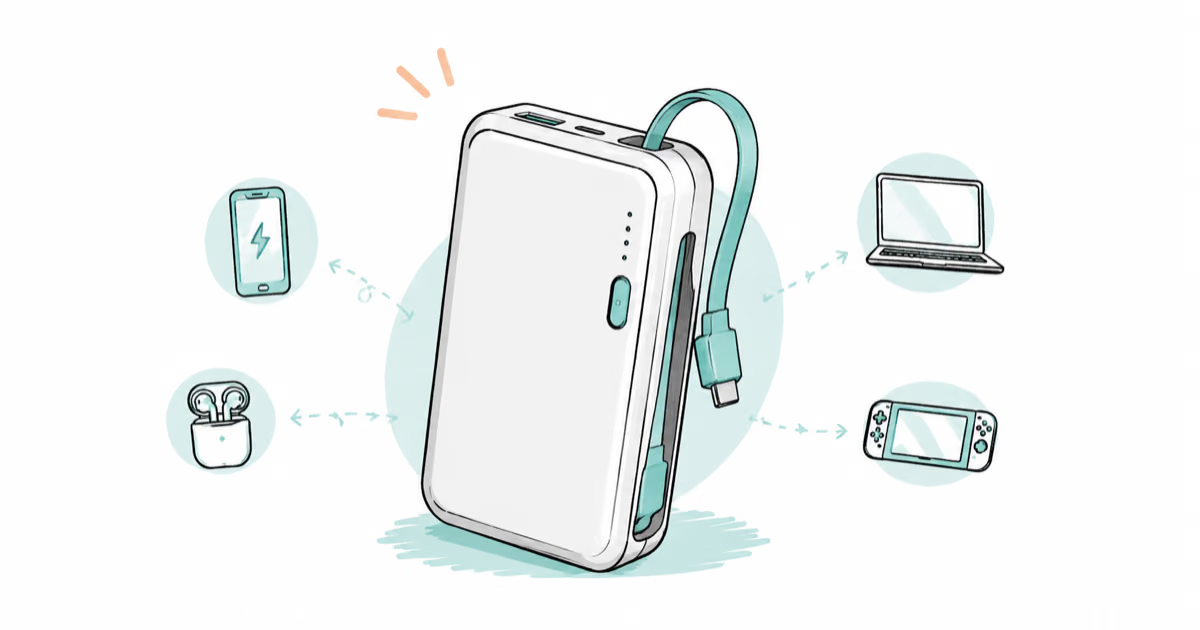
Best Power Bank With Built-In Cable: Top 2026 Picks
Best power bank with built-in cable picks for 2026. Compare single USB-C, multi-connector, and retractable laptop banks, plus airline Wh math.