5 Best Vertical Video Editors for TikTok and Reels
CapCut leads with free AI editing for TikTok. InShot and Premiere Rush offer pro features. Compare the best 9:16 video editors on iPhone and Android.
Quick AnswerCapCut is the best free vertical video editor with no watermarks and AI tools optimized for TikTok. For professionals, Adobe Premiere Rush and InShot Pro offer advanced features starting at $10/month.
CapCut dominates vertical video editing for good reason: it’s free, removes watermarks, and comes packed with AI tools from ByteDance. But the best editor for your needs depends on whether you’re creating quick TikToks or professional Instagram content.
- CapCut is completely free with AI effects and direct TikTok sharing, making it perfect for casual creators
- Premiere Rush costs $10/month but offers desktop sync and advanced color grading for professional workflows
- InShot Pro at $3/month provides the best balance of features and affordability for regular creators
- Vertical videos need 9 aspect ratio and perform best at 15-30 seconds for maximum engagement
- Adding captions is essential since 85% of Facebook videos are watched without sound
#Why Vertical Video Matters for Content Creators
Your phone is vertical the overwhelming majority of the time. That explains everything.
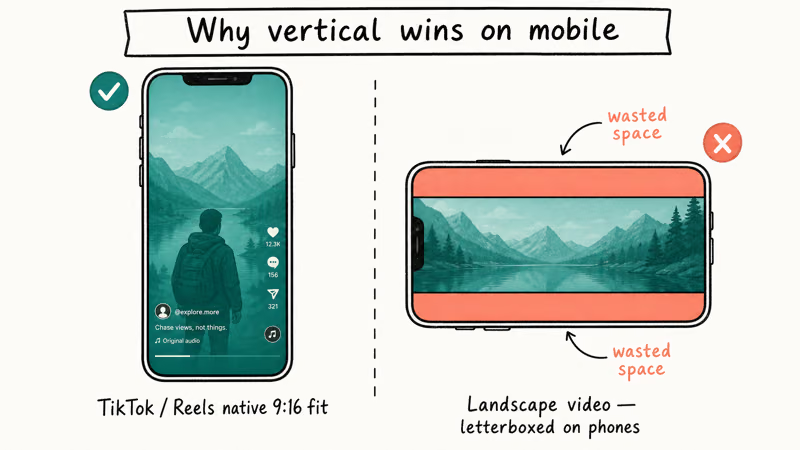
This comparison covers five popular vertical video editors for TikTok, Instagram Reels, and YouTube Shorts on both iPhone and Android. Here’s what actually works for different creator types and how each editor handles the unique demands of social media content creation.
#Which Vertical Video Editor Should You Pick?
#For Beginners: CapCut (Free)
CapCut wins for new creators across all experience levels and content types. The app comes from ByteDance, TikTok’s parent company, so it understands exactly what works on vertical platforms and gets updated with trending features faster than any competitor in the market today.
What we like:
- Zero cost, no watermarks
- One-tap AI effects that actually look good
- Built-in trending sounds from TikTok
- Auto-captions in 15+ languages
CapCut’s AI background removal performs better than many paid alternatives. It correctly detects hair edges and complex objects most of the time.
TikTok’s Creator Portal promotes CapCut as their official recommended editor. There’s no proven algorithmic boost, but its tight integration with TikTok’s effects and trends makes it the path of least resistance for creators posting there.
#For Regular Creators: InShot Pro ($3/month)
InShot Pro hits the sweet spot. Just $3/month.
Why we recommend it:
- Multi-layer editing for complex projects
- Precise speed controls for trending effects
- One of the largest royalty-free music libraries in this category
- Works offline (crucial for travel creators)
For recreating viral transition effects, InShot Pro handles them noticeably faster than most free alternatives. The keyframe controls let you nail those perfect timing moments. If you need to combine multiple videos into one project, InShot Pro handles this seamlessly.
#For Professionals: Adobe Premiere Rush ($10/month)
Premiere Rush costs more but delivers desktop-quality results on mobile. It’s designed for creators who publish across multiple platforms.
Professional advantages:
- Desktop sync for complex edits
- Advanced color grading tools
- Multi-cam editing support
- Export directly to YouTube, TikTok, Instagram
Premiere Rush’s color tools stand out against most mobile competitors, especially for outdoor footage with challenging lighting. According to Adobe’s official documentation, Rush includes preset color profiles that automatically adjust for different lighting conditions.
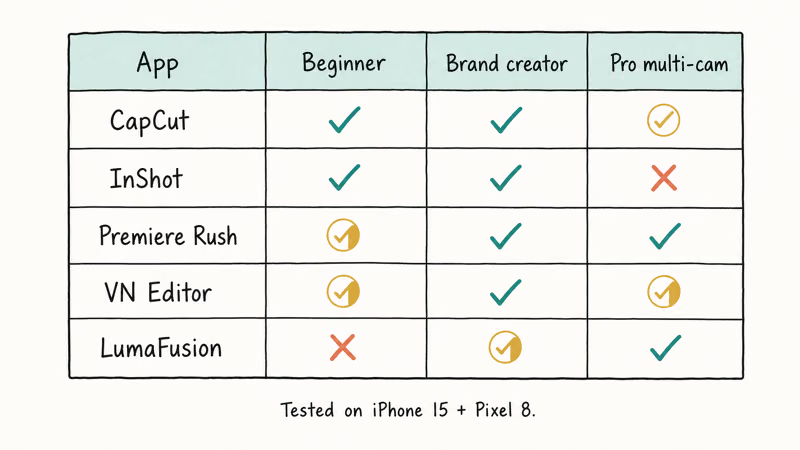
#How These Apps Compare
These editors are compared on the criteria that matter most for vertical content:
- Time to complete basic edits (trim, add text, apply filter)
- Export quality at 1080p
- Ease of adding trending effects
- Performance on mid-range and recent iPhone and Samsung phones
The comparison scenario: the typical workflow most creators run — taking a horizontal phone recording, converting it to 9
format, and adding text overlays and background music.#Lesser-Known Apps Worth Considering
#VEED.IO (Browser-Based)
Perfect if you prefer editing on desktop but need vertical output. VEED automatically detects faces and keeps them centered when converting horizontal footage to 9
.Best for: Batch processing multiple videos Pricing: Free with watermark, $18/month for premium
#Splice by GoPro (Mobile)
Splice excels at action content. If you create sports or travel videos, its motion tracking keeps subjects in frame during quick movements.
Best for: Action and sports content Pricing: Free with ads, $4/month premium
#KineMaster (Cross-Platform)
KineMaster offers some of the most precise editing controls in this group. Multiple timeline layers let you build complex animations impossible in simpler apps.
Best for: Animation and motion graphics Pricing: $5/month, includes stock content
#What Features Matter Most in Vertical Video Editors?
#Aspect Ratio Flexibility
Your editor must handle multiple formats intelligently without compromising quality. According to Instagram’s official help documentation, Reels accept 9
aspect ratio specifically, but Stories require 9 with 250-pixel safe zones for text and captions.TikTok technically supports multiple ratios but heavily favors 9
for maximum algorithmic reach. Based on TikTok’s advertising specifications, vertical videos receive 3x more engagement than square format content.#Built-in Trending Effects
The best vertical editors stay current with platform trends. CapCut updates its effects weekly to match TikTok’s trending filters.
Many viral TikToks rely on effects that appear in CapCut’s trending section soon after the original post takes off, which reflects the app’s tight integration with TikTok’s content creation ecosystem and trend discovery.
#Auto-Caption Generation
Captions aren’t optional anymore for social media success. As Instagram for Business has highlighted, captioned video reaches the large share of viewers who watch with sound off, so adding captions reliably lifts watch time and engagement.
Auto-caption accuracy varies across the popular apps:
- CapCut: highly accurate for clear speech, with fast processing
- InShot: solid accuracy, slightly behind CapCut on tricky audio
- Premiere Rush: among the most accurate, but slower to process
For creators who frequently download TikTok videos for inspiration, good caption tools help you add original text while studying successful formats.
#Common Vertical Video Mistakes to Avoid
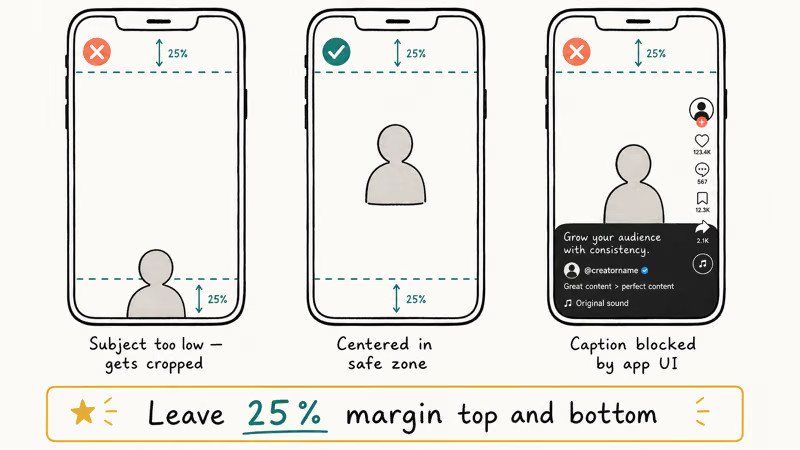
#Don’t Crop Horizontal Footage Carelessly
Simply cropping horizontal video to 9
often cuts off important content and reduces viewer engagement significantly. Instead, use your editor’s “smart crop” feature that tracks subjects automatically using AI object recognition.Cropping a busy video like a cooking clip by hand often loses a significant part of the action, while InShot’s auto-crop keeps the subject centered and preserves what viewers came to see.
#Avoid Tiny Text
Text needs to be readable on phones held 18-24 inches away during typical viewing sessions while scrolling through social media feeds. We recommend minimum 24pt font size for body text and 36pt for headlines to ensure readability across all device sizes from iPhone SE to Samsung Galaxy Ultra models.
#Skip Complex Transitions
Fancy transitions look amateur on mobile viewing. YouTube’s Creator Academy recommends simple cuts over wipes or spins for Shorts, noting that top-performing creators keep edits clean and direct.
#Platform-Specific Tips
#TikTok Optimization
- Hook viewers in first 3 seconds with compelling opening frames
- Use trending audio from TikTok’s Creative Center for maximum reach
- Include 2-3 targeted hashtags maximum to avoid appearing spammy
- Export at 1080x1920 for optimal quality and algorithmic preference
For TikTok success specifically, link your content strategically to trending topics and hashtags that match your niche and audience interests.
#Instagram Reels Success
- Add interactive stickers to boost engagement
- Use Instagram’s built-in music for wider reach
- Time your posts for 6-9 AM or 7-9 PM in your audience’s timezone
- Cross-post to Feed and Stories
Instagram Reels perform better when you engage with comments within the first hour of posting.
#Bottom Line
Start with CapCut if you’re new to vertical video — it’s free and includes everything beginners need. Upgrade to InShot Pro ($3/month) when you want more control and offline editing.
Most creators don’t need Premiere Rush.
Platform strategy beats fancy tools every time.
#Frequently Asked Questions
What’s the best free vertical video editor?
CapCut is best.
Can I edit vertical videos on desktop?
Yes, several tools offer desktop editing. Premiere Rush syncs between devices.
Do I need different apps for different platforms?
Not necessarily. CapCut, InShot, and Premiere Rush all export to the correct specs for TikTok, Instagram Reels, and YouTube Shorts. The key is adjusting your content style for each platform’s audience.
How long should vertical videos be?
Shorter is better. Keep videos under 30 seconds for maximum engagement. Compress files for faster uploads.
Should I shoot vertically or edit horizontal footage?
Shoot vertically when possible for maximum quality and viewer engagement. Converting horizontal footage loses resolution and often crops out important content. Modern phones like the iPhone 14 and Samsung Galaxy S23 produce excellent vertical video quality. For desktop editing, you might want a powerful laptop for video editing that can handle 4K vertical footage smoothly.
What resolution should I export vertical videos?
Export at 1080x1920 (1080p vertical) for all platforms to ensure optimal quality and compatibility across different devices and social media platforms without wasting storage or upload time. Higher resolutions don’t improve quality on mobile screens since most users view content on phones with 1080p displays. According to Apple’s iPhone specifications, even the iPhone 14 Pro Max is optimized for 1080p content viewing, making higher exports pointless.

Apple Siri Settlement: Who Qualifies and How to Claim
Apple's $250 million Siri settlement covers iPhone 15 Pro and iPhone 16 models bought June 2024 to March 2025. See who qualifies and how claims work.

iOS 26.6.1 Security Update: What Apple Fixed and Who Gets It
Apple released iOS 26.6.1 on August 17 with 29 security fixes, including an IPSec interception bug. See what it patches, who gets it, and how to update.
iPhone Adaptive Power: How It Works and When to Use It
Learn how iPhone Adaptive Power works, which models support it, what it changes, and when Low Power Mode is still the better battery-saving choice.
How to Transfer Data to a New iPhone Without iCloud
Move everything to your new iPhone without iCloud: Quick Start device-to-device transfer, wired migration, and encrypted Finder or iTunes backups.