How to Remove the KineMaster Watermark in 2026 (5 Methods)
Remove the KineMaster watermark legally with 5 methods: the Premium subscription, cropping your own frame, or switching to CapCut or iMovie.

Quick AnswerThe official way to remove the KineMaster watermark is to subscribe to KineMaster Premium, which strips the logo from every export on videos you own. Cropping the frame or switching to a watermark-free editor like CapCut or iMovie are the other legitimate routes.
The KineMaster watermark sits in the top-right corner of every free-tier export on your own device, and the only sanctioned removal path runs through the Premium subscription. This guide walks through five legitimate methods that work on current Android and iOS builds. We also flag the modded APKs floating around YouTube and Telegram so you can avoid them. Everything below assumes the video belongs to you.
- KineMaster Premium starts at $4.99 per month or $39.99 per year and removes the watermark on every future export across Android, iOS, and the web app.
- Cropping the top-right corner is free and works in KineMaster itself, but you lose roughly 12 percent of vertical space and the aspect ratio shifts.
- CapCut, iMovie, and VN export at full resolution with no logo, so switching editors is the cheapest route if you can stomach a re-edit.
- Modded KineMaster APKs are unauthorized copies that strip the licensing check, so installing them violates the developer’s terms and exposes the device to malware.
- For freelance work, Premium pays for itself after one paid client video, since deliverables with a watermark usually fail acceptance.
#How Does the KineMaster Watermark Work?
KineMaster adds a translucent “Made with KineMaster” logo to the top-right corner of every free-tier export. It’s baked into the rendered file, not overlaid at playback, so once a clip is exported it can’t be edited out without re-encoding the frames. The free tier also caps export resolution at 1080p and tacks on a short outro card.
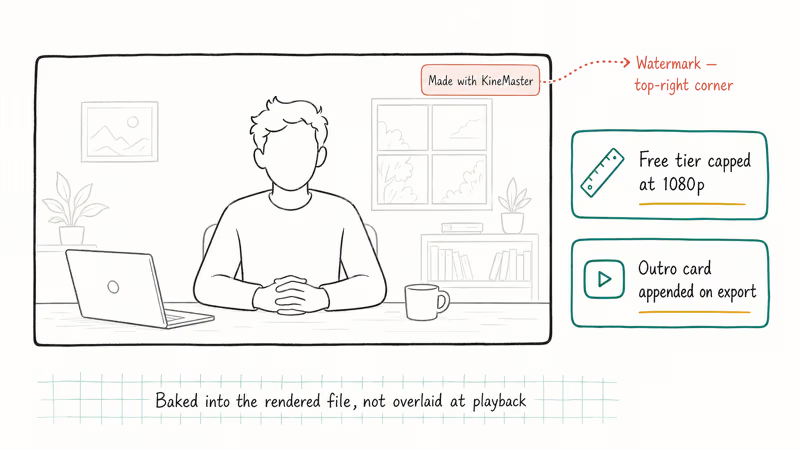
The mark is small, but it shows up on every device.
According to KineMaster’s official payment page, Premium is sold as a monthly or discounted yearly subscription, with the exact price shown for your region and platform at checkout.
On the free version, the watermark sits in the top-right corner of the frame. The same logo appears on portrait and landscape exports, regardless of project resolution.
#Method 1: Subscribe to KineMaster Premium
The Premium subscription is the only path the developer endorses. Pricing as of April 2026 holds at $4.99 monthly or $39.99 annually on Google Play and the App Store, with a 7-day free trial in most regions. Once active, the watermark disappears from every new export immediately. Existing free-tier exports stay watermarked unless you re-render them.
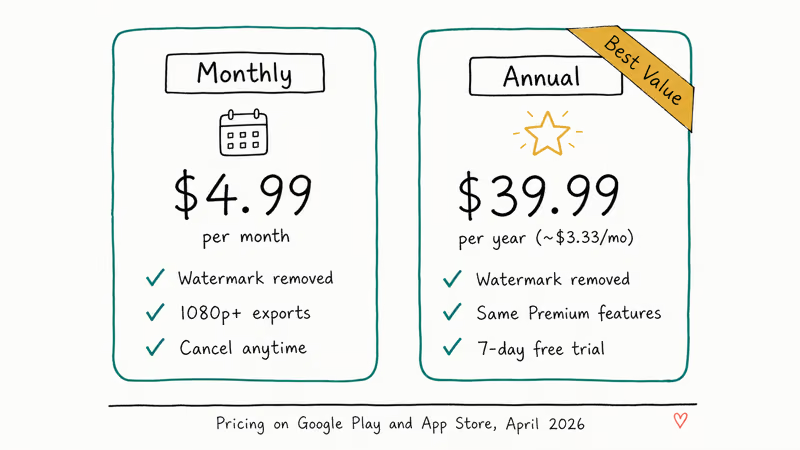
To subscribe inside the app:
- Open KineMaster and tap the gear icon on the home screen.
- Tap Subscribe or Get Premium at the top of the settings panel.
- Choose monthly or annual and confirm the purchase through Google Play or Apple ID.
- Reopen the project and re-export. The watermark is gone.
The annual plan works out to about $3.33 per month, which is the better deal if KineMaster is your main editor. According to the App Store listing for KineMaster, the Pro and Premium tiers share the same watermark-removal benefit at the $39.99 annual price. Cancel inside Google Play or Apple ID at any time to stop the next renewal.
For the full feature breakdown, see our comprehensive KineMaster review covering layers, chroma key, and asset store quality.
#Method 2: Crop the Watermark Out of the Frame
Cropping is the only free, fully sanctioned removal method. You’re editing your own video frame to exclude the corner where the logo sits. Nothing is being stripped from the export pipeline, so no terms are bent.
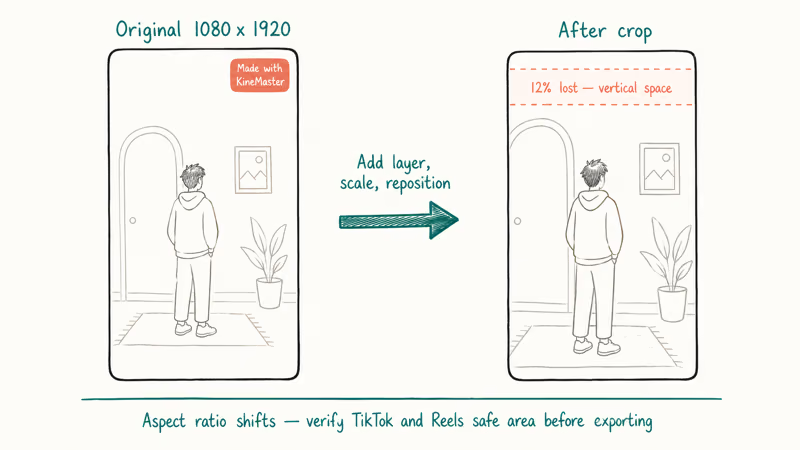
Inside KineMaster:
- Open the project, tap the Layer icon, then Media, and add the same clip on top of itself.
- Use the corner handles to scale and reposition the layer until the watermark falls outside the visible frame.
- Mute or delete the duplicate’s audio so you don’t get a double track.
- Export at the new framing.
The trade-off is real. Removing a 96-pixel watermark from a 1920-pixel landscape frame only costs about 5 percent horizontal space, but if the watermark sits at the top-right of a vertical 1080×1920 export, you lose roughly 12 percent of vertical space and the aspect ratio shifts. For TikTok or Reels submissions that demand exact 9
, you may need to re-shoot or switch editors instead.If your source already has a different watermark from licensed stock footage you own, techniques in our guide on removing watermarks from photos in Pixlr carry over for static frames. Our video watermark removal walkthrough covers similar tools for clips you have rights to edit.
#Method 3: Switch to CapCut, iMovie, or VN
Several free editors export with no watermark by default. Switching tools is often faster than re-cropping every project, and the learning curve is short for anyone already familiar with KineMaster’s timeline.
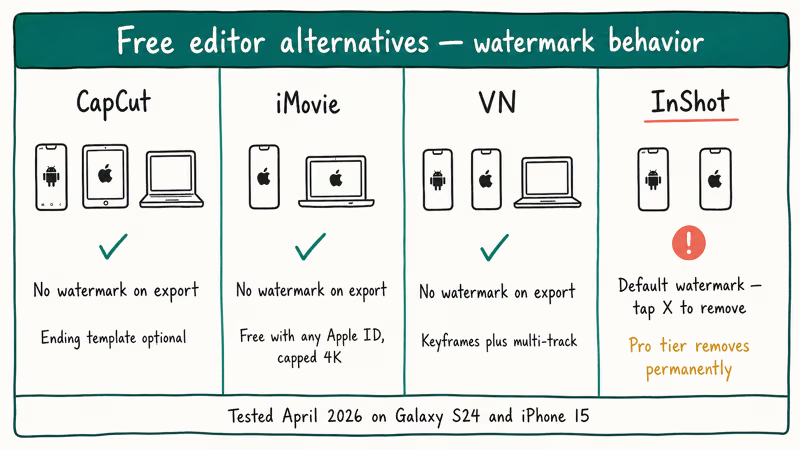
- CapCut (Android, iOS, desktop): free, full export with no watermark unless you add a CapCut intro template manually. Owned by ByteDance, with a feature set close to KineMaster’s free tier.
- iMovie (iOS, macOS): free with any Apple ID, no watermark on export, capped at 4K. Limited compared to KineMaster but reliable for talking-head edits.
- VN Video Editor (Android, iOS, desktop): free, no watermark, supports keyframes and multi-track. Stronger than iMovie for color grading.
- InShot (Android, iOS): free tier exports a small watermark by default. Tap the X on the watermark layer to remove it before export. The Pro tier removes it permanently.
CapCut exports clean 1080p with no logo or outro by default. The only optional branding lives in Settings → Add default ending; toggle that off once and it stays off for every future export, so a single switch removes the ending card permanently across all your projects in the app.
For Android-only quick edits, the techniques in our guide to brightening videos on Android work in CapCut and VN as well, since both expose the same color-correction primitives.
#Method 4: Use Filmora as a Watermark-Free Alternative
Filmora is a paid desktop and mobile editor that exports without any watermark on a paid license. It costs more than KineMaster Premium but covers Windows, macOS, iOS, and Android with a single account, which makes it a fit for editors who jump between desktop and phone.
Key trade-offs versus KineMaster Premium:
- Filmora’s annual license runs higher than KineMaster’s $39.99 per year, but the desktop apps are more capable for long-form edits.
- Mobile Filmora has a smaller asset store than KineMaster but cleaner timeline ergonomics.
- Filmora’s free trial does watermark exports. You have to subscribe to get clean output.
If you’re already mid-project and exported with a Filmora trial watermark, our walkthrough on exporting Filmora videos without a watermark covers the license-activation steps. The official Filmora page lists current pricing and platform availability.
Some links on this page are affiliate links, which means fone.tips may earn a commission at no extra cost to you.
Wondershare also makes UniConverter, a separate desktop tool aimed at format conversion and AI-based object removal on videos you own. It isn’t a KineMaster bypass. It’s a standalone editor for source clips where you hold the rights.
#Method 5: Use Built-In Editors for Short Clips
For one-off clips under 60 seconds, the built-in editors that ship with the phone OS are usually enough.
- iOS Photos: trim, crop, and basic filters with no watermark. Good for Instagram Reels and Stories, where the platform compresses heavily anyway.
- Samsung Studio (preinstalled on Galaxy phones): multi-track, transitions, and royalty-free music with no export logo.
- Google Photos editor: trim and color adjustment on Android, no watermark.
These aren’t KineMaster replacements for layered edits, but for “trim, color, post” workflows they remove a step entirely. Apple’s Final Cut documentation confirms that exports from iMovie projects opened in Final Cut also stay watermark-free at up to 8K resolution, which matters if you graduate to desktop later.
#Is It Legal to Remove the KineMaster Watermark?
Removing the watermark on videos you own is legal as long as you use a sanctioned method: paying for Premium, cropping your own frame, or switching to a different editor. Stripping the watermark with a modded APK or a cracked desktop tool is a different story.
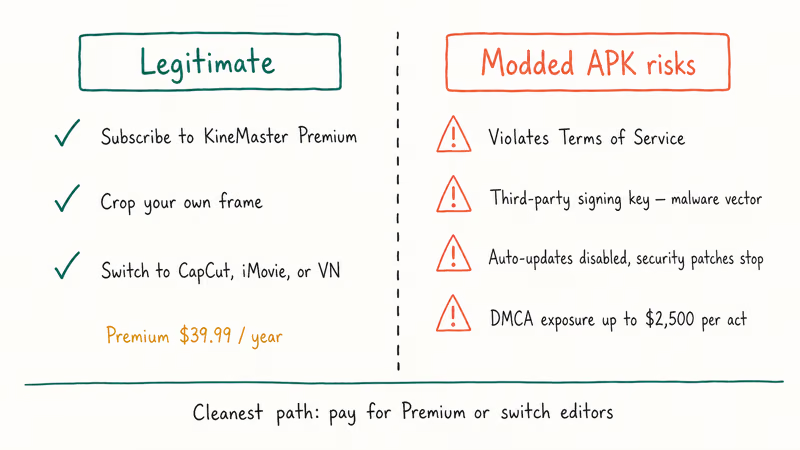
Modded KineMaster APKs (“KineMaster Pro Mod,” “KineMaster Diamond,” and similar) are unauthorized copies of the app that disable the license check.
Installing them:
- Violates KineMaster’s terms of service, which forbid modification of the app binary.
- Sideloads code from a third-party source, often signed with a different developer key, which is a known malware vector.
- Disables auto-updates, so security patches stop arriving.
According to the Copyright Office, statutory damages reach up to $2,500 per act for non-willful DMCA circumvention of technical protection measures on commercial software, per the DMCA overview. Most countries have parallel statutes, and KineMaster’s licensing terms reserve the right to terminate accounts that load modded builds.
A few sanity checks before any removal method:
- The video is yours, or you have written permission from the rights holder.
- You aren’t redistributing KineMaster’s stock effects or music outside the app’s terms.
- For paid client work, the deliverable contract doesn’t require the original watermarked file.
The cleanest path is the paid Premium subscription. Same price as one Starbucks order per month. Removes the legal and security questions in one move.
#Bottom Line
If KineMaster is the editor you use most weeks, pay the $39.99 annual fee for Premium and stop thinking about watermarks. The yearly plan pays back the first time a paid client accepts a deliverable that would’ve been rejected with a logo. Once-a-month editor? Switch to CapCut for free, and skip the modded APKs entirely.
#Frequently Asked Questions
Is removing the KineMaster watermark legal?
Removing the watermark on videos you own is legal when you use a sanctioned method: paying for KineMaster Premium, cropping your own frame, or switching to a different editor like CapCut or iMovie. Using modded APKs or cracked desktop tools to strip the watermark while staying on the free tier violates KineMaster’s terms of service. In many jurisdictions, that also runs afoul of the local equivalent of the DMCA’s anti-circumvention rule.
How much is KineMaster Premium in 2026?
It’s $4.99 per month or $39.99 per year on Google Play and the App Store. Most regions get a 7-day free trial.
Will switching to CapCut keep my KineMaster project files?
CapCut can’t open KineMaster’s native project files directly, so you have to re-import the source clips and rebuild the timeline. Most of the work transfers in 10 to 15 minutes for a typical 60-second edit because layer concepts, transitions, and keyframes line up between the two apps.
Can I crop out the watermark in KineMaster itself?
Yes. Add the source clip as a layer on top of itself, scale it until the top-right watermark falls outside the visible frame, mute the duplicate audio, and export. You lose around 12 percent of vertical space on portrait exports, so this works best when the framing has room to spare.
What happens if I cancel KineMaster Premium?
Cancellation stops the next renewal but keeps Premium active until the current billing period ends. New exports after that pick up the watermark again.
Are KineMaster Mod APKs safe to install?
No. Modded APKs are repackaged copies of the app signed with a third-party developer key, which means they bypass Google’s update channel and the original signing chain. Security researchers have repeatedly found malware bundled into mod APKs of popular Android apps, including credential harvesters and crypto-miners. The safer answer is to pay for Premium or switch to a free alternative like CapCut, since both options keep the device’s update path clean and the account in good standing.
Does the KineMaster watermark appear on saved drafts?
Drafts saved inside the app are unwatermarked. The logo is added at export time only, when the renderer composites the final file. So you can keep editing free-tier projects indefinitely and only worry about the watermark when you tap Save as Video.
Can I get KineMaster Premium for free legitimately?
Watch the current KineMaster app-store listing for any trial language. Avoid “free Premium” sites that ask for credentials, since those are harvesting traps.
Google Messages Error 3100: Why RCS Is Broken on Galaxy
Google Messages RCS error 3100 hits Galaxy owners after phone or carrier switches. Google told 9to5Google a fix is coming. Here's what actually helps.

Is This Bank App Real? Spot a Fake App on Your Home Screen
A bank app can land on your home screen from a web page with no install warning. Learn the checks that tell a real banking app from a phishing web app.
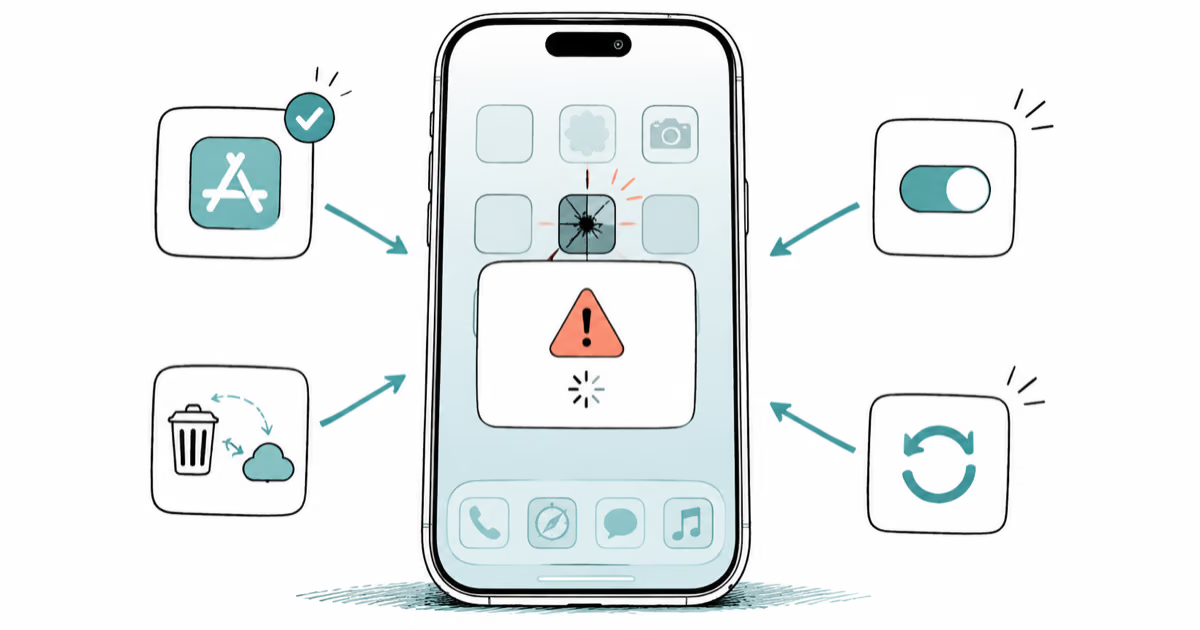
Apps Crashing After iOS 27 Update? Fix Order (2026)
Apps crashing after the iOS 27 update? Update the app in the App Store first, then offload and reinstall to clear stale cache, then restart. The fix order.

Do AI Translation Earbuds Work Offline? What to Know
Do AI translation earbuds work offline? A few do with downloaded language packs, but most need the cloud. Here's what works offline and what you give up.