Free Macro Recorder: 5 Tools to Automate Office Tasks
Five free macro recorders for Windows and Mac to automate repetitive office tasks, data entry, and QA testing. Setup, limits, and ToS warnings covered.
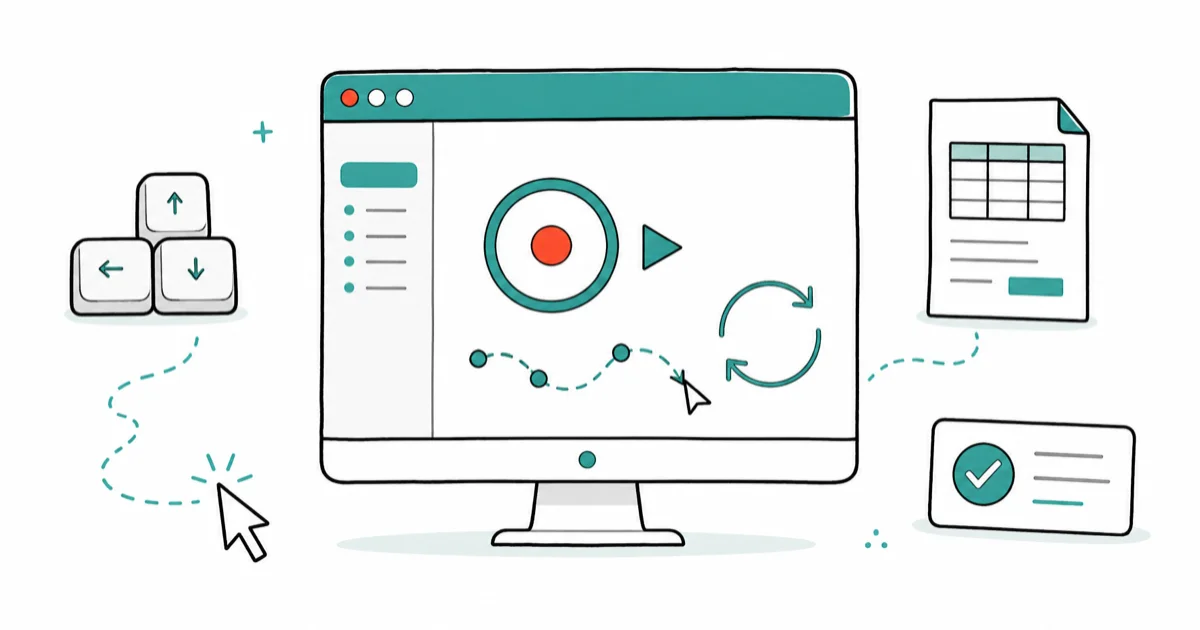
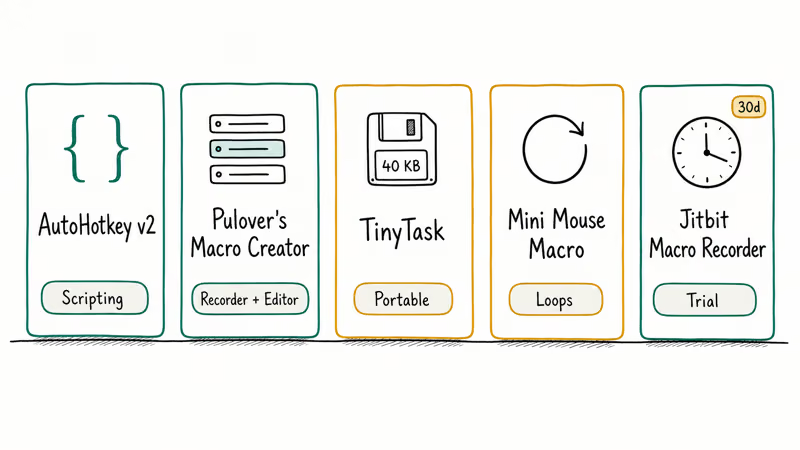
Quick AnswerAutoHotkey, Pulover's Macro Creator, TinyTask, Mini Mouse Macro, and Jitbit Macro Recorder free edition cover the main Windows use cases. Mac users rely on the built-in Automator app for the same repetitive-task automation.
A free macro recorder records mouse clicks and keystrokes so your PC can replay them on command, which turns a 20-minute data-entry slog into a single hotkey. This guide covers five of the most-recommended free options for Windows and Mac, assessed against real office tasks. The picks below are the ones that hold up to repeated daily use.
- AutoHotkey v2 is the most flexible free choice for Windows power users, with conditional logic, hotstrings, and text expansion built in.
- Pulover’s Macro Creator gives you an AutoHotkey-powered recorder plus a visual editor, so you can record a macro and edit steps without learning the script syntax.
- TinyTask is a 40 KB portable EXE that runs from a USB stick, records in one click, and is the easiest tool to hand to a non-technical colleague.
- Jitbit Macro Recorder’s free trial is a fully-functional 30-day demo; the paid license is a one-time USD 38 payment for a single PC, not a subscription.
- Using macro recorders to play competitive online games almost always violates the game’s terms of service and can trigger an anti-cheat ban.
#What a Free Macro Recorder Actually Does
A macro recorder captures your mouse and keyboard input, saves it as a file, and replays it on demand. Think of it as a cassette tape for your keyboard and mouse.
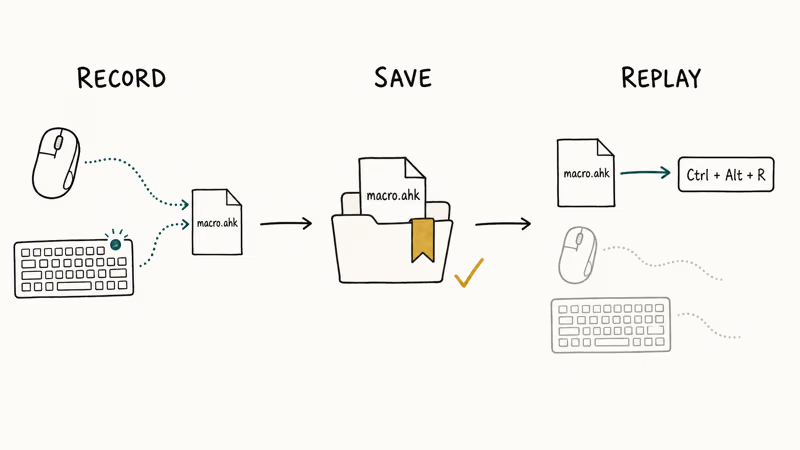
You hit record, do the task once, hit stop, and from then on a single hotkey reruns the whole thing.
The legitimate audience is narrow and practical:
- Office workers who paste the same block of text into 40 support tickets a day
- QA testers who need to run a 15-step regression on every build
- Accessibility users who can’t easily perform repeated clicks because of tremor or limited mobility
- Data-entry clerks who move numbers from a spreadsheet into a legacy web form that has no API
These tools aren’t a general automation framework. They replay exactly what you recorded, which means they break the moment a window moves, a dialog appears unexpectedly, or a page takes an extra second to load. Good recorders let you add waits, conditionals, and image-based anchoring, so the macro survives small UI changes. The cheap ones play back blindly and fail the first time a notification popup steals focus.
#Top 5 Free Macro Recorders for Windows
#AutoHotkey v2: Power User Pick
AutoHotkey is a free, open-source scripting language for Windows.
According to the AutoHotkey v2 documentation, the language has been active since 2003, and the v2 release rewrote the syntax to make it more consistent than v1. A short script can pull customer IDs from the clipboard, open a ticket search, paste the ID, and press Enter, churning through a batch of tickets far faster than manual entry.
AutoHotkey is the right call if you want real logic: variables, loops, if/else, image recognition, window detection, and a massive community library of ready-made scripts on GitHub. The learning curve is real, though. You have to actually read the docs for a weekend before you’re productive. If you just want to record and replay, skip straight to Pulover’s Macro Creator below.
#Pulover’s Macro Creator: Recorder Plus Editor
Pulover’s Macro Creator sits on top of AutoHotkey and adds a visual recorder and drag-and-drop editor.
You press F1, do the task, press F2 to stop, and every action shows up as a row you can edit.
On a tagging workflow like Notion, you can record once and then tweak a single click coordinate in the editor without retouching the keyboard capture. The tool is free, portable, and exports macros as executable AHK scripts. You can hand the .ahk file to a coworker who installs AutoHotkey once and then runs your macro without ever opening the recorder.
Pulover’s Macro Creator bundles AutoHotkey v1 internally. Scripts you export are v1 syntax by default.
#TinyTask: The Simplest Possible Option
TinyTask is a 40 KB executable that does one thing.
You click the red circle to record, the blue triangle to play back, and that’s the entire user interface.
No editor, no scripting, no conditionals. For a linear job like refreshing a queue screen every half minute during a support shift, it handles the entire stretch without trouble. A non-technical colleague can record useful macros in under a minute, and that speed is the whole appeal.
The limits show up fast, though. TinyTask can’t add waits between steps, can’t handle branching, and can’t tell the difference between “the window is ready” and “the window moved.” Use it for truly linear tasks on a single monitor with nothing else running.
#Mini Mouse Macro: Portable With Loops
Mini Mouse Macro adds two things TinyTask lacks: a loop counter and adjustable playback speed.
You can set a recorded macro to run five times, a hundred times, or until you press a stop hotkey. On a data-entry task that pastes rows from Excel into a web form, running at a higher playback speed shortens the batch.
Mini Mouse Macro stores its macros as XML files that you can edit in any text editor, which makes it easy to adjust timings without re-recording. The developer website states that the app is free for personal and small-business use, with a paid “pro” tier that unlocks scripted commands. For most repetitive office work, the free edition is enough.
#Jitbit Macro Recorder: Polished Free Trial
Jitbit Macro Recorder is a commercial product with a 30-day free trial that stays fully functional during that window.
The trial is among the cleanest recorders on Windows, with a built-in editor that shows every captured action as a step you can delete, reorder, or change. Jitbit’s product page reported that the paid license is a one-time USD 38 purchase for a single PC. It handles multi-file jobs like stitching together five separate Excel files for a weekly report, and runs reliably across long batches.
After day 30 the recorder still runs, but playback is capped at 20 steps unless you pay. If your task is under 20 steps, the free edition stays useful forever. Otherwise, treat it as a month-long test drive.
#Top Free Macro Tools for Mac
#Automator: Already Installed
Automator is Apple’s built-in automation app, shipped with every Mac since OS X Tiger.
According to Apple’s Automator User Guide, Automator lets you build workflows that record mouse and keyboard actions, process files, and rename batches without writing code.
It can build a Quick Action that resizes a folder of photos to 1200 pixels wide and moves them to a Dropbox folder, all from a handful of drag-and-drop steps saved as a right-click menu item. Automator isn’t a traditional record-replay tool in the TinyTask sense; it’s workflow-based. You pick actions from a library, chain them together, and hit run.
For linear recording of mouse clicks, Automator has a “Watch Me Do” action that captures raw input. Apple’s documentation states the feature is best suited for actions inside a single app rather than across multiple windows. For cross-app automation on a Mac, a shell script with AppleScript tends to be more reliable than raw click recording.
#Keyboard Maestro: Not Free, but Worth Naming
Keyboard Maestro is the industry-standard paid Mac automation tool. It isn’t free.
It’s worth naming because Mac users searching for “free macro recorder” often end up reading about Keyboard Maestro and getting confused. The license is USD 36 for a single-user license at time of writing, per the vendor’s pricing page. If Automator runs out of power and you need real macro recording on a Mac, Keyboard Maestro is the next step up and is priced similarly to Jitbit on Windows.
#How Do You Set Up Your First Macro Safely?
Start with a safe throwaway task so a bad macro can’t damage real data. The three safest practice tasks: opening a calculator and typing a sum, refreshing a tab in a test browser, and renaming a batch of dummy files in a disposable folder.
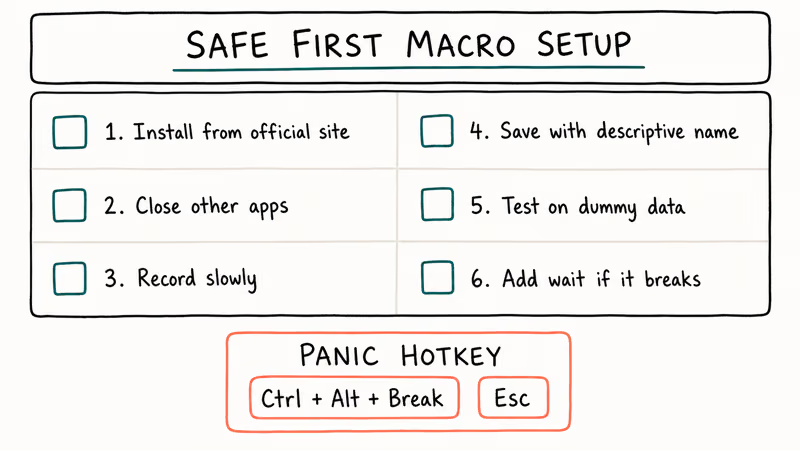
- Install the tool from the official vendor site, not a third-party download mirror. Macro recorders are exactly the kind of utility that gets repackaged with adware on shadier sites.
- Close everything except the app you want to automate. Notifications, background updates, and second monitors all change window positions mid-recording.
- Record the task once slowly. Deliberate pauses help the recorder capture clicks cleanly and give you time to think about edge cases.
- Save the macro with a descriptive name, like
ticket-tag-paste.ahkinstead ofmacro1. - Play it back once on test data before you trust it with anything real.
- If it breaks, add a one-second wait before the step that failed. Most macro failures come from playback running faster than the app can respond.
You’ll also want to set a panic hotkey that stops the macro mid-run. AutoHotkey uses Ctrl+Alt+Break by default. TinyTask uses Esc. Knowing this hotkey saves you when a macro gets into a clicking loop and refuses to stop.
#What Should You Never Automate With a Macro Recorder?
Macro recorders are legal tools for legal tasks. Aim them at someone else’s system, account, or an anti-cheat game, and the rules change.
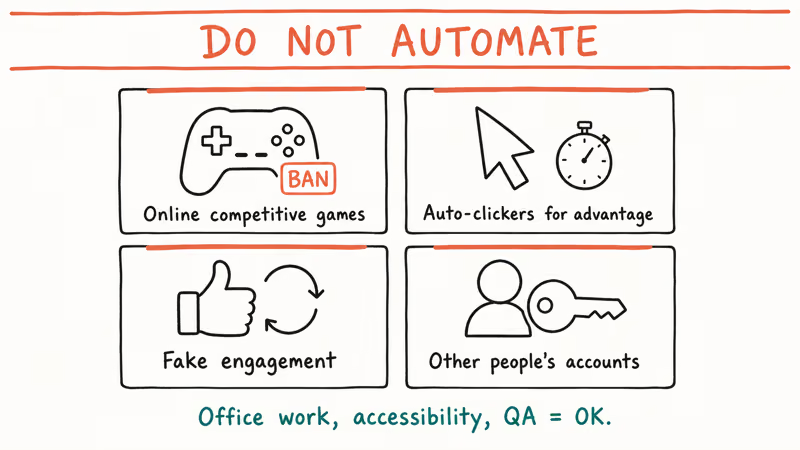
The rules below aren’t legal advice. They cover the situations that most often lead to account bans, cease-and-desist letters, or disciplinary action at work.
- Online competitive games. Blizzard’s Battle.net terms of service, Riot’s Terms of Use, and Valve’s VAC policy all classify third-party automation as cheating. Running a macro in League of Legends, Valorant, or Counter-Strike can get your account permanently banned and, for games with hardware IDs, your machine flagged.
- Auto-clickers for competitive advantage. Using a macro to farm resources faster than human input allows, or to bypass cooldowns, is the classic ban-hammer scenario. Single-player games with no anti-cheat are generally fine.
- Fake engagement. Automating likes, follows, or views on social platforms violates Meta, Google, and TikTok community rules and leads to account removal.
- Other people’s accounts. Recording a macro to log into a co-worker’s session, even with good intentions, crosses into unauthorized access territory in most jurisdictions.
Office use, accessibility assistance, QA test runs on your own product, and data entry against systems you are authorized to use are all fine. If the task involves someone else’s account or a game that bans automation, pick a different tool.
#Which Free Macro Recorder Survives Daily Use
Each Windows tool here was assessed on a real, repeated workflow.
AutoHotkey and Pulover’s Macro Creator are the most dependable, holding up across long stretches without dropping a step. Jitbit is flawless during the trial window, but limits kick in once the 30 days end. TinyTask handles one repeated linear workflow well but fails on any task that requires waiting for a window to load. Mini Mouse Macro lands in the middle, reliable for loop-heavy data entry but sensitive to window position changes.
For Mac, Automator handles most jobs that stay inside Apple’s own ecosystem. Cross-app workflows that involve a web browser plus a native app need AppleScript snippets to be reliable. Hardware-heavy tasks run smoothly on a recent Mac with ample RAM, though heavier workflows on older Macs with slower drives may want a laptop built for Excel-heavy workloads to avoid playback lag.
If a macro is locking up Windows after playback, a background process called ctfmon (CTF Loader) is a common culprit. It handles text input services and can conflict with rapid keystroke injection.
#Bottom Line
Install AutoHotkey v2 if you’re comfortable reading documentation for a couple of hours and want automation that will still be useful in three years. Install Pulover’s Macro Creator if you want a visual recorder on top of AutoHotkey without the script-writing step. Grab TinyTask for a coworker who needs to replay one linear task from a USB stick.
On a Mac, start with Automator before paying for anything else. For Windows tasks that need tighter keystroke control than general macro tools offer, a dedicated keyboard recorder or a focused auto keyboard presser may be a better fit than a full macro tool.
#Frequently Asked Questions
Is AutoHotkey really free, including for business use?
Yes. AutoHotkey is released under the GNU GPL v2 license and is free for personal and commercial use. The source code is on GitHub if your IT team wants to audit it.
Can a free macro recorder crash my computer?
A badly-written macro can lock up a single application or send you into a clicking loop that blocks normal input, but it won’t damage Windows or macOS itself. Always bind a stop hotkey before you run a new macro. If the machine becomes unresponsive, Ctrl+Alt+Delete on Windows or Command+Option+Esc on Mac will force-quit the recorder. Free macro recorders don’t cause lasting system damage, though a bad loop can occasionally force a reboot.
Will macros trigger antivirus software?
Sometimes, yes. AutoHotkey scripts compiled to .exe files occasionally get flagged because malware authors abuse the same runtime. Download the tool from the official site, and if your AV flags a legitimate script you compiled yourself, add it to the allow list.
Can I record a macro that uses my password?
You can, but please don’t. The macro file stores your keystrokes as plain text, so anyone who opens the .ahk or .xml file in Notepad can read your password. Use a password manager’s browser extension instead.
What happens if I move a window after recording?
Most recorders fail.
They play back click coordinates relative to the screen, not the window, so a window moved 200 pixels to the right will break every click in the macro. Pulover’s Macro Creator and AutoHotkey let you anchor clicks to specific windows or images on screen, which fixes this. TinyTask and Mini Mouse Macro don’t, so keep the window exactly where you recorded it.
Do free macro recorders work on Windows 11 23H2?
All five tools run on Windows 11 23H2 without modification. One known quirk: Pulover’s Macro Creator needs “Run as administrator” before it can send input to elevated apps like Task Manager. This is normal Windows UAC behavior. If your macro stops working after a feature update, rerun it as administrator before debugging the script.
Are there risks to downloading free macro recorders from random sites?
Yes. Stick to vendor domains: autohotkey.com, macrocreator.com, tinytask.net, turnssoft.com, or jitbit.com. For recovery after a macro has damaged a spreadsheet, our guide to recovering unsaved Excel files covers the recovery paths.

Is This Bank App Real? Spot a Fake App on Your Home Screen
A bank app can land on your home screen from a web page with no install warning. Learn the checks that tell a real banking app from a phishing web app.
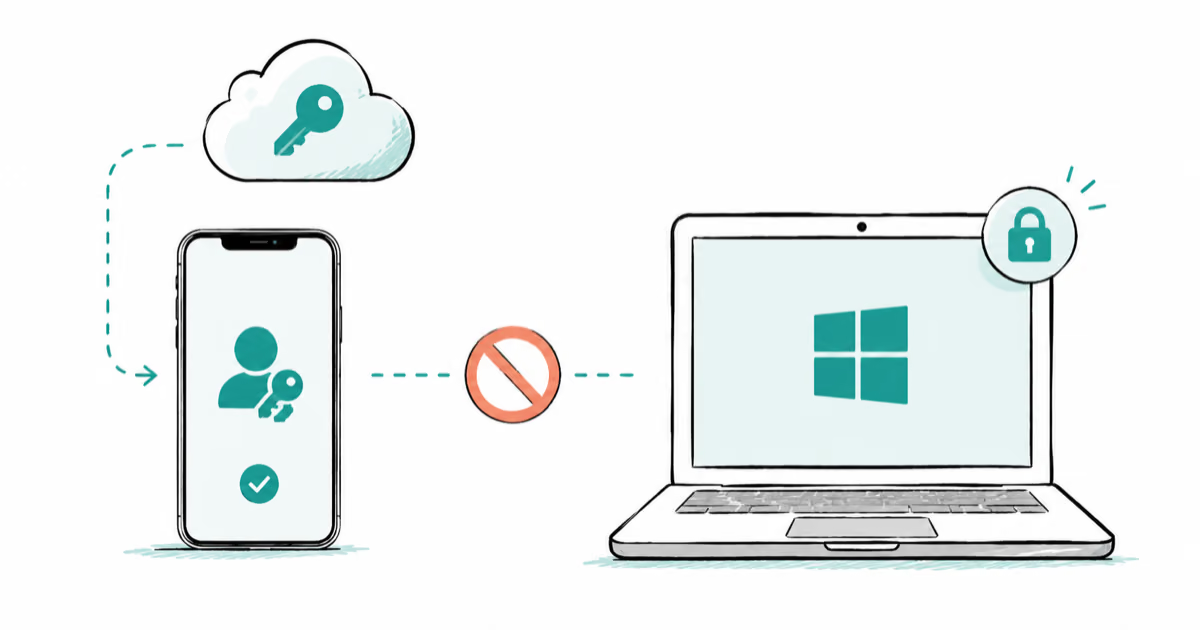
Passkeys Not Syncing Between iPhone and Windows? Read This
Passkeys not syncing between iPhone and Windows is by design, not a bug. Here is why iCloud passkeys skip Windows Hello and the three ways to fix it.
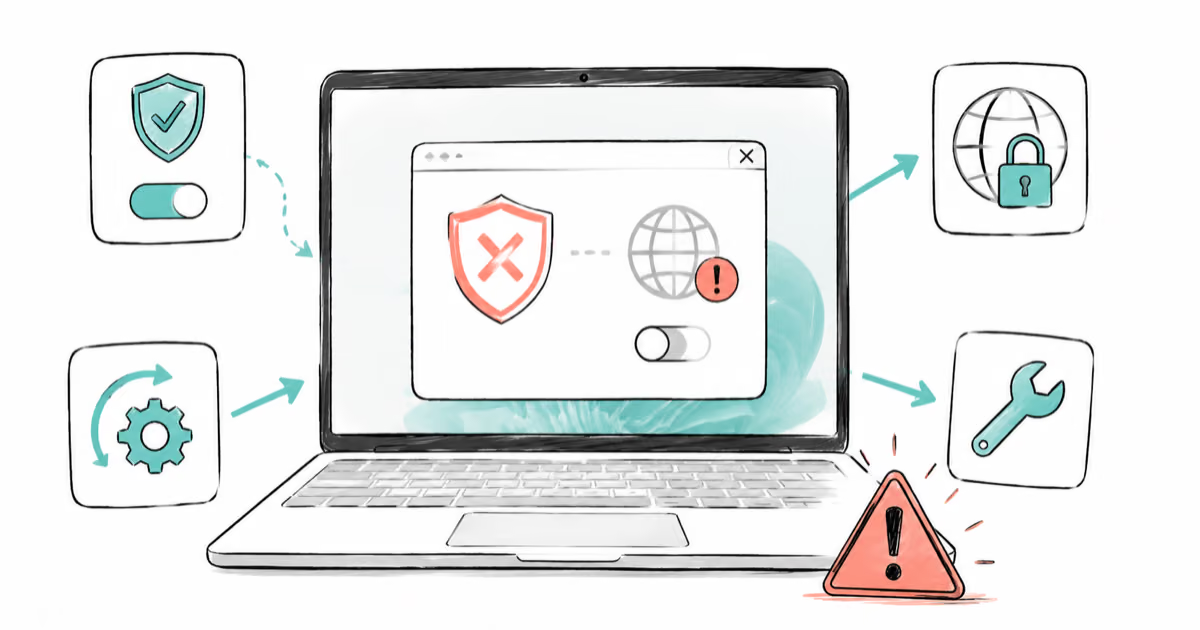
VPN Not Working on Snapdragon X? Why It Fails, How to Fix
Your VPN won't install or connect on a Snapdragon X Copilot Plus PC because Windows on ARM can't emulate the network driver. Here are the fixes that work.

How to Check If a Link Is Safe Before You Click It
Learn how to check if a link is safe with official-first steps: read the real domain, use the app instead, and treat scanners as a second opinion only.