Fix Windows Boot Error 0xc00000e9: Proven Solutions
Fix Windows error code 0xc00000e9 with practical repair steps for SATA cable checks, Startup Repair, BCD rebuilds, CHKDSK, and recovery basics.
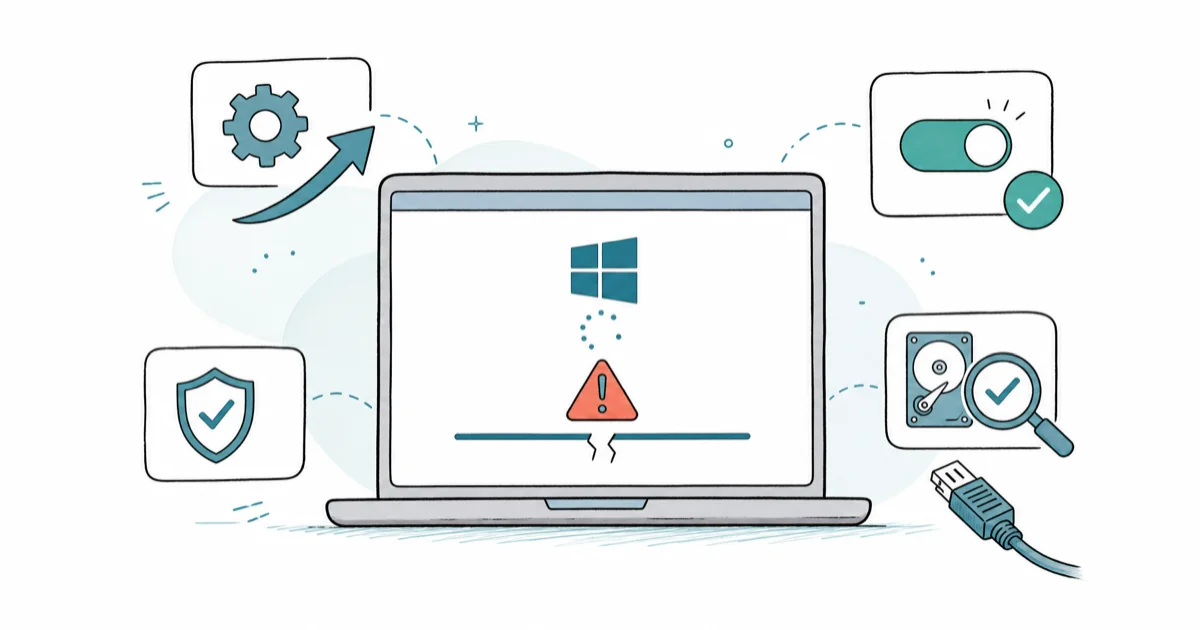
Quick AnswerError 0xc00000e9 is caused by a faulty hard drive connection or corrupted boot files. Check your SATA cables, run Startup Repair from a Windows recovery drive, or rebuild the BCD using bootrec commands.
Error 0xc00000e9 means Windows can’t read from your boot drive during startup. Common causes include a loose or failing boot-drive connection, corrupted boot files, and external-device I/O problems.
- Error 0xc00000e9 is a Windows Boot Manager I/O error that appears before the login screen and is most often caused by a loose SATA cable or a failing hard drive.
- Disconnecting all external USB devices and rebooting isolates whether a peripheral’s driver is triggering the error before attempting more invasive repairs.
- Windows Startup Repair, accessible by booting from installation media and selecting “Repair your computer,” fixes corrupted boot files without requiring a full reinstall.
- Running “chkdsk C: /f /r” from the recovery Command Prompt scans for and repairs bad sectors on the drive that prevent successful booting.
- If BIOS settings show incorrect SATA mode or missing drives, correcting them and verifying cable connections resolves the error in cases caused by configuration drift.
#What Causes Error 0xc00000e9?
This error means Windows Boot Manager hit an unexpected I/O (input/output) failure while trying to read from the boot drive, shown on screen as “An unexpected I/O error has occurred. Error code: 0xc00000e9.” According to Microsoft’s Windows recovery options guide, boot failures like this are repaired with built-in tools such as Startup Repair before you resort to reinstalling Windows.
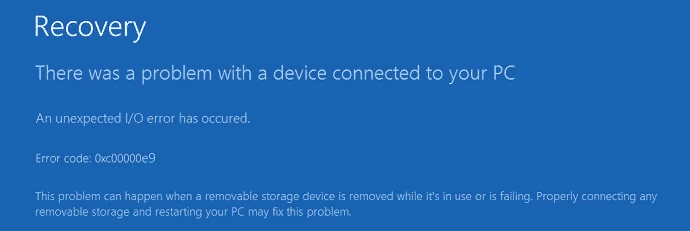
The impact of this error is significant:
- It prevents the system from booting properly
- It can lead to data loss if not addressed promptly
- It causes disruptions in productivity and access to important files
Understanding and resolving this error quickly is crucial to minimize potential data loss and system downtime. In some cases, this error might be accompanied by the message “Your PC needs to be repaired,” which indicates a serious boot issue. Learn more about this related error.
#Common Triggers and Root Causes
This error can come from hardware connection failures, corrupted boot files, unsafe drive removal, BIOS or UEFI misconfiguration, or malware affecting the boot process.
- Hardware Failures: Malfunctioning external devices or damaged I/O ports can disrupt the boot process. This includes issues with hard drives, SSDs, or connection cables.
- Corrupted System Files: Problems within the Windows Registry or critical system files can lead to boot errors. This corruption can occur due to improper shutdowns, failed updates, or software conflicts.
- Improper Removal of Storage Devices: Disconnecting external drives without properly ejecting them can cause data corruption and subsequent boot issues.
- Incorrect BIOS or UEFI Configurations: Misconfigured BIOS settings, particularly those related to boot order or drive recognition, can trigger this error. In some cases, your computer might get stuck on the boot menu, especially on Lenovo devices. Check this guide if you’re experiencing a similar issue.
- Malware Infections: Certain types of malware, especially boot sector viruses, can interfere with the normal boot process and cause errors like 0xc00000e9.
#How Should You Diagnose This Error?
Before attempting to fix the error, diagnose the root cause:
- Check Hardware Connections:
- Ensure all cables, especially those connecting the hard drive to the motherboard, are securely attached.
- Inspect cables for any visible damage and replace if necessary.
- Use Diagnostic Tools:
- Run CHKDSK to scan for hard drive errors and bad sectors.
- Use System File Checker (SFC) to identify and repair corrupted system files.
- Inspect BIOS Settings:
- Access your computer’s BIOS/UEFI setup.
- Verify that the boot order is correct and all hardware components are properly recognized.
- Test External Devices:
- Disconnect all external devices and attempt to boot the system.
- Reconnect devices one by one to identify any problematic hardware.
- Run Malware Scans:
- Use a bootable antivirus tool to perform a comprehensive scan of your system.
#Solutions to Fix Error 0xc00000e9
Once you’ve diagnosed the issue, try these solutions to resolve the error:
#1. Update Drivers
According to Windows boot manager background, outdated or corrupted storage controller drivers can trigger I/O errors. To update drivers:
- Boot into Safe Mode if possible.
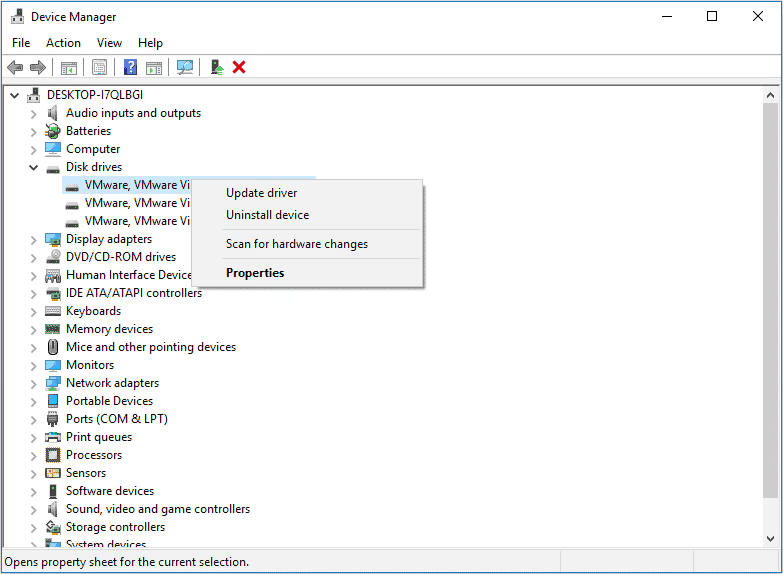
- Open Device Manager (right-click
Start>Device Manager). - Expand categories for disk drives and storage controllers.
- Right-click each device and select “Update driver.”
- Choose to search automatically for updated driver software.
#2. Run Check Disk Scan (CHKDSK)
CHKDSK can identify and repair disk errors:
- Boot from a Windows installation media.
- Open Command Prompt from the recovery options.
- Type
chkdsk C: /f /rand press Enter (replace C: with your system drive letter if different). - Allow the scan to complete, which may take some time.
#3. Perform Startup Repair
Windows’ built-in Startup Repair tool can fix many boot-related issues. According to Microsoft’s Bootrec.exe troubleshooting guide, you should try Startup Repair first in the Windows Recovery Environment, and rebuild the BCD store with bootrec commands only if it fails:
- Boot from Windows installation media.
- Choose “Repair your computer” instead of “Install now.”
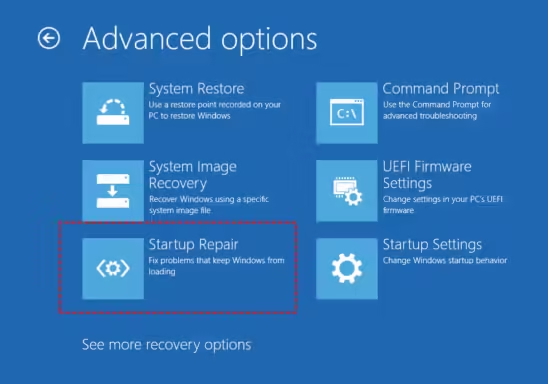
- Go to
Troubleshoot>Advancedoptions > Startup Repair. - Follow the on-screen instructions to complete the repair process.
If you’re experiencing issues with Windows 7 getting stuck on the welcome screen, this guide might be helpful.
#4. Repair Windows Without CD
If you don’t have a Windows installation CD, you can still attempt to repair your system. Learn how to repair Windows 10 without a CD.
#Reinstalling Windows as a Last Resort
If other methods fail, a clean Windows installation may be necessary:
- Back up all important data before proceeding.
- Boot from Windows installation media.
- Choose “Custom: Install Windows only” during the installation process.
- Follow the prompts to complete the installation.
#6. Replace Faulty Hardware
If hardware issues are identified:
- Replace any damaged cables, particularly SATA or power cables.
- If the hard drive is failing, replace it with a new one.
- Ensure all components are properly seated in their connections.
#Preventive Measures
To avoid encountering error 0xc00000e9 in the future:
- Regular Maintenance:
- Perform routine system checks and updates.
- Use Windows Update to keep your system current.
- Proper Device Handling:
- Always use the “Safely Remove Hardware” option before disconnecting external devices.
- Back Up Data Regularly:
- Use Windows Backup or third-party software to create regular backups of your important files.
- Monitor Hardware Health:
- Use diagnostic tools to check the health of your hard drives and other components periodically.
- Keep Software Updated:
- Ensure your operating system and all installed software are up-to-date to reduce vulnerabilities.
- Address Other System Issues:
- Be proactive in addressing other system issues, such as screen tearing, which might indicate underlying hardware or software problems. Here’s a guide on fixing screen tearing.
#Bottom Line
Check your SATA cables first because a loose boot-drive connection is one common cause of this error. If cables are fine, run Startup Repair from a recovery drive. For corrupted boot files, rebuild the BCD with bootrec commands.
#Frequently Asked Questions
Can error 0xc00000e9 cause permanent data loss?
The error itself doesn’t delete data. But if it’s caused by a failing hard drive, delaying the fix could lead to data loss as the drive continues to degrade. Back up your data as soon as you can boot into Windows or recovery mode.
How long does it take to fix this error?
If it’s a cable issue, about 5 minutes. Startup Repair takes 10-20 minutes. CHKDSK on a 1TB drive can take 1-2 hours. A full Windows reinstall takes 30-60 minutes plus setup time.
What if I encounter error 0x8007042B during repair?
That’s a separate Windows Update error. Check this guide for 0x8007042B solutions if it appears while trying to fix the boot error.
Is it safe to update BIOS to fix this error?
A BIOS update can help if the error is caused by drive recognition issues. But a failed BIOS update can brick your motherboard. Only update BIOS as a last resort and follow the manufacturer’s instructions exactly.
Can a faulty power supply cause this error?
Yes. If the PSU can’t deliver stable power to the hard drive, intermittent read failures trigger I/O errors. This is more common with older power supplies or systems with multiple drives drawing heavy loads.
Does this error affect SSDs differently than hard drives?
The error appears on both, but the causes differ. On hard drives, it’s often loose SATA cables or bad sectors. On NVMe SSDs, it’s usually a driver conflict or firmware issue rather than a physical connection problem.
How do I prevent this error from happening again?
Run CHKDSK quarterly, keep SATA cables secure during any hardware work, and use a UPS or surge protector to prevent sudden power loss during writes. Avoid force-shutting down your PC while Windows is updating.
Can I fix this error without a Windows installation USB?
If you can boot into Safe Mode, yes. But most solutions require booting from a Windows recovery drive or installation USB. Create one on another PC if you don’t have one already.

Best Laptop for Running LLMs in 2026: Memory Comes First
The best laptop for running LLMs is a memory purchase first. Compare MacBook unified memory against NVIDIA laptop VRAM, and see what each tier really runs.
How to Run a Local LLM on Windows: A 2026 Setup Guide
Run a local LLM on Windows with LM Studio or Ollama. Pick a model that fits your GPU memory, keep every prompt offline, and skip the monthly bill.
Bluetooth Not Working on Snapdragon X? Fixes for 2026
Bluetooth not working on your Snapdragon X Copilot+ PC? Generic audio, mice, and keyboards work, but vendor apps often lack an ARM build. Fixes inside.
Docker Desktop and WSL2 Not Working on Snapdragon X? Fix It
WSL2 runs fine on Snapdragon X, but Docker Desktop ARM is Early Access and throws WSL errors. Use WSL2 plus native ARM64 Ubuntu and Docker Engine.