Should You Wait for 2026 AI PCs or Buy a Laptop Now?
Should you wait for 2026 AI PCs or buy now? A timestamped June 2026 verdict on the CES chip wave, when to hold, and when buying today still wins.

Quick AnswerBuy now if your current laptop is dying or your work needs AI features today. Wait if you can hold a few months, because the CES 2026 chip wave (Snapdragon X2 Elite, Intel Panther Lake, AMD Ryzen AI 400) brings bigger NPUs and better battery for similar money. This advice is timestamped June 2026 and will shift as the new silicon ships.
Should you wait for the 2026 AI PCs or buy one today? The decision really comes down to one question: how much life does your current laptop have left? A new wave of silicon landed at CES 2026, so timing matters more this year than usual, and the right answer depends on whether you can comfortably hold for a few months.
- Buy now if your laptop is failing or you need AI features for work today; waiting punishes nobody whose machine still works.
- The CES 2026 chip wave (Snapdragon X2 Elite, Intel Panther Lake, AMD Ryzen AI 400) pushes NPUs well past the 40-TOPS Copilot+ floor.
- Snapdragon X2 Elite NPUs reach as high as 85 TOPS in one exclusive variant, roughly double the certification minimum.
- New silicon usually means more performance and better battery for similar money, which is the core case for patience.
- This guidance is timestamped June 2026 and will age as the new chips reach wide retail availability.
#What Changed at CES 2026?
Start with the news, because it reframes the whole timing question. At CES 2026 in January, all three major chipmakers unveiled their newest laptop silicon: Qualcomm’s Snapdragon X2 Elite, Intel’s Panther Lake, and AMD’s Ryzen AI 400 series. According to PCWorld’s CES 2026 chip preview, this is the year the second wave of AI laptop chips arrived ready for retail rather than as distant roadmap promises.
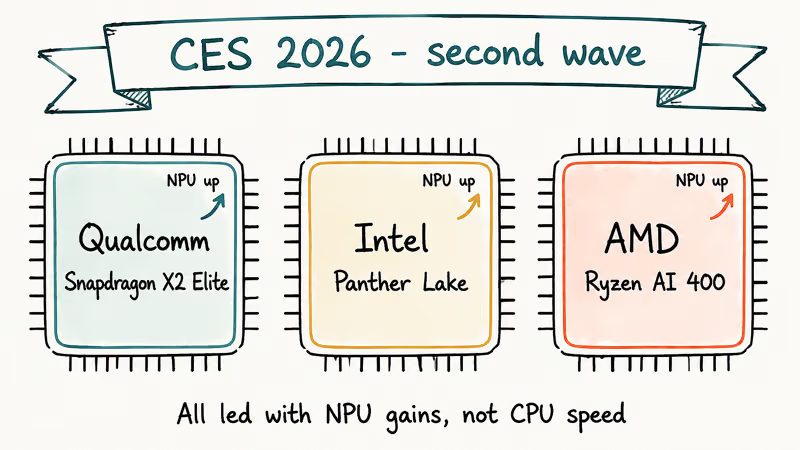
Across first-wave Copilot+ hardware, the pattern is clear: every vendor at CES led with NPU gains rather than raw CPU speed, a sign the industry is competing on AI headroom now.
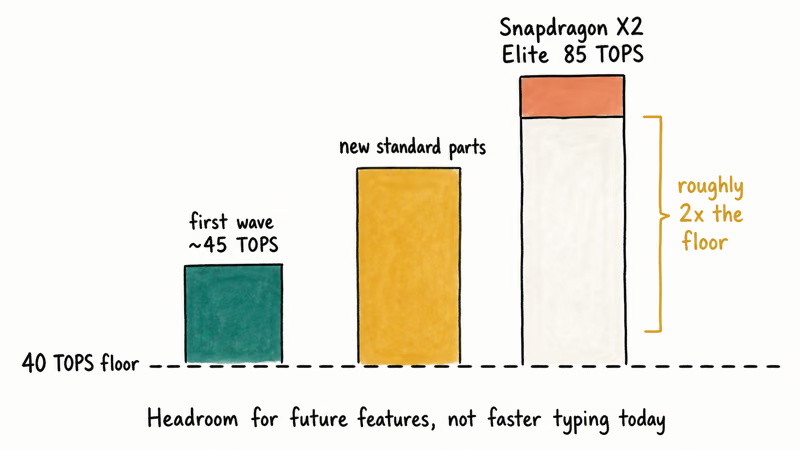
The headline is the NPU jump, and it’s a big one. The first wave of Copilot+ machines cleared Microsoft’s 40-TOPS bar by a hair, while this second wave clears it by a wide margin, with some parts landing at roughly double the certification minimum, and that single fact is the entire reason patience is even on the table for buyers whose current laptops still run fine.
For buyers who held off because the first-generation machines felt unfinished, this is the moment the category matured. The question is no longer “is the hardware good enough,” it’s “do I need it before the new models settle into wide availability.”
#How Much Bigger Are the New NPUs?
This is where waiting earns its case. Microsoft’s Copilot+ baseline states that a machine needs “at least 40 TOPS,” but the new chips blow past it. Tom’s Hardware confirms that an HP-exclusive Snapdragon X2 Elite variant has 85 TOPS, roughly double the certification floor, with the standard parts close behind.
Intel’s Panther Lake and AMD’s Ryzen AI 400 line also bring larger NPUs than their predecessors. So the gap between “barely certified” and “comfortably ahead” is real this cycle.
Here’s the honest caveat, though. For everyday AI features, you won’t feel the difference between 45 TOPS and 85 TOPS today. The current Studio Effects, Live Captions, and Recall run smoothly even on first-wave hardware that barely clears the floor. The bigger NPU is headroom for future features, not a speed boost you’ll notice this week, which softens the urgency to wait purely for TOPS.
#When Buying Now Is the Right Call
There are clear situations where you should not wait at all. If your current laptop is dying, throwing errors, or limping along on a swollen battery, replacing it today beats babysitting a failing machine for months. A working laptop is worth more than a slightly faster one you don’t yet own.
The same goes for work need. If your job leans on AI dictation, video-call effects, or Recall today, the productivity you gain now outweighs a spec bump you’d wait months for.
There’s also a value angle that cuts the other way. As the new chips arrive, first-wave Copilot+ laptops get discounted, so a well-priced current-generation machine can be the smartest buy on the shelf. If you need something dependable today, AMD’s Ryzen AI line is the safest mainstream x86 pick, with broad app compatibility and no emulation surprises. Our AI PC buying guide lays out the spec floor to insist on either way.
#When Waiting Is the Smarter Move
If your laptop still does the job, patience usually pays. Holding a few months for the new silicon tends to get you a bigger NPU, better battery, and fresher platform support for similar money, with no penalty for waiting beyond the inconvenience.
The clearest signal to wait? A machine that works fine but lacks AI features you only kind of want.
Tom’s Guide’s coverage of the 2026 CPU race shows how closely the three platforms now compete, which means more choice and better pricing for anyone who holds out a little.
If you’re cross-shopping the silicon, our Snapdragon vs Intel vs AMD AI chips breakdown maps the trade-offs, and our AI PC vs regular laptop guide checks whether you even need the NPU first.
#The Hidden Cost of Waiting Forever
Patience has a limit, and it’s worth naming. There will always be a faster chip six months out, so “wait for the next one” can become a loop that never ends. The CES 2026 wave is a genuine step up, but the wave after it will tempt you the same way.
The fix is simple. Wait for a specific, dated milestone, not an open-ended “better hardware.” If the new chips are already shipping into laptops you can buy, the waiting is over. Set a deadline tied to availability, not to the next rumor, and you avoid the trap of perpetual delay while a working laptop slowly ages out from under you.
#A Quick Decision Framework
Run your situation through three checks. Is your current laptop reliable? Do you need AI features for work today? Can you comfortably wait two to four months for wider availability of the new chips?
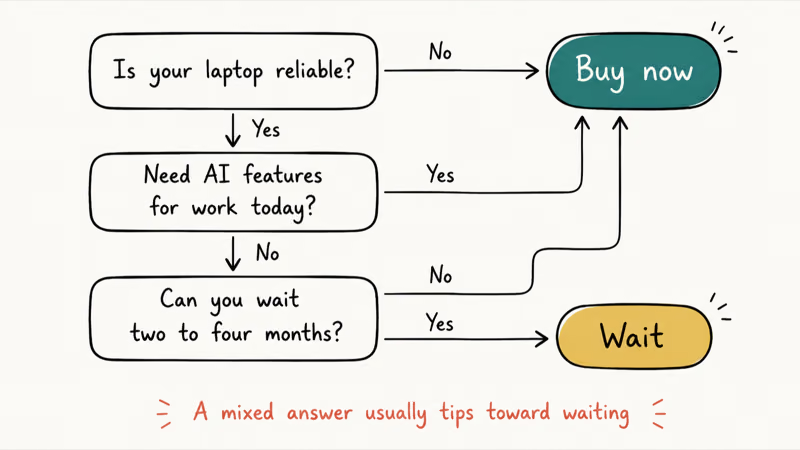
If the laptop is failing or the work need is real, buy now. If the laptop works and the need is a want, wait. A mixed answer usually tips toward waiting, since the downside of patience is small.
Whatever you decide, sort the app question before the silicon. A chip that can’t run your must-have software is the wrong chip regardless of its NPU rating, so check compatibility first, then pick a platform. To confirm whether your current PC is actually due for replacement, our guide on how to check if your PC can run Windows 11 helps you read your own specs.
#If You’re Buying Now, These Hold Up
Decided not to wait? The Surface Laptop 7 already clears the 40-TOPS Copilot+ bar; the Dell XPS 14 Premium is the x86 pick when app compatibility outranks the badge. The lighter, OLED Lenovo Yoga Slim 7X is the value alternative worth a look too.
- Rated up to 20 hours of battery life on the efficient Snapdragon X Plus
- Clears every line of the checklist: 45-TOPS NPU, 16GB floor, 1TB SSD
- Tall 3:2 120Hz touchscreen shows more of a document or web page than 16:9 panels
Last updated on Jul 3, 2026
As an Amazon Associate fone.tips earns from qualifying purchases. Prices and availability on Amazon are accurate as of the date above and subject to change.
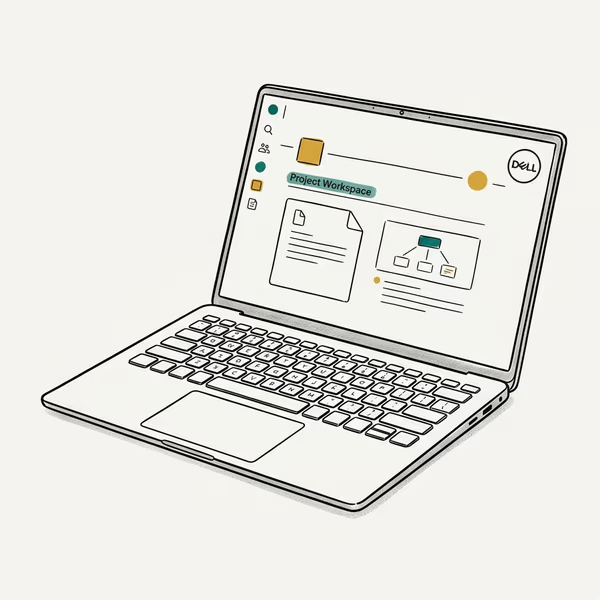
- x86 silicon runs legacy Windows apps natively, with no ARM emulation guesswork
- 14.5" 3.2K OLED touchscreen at 120Hz comes standard on this configuration
- Machined build with 16GB of RAM and a roomy 2TB SSD in this configuration
Last updated on Jul 3, 2026
As an Amazon Associate fone.tips earns from qualifying purchases. Prices and availability on Amazon are accurate as of the date above and subject to change.
#Bottom Line
Should you wait for the 2026 AI PCs? If your current laptop is dying or your work truly needs AI features today, buy now, and a well-priced first-wave Copilot+ machine or a Ryzen AI laptop will serve you well. There’s no reason to suffer a failing computer for a spec bump.
If your laptop still works and the AI features are a want rather than a need, wait. The CES 2026 wave pushed NPUs as high as 85 TOPS with better battery for similar money, and holding a few months usually buys more for the same budget. This call is timestamped June 2026, so revisit it as the new silicon reaches wide retail. When you’re ready, our roundup of the best laptops to buy in 2026 tracks current picks.
AI PCs and Copilot+ Laptops
#Frequently Asked Questions
Should I wait for the 2026 AI PCs or buy now?
Buy now if your laptop is failing or you need AI features for work today. Wait if your machine still works and the AI features are a nice-to-have, because the CES 2026 chips bring bigger NPUs and better battery for similar money. A mixed situation usually tips toward waiting, since the downside of patience is small.
What new AI PC chips came out in 2026?
CES 2026 introduced Qualcomm’s Snapdragon X2 Elite, Intel’s Panther Lake (Core Ultra 300 series), and AMD’s Ryzen AI 400 series. All three push their NPUs well past Microsoft’s 40-TOPS Copilot+ floor, with one Snapdragon variant reaching 85 TOPS.
Will waiting actually get me a better AI PC?
Usually, yes. The new silicon brings larger NPUs, better battery efficiency, and fresher platform support, often for the same price as the outgoing models. The catch is that everyday AI features run fine on first-wave hardware, so the bigger NPU is future headroom rather than a speed boost you’ll feel today.
Are first-wave Copilot+ PCs still worth buying?
Yes, especially at a discount. As the new chips arrive, first-generation Copilot+ laptops drop in price while still meeting Microsoft’s full feature requirements.
How much higher are the new NPU ratings?
Much higher than the floor. Microsoft requires at least 40 TOPS, while an HP-exclusive Snapdragon X2 Elite variant reaches 85 TOPS, roughly double that minimum.
Does a higher TOPS number mean a faster laptop?
Not for everyday use. A higher NPU rating helps future on-device AI features and improves efficiency, but it doesn’t speed up typing, browsing, or Office work, which run on the CPU and GPU. The TOPS figure is about AI headroom, not general speed.

Best Laptop for Running LLMs in 2026: Memory Comes First
The best laptop for running LLMs is a memory purchase first. Compare MacBook unified memory against NVIDIA laptop VRAM, and see what each tier really runs.
How to Run a Local LLM on Windows: A 2026 Setup Guide
Run a local LLM on Windows with LM Studio or Ollama. Pick a model that fits your GPU memory, keep every prompt offline, and skip the monthly bill.
Bluetooth Not Working on Snapdragon X? Fixes for 2026
Bluetooth not working on your Snapdragon X Copilot+ PC? Generic audio, mice, and keyboards work, but vendor apps often lack an ARM build. Fixes inside.
Docker Desktop and WSL2 Not Working on Snapdragon X? Fix It
WSL2 runs fine on Snapdragon X, but Docker Desktop ARM is Early Access and throws WSL errors. Use WSL2 plus native ARM64 Ubuntu and Docker Engine.