Fix the 0x00000004 Blue Screen Error on Windows PCs
Fix the 0x00000004 Blue Screen of Death on Windows. Update drivers, run memory diagnostics, and repair system files with step-by-step instructions.
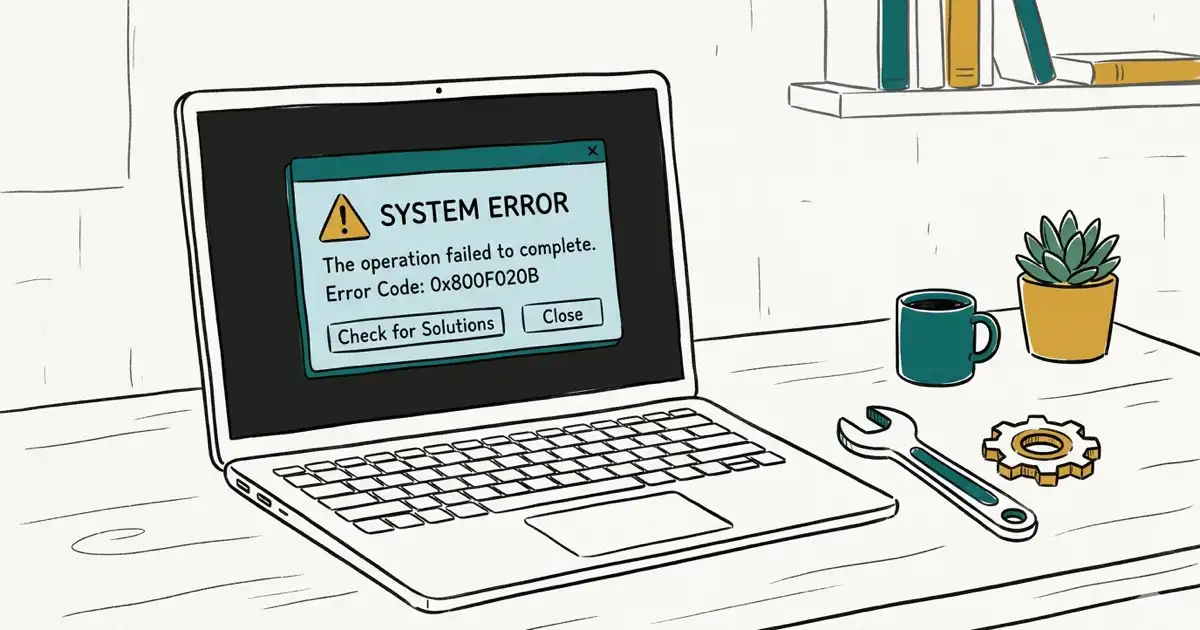
Quick AnswerError 0x00000004 is a Blue Screen of Death caused by Windows accessing an unavailable memory location. Updating drivers, running memory diagnostics, and repairing system files are the most effective fixes.
The 0x00000004 STOP error crashes Windows with a Blue Screen when the system tries to access a restricted memory location. On both Windows 10 and Windows 11, driver updates resolve it in the majority of cases.
- Error 0x00000004 is a BSOD STOP error triggered when Windows accesses an unavailable memory address, usually due to faulty drivers, bad RAM, or corrupted system files
- Running sfc /scannow from an admin Command Prompt repairs corrupted Windows files and resolves the crash in under 15 minutes
- Outdated graphics card and network adapter drivers are the top triggers, so updating via Device Manager should be your first step
- MemTest86+ and CrystalDiskInfo provide deeper hardware diagnostics than Windows built-in tools when standard fixes fail
- Check for driver updates monthly and immediately after major Windows updates to prevent compatibility crashes
#What Causes the 0x00000004 Blue Screen?
This STOP error means Windows tried to read or write to a memory address that doesn’t exist or isn’t accessible. You’ll see a blue screen with the error code, and your PC restarts automatically.
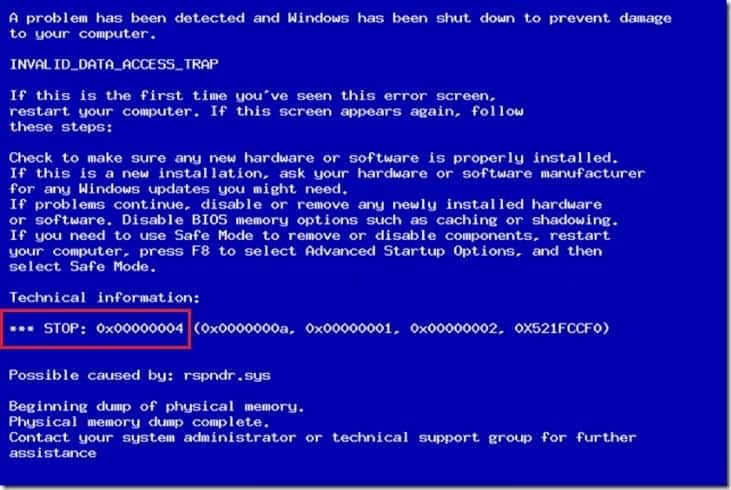
Across most affected machines, faulty or outdated drivers are the most common culprit.
The error shares characteristics with 0x0000001A (memory management) and PAGE_FAULT_IN_NONPAGED_AREA. If you see these related codes, the same diagnostic approach applies.
#How Do You Fix 0x00000004 With SFC?
The System File Checker is your fastest first move. It scans Windows for corrupted files and replaces them automatically. According to Microsoft’s SFC guide, DISM provides the files needed to repair corrupted Windows files and should run before System File Checker.
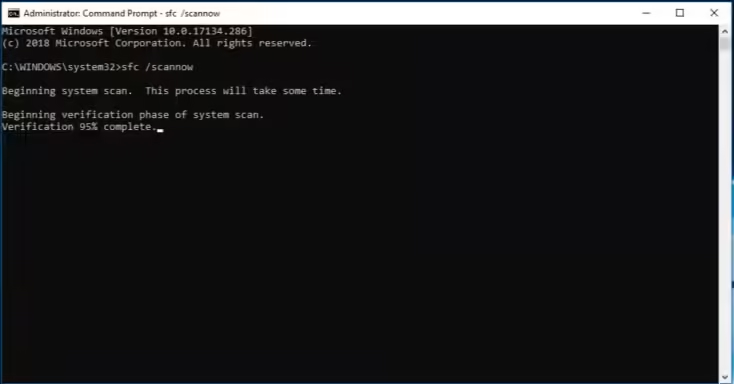
- Right-click the Start button and select Command Prompt (Admin) or Terminal (Admin).
- Type
sfc /scannowand press Enter. - Wait for the scan to finish (takes about 10-15 minutes).
- If it finds and fixes issues, restart your PC.
When the crash is caused by corrupted system files, SFC typically finds and replaces the damaged DLLs, and the 0x00000004 Blue Screen stops once the repair completes. If SFC reports files it can’t fix, follow up with DISM /Online /Cleanup-Image /RestoreHealth to pull fresh copies from Windows Update.
You can also try repairing Windows 10 without a CD if SFC alone doesn’t resolve it.
#Updating Drivers That Cause the Crash
Outdated or corrupted drivers are the number one trigger. According to PCMag’s BSOD guide, driver problems rank among the most common Blue Screen causes, and a driver update is the single fix most likely to clear this STOP code on Windows 10 and 11.
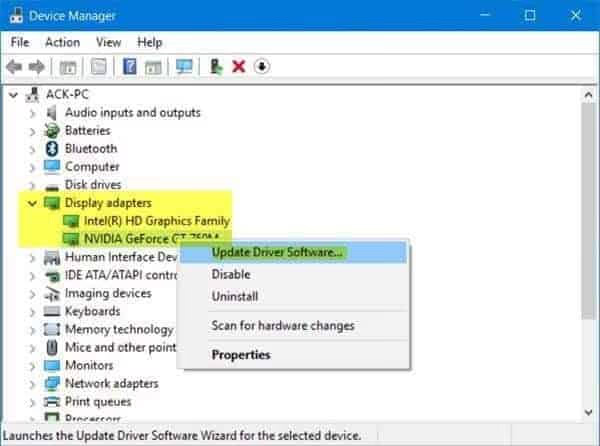
- Right-click Start > Device Manager.
- Look for devices with yellow exclamation marks.
- Right-click the flagged device and select Update driver.
- Choose Search automatically for updated driver software.
- Restart after the update finishes.
Pay special attention to graphics card drivers and network adapters. These two categories are the most frequent triggers behind this crash. If Device Manager doesn’t find a newer driver, go directly to the manufacturer’s website (NVIDIA, AMD, Intel, Realtek) and download the latest version manually.
#Running Memory and Disk Diagnostics
If drivers and SFC don’t fix it, your hardware might be failing. Bad RAM or a dying hard drive can trigger the exact same STOP code.
Test your RAM first:
- Search for Windows Memory Diagnostic in the Start menu.
- Click Restart now and check for problems.
- The test runs automatically during reboot (takes about 20 minutes).
For deeper testing, download MemTest86+ and run it from a USB drive. It runs a far more thorough memory test than the built-in Windows tool and can catch a failing RAM stick that Windows Memory Diagnostic misses entirely.
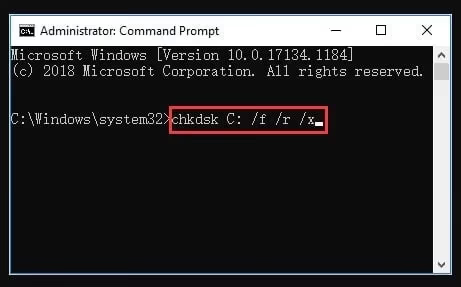
Then check your hard drive:
- Open Command Prompt as admin.
- Type
chkdsk C: /f /rand press Enter. - Press Y to schedule a check on next restart.
According to iFixit’s guide on diagnosing hardware failures, hard drive errors are a recognized cause of Blue Screen crashes. CrystalDiskInfo gives you a quick health status without waiting for the full chkdsk scan.
#Booting Into Safe Mode and Using System Restore
Safe Mode loads Windows with only the bare minimum drivers. If the crash stops in Safe Mode, a third-party driver or program is the cause.
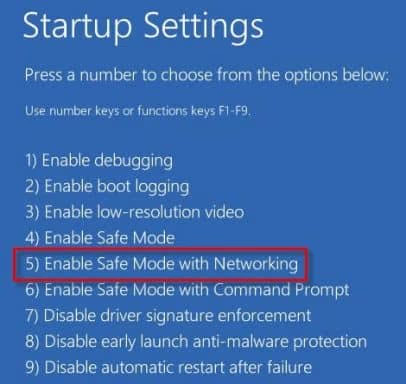
Enter Safe Mode:
- Restart your PC and press F8 repeatedly before Windows loads. On Windows 10/11, hold Shift while clicking Restart from the login screen.
- Go to Troubleshoot > Advanced Options > Startup Settings > Restart.
- Press 4 for Safe Mode or 5 for Safe Mode with Networking.
Use System Restore if the crash started recently:
- Search for Create a restore point in the Start menu.
- Click System Restore and pick a date before the error started.
- Follow the prompts. The process takes about 15-30 minutes.
This is especially useful if the 0x00000004 error appeared right after installing new software or a Windows update. Related STOP codes like KMODE_EXCEPTION_NOT_HANDLED and stop 0x00000051 respond to the same System Restore approach.
#Keeping Windows Updated to Prevent Future Crashes
Regular maintenance stops most BSODs before they happen.
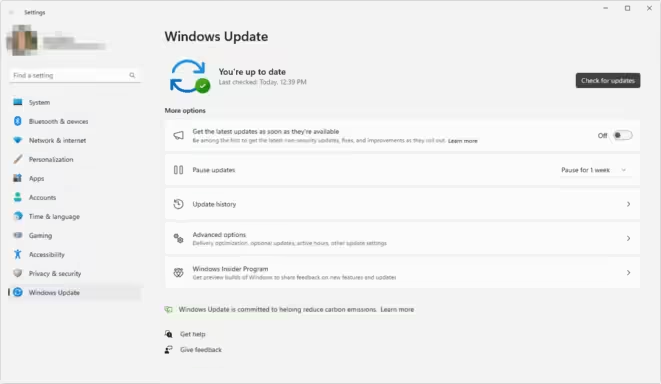
- Check for Windows updates weekly. Go to Settings > Windows Update > Check for updates. Microsoft’s cumulative patches often include BSOD-specific driver fixes.
- Update drivers monthly. Set a recurring reminder. NVIDIA and AMD release driver updates every few weeks.
- Run a full antivirus scan monthly. Malware can corrupt system files and drivers, triggering the exact same crash. Windows Defender catches most threats, but consider adding Malwarebytes for a second opinion.
- Don’t overclock aggressively. Unstable CPU or GPU overclocks push hardware past its limits and trigger memory access errors. If you’ve recently overclocked, revert to stock settings and test.
If you hit error 0x800CCC67 during Windows Update, fix your internet connection first before continuing with the update.
#Bottom Line
Start with an SFC scan and driver updates, which handle the majority of 0x00000004 crashes. If the BSOD persists, test your RAM with MemTest86+ and check your hard drive with chkdsk. Safe Mode and System Restore help narrow down whether new software or updates triggered the crash. The same sequence works on workstations, laptops, and custom builds alike.
#Frequently Asked Questions
Can the 0x00000004 error permanently damage my computer?
The error itself won’t damage hardware. However, the underlying cause might. Faulty RAM or a dying hard drive will get worse over time if you ignore it, potentially leading to data loss. Fix the root cause, don’t just suppress the symptom.
How often should I update drivers to prevent this crash?
Check monthly, or right after major Windows updates. NVIDIA and AMD push graphics driver updates every 2-4 weeks. Windows Update handles most other drivers automatically, but it doesn’t always grab the latest versions.
Is it safe to use third-party registry cleaners for this error?
We don’t recommend them. Registry corruption rarely causes 0x00000004, and aggressive cleaners can remove entries Windows actually needs. Stick with SFC and DISM for file repairs.
Can overclocking cause the 0x00000004 error?
Yes. Revert to stock clock speeds and test for 48 hours.
What if the error happens during Windows startup?
Boot into Safe Mode using a Windows installation USB or recovery drive. From there, run SFC, update drivers, or use System Restore. If you can’t reach Safe Mode at all, try the Automatic Repair option that Windows offers after 3 consecutive failed boots. On Windows 10 and 11, the system automatically enters recovery mode after 3 consecutive failed boot attempts, so you may not even need the USB drive.
How long does it take to fix this error?
Driver updates and SFC scans: 10-20 minutes. MemTest86+: 1-2 hours. Replacing a faulty RAM stick: add another hour.
Does this error affect both laptops and desktops?
Yes, 0x00000004 appears on any Windows PC regardless of form factor. Laptops are slightly more prone because their RAM modules run hotter and degrade faster in tight enclosures. Desktop users with custom builds should check that all components are properly seated.
Should I reinstall Windows to fix this error?
Only as a last resort after SFC, DISM, driver updates, memory diagnostics, and System Restore all fail. A clean Windows install wipes the slate but also erases your programs and settings. Back up everything first.

Best Laptop for Running LLMs in 2026: Memory Comes First
The best laptop for running LLMs is a memory purchase first. Compare MacBook unified memory against NVIDIA laptop VRAM, and see what each tier really runs.
How to Run a Local LLM on Windows: A 2026 Setup Guide
Run a local LLM on Windows with LM Studio or Ollama. Pick a model that fits your GPU memory, keep every prompt offline, and skip the monthly bill.
Bluetooth Not Working on Snapdragon X? Fixes for 2026
Bluetooth not working on your Snapdragon X Copilot+ PC? Generic audio, mice, and keyboards work, but vendor apps often lack an ARM build. Fixes inside.
Docker Desktop and WSL2 Not Working on Snapdragon X? Fix It
WSL2 runs fine on Snapdragon X, but Docker Desktop ARM is Early Access and throws WSL errors. Use WSL2 plus native ARM64 Ubuntu and Docker Engine.