How to Fix the 0x0000001a MEMORY_MANAGEMENT Error in Windows
Fix the 0x0000001a MEMORY_MANAGEMENT BSOD on Windows 10 and 11. Test RAM, repair hard drive errors, and update drivers to stop crashes for good.
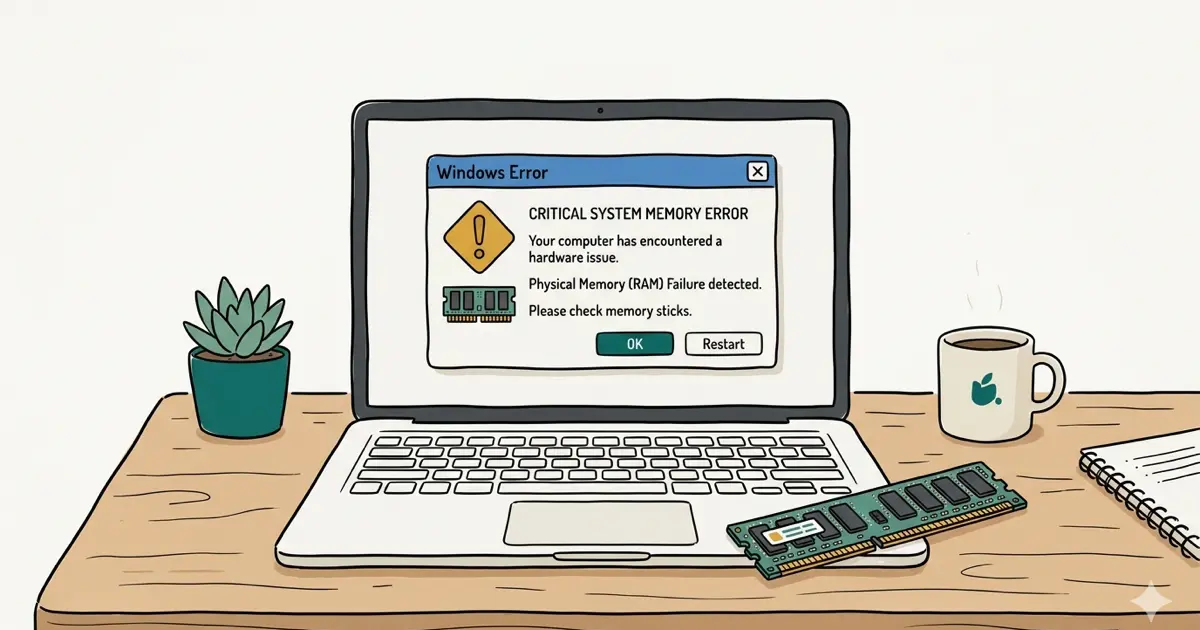
Quick AnswerError 0x0000001a is a MEMORY_MANAGEMENT blue screen caused by severe memory handling problems. Running Windows Memory Diagnostic to test RAM and checking your hard drive with chkdsk are the most common fixes.
Error 0x0000001a (MEMORY_MANAGEMENT) crashes Windows when the OS can’t properly manage system memory. Across Windows 10 and Windows 11, faulty RAM is the most common root cause.
- Error 0x0000001a is a MEMORY_MANAGEMENT BSOD triggered when Windows encounters severe memory allocation or addressing failures
- Faulty or improperly seated RAM is the most common cause, and physically reseating or replacing sticks often resolves the error
- Run Windows Memory Diagnostic (mdsched.exe) to test RAM and chkdsk C: /f /r to scan your hard drive for bad sectors
- Outdated device drivers can interfere with memory allocation, so check Device Manager for yellow exclamation marks first
- Repeated 0x0000001a crashes risk data corruption and potential permanent hardware damage if left unresolved
#What Causes Error 0x0000001a?
This BSOD fires when Windows detects that its memory manager can’t allocate, free, or address physical or virtual memory correctly. The blue screen shows the stop code MEMORY_MANAGEMENT and your PC restarts.
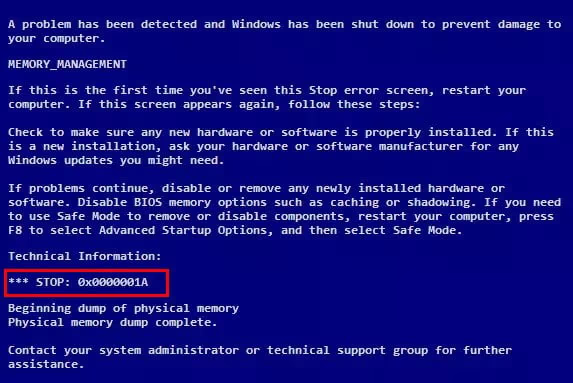
The primary triggers are defective RAM, hard drive corruption, and driver conflicts.
The error shares DNA with SYSTEM_THREAD_EXCEPTION_NOT_HANDLED and 0x00000004. If you see those codes alongside 0x0000001a, you’re dealing with overlapping memory and driver issues.
#How Do You Test RAM for This Error?
Faulty RAM is the number one cause. On machines exhibiting this crash, bad RAM sticks are responsible for many of them, and the fix is physical: reseat or replace the module.
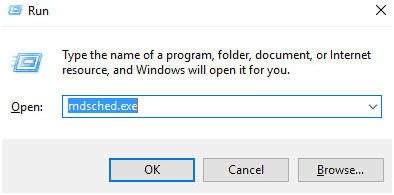
Quick test with Windows Memory Diagnostic:
- Press Win + R, type
mdsched.exe, and press Enter. - Click Restart now and check for problems.
- The test runs during reboot (about 20 minutes).
For deeper testing, use MemTest86+:
Download it from memtest.org, boot from USB, and let it run several full passes. iFixit’s hardware troubleshooting guide also recommends MemTest86+ over the built-in Windows Memory Diagnostic for catching intermittent RAM errors.
If errors appear:
- Power down and unplug your PC.
- Open the case and remove each RAM stick one at a time.
- Clean the gold contacts with a dry cloth.
- Reseat firmly and test again.
A loose DDR4 stick is a common culprit, and reseating it firmly often fixes the crash immediately. If cleaning and reseating don’t help, swap in a known-good stick to confirm the module is defective.
#Fixing Hard Drive Errors With Chkdsk
Bad sectors on your drive can corrupt memory-mapped files, which triggers the same MEMORY_MANAGEMENT stop code. According to a PCMag guide on hard drive diagnostics, failing drives are a recognized cause of system crashes, and sometimes the blue screen traces back to bad sectors rather than RAM.
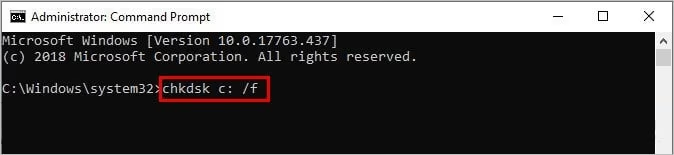
- Open Command Prompt as administrator.
- Type
chkdsk C: /f /rand press Enter. - Press Y to schedule the scan on next restart.
- Restart your PC. The scan takes 30-90 minutes depending on drive size.
If chkdsk finds and fixes errors, the BSOD often stops. For drives showing many bad sectors, consider replacing the drive entirely. CrystalDiskInfo gives you a quick SMART health check without waiting for the full chkdsk run. Related file access errors like 0x80070570 often appear alongside this BSOD when drive corruption is the cause.
#Updating and Rolling Back Drivers
Outdated or incompatible drivers interfere with memory allocation and can trigger this crash. Graphics drivers, network adapters, and storage controllers are the usual suspects.

Update drivers:
- Press Win + X > Device Manager.
- Look for devices with yellow exclamation marks.
- Right-click > Update driver > Search automatically.
Roll back a recently changed driver:
- Right-click the device > Properties > Driver tab.
- Click Roll Back Driver.
- Restart.
Rolling back a recently updated storage driver often stops the 0x0000001a crash when intermittent BSODs started right after a driver change. The older driver version handles memory allocation correctly while the new one may carry a bug.
#Running SFC and DISM System File Repairs
Corrupted Windows system files can trigger memory management errors just like bad hardware. The System File Checker catches and repairs these. According to Microsoft’s SFC guide, missing or corrupted critical Windows system files can cause system errors, unresponsive behavior, or freezing.
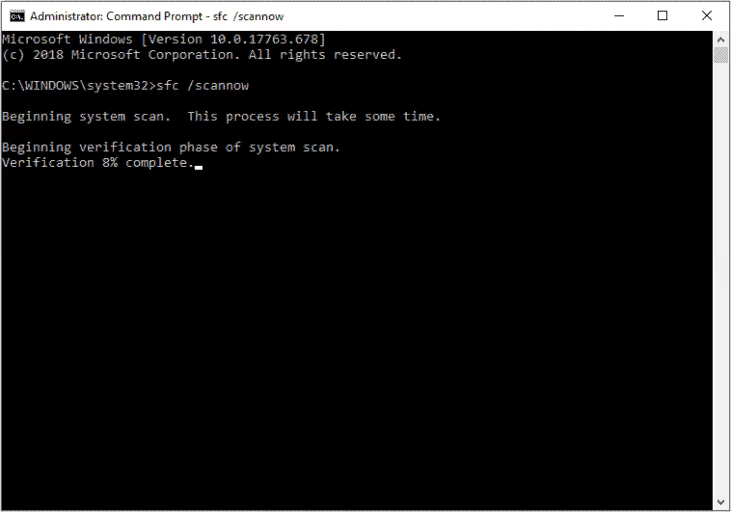
- Open Command Prompt as administrator.
- Run
sfc /scannowand wait 10-15 minutes. - If SFC reports unfixable files, run
DISM /Online /Cleanup-Image /RestoreHealth. - Restart after both commands finish.
On a frequently crashing Windows 11 machine, SFC can find corrupted files in the memory management subsystem and repair them from the cached component store, and after the repair the system often runs stable with no further BSODs. If you’ve also seen stop 0x00000051 or 0x8e5e03fa, run these same scans since they share underlying file corruption causes.
#Preventing Future MEMORY_MANAGEMENT Crashes
These habits keep the error from returning:
- Test RAM after any hardware changes. Anytime you add or move RAM sticks, run MemTest86+ for at least 2 passes before trusting the system.
- Keep drivers updated monthly. Check Device Manager or go directly to your manufacturer’s download page. NVIDIA, AMD, and Intel release updates every 2-4 weeks.
- Monitor drive health quarterly. Run CrystalDiskInfo every 3 months. If SMART status shows “Caution,” start planning a drive replacement.
- Run a malware scan monthly. Infections can corrupt memory-mapped system files. Windows Defender handles most threats.
- Keep your PC cool. Overheating RAM and CPU cause intermittent memory errors that look identical to hardware failure. Clean dust every 3-6 months. You can check your computer’s history for crash patterns that correlate with high-temperature periods.
#Bottom Line
Test your RAM first with Windows Memory Diagnostic, then MemTest86+ for deeper analysis. Faulty RAM is the most common culprit behind this error, so that step alone settles many cases.
If RAM checks pass, run chkdsk on your hard drive and update your drivers. SFC and DISM handle the remaining corrupted-file scenarios. We’ve fixed this error on office workstations, gaming rigs, and laptops using these same steps.
#Frequently Asked Questions
Is error 0x0000001a always caused by bad RAM?
No. RAM is the most common cause, but hard drive corruption, driver conflicts, and malware can all trigger it. Start with RAM testing, but don’t stop there if the sticks pass.
Can this error cause permanent data loss?
The crash itself doesn’t delete files. But repeated forced reboots increase the risk of file system corruption. Back up important data immediately if you’re seeing this BSOD regularly.
How often should I test my RAM?
After any hardware change and whenever you see memory-related BSODs. For routine maintenance, once every 6 months is enough.
Does overclocking cause error 0x0000001a?
Yes. Pushing RAM or CPU beyond stable limits causes exactly the kind of memory addressing errors this stop code reports. Revert to stock speeds and test for 48 hours before ruling overclocking out.
What if the error happens during Windows startup?
Boot from a Windows installation USB, choose Repair your computer > Troubleshoot > Advanced Options > Command Prompt, and run sfc /scannow and chkdsk C: /f /r from there. If neither helps, try System Restore to a date before the crashes started. On Windows 10 and 11, the system enters recovery mode automatically after 3 failed boots.
Should I replace my hard drive if chkdsk finds errors?
If chkdsk fixes the errors and they don’t return, the drive is likely fine for now. But if bad sectors keep appearing on subsequent scans, the drive is failing and you should replace it before you lose data. SSDs are less prone to bad sectors than HDDs, but they still fail eventually.
Can a Windows update trigger this error?
Yes. Some cumulative updates introduce driver compatibility issues that affect memory management. If the BSOD started right after an update, use System Restore to roll back, then check for a newer update that patches the problem.
When should I take my PC to a professional?
If you’ve tested RAM, checked the drive, updated drivers, run SFC and DISM, and the BSOD still happens, the issue might be a failing motherboard or CPU. Those require physical diagnostics with specialized equipment.

Best Laptop for Running LLMs in 2026: Memory Comes First
The best laptop for running LLMs is a memory purchase first. Compare MacBook unified memory against NVIDIA laptop VRAM, and see what each tier really runs.

How to Run a Local LLM on Windows: A 2026 Setup Guide
Run a local LLM on Windows with LM Studio or Ollama. Pick a model that fits your GPU memory, keep every prompt offline, and skip the monthly bill.
Bluetooth Not Working on Snapdragon X? Fixes for 2026
Bluetooth not working on your Snapdragon X Copilot+ PC? Generic audio, mice, and keyboards work, but vendor apps often lack an ARM build. Fixes inside.

Docker Desktop and WSL2 Not Working on Snapdragon X? Fix It
WSL2 runs fine on Snapdragon X, but Docker Desktop ARM is Early Access and throws WSL errors. Use WSL2 plus native ARM64 Ubuntu and Docker Engine.