Does Airplane Mode Turn Off GPS Tracking? The Truth Revealed
Airplane Mode does not turn off GPS. Learn why your phone can still be tracked in Airplane Mode and what steps actually stop GPS location tracking.
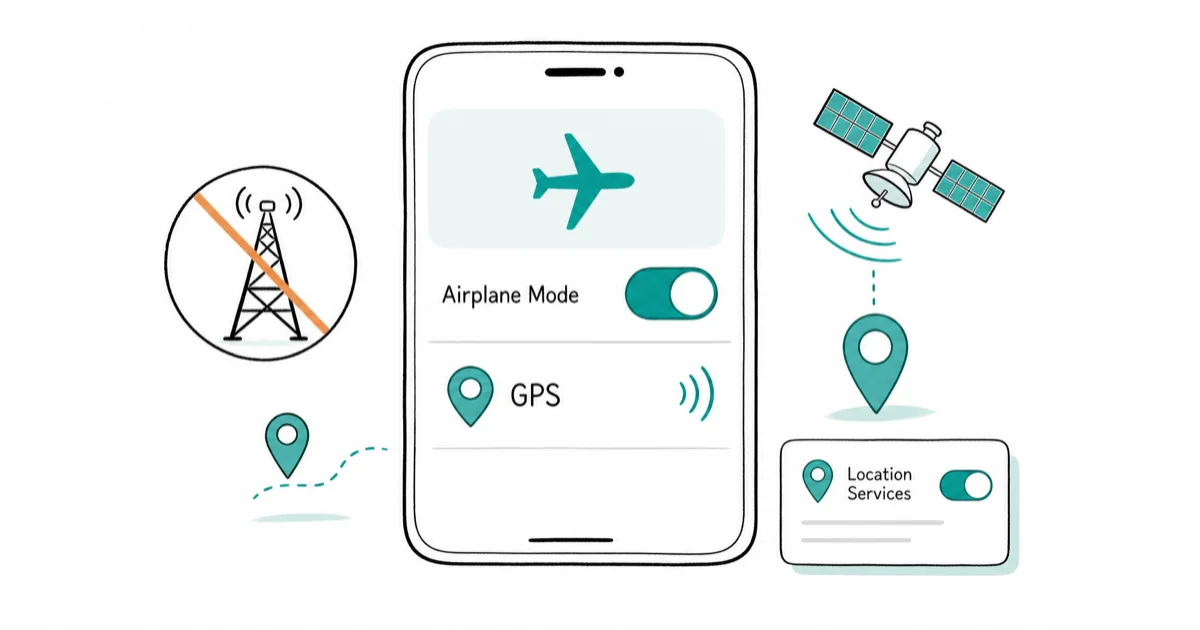
Quick AnswerNo, Airplane Mode does not turn off GPS. GPS is a passive receiver that listens to satellite signals without transmitting, so it continues working in Airplane Mode. To fully stop location tracking, disable Location Services separately in Settings.
Airplane Mode shuts off Wi-Fi, cellular data, and Bluetooth — but not GPS. On most iPhones and Android phones, the device keeps receiving GPS signals and logging location data even after you switch Airplane Mode on. The distinction matters if you’re trying to stop location tracking for privacy reasons. Using these methods on devices or accounts you don’t own may violate applicable laws and platform terms.
- Airplane Mode does not disable GPS because GPS is receive-only and never transmits signals
- Your phone still records location data locally in Airplane Mode, then apps upload it when you reconnect
- To stop GPS tracking on iPhone:
Settings>Privacy & Security>Location Services> toggle off - Without cellular A-GPS assistance, initial GPS lock takes 30-90 seconds longer in Airplane Mode
- Emergency services can still access your GPS coordinates even in Airplane Mode
#Why Airplane Mode Doesn’t Turn Off GPS
GPS is fundamentally different from the wireless radios Airplane Mode targets. Wi-Fi, cellular, and Bluetooth are two-way radios that both transmit and receive. Airlines ban them because transmitting radio signals can interfere with aircraft navigation instruments.
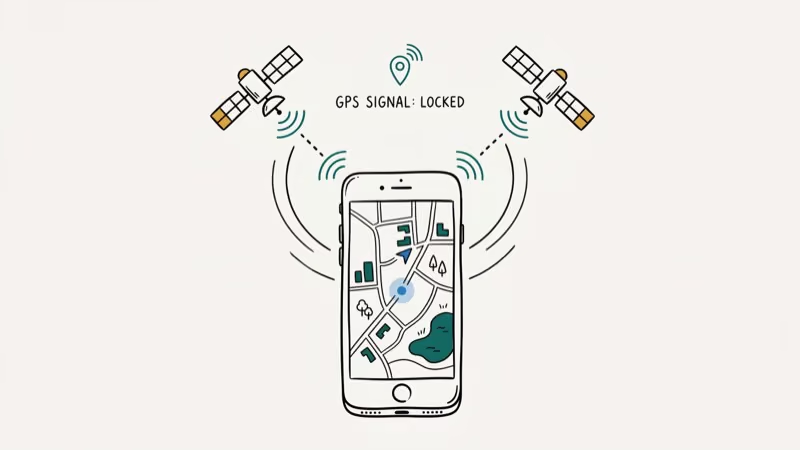
GPS is a one-way, receive-only system. Your phone’s GPS chip only listens to signals from satellites orbiting 12,550 miles above Earth — it never transmits anything. According to Apple’s Airplane Mode support page, Airplane Mode disables cellular voice and data, Wi-Fi, and Bluetooth, but GPS behavior varies by device and setting.
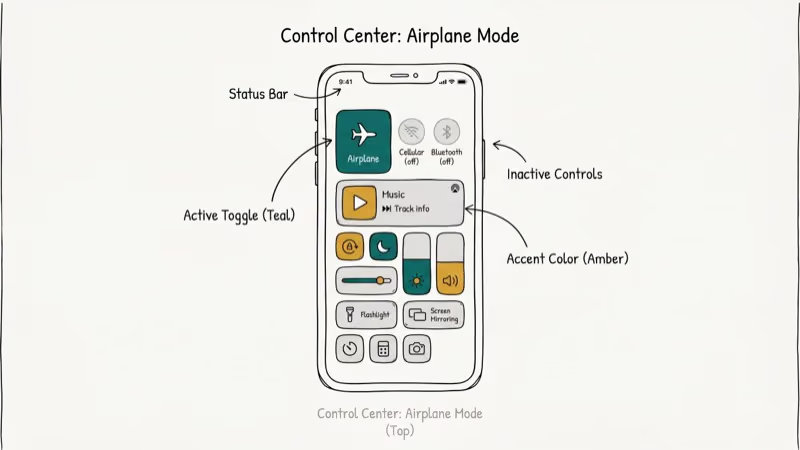
Apple’s implementation varies by context: GPS hardware is off in Airplane Mode by default on some iPhone configurations, but you can re-enable it in Control Center. Android phones vary by manufacturer. Some Pixel devices keep a GPS lock in Airplane Mode without any extra steps, while certain iPhones need Bluetooth or Wi-Fi re-enabled before GPS resumes.
The practical takeaway: don’t assume Airplane Mode means GPS is off. Test it on your specific device.
#What Airplane Mode Actually Disables
When you enable Airplane Mode, your phone cuts these connections:
- Cellular data and voice — no calls, texts, or mobile internet
- Wi-Fi — unless you manually re-enable it after activating Airplane Mode
- Bluetooth — same as Wi-Fi; re-enableable after activation
- NFC — contactless payments and NFC tags stop working
Location-sharing apps can’t upload your coordinates to their servers while you’re in Airplane Mode because there’s no internet connection. But your phone still records your position locally. Once you reconnect to the internet, apps can upload that stored location data unless you clear it first.
#Does Your Location Get Tracked in Airplane Mode?
Real-time tracking by apps and third parties stops when you enter Airplane Mode, because there’s no data connection. But your device itself still knows exactly where you are.
Apple’s Find My network uses Bluetooth proximity from nearby Apple devices to report your location even when your phone is offline. Apple’s Find My support page states that this feature works even without cellular or Wi-Fi connectivity, which is specifically designed for the Airplane Mode scenario. Google’s Find My Device can use nearby Android phones as relays in similar fashion.
If someone had access to your device’s local location history after you reconnected to the internet, they could see everywhere you went during the offline period. This is worth knowing if you’re traveling somewhere you don’t want logged.
#How to Actually Stop GPS Tracking
Airplane Mode alone isn’t enough. Here are the steps that work on each platform.
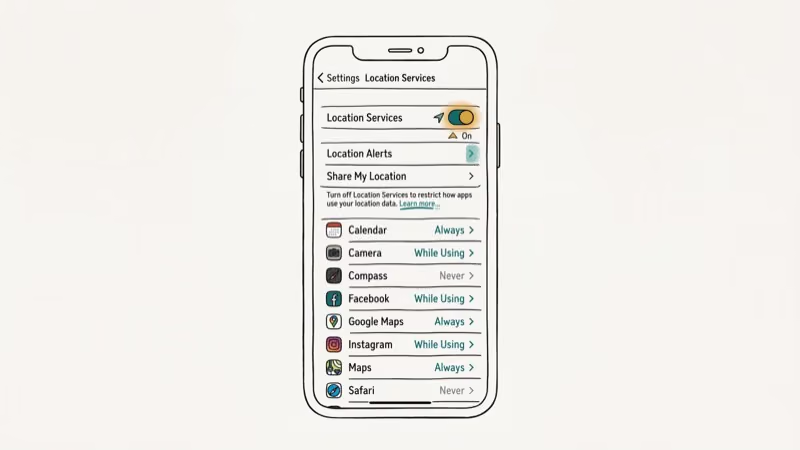
On iPhone: Go to Settings > Privacy & Security > Location Services and toggle off “Location Services” at the top. This disables GPS for all apps. You can also manage it per app rather than turning it off globally if you want some apps to still have access.
On Android: Go to Settings > Location and toggle off “Use location.” The path varies slightly by manufacturer — Samsung uses “Location” in the main Settings menu; Pixel uses “Location” under Privacy.
Turning off Location Services completely stops GPS hardware access for all apps. Combined with Airplane Mode, this is the most thorough privacy approach for local-only use. See our guide on how to stop sharing your location without others knowing if you want to manage this more selectively.
#GPS Accuracy in Airplane Mode
Without cellular connectivity, your phone loses access to Assisted GPS (A-GPS), which uses carrier network data to speed up satellite acquisition.
The practical effect on timing: cold start time (GPS hasn’t been used recently) gets noticeably longer in Airplane Mode, because the cellular-assisted positioning data that normally speeds up a first fix isn’t available. Accuracy is slightly reduced in dense urban areas where cellular-assisted positioning normally supplements GPS. Navigation works fine once locked, including offline maps from Google Maps, Apple Maps, and HERE WeGo.
The initial GPS lock in Airplane Mode generally takes longer than it does with cellular on, since the phone can’t pull A-GPS data to speed up the fix. Once it’s locked, navigation stays accurate, and the gap shrinks as GPS warms up from prior use.
If you’re going somewhere remote and want reliable offline navigation, download your maps before enabling Airplane Mode. According to Google’s offline maps documentation, downloaded areas remain fully navigable without any cellular or Wi-Fi connection.
#Can Emergency Services Track You in Airplane Mode?
Yes. Emergency calls automatically bypass Airplane Mode restrictions on all modern smartphones. When you dial 911 or the local equivalent, the phone re-enables the minimum cellular functions needed to place the call.
The phone also transmits your GPS coordinates to emergency dispatchers through this process. According to the FCC’s Enhanced 911 rules, carriers are required to provide location data for emergency calls within specified accuracy standards. This applies even if Location Services is turned off globally.
This is worth knowing if you’re in a safety situation — your phone can reach emergency services regardless of Airplane Mode or location privacy settings.
#Bottom Line
Airplane Mode doesn’t turn off GPS. Your phone’s GPS chip keeps receiving satellite signals because it’s a receive-only system that never transmits. For complete location privacy, disable Location Services manually via Settings in addition to enabling Airplane Mode. For more on what’s logged during private browsing on your phone, check our guide on how to view private browsing history on iPhone.
If you’re concerned about someone tracking your phone without permission, our guide on how to track a cell phone number on Google Map explains which tracking methods work and which you can block. You can also learn more about whether a SIM card can be tracked independently of GPS.
For a broader overview of location tracking methods across iOS, see our guide on how to track an iPhone with and without an app.
#Frequently Asked Questions
Does Airplane Mode turn off location completely?
No. GPS hardware keeps running. Your device records its location locally and uploads that data once you reconnect.
Can someone track my phone when it’s in Airplane Mode?
Real-time tracking via apps or cellular is blocked. However, the phone still has GPS access, and Apple’s Find My and Google’s Find My Device can use Bluetooth proximity from nearby devices to estimate your location even offline.
Does turning off GPS stop tracking?
Turning off Location Services stops app-based GPS tracking, but cell tower triangulation, Wi-Fi positioning, and Bluetooth proximity can still estimate your location if those radios remain active. For thorough privacy, disable Location Services and enable Airplane Mode at the same time. That combination blocks all the main tracking vectors simultaneously, leaving only offline storage of prior GPS points — and those only upload after you reconnect to a network.
Does Airplane Mode save battery if GPS is still on?
Yes. The big battery drains in Airplane Mode — cellular and Wi-Fi — are off. GPS by itself uses only 15-50 mA, much less than cellular modems. Active GPS navigation in Airplane Mode still drains battery, but significantly slower than with all radios on.
Why does my phone’s GPS seem less accurate in Airplane Mode?
Without cellular A-GPS data, your phone relies entirely on satellite signals, which take longer to acquire and can be less precise in areas with poor satellite visibility. The accuracy difference is typically 5-10 meters in urban areas and less noticeable in open spaces.
Can emergency services find me in Airplane Mode?
Yes. Dialing 911 bypasses Airplane Mode and transmits your GPS location to dispatchers automatically.
Should I use Airplane Mode for privacy on planes?
Airplane Mode is required during flights for a practical reason — it prevents potential interference with avionics. For privacy, it’s a partial measure. If you want to prevent your phone from logging your flight path in location history, disable Location Services before boarding in addition to enabling Airplane Mode.
Is This Bank App Real? Spot a Fake App on Your Home Screen
A bank app can land on your home screen from a web page with no install warning. Learn the checks that tell a real banking app from a phishing web app.
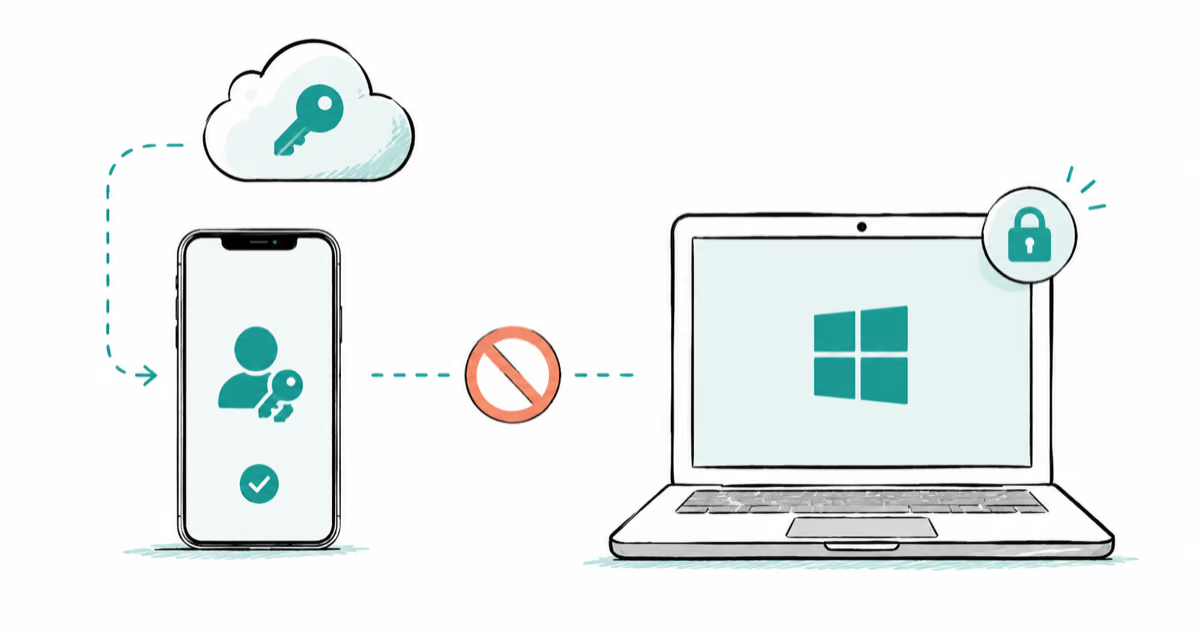
Passkeys Not Syncing Between iPhone and Windows? Read This
Passkeys not syncing between iPhone and Windows is by design, not a bug. Here is why iCloud passkeys skip Windows Hello and the three ways to fix it.
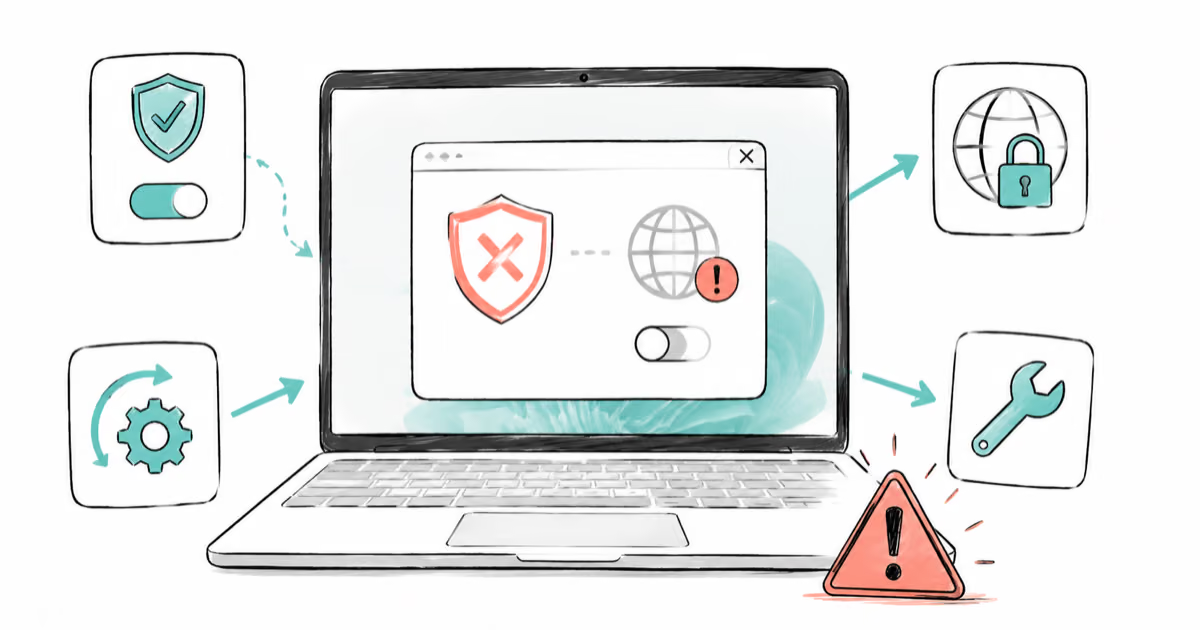
VPN Not Working on Snapdragon X? Why It Fails, How to Fix
Your VPN won't install or connect on a Snapdragon X Copilot Plus PC because Windows on ARM can't emulate the network driver. Here are the fixes that work.
How to Check If a Link Is Safe Before You Click It
Learn how to check if a link is safe with official-first steps: read the real domain, use the app instead, and treat scanners as a second opinion only.