How to Change or Delete iCloud Account from iPhone
Learn how to change or delete your iCloud account on iPhone, back up data safely, sign out without losing photos, and prepare your device for sale.
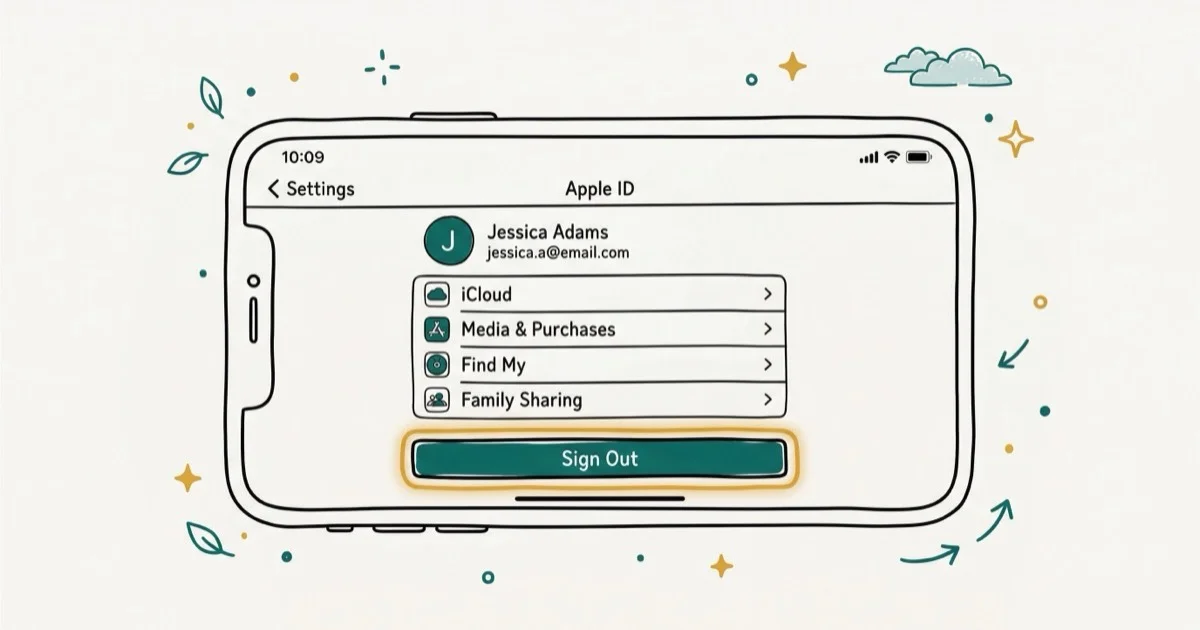
Quick AnswerTo change your iCloud account on iPhone, go to Settings, tap your name, scroll down and tap Sign Out, enter your Apple ID password, then sign in with the new account. Always back up your data before making changes.
As an iPhone user, your iCloud account sits at the center of backups, photo sync, and Find My. There’s a good chance you’ll eventually need to switch it, whether you’re moving to a fresh Apple ID or wiping the phone before a sale. This guide walks through every step on your own device, with the official Apple paths and the gotchas that come up on iOS 17 and iOS 15.
- Create a fresh iCloud backup right before signing out so contacts, photos, and app data survive the account switch.
- Signing out removes Find My, iMessage, and FaceTime from this device until you sign back in with the new account.
- When prompted, tap “Keep on My iPhone” for contacts, calendars, and reminders to keep a local copy on the device.
- Removing iCloud from this iPhone does not delete your Apple ID; your content stays in iCloud and is reachable from any other signed-in device.
- Before selling or gifting the phone, sign out of iCloud so Activation Lock releases and the next owner can finish setup.
#Why Would You Change or Delete Your iCloud Account?
Your iCloud account is the Apple ID tied to Apple’s cloud services. It holds your contacts, calendars, photos, and device backups, and it lets every Apple device you own talk to the same data. There are a handful of normal reasons to switch or remove it on a single iPhone:
- Switching to a new email address that becomes your primary Apple ID.
- Separating a personal Apple ID from a work or family-owned one.
- Preparing to sell, return, or hand the phone to someone else.
- Locking down a device after a security scare and starting clean.
According to Apple’s support article, each iPhone uses one primary Apple ID for iCloud, with an optional secondary ID just for Media & Purchases.
#Prepare Before Signing Out
Before you touch the Sign Out button, lock in a backup and confirm what’s stored where. Apple recommends backing up your device before any account change, and that’s the single most important step in this whole process.
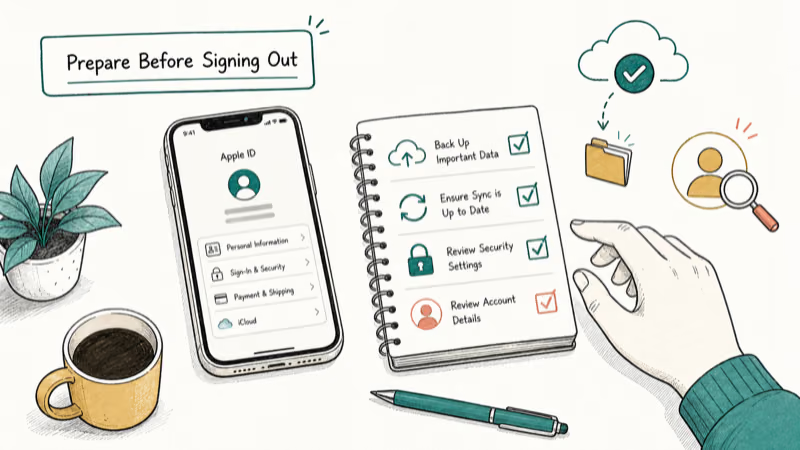
- Back up your data: Open Settings → [your name] → iCloud → iCloud Backup and tap Back Up Now, or plug into a Mac/PC and run a Finder/iTunes backup.
- Check what only lives in iCloud: Photos in iCloud Photos, notes in iCloud Notes, and messages stored in iCloud all depend on the account staying signed in. Export anything irreplaceable first.
- Understand the consequences: Signing out removes the account from this device but does not erase your Apple ID. We cover the exact side effects further down.
A full iCloud Backup of a moderately loaded phone, around 35 GB, can take roughly 15 to 20 minutes over a fast connection, and considerably longer on slower Wi-Fi. Plan for that window before you start the sign-out so the account switch doesn’t interrupt a backup that’s still running.
#How to Change Your iCloud Account on iPhone
Changing your iCloud account means signing out of the current Apple ID and signing back in with a new one. Here’s the modern path (iOS 13 and later):
- Go to Settings and tap your name at the top.
- Scroll down and tap Sign Out.
- Enter your Apple ID password and tap Turn Off.
- Choose what data you want to keep on the iPhone (contacts, calendars, Safari data, etc.).
- Tap Sign Out again to confirm.
- Once signed out, tap Sign in to your iPhone at the top of Settings.
- Enter the new Apple ID and password.
- Follow the prompts to merge or keep data separate.
On an iPhone 11 still running iOS 15, the menu structure is identical, only the icons are less rounded. If you can’t get past the sign-out screen, the most common cause is Screen Time restrictions; our what to do when you can’t sign out of Apple ID guide walks through that fix.
#How to Delete Your iCloud Account from iPhone
The process for removing your iCloud account from the device is essentially the same sign-out flow, with a small wrinkle on very old iOS versions.
#For iOS 10.3 and later
- Go to Settings and tap your name.
- Scroll down and tap Sign Out.
- Enter your Apple ID password and tap Turn Off.
- Choose what data you want to keep on this iPhone.
- Tap Sign Out again to confirm.
#For iOS 10.2 and earlier
- Go to Settings → iCloud.
- Scroll down and tap Sign Out.
- Tap Delete from My [device] and enter your Apple ID password.
This only removes the account from this device. To permanently delete the Apple ID itself, sign in to Apple’s Data and Privacy site from a browser and submit a deletion request. Apple’s published policy states that processing a permanent Apple ID deletion can take up to 7 days for verification.
For a deeper walkthrough that covers iPad too, see our companion guide on how to remove Apple ID from iPad or iPhone.
#Removing iCloud Account Without Password
If you’ve forgotten the password for your own account, stick to the official recovery paths. Don’t use third-party “iCloud removers.” Most of them either fail outright, brick the device, or violate Apple’s Terms of Service.
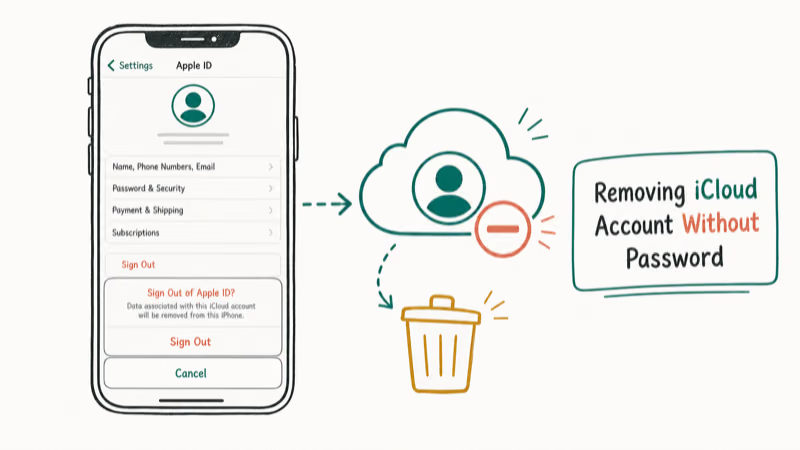
- Reset your password: Tap “Forgot Apple ID or password?” on the sign-in screen, or open iforgot.apple.com on another device.
- Use account recovery: If you set up a trusted phone number or trusted device beforehand, Apple’s account recovery flow can verify you and reset the password.
- Contact Apple Support: Apple Support can help recover an Apple ID once you prove ownership of the account. Have your purchase receipt, original email, and any associated billing information ready.
Apple’s account security documentation confirms that account recovery is the only legitimate path when the password and recovery options are both gone, and it can take several days. If your phone itself is locked out, see our guide on how to unlock a locked iPhone.
#What Happens When You Delete Your iCloud Account?
Signing out of iCloud or deleting the Apple ID has predictable side effects. According to Apple’s support documentation, removing the account from a device:
- Disables Apple services tied to that ID: iMessage, FaceTime, iCloud Mail, iCloud Photos, iCloud Drive, and Find My.
- Removes access to App Store and Apple Music purchases until you sign back in.
- Stops new content from syncing to iCloud; previously downloaded items stay on the device.
- Cancels the paid iCloud+ storage plan only if you cancel it explicitly in the Apple ID settings.
Data already saved locally stays on the device. That includes photos in the Photos app that you’ve downloaded, files in the Files app under “On My iPhone,” and any offline music. If the account refuses to sign out cleanly, an iCloud removal service walkthrough may apply, but only when you’re the verified owner.
#Steps to Take Before Selling or Giving Away Your iPhone
If you’re handing the phone off, follow Apple’s pre-sale checklist. Apple recommends running through every step in What to do before you sell, give away, or trade in your iPhone, iPad, or iPod touch, and skipping the sign-out is the most common reason Activation Lock traps the next owner.
If you don’t use iCloud, move everything off first with Quick Start or an encrypted computer backup.
- Transfer data to your new device using Quick Start or an iCloud backup.
- Unpair an Apple Watch in the Watch app if you paired one.
- Run a final backup.
- Sign out of iCloud and the iTunes & App Store.
- Erase all content and settings (Settings → General → Transfer or Reset iPhone → Erase All Content and Settings).
- Remove the old device from your trusted devices list in your Apple ID account.
Don’t try to change IMEI. It’s illegal in most countries and is not a workaround for iCloud lock. See why people consider it.
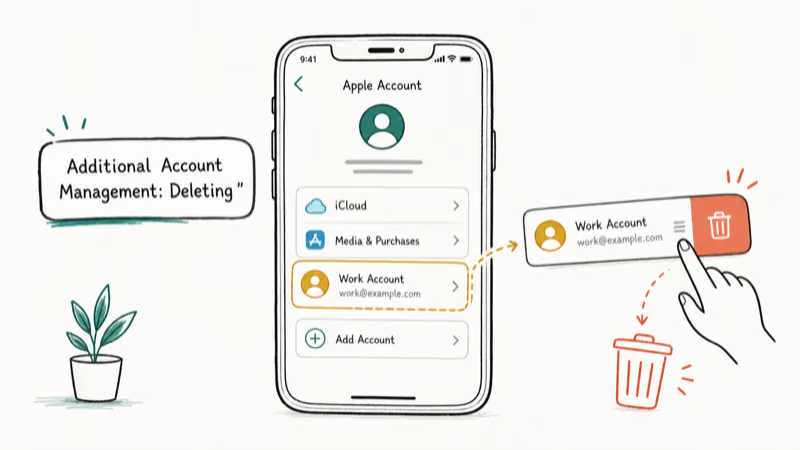
#Additional Account Management: Deleting Other Accounts
While you’re cleaning up the device, it’s a good moment to audit the other accounts that live on it. If you’re stepping back from social media, our walkthrough on how to delete your Instagram account on iPhone completely covers the deactivation-vs-deletion distinction, the 30-day grace window Instagram allows, and how to confirm the account is gone.
iPhone tips & tricks
#Frequently Asked Questions
Can I change my iCloud email address without creating a new Apple ID?
No. Your iCloud email address is your Apple ID, and the two are inseparable.
Will I lose my App Store purchases if I delete my iCloud account?
You’ll lose access on this device until you sign back in. App Store purchases, Apple Music libraries, and iCloud Photos uploads are tied to the Apple ID, so they restore automatically the next time you sign in with the same ID, even on a brand-new device. If you permanently delete the Apple ID through Apple’s Data and Privacy site, those purchases can’t be recovered, which is why a sign-out is almost always the right move.
Can I recover my iCloud account after deleting it?
It depends on what you deleted. Sign back in after a device sign-out and everything returns.
How long does it take to delete an iCloud account?
Removing an account from a device is immediate. The sign-out finishes in under a minute on every modern iPhone. Permanently deleting the Apple ID through Apple’s Data and Privacy portal is a different process, and Apple’s policy states that closure can take up to 7 days while the request is verified and processed.
Can I use my iPhone without an iCloud account?
Yes. You’ll lose iCloud Backup, Find My iPhone, Messages in iCloud, and cross-device sync.
Does signing out turn off Find My on this iPhone?
Yes. Signing out of iCloud disables Find My on the device and removes Activation Lock for that Apple ID, which Apple confirms is the required step before selling, gifting, or trading in any iPhone. Skip it and the new owner will hit the Activation Lock screen during setup and won’t be able to finish, because Apple’s servers still link the device to the previous Apple ID until you complete the sign-out. That’s why erasing the phone alone is not enough.
What if I have two-factor authentication enabled?
You’ll still need the password and a verification code from a trusted device. If you’ve lost access, run account recovery from iforgot.apple.com first.
#Bottom Line
For a clean switch on a phone you own: back up first, sign out from Settings → [your name] → Sign Out, keep a local copy of contacts and calendars when prompted, and sign back in with the new Apple ID. If the phone’s leaving your hands, finish with Erase All Content and Settings and confirm the device is gone from your trusted devices list.
Skip the third-party “no-password” iCloud removers entirely. Go through Apple’s recovery flow at iforgot.apple.com instead. That’s the route that actually works and the only one Apple supports.
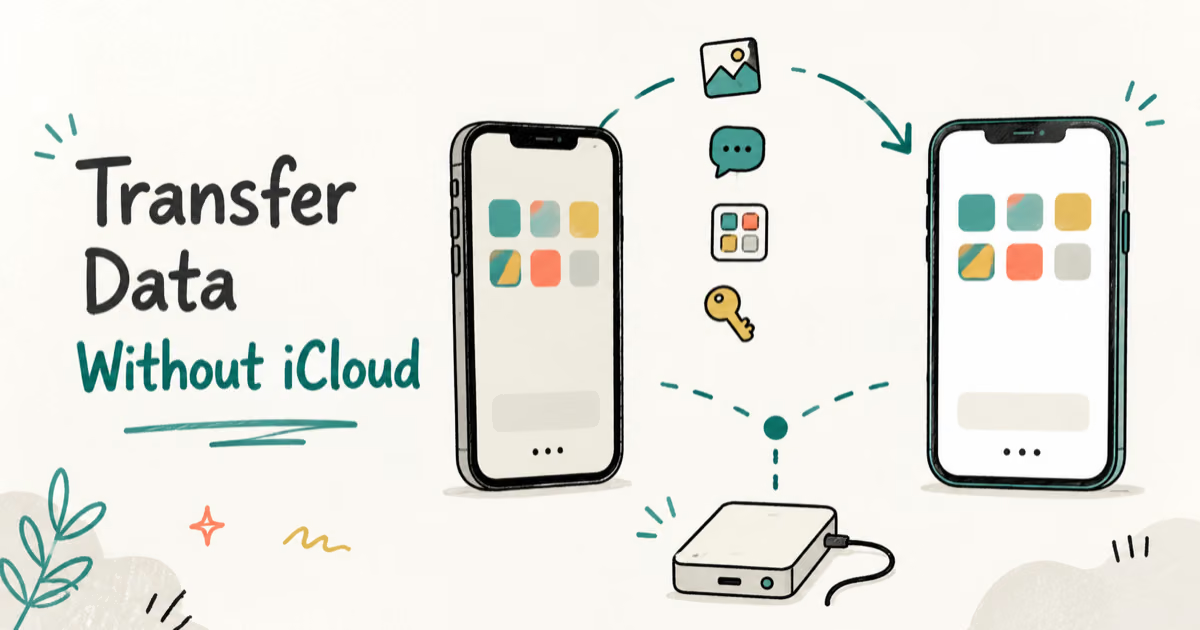
How to Transfer Data to a New iPhone Without iCloud
Move everything to your new iPhone without iCloud: Quick Start device-to-device transfer, wired migration, and encrypted Finder or iTunes backups.
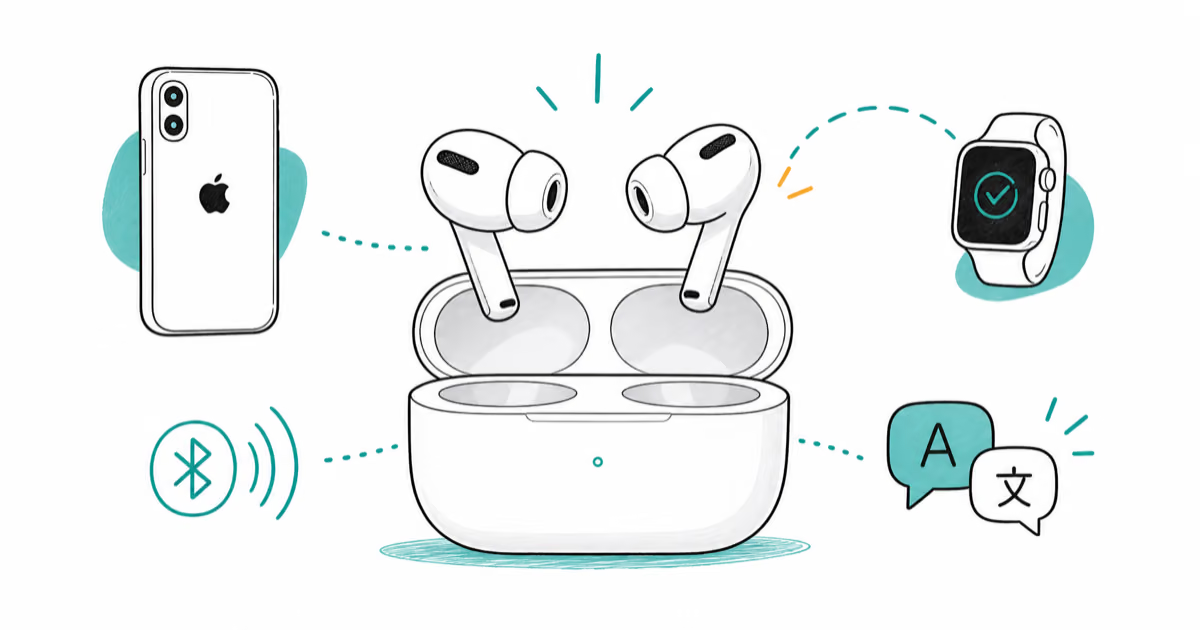
Best Wireless Earbuds for iPhone in 2026: USB-C Era Picks
Best wireless earbuds for iPhone in 2026, comparing AirPods Pro 3, Sony WF-1000XM6, Bose QC Ultra, and Anker Liberty 4 NC on the USB-C iPhone lineup.
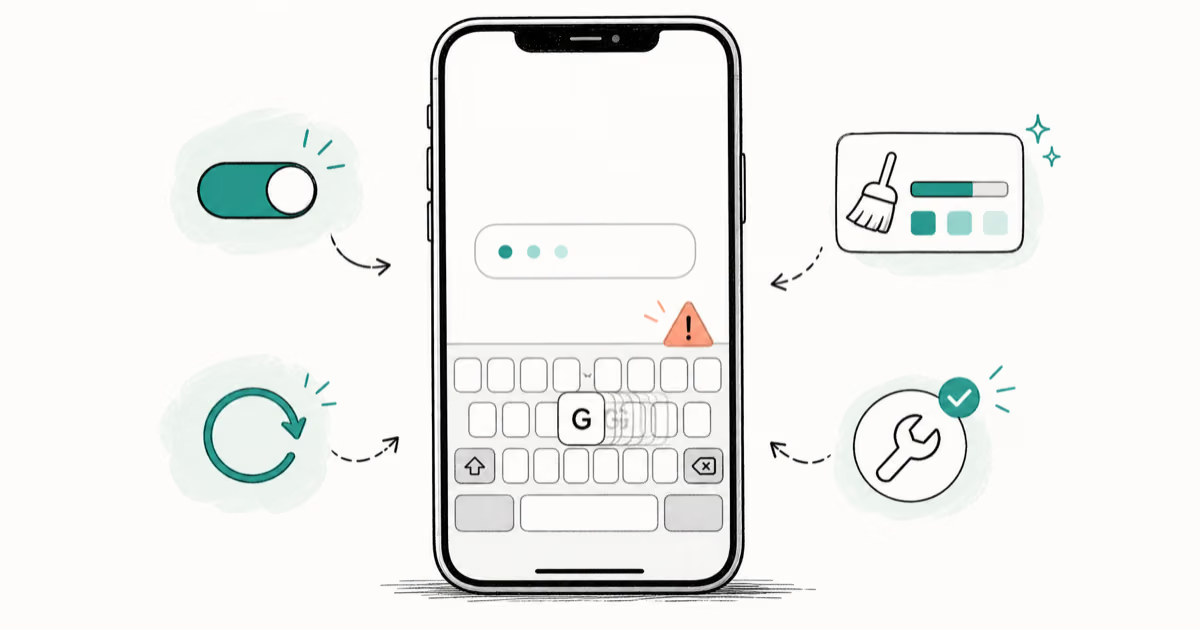
iPhone Keyboard Lag? 7 Proven Fixes for iOS 26 (2026)
Fix iPhone keyboard lag with 7 proven fixes for iOS 26. Covers restart, storage, predictive text, third-party keyboards, and dictionary reset.
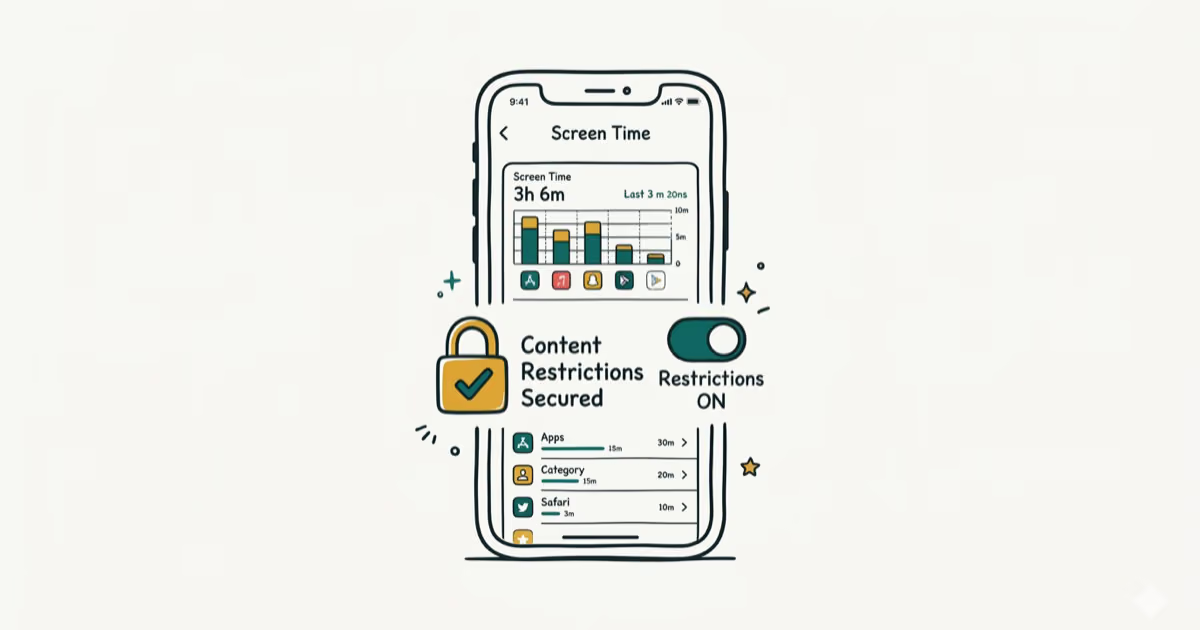
How to Block Porn on an iPhone: A Guide for Parents
Learn how to block porn on iPhone using Screen Time, DNS filtering, and safe browsers. Step-by-step guide for parents to protect kids' devices.